


 中文简体
12L/H Stainless Steel Commercial Hard Ice Cream Machine for Restaurant Applications
Admin 2026-09-08Choosing the right hard ice cream machine is an important decision for restaurants, dessert shops, cafés, snack bars, hotels, catering businesses, and other foodservice operators. The equipment must do more than freeze an ice cream mix. It must provide stable production, consistent texture, safe food contact surfaces, convenient operation, manageable maintenance, and dependable performance during daily commercial service. A machine that cannot maintain freezing stability or withstand continuous use can lead to slow service, product inconsistency, unnecessary waste, and higher operating costs.
The BQL-112Y 12L/H commercial hard ice cream machine is designed for businesses that need professional ice cream production in a compact and practical format. With a stated production capacity of 12 liters per hour, an air-cooled refrigeration system, a food-grade stainless steel body, and a space-conscious footprint, it is suitable for restaurants and small to medium-sized dessert operations that want to produce hard ice cream on site.
This article examines the machine’s specifications, construction, production value, refrigeration design, operational benefits, maintenance requirements, installation considerations, and potential advantages compared with less specialized or less durable alternatives. It also explains how the manufacturer’s production capabilities support customization, quality control, and long-term foodservice applications.

12L/h Stainless Steel Commercial Hard Ice Cream Machine for Restaurant
1. Commercial Ice Cream Production for Modern Foodservice Businesses
Hard ice cream remains a popular product in restaurants, cafés, dessert shops, family entertainment venues, hotels, and retail food outlets. Consumers often associate freshly produced ice cream with better flavor, smoother texture, and greater product freshness. For business owners, on-site production also creates opportunities to offer distinctive flavors, seasonal recipes, premium ingredients, and attractive menu presentations.
However, making hard ice cream commercially requires equipment that can freeze and process the mixture in a controlled manner. A domestic freezer or basic countertop appliance is generally not designed for repeated production cycles, commercial hygiene requirements, or the workload of a foodservice environment. Commercial equipment must be structurally stronger, easier to clean, more stable under continuous operation, and capable of supporting predictable output.
The BQL-112Y is positioned for operators that need a practical production solution without installing a large industrial freezing line. Its capacity of 12 liters per hour provides a useful balance between output and equipment size. This level of production can support a small dessert menu, restaurant service, café sales, or a dedicated ice cream counter without requiring an oversized machine that occupies excessive space.
The machine is especially suitable for businesses that want to produce ice cream close to the point of sale. When the equipment is installed in a visible preparation area, customers may also perceive the production process as part of the dining experience. This can help communicate freshness and reinforce the value of handmade or freshly prepared desserts.
2. Main Product Specifications
The following table summarizes the principal information provided for the BQL-112Y commercial hard ice cream machine.
| Specification | Details |
|---|---|
| Product type | Commercial hard ice cream machine |
| Model | BQL-112Y |
| Production capacity | 12 liters per hour |
| Condensation method | Air cooling |
| Voltage and frequency | 220V / 50Hz |
| Power information | 750W listed in one specification set; 1300W listed in the product information table |
| Refrigerant | R410 listed in the product specification |
| Net weight | 60 kilograms |
| Machine dimensions | 520 × 490 × 650 millimeters |
| Body material | Food-grade stainless steel and sprayed steel components |
The power figures supplied in the technical materials are different: one section lists 750W, while another lists 1300W. This may reflect different measurement methods, electrical configurations, revised specifications, or a distinction between rated input and another operating value. Buyers should confirm the final nameplate rating, circuit requirement, and configuration with the supplier before purchase or installation. Verifying this information is particularly important for international orders, project procurement, and sites with strict electrical capacity limits.
3. Food-Grade Stainless Steel Construction
One of the most important advantages of a commercial ice cream machine is the quality of its exterior and food-contact construction. The BQL-112Y uses a food-grade stainless steel body together with colorful sprayed steel elements. This combination is intended to provide a clean appearance, structural durability, and suitability for foodservice environments.
Stainless steel is widely used in professional kitchens because it is resistant to corrosion, relatively easy to clean, and compatible with routine sanitation procedures. It also presents a professional appearance that fits restaurants, cafés, hotel kitchens, dessert counters, and open-service areas. Compared with painted household appliances or low-cost equipment made from less durable materials, stainless steel can offer better resistance to the daily demands of commercial use.
The body material also supports operational hygiene. Ice cream production involves dairy, sugar, flavorings, and other ingredients that can leave residue on exposed surfaces. A smooth and properly maintained stainless steel exterior makes it easier for staff to wipe away splashes and maintain a neat workspace. While the material itself does not replace cleaning and sanitation, it provides a practical foundation for good hygiene practices.
The use of sprayed steel components allows the equipment to have a more distinctive appearance than plain industrial machinery. Businesses can select a machine style that complements their brand environment, décor, or service counter. In a customer-facing space, a well-presented machine can contribute to the overall visual impression of the business.
Compared with competitors that focus only on basic mechanical operation, a machine combining stainless steel construction with a presentable exterior can provide greater value for businesses where equipment remains visible to customers. The purchase decision is therefore not based only on output. Appearance, cleanability, durability, and suitability for the service environment also matter.
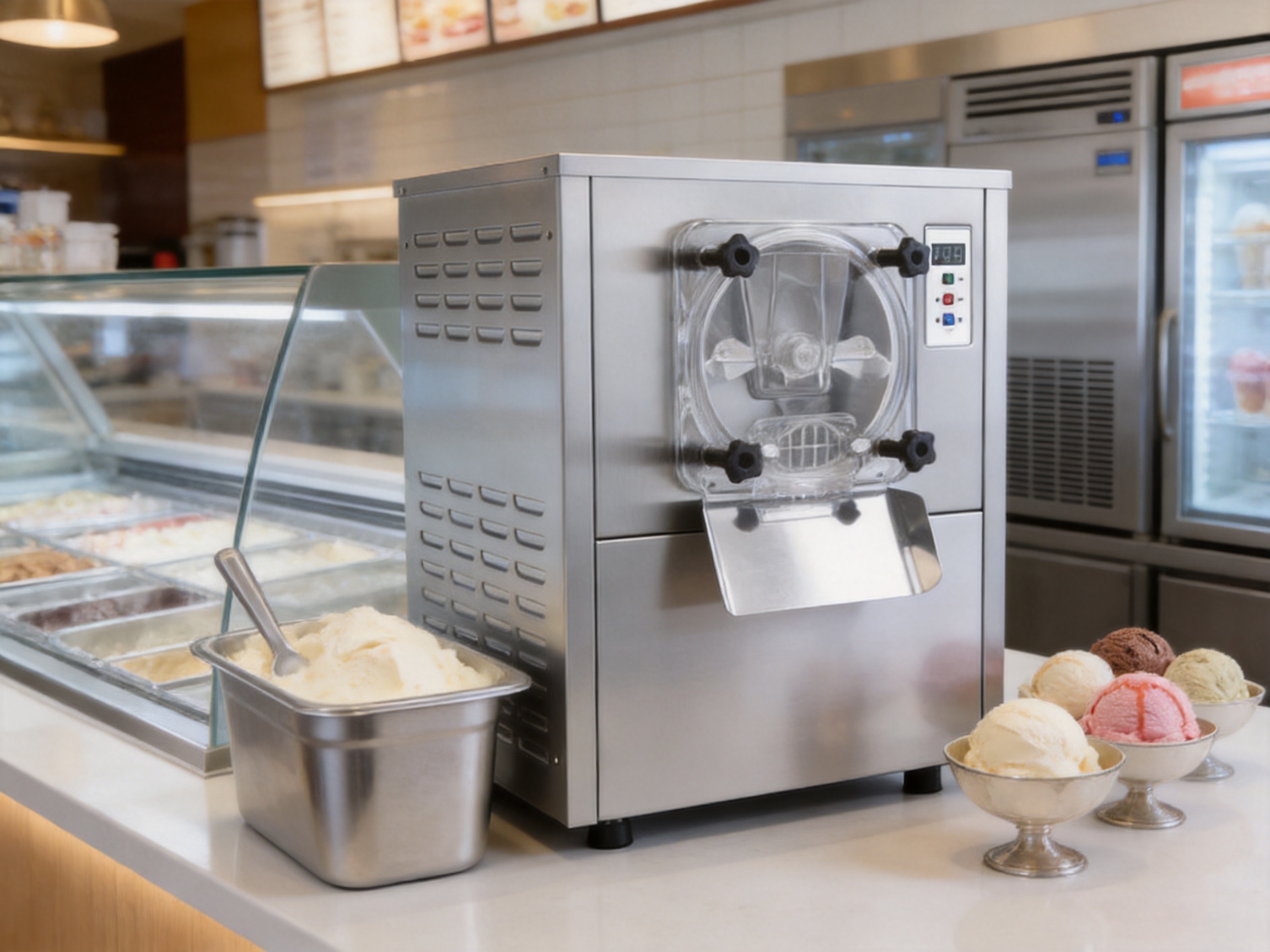
4. 12-Liter-Per-Hour Production Capacity
The stated capacity of 12 liters per hour makes this model appropriate for small and medium-sized foodservice applications. It is not intended to replace a high-volume industrial production line, but it can provide a useful level of output for businesses that need regular fresh production without excessive equipment size.
Capacity planning should always be based on actual menu demand. A restaurant serving ice cream as one of several dessert options may not need a large continuous-production machine. A small dessert shop may require enough output to support peak afternoon and evening sales. A café may use the machine to produce a limited range of signature flavors, while a hotel may operate it during buffet service, special events, or seasonal promotions.
At a nominal capacity of 12 liters per hour, the machine can support measured production planning. Operators can estimate the volume required for a service period, prepare the appropriate mix quantity, and organize production around expected customer demand. This can help reduce overproduction and preserve product quality.
The capacity is also useful for menu flexibility. A business may be able to produce several batches during the day rather than committing to one very large production cycle. This approach can support changing flavors, limited-time recipes, and smaller quantities of premium ingredients. It may also help reduce the amount of finished product held in storage for long periods.
Compared with oversized equipment, a 12L/H machine can be easier to integrate into a smaller kitchen. Large commercial machines may provide higher theoretical output but can require more floor area, greater electrical capacity, additional ventilation planning, and larger investment. For a growing business, a compact machine with moderate production capacity may offer a more balanced relationship between cost, output, and available space.
Operators should interpret the 12L/H figure as a reference capacity rather than an unconditional guarantee for every recipe and operating environment. Production can vary according to mix temperature, formulation, ambient temperature, ingredient composition, batch size, operator procedure, and cleaning intervals. Even so, the stated rating provides a helpful basis for preliminary capacity planning.
5. Air-Cooled Refrigeration System
The BQL-112Y uses an air-cooled condensation method. Air cooling is a common choice for commercial refrigeration equipment because it avoids the need for a dedicated water supply, water drainage connection, and water-cooled condenser system. This can simplify installation, especially in restaurants or small shops where plumbing modifications are undesirable.
An air-cooled machine can be installed in a wider range of locations as long as sufficient airflow is provided around the unit. This flexibility is useful for businesses that are renting a property, remodeling an existing kitchen, or operating in a compact commercial space. Installation planning should still include appropriate clearance around ventilation openings and should avoid placing the machine beside high-heat equipment or in a severely enclosed cabinet.
Air-cooled refrigeration can also simplify daily operation. Staff do not need to monitor condenser water flow or manage additional water connections. Fewer external connections can mean fewer potential leak points and a simpler maintenance routine. This does not eliminate the need to clean the condenser area, but it can make the equipment easier to manage than a water-dependent alternative.
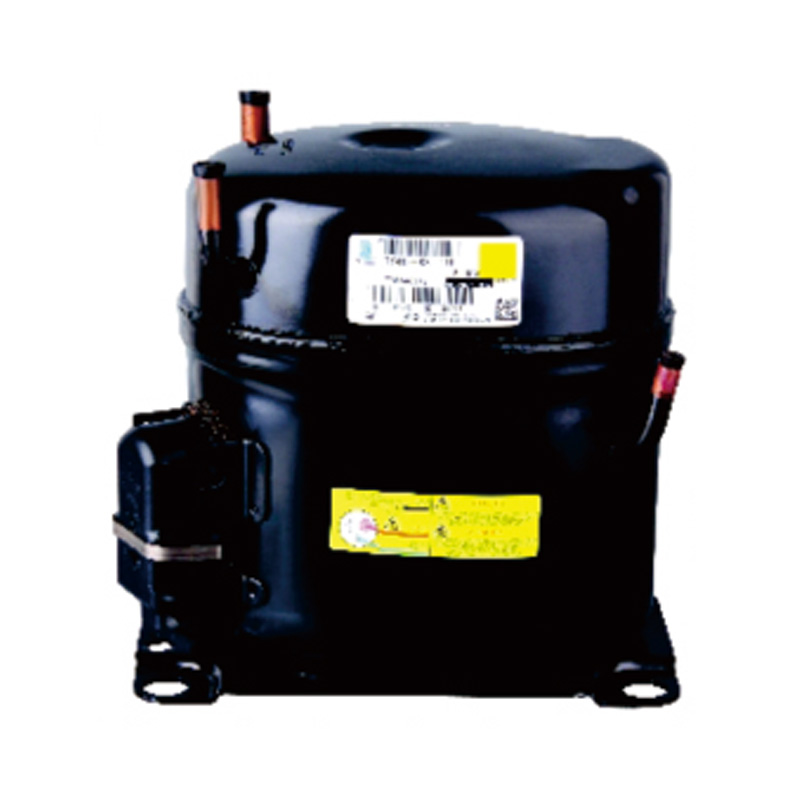
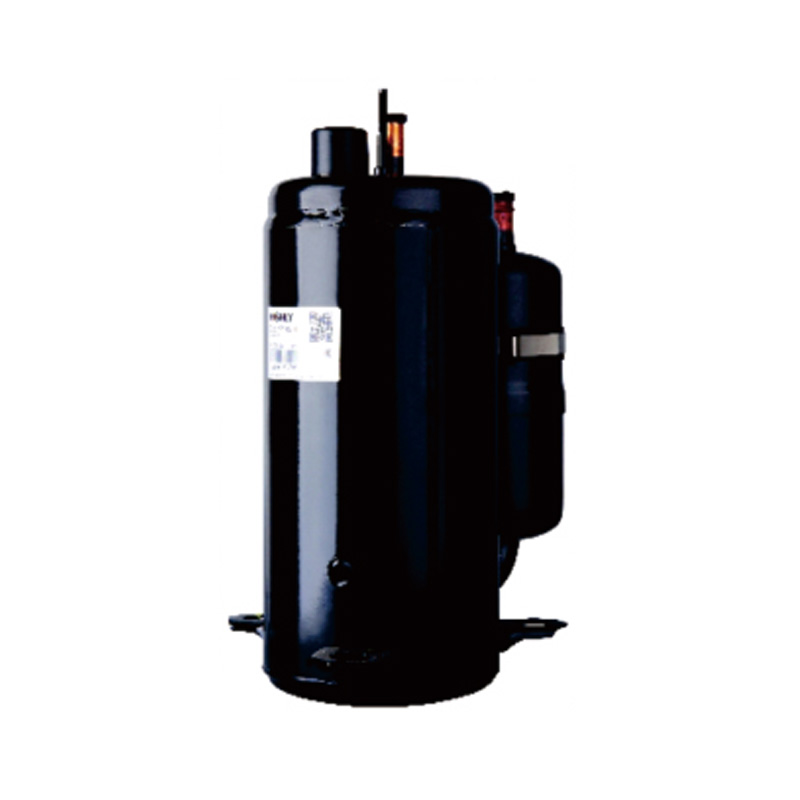
The supplied product information identifies R410 as the compressor refrigerant. Refrigerant details should be verified against the final machine nameplate and the regulations applicable in the destination market. Service work should be performed by qualified refrigeration technicians using appropriate recovery, charging, and safety procedures.
Compared with low-cost machines that use poorly integrated or inconsistent refrigeration components, a purpose-built commercial refrigeration system can provide better process stability. Stable refrigeration is essential to ice cream texture. If the freezing process is inconsistent, the product may become too soft, too hard, icy, or uneven. A reliable refrigeration system supports a more repeatable production result.
6. Texture, Consistency, and Product Quality
For ice cream businesses, texture is one of the most important measures of equipment performance. Customers expect hard ice cream to be smooth, cohesive, and pleasant to scoop or serve. Equipment must therefore do more than lower the temperature. It must work with the formulation and processing method to create a consistent frozen product.
The BQL-112Y is designed to provide continuous output of hard ice cream through an efficient refrigeration and processing system. The intended result is a rich and smooth texture suitable for restaurant and dessert-shop service. Actual texture will depend on the recipe, fat content, sugar level, stabilizers, inclusion ingredients, mix temperature, and storage conditions, but reliable equipment provides the foundation for repeatable results.
Consistent processing is valuable for portion control. If one batch is very soft and the next is extremely firm, staff may serve inconsistent portions or spend additional time adjusting the product. More stable operation can help employees work faster and present a more uniform customer experience.
Texture consistency is also important when a business builds a reputation around signature ice cream. A popular flavor must taste and feel similar each time it is produced. A machine that supports predictable freezing can help reduce variation between batches, particularly when operators follow standardized recipes and procedures.
Compared with basic freezers or improvised production methods, a dedicated commercial hard ice cream machine provides a more controlled process. It is engineered specifically for ice cream production rather than adapted from general refrigeration equipment. That specialization is a major practical advantage for foodservice businesses seeking dependable quality.
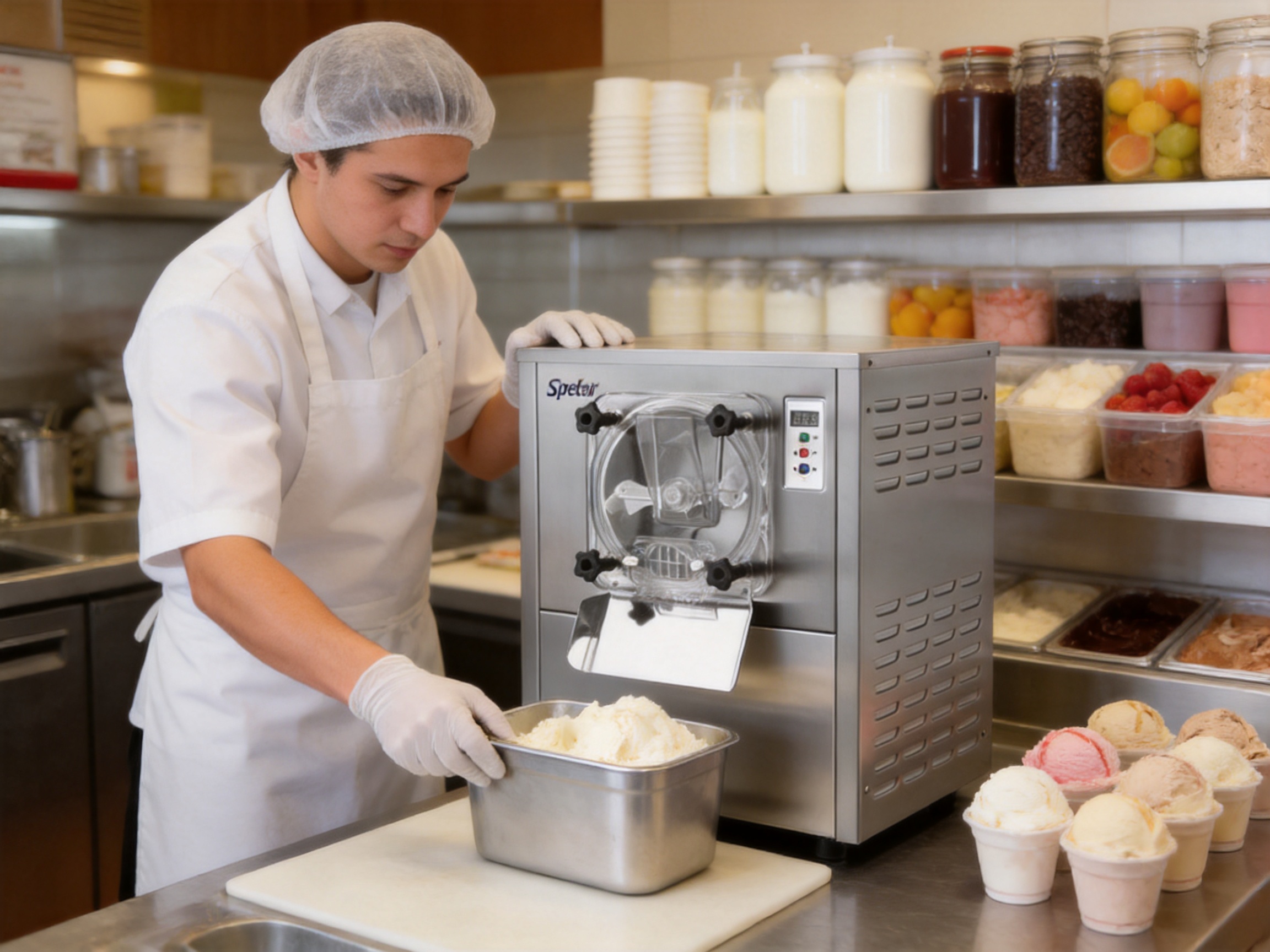
7. Compact Dimensions for Restaurants and Dessert Shops
The listed dimensions of 520 × 490 × 650 millimeters give the BQL-112Y a relatively compact footprint for commercial ice cream equipment. The machine can be easier to position in a small kitchen, service counter, dessert preparation area, or beverage and snack production zone.
Space is often one of the most difficult limitations for independent food businesses. A restaurant may already have cooking appliances, refrigeration cabinets, preparation tables, storage racks, sinks, and customer service equipment. A machine that occupies less floor area can be easier to incorporate without forcing a major redesign.
The compact format can also support workflow improvements. A business may position the machine near the preparation area, close to ingredient storage, or beside a serving counter. The best location depends on ventilation, electrical supply, cleaning access, staff movement, and local safety requirements. Because the machine weighs approximately 60 kilograms, operators should prepare a stable and level support surface capable of handling the load.
Compact dimensions do not mean that ventilation requirements can be ignored. Air-cooled refrigeration equipment needs space for heat dissipation. Blocking air inlets or outlets may reduce efficiency and increase the workload on the refrigeration system. Adequate clearance should be maintained according to the installation instructions supplied with the final unit.
Compared with larger machines designed for industrial production, this model may be more appropriate for businesses that value efficient use of space. Compared with small domestic appliances, it offers a more professional production format and a heavier commercial build. This combination of moderate output and manageable size is one of its principal advantages.
8. Suitability for Different Business Models
Restaurants
Restaurants can use the machine to add house-made ice cream to dessert menus. Producing ice cream in-house can help create a distinctive offering and may allow the kitchen to match flavors with the restaurant’s cuisine. Fruit, chocolate, coffee, nut, dairy, and seasonal recipes can be developed according to the menu concept.
Small Dessert Shops
For a small dessert shop, the machine can serve as a central production unit. A 12L/H capacity may support daily shop operations while avoiding the footprint and investment associated with a larger industrial machine. The operator can plan production according to expected traffic and replenish popular flavors during service.
Cafés
Cafés can use hard ice cream as a standalone dessert, a topping, or an ingredient in specialty beverages and plated desserts. The compact format may allow the machine to fit behind a service counter or in a back-of-house preparation area, subject to ventilation and electrical requirements.
Hotels and Catering Operations
Hotels can use the equipment for buffet service, banquets, seasonal promotions, and special events. Catering businesses may use it for controlled production at a central kitchen or event preparation facility. The machine’s 60-kilogram net weight means transport planning is required, but its dimensions can be easier to manage than those of larger production systems.
Snack Bars and Family Entertainment Venues
Snack bars, recreational venues, and family entertainment centers can use fresh ice cream to expand their menu and increase the value of each customer visit. In these environments, simple operation, clean appearance, and reliable output are particularly important because staff may need to operate several types of equipment at the same time.
9. Advantages Compared with Less Specialized Alternatives
When evaluating commercial refrigeration equipment, it is useful to compare a dedicated hard ice cream machine with alternative approaches rather than focusing only on individual specifications.
| Evaluation area | Dedicated commercial hard ice cream machine | Basic or improvised alternative |
|---|---|---|
| Production purpose | Designed specifically for hard ice cream processing | May be adapted from general freezing or storage equipment |
| Commercial workload | Designed for repeated foodservice operation | May not be suitable for frequent production cycles |
| Foodservice construction | Food-grade stainless steel body and professional structure | May use less durable or less cleanable materials |
| Capacity planning | Stated output of 12L/H | Output may be difficult to predict |
| Installation | Air-cooled system without a dedicated condenser water connection | May have unclear ventilation or cooling requirements |
| Space utilization | Compact commercial dimensions | May require multiple appliances or unsuitable workarounds |
| Product consistency | Purpose-built refrigeration and processing system | Greater risk of inconsistent freezing and texture |
| Professional appearance | Stainless steel and sprayed steel exterior | May not be suitable for customer-facing areas |
This comparison does not mean that every competing product is inferior. Different machines are designed for different capacities, budgets, and applications. However, the BQL-112Y offers a practical combination of commercial construction, moderate capacity, air cooling, and compact dimensions. These features can make it more appropriate than domestic appliances, storage freezers, or low-cost equipment without a defined commercial operating profile.
10. Manufacturing Strength and Product Development Capability
The manufacturer, Spelor Electrical Appliances (Zhejiang) Co., Ltd., is described as a professional enterprise integrating design, research and development, manufacturing, sales, and service. Its production base covers more than 60,000 square meters of modern manufacturing facilities. This scale supports a broader product and engineering capability than a small trading operation that only resells equipment from unrelated sources.
The company’s product range includes commercial refrigeration, kitchen equipment, buffet equipment, ice cream machines, juice dispensers, fried ice cream machines, refrigeration cabinets, slush machines, flake ice machines, cooking equipment, griddles, fryers, insulation products, barbecue equipment, and buffet solutions. This broad portfolio indicates experience across multiple foodservice categories.
A manufacturer with capabilities in several related equipment fields can develop a better understanding of real commercial kitchen requirements. Foodservice equipment must often operate in crowded spaces, warm environments, demanding service schedules, and conditions where cleaning and maintenance are performed quickly between shifts. Experience across refrigeration and kitchen equipment can support more practical product design.
Integrated design and production capabilities can also improve communication. When a customer requests a technical adjustment, a direct manufacturer may be able to evaluate the mechanical, electrical, structural, and production consequences more efficiently than a distributor that must pass every request to another factory.
The company provides OEM and ODM services based on customer drawings or requirements. This may be valuable for importers, distributors, chain restaurants, project contractors, hospitality groups, and foodservice brands that need customized appearance, labeling, packaging, configuration, or technical features.
Customization should be managed through a clear technical process. Buyers should provide intended voltage, frequency, destination-market standards, operating environment, target capacity, exterior requirements, packaging expectations, and service conditions. The supplier can then assess feasibility, prepare technical confirmation documents, and clarify the effects of customization on price, lead time, certification, and minimum order quantity.
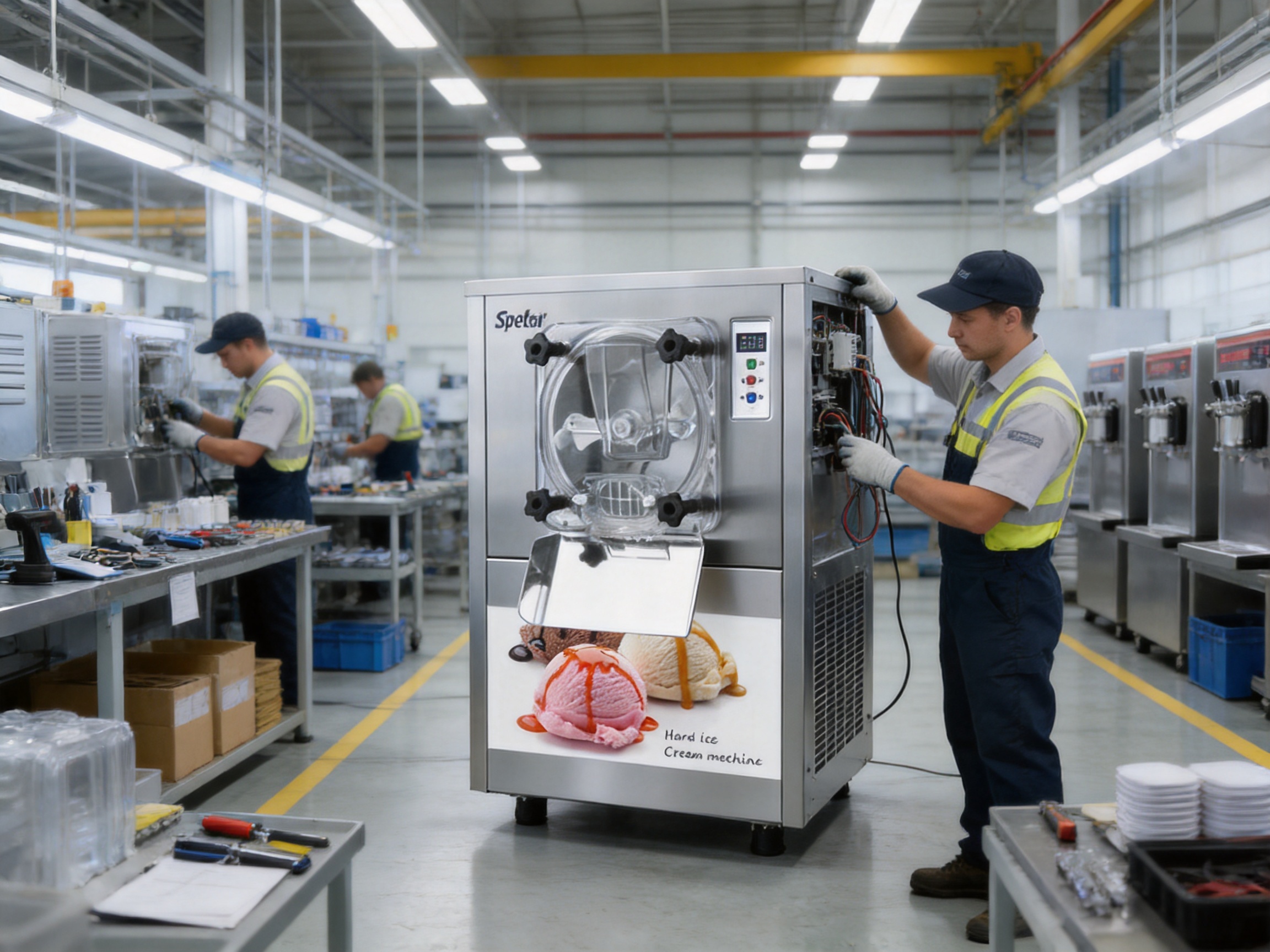
11. Manufacturing Process Considerations
Commercial ice cream equipment must pass through several important manufacturing stages before it is ready for shipment. Although exact factory procedures may vary by model and order, a professional production process generally includes material preparation, sheet-metal processing, forming, welding, surface treatment, component assembly, refrigeration-system installation, electrical wiring, testing, cleaning, and packaging.
Material Preparation
Material selection begins with stainless steel sheets, sprayed steel components, refrigeration parts, motors, control components, insulation materials, fasteners, and food-contact elements. Material consistency is important because variations in thickness, surface finish, or component quality can affect assembly and long-term durability.
Sheet-Metal Processing
Sheet-metal parts are cut, bent, formed, and prepared according to engineering drawings. Accurate dimensions are necessary for panel alignment, door or cover fitting, ventilation openings, internal clearances, and overall appearance. Controlled processing helps reduce sharp edges, uneven gaps, and unnecessary rework.
Welding and Structural Assembly
Welding and structural assembly connect the main body components and help create a stable enclosure. Welded areas should be properly finished so that they do not create avoidable hygiene concerns or interfere with cleaning. The final structure must also support the weight of internal components and resist vibration during operation.
Surface Treatment
Stainless steel surfaces may be finished and protected to maintain a clean appearance, while sprayed steel parts receive their intended color and coating. Surface treatment contributes to visual quality and can help protect external panels from routine wear. Proper preparation before spraying is essential for coating adhesion and consistent appearance.
Refrigeration Assembly
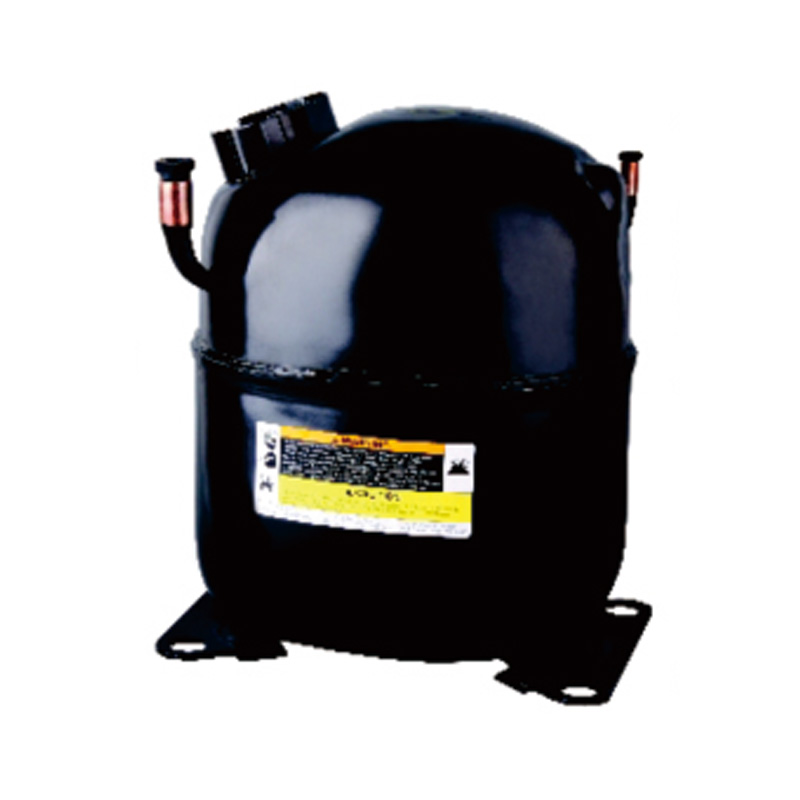
The refrigeration system is assembled with the compressor, condenser, evaporator, piping, refrigerant circuit, and related controls. Accurate pipe routing, secure connections, and appropriate testing are essential. The system must be checked for leakage and operating stability before shipment.
Electrical Assembly
Electrical wiring must match the specified voltage and frequency. Connections should be secured, insulated, and organized to support safe operation and service access. The final power rating must be clearly confirmed because the provided materials list both 750W and 1300W in different sections.
Functional Testing
Testing should cover refrigeration performance, operating controls, abnormal noise, electrical safety, cooling stability, and general operation. A professional quality-control process helps identify manufacturing defects before the equipment reaches the customer. Buyers may request information about factory testing procedures, inspection standards, and pre-shipment documentation.
12. Quality Control and Reliability
Reliability is especially important in commercial foodservice because equipment failure can affect sales, labor scheduling, ingredients, and customer satisfaction. A machine that operates consistently can help businesses plan production and reduce the risk of unexpected interruptions.
Quality control should begin with incoming component inspection. Refrigeration components, electrical parts, stainless steel materials, fasteners, and control systems should meet the intended specification. Assembly quality must then be monitored through process inspections rather than relying only on a final visual check.
Final inspection should include appearance, dimensions, electrical connections, refrigeration operation, cooling performance, noise, vibration, and packaging condition. The machine should also be checked for cleanliness before it is prepared for shipment.
For international buyers, quality documentation can be valuable. Depending on the destination market, customers may request product specifications, nameplate information, electrical diagrams, user manuals, test records, packaging details, and applicable conformity documents. Such documentation supports installation, customs processing, maintenance, and distributor training.
The manufacturer’s stated combination of design, research and development, production, sales, and after-sales service can provide an advantage over suppliers with limited technical involvement. A direct relationship with an integrated factory may make it easier to discuss modifications, replacement parts, troubleshooting, and future orders.
13. Installation Recommendations
Correct installation is essential for stable performance. Before delivery, the buyer should confirm the available electrical supply, installation space, floor or counter strength, ventilation conditions, access routes, and cleaning arrangements.
The machine should be positioned on a level, stable surface. Because the net weight is approximately 60 kilograms, the support structure must be strong enough to handle the equipment without movement or deformation. If the machine is placed on a counter, the counter should be checked for both static load and vibration resistance.
Air circulation must be maintained around the condenser and ventilation areas. The machine should not be pushed tightly against a wall if this blocks airflow. It should also be kept away from ovens, fryers, cooking ranges, direct sunlight, and other heat sources whenever possible.
The electrical circuit should match the final nameplate rating. A qualified electrician should verify voltage, frequency, grounding, plug configuration, circuit protection, and local code requirements. Because the supplied documents list different power figures, the final electrical data should be confirmed before installation.
After installation, the equipment should be allowed to settle if required by the shipping and refrigeration instructions. Staff should then inspect the machine, review the manual, perform an initial cleaning, and conduct a controlled test before beginning normal commercial production.
14. Daily Operation and Staff Training
Staff training has a direct effect on product quality and machine life. Operators should understand the correct mix preparation procedure, loading limits, start-up sequence, production cycle, product removal, cleaning routine, and shutdown procedure.
Recipes should be standardized. Changes in sugar, fat, solids, stabilizer, or liquid content can change freezing behavior and texture. Staff should record the recipes used for each flavor and avoid making untested adjustments during peak service.
Ingredients should be prepared hygienically and handled at appropriate temperatures. The machine should not be overloaded beyond its intended operating conditions. If the manufacturer specifies a minimum or maximum batch volume, operators should follow those instructions.
During operation, staff should monitor product texture, unusual noise, excessive vibration, abnormal heat, and other changes. Early attention to unusual conditions can help prevent more serious faults. Operators should never remove safety covers or attempt refrigeration repairs without authorization and appropriate technical training.
At the end of service, the machine should be cleaned according to the manufacturer’s instructions. Product residue should not be allowed to remain in contact with internal parts longer than necessary. Cleaning chemicals must be compatible with stainless steel, seals, food-contact surfaces, and the manufacturer’s recommendations.
15. Cleaning and Maintenance
Cleaning is essential for both food safety and equipment performance. Ice cream ingredients can accumulate in product channels, mixing areas, seals, hoppers, and dispensing components. A regular cleaning schedule helps prevent bacterial growth, off-flavors, blocked passages, and mechanical stress.
Daily cleaning should normally include removal of remaining product, rinsing, washing approved removable parts, cleaning accessible surfaces, sanitizing as required, and allowing parts to dry correctly. The exact procedure depends on the machine design and should follow the official manual.
The exterior stainless steel surface should be wiped with a suitable cleaning solution and a soft cloth. Abrasive pads, aggressive chemicals, and improper scouring methods may damage the finish. Sprayed steel panels should be cleaned carefully to preserve the coating.
The air-cooled condenser area deserves particular attention. Dust and grease can restrict airflow, reduce heat transfer, and increase refrigeration-system workload. The cleaning frequency should reflect the environment. A machine installed near fryers or in a dusty location may require more frequent condenser maintenance than one in a clean dessert preparation area.
Seals, gaskets, fasteners, wiring, and visible refrigeration components should be inspected periodically. Preventive maintenance can identify wear before it becomes a production failure. Businesses with high usage should establish a maintenance log showing cleaning dates, inspection findings, service work, and replacement parts.
16. Energy and Operating Cost Considerations
Energy consumption is an important part of the total cost of ownership. The final cost depends on the rated power, operating time, ambient temperature, recipe, production volume, maintenance condition, and local electricity price. The inconsistent power figures in the supplied materials make it especially important to confirm the final electrical specification before calculating operating costs.
Efficient operation begins with proper installation. Adequate ventilation allows the air-cooled refrigeration system to reject heat effectively. Keeping the condenser clean can also support better performance. Operating the machine in a cool, organized environment may reduce unnecessary refrigeration workload.
Production planning can further improve efficiency. Businesses should prepare quantities according to demand rather than running the machine without a clear sales plan. Standardized recipes and organized service routines can reduce wasted ingredients and unnecessary operating cycles.
It is also important to consider the cost of product inconsistency. A machine that produces unreliable texture may lead to discarded batches, customer complaints, additional labor, and lost sales. Stable equipment performance can contribute to lower indirect costs even when the purchase price is not the lowest available option.
17. Procurement and OEM/ODM Opportunities
Commercial buyers often need more than a standard catalog machine. Importers may require local voltage, specific plug types, private labels, custom colors, modified panels, special packaging, or documentation for their market. Chain restaurants may need consistent appearance across multiple locations. Distributors may request packaging and technical information suited to their sales channels.
The manufacturer’s OEM and ODM capability can support these requirements. OEM production generally involves manufacturing according to a customer’s branding or established specification, while ODM development may involve adapting an existing platform or creating a solution based on a customer’s functional requirements.
A successful customization project should begin with a written technical brief. This brief should identify the target capacity, dimensions, electrical supply, refrigerant requirements, control functions, materials, finish, packaging, labeling, certification needs, and expected order quantity.
Prototype review is also important. Buyers should evaluate drawings, samples, photographs, technical data, and test results before approving mass production. Any changes agreed during development should be documented so that the final product matches the approved version.
Because the company provides design, manufacturing, sales, and service functions, it may be able to offer a more coordinated project experience than a supplier that relies entirely on external factories. This can be particularly valuable for customers managing multi-unit orders or long-term product programs.
18. After-Sales Service and Spare Parts Support
Commercial equipment should be evaluated not only at the time of purchase but throughout its working life. Access to service information, replacement parts, troubleshooting guidance, and technical support can significantly affect the value of the equipment.
Spelor’s stated service approach includes pre-sales consultation, product customization, flexible logistics and payment solutions, and after-sales maintenance. For international customers, it is advisable to clarify the exact service process before ordering. Important questions include the availability of spare parts, warranty terms, response time, technical support channels, and responsibility for local service labor.
Buyers should also ask for a recommended spare-parts list. Commonly replaceable items may include seals, gaskets, switches, electrical components, sensors, belts, fasteners, and other wear parts, depending on the final machine configuration. Maintaining a small inventory of critical parts can reduce downtime for businesses that operate in regions where replacement shipments take longer.
Training documents and service manuals are valuable for distributors and commercial operators. Clear documentation can help local technicians diagnose problems, perform routine maintenance, and identify when specialized refrigeration support is required.
19. How to Evaluate Whether This Machine Fits Your Business
Before purchasing, a business should compare expected demand with the machine’s stated 12L/H capacity. The calculation should consider peak service periods rather than only average daily sales. If the business expects very high continuous demand, a larger or multiple-machine configuration may be more appropriate.
The business should also evaluate the available installation space. The listed dimensions are compact, but operators still need room for ventilation, cleaning, ingredient handling, staff movement, and service access. The machine should not be installed where it creates a safety obstruction or interferes with other equipment.
Electrical compatibility must be confirmed. Voltage, frequency, power, plug type, grounding, and circuit protection should be reviewed by a qualified professional. The difference between the 750W and 1300W figures in the supplied information should be resolved in writing before order confirmation.
Operators should assess the level of staff training available. A commercial machine can provide better results when staff follow consistent procedures. If the business has frequent employee turnover, clear operating and cleaning instructions become even more important.
Finally, the total purchase decision should include shipping, installation, customs, local compliance, maintenance, spare parts, energy use, and expected service life. A machine offering a useful combination of durability, capacity, service support, and compact design may deliver greater long-term value than an inexpensive product with limited documentation or uncertain after-sales support.
20. Frequently Asked Questions
What type of equipment is the BQL-112Y?
The BQL-112Y is a commercial hard ice cream machine designed for foodservice production. It is intended for restaurants, dessert shops, cafés, hotels, snack bars, and similar commercial applications.
What is the stated production capacity?
The stated production capacity is 12 liters per hour. Actual output may vary according to recipe formulation, mix temperature, ambient conditions, operating procedures, and production cycle requirements.
Is the machine suitable for a small dessert shop?
Yes. Its moderate production capacity and compact dimensions make it suitable for many small and medium-sized dessert operations. The business should confirm that 12L/H is sufficient for its peak demand.
What cooling method does the machine use?
The machine uses air cooling. It does not require a dedicated condenser water connection, but it does require sufficient ventilation and clearance for proper heat dissipation.
What are the machine dimensions?
The listed dimensions are 520 × 490 × 650 millimeters. Additional clearance should be provided for ventilation, cleaning, electrical access, and maintenance.
How much does the machine weigh?
The listed net weight is 60 kilograms. The installation surface and delivery route should be prepared to support and safely move this weight.
What materials are used for the body?
The product information identifies a food-grade stainless steel body and colorful sprayed steel components. These materials provide a professional appearance and support routine commercial cleaning when properly maintained.
What refrigerant is listed?
R410 is listed in the supplied product specification. Buyers should confirm the refrigerant and final nameplate information for the exact unit and destination market.
What is the rated power?
The supplied materials list both 750W and 1300W in different sections. The final rated power should be confirmed with the manufacturer before purchase, installation, and electrical planning.
Can the machine be customized?
The manufacturer offers OEM and ODM services based on customer drawings or requirements. Possible project discussions may include appearance, labeling, packaging, electrical configuration, and other technical requirements, subject to feasibility and order conditions.
Does the machine require water cooling?
No water-cooled condenser connection is indicated. The listed condensation method is air cooling. The machine still requires adequate ventilation and regular condenser cleaning.
How should the machine be maintained?
Operators should follow the official cleaning and maintenance instructions. Routine care generally includes cleaning product-contact areas, sanitizing approved components, inspecting seals, keeping the condenser clean, checking electrical connections, and arranging qualified service when necessary.
Is the machine intended for industrial-scale production?
The stated 12L/H capacity indicates a compact commercial application rather than a large industrial production line. It is better suited to restaurants, cafés, small dessert shops, hotels, and other moderate-volume foodservice businesses.
What should buyers confirm before ordering?
Buyers should confirm the final model, production capacity, electrical rating, voltage, frequency, refrigerant, dimensions, packaging, warranty, spare-parts support, certifications, delivery terms, and any customization requirements.
21. Overall Assessment
The 12L/H stainless steel commercial hard ice cream machine provides a practical solution for foodservice businesses that want to produce hard ice cream on site. Its main strengths include a stated capacity of 12 liters per hour, a food-grade stainless steel body, a professional sprayed steel exterior, air-cooled refrigeration, compact dimensions, and suitability for restaurants and small to medium-sized dessert operations.
Its advantages over less specialized alternatives come from the combination of purpose-built ice cream processing, commercial construction, predictable capacity planning, and a more professional installation format. Businesses can benefit from improved menu flexibility, fresh product production, better control over recipes, and a machine appearance suitable for customer-facing environments.
The manufacturer’s more than 60,000-square-meter production base, broad foodservice equipment portfolio, integrated design and manufacturing capability, and OEM/ODM services provide additional support for international procurement and customized projects. These capabilities can be valuable for distributors, restaurant groups, hospitality businesses, and customers seeking consistent equipment programs.
Before final purchase, buyers should resolve the difference between the listed 750W and 1300W power figures and confirm all technical details for the exact configuration. Proper installation, ventilation, staff training, recipe control, cleaning, and preventive maintenance will also be essential to achieving dependable results.
For businesses seeking a compact commercial hard ice cream machine with moderate production capacity and durable foodservice construction, the BQL-112Y represents a balanced option for professional dessert production.
References
1. Product specification information for the BQL-112Y commercial hard ice cream machine.
2. Product information and technical data supplied for the 12L/H stainless steel commercial hard ice cream machine.
3. General principles of commercial refrigeration equipment installation, ventilation, and preventive maintenance.
4. General foodservice equipment hygiene and stainless steel cleaning practices.
5. Manufacturer information regarding design, research and development, production, OEM, ODM, sales, and after-sales service.
6. General commercial ice cream production and foodservice capacity-planning principles.
Product: 12L/h Stainless Steel Commercial Hard Ice Cream Machine for Restaurant

For exclusive deals and latest offers, sign up by entering your email address below.


-
spelor@spelor.com
-
+86-576-85229688
-
No.528, Changxi Road, Linhai City, Zhejiang Province, China
Commercial Refrigeration Equipment Manufacturer China
Copyright © 2025 by Spelor Electrical Appliances (Zhejiang) Co., Ltd. Rights Reserved.
