


 中文简体
Creative Soft-Serve Cone Molds for Memorable Dessert Presentation
Admin 2026-10-03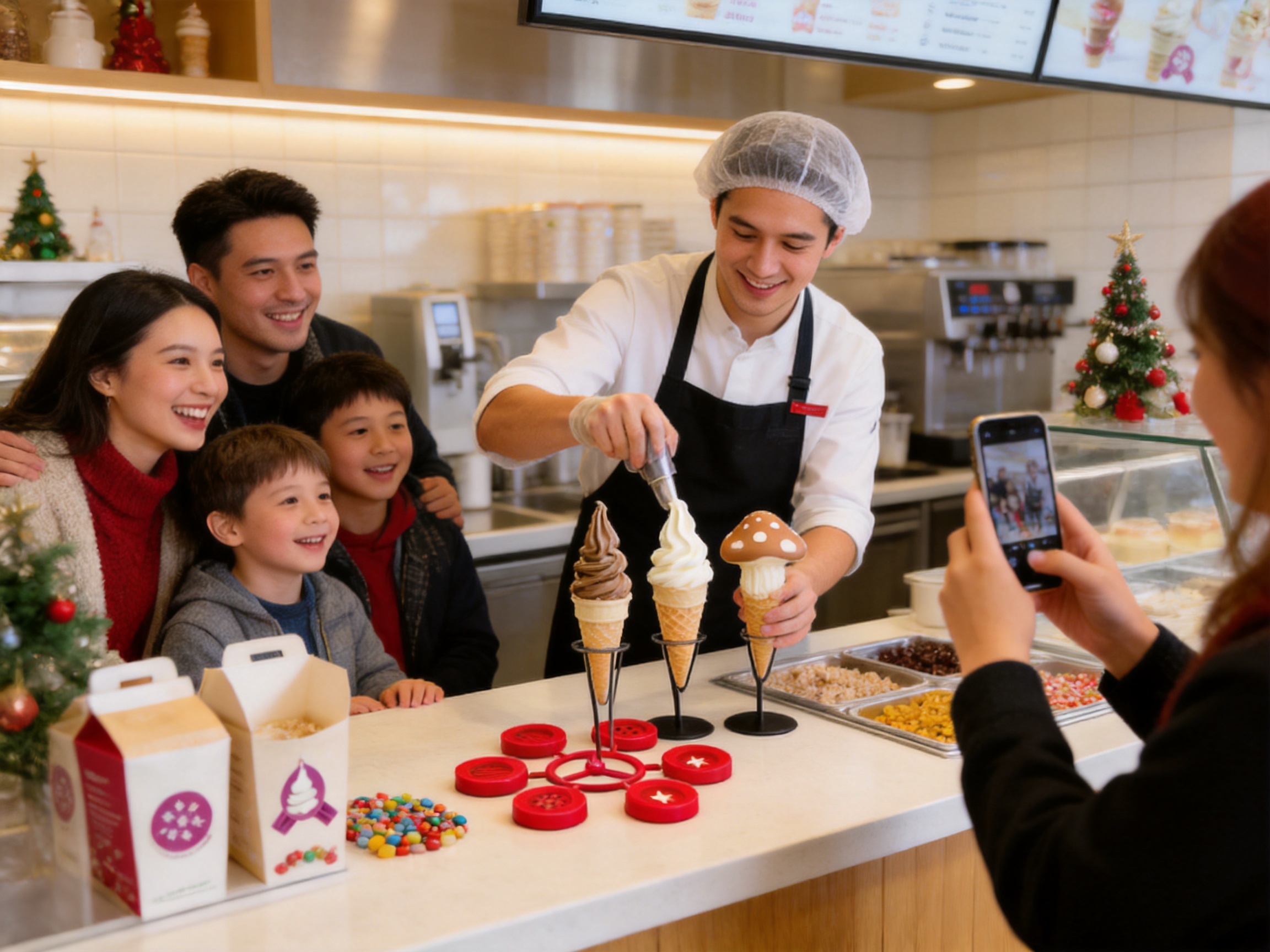
Soft-serve ice cream is one of the most popular dessert products in cafés, snack shops, fast-food outlets, amusement venues, supermarkets, restaurants, and mobile food businesses. Its appeal comes from more than flavor alone. Customers also respond to texture, color, portion presentation, serving speed, and the visual experience created at the point of sale. A carefully shaped ice cream cone can turn a familiar dessert into a product that attracts attention, encourages social sharing, and gives a foodservice business a stronger identity.
The Various Flavors Magical Shape for Soft-Serve Ice Cream Cones Making molds are designed to help operators create distinctive soft-serve presentations in creative shapes. The product is classified under Optional Components & Spare Parts and is not sold separately. Instead, it is intended to function as an accessory or optional component for compatible soft-serve ice cream equipment. By guiding the shape of dispensed ice cream, these molds give operators more flexibility in creating seasonal, themed, and novelty desserts.
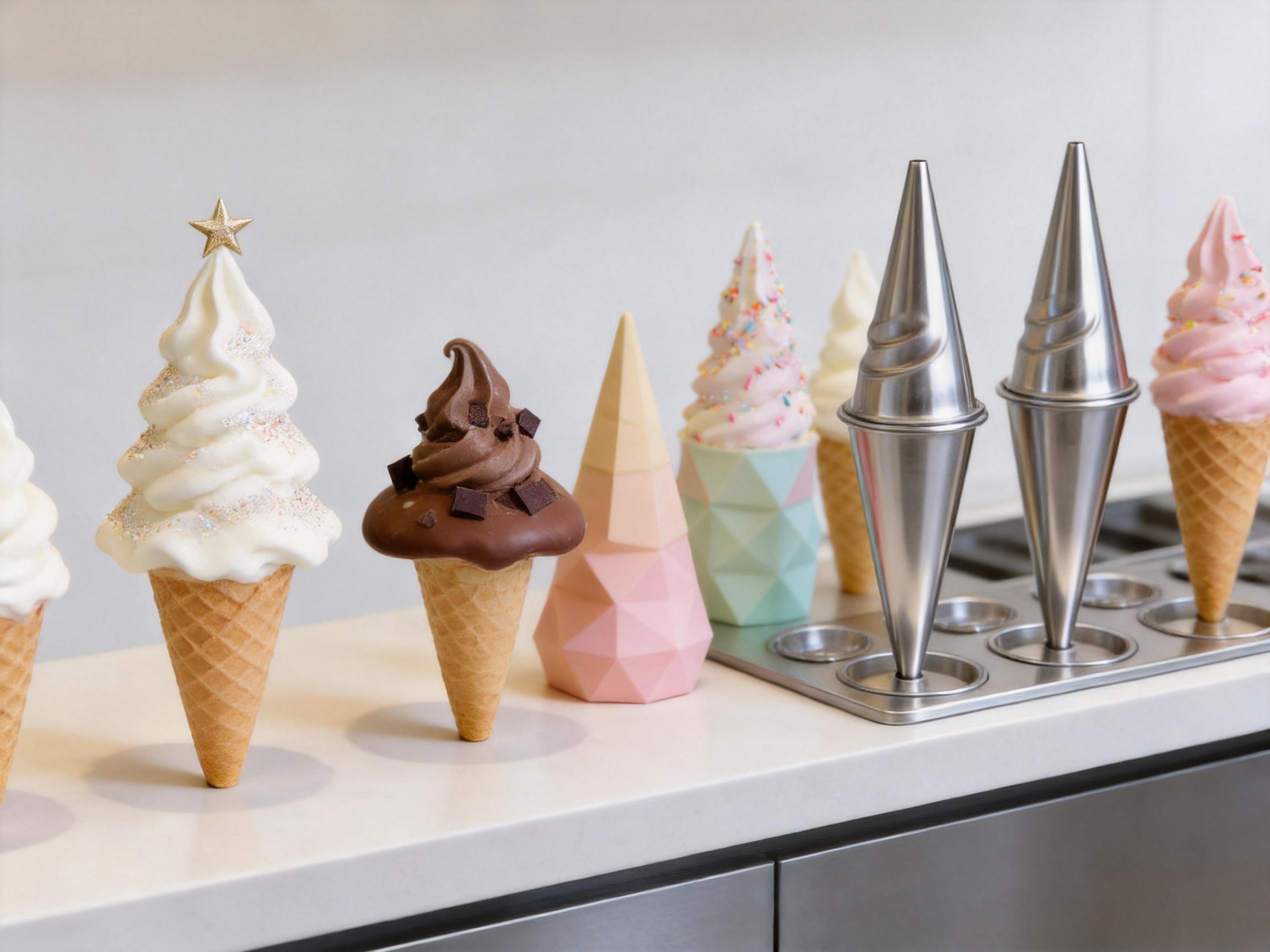
The available mold concepts include a Christmas tree shape, a mushroom shape, and other creative forms shown in the product images. Each shape offers a different visual effect while preserving the basic appeal of soft-serve ice cream. The result is an accessory that can support product differentiation without requiring a restaurant or dessert shop to completely change its core ice cream recipe or invest in an entirely new service concept.
For foodservice businesses, this type of accessory has an important commercial role. It can help a standard soft-serve machine produce a wider range of menu items. A Christmas tree shape can support winter promotions, holiday events, and festive family menus. A mushroom shape can be used for playful dessert designs, children’s products, themed cafés, or creative topping combinations. Other available shapes can provide additional variety when a business wants to refresh its menu or test a limited-time offering.
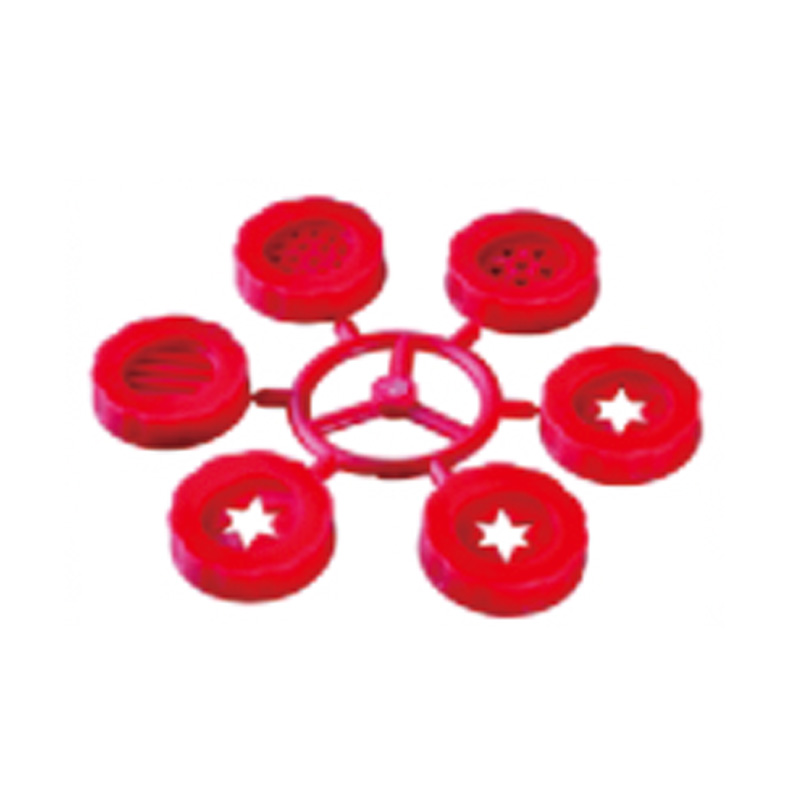
Various Flavors Magical Shape for Soft-Serve Ice Cream Cones Making(Not sold separately)
What the Creative Soft-Serve Molds Are Designed to Do
Traditional soft-serve equipment usually produces a familiar spiral, curl, or cone-shaped serving. These presentations are attractive and widely accepted, but they can look similar from one business to another. The creative molds described in this product introduce an additional visual element. They allow the ice cream to be formed into recognizable or imaginative shapes that can become a central part of the serving experience.
The molds are intended to work with soft-serve ice cream cones and compatible commercial soft-serve systems. During operation, the mold helps guide or define the form of the dispensed product. The exact operating method depends on the compatible machine design, mold configuration, and service procedure. For this reason, buyers should confirm equipment compatibility, dimensions, operating instructions, and intended use before ordering.
These molds are not presented as a replacement for the soft-serve machine itself. Their purpose is to expand the creative capability of existing or compatible equipment. This distinction is commercially valuable. A business that already owns a soft-serve machine may be able to introduce new visual products by adding an optional component rather than replacing its main equipment line.
The product description identifies several visual categories. The Christmas tree shape provides a recognizable seasonal form with strong promotional potential. The mushroom shape creates a playful and unusual appearance that can appeal to customers seeking something different from a standard cone. Other shapes shown in the images broaden the creative possibilities, even when their exact names or applications are not specified.
Because the product is not sold separately, it should be evaluated as part of a compatible equipment solution. This arrangement helps ensure that the mold, the soft-serve machine, the dispensing process, and the operator’s workflow are considered together. It also gives commercial buyers an opportunity to discuss application requirements with the supplier before finalizing an equipment package.
Main Advantages for Commercial Foodservice Applications
1. Stronger Visual Differentiation
The most immediate advantage of a creative soft-serve mold is visual differentiation. In a crowded dessert market, customers often make a purchase decision within a few seconds. A distinctive cone displayed at a counter, in a menu photograph, or on a social media post can attract attention more effectively than a standard serving that customers have seen many times before.
Shape creates an additional marketing message. A Christmas tree cone immediately communicates a holiday theme. A mushroom-shaped serving suggests playfulness and novelty. Other creative shapes can be matched with children’s menus, seasonal events, local celebrations, brand campaigns, or themed store interiors. This makes the mold more than a forming accessory; it becomes a tool for product presentation and visual merchandising.
2. Menu Variety Without a Complete Equipment Change
Restaurants and dessert shops often want to introduce new products while controlling investment. Replacing a complete soft-serve system can require substantial capital, installation work, staff training, and changes to the service area. An optional mold can offer a more focused way to test a new concept, provided that it is compatible with the existing equipment.
A business may continue using its existing ice cream base, flavors, sauces, and toppings while changing the shape of the final product. This allows the operator to create a new menu item through presentation rather than through a complicated recipe reformulation. The same flavor can be offered in a classic form for traditional customers and in a creative shape for customers looking for novelty.
3. Support for Seasonal Promotions
Seasonal products are important in foodservice because they create urgency and encourage repeat visits. A Christmas tree-shaped soft-serve serving is naturally suited to winter promotions, holiday markets, school events, shopping centers, and family entertainment venues. It can be combined with colored sprinkles, chocolate decorations, edible stars, or themed packaging to create a complete seasonal product.
When the season ends, the business can return to other shapes or use the molds for different campaigns. This flexibility is useful for operators that want to refresh their offering regularly without developing a new production process for every promotion. It also supports limited-time menu testing, where the business can measure customer response before investing in a larger product-development program.
4. Customer Engagement and Shareable Presentation
Novelty desserts are often purchased because they provide an experience as well as a taste. Customers may photograph the product, share it with friends, or recommend it to family members. A recognizable shape gives the dessert a clear visual identity that can be communicated easily in menus, promotional displays, and digital content.
For children, an unusual shape can make the dessert more exciting. For adults, it can provide an attractive photo opportunity or a nostalgic connection to seasonal celebrations. For operators, this can support organic promotion when customers voluntarily share images of their purchases. The mold therefore contributes to customer engagement without requiring complex interactive technology.
5. Practical Use in Multiple Foodservice Settings
The product description indicates that these molds are suitable for home use as well as restaurants and dessert shops. In commercial environments, their value is especially apparent in locations where appearance influences purchasing decisions. Examples include cafés, snack counters, food courts, fast-food chains, tourist venues, amusement parks, supermarkets, bars offering dessert items, and temporary event stalls.
Different businesses can use the same general concept in different ways. A café may pair a creative cone with premium sauces. A family restaurant may use a playful shape in a children’s meal. A supermarket may use it in a promotional tasting area. A themed venue may select shapes that match its visual identity. This versatility makes the accessory relevant to a broad range of operators.
Shape Options and Their Commercial Potential
Christmas Tree Shape
The Christmas tree shape is particularly suitable for seasonal merchandising. Its silhouette is easy to recognize, making the product immediately understandable to customers. It can be served during holiday periods, winter festivals, Christmas markets, school celebrations, and year-end promotional events.
This shape can support a variety of decoration strategies. Green-colored ice cream can emphasize the tree concept, while vanilla, chocolate, or fruit flavors can offer a different visual style. Toppings may include edible glitter, colored sugar, chocolate ornaments, candy pieces, or a star-shaped decoration. The mold itself creates the basic structure, allowing the operator to add finishing details according to the shop’s recipes and food-safety procedures.
The Christmas tree form can also be used for bundled promotions. For example, a business may offer a family dessert set, a holiday beverage pairing, or a limited-edition takeaway package. Because the shape is strongly associated with a particular season, it can make a temporary promotion more noticeable and easier to explain in advertising.
Mushroom Shape
The mushroom shape provides a more whimsical and unconventional presentation. It may appeal to customers who enjoy playful food designs, unusual dessert photographs, or products that look different from conventional ice cream cones. The shape can work well in cafés, children’s venues, dessert boutiques, themed restaurants, and social-media-oriented businesses.
Operators can develop different interpretations of the mushroom concept through color and toppings. A chocolate flavor may create a darker cap, while strawberry or berry sauces can create a colorful contrast. Cookie crumbs, wafer pieces, or decorative confectionery can be added when suitable for the recipe and service process. The mold establishes the form, while the business retains control over flavor, decoration, portion presentation, and pricing.
Other Creative Shapes
The product images also show other mold forms, although the exact shapes are not clearly defined in the available product information. This uncertainty does not reduce their potential value. Instead, it suggests that the accessory range is intended to support experimentation and a broader creative program rather than only one fixed seasonal application.
When evaluating other shapes, buyers should consider whether the form matches their target customer, serving environment, packaging, and cleaning procedure. A shape that looks attractive in a product photograph should also be practical to produce consistently during busy service periods. Commercial success depends on the combination of appearance, reliability, ease of handling, and compatibility with the relevant soft-serve equipment.
| Shape Category | Possible Application | Commercial Value | Planning Consideration |
|---|---|---|---|
| Christmas tree | Holiday menus, winter events, seasonal promotions | Strong recognition and limited-time appeal | Consider seasonal ingredients, decorations, and packaging |
| Mushroom | Playful cafés, children’s desserts, themed venues | Novel appearance and customer engagement | Match colors, toppings, and serving presentation |
| Other creative shapes | Experimental products, campaigns, and menu refreshes | Supports differentiation and testing | Confirm shape details, machine compatibility, and workflow |
Advantages Over Conventional Soft-Serve Presentation
Conventional soft-serve presentation remains effective, but it often depends on flavor, toppings, portion size, and price to distinguish one product from another. Creative molds add another point of differentiation. Instead of changing only the ingredients placed on top of the ice cream, the operator can change the fundamental silhouette of the serving.
This can be especially useful in markets where many businesses sell similar flavors. If several nearby stores offer vanilla, chocolate, and strawberry soft serve, a visually unusual shape can help one product stand apart. The mold can support a signature item that customers associate with a particular location. This form of recognition may be difficult to achieve through flavor alone.
Creative shaping can also reduce the need for excessive decorative ingredients. Toppings remain useful, but the mold creates a strong visual foundation before additional decoration is applied. This may help operators design attractive products with a controlled topping program. The final cost will depend on the recipe and decoration materials, but the shape itself can contribute substantially to presentation.
Another advantage is flexibility. A standard cone may be appropriate for everyday service, while a creative shape can be reserved for premium items or special occasions. This allows the same business to serve different customer segments. Customers who want a simple product can choose a conventional serving, while customers seeking something memorable can select a themed option.
Creative molds can also support more effective menu photography. A distinctive silhouette is easier to recognize in a small menu image or promotional banner. It can become a visual symbol for a campaign, helping customers identify the product quickly. For businesses that rely on online ordering or social media promotion, this can be an important advantage.
Manufacturing Strengths Behind the Product
The quality of an optional mold is closely connected to the manufacturing capability of the supplier. A mold used in a commercial soft-serve environment must be produced with attention to dimensional consistency, surface quality, durability, hygiene, and compatibility. If the shape varies from one production unit to another, the operator may have difficulty maintaining a consistent presentation. If the surface is difficult to clean, the accessory may create unnecessary maintenance concerns.
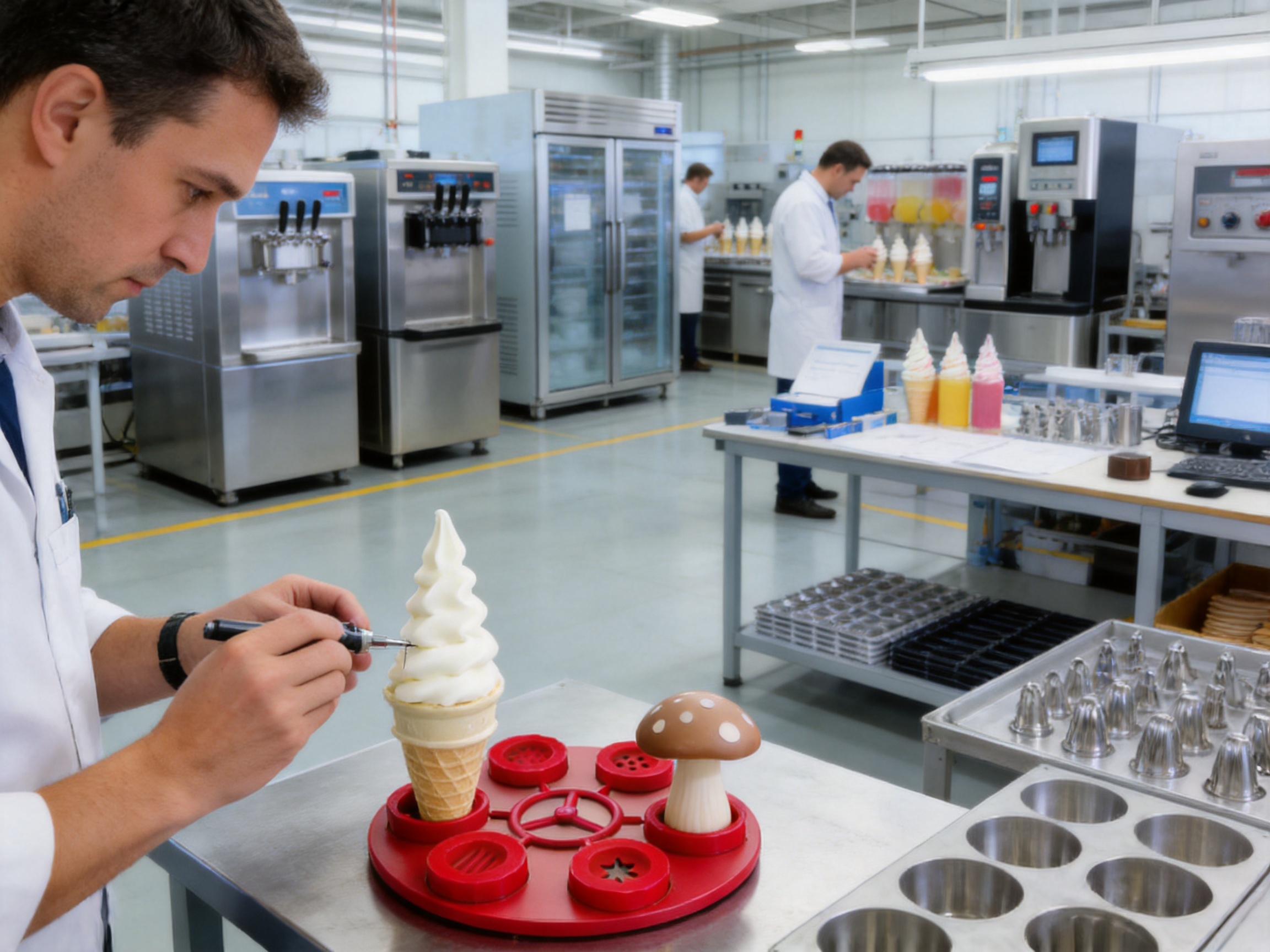
Spelor Electrical Appliances (Zhejiang) Co., Ltd. is described as a professional manufacturer integrating design, research and development, manufacturing, sales, and service. This integrated structure is valuable for accessory products because development can consider the full equipment application rather than treating the mold as an isolated item.
The company operates more than 60,000 square meters of modern production facilities and specializes in commercial refrigeration, kitchen, and buffet equipment. Its broader product range includes ice cream machines, juice dispensers, fried ice cream machines, refrigeration cabinets, slush machines, flake ice machines, cooking equipment, griddles, fryers, insulation products, barbecue equipment, and buffet solutions.
This product portfolio provides a useful manufacturing foundation for soft-serve accessories. A supplier that understands ice cream equipment, refrigeration systems, foodservice workflows, and commercial service conditions is better positioned to consider how an optional component will be used in practice. It can evaluate the relationship between the accessory and the machine, the operator, the product, and the customer-facing presentation.
Integrated Design and Development
Design integration is especially important for creative molds because appearance must be balanced with practical performance. A shape may look appealing but be difficult to fill, remove, clean, package, or serve. A manufacturer with design and research capabilities can examine these factors during development and refine the product for its intended application.
Design work may include the shape profile, contact surfaces, opening dimensions, handling features, storage requirements, and relationship with compatible equipment. It can also consider whether operators can use the component efficiently during busy periods. The objective is not simply to create an attractive form, but to develop an accessory that supports repeatable commercial service.
Modern Production Facilities
A modern production facility can support better coordination between product development, component manufacturing, assembly, inspection, and packaging. For foodservice equipment suppliers, production organization is important because customers often require stable quality across repeated orders and different markets.
The stated facility scale of more than 60,000 square meters indicates substantial manufacturing capacity. This capacity can be valuable for distributors, equipment dealers, restaurant groups, and OEM or ODM customers that require coordinated product supply. It may also support broader customization discussions when a buyer wants accessories or equipment configured for a particular application.
Experience Across Foodservice Equipment Categories
Spelor’s experience across refrigeration, kitchen equipment, buffet equipment, ice machines, slush machines, juice dispensers, and ice cream machines creates a broader understanding of commercial foodservice requirements. These product categories share many operational priorities: durability, efficient use of space, stable performance, straightforward cleaning, safe handling, and dependable service support.
That experience can strengthen the development of optional components. A creative soft-serve mold should not be considered only as a decorative object. It must fit into a complete commercial routine that may include ingredient preparation, machine operation, dispensing, presentation, customer handover, cleaning, storage, and maintenance. A supplier familiar with the entire routine can provide more relevant technical communication.
Manufacturing Process Considerations for Creative Molds
The specific material, production method, and inspection standard for a particular mold should be confirmed with the supplier. Nevertheless, several general manufacturing considerations are important when evaluating this type of accessory.
Dimensional Control
Dimensional consistency supports uniform product presentation. When molds are made to controlled dimensions, operators can expect the shape to remain closer to the intended design across repeated use. This matters for businesses that display a product photograph, establish a standard serving procedure, or operate multiple locations.
Dimensional control also affects compatibility. An accessory must be suitable for the relevant soft-serve equipment and service process. Buyers should provide machine details, drawings, photographs, or other technical information when requesting confirmation. OEM and ODM discussions can be more efficient when the customer supplies clear requirements at the beginning of the project.
Surface Quality
The internal surface of a mold influences how easily the soft-serve product forms and releases. A well-finished surface can help reduce unwanted sticking and support a cleaner visual result. It may also simplify routine cleaning, although the correct cleaning method must always follow the supplier’s instructions and the applicable foodservice procedures.
Surface quality is also relevant to appearance. Fine details in a creative shape need to be clear enough to remain recognizable after the ice cream is formed. Excessively rough or inconsistent surfaces may reduce the definition of the final product. Careful finishing and inspection can therefore improve both operational performance and presentation.
Hygienic Design
Food-contact accessories should be designed with hygiene in mind. Areas that trap residue can increase cleaning effort and create avoidable sanitation concerns. Smooth transitions, accessible surfaces, and a clear cleaning procedure can help operators maintain the accessory properly.
Buyers should request information about the intended food-contact material, temperature range, cleaning method, and sanitation requirements. The mold should be used only as instructed and should be inspected regularly for wear, cracks, deformation, or other damage. These practices are important for any reusable foodservice component.
Durability and Repeated Use
Commercial equipment accessories are exposed to repeated handling, washing, storage, and service. The material and construction should be appropriate for the intended conditions. Durability does not mean that a component can be used without maintenance; rather, it means that the product is designed for its stated application when operated and cared for correctly.
Businesses should establish a simple operating procedure for staff. It may include inspection before use, correct installation, careful handling, cleaning after service, drying, and storage in a protected location. Training helps preserve the mold’s condition and supports consistent results between employees and shifts.
OEM and ODM Possibilities
The company’s stated OEM and ODM capabilities are relevant to buyers seeking more than a standard accessory. OEM projects may involve supplying equipment or components according to a customer’s brand, drawings, packaging, or commercial specifications. ODM projects may involve developing a product solution based on a customer’s application requirements and the supplier’s design and manufacturing capabilities.
For creative soft-serve molds, customization may involve shape concepts, size, compatibility, packaging, color, accessory configuration, or integration with a broader equipment package. Not every request will be technically or commercially suitable, so the development process should begin with a detailed discussion of the intended use.
A customer may want a shape based on a mascot, seasonal symbol, local cultural theme, or brand concept. The supplier can then assess the design from practical perspectives such as moldability, release behavior, durability, cleaning, production consistency, and compatibility with the selected soft-serve machine. This process can help convert a creative idea into a product that is more appropriate for real foodservice operations.
OEM and ODM cooperation can also be useful for restaurant groups and distributors. A chain may want the same signature shape across multiple locations. A distributor may want a complete package combining a soft-serve machine with optional creative accessories. A food equipment dealer may want to offer a differentiated solution to hospitality customers. Integrated supplier support can simplify communication and procurement.
How the Molds Can Support Business Growth
Building a Signature Product
A signature product gives customers a reason to remember one business rather than another. Creative shaping can be part of that identity. A store may select one recognizable form as its standard specialty or rotate several forms according to the season. The important point is consistency: the product should be presented in a way that customers can recognize and associate with the business.
Signature products can support premium pricing when the overall experience justifies it. The shape alone does not guarantee a higher price, but it can contribute to a package that includes quality ingredients, attractive toppings, appealing packaging, and reliable service. Operators should evaluate ingredient cost, labor time, production speed, and customer response before setting the final price.
Increasing Repeat Visits
Limited-time shapes and seasonal designs can encourage customers to return. A child may want to try several forms, while an adult customer may visit again to experience a new promotion. Rotating creative options can create a sense of discovery, especially when the business communicates upcoming designs through signage and digital channels.
Rotation should be managed carefully. Too many shapes may complicate storage, staff training, and inventory control. A focused selection of well-chosen molds may provide better results than an unnecessarily large range. The best program will depend on customer demand, service volume, available space, and the operator’s ability to maintain consistent quality.
Improving Promotional Content
Creative soft-serve shapes can provide strong content for menus, posters, online promotions, and social media. Their visual character makes them suitable for product photography and short promotional videos. A business can show the forming process, decoration steps, seasonal launch, or customer reaction while maintaining its own brand style.
Promotional content should represent the actual product accurately. The final serving should look reasonably close to the displayed image, and the business should clearly state flavor options, toppings, availability, and any seasonal limitations. Accurate communication builds customer trust and reduces confusion at the point of sale.
Operational Guidance for Restaurants and Dessert Shops
Confirm Compatibility Before Ordering
Because the product is not sold separately, compatibility is the first issue to confirm. Buyers should identify the soft-serve machine model, dispensing configuration, available space, operating method, and intended serving format. Technical drawings or photographs may help the supplier evaluate the application more accurately.
Compatibility should include more than physical fit. The mold should be appropriate for the type of soft-serve product, the expected temperature and consistency, the operator’s workflow, and the cleaning process. If several machines will use the accessory, each configuration should be reviewed before placing a larger order.
Develop a Repeatable Serving Procedure
Creative products should be supported by a written service procedure. The procedure can explain how to install or position the mold, how to dispense the ice cream, how long to maintain the form if relevant, how to remove or present the product, and how to clean the accessory after use.
Staff should practice the process during a quiet period before the product is introduced to customers. This can reveal practical issues such as hand positioning, topping placement, packaging size, service speed, and storage. Practice also helps different employees produce more consistent results.
Plan Packaging Carefully
A creative shape may require packaging that protects the form during handover and transport. A conventional cone holder may not be suitable for every design. Operators should test cups, sleeves, trays, lids, and takeaway boxes before launching the product.
Packaging should preserve the visual effect while remaining practical for customers to hold and eat. It should also support hygiene and prevent unnecessary contact with the product. If the shape is intended for delivery or takeaway service, the business should conduct a realistic transport test under expected conditions.
Control Toppings and Decoration
Toppings can enhance a shaped soft-serve cone, but excessive decoration may hide the form. Operators should select ingredients that emphasize rather than overwhelm the design. Color contrast, texture, portion control, and stability during service should all be considered.
Decoration should also be integrated into the production schedule. If a topping requires too much time during peak service, it may reduce throughput. A practical approach is to prepare certain components in advance while keeping the final assembly simple and consistent.
Maintain Cleaning and Inspection Routines
The mold should be cleaned according to the supplier’s instructions and the business’s food-safety procedures. Staff should avoid using methods or chemicals that could damage the material or leave residues. After cleaning, the component should be dried appropriately and stored in a clean location.
Regular inspection is also important. Staff should look for cracks, deformation, sharp edges, surface damage, discoloration, or any change that could affect food contact or product appearance. Damaged components should be removed from service and assessed before reuse.
Quality and Service Expectations for International Buyers
International buyers often evaluate more than the product itself. They may also consider communication, documentation, packaging, lead time, shipment coordination, payment terms, spare-part support, and after-sales service. A supplier that provides one-stop support can reduce the administrative burden associated with commercial equipment procurement.
Spelor’s company information describes a service model that includes pre-sales consultation, product customization, flexible logistics and payment solutions, and after-sales maintenance. These services can be particularly useful when the buyer is purchasing a complete foodservice solution that includes machines, optional components, and related accessories.
Pre-sales consultation helps clarify application requirements before production. Product customization can support a buyer’s equipment layout or menu concept. Logistics support can assist with international delivery planning. After-sales maintenance can help customers manage equipment over its operating life. Together, these services contribute to procurement confidence and long-term business value.
For distributors and commercial buyers, clear communication is especially important when a product is not sold separately. The order should identify which machine or equipment package the mold is intended to accompany. It should also clarify quantities, compatibility, packaging, documentation, and any special requirements. Early confirmation helps reduce the risk of ordering an accessory that does not match the intended application.
Why Supplier Experience Matters
A creative mold may appear simple, but its commercial usefulness depends on the quality of the complete solution. A supplier with experience in refrigeration, kitchen equipment, ice cream machines, and buffet systems can better understand the environment in which the accessory will operate.
Equipment experience can support more practical recommendations. For example, the supplier may be able to discuss how the accessory fits into the dispensing area, how it relates to machine capacity, how operators can manage it during peak demand, and what information is needed for compatibility confirmation. This is more valuable than treating the mold as a decorative item with no connection to the equipment system.
Manufacturing experience also supports production planning. A supplier with its own design, development, manufacturing, sales, and service functions may be able to coordinate different stages more efficiently. This can be beneficial when the customer requests a combination of standard equipment, optional components, and customized products.
The company’s stated quality-driven and user-oriented philosophy is aligned with the needs of commercial foodservice buyers. Operators want equipment that supports stable business performance, not merely attractive specifications. They need products that can be integrated into daily work, maintained by staff, and supported when questions arise.
Recommended Evaluation Checklist
Before selecting the Various Flavors Magical Shape for Soft-Serve Ice Cream Cones Making molds, buyers should establish a clear evaluation checklist. This helps ensure that the accessory meets operational needs as well as visual expectations.
First, confirm the compatible soft-serve machine and operating method. Ask whether the mold is designed for the buyer’s existing equipment or for a specific equipment package. Provide model information or technical drawings when available.
Second, identify the preferred shape or shapes. The Christmas tree and mushroom forms have different promotional applications. Other creative shapes should be reviewed according to their actual appearance, dimensions, and intended use.
Third, request information about material, food-contact suitability, temperature range, cleaning, storage, and expected service conditions. These details are essential for responsible commercial use.
Fourth, review the required quantity and whether the accessory is included with a machine or equipment package. Since the product is not sold separately, ordering terms should be clarified before purchase.
Fifth, consider the complete customer experience. Check whether the shape fits available cones, cups, holders, packaging, toppings, and display equipment. A successful product requires coordination from production to customer handover.
Sixth, discuss customization possibilities if a standard shape is not sufficient. Provide drawings, reference images, dimensions, target customers, production volume, and market requirements. Detailed information can help the manufacturer assess feasibility more effectively.
| Evaluation Area | Questions for the Buyer | Why It Matters |
|---|---|---|
| Compatibility | Which soft-serve machine will be used? Does the mold fit the equipment and workflow? | Prevents installation and operation problems |
| Shape selection | Is the product intended for holidays, children, themed service, or daily use? | Connects the mold with the correct menu strategy |
| Hygiene | What material, cleaning process, and storage conditions are required? | Supports safe and responsible foodservice operation |
| Packaging | Can the selected cup, sleeve, tray, or box protect the shaped cone? | Preserves appearance during handover and transport |
| Customization | Can the supplier develop a special shape or equipment configuration? | Supports OEM and ODM projects |
| Service support | What technical, logistics, and after-sales assistance is available? | Reduces procurement and maintenance uncertainty |
Q&A: Creative Soft-Serve Cone Molds
Q1: What is this product?
It is a collection of creative soft-serve molds designed to help form ice cream into distinctive shapes, including a Christmas tree shape, a mushroom shape, and other creative forms shown in the product images. It is classified as an optional component or spare part for compatible soft-serve equipment.
Q2: Is the mold sold separately?
No. The product information states that it is not sold separately. Buyers should discuss the mold as part of a compatible soft-serve machine or equipment package and confirm the applicable ordering conditions with the supplier.
Q3: What is the main benefit of using a creative shape?
The main benefit is stronger visual differentiation. A shaped soft-serve serving can support seasonal promotions, themed menus, children’s products, customer engagement, and social-media-friendly presentation.
Q4: What is the Christmas tree shape suitable for?
It is suitable for Christmas promotions, winter events, holiday markets, family menus, and other seasonal campaigns. The shape can be combined with suitable colors, toppings, and packaging to create a festive product.
Q5: What is the mushroom shape suitable for?
The mushroom shape is suitable for playful dessert concepts, cafés, children’s menus, themed restaurants, and businesses that want a distinctive novelty product. Its final appearance can be enhanced through flavors, sauces, and appropriate decorations.
Q6: Can the molds be used with any soft-serve machine?
Compatibility should not be assumed. Buyers should provide the machine model, technical information, or drawings and request confirmation from the supplier. The mold must be suitable for the equipment, operating process, and intended foodservice application.
Q7: Are the molds appropriate for commercial use?
The product description indicates that the molds can be used in restaurants and dessert shops as well as at home. Commercial buyers should confirm material, cleaning, durability, and compatibility requirements before placing an order and should follow the supplier’s operating instructions.
Q8: Can the molds be used for different flavors?
The product is described as supporting various flavors and creative shapes. The exact flavor selection depends on the compatible soft-serve machine, the recipe, and the operator’s menu. The mold changes the presentation, while the business controls the flavor and decoration program.
Q9: Can a customer request a customized shape?
Spelor provides OEM and ODM services, so customization may be possible depending on the design, quantity, application, and technical feasibility. Buyers should provide drawings or detailed requirements for evaluation.
Q10: How should the mold be maintained?
It should be cleaned, dried, stored, and inspected according to the supplier’s instructions and the business’s food-safety procedures. Staff should check for damage, deformation, cracks, or surface changes before use.
Q11: What kind of businesses can benefit from this product?
Cafés, dessert shops, fast-food restaurants, family restaurants, supermarkets, bars, amusement venues, snack shops, tourist attractions, event operators, and other foodservice businesses can use creative soft-serve shapes to improve menu presentation and create themed products.
Q12: Why work with a manufacturer that produces several types of foodservice equipment?
A broader equipment manufacturer may better understand the relationship between the mold, the soft-serve machine, commercial workflow, maintenance, and customer service. Integrated design, manufacturing, and support can make it easier to develop a complete solution.
Conclusion
The Various Flavors Magical Shape for Soft-Serve Ice Cream Cones Making molds provide a practical way to expand the visual possibilities of soft-serve desserts. By creating Christmas tree, mushroom, and other creative forms, the accessory can help restaurants, cafés, dessert shops, and foodservice operators offer products that are more distinctive, memorable, and suitable for themed promotions.
Its primary advantage over conventional presentation is the ability to change the silhouette of the dessert rather than relying only on flavor or toppings. This can support seasonal menus, signature products, customer engagement, social media promotion, and menu testing without necessarily requiring a complete change to the operator’s core soft-serve concept.
The product should be evaluated as part of a compatible equipment solution because it is not sold separately. Machine compatibility, food-contact suitability, cleaning, packaging, workflow, and staff training all contribute to successful use. Buyers should confirm technical details and ordering conditions with the supplier before purchase.
Spelor Electrical Appliances (Zhejiang) Co., Ltd. brings relevant strengths through integrated design, research and development, manufacturing, sales, and service. Its more than 60,000 square meters of modern production facilities and broad experience in commercial refrigeration, kitchen, buffet, ice cream, juice, slush, and ice-making equipment provide a strong foundation for optional components and customized foodservice solutions.
For businesses seeking to make soft-serve products more attractive and commercially distinctive, creative molds can be a valuable addition to a wider equipment strategy. When supported by suitable manufacturing quality, compatibility planning, hygienic operation, and responsive supplier service, they can help turn an ordinary cone into a recognizable customer experience.
References
1. Product information supplied for Various Flavors Magical Shape for Soft-Serve Ice Cream Cones Making, including product description, shape categories, images, and classification as an optional component.
2. Company information supplied for Spelor Electrical Appliances (Zhejiang) Co., Ltd., including manufacturing scope, facility scale, product categories, OEM and ODM capabilities, and customer support services.
3. General foodservice equipment planning principles concerning equipment compatibility, hygienic design, commercial workflow, maintenance, packaging, and staff operating procedures.
4. General product development principles for seasonal menus, visual merchandising, novelty desserts, customer engagement, and limited-time foodservice promotions.
Product: Various Flavors Magical Shape for Soft-Serve Ice Cream Cones Making(Not sold separately)

For exclusive deals and latest offers, sign up by entering your email address below.



-
spelor@spelor.com
-
+86-576-85229688
-
No.528, Changxi Road, Linhai City, Zhejiang Province, China
Commercial Refrigeration Equipment Manufacturer China
Copyright © 2025 by Spelor Electrical Appliances (Zhejiang) Co., Ltd. Rights Reserved.
