


 中文简体
Food-Grade Stainless Steel Commercial Desktop Soft Serve Ice Cream Machine
Admin 2026-10-24For cafés, bakeries, snack shops, dessert counters, convenience stores, and other compact foodservice businesses, a soft serve ice cream machine must do more than produce frozen desserts. It must fit into a limited workspace, maintain hygienic operating conditions, deliver dependable output, remain simple for staff to use, and support efficient daily production. The BQL-9200ST food-grade stainless steel commercial desktop soft serve ice cream machine is designed around these practical requirements.
This compact countertop model combines a food-grade stainless steel body, colorful sprayed steel panels, intelligent LCD touch-screen operation, self-cleaning functionality, pre-cooling, and a production capacity of up to 10 liters per hour. Its desktop format allows operators to add soft serve to an existing menu without dedicating the floor space normally required by a large free-standing machine.
The machine is intended for small-batch and regular commercial use. It provides a suitable solution for businesses that want to serve soft ice cream, frozen desserts, cones, cups, sundaes, and related menu items while maintaining control over space, investment, and operating efficiency. Its compact size does not eliminate essential commercial functions. Instead, it concentrates core freezing, storage, control, and sanitation features into a relatively small footprint.
Manufactured by Spelor Electrical Appliances (Zhejiang) Co., Ltd., the machine reflects the capabilities of a professional commercial refrigeration and foodservice equipment manufacturer. Spelor operates modern production facilities covering more than 60,000 square meters and integrates product design, research and development, manufacturing, sales, and service. This integrated structure supports consistent production, product customization, export coordination, and after-sales assistance for international foodservice customers.
For buyers comparing desktop soft serve equipment, the BQL-9200ST stands out because it addresses the complete operating cycle. It is designed not only to freeze product but also to support preparation, serving, cleaning, ingredient freshness, staff training, and routine commercial use.
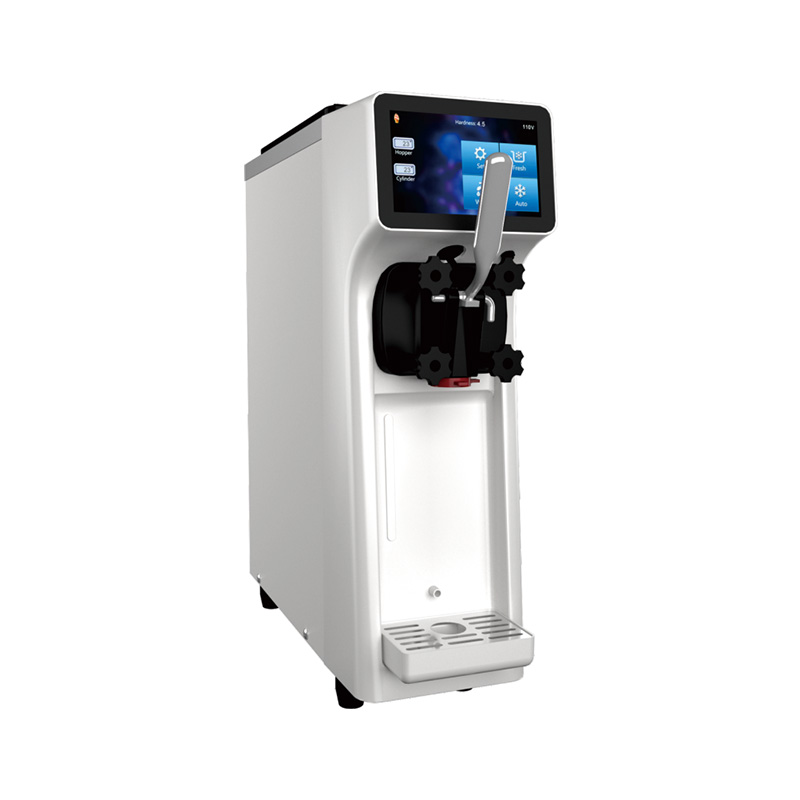
Food-Grade Stainless Steel Commercial Desktop Soft Serve Ice Cream Machine
Compact Commercial Design for Space-Limited Businesses
Space is one of the most important considerations when selecting foodservice equipment. A full-size floor-standing soft serve machine may offer high capacity, but it can be difficult to install in a small café, bakery, kiosk, dessert shop, or fast-food counter. The BQL-9200ST uses a desktop configuration to provide a more flexible alternative.
The countertop structure allows the machine to be positioned on a stable work surface near the serving area. This arrangement can simplify the workflow between ingredient preparation, freezing, dispensing, and customer service. It may also help businesses use existing counters instead of redesigning the entire production area.
The listed machine dimensions are approximately 210 x 580 x 700 millimeters in the product information, while the product specification section lists 213 x 555 x 720 millimeters. Small dimensional differences can occur because of measurement methods, panel projections, or documentation versions. Buyers should confirm the final technical drawing and packing dimensions with the supplier before installation. Regardless of the reference used, the model is positioned as a compact commercial desktop machine rather than a large floor-standing unit.
A compact format can provide several practical advantages. It can reduce the distance staff must travel during service, preserve floor space for refrigeration or preparation equipment, and allow a dessert station to be added to an existing business. It may also be suitable for seasonal locations, small retail outlets, hotel breakfast areas, bars, and institutional dining spaces where moderate production is more appropriate than maximum-volume output.
Compact design, however, does not mean that the machine is intended only for occasional household use. The BQL-9200ST is specified as commercial foodservice equipment, with a stated production capacity of 10 liters per hour, a 1,000-watt input power rating, and a 45-kilogram net weight. These specifications indicate a machine designed for repeated service in a professional environment, subject to correct installation, operating conditions, and maintenance.
Food-Grade Stainless Steel Construction
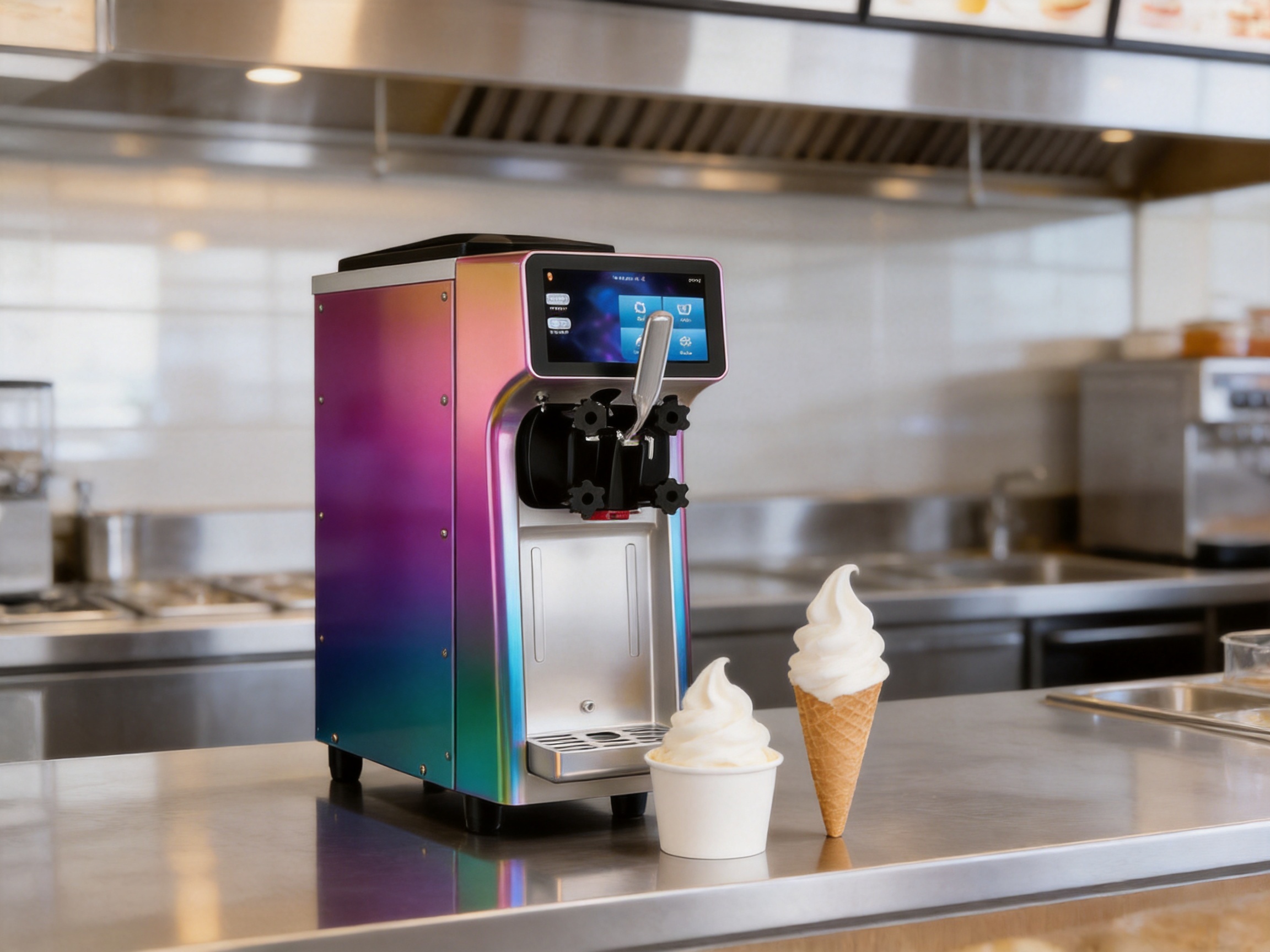
The plate body is made from food-grade stainless steel and colorful sprayed steel. This combination creates a balance between hygiene, durability, appearance, and design flexibility. Stainless steel is widely used in foodservice equipment because it is resistant to corrosion, relatively easy to clean, and suitable for environments where moisture, dairy ingredients, and frequent wiping are present.
A sanitary external structure supports daily cleaning routines. Smooth metal surfaces can be wiped down more easily than rough or porous materials, helping staff remove splashes, dust, and residue around the operating area. The stainless steel construction also contributes to a professional appearance, which is valuable when the machine is installed in an open customer-facing counter.
The colorful sprayed steel sections add visual distinction without changing the machine’s commercial purpose. Food businesses can use equipment appearance as part of their store presentation. A clean and attractive soft serve station can draw customer attention, make the dessert preparation area look more organized, and support a consistent visual identity within a café or snack shop.
Compared with machines made primarily from lower-grade exterior materials, a food-grade stainless steel body can offer better long-term suitability for demanding foodservice conditions. It supports routine sanitation and can help the equipment maintain a professional appearance over an extended service life. The construction also communicates that the machine has been developed for food handling rather than for light, non-commercial use.
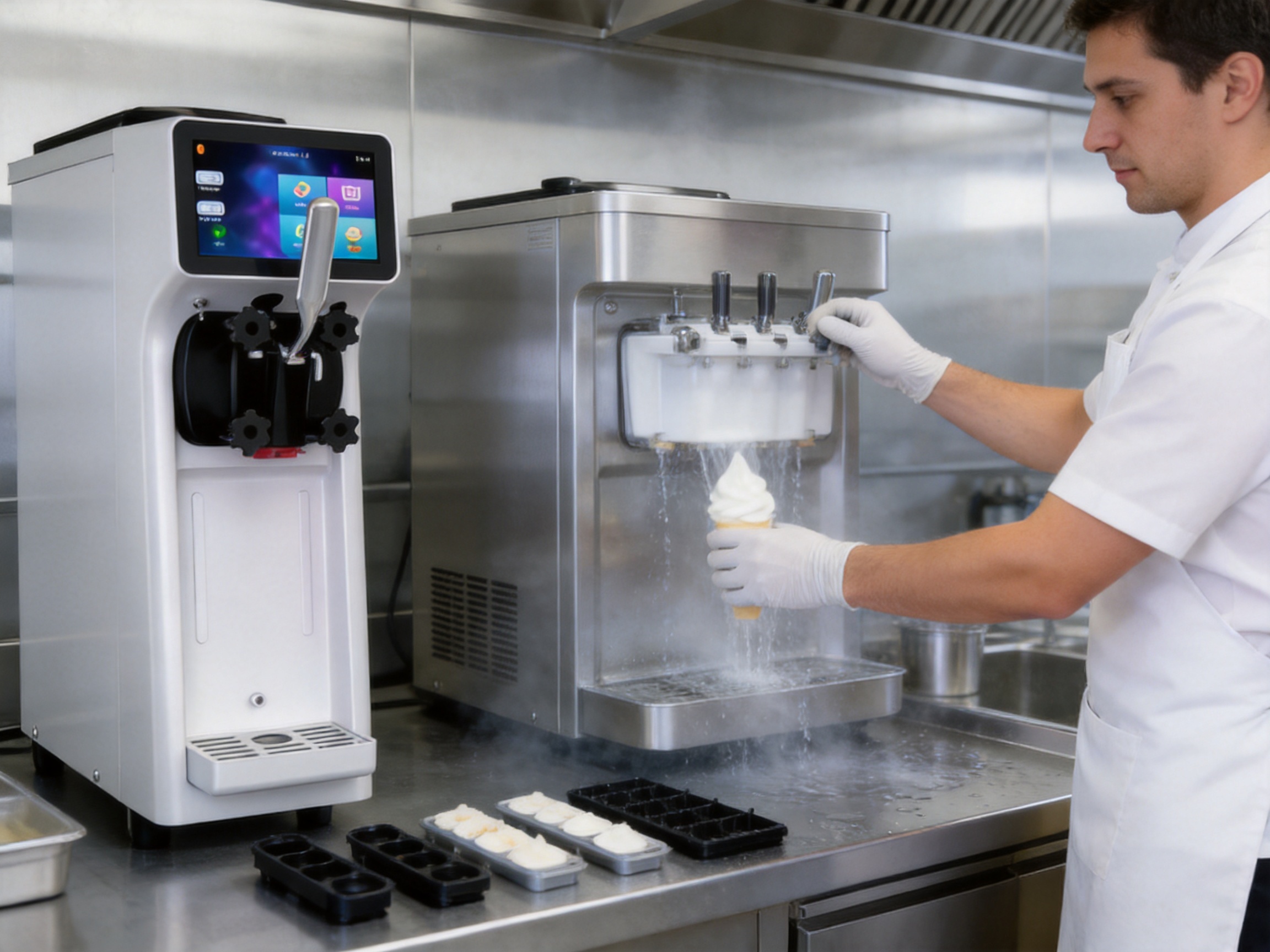
Users should still follow appropriate cleaning procedures and avoid abrasive chemicals or tools that may damage the finish. Stainless steel is durable, but good maintenance practices remain essential. Operators should clean product-contact components according to the supplier’s instructions, remove residues promptly, inspect seals and dispensing parts regularly, and ensure that surfaces are dried after cleaning where appropriate.
Intelligent LCD Touch-Screen Operation
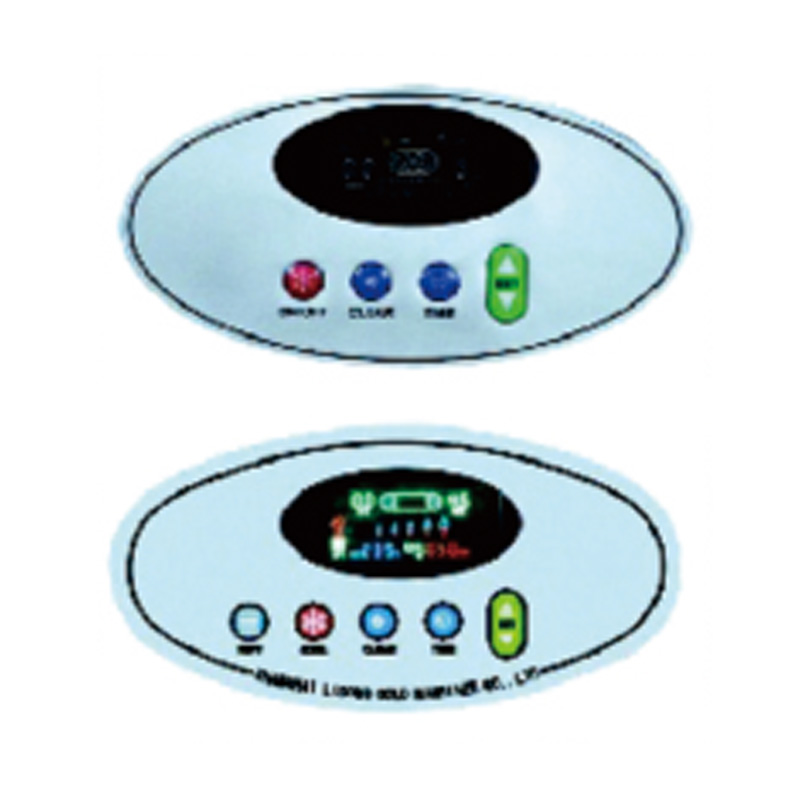
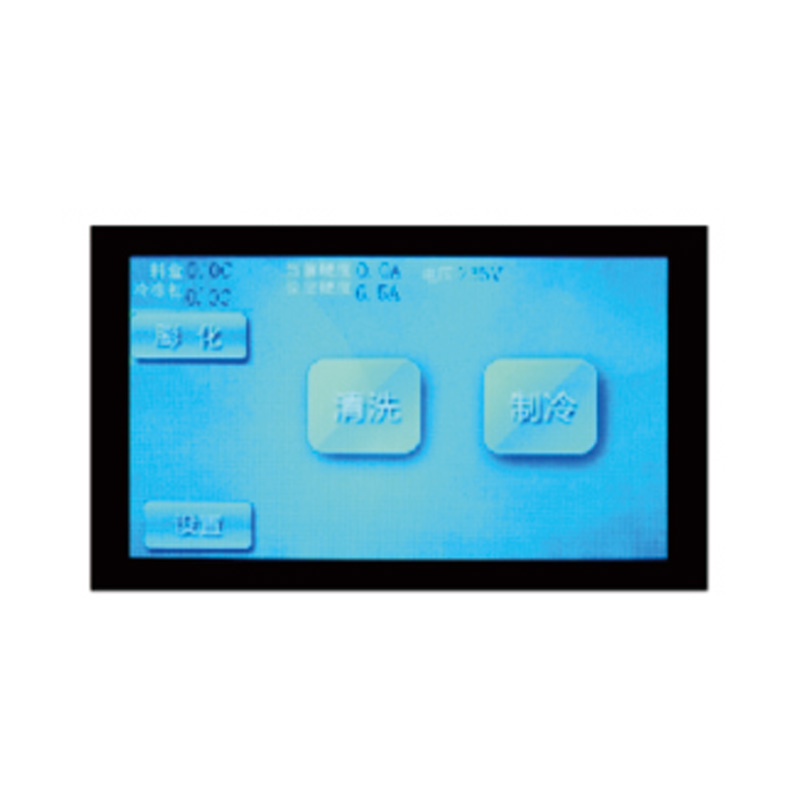
The BQL-9200ST uses an LCD touch screen to support intelligent operation and real-time visualization. An electronic interface can make routine controls easier to understand than a collection of basic mechanical switches, particularly when the machine includes multiple operating functions.
A touch-screen interface can provide a more organized view of machine status and operating selections. Staff may be able to monitor relevant information, select working modes, and access functions from a single control panel. This can reduce unnecessary steps during busy service periods and make it easier for managers to establish consistent operating procedures.
Real-time visualization is especially useful in commercial environments where several employees may share responsibility for the machine. New staff can learn the operating sequence more quickly when controls are clearly presented. Experienced employees can check the current state of the machine without interrupting production. Managers can also use the interface as part of daily operating checks.
Digital control may provide an advantage over simpler competing models that offer limited feedback. Basic machines can require staff to rely on indicator lights, approximate timing, or personal judgment. A visual LCD system can make the interaction more direct and help reduce uncertainty during preparation and service. It does not eliminate the need for staff training, but it can support more standardized use.
For a commercial buyer, intelligent operation should be evaluated as part of total labor efficiency. A machine that is straightforward to operate can reduce training time, limit avoidable errors, and support smoother shift changes. In a small business, where one employee may handle preparation, sales, and cleaning, clear controls can be particularly valuable.
Operational Consistency
Soft serve quality depends on more than the refrigeration system. Ingredient formulation, mix temperature, cleaning, operating mode, serving speed, and staff technique all influence the result. A clear control system supports repeatability by helping operators follow the same steps each day.
Consistent operation can contribute to a more uniform product texture and serving experience. Customers expect the same basic quality whether they visit in the morning, afternoon, or evening. By presenting operating information in a visible format, the LCD panel can help staff identify whether the machine is ready, requires attention, or is operating in a holding or cooling mode.
The exact functions and screen indications should be confirmed with the supplier during product training. Buyers may also request operating manuals, control-panel instructions, and recommended cleaning procedures before placing a large order or deploying the equipment across multiple locations.
Self-Cleaning Function for Commercial Hygiene
Cleaning is a central issue in any machine that handles dairy mixes or other food ingredients. Residues can accumulate in the hopper, freezing tank, dispensing path, seals, and other product-contact areas if cleaning is delayed or incomplete. The BQL-9200ST includes a self-cleaning function intended to simplify routine sanitation and reduce the labor burden associated with maintenance.
A self-cleaning program can help organize the cleaning process by circulating water or cleaning solution through relevant internal pathways, depending on the machine’s designed procedure. This may reduce manual effort and support more regular cleaning intervals. It can be particularly helpful for smaller businesses that do not have a large maintenance team.
Self-cleaning should be understood as a support function rather than a substitute for responsible sanitation. Operators must still follow the manufacturer’s instructions, use approved cleaning materials, remove and wash components when required, inspect accessible areas, and confirm that the equipment is ready for food production after cleaning. Product-contact parts may require manual disassembly, brushing, rinsing, sanitizing, and reassembly.
In comparison with machines that provide no automated cleaning assistance, a self-cleaning function may improve workflow efficiency and encourage better routine compliance. A shorter or simpler cleaning process can make it more practical for staff to complete sanitation at the recommended frequency instead of postponing it until the end of an extended operating period.
Good cleaning practices also protect product quality. Old mix residue can affect taste, odor, texture, and appearance. Regular sanitation helps maintain a cleaner internal environment and can support reliable operation of the freezing system. It can also help staff identify worn seals, blocked passages, or other issues before they develop into more serious service problems.
Recommended Cleaning Discipline
At the beginning of a cleaning cycle, staff should follow the machine’s shutdown and product-removal procedure. Remaining mix should be handled according to local food safety requirements. The cleaning program should then be used as specified, followed by rinsing and sanitizing where required. Operators should pay attention to dispensing nozzles, valves, seals, handles, hopper surfaces, and drainage areas.
After cleaning, all removable parts should be correctly reinstalled. Improper assembly can lead to leakage, inconsistent dispensing, or hygiene risks. Staff should also check that the equipment has reached the appropriate operating condition before serving product again.
Pre-Cooling and Mix Freshness Support
The machine includes a pre-cooling function designed to help keep mix fresh for up to one week under suitable conditions. This feature is intended to support ingredient management and reduce unnecessary waste, while the exact holding period depends on the mix formulation, storage temperature, local regulations, and the manufacturer’s operating instructions.
Pre-cooling can be useful when a business prepares mix before a service period or needs to maintain the hopper at a lower temperature between production cycles. It may help preserve the condition of the mix and reduce the time required to bring ingredients into a suitable operating range.
For small commercial operations, ingredient planning is often a major cost consideration. A business may not have enough customer volume to empty the machine continuously throughout the day. A pre-cooling function provides additional flexibility by supporting planned production and controlled holding rather than forcing operators to prepare only the exact quantity needed for immediate serving.
This feature may also offer an advantage over simpler desktop machines that provide freezing but lack dedicated pre-cooling support. By combining pre-cooling with an insulated hopper and controlled refrigeration system, the BQL-9200ST is designed to address both product preparation and product holding.
Food safety remains the responsibility of the operator. “Up to one week” should not be treated as a universal guarantee for every recipe or operating environment. Mixes containing different dairy, sugar, fruit, or other ingredients may have different storage requirements. Operators should comply with applicable food safety rules and obtain specific guidance from the supplier for their chosen mix.
Production Capacity and Commercial Application
The stated production capacity of the BQL-9200ST is 10 liters per hour. This output level is appropriate for businesses that need a dependable supply of soft serve but do not require the extremely high throughput of a large multi-cylinder production system.
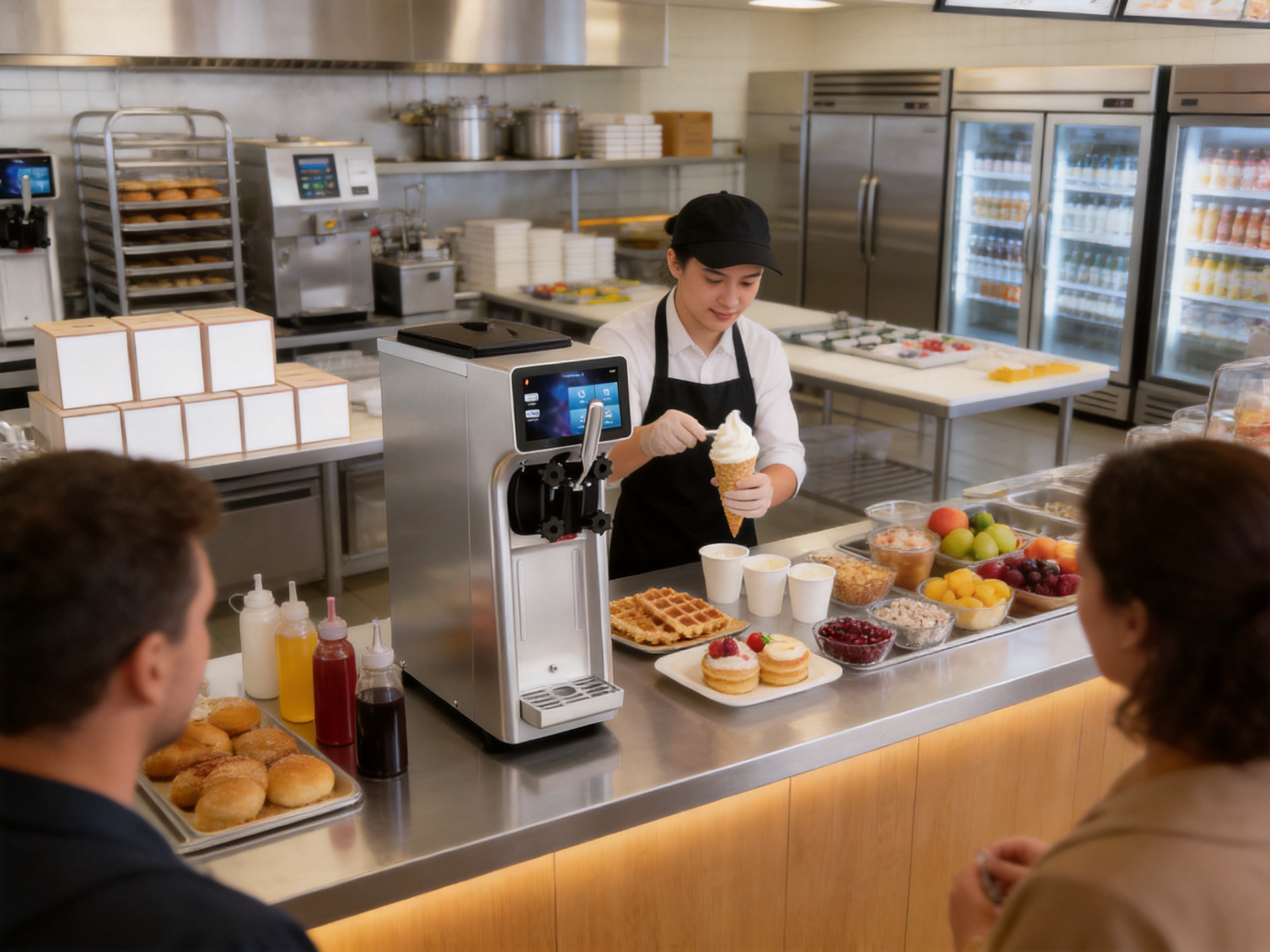
A 10-liter-per-hour machine can serve a range of applications. A café may use it for cones and cups during normal daily service. A bakery can add soft serve to pastries, waffles, and dessert combinations. A snack shop can offer soft serve as a high-margin add-on. A small restaurant can use it for after-meal desserts. A bar or beverage outlet can include frozen dessert items during peak periods.
The practical number of servings depends on serving size. Smaller portions will produce more individual servings, while larger portions will reduce the total count. Product formulation, freezing time, ambient temperature, serving technique, and replenishment practices also affect actual output.
The machine has one 3.6-liter hopper and a 1 x 1.6-liter freezing tank. These capacities are designed for controlled small-batch operation. A single hopper can simplify ingredient management for businesses that prefer to offer one primary flavor or rotate flavors during different service periods. It may also make cleaning and product changeover more straightforward than a larger multi-hopper configuration.
Businesses that require two flavors at the same time may need to evaluate a different machine configuration. The BQL-9200ST is best suited to buyers whose priorities are compact size, moderate capacity, single-product simplicity, and manageable investment rather than simultaneous multi-flavor dispensing.
Technical Specifications
| Specification | Details |
|---|---|
| Model | BQL-9200ST |
| Product type | Commercial desktop soft serve ice cream machine |
| Configuration | Desktop |
| Production capacity | 10 liters per hour |
| Input power | 1,000 watts |
| Hopper capacity | 1 x 3.6 liters |
| Freezing tank | 1 x 1.6 liters |
| Net weight | 45 kilograms |
| Refrigerant | R290 |
| Compressor | Chinese compressor |
| Approximate dimensions listed in product information | 210 x 580 x 700 millimeters |
| Approximate dimensions listed in product specification | 213 x 555 x 720 millimeters |
| Control system | LCD touch screen |
| Cleaning function | Self-cleaning function |
| Cooling support | Pre-cooling function |
| Main body material | Food-grade stainless steel with colorful sprayed steel |
The table provides the principal specifications available for this model. The dimensional difference between the two supplied references should be confirmed before installation. Buyers should also request the final electrical requirements, voltage and frequency options, shipping dimensions, packaging weight, clearance requirements, and installation instructions for the destination market.
R290 Refrigerant and Refrigeration Design
The BQL-9200ST uses R290 refrigerant. R290 is propane refrigerant, a natural refrigerant used in various modern refrigeration applications. It has a low global warming potential compared with many traditional refrigerants, making it an important option in equipment designed with current environmental considerations in mind.
Use of R290 requires proper engineering, handling, installation, and servicing because it is flammable. Only trained and qualified technicians should work on the refrigeration circuit. The machine should be installed and maintained in accordance with the supplier’s technical instructions and applicable local regulations.
The refrigeration system is responsible for bringing the mix to the required frozen condition and supporting stable service. Rapid and stable cooling is especially important during commercial operation, when staff may need to serve multiple customers within a short period. A properly maintained cooling system can help the machine recover after dispensing and maintain consistent product texture.
The stated input power is 1,000 watts. Actual energy consumption depends on ambient temperature, operating duration, product load, cleaning cycles, ventilation, and refrigeration demand. Adequate air circulation around the machine is important. Operators should not block ventilation openings or install the equipment in an excessively hot, enclosed location unless the supplier specifically approves that arrangement.
The Chinese compressor specified for the model is selected as part of the machine’s integrated refrigeration design. Compressor reliability depends on correct operating conditions, stable electrical supply, proper ventilation, and routine maintenance. Commercial buyers should request information about compressor service procedures, warranty coverage, replacement availability, and recommended spare parts.
Advantages Compared with Basic Desktop Machines
The BQL-9200ST offers several practical advantages when compared with entry-level desktop machines that provide only basic freezing and dispensing.
Commercial Construction
Its food-grade stainless steel body is designed for foodservice environments where frequent cleaning, moisture resistance, and durable presentation are important. This provides a stronger commercial positioning than lightweight machines intended mainly for occasional use.
Integrated Digital Control
The LCD touch screen provides a more modern operating interface than simple switches or limited indicator lights. Real-time visualization can support easier training, clearer status checking, and more consistent daily use.
Self-Cleaning Support
The self-cleaning function can reduce the manual burden of sanitation and encourage more regular cleaning. This is particularly valuable for small teams that must balance customer service with equipment maintenance.
Pre-Cooling Capability
Pre-cooling supports ingredient management and can help maintain mix freshness under appropriate conditions. It provides more flexibility than a machine that only freezes product during active serving.
Space Efficiency
The desktop design allows commercial soft serve production in locations where a larger floor-standing machine may not be practical. This can help businesses add a dessert program without significant renovation.
Balanced Output
A capacity of 10 liters per hour gives the machine a useful balance between productivity and compactness. It is suitable for moderate demand and small-batch production without requiring the investment, floor area, or operating complexity of a high-volume system.
Suitable Business Applications
The machine is suitable for cafés that want to introduce soft serve as a complementary product. It can be installed near a pastry counter or beverage station, allowing customers to select cones, cups, sundaes, and combination desserts.
Bakeries can use the machine to expand beyond baked products. Soft serve may be paired with cakes, waffles, crepes, brownies, cookies, fruit, or specialty toppings. Because the equipment has a relatively compact footprint, it can support dessert sales without occupying the main baking production area.
Small restaurants may use the machine for after-meal desserts or seasonal promotions. A moderate-capacity unit can be more appropriate than a large machine when dessert demand is steady but not continuous throughout the day.
Snack shops and fast-food outlets can use soft serve as an impulse purchase. A visible machine positioned near the customer ordering area can increase menu variety and encourage add-on sales.
Hotels, institutional dining operations, and buffet areas may also consider the model for controlled dessert service. In these settings, ease of cleaning, visual presentation, and the ability to manage a moderate quantity of mix can be important selection criteria.
Bars and entertainment venues can develop frozen dessert combinations using toppings, fruit, syrups, coffee, or specialty beverages. The machine can serve as a dedicated dessert station while preserving valuable floor space for seating or service operations.
Manufacturing Capabilities and Quality Approach
Spelor Electrical Appliances (Zhejiang) Co., Ltd. is a professional manufacturer integrating design, research and development, manufacturing, sales, and service. This structure is significant for commercial equipment buyers because product performance depends not only on the finished machine but also on the manufacturer’s ability to coordinate engineering, production, quality control, logistics, and support.
The company operates more than 60,000 square meters of modern production facilities. A large manufacturing base can support organized production flows, dedicated assembly areas, component management, testing procedures, and scalable output. It also provides a foundation for serving different customer groups, including independent businesses, distributors, foodservice chains, and OEM or ODM clients.
Manufacturing commercial refrigeration equipment requires coordination among metal fabrication, surface treatment, refrigeration assembly, electrical integration, insulation, control systems, product testing, and packaging. A manufacturer with experience across these areas can better manage the relationships between individual components and the final machine.
For a soft serve machine, quality assurance should cover body construction, panel finish, hopper and freezing tank assembly, compressor operation, refrigerant circuit integrity, electrical safety, control-panel performance, dispensing function, and cleaning-system operation. Consistent inspection of these areas helps reduce the risk of performance problems after delivery.
Spelor’s broader product range includes commercial refrigeration, kitchen equipment, buffet equipment, ice cream machines, juice dispensers, fried ice cream machines, refrigeration cabinets, slush machines, flake ice machines, cooking equipment, griddles, fryers, insulation products, barbecue equipment, and buffet solutions. This product breadth indicates experience serving a variety of foodservice environments rather than focusing on a single equipment category.
Manufacturing integration can also support customized projects. Customers may need different colors, labels, electrical specifications, packaging designs, controls, or product configurations. The company states that it provides OEM and ODM services based on drawings or customer requirements. Buyers should discuss customization scope, minimum order quantities, sample approval, certification, tooling, lead time, and warranty conditions during the project planning stage.
OEM and ODM Support for International Buyers
International distributors and foodservice equipment suppliers often require more than a standard catalog product. They may need private labeling, customized exterior panels, market-specific electrical specifications, packaging in several languages, or coordinated equipment combinations for a complete project.
The manufacturer’s OEM and ODM capabilities can support these requirements. OEM production may allow a buyer to sell the machine under its own brand, subject to agreed specifications and compliance requirements. ODM cooperation may involve adapting the product design, control interface, body appearance, capacity, or functional configuration to meet a particular market need.
A successful OEM or ODM project should begin with a detailed technical brief. The buyer should identify the target customer, expected daily output, available installation space, voltage and frequency, preferred refrigerant, control language, body color, logo placement, packaging requirements, certifications, and service expectations.
Product drawings and samples should be reviewed before mass production. Important points include external dimensions, counter clearance, access to ventilation, cleaning access, cable position, dispensing height, hopper opening, drainage arrangement, and component replacement access. Confirming these details early helps reduce costly changes later.
Spelor’s integrated design, research and development, production, sales, and service structure can simplify communication during such projects. Instead of coordinating unrelated suppliers for design, production, and support, the buyer can work with one manufacturing partner for the main development process.
Installation and Daily Operating Considerations
The BQL-9200ST should be placed on a stable, level countertop capable of supporting a net weight of approximately 45 kilograms, in addition to the weight of ingredients and accessories. The support surface should be strong enough to minimize vibration and should remain dry and easy to clean.
Ventilation clearance is important for refrigeration equipment. The machine should not be pushed tightly against walls or placed beside heat-producing appliances unless the installation instructions permit it. Excessive ambient heat or blocked airflow can increase refrigeration demand and affect operating stability.
The electrical supply must match the machine’s approved rating for the destination market. Buyers should confirm voltage, frequency, plug type, circuit requirements, grounding requirements, and any local electrical certification. Installation should be performed by qualified personnel where required.
Before operation, staff should inspect the machine for shipping damage, confirm that removable parts are installed correctly, and review the operating manual. The appropriate soft serve mix should be prepared according to its formulation instructions. Overfilling the hopper, using unsuitable ingredients, or operating without sufficient mix may affect machine performance.
During service, operators should monitor product consistency and observe unusual noise, vibration, leakage, temperature behavior, or control-panel warnings. Problems should be addressed promptly rather than ignored. Early attention can help protect the compressor, dispensing system, and product quality.
At the end of a service period, the machine should be cleaned according to the approved procedure. Operators should maintain a written cleaning schedule if required by the business or local regulations. A simple checklist can include product removal, self-cleaning activation, manual component cleaning, sanitizing, inspection, drying, reassembly, and recording of any maintenance issue.
Maintenance and Spare Parts Planning
Commercial equipment performs best when preventive maintenance is planned rather than postponed until a breakdown occurs. The BQL-9200ST should be inspected regularly for seal wear, dispensing-part condition, electrical cable damage, unusual compressor sounds, blocked ventilation, and residue accumulation.
Wear components such as seals, gaskets, dispensing parts, and cleaning accessories may require replacement over time. The correct spare parts should be obtained through the manufacturer or an authorized service channel. Using unsuitable replacement parts can create leakage, hygiene, performance, or safety problems.
Because the machine uses R290 refrigerant, refrigeration-system service should be carried out by technicians trained to work safely with flammable refrigerants. The refrigeration circuit should not be opened by unqualified personnel. Service records should identify the date, work completed, parts replaced, and technician responsible.
International buyers should discuss spare-parts availability before ordering. A distributor may choose to stock high-use components locally, while a multi-site operator may establish a central maintenance inventory. A clear parts list and service manual can reduce downtime and simplify field support.
Procurement Guidance for Distributors and Foodservice Operators
When comparing the BQL-9200ST with competing commercial desktop machines, buyers should evaluate more than purchase price. Important criteria include actual output, body materials, control system, cleaning functions, pre-cooling, refrigerant, compressor support, dimensions, service access, warranty, spare parts, certifications, and manufacturer responsiveness.
The lowest-priced machine may not provide the lowest total cost of ownership. If a product requires more manual cleaning, occupies more space, has limited technical support, or experiences longer downtime because spare parts are unavailable, the initial saving may disappear during operation.
The BQL-9200ST is positioned as a balanced solution for customers that need commercial capability in a compact form. Its value comes from the combination of food-grade construction, digital control, sanitation support, ingredient cooling, moderate output, and manufacturer-backed customization.
Buyers should request a quotation that clearly identifies the model, configuration, capacity, power specification, dimensions, refrigerant, included accessories, packaging, delivery terms, warranty, and after-sales service. If the machine is intended for export, the quotation should also address documentation and destination-market compliance.
For chain stores or distributors, sample testing is recommended before a large order. A sample can be evaluated for product texture, ease of cleaning, operating noise, countertop fit, staff usability, energy behavior, and customer-facing appearance. Testing under realistic service conditions provides more useful information than evaluating the machine only when it is empty.
Why the Manufacturer Is a Suitable Commercial Partner
Spelor’s product portfolio covers many categories that are commonly used together in foodservice operations. A customer sourcing soft serve equipment may also need juice dispensers, slush machines, ice machines, refrigeration cabinets, cooking equipment, buffet systems, or spare parts. Working with a manufacturer that understands these related categories can simplify equipment planning.
The company’s stated one-stop service includes pre-sales consultation, product customization, flexible logistics and payment solutions, and after-sales maintenance. These services are relevant to international buyers that need support beyond factory production.
Technical consultation can help customers identify the appropriate capacity and configuration. Customization can support branding and market requirements. Logistics coordination can assist with export shipments and delivery planning. After-sales maintenance can help protect the equipment’s working life and reduce operational interruptions.
A manufacturer’s value is ultimately measured by the reliability of the complete business relationship. Clear communication, accurate documentation, stable production, realistic lead times, responsible quality control, and responsive support all contribute to successful equipment deployment.
Frequently Asked Questions
What type of machine is the BQL-9200ST?
It is a commercial desktop soft serve ice cream machine designed for cafés, bakeries, snack shops, restaurants, bars, institutional foodservice, and other businesses requiring moderate soft serve production in a compact format.
What is the production capacity?
The stated production capacity is 10 liters per hour. Actual output depends on serving size, mix formulation, ambient conditions, operating settings, and service practices.
How much mix can the hopper hold?
The machine has one hopper with a listed capacity of 3.6 liters. The freezing tank is listed as 1 x 1.6 liters.
Does the machine have a digital control panel?
Yes. The machine uses an LCD touch screen designed to support intelligent operation and real-time visualization.
Does it include a self-cleaning function?
Yes. A self-cleaning function is included. Operators must still follow the manufacturer’s complete sanitation procedure, including manual cleaning of removable or product-contact components when required.
What is the purpose of the pre-cooling function?
Pre-cooling helps maintain the mix at a lower temperature before or between production cycles. The product information states that it can help keep mix fresh for up to one week under appropriate conditions. The actual holding time depends on the recipe, temperature, hygiene controls, and local food safety requirements.
What material is used for the machine body?
The plate body is made from food-grade stainless steel and colorful sprayed steel. The stainless steel construction supports durability, sanitation, corrosion resistance, and professional presentation.
What refrigerant does the machine use?
The listed refrigerant is R290. Because R290 is flammable, installation and refrigeration-system service must be performed according to applicable safety requirements by appropriately trained personnel.
How much does the machine weigh?
The listed net weight is 45 kilograms. Buyers should also confirm gross shipping weight and packaging dimensions for delivery and installation planning.
What are the machine dimensions?
The supplied information lists two approximate dimension sets: 210 x 580 x 700 millimeters and 213 x 555 x 720 millimeters. Buyers should confirm the final approved dimensions and technical drawing before preparing the countertop or ordering transport packaging.
Is the machine suitable for a small café?
Yes. Its desktop design, moderate 10-liter-per-hour capacity, compact format, digital control, self-cleaning function, and pre-cooling support make it suitable for many small cafés and similar businesses.
Can it produce two flavors at the same time?
The supplied specifications identify one 3.6-liter hopper and one 1.6-liter freezing tank. This configuration should be treated as a single-product setup unless the manufacturer confirms another arrangement. Businesses requiring simultaneous flavors should discuss alternative models.
Can the manufacturer provide OEM or ODM services?
Spelor states that it offers OEM and ODM commercial refrigeration and foodservice equipment based on drawings or customer requirements. Buyers should confirm customization options, minimum quantities, certifications, sample approval, lead time, and packaging specifications.
What should be confirmed before purchase?
Buyers should confirm voltage, frequency, plug type, final dimensions, ventilation clearance, capacity, included accessories, cleaning instructions, warranty terms, spare-parts support, shipping details, certifications, and the final control-panel configuration.
Conclusion
The BQL-9200ST food-grade stainless steel commercial desktop soft serve ice cream machine is designed for businesses that need practical commercial performance without the footprint of a large floor-standing system. Its 10-liter-per-hour capacity, 1,000-watt input power, 3.6-liter hopper, 1.6-liter freezing tank, and 45-kilogram net weight create a balanced configuration for moderate daily production.
Its main advantages include food-grade stainless steel construction, a professional countertop design, LCD touch-screen operation, real-time visualization, self-cleaning support, pre-cooling, and R290 refrigeration. These features address the key demands of modern foodservice operations: hygiene, space efficiency, operating clarity, ingredient management, and reliable service.
Compared with basic desktop machines, the model offers a more complete commercial operating package. It is not intended to replace every high-capacity or multi-flavor machine, but it provides an effective solution for cafés, bakeries, snack shops, small restaurants, bars, hotels, and other businesses with moderate soft serve demand.
The manufacturer’s integrated capabilities add further value. With more than 60,000 square meters of modern production facilities and experience across commercial refrigeration, kitchen, buffet, beverage, ice-making, and dessert equipment, Spelor can support standard product supply as well as OEM and ODM projects.
For prospective buyers, the best purchasing decision will come from matching the machine to actual demand, available counter space, local electrical conditions, cleaning resources, menu plans, and service expectations. When these factors are confirmed, the BQL-9200ST can serve as a compact, hygienic, and visually appealing addition to a professional foodservice operation.
References
1. Product specification sheet for the BQL-9200ST commercial desktop soft serve ice cream machine.
2. Product information for the food-grade stainless steel commercial desktop soft serve ice cream machine.
3. Manufacturer-provided company profile for Spelor Electrical Appliances (Zhejiang) Co., Ltd.
4. Manufacturer-provided information regarding OEM, ODM, commercial refrigeration, and foodservice equipment manufacturing.
5. General commercial foodservice equipment sanitation and maintenance principles.
6. General refrigeration safety principles for equipment using R290 refrigerant.
Product: Food-Grade Stainless Steel Commercial Desktop Soft Serve Ice Cream Machine

For exclusive deals and latest offers, sign up by entering your email address below.


-
spelor@spelor.com
-
+86-576-85229688
-
No.528, Changxi Road, Linhai City, Zhejiang Province, China
Commercial Refrigeration Equipment Manufacturer China
Copyright © 2025 by Spelor Electrical Appliances (Zhejiang) Co., Ltd. Rights Reserved.
