


 中文简体
12L/H Stainless Steel Commercial Hard Ice Cream Machine for Restaurants
Admin 2026-08-15For restaurants, dessert shops, cafés, snack bars, and small foodservice businesses, a hard ice cream machine must do more than freeze a mixture. It must support consistent product quality, dependable daily operation, efficient use of space, practical maintenance, and a reasonable total cost of ownership. The 12L/H Stainless Steel Commercial Hard Ice Cream Machine, model BQL-112Y, is designed to meet these requirements in a compact and professional format.
With a rated production capacity of 12 liters per hour, an air-cooled refrigeration system, a food-grade stainless steel body, and a compact footprint of 520 x 490 x 650 millimeters, the machine is suitable for businesses that need dependable hard ice cream production without installing a large industrial freezer system. Its structure combines commercial functionality with a manageable size, making it appropriate for restaurants and small to medium-sized dessert operations.
The machine is also supported by the manufacturing capabilities of Spelor Electrical Appliances (Zhejiang) Co., Ltd., a professional equipment manufacturer involved in design, research and development, production, sales, and service. With more than 60,000 square meters of modern production facilities and a product portfolio covering commercial refrigeration, kitchen equipment, buffet equipment, ice cream machines, juice dispensers, slush machines, ice machines, and related products, the company is positioned to provide complete foodservice equipment solutions.
This article examines the machine’s construction, operating advantages, production capacity, refrigeration system, application value, maintenance requirements, and purchasing considerations. It also explains how the manufacturer’s integrated capabilities can benefit distributors, restaurant groups, project contractors, and foodservice operators seeking OEM or ODM cooperation.

12L/h Stainless Steel Commercial Hard Ice Cream Machine for Restaurant
Product Overview
The BQL-112Y is a commercial hard ice cream machine intended for continuous production in professional foodservice environments. Unlike domestic countertop appliances designed for occasional use, this equipment is built around the practical needs of business operators. It is designed to process ice cream mix efficiently and deliver a stable supply of hard ice cream during service periods.
The machine has a production capacity of 12 liters per hour. This capacity is appropriate for restaurants, cafés, dessert counters, bakeries, small ice cream shops, hotel food outlets, and other establishments with moderate demand. It can help operators prepare fresh product on site, reduce dependence on prepackaged frozen products, and offer a more flexible dessert menu.
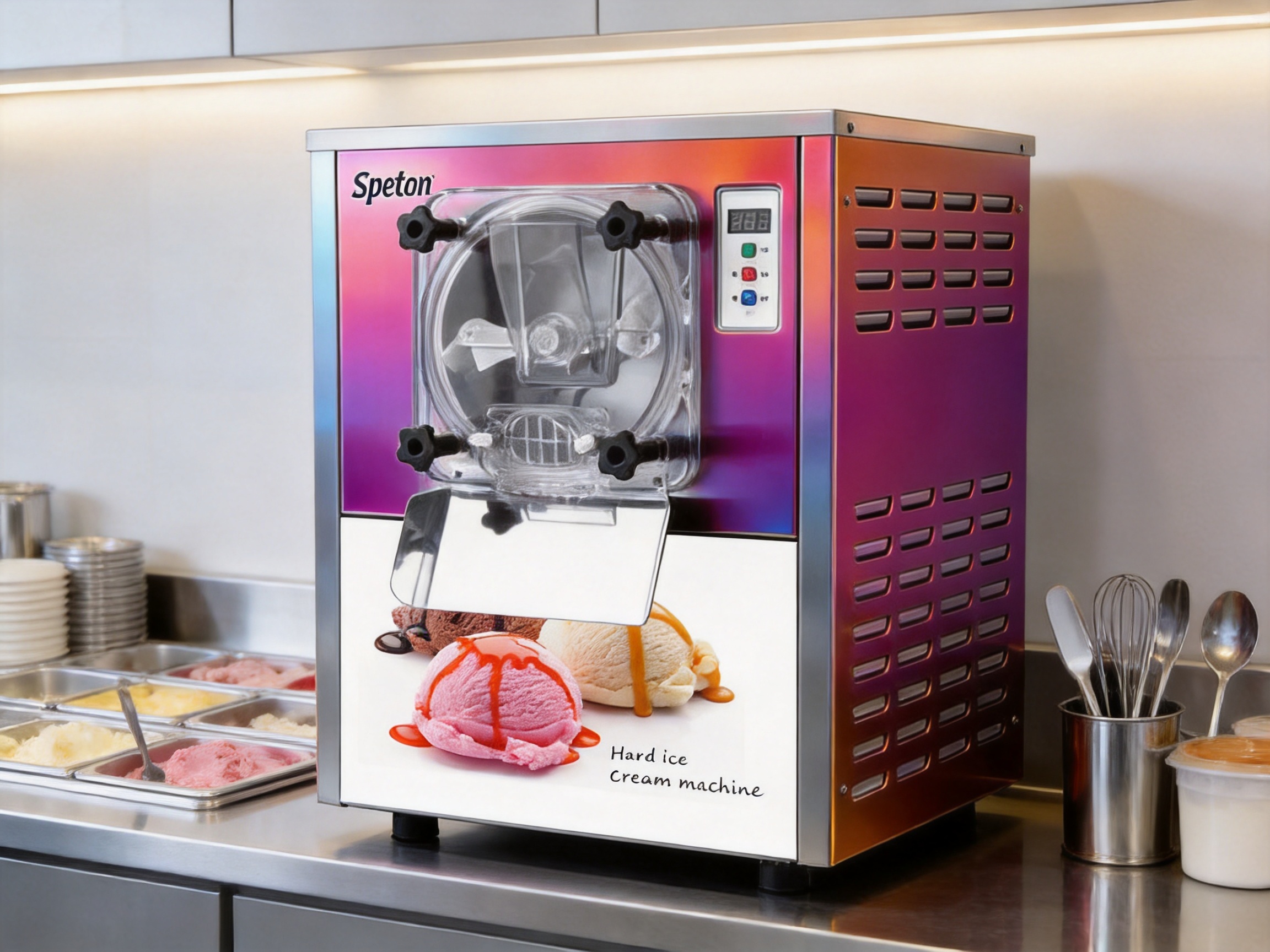
The exterior uses food-grade stainless steel together with colorful sprayed steel. This combination provides a professional appearance while supporting hygiene, durability, and ease of cleaning. Stainless steel is widely used in commercial food equipment because it resists corrosion, tolerates frequent cleaning, and does not easily absorb odors or moisture. The sprayed steel elements can also provide visual flexibility for businesses that want equipment with a more distinctive appearance.
The machine’s compact dimensions allow it to be positioned in a relatively limited service or preparation area. Measuring 520 x 490 x 650 millimeters, it can fit into many restaurant counters, dessert preparation zones, and small production rooms. The 60-kilogram net weight provides a stable base while remaining manageable for professional installation and relocation when required.
| Product Feature | Specification or Benefit |
| Model | BQL-112Y |
| Product Type | Commercial hard ice cream machine |
| Production Capacity | 12 liters per hour |
| Cooling Method | Air cooling |
| Refrigerant | R410 |
| Voltage and Frequency | 220V / 50Hz |
| Power Information | 750W input power listed in the basic specification; 1300W power listed in the detailed information |
| Net Weight | 60 kilograms |
| Machine Dimensions | 520 x 490 x 650 millimeters |
| Main Body Material | Food-grade stainless steel and sprayed steel |
Advantages of a Commercial Hard Ice Cream Machine
Fresh Production at the Point of Sale
One of the main advantages of a commercial hard ice cream machine is the ability to produce fresh ice cream close to the customer. Rather than relying entirely on frozen tubs supplied from an external producer, a restaurant can prepare its own product according to demand. This creates opportunities for greater menu flexibility, seasonal flavors, limited-time promotions, and signature recipes.
Fresh production can also improve the customer experience. The operator can present ice cream as a house-made or freshly prepared product, which may strengthen the perceived value of desserts. Restaurants can use the machine to serve ice cream with cakes, waffles, crepes, fruit, beverages, and other menu items. In a dessert-focused store, the machine can form the foundation of a dedicated frozen product program.
Balanced Capacity for Small and Medium-Sized Businesses
A capacity of 12 liters per hour offers a practical balance between output and equipment size. Larger machines may be unnecessary for a business with moderate traffic, while smaller domestic appliances may not withstand repeated commercial use. The BQL-112Y is positioned between these two extremes, allowing operators to obtain commercial functionality without committing to a large production line.
Capacity planning is important in foodservice. A machine that is too small may create queues, delays, or inconsistent availability. A machine that is too large may consume unnecessary space, energy, and investment. The 12L/H format is suitable for businesses that want reliable production during normal service periods while maintaining a compact operating area.
Hygienic Stainless Steel Construction
Food-contact and foodservice equipment must be easy to clean and suitable for repeated sanitation. The stainless steel body of this machine supports those requirements. Its smooth metal surfaces can be wiped down efficiently, and the material is well suited to environments where equipment is exposed to water, cleaning agents, food residue, and changing temperatures.
The stainless steel construction also contributes to long-term durability. Commercial kitchens are demanding workplaces. Equipment may be used for many hours each day, moved during cleaning, and exposed to constant operational vibration. A robust outer structure helps protect internal components and supports a more professional appearance over the service life of the machine.
Compact Footprint and Efficient Space Use
Many restaurants and dessert shops operate in areas where every square meter must be carefully planned. The machine’s 520 x 490 x 650 millimeter dimensions make it easier to integrate into a compact production or serving layout. It can be placed near a dessert counter, in a preparation room, or alongside other small commercial appliances, subject to suitable ventilation and electrical arrangements.
A compact machine can also reduce installation complexity. Operators may not need to redesign an entire kitchen or construct a separate equipment room. For franchise stores, distributors, and project contractors, a consistent compact format can simplify layout planning across multiple locations.
Air-Cooled Refrigeration
The BQL-112Y uses air cooling. Air-cooled equipment does not require a dedicated water supply or water drainage connection for condenser operation, which can simplify placement and installation. This is particularly useful for restaurants and small shops where plumbing access is limited or where water consumption must be controlled.
Air cooling can also make the equipment easier to deploy in different locations. Operators can install the machine in premises where adding a water-cooled system would be inconvenient. However, air-cooled machines require sufficient clearance around ventilation areas, and the installation location should be kept away from excessive heat, grease, dust, and blocked airflow.
Product Quality and Competitive Position
The commercial equipment market includes domestic ice cream appliances, entry-level commercial machines, high-capacity production units, and specialized industrial systems. The BQL-112Y has several characteristics that make it competitive within the small and medium-sized foodservice segment.
Compared with Domestic Ice Cream Appliances
Domestic appliances are generally designed for occasional household use. They may have lower capacity, less robust external construction, and limited suitability for repeated production cycles. A restaurant using a domestic machine for commercial service may encounter slow output, premature wear, difficulty obtaining replacement parts, and inconsistent product availability.
The BQL-112Y is designed specifically for commercial environments. Its stainless steel body, 60-kilogram structure, commercial refrigeration design, and 12L/H output provide a more suitable platform for business use. It is intended to support routine operation rather than occasional preparation.
Compared with Oversized Industrial Equipment
At the opposite end of the market, large industrial machines may deliver very high output but require more floor space, higher investment, more complex installation, and greater production demand to justify their use. For a small restaurant or dessert shop, this can create unnecessary cost and operational complexity.
The BQL-112Y provides a more targeted solution. Its output is sufficient for moderate commercial demand, while its compact size allows it to operate in a smaller service environment. Businesses can obtain professional hard ice cream production without purchasing a machine intended for a large factory or high-volume central kitchen.
Compared with Water-Cooled Alternatives
Water-cooled machines can be useful in certain high-temperature or high-load environments, but they require access to water and drainage. They may also add operating considerations related to water consumption, installation, and local utility conditions. The air-cooled design of the BQL-112Y reduces those requirements and can be more practical for independent restaurants, mobile project installations, and locations with limited plumbing infrastructure.
Professional Appearance and Brand Presentation
Equipment appearance contributes to the overall impression of a foodservice business. The stainless steel and colorful sprayed steel exterior gives the machine a clean, commercial appearance that can fit modern restaurants, dessert shops, and open-kitchen concepts. When positioned where customers can see it, the machine may also reinforce the impression of fresh preparation and professional operation.
Support for Menu Differentiation
Restaurants increasingly use desserts and specialty beverages to distinguish themselves from competitors. A hard ice cream machine enables businesses to create menu combinations that are difficult to achieve with only prepackaged products. Operators can develop house flavors, create rotating seasonal offerings, and pair ice cream with local ingredients or signature desserts.
This flexibility can support higher average order values. A customer who visits for a meal may add a premium dessert, while a dessert customer may purchase a combination of ice cream, coffee, juice, or toppings. The machine therefore has value not only as a production appliance but also as a tool for menu development and sales growth.
Construction, Materials, and Hygiene
Food-Grade Stainless Steel Body
The food-grade stainless steel body is one of the most important structural features of the equipment. Stainless steel is valued in commercial kitchens for its combination of strength, corrosion resistance, cleanability, and professional appearance. It is suitable for environments where surfaces must be cleaned regularly and where hygiene is an essential operational priority.
A stainless steel exterior can also reduce the visual effects of normal commercial use. When maintained properly, it remains presentable over time and helps equipment maintain a consistent appearance across a restaurant group or distributor’s product range.
Sanitary Equipment Design
Sanitation should be considered as part of the daily operating procedure. Operators should establish a routine for cleaning surfaces, removing product residue, inspecting accessible areas, and following the applicable local food safety requirements. The machine’s stainless steel construction supports this process, but proper cleaning practices remain essential.
Food residue should not be allowed to accumulate around dispensing or processing areas. Cleaning schedules should be based on usage frequency, product formulation, and local regulations. Employees should be trained to use approved cleaning materials and to avoid practices that may damage surfaces or internal components.
Durability for Professional Use
The 60-kilogram net weight indicates a substantial commercial structure rather than a lightweight domestic appliance. A stable machine can be beneficial during operation because it is less likely to move or vibrate excessively when placed on a suitable level surface. Stability also supports safer interaction with controls, containers, and serving accessories.
Durability depends on more than the outer shell. Refrigeration components, electrical parts, seals, moving elements, and internal processing assemblies must all be properly maintained. The manufacturer’s integrated design and production capabilities are important because they allow the equipment to be developed as a coordinated system rather than as a collection of unrelated components.
Refrigeration and Operating Performance
Stable Refrigeration for Hard Ice Cream
Hard ice cream requires controlled freezing to achieve an appealing texture and serving consistency. The machine’s refrigeration system is designed to continuously support the production of hard ice cream at a rated capacity of 12 liters per hour. Stable cooling helps the operator maintain more consistent results over successive production cycles.
Product texture depends on several factors, including recipe composition, fat and sugar content, mix temperature, freezing time, air incorporation, serving temperature, and storage conditions. The machine provides the refrigeration platform, while operators remain responsible for using a suitable formulation and following correct operating procedures.
R410 Refrigerant
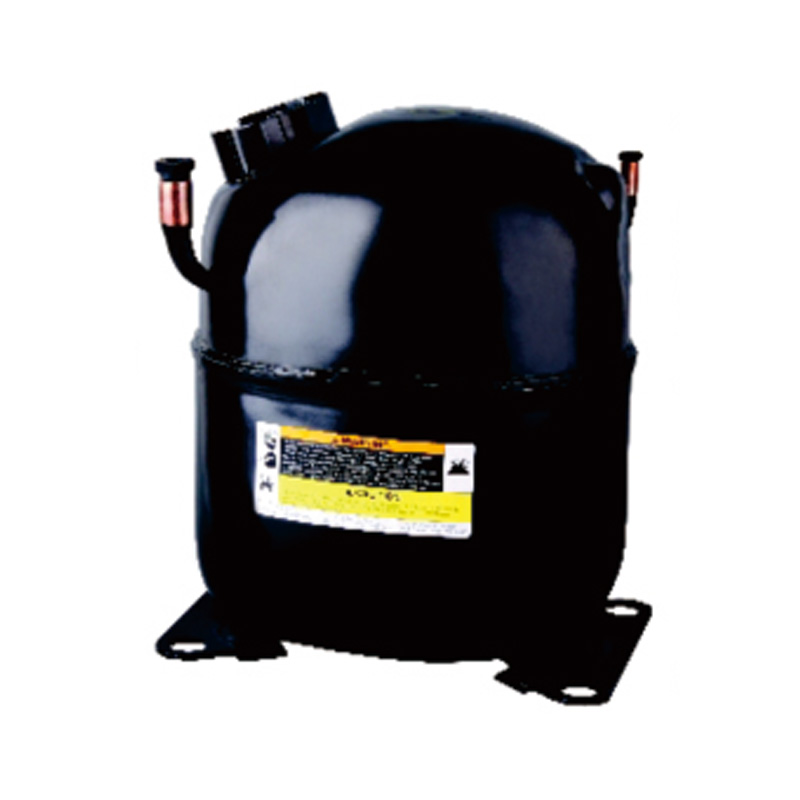
The listed compressor refrigerant is R410. Refrigerant selection affects system design, operating pressure, servicing requirements, and regulatory considerations. Equipment owners should ensure that installation and maintenance are performed by qualified technicians familiar with the refrigerant system used in the machine.
Refrigeration performance can be affected by ambient temperature, ventilation, condenser cleanliness, electrical stability, and workload. The machine should be installed in a location that allows warm air to discharge freely. Blocking air inlets or placing the unit beside heat-producing equipment may reduce cooling efficiency and place additional stress on the compressor.
Airflow and Installation Conditions
Because the machine is air-cooled, ventilation is a key installation consideration. A suitable clearance should be maintained around the machine according to the installation instructions. The machine should not be enclosed tightly inside a cabinet unless the cabinet has been specifically designed to provide adequate airflow.
The surrounding environment should be clean and reasonably dry. Excessive grease, flour, dust, or airborne particles can accumulate on the condenser and restrict heat transfer. Regular inspection and cleaning of ventilation areas can help preserve refrigeration performance and reduce unnecessary energy consumption.
Electrical Compatibility
The listed voltage and frequency are 220V and 50Hz. Before ordering, the customer should confirm that the local electrical supply matches the machine’s requirements. Electrical installation should comply with local regulations and should include appropriate grounding and protection.
The supplied specifications list 750W as input power in one section and 1300W as power in the detailed information. This difference may reflect different measurement conditions, configurations, or documentation versions. Buyers should request confirmation of the exact electrical rating for the intended configuration before final purchase, especially when planning circuit capacity, shipping documentation, or certification.
Manufacturing Strength and Factory Capabilities
Integrated Design and Development
The manufacturer operates as a professional company integrating design, research and development, manufacturing, sales, and service. This integrated structure can provide advantages over a trading model that purchases unrelated products from multiple factories. Product design, production coordination, quality feedback, customization, and after-sales support can be managed through a more unified process.
Integrated research and development allows equipment to be improved in response to operator feedback. Factors such as cleaning convenience, component accessibility, energy use, appearance, production capacity, and installation requirements can be considered during product development. This approach is especially valuable for OEM and ODM customers that require adjustments for different markets or applications.
Modern Production Facilities
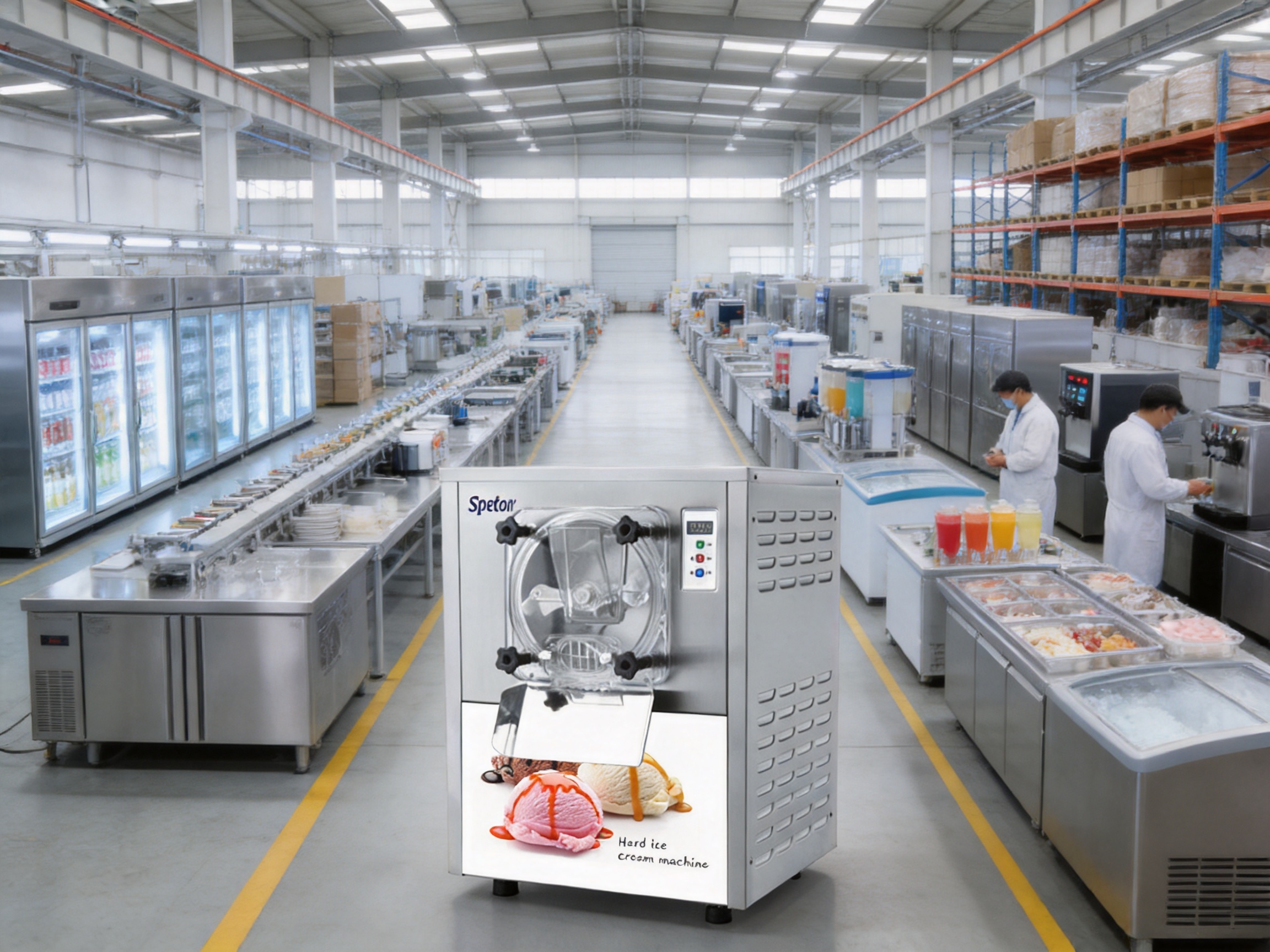
The company has more than 60,000 square meters of modern production facilities. A facility of this scale can support organized manufacturing, component management, assembly operations, testing, warehousing, and order coordination. It also provides a foundation for handling multiple product categories and serving customers with different purchasing requirements.
Large production facilities can be particularly important for distributors and project buyers. They may need repeated shipments, standardized specifications, packaging coordination, documentation, and consistent supply. A manufacturer with broader production resources is generally better positioned to support these requirements than a small workshop focused on one-off orders.
Broad Foodservice Equipment Portfolio
The manufacturer’s product range includes commercial refrigeration equipment, kitchen equipment, buffet equipment, ice cream machines, juice dispensers, fried ice cream machines, refrigeration cabinets, slush machines, flake ice machines, griddles, fryers, insulation products, barbecue equipment, and buffet solutions.
This broad portfolio creates opportunities for one-stop procurement. A restaurant chain, hotel, supermarket, catering contractor, or distributor may be able to source multiple equipment categories from one manufacturing partner. Consolidated procurement can simplify communication, reduce the number of supplier relationships, and support more coordinated delivery planning.
Quality-Oriented Production Management
Commercial refrigeration equipment must be evaluated as a complete system. The manufacturer’s production process should include suitable controls for incoming materials, assembly accuracy, electrical safety, refrigeration performance, appearance, and final operation. While specific factory testing procedures should be confirmed for each order, an integrated manufacturer is able to coordinate these aspects throughout the production cycle.
For customers purchasing under their own brand, production consistency is especially important. OEM and ODM buyers need products that maintain stable dimensions, appearance, performance, and packaging from one order to the next. Factory cooperation should therefore include clear technical specifications, approved samples, inspection standards, and communication procedures.
OEM and ODM Cooperation
The company offers OEM and ODM capabilities based on customer drawings or requirements. This can benefit distributors and foodservice equipment brands that want to develop a product range suited to a specific region or customer group.
Possible customization areas may include external color, branding, labeling, packaging, electrical configuration, documentation, accessories, and selected structural details. The feasibility of each request depends on production quantity, technical requirements, certification, and tooling considerations. Buyers should define customization expectations early and request written confirmation before production begins.
Applications in Foodservice Businesses
Restaurants
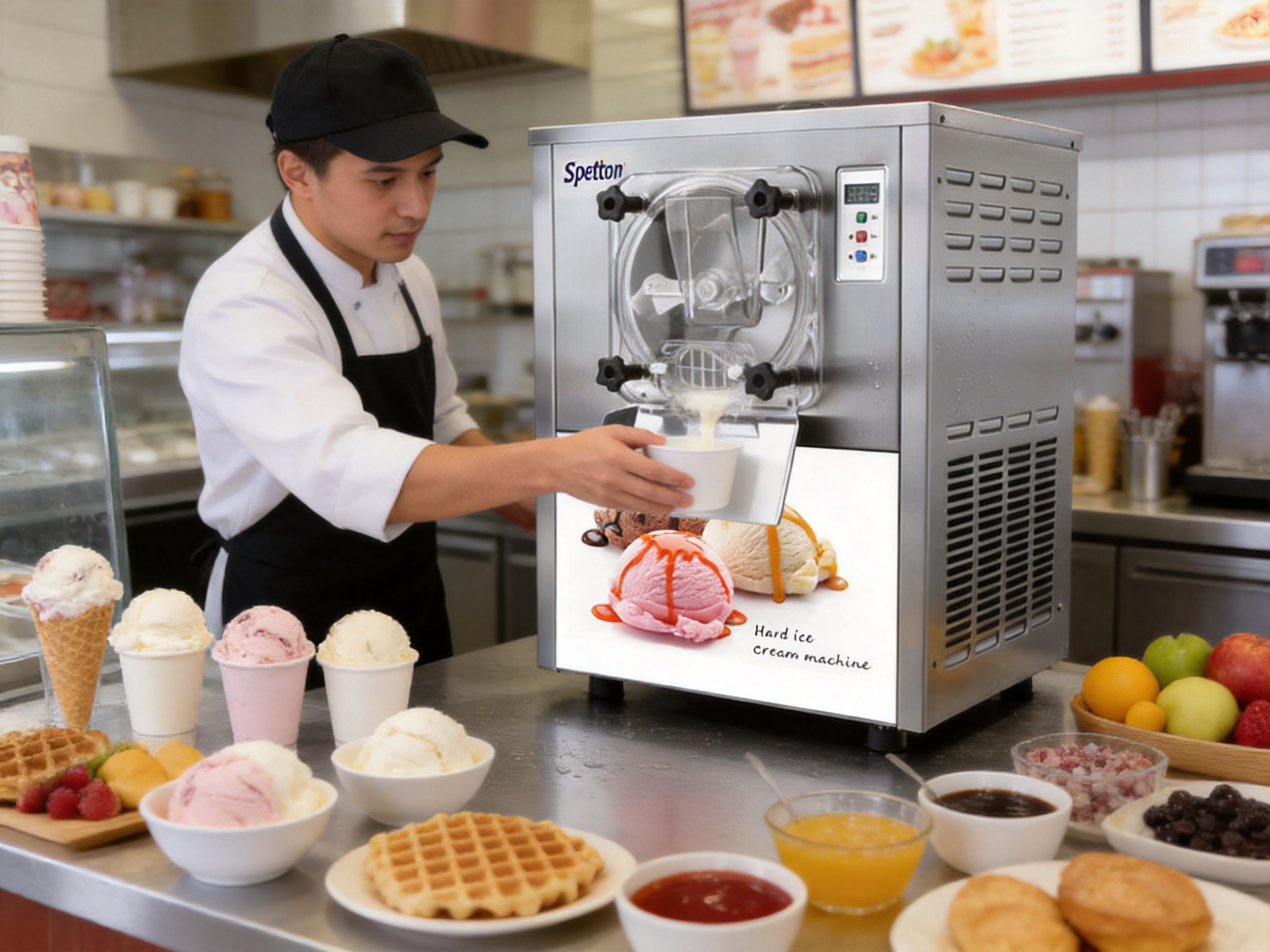
Restaurants can use the machine to add ice cream to dessert menus, children’s meals, set menus, and seasonal promotions. A 12L/H output is suitable for operations that need regular service capacity but do not require a large industrial production line.
The machine can be positioned in a kitchen, dessert preparation room, or customer-facing service area. Its compact dimensions make it easier to integrate alongside ovens, beverage equipment, refrigerated counters, and topping stations, provided that adequate airflow and safe working clearance are maintained.
Small Dessert Shops
For a small dessert shop, the machine can serve as a central production appliance. Operators can offer several flavors in rotation and combine the ice cream with fruit, sauces, cookies, cakes, waffles, or specialty drinks. The machine’s stainless steel body also complements the clean visual style commonly used in dessert-focused retail spaces.
Cafés and Bakeries
Cafés and bakeries can use hard ice cream to expand beyond beverages and baked goods. Ice cream can be served with pastries, brownies, pies, waffles, and coffee-based desserts. This creates additional opportunities to use existing ingredients and increase the range of high-margin items available to customers.
Hotels and Institutional Foodservice
Hotels, schools, hospitals, canteens, and institutional dining facilities may use the machine for controlled dessert production. Its moderate capacity can be helpful where demand is predictable but not large enough to justify industrial equipment. The machine can support buffet service, special events, staff dining, and banquet preparation, subject to the facility’s food safety procedures.
Supermarkets and Specialty Food Counters
Supermarkets and specialty retailers can use the machine to create fresh dessert counters or promotional service points. Visible production can attract customer attention and support product sampling. Retailers should plan the placement carefully so that the machine remains accessible to staff, protected from customer interference, and adequately ventilated.
Foodservice Distributors and Contractors
Distributors can include the machine in a portfolio of compact commercial refrigeration and dessert equipment. Contractors designing restaurants, kiosks, hotels, or food courts can specify it for projects requiring moderate hard ice cream production. The manufacturer’s wider equipment range may also support complete project quotations.
Operational Planning and Efficiency
Matching Capacity to Demand
Before purchase, operators should estimate expected daily demand, peak-hour demand, menu frequency, and storage requirements. The rated capacity of 12 liters per hour should be treated as a production reference under specified conditions, not as a guarantee of identical output in every environment.
Actual performance can vary according to the initial temperature of the mix, recipe formulation, ambient temperature, operator procedures, and the number of consecutive cycles. A realistic demand estimate helps prevent both underutilization and overload.
Workflow Design
The machine should be placed where ingredients, containers, utensils, toppings, and finished product can move efficiently through the workspace. A well-designed workflow reduces unnecessary staff movement and helps maintain cleanliness. Operators should also provide enough space for cleaning, inspection, and service access.
If the machine is located near a customer-facing counter, staff should ensure that the serving area does not obstruct ventilation or create a risk of spills entering electrical or mechanical areas. If it is located in a back-of-house area, access to the dessert assembly station should remain convenient.
Energy and Operating Considerations
Efficient operation depends on maintaining the refrigeration system and avoiding conditions that force the compressor to work harder than necessary. The machine should not be placed near ovens, fryers, direct sunlight, or other major heat sources. The condenser and air passages should be kept clean, and the machine should not be operated beyond its recommended conditions.
Operators can also improve efficiency by preparing mixes correctly, avoiding unnecessary opening or interruption of the process, and planning production around customer demand. Preventive maintenance is usually more economical than waiting for a breakdown during a busy service period.
Cleaning and Maintenance Recommendations
Daily Cleaning
Daily cleaning should follow the equipment manual and applicable food safety standards. Product-contact areas should be cleaned at the required intervals, particularly when changing flavors or when the machine has completed a service period. Exterior surfaces should be wiped with suitable materials and dried to reduce water marks and residue.
Cleaning tools should be dedicated to food equipment and kept in sanitary condition. Harsh abrasive materials may scratch stainless steel surfaces, while unsuitable chemicals may damage seals, coatings, or other components. Staff should follow the chemical supplier’s instructions and the machine manufacturer’s recommendations.
Inspection of Seals and Accessible Components
Seals, gaskets, fasteners, and accessible processing components should be inspected regularly. Worn seals may lead to leakage, air infiltration, hygiene concerns, or reduced performance. Any component showing abnormal wear should be reported and replaced through an appropriate service channel.
Condenser and Ventilation Maintenance
Air-cooled refrigeration systems depend on clean airflow. Dust and grease accumulation on the condenser can reduce heat transfer and increase operating load. The condenser should be inspected according to the service schedule, and cleaning should be performed by trained personnel when necessary.
Maintenance should always be carried out with the machine safely isolated from the electrical supply when required. Refrigeration-system service, electrical repairs, and refrigerant handling should be performed by qualified technicians.
Preventive Service
A preventive maintenance program can reduce unexpected downtime. It may include inspection of electrical connections, compressor performance, ventilation, seals, controls, structural fasteners, and general operating condition. The exact schedule depends on usage frequency and the operating environment.
Restaurants with high seasonal demand should consider servicing the machine before peak periods. Maintaining a record of cleaning, inspection, service, and replacement parts can help managers identify trends and plan future maintenance costs.
Purchasing and Installation Considerations
Confirming Technical Specifications
Buyers should confirm the final product specification before placing an order. Important items include voltage, frequency, power rating, production capacity, refrigerant, dimensions, cooling method, packaging, accessories, and warranty terms.
In the supplied information, the basic specification states an input power of 750W, while the detailed information lists power as 1300W. This should be clarified with the supplier for the exact machine configuration. Such confirmation is important for electrical planning, import documentation, energy calculations, and compliance with local requirements.
Checking Site Conditions
The installation site should have a suitable 220V/50Hz electrical supply, a stable and level floor or counter, sufficient ventilation, and enough room for operation and service. The machine should be protected from rain, excessive humidity, direct heat, heavy dust, and corrosive atmospheres.
Because the equipment is air-cooled, the location must allow heat to disperse. A crowded installation may cause high ambient temperatures around the machine and reduce refrigeration performance. Buyers should request installation clearance recommendations before finalizing the kitchen layout.
Shipping and Logistics
The 60-kilogram net weight and compact dimensions make the machine practical for international shipping compared with larger commercial production units. Nevertheless, shipping weight, packaging dimensions, pallet requirements, and container loading plans should be confirmed separately.
Importers should also check local requirements for electrical safety, refrigeration equipment, labeling, language, warranty documentation, and customs classification. The supplier can assist with documentation and logistics planning, but the importer remains responsible for confirming the regulations in the destination market.
After-Sales Support
Reliable after-sales support is an important part of the total value of commercial equipment. Customers should ask about warranty coverage, spare parts availability, troubleshooting support, technician guidance, and response procedures before purchasing.
The manufacturer describes its service offering as including pre-sales consultation, product customization, flexible logistics and payment solutions, and after-sales maintenance. These services can help customers move from product selection to installation and long-term operation with fewer communication gaps.
Value for Distributors and OEM Customers
For distributors, the BQL-112Y can fill an important position in a product portfolio. It is not an entry-level domestic machine and is not an oversized industrial unit. Instead, it addresses the broad market of restaurants, cafés, dessert shops, and moderate-volume foodservice operators.
Its compact format can simplify warehouse planning and customer recommendations. Sales teams can present it to businesses that need professional equipment but have limited space or a moderate budget. The stainless steel appearance can also support a premium product presentation.
OEM customers may use the machine as a platform for developing their own commercial dessert equipment range. Branding, packaging, product presentation, and selected specifications can be discussed according to order requirements. A manufacturer with experience across refrigeration and foodservice equipment can help buyers coordinate related products within the same brand family.
ODM cooperation may be appropriate for customers seeking a product adapted to a specific market. Regional differences may include power supply, plug configuration, labeling, packaging language, certification, color preferences, and customer expectations. Technical feasibility and minimum order quantities should be evaluated during the project planning stage.
Why Manufacturing Integration Matters
Commercial equipment buyers often focus on the product price, but long-term value depends on a wider group of factors. These include construction quality, component compatibility, production consistency, documentation, delivery reliability, service response, and spare parts support.
An integrated manufacturer can coordinate these areas more effectively. The same organization can connect product development with production, collect feedback from sales and service teams, and adjust future models based on field experience. This structure can reduce the risk of unclear responsibility between separate design, assembly, and support companies.
The manufacturer’s experience with commercial refrigeration, kitchen, and buffet equipment also provides a broader understanding of foodservice operating environments. Ice cream machines are often used alongside refrigerators, freezers, beverage dispensers, slush machines, cooking appliances, and display equipment. Knowledge of these connected applications can help support more practical project solutions.
Frequently Asked Questions
What type of business is this machine designed for?
The machine is designed for restaurants, small dessert shops, cafés, bakeries, hotel outlets, specialty food counters, institutional foodservice operations, and other businesses requiring moderate hard ice cream production.
What is the production capacity?
The listed production capacity is 12 liters per hour. Actual results may vary depending on mix temperature, recipe composition, ambient conditions, operating procedures, and workload.
Is the machine suitable for continuous commercial use?
It is designed as a commercial hard ice cream machine for routine foodservice operation. Operators should follow the recommended duty cycle, cleaning process, installation conditions, and maintenance schedule in the technical documentation.
What is the cooling method?
The machine uses air cooling. It does not require a dedicated condenser water supply, but it does require sufficient ventilation and clearance around the air inlets and outlets.
What refrigerant does the machine use?
The listed compressor refrigerant is R410. Refrigeration maintenance should be performed by qualified technicians using procedures appropriate for the refrigerant system.
What are the machine dimensions?
The stated dimensions are 520 x 490 x 650 millimeters. Buyers should confirm whether the dimensions refer to the complete machine or exclude handles, packaging, accessories, or other external parts.
How much does the machine weigh?
The net weight is listed as 60 kilograms. Shipping weight and packaging dimensions may be higher and should be confirmed for logistics planning.
What electrical supply does it require?
The listed voltage and frequency are 220V and 50Hz. The supplied information includes both 750W input power and 1300W power. Customers should confirm the final electrical rating for their chosen configuration before ordering.
Why is stainless steel important for this equipment?
Food-grade stainless steel supports hygiene, corrosion resistance, durability, and easy cleaning. It is a practical material for commercial foodservice environments where equipment is exposed to frequent cleaning and daily use.
Can the machine be used in a small shop?
Yes. Its compact dimensions and moderate 12L/H capacity make it suitable for many small and medium-sized foodservice locations. The installation area must still provide adequate electrical supply, ventilation, working space, and service access.
Can the machine support OEM or ODM projects?
The manufacturer offers OEM and ODM cooperation based on customer drawings or requirements. Specific customization options, minimum order quantities, certifications, packaging, and lead times should be discussed during the project quotation process.
How should the machine be maintained?
Operators should clean food-contact areas regularly, inspect seals and accessible components, keep ventilation passages clean, and arrange preventive service as needed. Electrical and refrigeration-system work should be completed by qualified technicians.
What should be confirmed before purchase?
Customers should confirm the exact model, capacity, power rating, voltage, frequency, refrigerant, cooling method, dimensions, accessories, packaging, warranty, spare parts, delivery terms, and local compliance requirements.
Conclusion
The 12L/H Stainless Steel Commercial Hard Ice Cream Machine is a practical solution for foodservice businesses seeking dependable hard ice cream production in a compact format. Its key advantages include a moderate commercial output, food-grade stainless steel construction, air-cooled refrigeration, a professional appearance, and dimensions suitable for restaurants and small dessert shops.
The machine offers a balanced alternative to both domestic appliances and oversized industrial equipment. It can help businesses serve fresh desserts, develop distinctive menus, improve customer choice, and create additional sales opportunities. Its air-cooled design can simplify installation where water connections are inconvenient, while its stainless steel body supports a clean and durable working environment.
The manufacturer adds further value through integrated design, research and development, production, sales, and service capabilities. More than 60,000 square meters of modern production facilities and a broad foodservice equipment portfolio provide a foundation for OEM, ODM, distribution, and complete project procurement.
For the best purchasing decision, customers should evaluate expected demand, installation conditions, electrical requirements, service access, maintenance planning, and local compliance. They should also clarify the difference between the listed 750W input power and 1300W power specification before ordering. With the correct installation and regular maintenance, this machine can become a dependable part of a restaurant or dessert business’s daily production workflow.
References
1. Product specification sheet for BQL-112Y commercial hard ice cream machine.
2. Manufacturer-provided product information for the 12L/H stainless steel commercial hard ice cream machine.
3. General commercial food equipment sanitation and maintenance principles.
4. General refrigeration equipment installation and ventilation guidelines.
5. Manufacturer profile and company information for commercial refrigeration and foodservice equipment production.
Product: 12L/h Stainless Steel Commercial Hard Ice Cream Machine for Restaurant

For exclusive deals and latest offers, sign up by entering your email address below.


-
spelor@spelor.com
-
+86-576-85229688
-
No.528, Changxi Road, Linhai City, Zhejiang Province, China
Commercial Refrigeration Equipment Manufacturer China
Copyright © 2025 by Spelor Electrical Appliances (Zhejiang) Co., Ltd. Rights Reserved.
