


 中文简体
Food-Grade Plastic Beater Components for Soft-Serve Machines
Admin 2026-10-09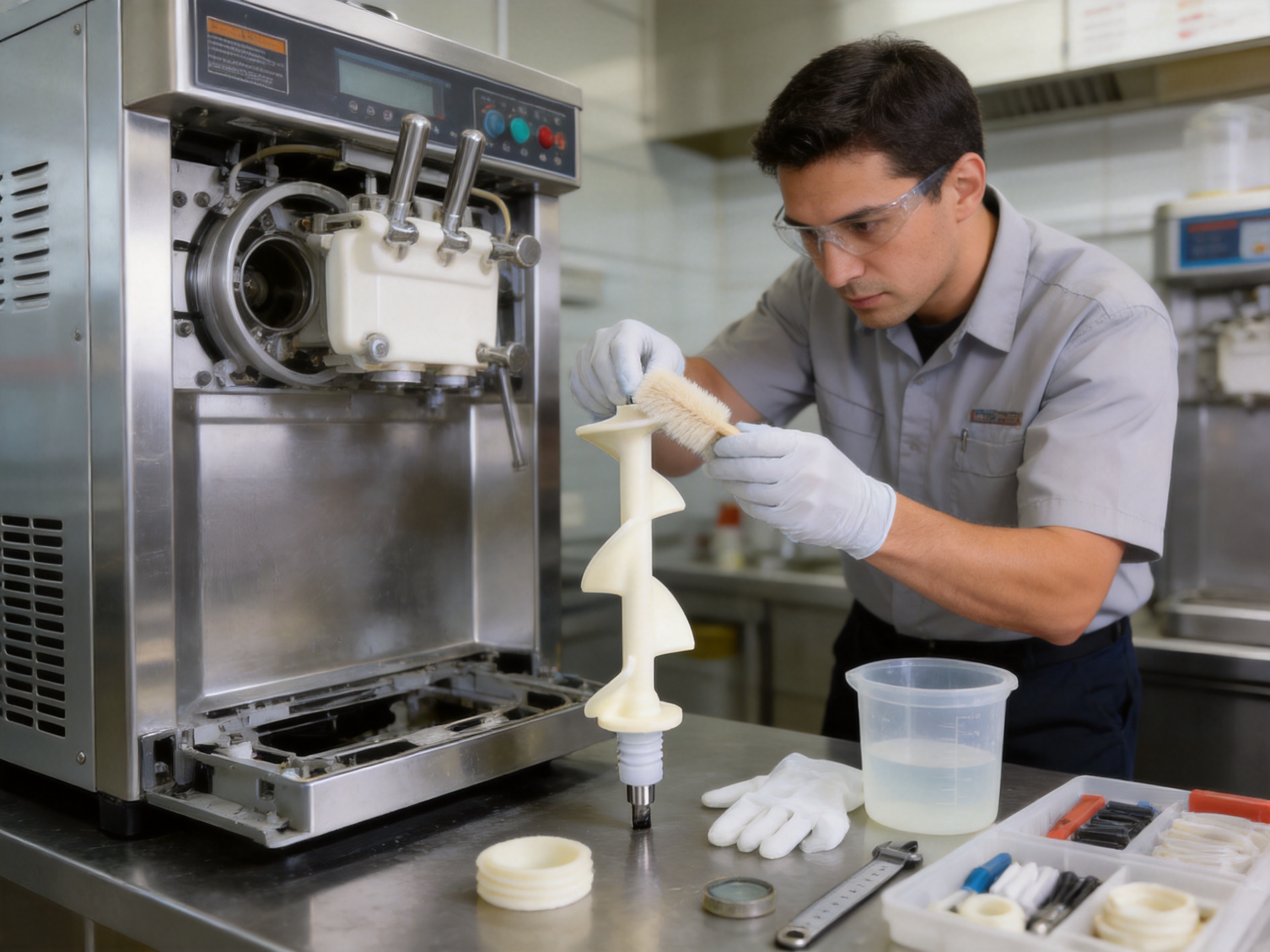
Soft-serve ice cream equipment depends on the reliable performance of many individual components. While the freezer barrel, refrigeration system, control panel, and dispensing assembly receive most of the attention, the internal beater or agitator plays an equally important role in daily operation. It helps move the product through the freezing cylinder, supports even mixing, and contributes to the smooth texture expected from soft-serve ice cream. When the beater component becomes worn, damaged, or difficult to clean, the quality, hygiene, and efficiency of the entire machine may be affected.
The food-grade plastic beater component for soft-serve machines is designed as a practical replacement and maintenance solution for commercial operators, equipment distributors, service companies, and original equipment manufacturers. Manufactured from food-grade plastic, the component combines functional performance, convenient handling, simple cleaning, and economical replacement value. It is intended to support the internal operation of compatible soft-serve machines while helping businesses maintain consistent product quality and reliable service.
This component is supplied as an optional spare part and is not sold separately as a standalone retail product. It is suitable for customers who require replacement parts together with compatible equipment, after-sales service, equipment maintenance programs, or customized procurement arrangements. Its design supports convenient disassembly and installation, which can reduce maintenance effort and help operators keep the equipment in hygienic working condition.
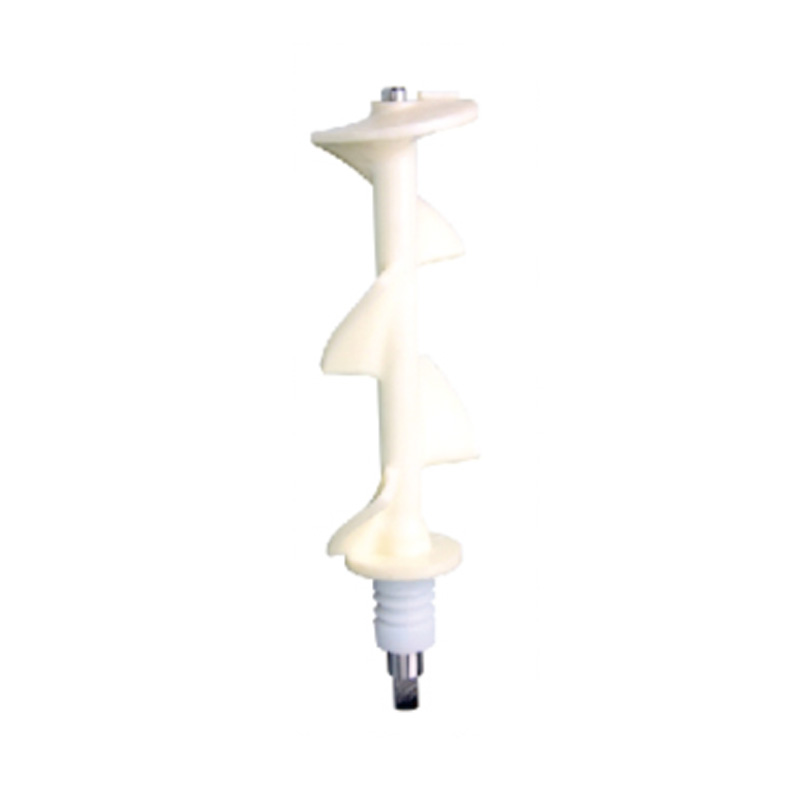
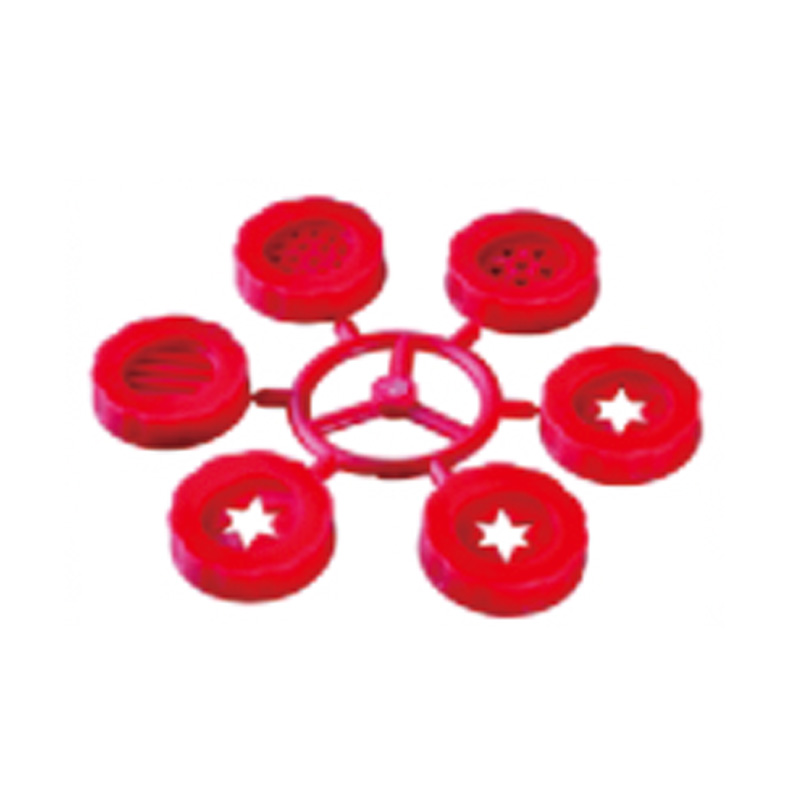
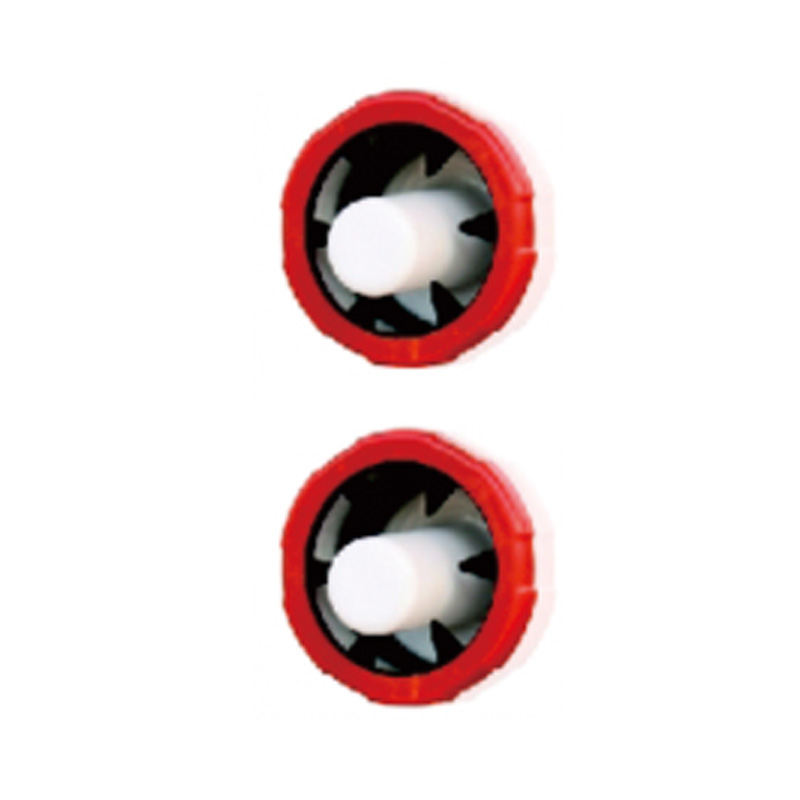
Plastic Beater Components for Soft-Serve Machine(Not sold separately)
The Role of a Beater in a Soft-Serve Machine
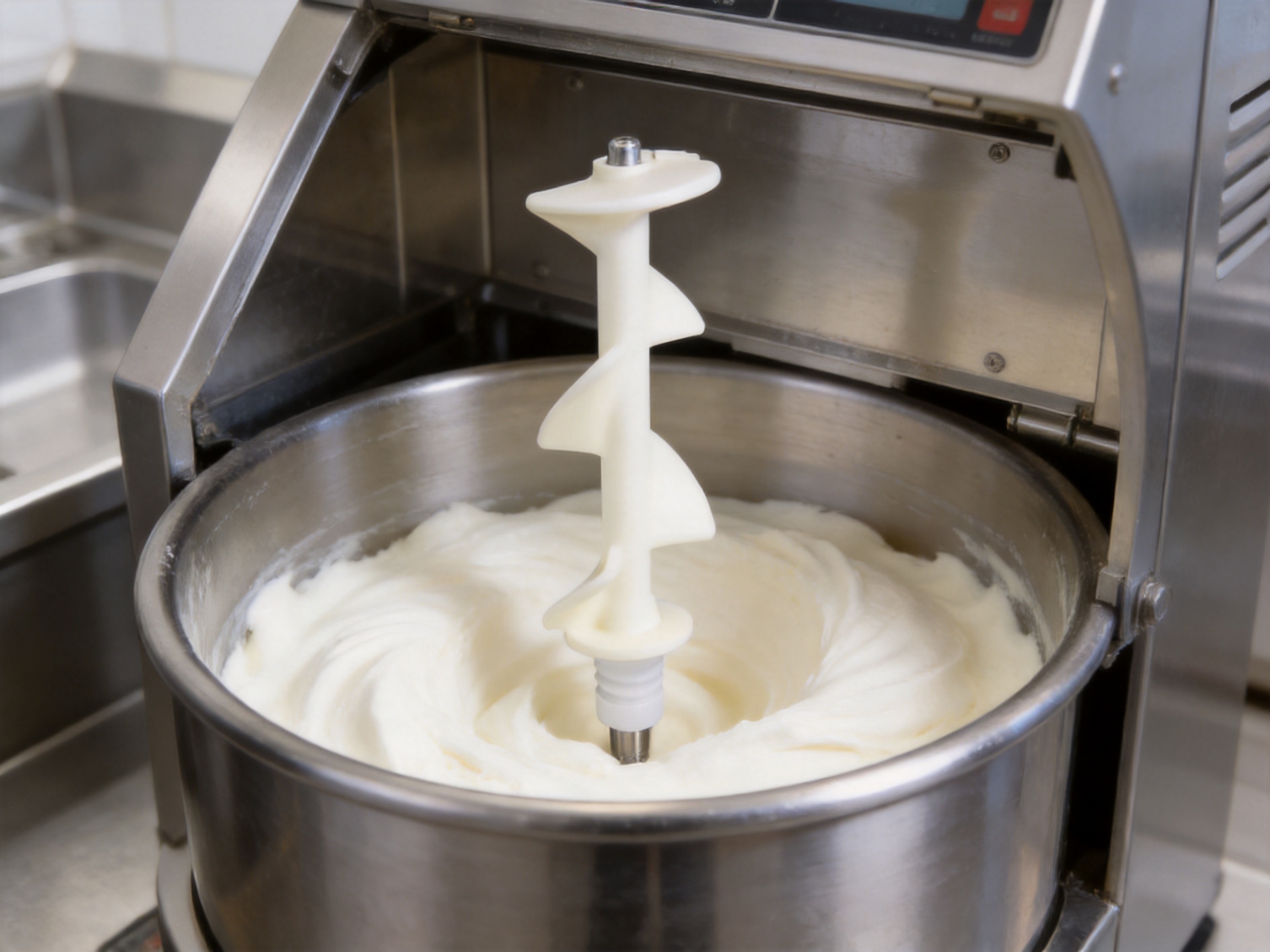
A soft-serve machine must perform several processes at the same time. It receives a liquid or semi-liquid mix, cools the mix inside a freezing cylinder, incorporates a controlled amount of air, maintains the desired consistency, and delivers the finished product through the dispensing outlet. The beater or agitator is positioned inside the freezing cylinder and works continuously or intermittently, depending on the machine design and operating mode.
During operation, the beater helps keep the mix moving against the cooled internal wall of the cylinder. This movement supports heat transfer and helps prevent the product from remaining stationary in one area. It also helps distribute the mix more evenly, reducing the risk of inconsistent texture between different portions. In many machine designs, the beater contributes to the incorporation and distribution of air, which is important for the body, appearance, and serving characteristics of soft-serve ice cream.
A properly functioning beater helps the machine produce a more uniform product. The finished ice cream should generally be smooth, stable, and easy to dispense. If the beater is worn or incorrectly installed, the machine may experience uneven mixing, irregular product flow, increased noise, excessive load, or inconsistent freezing results. For this reason, the beater should be treated as a key working component rather than a minor accessory.
The plastic beater component is developed to support this basic operating function while offering practical advantages in commercial foodservice environments. Its material and structure are selected to provide a balance between food-contact suitability, low weight, ease of handling, and maintenance convenience.
Food-Grade Plastic for Commercial Foodservice Applications
Material selection is especially important for any component that operates in contact with ice cream mix. Foodservice equipment is exposed to moisture, sugars, dairy ingredients, cleaning solutions, temperature changes, and frequent handling. A component that is unsuitable for the application can create maintenance difficulties or raise concerns about hygiene and long-term reliability.
The beater component is made from food-grade plastic intended for use in a foodservice environment. This material choice supports a clean and practical design for soft-serve machine applications. Food-grade plastic can provide a smooth surface that is easier to rinse and sanitize than a rough or damaged surface. It can also reduce the risk of product residue becoming trapped in difficult-to-reach areas when the component is properly disassembled and cleaned.
Plastic also offers a useful combination of light weight and functional strength. Compared with heavier construction materials, a plastic beater can be easier for operators and service technicians to remove, carry, inspect, and reinstall. Lower component weight may also make routine cleaning more convenient, especially in busy stores where maintenance work must be completed quickly between operating periods.
The use of food-grade plastic does not eliminate the need for correct operating procedures. Operators should still follow the cleaning instructions for the specific soft-serve machine, use approved detergents and sanitizers, avoid unsuitable abrasive tools, and inspect the component regularly. A well-designed part performs best when it is used within the temperature, chemical, and mechanical conditions specified for the compatible equipment.
Key Product Advantages
Hygienic and Easy to Clean
Hygiene is one of the most important considerations in soft-serve production. Dairy-based and sugar-based mixes can leave residue on internal components if cleaning is delayed or incomplete. The plastic beater is designed for easy disassembly, allowing operators to remove it from the freezing cylinder and clean it thoroughly as part of the machine’s regular sanitation routine.
Its practical structure helps simplify the cleaning process. When a component can be removed without excessive effort, operators are more likely to follow the recommended maintenance schedule. Easy access also allows technicians to inspect contact surfaces, connection points, and areas where residue may collect. This supports better hygiene control and helps extend the usable life of the part.
Compared with poorly designed replacement parts that are difficult to remove or contain unnecessary recesses, a maintenance-oriented beater can save time during daily cleaning. This is particularly valuable for ice cream shops, restaurants, supermarkets, cafés, convenience stores, and other locations that may operate for long hours and serve large numbers of customers.
Supports Consistent Texture
The internal movement created by the beater helps maintain the uniformity of the ice cream mix during freezing and dispensing. A stable and correctly fitted agitator contributes to the consistent movement of the product through the cylinder. This can support a smoother mouthfeel and more even product structure when the machine is correctly adjusted.
Consistency is important for both customer satisfaction and business control. Customers expect every serving to have a familiar texture and appearance. Operators also need predictable product performance when changing staff, opening additional locations, or using the same recipe across multiple machines. A dependable beater component helps maintain the mechanical conditions required for this consistency.
The component does not replace correct mix formulation, temperature control, machine calibration, or cleaning procedures. Instead, it works as part of the complete system. When all parts of the machine are properly matched and maintained, the beater can contribute to stable operating results.
Convenient Installation and Replacement
Replacement work is easier when the component has a practical structure and can be installed in a clear, straightforward manner. The plastic beater is designed to facilitate installation in compatible soft-serve machine models. Its manageable weight and service-oriented design can help reduce handling time for technicians and equipment operators.
A convenient replacement process can reduce machine downtime. For a commercial business, even a short interruption may affect sales, customer flow, and staff scheduling. Keeping suitable spare components available can help service personnel respond more quickly when inspection identifies wear or damage.
Installation should always be performed according to the machine manufacturer’s instructions. Compatibility should be confirmed before ordering, and the component should be checked for correct dimensions, connection structure, and operating requirements. If a customer is uncertain about compatibility, technical information and machine model details should be provided during the purchasing process.
Lightweight Handling
Soft-serve machine components may need to be removed frequently for cleaning and inspection. A lightweight plastic part is easier to handle than a comparable heavy component. This can reduce physical effort and make it more convenient for operators to complete sanitation procedures correctly.
Light weight can also reduce the risk of accidental impact during maintenance. Operators can remove and reinstall the component with greater control, provided they follow proper procedures. This is especially helpful in commercial kitchens and front-of-house environments where working space may be limited.
Economical Maintenance Value
Replacing an individual beater component can be more economical than replacing a complete freezing-cylinder assembly or delaying maintenance until multiple components are affected. A spare part strategy allows businesses to address a specific maintenance requirement while keeping the rest of the equipment in service.
The component can be included in preventive maintenance plans, equipment packages, distributor inventories, and service kits. For businesses with several soft-serve machines, maintaining a reasonable supply of compatible spare components may simplify purchasing and reduce the time required to locate replacement parts.
Economical value should be considered over the entire maintenance cycle. A part that is easy to clean, inspect, install, and replace can help reduce labor time as well as direct replacement costs. It may also help protect the performance of other machine components by supporting correct internal operation.
Comparison with Generic or Poorly Matched Alternatives
Commercial buyers often encounter replacement parts that appear similar but differ substantially in dimensions, materials, surface finish, and connection design. A generic part may be less expensive at the time of purchase, but an incorrect fit can lead to operational problems. Potential issues include excessive vibration, product leakage, difficult installation, poor mixing, unusual noise, and accelerated wear on related components.
The food-grade plastic beater is developed specifically for soft-serve machine applications rather than for general-purpose mixing. Its intended use, material selection, and maintenance characteristics are aligned with the requirements of commercial frozen dessert equipment. This application-focused approach provides an advantage over parts selected only by appearance or approximate size.
Another difference is attention to serviceability. Some low-quality alternatives may have rough surfaces, inconsistent molding, weak connection areas, or designs that make cleaning difficult. These problems can increase the chance of residue retention and make routine maintenance more time-consuming. A component designed with disassembly and hygiene in mind offers a more practical solution for professional users.
Commercial customers also benefit from a structured supplier relationship. When a component is supplied by an established foodservice equipment manufacturer, buyers can discuss equipment models, application requirements, packaging, customization, spare-part planning, and after-sales service in one procurement process. This can be more efficient than sourcing unrelated components from multiple vendors.
| Consideration | Food-Grade Plastic Beater Component | Unverified Generic Alternative |
|---|---|---|
| Material suitability | Food-grade plastic intended for compatible foodservice applications | Material specification may be unclear or inconsistent |
| Cleaning access | Designed to support disassembly, cleaning, and inspection | May contain difficult-to-clean areas or unsuitable surfaces |
| Machine fit | Selected according to compatible machine models and requirements | May be based only on approximate dimensions |
| Handling | Lightweight and convenient for routine service | Weight and handling characteristics may vary |
| Maintenance planning | Can be included in equipment packages and spare-part programs | Supply continuity may be uncertain |
| Supplier support | Technical communication, OEM and ODM discussion, and after-sales coordination | Support may be limited or unavailable |
Applications in Commercial Soft-Serve Operations
The beater component can support a wide range of professional soft-serve applications. In an ice cream shop, it helps maintain the operating condition of the machine used throughout the day. In a restaurant or café, it supports reliable dessert service without requiring excessive maintenance time. In a supermarket or convenience store, it can be included in a planned stock of replacement parts for equipment used continuously during business hours.
Fast-food chains and franchise operators may use multiple machines across different locations. Standardized spare-part procurement can simplify maintenance and reduce differences between branches. When the same or compatible components are available through an organized supply system, service teams can improve response time and manage inventory more efficiently.
Hotels, institutional dining facilities, catering businesses, and entertainment venues can also benefit from dependable spare components. These operations may have changing levels of demand, but they still require food equipment that can be cleaned efficiently and returned to service quickly. A replacement beater can be useful when preventive inspection identifies surface wear, connection damage, or other conditions that may affect performance.
Equipment distributors and maintenance companies may purchase the component for inclusion in service packages. A distributor can offer compatible spare parts together with soft-serve machines, technical support, and maintenance recommendations. Service organizations can use the component when repairing or refurbishing equipment, subject to confirmation of model compatibility.
Manufacturing Strengths and Production Capabilities
The component is supplied by a professional manufacturer integrating product design, research and development, manufacturing, sales, and service. This integrated structure is valuable because a spare component must satisfy more than a basic shape requirement. It must be considered in relation to machine operation, food-contact conditions, installation, cleaning, packaging, and long-term service support.
The company operates modern production facilities covering more than 60,000 square meters. This manufacturing base supports a broad product portfolio that includes ice cream machines, juice dispensers, fried ice cream machines, refrigeration cabinets, slush machines, flake ice machines, cooking equipment, griddles, fryers, insulation products, barbecue equipment, and buffet solutions.
Experience across these product categories provides a broader understanding of commercial foodservice equipment. The same customer may require several types of equipment for a complete store, restaurant, supermarket, or buffet project. A manufacturer with capabilities across refrigeration, frozen dessert, cooking, and serving equipment can help coordinate product requirements and provide more consistent support.
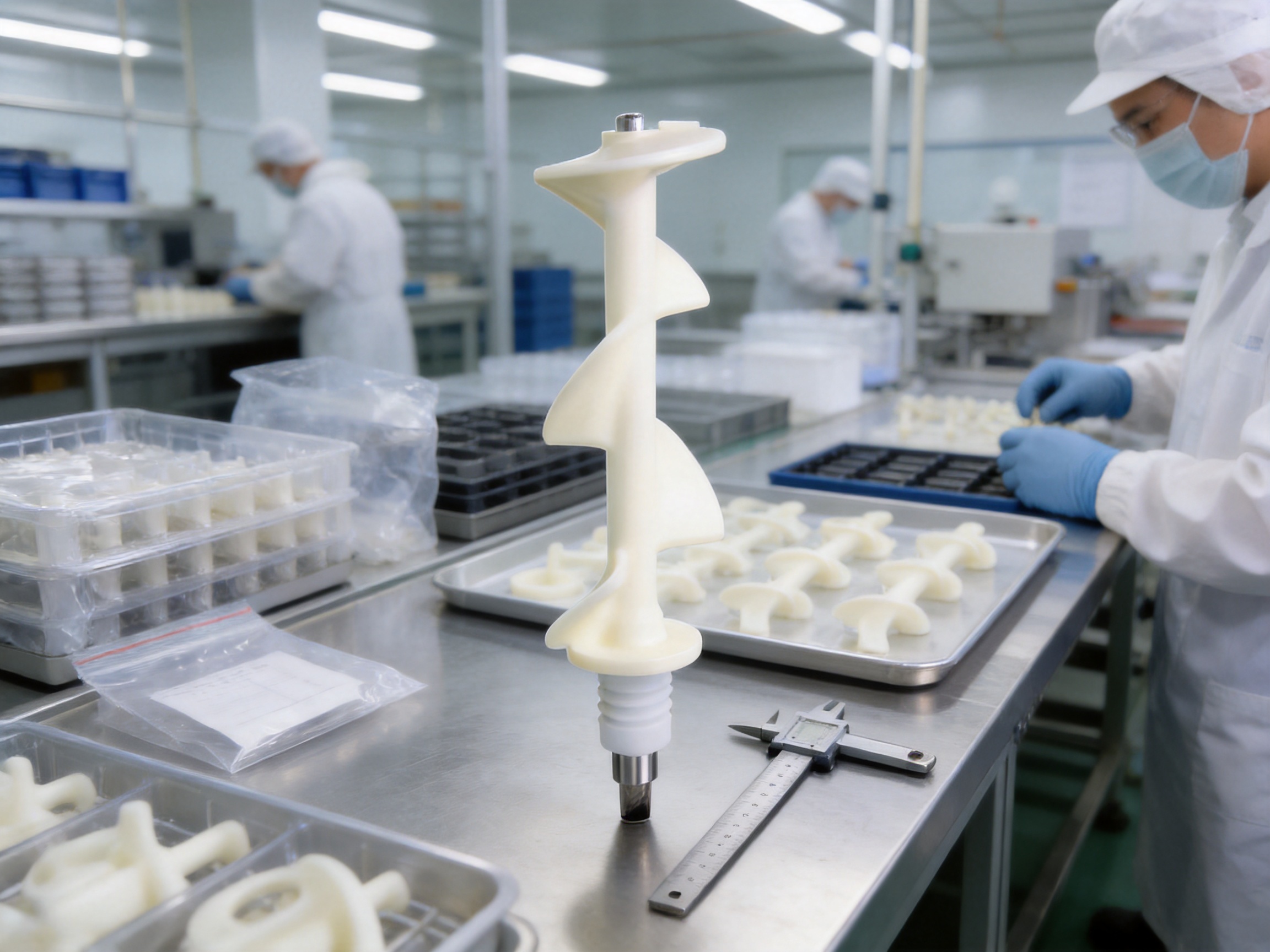
Manufacturing capability is also important for maintaining repeatability. Plastic components require controlled material preparation, mold design, forming or injection processes, trimming, dimensional inspection, surface inspection, and packaging. Consistency in these stages helps ensure that replacement parts maintain the intended geometry and connection performance from one production batch to another.
Design and Development
Product development begins with understanding the operating environment. For a soft-serve beater, relevant factors include the internal cylinder size, rotation or movement method, connection structure, contact with frozen mix, cleaning requirements, temperature changes, and expected service frequency. These factors influence the design of the plastic body, working surfaces, and attachment points.
Research and development teams can use equipment experience to identify common service needs and improve the practicality of the component. Designs may be reviewed for ease of assembly, cleaning access, structural stability, and compatibility with the larger machine system. The result should be a component that performs its intended role while remaining convenient for commercial maintenance.
OEM and ODM capabilities provide additional flexibility. OEM customers may require a component produced according to an existing drawing or machine specification. ODM customers may need support in developing a component for a new machine platform or private-label product line. In both cases, clear technical communication is essential for confirming material requirements, dimensions, tolerances, appearance, packaging, and inspection standards.
Material and Process Control
Foodservice components require disciplined material control. The selected plastic should be appropriate for the intended food-contact and operating environment. Production personnel must also maintain process conditions that support consistent molding, dimensional stability, and surface quality.
Process control may include incoming material verification, production parameter monitoring, visual inspection, dimensional checks, and final sampling. The specific inspection plan can be adjusted according to customer requirements and product design. Attention to these steps helps reduce the risk of variation that could affect installation or machine performance.
Because the beater is a working component, inspection should focus on both appearance and function. A surface may look acceptable but still have a dimensional issue at a connection point. Conversely, a minor cosmetic variation may not affect performance. A professional manufacturing process considers the characteristics that matter most to safe, stable, and hygienic operation.
Assembly and Quality Assurance
When the beater is supplied as part of a larger assembly, correct assembly is important. Components must be positioned properly, connection points must be secure, and the finished assembly must be checked before packaging. Quality assurance procedures help verify that the product is ready for installation in compatible equipment.
Packaging also deserves attention. Plastic parts can be damaged by pressure, impact, or improper stacking during storage and transportation. Suitable protective packaging helps preserve the component’s shape and surface condition until it reaches the customer. Clear labeling can further support warehouse identification and reduce the chance of selecting the wrong part during maintenance.
A manufacturer that manages design, production, inspection, packaging, and service in an integrated way can provide greater supply reliability than a trading source with limited control over production. This is especially important for distributors and commercial customers who need stable quality across repeat orders.
Cleaning and Maintenance Recommendations
Regular cleaning is essential for any internal soft-serve machine component. Product residue can harden over time, making removal more difficult and creating an unsuitable environment for hygienic operation. The beater should be removed and cleaned according to the machine’s established sanitation schedule and the instructions provided for the compatible equipment.
Before removing the component, the machine should be switched off and made safe according to the operator manual. Product should be drained or handled as required by the equipment procedure. Operators should use clean tools and avoid forcing the component if it does not release normally. Excessive force may damage the beater, the connection mechanism, or the freezing cylinder.
The component should be rinsed with an appropriate solution and cleaned with a soft brush or other approved tool. Abrasive pads, sharp metal tools, and unsuitable chemicals may scratch or weaken the plastic surface. After cleaning, the part should be thoroughly rinsed if required by the cleaning chemical instructions and sanitized using an approved food-equipment sanitizer.
Inspection should be performed after cleaning. Operators should look for cracks, deformation, excessive wear, rough edges, discoloration associated with chemical damage, and damage around the connection area. If the part no longer fits correctly or shows signs of structural failure, it should be replaced rather than returned to service.
The component should be completely dry or handled according to the machine manufacturer’s reassembly instructions before storage or installation. Clean parts should be protected from dust and contamination. Maintenance records can help commercial operators identify wear patterns and plan replacement before a failure causes unplanned downtime.
Installation and Compatibility Considerations
Although the component is designed for broad compatibility with various machine models, compatibility must always be confirmed before purchase and installation. Soft-serve machines may differ in freezing-cylinder dimensions, beater length, drive connection, blade arrangement, product capacity, and operating method. A part that looks similar may not function correctly if one of these specifications is different.
Customers should provide the machine model, required quantity, drawings, photographs, dimensions, or other technical information when requesting a quotation. This allows the supplier to review the application and recommend a suitable component. For OEM and ODM projects, technical drawings and samples can be used to establish the required specification.
During installation, the operator should check that the component is clean, undamaged, correctly oriented, and fully seated. The drive connection should engage without abnormal resistance. If the beater is difficult to install, the operator should stop and verify the alignment rather than applying excessive pressure.
After installation, the machine should be tested according to the operating manual. Unusual noise, vibration, leakage, irregular rotation, or inconsistent product flow may indicate an installation or compatibility issue. The machine should not continue operating under abnormal conditions until the cause has been identified.
Advantages for OEM, ODM, and Wholesale Buyers
Commercial equipment buyers often require more than a standard spare part. They may need private labeling, customized packaging, specified materials, drawing-based production, consolidated shipments, or a long-term supply arrangement. The manufacturer’s OEM and ODM capabilities provide a basis for discussing these requirements.
For OEM customers, production can be coordinated around existing machine designs and technical documents. The customer may specify dimensions, material characteristics, appearance, marking, packaging, and inspection criteria. The manufacturing team can then review the requirements and determine the appropriate production and quality-control process.
For ODM customers, the manufacturer can participate earlier in the development process. This may involve reviewing a concept, evaluating manufacturability, suggesting design improvements, preparing samples, and coordinating testing. Early technical cooperation can help identify cleaning, installation, or durability considerations before mass production begins.
Wholesale buyers may benefit from stable production capacity and product coordination. A buyer sourcing ice cream machines, juice dispensers, slush machines, and spare parts may be able to organize procurement through one experienced supplier. This can simplify communication, documentation, shipping arrangements, and after-sales service.
Flexible logistics and payment solutions can also support international foodservice projects. Requirements vary by market, order volume, delivery schedule, and product type. A supplier that offers responsive coordination can help customers plan inventory and reduce procurement uncertainty.
How the Component Supports Total Equipment Value
The value of a commercial machine is not determined only by its initial purchase price. Long-term operating value also depends on maintenance access, spare-part availability, cleaning time, service support, and the ability to keep the equipment productive. A practical beater component contributes to this total value by supporting routine service and targeted replacement.
When a small but important component can be replaced without replacing the entire machine assembly, businesses may reduce repair costs and extend the useful life of their equipment. The machine can remain in service while maintenance teams address the specific part requiring attention. This supports a more sustainable approach to equipment ownership.
Replacement components can also help reduce unnecessary waste. Instead of discarding a complete machine or large assembly because one internal part has worn, the operator may replace the affected component, provided the remaining equipment is safe and serviceable. This approach may improve resource efficiency and support responsible maintenance planning.
Environmental value should be considered together with correct disposal and cleaning practices. Damaged plastic parts should be handled according to applicable local waste-management requirements. Businesses should also avoid extending the service life of a component beyond safe operating limits. Responsible replacement means using the part for its intended purpose and changing it when inspection indicates that continued use may affect safety or performance.
Recommended Purchasing Checklist
Before ordering a plastic beater component, commercial buyers should collect accurate information about the machine and the intended application. The following checklist can help reduce ordering errors and improve communication with the supplier.
First, identify the machine brand, model, production series, and freezing-cylinder configuration. If the machine has been modified, include information about the modification. Second, confirm the required quantity and whether the component is needed for a replacement, new equipment package, service kit, or private-label project.
Third, provide drawings, photographs, measurements, or a physical sample when available. Important dimensions may include overall length, outside diameter, connection size, blade or paddle arrangement, and the location of any seals or attachment features. Fourth, specify any material, color, marking, packaging, or documentation requirements.
Fifth, discuss delivery expectations, packaging protection, inspection standards, and after-sales support. For repeat orders, buyers should ask about production consistency, minimum order quantities, lead times, and the possibility of maintaining a regular spare-part inventory.
| Purchasing Information | Why It Matters |
|---|---|
| Machine model and series | Helps verify compatibility and avoid ordering an unsuitable part |
| Drawings or measurements | Supports accurate review of dimensions and connection points |
| Required material specification | Confirms suitability for the intended foodservice application |
| Quantity and order frequency | Helps plan production, pricing, and inventory support |
| Packaging and labeling needs | Improves warehouse handling and protects parts during shipping |
| Inspection requirements | Defines the quality characteristics to be checked before delivery |
| Delivery and service expectations | Supports maintenance planning and reduces equipment downtime |
Why Choose an Integrated Foodservice Equipment Supplier
An integrated supplier can provide advantages that extend beyond the individual component. Because the manufacturer works across commercial refrigeration, frozen dessert equipment, cooking equipment, and buffet solutions, it understands the broader environment in which the beater will be used.
This broader experience can improve technical communication. A customer may be able to discuss machine configuration, spare-part requirements, cleaning procedures, equipment layout, and future customization with one supplier team. The supplier can also better understand the relationship between the beater and other components in the soft-serve system.
Integrated manufacturing may also support more consistent quality management. Design information can move directly between development and production teams. Service feedback can be considered in future product improvements. Sales and after-sales personnel can coordinate more effectively when they share access to product and manufacturing knowledge.
For international buyers, one-stop support can reduce the complexity of procurement. Consultation, customization, logistics, payment coordination, and maintenance communication can be organized through an established business relationship. This is particularly valuable for foodservice groups expanding into new markets or distributors building a complete equipment portfolio.
Frequently Asked Questions
What is the purpose of this plastic beater component?
The component is used inside compatible soft-serve machines to help move and mix the product in the freezing cylinder. It supports even product movement and contributes to consistent soft-serve texture when the machine is correctly installed, adjusted, and maintained.
Is the component sold as an individual retail product?
No. The product is described as an optional component and spare part and is not sold separately. It can be supplied with compatible equipment, through equipment maintenance arrangements, or as part of an OEM, ODM, distributor, or service procurement program.
Is the plastic suitable for foodservice equipment?
The component is made from food-grade plastic intended for compatible foodservice applications. Buyers should still confirm the exact machine model, operating conditions, cleaning chemicals, and technical requirements before placing an order.
Can the component fit every soft-serve machine?
No universal fit should be assumed. Soft-serve machines vary in dimensions, drive systems, cylinder structures, and beater designs. Compatibility should be confirmed using the machine model, drawings, measurements, photographs, or other technical information.
How does the component support hygiene?
Its design facilitates disassembly and cleaning. Removing the component allows operators to rinse, sanitize, inspect, and dry the part more effectively. Proper hygiene still depends on following the complete cleaning procedure for the specific machine.
What should operators inspect before reusing the beater?
Operators should check for cracks, distortion, excessive wear, rough edges, chemical damage, and problems around the connection area. The component should also be checked for correct fit and smooth installation. Any part that may compromise safe operation should be replaced.
What are the advantages of plastic construction?
Plastic can provide a useful combination of low weight, food-contact suitability, easy handling, and convenient cleaning. It may also make routine removal and installation easier. The actual performance depends on the material specification, component design, machine compatibility, and operating conditions.
Can the component be customized?
OEM and ODM cooperation may be available based on drawings, samples, technical requirements, packaging instructions, or machine specifications. Customers should provide complete information so the supplier can evaluate feasibility and confirm production details.
What information should be provided for a quotation?
Useful information includes the machine model, component photographs, dimensions, drawings, required quantity, material requirements, packaging expectations, delivery destination, and whether the part is for replacement, new equipment, private labeling, or a service program.
How often should the beater be replaced?
There is no single replacement interval for every machine. Service life depends on operating hours, product formulation, cleaning methods, machine settings, installation accuracy, and maintenance conditions. Replacement should be based on inspection, machine performance, and the equipment manufacturer’s recommendations.
Can a damaged beater affect machine performance?
Yes. A damaged or poorly fitted beater may contribute to uneven mixing, abnormal noise, vibration, poor product flow, or inconsistent freezing. The machine should be inspected and stopped for service if abnormal operation occurs.
Why is supplier manufacturing capability important for a spare part?
A capable manufacturer can control material selection, design, production, inspection, packaging, and after-sales communication. This can improve consistency and make it easier to address technical questions, repeat orders, customized requirements, and long-term maintenance needs.
Conclusion
The food-grade plastic beater component is a practical maintenance solution for compatible commercial soft-serve machines. It supports internal product movement, contributes to uniform texture, and is designed for convenient removal, cleaning, inspection, and replacement. Its lightweight construction and economical maintenance value make it suitable for ice cream shops, restaurants, cafés, supermarkets, fast-food chains, hotels, institutions, distributors, and service organizations.
Compared with unverified generic alternatives, a purpose-designed component offers advantages in material suitability, maintenance access, application focus, supplier support, and procurement reliability. Correct compatibility confirmation remains essential, but the component’s food-grade plastic construction and service-oriented design provide a strong foundation for professional use.
The manufacturing strength behind the product adds further value. With integrated design, research and development, production, sales, and service capabilities, modern manufacturing facilities, and experience across a broad range of commercial foodservice equipment, the supplier can support both standard spare-part needs and customized OEM or ODM projects.
For buyers seeking dependable soft-serve machine maintenance, the right beater is more than a replacement piece. It is part of a complete strategy for hygiene, product consistency, equipment uptime, cost control, and long-term operational value. By selecting a suitable food-grade component, following correct installation and cleaning procedures, and working with a capable manufacturing partner, foodservice operators can maintain more stable equipment performance and deliver a more consistent customer experience.
References
1. General principles of foodservice equipment sanitation and preventive maintenance.
2. Commercial soft-serve machine operating and service procedures.
3. Food-contact material selection principles for commercial food equipment.
4. Manufacturing quality-control practices for molded plastic components.
5. Preventive maintenance planning for commercial refrigeration and frozen dessert equipment.
6. OEM and ODM product-development practices for foodservice equipment suppliers.
Product: Plastic Beater Components for Soft-Serve Machine(Not sold separately)

For exclusive deals and latest offers, sign up by entering your email address below.


-
spelor@spelor.com
-
+86-576-85229688
-
No.528, Changxi Road, Linhai City, Zhejiang Province, China
Commercial Refrigeration Equipment Manufacturer China
Copyright © 2025 by Spelor Electrical Appliances (Zhejiang) Co., Ltd. Rights Reserved.
