


 中文简体
Compact Commercial Soft-Serve Ice Cream Machine for Efficient Small-Batch Dessert Production
Admin 2026-10-17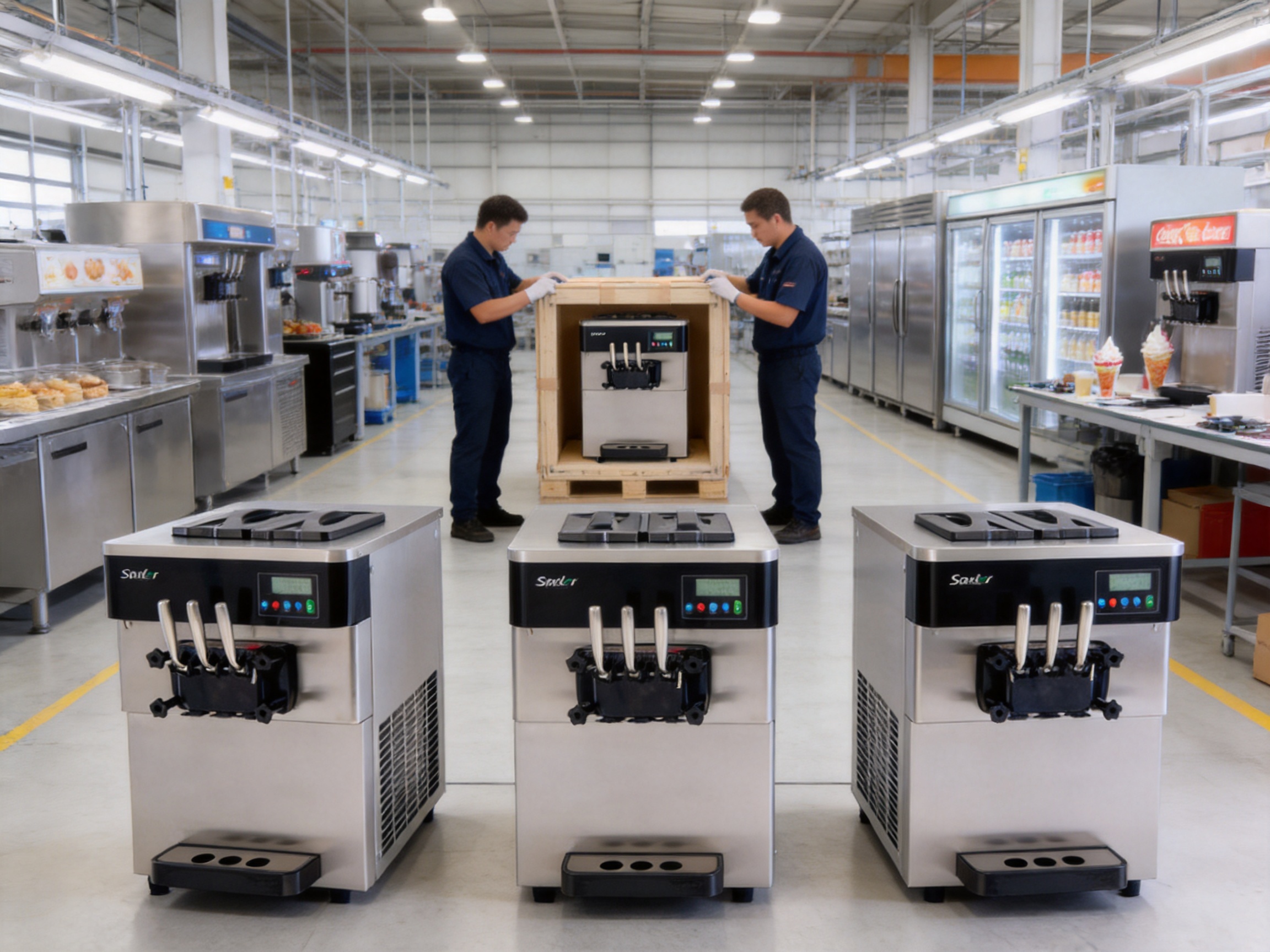
Soft-serve ice cream remains one of the most attractive frozen dessert products for cafés, snack shops, restaurants, convenience stores, family entertainment venues, and small foodservice businesses. It is visually appealing, easy to customize, and suitable for customers of many ages. However, choosing the right machine is essential for achieving reliable output, manageable operating costs, and consistent product quality. A machine that is too large can waste valuable space and energy, while an undersized or poorly designed unit may struggle to meet daily demand.
The Spelor Commercial Desktop Soft Serve Ice Cream Maker, model BQL-825T, is designed to address the needs of businesses that require professional frozen dessert production in a compact format. This electric mini soft-serve machine combines a desktop structure, food-grade stainless steel construction, a colorful sprayed steel exterior, an LCD control panel, and a self-cleaning function. With a rated capacity of 25 liters per hour and a power rating of 2,000 watts, it offers practical production performance for cafés, small dessert shops, home-based food businesses, and other locations with limited space.
Unlike many large floor-standing soft-serve machines designed for high-volume operations, this desktop model emphasizes flexibility, efficient use of space, straightforward operation, and convenient storage. It is suitable for businesses that need professional equipment without committing to the footprint, installation requirements, and higher investment associated with larger commercial systems. At the same time, its stainless steel food-contact construction and commercial-grade design support the hygiene, durability, and daily usability expected in a professional environment.
Product Overview and Intended Applications
The BQL-825T is an electric desktop soft-serve ice cream machine intended for the preparation of soft-serve ice cream and related frozen desserts. Its compact body makes it suitable for countertops, preparation areas, dessert stations, mobile service environments, and small production rooms. The machine can support businesses that want to add soft-serve products to an existing menu without redesigning their entire kitchen.
Its 25-liter-per-hour capacity provides a useful balance between production ability and compactness. This output level is appropriate for operations with steady but moderate customer traffic, including cafés, milk tea shops, dessert counters, small restaurants, snack kiosks, school canteens, and community foodservice locations. It can also be used by businesses that serve soft-serve as one part of a broader menu rather than as their only product category.
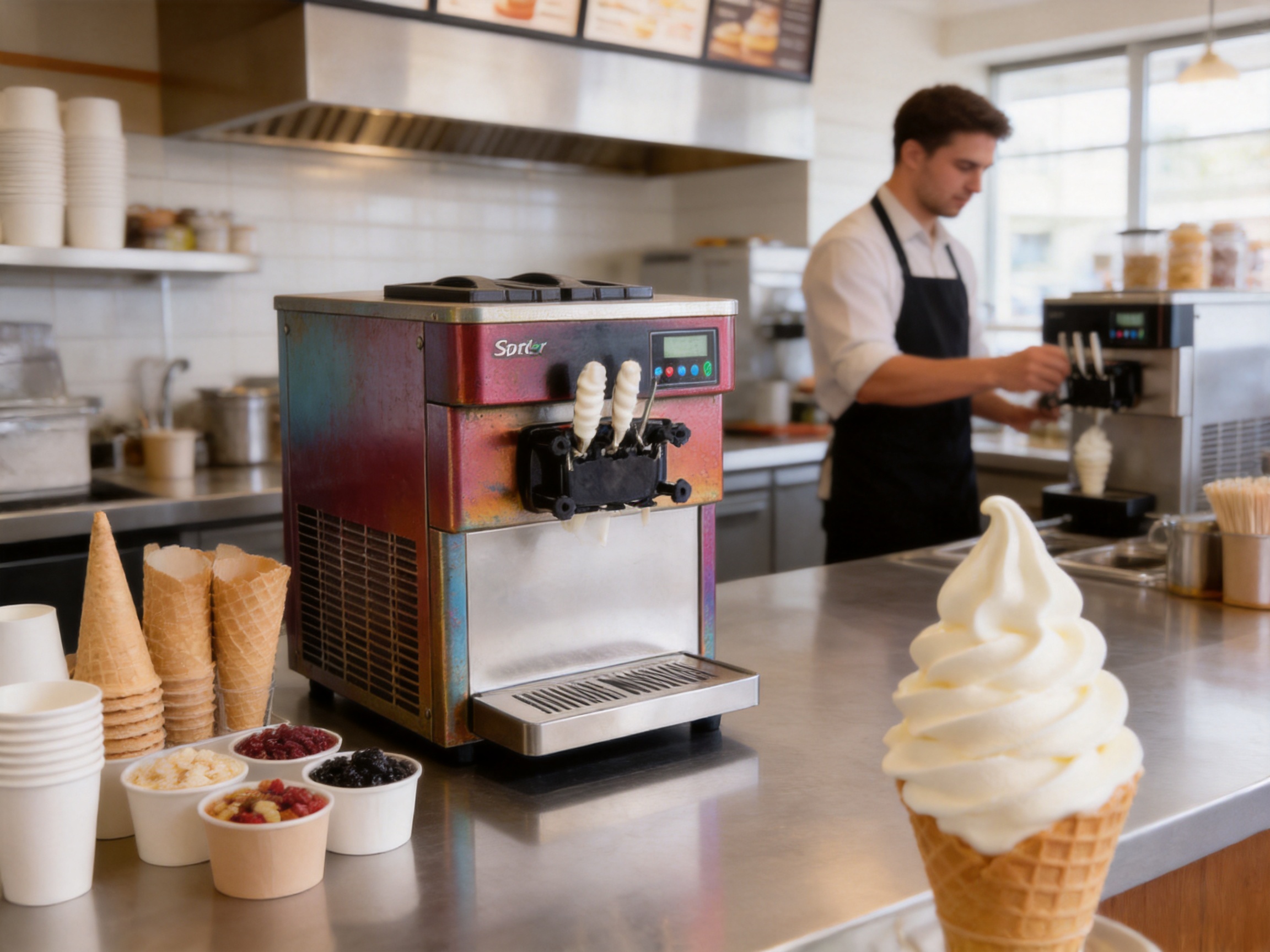
The machine is also appropriate for new entrepreneurs who want to test a frozen dessert concept. A compact machine can help reduce the amount of space required during the early stages of a business. It can be positioned near the sales counter, allowing customers to see the production process and making the soft-serve offering more noticeable. For established businesses, the unit can serve as an additional machine for seasonal demand, special events, promotional activities, or a secondary production area.
Because the design is electric and self-contained, the machine is easier to integrate into a suitable commercial environment than equipment that requires complicated external systems. Buyers should still confirm local electrical requirements, ventilation conditions, clearance space, and food safety regulations before installation. Proper preparation helps ensure stable operation and protects the equipment from avoidable performance problems.
Main Product Advantages
Compact Desktop Configuration
The most visible advantage of this model is its desktop configuration. Measuring 540 by 710 by 780 millimeters, the machine occupies considerably less floor area than many traditional floor-standing commercial soft-serve units. This makes it especially valuable in locations where every square meter must support revenue-generating activity.
A compact format can simplify shop planning. The machine may be installed on a suitable work surface or placed within a dedicated service area, depending on the site layout and local safety requirements. Its relatively small footprint allows operators to keep ingredients, serving supplies, cones, cups, toppings, and cleaning materials close to the point of use. This can reduce unnecessary movement during busy service periods.
Space efficiency is particularly important for small dessert shops, cafés, kiosks, and convenience stores. A business may want to add a soft-serve product but lack the room for a large freezer or a full-size floor model. The BQL-825T provides a practical alternative by offering commercial production functionality in a smaller body.
The desktop design also improves flexibility when a business changes its layout. A machine with a smaller footprint is easier to relocate during renovation, seasonal reconfiguration, or event preparation. Although the listed net weight is 92 kilograms, which still requires proper handling and a stable support surface, its compact dimensions make planning and positioning more manageable than with many larger commercial machines.
Food-Grade Stainless Steel Construction
Food-contact safety is a fundamental consideration when purchasing frozen dessert equipment. The plate body of this machine is made from food-grade stainless steel combined with a colorful sprayed steel exterior. Stainless steel is widely used in professional foodservice equipment because it offers a smooth, durable, and comparatively easy-to-clean surface.
The food-grade construction helps support hygienic handling of ingredients and finished products. It is also resistant to many common forms of wear associated with commercial kitchen use, including frequent wiping, routine sanitation, and exposure to moisture. A well-maintained stainless steel surface can retain a professional appearance over a long service period.
The sprayed steel exterior adds visual appeal while contributing to the machine’s overall enclosure and protection. The result is equipment that can fit into customer-facing environments rather than appearing purely industrial. This is useful for cafés and dessert counters where the machine forms part of the customer experience. A clean and attractive machine can reinforce perceptions of professionalism and product quality.
Compared with machines that use lower-grade exterior materials or difficult-to-clean surface finishes, the combination of stainless steel and sprayed steel provides a stronger balance between appearance, durability, and daily maintenance. Operators should follow the recommended cleaning procedures and avoid abrasive tools or unsuitable chemicals that could damage the finish.
LCD Control Panel
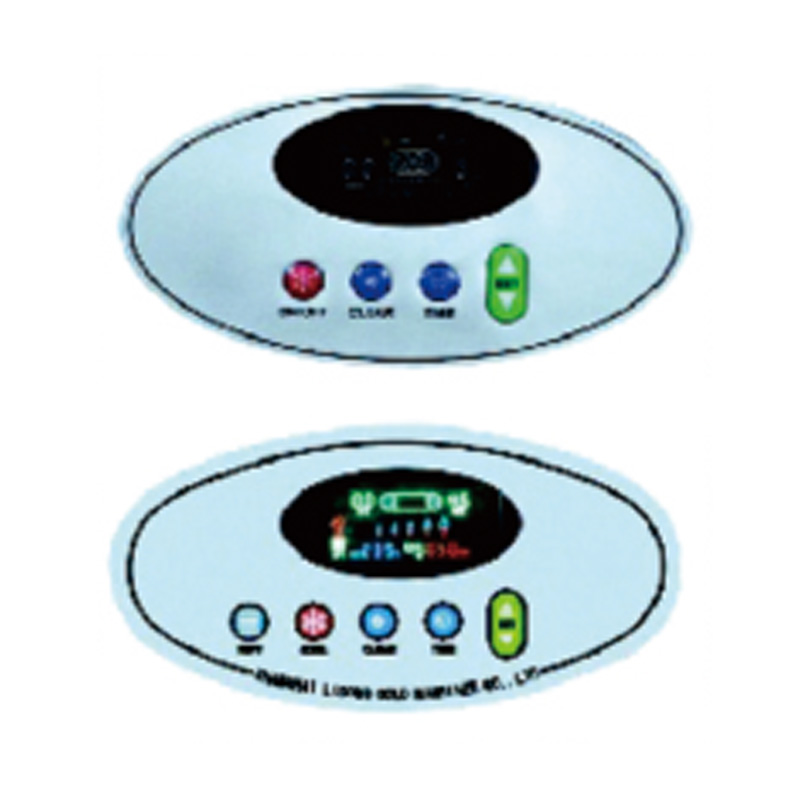
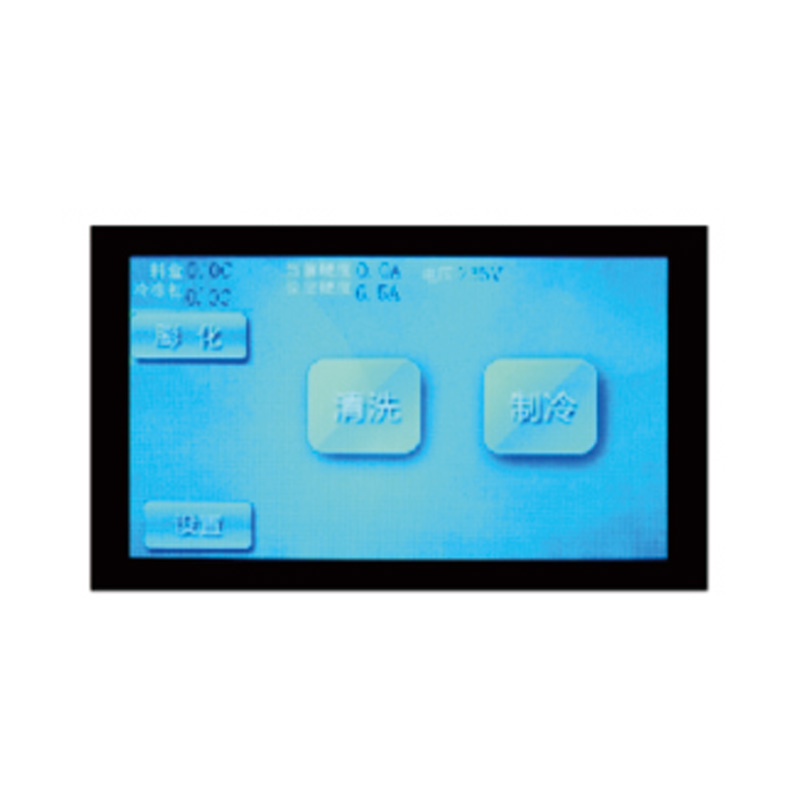
The LCD panel gives operators a clear interface for monitoring and managing the machine. Digital controls are valuable in foodservice environments because they can make operating information easier to view than simple mechanical switches or unclear indicator lights. A visible display can support more consistent daily operation, especially when several employees share responsibility for the equipment.
An LCD interface can also reduce the learning curve for new staff. Employees can become familiar with the machine’s operating functions more quickly when information is presented in a clear, organized format. This is beneficial for businesses with seasonal workers, rotating teams, or high employee turnover.
Simple operation does not eliminate the need for training. Operators should understand ingredient preparation, starting and stopping procedures, product consistency, cleaning routines, and basic troubleshooting. However, an accessible control panel can make those procedures easier to follow and can reduce uncertainty during busy service periods.
For owners and managers, digital operation can improve process consistency. Staff members are more likely to follow the same basic workflow when the machine provides a clear operating interface. Consistency is important because soft-serve quality depends not only on the recipe but also on correct loading, cooling, dispensing, cleaning, and storage practices.
Self-Cleaning Function
Cleaning is one of the most important responsibilities associated with soft-serve equipment. Residual dairy mixes and frozen dessert ingredients can create hygiene risks if they are not removed correctly. The self-cleaning function of the BQL-825T is designed to make routine cleaning more convenient and less labor-intensive.
A self-cleaning program can help operators follow a repeatable cleaning sequence and reduce the amount of manual effort involved in routine maintenance. This is especially useful in small businesses where the same employees may be responsible for customer service, preparation, cleaning, and closing duties. By simplifying the process, the function can support better compliance with daily sanitation schedules.
Self-cleaning should be regarded as a maintenance aid rather than a replacement for responsible sanitation. Operators must still follow the applicable cleaning instructions, use approved cleaning agents, inspect product-contact components, and disassemble and sanitize parts when required. Local food safety regulations may also specify cleaning frequencies and procedures.
Compared with basic machines that require a completely manual cleaning process, an integrated self-cleaning function can improve workflow efficiency. It may also help reduce the risk that staff members skip cleaning because the process appears too complicated or time-consuming. A simple, visible, and repeatable routine is valuable for maintaining product quality and protecting customers.

Spelor Commercial Desktop Soft Serve Ice Cream Maker Electric Mini Frozen Dessert Machine
Performance for Small-Batch Commercial Production
The BQL-825T has a stated capacity of 25 liters per hour. This specification indicates that the machine is designed for meaningful commercial production while remaining smaller than high-output systems intended for large chains, amusement parks, or major buffet operations. The actual output achieved in practice may depend on mix formulation, ambient temperature, serving size, operating conditions, and the way the machine is maintained.
A 25-liter-per-hour rating can be suitable for a business that serves soft-serve throughout the day but does not need to produce hundreds of liters at once. For example, a café may use the machine to serve cones, cups, sundaes, milkshakes, dessert combinations, and seasonal specials. A snack shop may use it as a primary frozen dessert unit, while a restaurant may operate it during peak dining periods.
The capacity is also suitable for controlled menu expansion. Many food businesses do not need a machine that operates at maximum output continuously. Excessive capacity can increase equipment cost, energy consumption, cleaning requirements, and unused production volume. Selecting a machine that matches actual demand can lead to more efficient investment and better operational control.
Businesses should estimate demand before purchasing. Important factors include the number of expected servings per hour, the length of peak periods, the product serving size, the available electrical supply, and the space allocated for ingredients and finished products. Choosing equipment based on realistic demand rather than the highest possible sales forecast helps avoid both under-capacity and unnecessary overspending.
Energy and Operational Efficiency
The machine has a rated power of 2,000 watts. For a commercial soft-serve appliance, power consumption should be evaluated together with output, operating time, local electricity rates, and the required cooling performance. The objective is not simply to choose the machine with the lowest nominal power, but to select a system that can deliver the necessary production efficiently and consistently.
The compact structure can contribute to practical efficiency because it is designed for smaller production environments. A business does not need to operate a large machine when demand is moderate. Using appropriately sized equipment may reduce unnecessary energy use and make the daily workflow easier to control.
Efficient operation also depends on staff behavior. Operators should avoid repeatedly opening covers, loading unsuitable mixes, allowing the machine to run without sufficient ingredients, or placing it in a location with excessive heat. Adequate clearance, stable ambient conditions, and routine cleaning can support more reliable cooling performance.
Energy efficiency has a direct relationship with operating cost, but it also affects product consistency. A machine that is maintained properly can cool and process the mix more predictably. Stable conditions help operators achieve a more uniform soft-serve texture and reduce avoidable interruptions during service.
For international buyers, electrical compatibility must be confirmed before shipment or installation. Voltage, frequency, plug configuration, circuit protection, and local certification requirements can vary between markets. Importers and distributors should communicate these requirements clearly when discussing orders and customization.
Advantages Over Larger or Less Specialized Alternatives
Commercial buyers often compare a compact desktop machine with three broad alternatives: a large floor-standing unit, a low-cost light-duty appliance, or a manually operated frozen dessert solution. Each option may have a place in the market, but the BQL-825T offers a balanced combination of professional construction and compact operation.
Compared with Large Floor-Standing Machines
Large floor-standing machines can provide higher capacity, but they also require more floor space and may be excessive for businesses with moderate demand. They can be more difficult to move, more demanding to install, and more expensive to purchase. A compact desktop machine can be a better match for cafés, kiosks, and small shops that need reliable output without the infrastructure associated with a high-volume system.
The smaller format may also allow a business to place the equipment closer to the point of sale. This can shorten the distance between preparation and serving, improve staff workflow, and make the product more visible to customers. For businesses operating in rented premises, avoiding major layout changes may be an important financial advantage.
Compared with Low-Cost Consumer Appliances
Consumer appliances are typically designed for occasional household use rather than continuous commercial service. They may have smaller capacities, less durable external materials, limited controls, and fewer sanitation-oriented functions. A commercial machine is generally better suited to repeated daily operation, provided it is installed and maintained correctly.
The BQL-825T combines a commercial capacity with food-grade construction, an LCD panel, and a self-cleaning function. These features are more relevant to professional operators than the basic controls commonly found on household units. Businesses can therefore benefit from a machine designed around daily production rather than occasional personal use.
Compared with Manual Frozen Dessert Preparation
Manual preparation can be flexible, but it often requires more labor and may produce inconsistent texture and serving speed. During busy periods, employees may struggle to keep up with customer demand while also managing other menu items. An electric soft-serve machine helps automate the freezing and dispensing process, allowing staff to serve products more quickly and consistently.
Automation also supports menu presentation. Soft-serve can be dispensed directly into cones or cups and combined with toppings, sauces, fruit, cookies, waffles, and other dessert ingredients. This creates opportunities to increase average order value without adding complicated cooking processes.
Suitability for Different Business Environments
Cafés and Coffee Shops
Cafés can use the machine to expand beyond hot beverages and baked goods. Soft-serve can be offered as a standalone dessert, an accompaniment to coffee, or part of a specialty menu. Its compact size helps cafés add a frozen category without sacrificing too much counter or preparation space.
The machine can also support seasonal promotions. In warm weather, soft-serve may become a prominent product, while in cooler months it can remain available as a smaller dessert option. A café can develop signature combinations using toppings, espresso, fruit sauces, or baked products.
Small Dessert Shops
For a dessert shop, the machine can serve as a central production unit for cones, cups, sundaes, and specialty creations. The 25-liter-per-hour capacity can support steady customer service while allowing the shop to maintain a compact layout. The attractive exterior may also suit a front-of-house installation where customers can observe the dispensing process.
Snack Kiosks and Convenience Stores
Snack kiosks and convenience stores often work within limited floor areas. A desktop machine can help these businesses introduce a higher-margin dessert item without requiring a major expansion. Operators can create simple menus that are quick to serve and easy for customers to understand.
The machine may be particularly useful near cinemas, tourist attractions, shopping centers, transportation hubs, and family recreation venues. In these environments, customers often seek convenient treats that can be served quickly while they continue shopping or moving through the venue.
Restaurants and Fast-Food Operations
Restaurants can use soft-serve as an add-on to meals or as part of a children’s menu. It can also be included in promotional bundles and limited-time offers. For smaller restaurants, a compact machine is easier to accommodate than a high-output unit designed for large chains.
Fast-food operators can use soft-serve to strengthen dessert sales and provide a visually attractive product. The machine’s digital interface and self-cleaning function may support standardized operating procedures across different shifts.
Home-Based and Small Entrepreneurial Businesses
Although the machine is a commercial model, its desktop format makes it relevant to certain home-based or small entrepreneurial businesses. Users must ensure that the installation environment satisfies local regulations, electrical requirements, hygiene rules, and structural safety expectations.
For a new business, the machine can provide a professional production foundation without requiring the investment associated with a large industrial system. Entrepreneurs can begin with a focused menu, learn customer preferences, and expand their offering as demand develops.
Events and Temporary Service Locations
The unit may also be considered for event-related service, promotional counters, or temporary dessert stations. Its compact dimensions simplify planning, although its 92-kilogram net weight means that movement should be performed with suitable equipment and sufficient personnel. The machine should be transported, positioned, and connected carefully to avoid damage.
Manufacturing Strengths and Company Capabilities
Behind a commercial appliance’s performance is the manufacturer’s ability to design, produce, inspect, customize, and support the product. Spelor Electrical Appliances (Zhejiang) Co., Ltd. is a professional manufacturer integrating design, research and development, manufacturing, sales, and service. This integrated structure allows the company to coordinate product development with factory production and customer support.
The company operates more than 60,000 square meters of modern production facilities. A manufacturing base of this scale can provide important advantages for international buyers, including organized production planning, dedicated equipment categories, supply chain coordination, and the ability to support different product lines. It also demonstrates that the supplier is positioned as a professional foodservice equipment manufacturer rather than a small trading operation focused only on product resale.
The company specializes in commercial refrigeration, kitchen equipment, and buffet equipment. Its product range includes ice cream machines, juice dispensers, fried ice cream machines, refrigeration cabinets, slush machines, flake ice machines, cooking equipment, griddles, fryers, insulation products, barbecue equipment, and buffet solutions. This broad product portfolio gives the company experience across several foodservice applications.
For distributors and project buyers, a broad product range can simplify procurement. A customer may source multiple categories from one manufacturing partner rather than coordinating separate suppliers for ice cream machines, beverage equipment, refrigeration, and cooking equipment. This can help reduce communication complexity and support more consistent product planning across a store or chain.
Integrated Design and Research and Development
Integrated design and research and development support continuous improvement in product function, appearance, usability, and manufacturing efficiency. For a machine such as the BQL-825T, development work may involve the interaction of the cooling system, product-contact components, control interface, external panels, cleaning process, and overall dimensions.
A compact machine must use its internal space efficiently. The manufacturer has to balance output, component placement, structural stability, heat management, accessibility, and serviceability. The desktop format requires careful attention to weight distribution and support requirements because the unit is intended to operate on a work surface rather than directly on the floor.
Product development also needs to consider the practical realities of foodservice operations. Operators require clear controls, easy access to relevant parts, surfaces that can be cleaned, and a design that can withstand frequent use. The combination of an LCD panel and self-cleaning function shows attention to operational convenience as well as basic freezing performance.
Manufacturing and Assembly Coordination
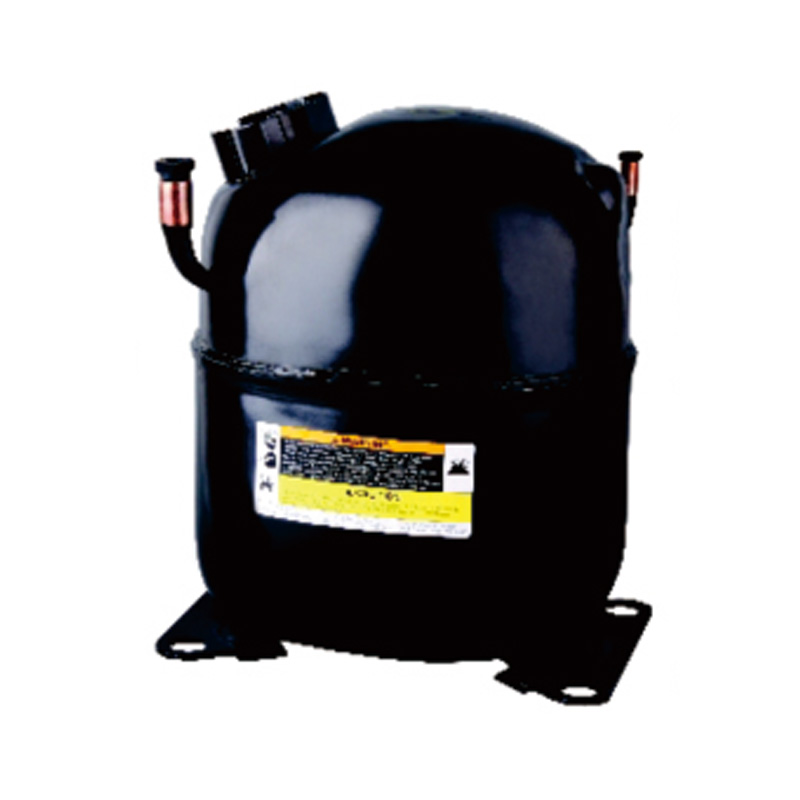
Commercial foodservice equipment is made up of multiple systems that must work together. The refrigeration and freezing elements must provide appropriate cooling. The product path must be suitable for food contact. The outer structure must protect internal components. Controls must communicate with the operating system. Assembly quality affects the stability and service life of the finished machine.
An established production facility can coordinate these stages more effectively by using defined assembly procedures, component management, and quality checks. Consistency is especially important when products are supplied to international distributors, because buyers expect the same model to perform predictably across multiple orders.
The manufacturer’s experience across commercial refrigeration and kitchen equipment categories can also support component knowledge and production discipline. While each product has its own design requirements, shared experience with cooling systems, stainless steel fabrication, electrical assemblies, and foodservice applications can contribute to efficient development and manufacturing.
Quality-Oriented Materials and Finishing
The use of food-grade stainless steel in the plate body reflects the importance of material selection in commercial equipment. Material quality affects hygiene, durability, appearance, and maintenance. The colorful sprayed steel exterior also requires a controlled finishing process to achieve a consistent appearance and adequate surface protection.
A professional manufacturer must coordinate material sourcing, fabrication, surface treatment, assembly, inspection, and packaging. These steps influence not only how the machine looks when delivered but also how it performs after repeated use. Proper packaging is particularly important for international shipments because the machine must be protected from vibration, impact, moisture, and handling during transportation.
Commercial Specification Summary
| Product Category | Commercial Soft-Serve Ice Cream Machine |
| Model | BQL-825T |
| Configuration | Desktop electric machine |
| Rated Capacity | 25 liters per hour |
| Rated Power | 2,000 watts |
| Net Weight | 92 kilograms |
| Dimensions | 540 x 710 x 780 millimeters |
| Control Interface | LCD panel |
| Cleaning Feature | Self-cleaning function |
| Main Materials | Food-grade stainless steel and sprayed steel |
| Recommended Applications | Cafés, dessert shops, snack stores, restaurants, kiosks, and small-batch foodservice operations |
The specifications show that this machine is positioned between household equipment and high-capacity industrial systems. Its capacity is sufficient for many small commercial applications, while its dimensions are suited to locations that cannot accommodate a large floor-standing unit. The 2,000-watt power rating should be evaluated together with the site’s electrical infrastructure before purchase.
Installation and Site Planning
Proper installation is essential for safe and stable operation. The machine should be placed on a firm, level, and sufficiently strong surface capable of supporting its 92-kilogram net weight as well as any operational load. A weak or unstable work surface can create vibration, noise, alignment problems, or safety risks.
Operators should leave adequate clearance around the equipment for ventilation, inspection, cleaning, and service access. The precise clearance requirements should be confirmed from the applicable product documentation. The machine should not be placed in an area exposed to excessive heat, direct sunlight, water spray, heavy dust, or obstructed airflow.
Electrical installation should be completed according to local regulations. The circuit must be suitable for the machine’s rated power, and protective devices should be selected by a qualified professional where required. International customers should verify voltage and frequency compatibility before placing an order.
Ingredient storage and workflow should also be considered. Mix, cups, cones, spoons, toppings, cleaning materials, and waste containers should be positioned so that staff can work efficiently without crossing unsafe paths. A carefully planned service station can improve speed and reduce the risk of spills or contamination.
Daily Operation and Product Consistency
Soft-serve quality depends on more than the machine itself. Operators should use a suitable mix prepared according to the supplier’s instructions. Ingredients should be stored at appropriate temperatures and handled using hygienic procedures. The mix should be loaded in a way that prevents contamination and avoids introducing unnecessary air or debris.
Consistent serving size is important for cost control. Staff should be trained to dispense comparable portions and to use standard cups, cones, or recipe guides. This helps the business calculate ingredient costs, maintain predictable margins, and deliver a consistent customer experience.
Product texture can be affected by mix composition, ambient temperature, cooling conditions, serving frequency, and machine cleanliness. If the product becomes too soft, too firm, or inconsistent, operators should check the mix, operating settings, environmental conditions, and cleaning status before assuming that a major equipment fault has occurred.
Staff should also understand the importance of avoiding extended periods of operation without sufficient mix. Operating conditions that differ significantly from normal use may affect performance. A daily checklist can help employees confirm that the machine is clean, correctly loaded, powered appropriately, and ready for service.
Cleaning, Hygiene, and Preventive Maintenance
A written sanitation routine should be established for every foodservice location using the machine. The routine should identify opening checks, operating checks, closing procedures, and periodic maintenance tasks. Responsibilities should be assigned clearly so that cleaning is not overlooked during busy shifts.
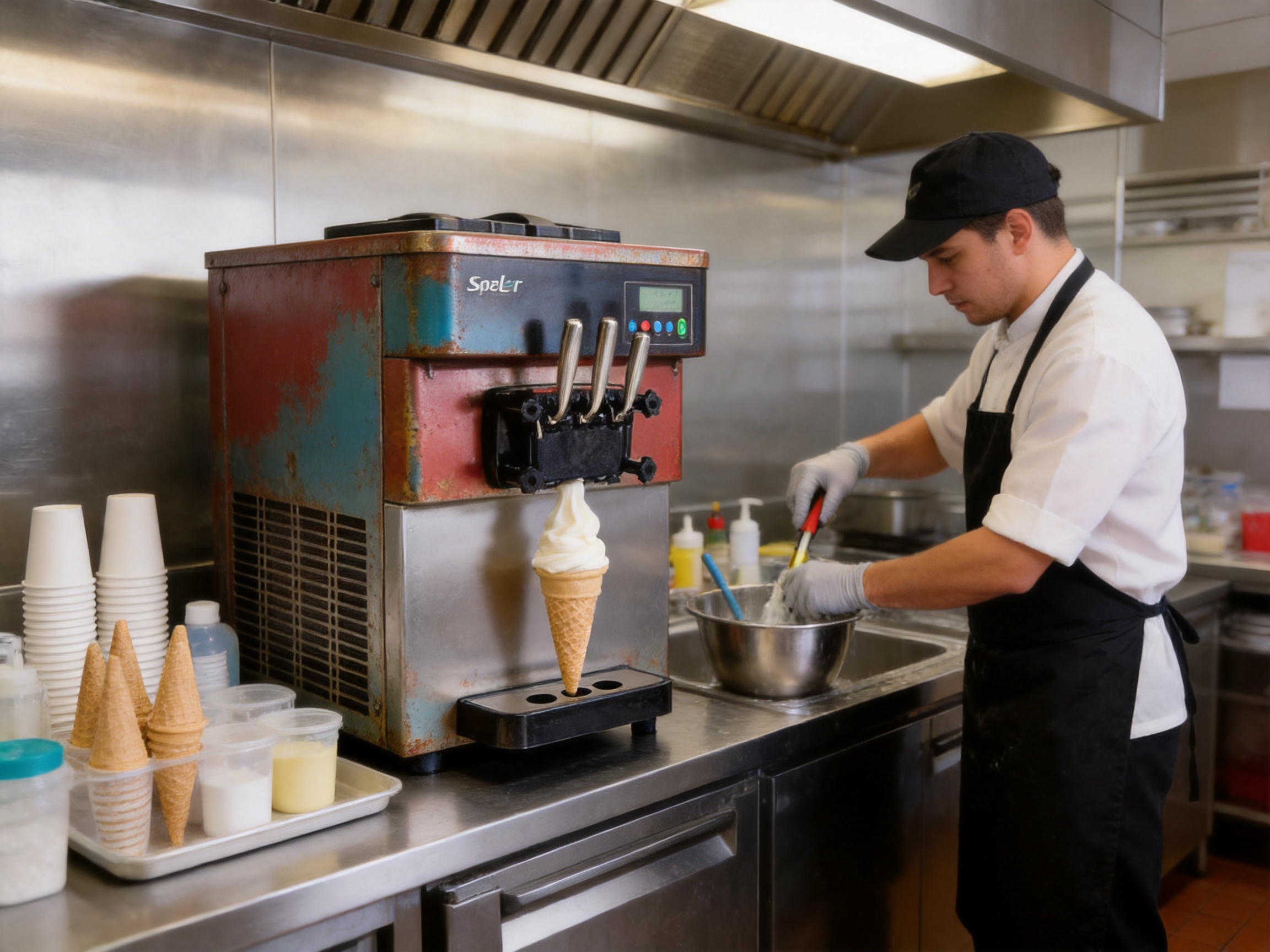
The self-cleaning function can support the routine by simplifying regular cleaning operations. Even so, staff should inspect accessible product-contact areas and follow the manufacturer’s instructions for removing, washing, sanitizing, and reinstalling relevant parts. Cleaning chemicals should be compatible with the machine’s materials and approved for food equipment use.
Preventive maintenance can help protect performance and extend service life. Operators should monitor unusual sounds, abnormal vibration, inconsistent freezing, damaged seals, loose fittings, electrical irregularities, and visible wear. Problems should be reported and addressed promptly rather than ignored until a breakdown occurs during a busy service period.
External surfaces should be wiped with suitable materials to preserve the stainless steel and sprayed steel finishes. Abrasive pads, corrosive chemicals, and excessive water around electrical components should be avoided. A clean exterior is not only visually professional but also easier to inspect for damage or leaks.
Procurement Benefits for Wholesalers and Distributors
Wholesalers and distributors often need products that can serve multiple customer segments. The BQL-825T is suitable for small cafés, dessert shops, restaurants, kiosks, and other businesses, giving distributors a broad potential market. Its compact design also makes it easier to present as a solution for locations where larger machines are unsuitable.
The product can be positioned around several strong selling points: commercial production capacity, desktop installation, food-grade construction, digital controls, self-cleaning convenience, and a design suitable for small-batch operations. These features help distributors explain the machine’s value to customers who want professional performance without excessive size.
Spelor’s broader manufacturing portfolio can create opportunities for package sales. A distributor serving a new café or snack shop may be able to combine a soft-serve machine with a juice dispenser, slush machine, ice machine, refrigeration cabinet, or other foodservice equipment. A coordinated equipment package may simplify the buyer’s procurement process and improve project efficiency.
The company also provides OEM and ODM capabilities based on customer drawings or requirements. This is relevant to importers, private-label distributors, regional equipment suppliers, and project contractors that need particular colors, configurations, branding arrangements, packaging specifications, or market adaptations. Customized projects should be reviewed in detail to confirm technical feasibility, minimum order quantities, production schedules, certification requirements, and documentation.
Flexible logistics and payment solutions may further support international procurement. Exact arrangements depend on the order, destination, product configuration, and commercial agreement. Buyers should request complete quotations that specify product details, packaging, delivery terms, lead time, warranty conditions, spare parts, and after-sales support.
OEM and ODM Cooperation Potential
OEM cooperation allows a buyer to sell equipment under its own brand or within its own distribution system, subject to an agreed manufacturing arrangement. ODM cooperation can involve adapting an existing product or developing a product solution according to specific market requirements. For commercial refrigeration and foodservice equipment, customization may cover exterior appearance, labels, controls, packaging, electrical standards, accessories, or product documentation.
A successful OEM or ODM project requires clear communication. Buyers should provide information about the target market, customer profile, expected operating environment, preferred specifications, certification requirements, packaging standards, and projected order volume. Early technical communication helps prevent misunderstandings later in the production process.
The BQL-825T can serve as a starting point for discussions because it already combines a compact structure with commercial functionality. Depending on project requirements, customers may explore whether certain aspects can be adapted. All proposed modifications should be evaluated by the manufacturer’s technical team before commitments are made.
For international markets, documentation is particularly important. Buyers may require manuals, product labels, electrical information, packing lists, inspection records, and other documents relevant to importation and local compliance. A manufacturer with integrated sales, production, and service capabilities can coordinate these requirements more efficiently.
After-Sales Service and Long-Term Business Value
Foodservice equipment creates value only when it remains operational. A dependable after-sales structure can therefore be as important as the initial product specification. Spelor provides pre-sales consultation, product customization, logistics and payment support, and after-sales maintenance as part of its one-stop service approach.
Pre-sales consultation helps customers select equipment according to capacity, application, layout, and market needs. This can reduce the risk of buying a machine that does not fit the intended site or sales volume. Technical discussions before purchase are especially important for international buyers with different voltage requirements or certification expectations.
After-sales maintenance supports the long-term use of the equipment. Operators should retain purchase records, model information, manuals, and maintenance documentation. When requesting technical assistance, they should provide clear details about the issue, operating conditions, error information if available, and any recent changes in product performance.
For distributors, supplier responsiveness can influence customer satisfaction and brand reputation. A manufacturer that can support spare parts, maintenance guidance, and technical communication helps distributors provide a stronger service package to their own buyers. This can contribute to repeat orders and long-term commercial relationships.
How to Evaluate Whether This Machine Is the Right Choice
Potential buyers should begin by estimating actual demand. The appropriate machine depends on the expected number of servings, peak-hour traffic, operating schedule, menu design, and available space. The stated 25-liter-per-hour capacity makes this model appropriate for many small and medium-demand applications, but businesses expecting continuous high-volume service may require a different configuration.
Next, buyers should review the installation environment. The dimensions are compact, but the 92-kilogram weight requires a stable support structure. Electrical capacity, ventilation, cleaning access, and ingredient workflow should all be confirmed before purchase.
Buyers should also consider the value of commercial features. If self-cleaning, food-grade materials, digital controls, and professional output are important to the business, a commercial desktop machine may provide better long-term value than a low-cost household appliance. The evaluation should include not only the purchase price but also expected durability, productivity, labor savings, maintenance, and revenue potential.
Finally, buyers should discuss service and customization. Questions about voltage, packaging, spare parts, warranty terms, delivery schedules, private labeling, and technical support should be settled before order confirmation. A clear purchasing process protects both the buyer and the manufacturer.
Frequently Asked Questions
What type of business is the BQL-825T designed for?
The machine is designed for small-batch commercial applications such as cafés, dessert shops, snack stores, kiosks, restaurants, convenience stores, and other foodservice operations. Its desktop structure makes it particularly suitable for businesses with limited space and moderate soft-serve demand.
What is the production capacity?
The stated capacity is 25 liters per hour. Actual output may vary according to mix formulation, serving size, ambient temperature, operating conditions, and maintenance. Buyers should use the rated capacity as a planning reference and evaluate it against their expected peak demand.
Is this a floor-standing machine?
No. It is a desktop model with listed dimensions of 540 x 710 x 780 millimeters. It must be placed on a stable and sufficiently strong surface capable of supporting its 92-kilogram net weight.
What materials are used in the machine?
The plate body is made from food-grade stainless steel, while the exterior also uses colorful sprayed steel. These materials support a professional appearance, durability, and easier routine cleaning when the machine is maintained correctly.
Does the machine have digital controls?
Yes. The machine is equipped with an LCD panel. The display is intended to make operation and monitoring more convenient for staff members.
Does the machine include a self-cleaning function?
Yes. The self-cleaning function is designed to simplify routine cleaning. It should be used together with the manufacturer’s complete sanitation instructions, manual cleaning of applicable parts, and compliance with local food safety requirements.
What is the rated power?
The listed power is 2,000 watts. Buyers should confirm voltage, frequency, plug type, circuit capacity, and local electrical requirements before installation or shipment.
Can the machine be used in a home kitchen?
Its compact format can be suitable for certain home-based businesses or test kitchens, but users must confirm local regulations, hygiene requirements, electrical safety, ventilation, and the suitability of the supporting surface. It is a commercial machine and is heavier than ordinary household appliances.
How does it compare with a large commercial soft-serve machine?
The main advantages are compact dimensions, easier placement, lower space requirements, and suitability for moderate production. A larger machine may be preferable for continuous high-volume operations, while the BQL-825T is better suited to small and medium-demand applications.
Can international distributors request OEM or ODM services?
Spelor offers OEM and ODM foodservice equipment solutions based on customer drawings or requirements. Buyers should discuss specifications, branding, packaging, electrical standards, certifications, minimum order quantities, lead times, and technical feasibility with the manufacturer.
What other products does the manufacturer produce?
The company’s product range includes commercial ice cream machines, juice dispensers, fried ice cream machines, refrigeration cabinets, slush machines, flake ice machines, cooking equipment, griddles, fryers, insulation products, barbecue equipment, and buffet solutions.
What information should be included in an inquiry?
An inquiry should include the intended application, estimated daily and peak demand, destination country, electrical requirements, preferred configuration, branding or packaging needs, delivery expectations, and any certification or documentation requirements. Clear information helps the manufacturer provide a more accurate proposal.
Conclusion
The Spelor BQL-825T Commercial Desktop Soft Serve Ice Cream Maker is a practical solution for businesses that want professional frozen dessert production without the footprint of a large floor-standing machine. Its 25-liter-per-hour capacity, 2,000-watt electric system, food-grade stainless steel plate body, colorful sprayed steel exterior, LCD panel, and self-cleaning function create a useful combination of performance, convenience, hygiene support, and visual appeal.
The machine is especially well suited to cafés, small dessert shops, snack kiosks, restaurants, convenience stores, and other foodservice businesses with moderate demand and limited space. It can help operators add soft-serve products to an existing menu, develop specialty desserts, improve service speed, and create additional revenue opportunities.
Its value is strengthened by the manufacturer’s broader capabilities. Spelor Electrical Appliances (Zhejiang) Co., Ltd. integrates research and development, design, manufacturing, sales, and service across more than 60,000 square meters of modern production facilities. Its experience in commercial refrigeration, kitchen equipment, and buffet solutions supports product development, coordinated manufacturing, OEM and ODM cooperation, and after-sales service for customers in global markets.
For buyers, the best purchasing decision should be based on a complete evaluation of capacity, space, electrical requirements, cleaning procedures, maintenance expectations, market demand, and supplier support. When those factors are properly matched, this compact commercial soft-serve machine can provide a dependable foundation for efficient small-batch dessert production and long-term foodservice growth.
References
1. Product specification sheet for the BQL-825T desktop soft-serve ice cream machine.
2. Manufacturer-provided company profile for Spelor Electrical Appliances (Zhejiang) Co., Ltd.
3. General commercial food equipment sanitation and preventive maintenance principles.
4. General foodservice equipment planning and small-business capacity evaluation practices.
5. General guidance on food-grade materials and hygienic design for commercial kitchen equipment.
Product: Spelor Commercial Desktop Soft Serve Ice Cream Maker Electric Mini Frozen Dessert Machine

For exclusive deals and latest offers, sign up by entering your email address below.


-
spelor@spelor.com
-
+86-576-85229688
-
No.528, Changxi Road, Linhai City, Zhejiang Province, China
Commercial Refrigeration Equipment Manufacturer China
Copyright © 2025 by Spelor Electrical Appliances (Zhejiang) Co., Ltd. Rights Reserved.
