


 中文简体
15L Single-Tank Commercial Slush Machine for Efficient Frozen Beverage Service
Admin 2026-09-21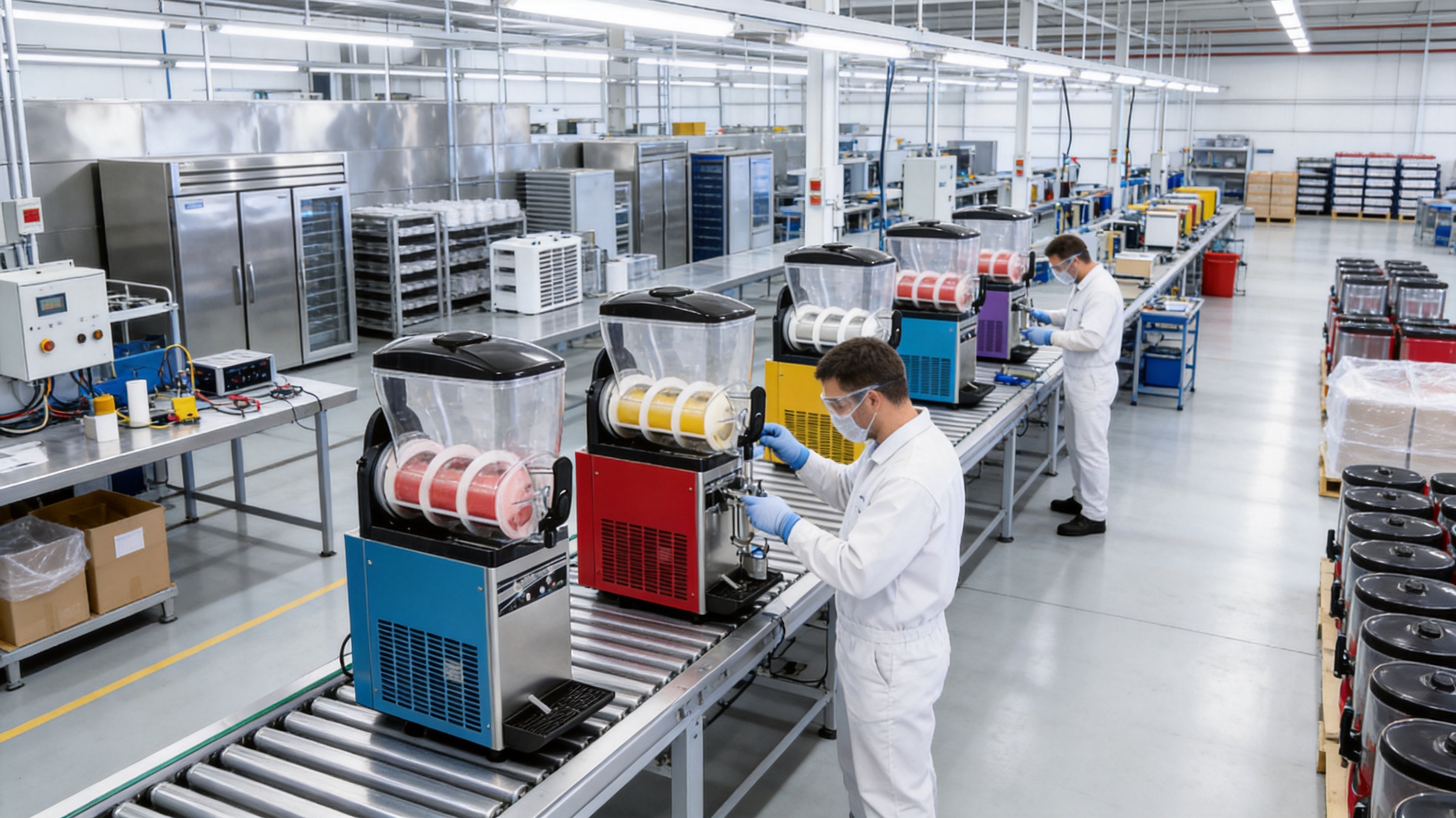
In cafés, bars, restaurants, snack shops, convenience stores, and other foodservice environments, frozen beverages are increasingly valued for their visual appeal, refreshing taste, and strong sales potential. A well-designed slush machine allows operators to produce chilled, semi-frozen drinks consistently while offering customers an engaging self-serve or counter-service experience. The 15L Single-Tank Commercial Slush Machine is developed for businesses that need dependable frozen drink production in a compact footprint.
With a 15-liter tank, efficient refrigeration, even stirring, food-grade construction, and a practical countertop-friendly form, this machine is suited to small and medium-sized commercial operations. It provides a balance between capacity and space efficiency, making it a useful solution for locations that cannot accommodate a large multi-tank system but still require stable daily performance.
The machine is identified as model X-150 and is designed for commercial frozen drink applications. It uses R290 refrigerant, offers a rated power range listed at approximately 500 to 550 watts depending on the specification version, and has a net weight of about 26 kilograms. The stainless-steel and coated-steel body gives the unit a clean professional appearance while supporting the hygiene and durability requirements of foodservice environments.
Why a 15L Slush Machine Is Suitable for Commercial Beverage Operations
Frozen drinks are often purchased as impulse products. Customers may be attracted by the bright colors, visible movement, and distinctive texture of slush beverages displayed at the service counter. For operators, this creates an opportunity to add a high-margin product category without installing a complicated production line.
A 15-liter tank is particularly practical for small and medium-sized venues. It can support regular beverage production while avoiding the excessive footprint and energy demand that may be associated with larger commercial models. The capacity is sufficient for many café counters, bars, restaurants, dessert stores, kiosks, and seasonal beverage outlets. At the same time, the single-tank design is straightforward to operate when a business wants to focus on one popular flavor or rotate flavors during different service periods.
Compared with a very small domestic-style frozen drink appliance, a commercial slush machine is built for more demanding use. It is designed around continuous service, product visibility, controlled cooling, and repeated dispensing. The X-150 format provides a more professional solution for businesses that need stable output during opening hours rather than occasional home use.
Compared with a larger multi-tank unit, the single-tank configuration can offer several practical advantages. It occupies less counter or floor space, requires fewer ingredients to fill, simplifies cleaning, and allows operators to begin production with a lower initial product volume. This can be valuable for new businesses, compact premises, seasonal locations, and operators testing a new frozen beverage concept.
Core Product Specifications
| Product Type | Commercial single-tank slush machine |
| Model | X-150 |
| Tank Capacity | 15 liters |
| Rated Output | Approximately 500–550 watts, depending on configuration |
| Refrigerant | R290 or R290a, as specified for the supplied configuration |
| Net Weight | Approximately 26 kilograms |
| Machine Dimensions | Approximately 205 × 510–535 × 810 millimeters, depending on specification version |
| Body Materials | Food-grade stainless steel and coated steel components |
| Primary Application | Bars, cafés, restaurants, dessert shops, snack stores, kiosks, and foodservice counters |
The supplied product information contains two closely related dimensional and rated-output descriptions: one lists 550 watts and dimensions of 205 × 510 × 810 millimeters, while another lists 500 watts and dimensions of 205 × 535 × 810 millimeters. These differences may reflect a configuration, production revision, or documentation variation. Buyers should confirm the final electrical rating, refrigerant designation, and external dimensions before placing an order, especially when preparing a fitted counter or planning electrical installation.
Efficient Frozen Beverage Production
The principal function of a commercial slush machine is to cool and maintain beverages in a partially frozen state without turning the product into a solid block. This requires a coordinated relationship between the refrigeration system, mixing mechanism, tank design, and operating controls.
The X-150 is designed to provide efficient cooling for a 15-liter product volume. During operation, the beverage is chilled while the internal stirring action helps distribute temperature evenly throughout the tank. This combination supports a smoother texture and helps prevent excessive separation between liquid and ice crystals.
Even stirring is important for both product quality and presentation. Without regular movement, frozen beverage ingredients can settle, freeze unevenly, or form hard areas near the coldest surfaces. Continuous or controlled agitation helps keep the mixture visually attractive and easier to dispense. It also contributes to a consistent texture from the beginning of the service period to the end.
For operators, consistent product texture can reduce waste and improve customer satisfaction. Customers generally expect each serving of a slush beverage to have a similar appearance and mouthfeel. Stable performance is therefore more valuable than simply achieving a low temperature. The machine is intended to support this consistency during normal commercial use.
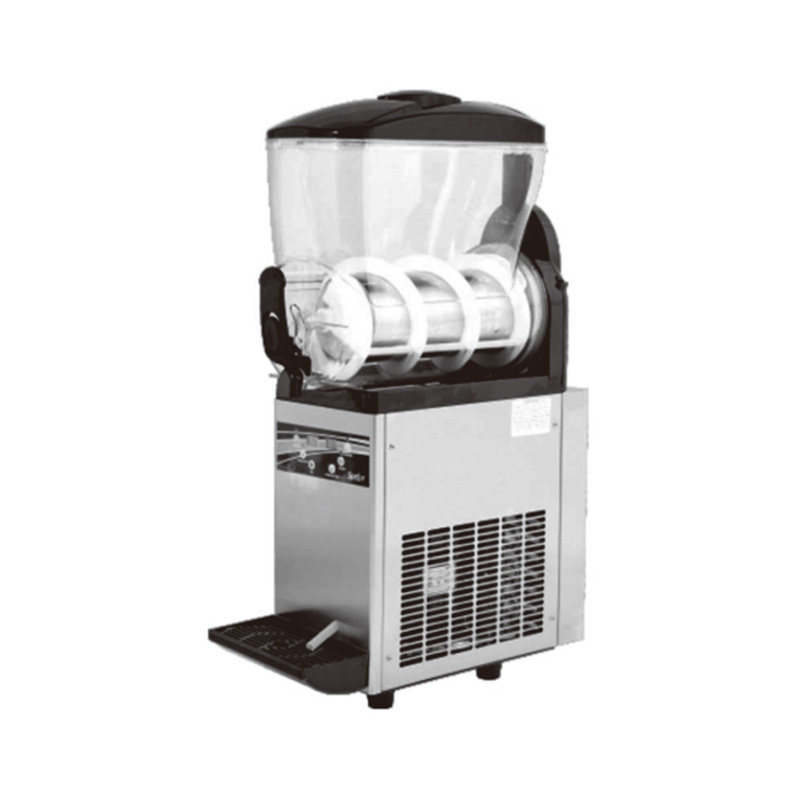
15L Single Tank Commercial Slush Machine for Bar Cafe Restaurant
Compact Design for Space-Conscious Businesses
Many foodservice businesses operate in locations where every square meter has a commercial purpose. Counter space may be shared by coffee equipment, cash registers, display cases, menus, preparation tools, and other appliances. A large frozen beverage system may not be suitable even when customer demand exists.
The compact design of this single-tank machine makes it easier to integrate into a small or medium-sized service area. Its approximate width of 205 millimeters allows it to occupy a relatively narrow footprint, while the vertical format makes practical use of counter height. The machine can be positioned at a front counter, beverage station, service bar, or dedicated preparation area, subject to suitable ventilation and installation conditions.
A compact machine can also help businesses create a dedicated frozen beverage station without major remodeling. For example, a café can place the unit beside its cold drink refrigerator, while a bar can position it near the mixing and dispensing area. A snack shop may use it as a visible attraction near the ordering counter.
The narrow single-tank format is also useful for businesses that want to introduce a new product category gradually. Instead of committing to a large multi-flavor system, an operator can begin with one signature slush flavor, a seasonal recipe, or a limited-time promotion. If sales increase, the business can later add another machine or expand the beverage station.
Food-Grade Construction and Professional Appearance
Equipment used in beverage preparation must be designed with hygiene, cleanability, and long-term service in mind. The machine body combines food-grade stainless steel with colorful sprayed steel components. Stainless steel is widely used in commercial kitchens because it offers a smooth, durable surface and a professional appearance.
The stainless-steel construction supports routine cleaning and helps the machine fit naturally into modern foodservice environments. It also provides a visual impression of reliability, which is important when the appliance is positioned in front of customers. A clean and well-maintained machine can reinforce the perception that the beverage operation is organized and hygienic.
The colorful sprayed-steel elements add visual distinction to the unit. This can be valuable for beverage concepts built around bright colors, summer promotions, children’s refreshments, or themed restaurant interiors. Rather than functioning only as a back-of-house appliance, the machine can become part of the customer-facing presentation.
Operators should still follow appropriate cleaning procedures, use approved detergents, and maintain all product-contact components according to the machine manual. Food-grade materials support hygienic operation, but sanitation depends on correct daily practice, timely disassembly, thorough rinsing, and proper drying.
R290 Refrigerant and Refrigeration Considerations
The product information identifies R290 or R290a as the refrigerant. R290 is propane used as a refrigerant and is recognized in modern refrigeration engineering for its low global warming potential compared with many older refrigerant types. Its use reflects the broader industry movement toward more environmentally considerate refrigeration solutions.
R290 systems must be designed, manufactured, installed, and serviced with appropriate safety controls because the refrigerant is flammable. Commercial buyers should ensure that the machine is operated in accordance with the supplied instructions and local regulations. Service work involving the sealed refrigeration circuit should be performed by qualified technicians with suitable equipment and training.
From an operational perspective, refrigeration performance depends on more than refrigerant selection alone. Airflow, condenser cleanliness, ambient temperature, beverage formulation, initial product temperature, ventilation clearance, and electrical stability all affect cooling results. The machine’s compact construction should therefore be installed in a location that allows proper heat dissipation and access for cleaning and maintenance.
When used under appropriate conditions, the refrigeration system is intended to support smooth frozen beverage production and stable holding temperature. Operators can improve efficiency by pre-chilling ingredients where suitable, avoiding unnecessary opening of the tank, keeping ventilation openings clear, and following recommended fill levels.
Advantages Compared with Basic or Non-Commercial Alternatives
More Suitable for Repeated Service
A domestic frozen drink appliance may be adequate for occasional personal use, but commercial service requires a different level of practicality. Businesses need equipment that can be placed into a daily workflow, cleaned regularly, and operated repeatedly during customer service hours. The X-150 is positioned as commercial foodservice equipment, with a tank capacity and construction intended for business environments.
Better Balance Between Capacity and Footprint
Large machines may provide more total capacity, but they can consume valuable space and require greater investment. The 15-liter single-tank design provides a middle ground. It is larger and more commercially oriented than many home units, yet more compact and simpler than a high-capacity multi-flavor system.
Professional Presentation
A visible beverage machine can influence purchasing decisions. The stainless-steel body and colorful coated exterior create a more professional appearance than many consumer appliances. The machine can contribute to a counter display while communicating that the business produces frozen beverages in a dedicated commercial system.
Simple Product Management
One tank makes inventory planning straightforward. Operators can calculate how much syrup, water, concentrate, or other approved ingredients are needed for one production batch. Cleaning and flavor changes can also be easier to organize than with several independent tanks, provided the tank is emptied and sanitized properly between recipes.
Suitable for New Product Development
A single tank allows a business to test recipes, seasonal flavors, promotional beverages, and regional preferences without committing to a large installation. This makes the machine useful not only for established restaurants but also for startups and entrepreneurs developing a new beverage concept.
Commercial Applications
The machine can serve a broad range of foodservice applications. In a bar, it can produce frozen cocktails or non-alcoholic slush beverages using recipes that are compatible with the equipment and local service regulations. In a café, it can offer fruit-based refreshments, coffee-inspired frozen drinks, or seasonal specialties.
Restaurants can use the unit to add a dessert-style drink or a chilled accompaniment to meals. Fast-food outlets and snack shops may place the machine near the ordering counter to encourage impulse purchases. Dessert stores can combine frozen beverages with ice cream, fried ice cream rolls, waffles, or other sweet products.
Convenience stores and kiosks may benefit from the customer-facing appearance of a slush machine. The visible product can attract attention, particularly in warm weather or high-footfall areas. Hotels, institutional dining facilities, leisure venues, and event operators may also consider the unit where a compact frozen drink station is required.
| Business Type | Potential Use |
| Bar | Frozen cocktails, mocktails, and signature chilled beverages |
| Café | Fruit slushes, flavored refreshments, and seasonal drinks |
| Restaurant | Meal accompaniments, dessert drinks, and promotional beverages |
| Snack Shop | Impulse-purchase frozen drinks and combination offers |
| Convenience Store | Self-service or counter-service chilled beverage sales |
| Event Venue | Compact beverage service for seasonal or temporary operations |
| Hotel or Institution | Breakfast, leisure, buffet, and guest refreshment service |
Recipe Flexibility and Product Quality
A commercial slush machine can support different beverage concepts, but recipe compatibility is essential. The sugar content, alcohol content, acidity, viscosity, and solids level of a beverage affect freezing behavior. Operators should use formulas recommended for slush equipment and avoid mixtures that may freeze too hard, remain excessively liquid, or place unnecessary stress on the stirring system.
Recipes should be tested before being introduced during peak service. A small test batch allows the operator to evaluate freezing time, consistency, flavor balance, dispensing behavior, and holding stability. It also helps determine whether the beverage requires adjustment in concentration or preparation temperature.
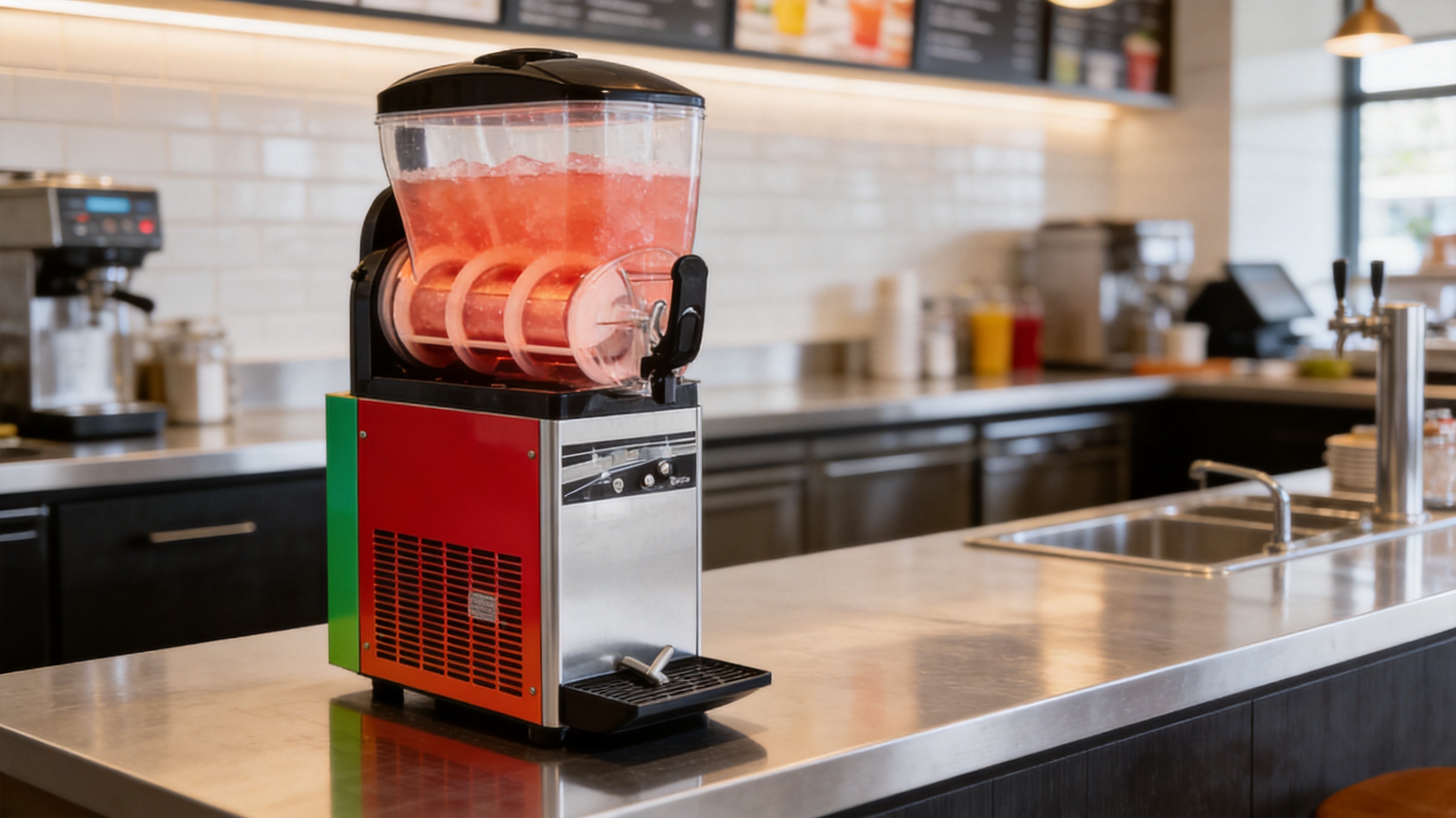
Visual presentation is another important part of product quality. A smooth, evenly mixed texture generally appears more attractive than a separated or partially frozen beverage. Transparent or visible tanks can help customers see the product, while colorful recipes can make the machine a noticeable feature of the service counter.
Operators can use the machine to create a focused menu rather than an unnecessarily large selection. A single signature flavor may be easier to promote, prepare, and control. Businesses can also rotate flavors according to season, local preferences, holidays, or promotional campaigns.
Ease of Operation and Daily Workflow
Commercial equipment should support a clear and repeatable workflow. Before starting production, the operator should verify that the machine is clean, correctly assembled, properly positioned, and connected to an appropriate power supply. The beverage mixture should be prepared according to the selected recipe and filled within the permitted operating range.
Once the refrigeration and stirring functions are activated, the operator can monitor the product as it reaches the desired consistency. During service, the tank should be checked periodically for product level, texture, and cleanliness. If the machine is used in a high-volume environment, staff should be trained to recognize unusual noise, excessive vibration, poor cooling, or abnormal frost formation.
At the end of the operating period, remaining product should be handled according to food safety requirements. The tank, dispensing components, stirring parts, and other product-contact surfaces should be cleaned using an appropriate procedure. Regular cleaning is essential not only for hygiene but also for maintaining smooth mechanical movement and preventing residue from affecting future batches.
The compact single-tank format simplifies staff training. Employees need to understand one product chamber, one set of dispensing operations, and one cleaning routine. This can reduce operational complexity compared with larger systems containing multiple independent tanks and more complicated product controls.
Maintenance and Long-Term Operating Value
Maintenance has a direct effect on equipment life and beverage consistency. The machine should be placed in a clean, dry, ventilated location. Air passages and condenser areas should be kept free from dust, grease, packaging materials, and other obstructions. Restricted airflow can reduce cooling efficiency and increase the workload placed on the refrigeration system.
Product-contact components should be inspected for wear, cracks, distortion, or residue accumulation. Seals and dispensing parts are particularly important because they influence hygiene and leakage prevention. Replacement components should be selected according to the correct model and specification.
Operators should avoid using abrasive tools or harsh chemicals that could damage surfaces. Stainless steel should be cleaned with methods suitable for foodservice equipment, and all components should be rinsed thoroughly when required. The exact cleaning and maintenance schedule should follow the supplied technical documentation and the working conditions of the site.
Preventive maintenance is generally more efficient than waiting for a major failure. A regular inspection can identify unusual sounds, changes in freezing performance, loose fittings, worn seals, or electrical concerns before they cause extended downtime. For commercial buyers, this is especially important because equipment availability can directly influence daily revenue.
The machine’s relatively manageable weight of approximately 26 kilograms may also simplify repositioning during scheduled cleaning or service, although lifting and installation should always be performed safely by suitable personnel. When the appliance is integrated into a counter, sufficient access should be maintained for inspection and repair.
Manufacturing Strengths and Production Capability
The manufacturer is a professional foodservice equipment company integrating design, research and development, manufacturing, sales, and service. Its modern production facilities cover more than 60,000 square meters, providing a substantial base for organized manufacturing and product development.
This scale is important for commercial buyers because reliable supply requires more than assembling individual machines. A capable factory must coordinate metal fabrication, refrigeration components, electrical systems, assembly, testing, quality control, packaging, documentation, and logistics. An integrated production structure can help reduce communication gaps between engineering and manufacturing teams.
The company’s product range includes ice cream machines, juice dispensers, fried ice cream machines, refrigeration cabinets, slush machines, flake ice machines, cooking equipment, griddles, fryers, insulation products, barbecue equipment, and buffet solutions. This broad portfolio demonstrates experience across several categories of commercial foodservice equipment.
Experience in related products can support practical design decisions. Refrigeration knowledge is relevant to slush machines, ice cream equipment, juice dispensers, and ice-making systems. Metalworking and thermal insulation experience can also contribute to the development of durable commercial cabinets and service-friendly equipment.
Design and Research Integration
Product design for commercial equipment must consider more than appearance. Engineers need to evaluate thermal performance, product-contact materials, structural strength, operating ergonomics, access for cleaning, component compatibility, and shipping requirements. Integrating research and development with manufacturing allows design decisions to be assessed against actual production capability.
For the X-150, the resulting design combines a compact body with a 15-liter working capacity, commercial refrigeration, internal stirring, and foodservice-oriented materials. This indicates an emphasis on practical operating performance rather than purely decorative design.
Manufacturing Process Considerations
A professional production process typically begins with material and component preparation. Sheet metal is cut, formed, and finished to create the external structure. Stainless-steel parts are selected for areas requiring cleanability and corrosion resistance, while coated steel components can provide color, protection, and visual identity.
Mechanical parts, refrigeration components, electrical controls, tank elements, and dispensing assemblies are then brought together through controlled assembly procedures. Proper alignment is essential because the stirring mechanism and tank system must operate smoothly. Electrical connections must be installed securely, and refrigeration components must be handled according to suitable technical standards.
Testing is a key stage before shipment. Functional checks may include power operation, stirring action, refrigeration response, leakage inspection, appearance review, and general assembly verification. A disciplined inspection process helps identify problems before products leave the factory and supports more consistent delivery for distributors and commercial buyers.
Packaging is also important for equipment with metal panels, transparent or visible product components, and mechanical assemblies. Protective packaging should reduce the risk of scratches, impact damage, and movement during transportation. Export-oriented suppliers must also coordinate product documentation, carton markings, loading arrangements, and destination requirements.
OEM and ODM Support for International Buyers
The manufacturer offers OEM and ODM cooperation for commercial refrigeration and foodservice equipment. This can be valuable for importers, distributors, hospitality groups, chain restaurants, project contractors, and private-label businesses that need products adapted to specific market requirements.
OEM cooperation may involve branding, packaging, labeling, documentation, color selection, or other agreed product details. ODM cooperation can involve more extensive changes based on drawings, functional requirements, target price, local regulations, or a customer’s planned product portfolio.
Potential customization should be reviewed carefully because changes to electrical specifications, tank structure, refrigeration components, controls, dimensions, or materials can affect performance, cost, certification, production time, and service requirements. A clear technical specification is therefore important at the quotation and sampling stages.
For international buyers, the factory’s broader product range can support consolidated procurement. A distributor may source slush machines together with juice dispensers, ice cream machines, ice makers, refrigeration cabinets, or other foodservice products. This may simplify supplier management and help create a more complete commercial equipment offering.
Procurement Guidance for Commercial Buyers
Before purchasing, buyers should determine the expected daily volume, peak service periods, available installation area, local voltage, ambient temperature, beverage recipes, and desired service format. A 15-liter tank is well suited to many small and medium-sized applications, but the appropriate capacity depends on actual sales demand.
Buyers should request confirmation of the final model specification, including rated power, dimensions, refrigerant, voltage, frequency, plug type, tank configuration, warranty terms, spare parts availability, and packaging details. Because the supplied information presents slightly different wattage and depth figures, these items should be clarified in the commercial quotation or technical datasheet.
It is also useful to confirm the recommended clearance around the machine. Refrigeration equipment needs to release heat, and placing it tightly against walls or beside heat-generating appliances may reduce performance. The installation surface should be level, stable, and strong enough to support the operating machine.
For bulk orders, buyers may evaluate sample approval procedures, production lead time, inspection arrangements, container loading plans, replacement part supply, and after-sales communication. These considerations can be as important as the purchase price because they influence the total cost of ownership and long-term operating continuity.
Operational Benefits for Startups and Growing Businesses
Startups often need to control capital investment while presenting a professional product to customers. A compact single-tank commercial machine can provide a practical entry point into frozen beverage sales. It does not require the same space commitment as a large multi-flavor system, and it can be used to validate demand before a business expands its equipment fleet.
Growing businesses can use the machine as an additional revenue stream. A café that already sells coffee and bakery products may add a frozen fruit drink during summer. A bar may introduce a signature frozen cocktail. A restaurant may offer a children’s slush beverage or a dessert pairing. These additions can increase menu variety without requiring a major change to the kitchen layout.
Seasonal businesses may also benefit from the machine’s focused capacity. It can support summer promotions, outdoor food markets, leisure facilities, and temporary beverage counters. When demand is lower, the equipment can be used for limited production rather than requiring a large multi-tank system to remain fully stocked.
Quality, Hygiene, and Customer Confidence
Customers increasingly notice how food and beverages are prepared. A clean, well-maintained commercial machine can contribute to confidence, especially when positioned where the product is visible. The food-grade stainless-steel body, organized construction, and professional appearance support a credible presentation.
Nevertheless, equipment quality must be supported by operating discipline. Staff should wash hands, use clean ingredients, prevent cross-contamination, follow recipe controls, and maintain a documented cleaning schedule. The machine should not be treated as self-cleaning simply because it uses a refrigeration and stirring system.
Clear internal procedures can help maintain consistency across different staff shifts. These procedures may include opening checks, product preparation instructions, temperature and texture observations, dispensing-area cleaning, closing sanitation, and periodic maintenance records.
How the Machine Can Support a Stronger Beverage Menu
A frozen beverage menu should be designed around the business’s customer base and service concept. Fruit flavors may appeal to customers seeking a refreshing non-dairy option, while richer or more specialized recipes may work well in dessert shops and bars. Operators can use colors, names, serving sizes, toppings, and combination promotions to distinguish the product.
The 15-liter capacity allows businesses to create a controlled daily batch. This can help reduce unnecessary ingredient exposure and make it easier to evaluate sales. Operators may track which flavors sell fastest, which time periods generate the most demand, and how often the tank needs to be refilled.
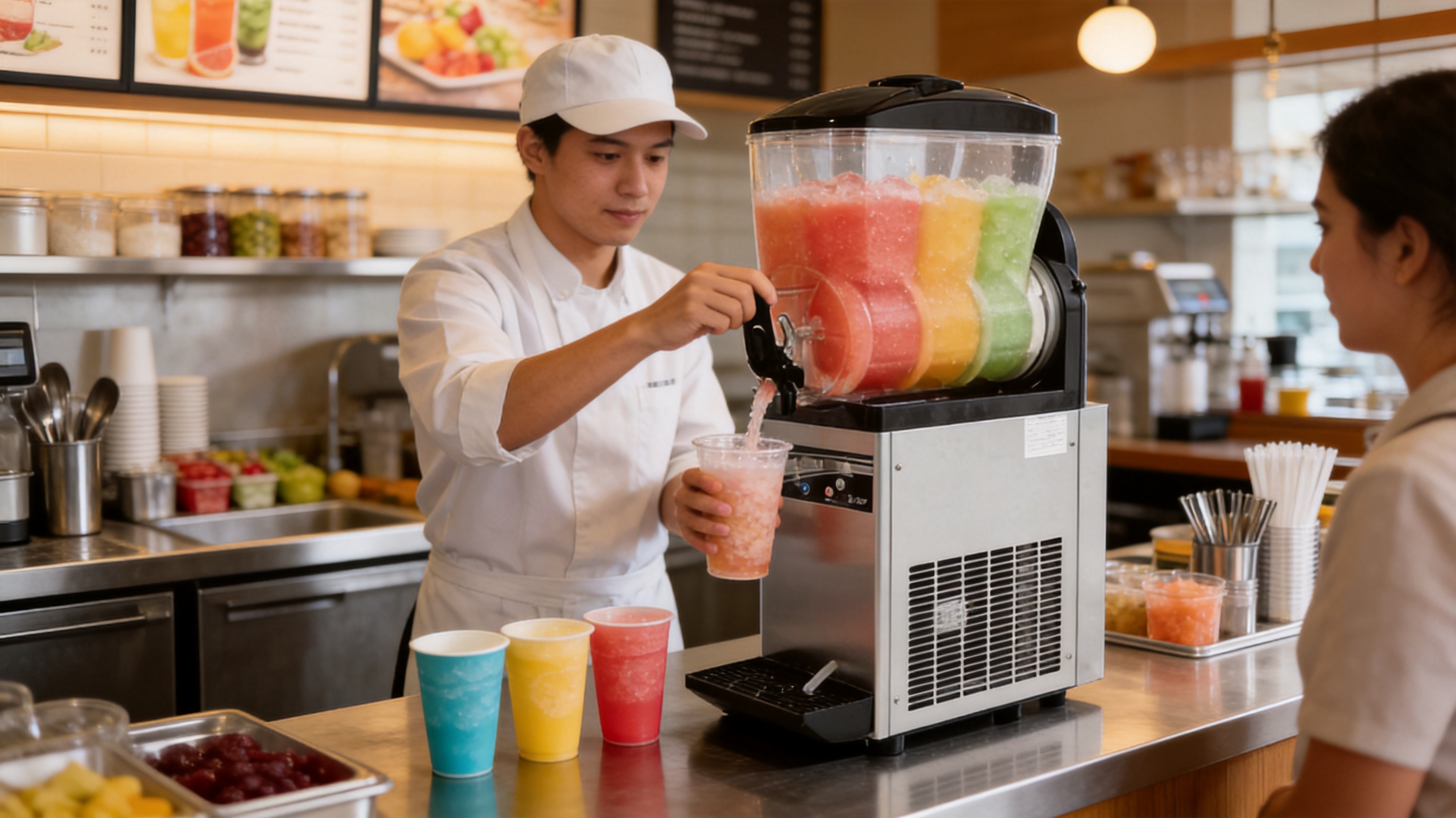
Because the machine is visible, menu design and equipment presentation can work together. A clearly labeled flavor, attractive cup, and well-positioned counter display may encourage customers to try the product. The machine can become a focal point without requiring a large promotional installation.
Frequently Asked Questions
What is the capacity of the machine?
The nominal tank capacity is 15 liters. The practical operating fill level should follow the manufacturer’s instructions and should allow sufficient space for product movement and expansion where applicable.
Is this machine suitable for a bar or café?
Yes. The machine is designed for commercial frozen beverage production and is suitable for bars, cafés, restaurants, snack shops, kiosks, and similar foodservice locations. Recipe compatibility should be confirmed before producing alcoholic or specialty beverages.
What refrigerant does the machine use?
The supplied specifications identify R290 or R290a. Buyers should confirm the exact designation on the final technical datasheet. Because R290 is flammable, servicing should be carried out by qualified personnel and the machine should be used according to applicable safety requirements.
What is the rated power?
The information provided lists approximately 500 watts in one specification and 550 watts in another. This may relate to a configuration or documentation difference. The final rated power should be confirmed before purchase and installation.
What are the machine dimensions?
The listed dimensions are approximately 205 × 510 × 810 millimeters and 205 × 535 × 810 millimeters in different product descriptions. Buyers should verify the final supplied dimensions when planning counter openings, clearance, and transportation.
Can the machine produce different flavors?
The single-tank design is intended to produce one flavor or beverage formula at a time. Flavors can be changed after the tank and product-contact components have been properly emptied and cleaned.
Is the machine appropriate for a small business?
Yes. Its compact footprint and 15-liter capacity are particularly suitable for small and medium-sized operations, startups, seasonal businesses, and locations with limited space.
What type of maintenance is required?
Routine maintenance includes cleaning and sanitizing product-contact parts, checking dispensing components and seals, keeping ventilation areas clear, inspecting the electrical connection, and monitoring cooling and stirring performance. The exact procedure should follow the product manual.
Can the manufacturer provide customized products?
The manufacturer offers OEM and ODM services based on customer drawings or requirements. Customization should be discussed in detail because changes may affect product specifications, certification, cost, production time, and minimum order quantities.
What should be checked before placing a bulk order?
Commercial buyers should confirm the final model, tank capacity, voltage, frequency, rated power, dimensions, refrigerant, packaging, warranty, spare parts, delivery schedule, inspection procedure, and after-sales support arrangements.
Conclusion
The 15L Single-Tank Commercial Slush Machine is a practical frozen beverage solution for businesses that need commercial functionality without the footprint of a large multi-tank system. Its 15-liter capacity supports regular service, while the compact design is appropriate for cafés, bars, restaurants, snack shops, kiosks, and other space-conscious foodservice operations.
The machine’s main advantages include efficient cooling, even stirring, professional food-grade construction, attractive customer-facing styling, a manageable operating format, and the use of R290 refrigerant in the specified refrigeration system. Together, these features support smooth beverage texture, consistent presentation, and flexible menu development.
Its value is further supported by the manufacturer’s integrated capabilities in design, research and development, production, sales, service, OEM, and ODM cooperation. With more than 60,000 square meters of modern manufacturing facilities and a broad foodservice equipment portfolio, the supplier is positioned to support both individual equipment purchases and larger commercial procurement programs.
For the best purchasing decision, buyers should match the machine to their expected sales volume, confirm the final technical configuration, prepare an appropriate installation area, and establish clear cleaning and maintenance procedures. When these factors are managed correctly, the X-150 format can provide an efficient foundation for frozen beverage production and long-term commercial growth.
References
1. Product specification and technical information supplied for the 15L Single-Tank Commercial Slush Machine, model X-150.
2. Manufacturer information concerning commercial refrigeration, foodservice equipment production, OEM, ODM, and after-sales support.
3. General foodservice equipment hygiene and sanitation principles for beverage preparation appliances.
4. General refrigeration engineering guidance concerning hydrocarbon refrigerants and equipment ventilation.
5. General commercial kitchen planning principles concerning equipment placement, workflow, maintenance access, and foodservice space utilization.
Product: 15L Single Tank Commercial Slush Machine for Bar Cafe Restaurant

For exclusive deals and latest offers, sign up by entering your email address below.


-
spelor@spelor.com
-
+86-576-85229688
-
No.528, Changxi Road, Linhai City, Zhejiang Province, China
Commercial Refrigeration Equipment Manufacturer China
Copyright © 2025 by Spelor Electrical Appliances (Zhejiang) Co., Ltd. Rights Reserved.
