


 中文简体
30L Single-Tank Spraying Commercial Juice Dispenser: Capacity, Cooling Performance, and Foodservice Efficiency
Admin 2026-10-01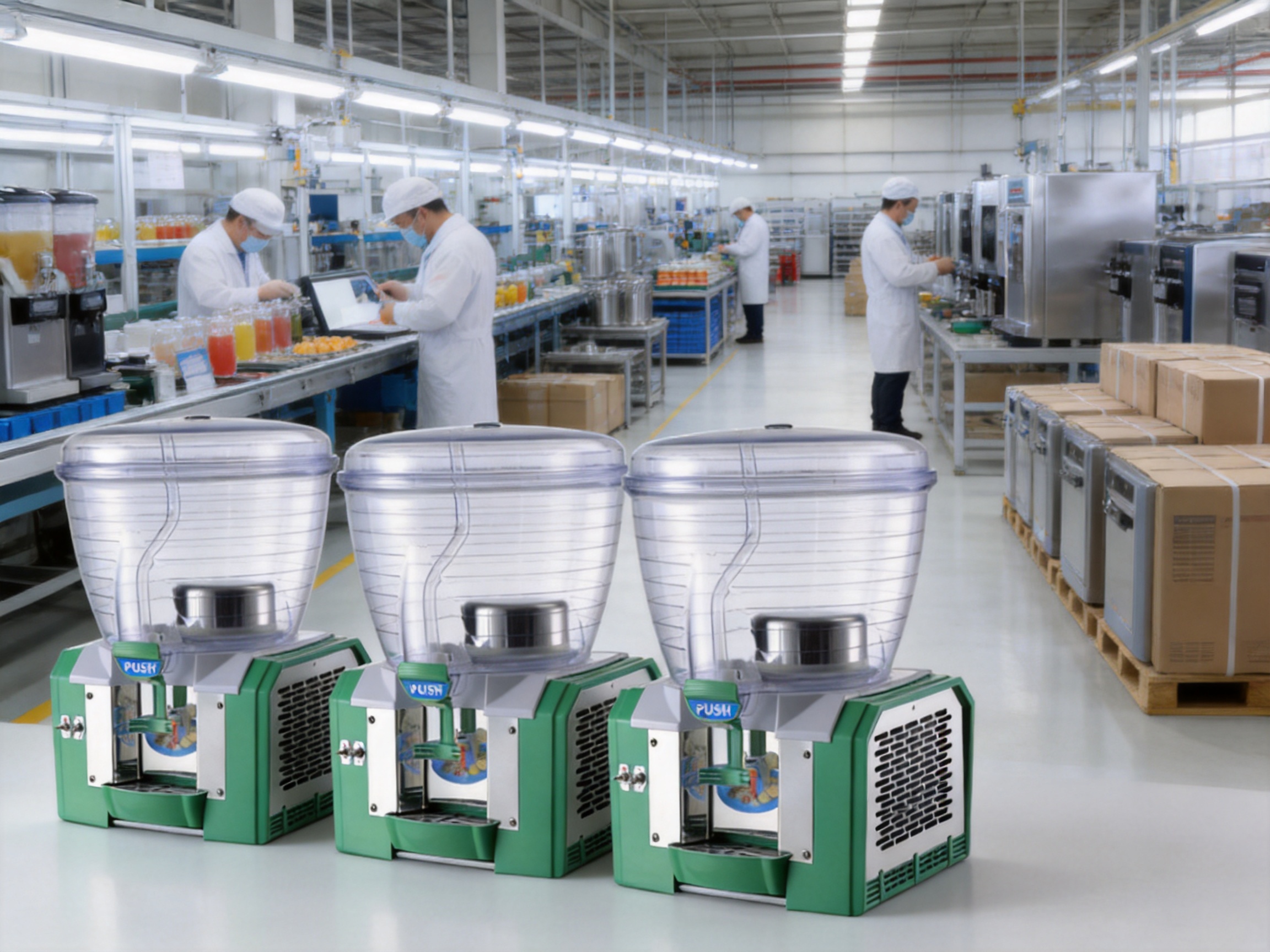
In busy foodservice environments, beverage equipment must do more than hold and dispense juice. It must maintain a suitable serving temperature, support consistent product quality, simplify daily operation, withstand frequent use, and help staff work efficiently during peak periods. The 30L Single-Tank Spraying Commercial Juice Dispenser is designed around these practical requirements. With its large-capacity tank, spray-circulation system, refrigeration-only operation, stainless steel construction, transparent container, and compact footprint, it offers a focused solution for restaurants, cafés, buffets, snack shops, supermarkets, bars, and other commercial locations.
Model PL-130A combines a 30-liter capacity with a spraying power rating of 300 watts. Its operating temperature range is 7°C to 12°C, and its overall dimensions are 450 × 450 × 665 millimeters. With a net weight of 24 kilograms, the dispenser provides substantial capacity without requiring the floor space of a much larger multi-tank beverage system. This balance makes it particularly useful for businesses that need dependable chilled juice service but also need to manage limited counter or service-area space.
The equipment is manufactured by Spelor Electrical Appliances (Zhejiang) Co., Ltd., a professional producer of commercial refrigeration, kitchen, buffet, beverage, and foodservice equipment. The company combines product design, research and development, manufacturing, sales, and service within one organization. Its production capabilities, modern facilities, product-development experience, and OEM and ODM support allow it to serve distributors, project contractors, restaurant groups, and other commercial buyers with both standard equipment and customized solutions.
This article examines the product’s design, operating principle, commercial advantages, application value, manufacturing strengths, maintenance considerations, and purchasing factors. It also explains why a single-tank spraying dispenser can be a practical alternative to competing beverage systems when the priority is large-volume chilled juice service with straightforward operation.

30L Single Tank Spraying Commercial Juice Dispenser
1. Product Overview
The 30L Single-Tank Spraying Commercial Juice Dispenser is a refrigeration-only beverage dispenser intended for chilled juice and similar non-carbonated beverages. Its central function is to keep the beverage within a suitable chilled range while circulating the liquid through a spraying mechanism. The circulation helps distribute cooling more evenly and supports a consistent serving experience throughout the tank.
The 30-liter tank is the defining feature of the unit. Compared with small countertop dispensers, the larger container reduces the frequency of refilling. This is especially valuable in high-traffic environments where staff may not have enough time to replenish beverage equipment repeatedly. A large tank can help maintain service continuity during breakfast periods, lunch rushes, buffet turnover, events, and other busy operating windows.
The dispenser uses a transparent tank, allowing staff to view the remaining beverage level without opening the container. This simple feature supports faster planning and reduces the risk of unexpectedly running out of juice during service. Visual monitoring is also useful for identifying when cleaning, product replacement, or replenishment is required.
The body uses food-grade stainless steel panels. Stainless steel is widely used in commercial foodservice equipment because it provides a clean appearance, good resistance to routine wear, and a surface that can be wiped down efficiently. The all-stainless steel exterior also gives the unit a professional appearance suitable for front-of-house beverage stations, buffet counters, self-service areas, cafés, and restaurant service lines.
The machine is designed with European and American styling influences. Its appearance is intended to be modern and adaptable rather than limited to one type of business. The compact rectangular footprint allows it to fit into various service environments while preserving the capacity required for commercial use.
2. Main Technical Specifications
The following table summarizes the principal specifications of Model PL-130A.
| Specification | Details |
|---|---|
| Model | PL-130A |
| Product type | Single-tank spraying commercial juice dispenser |
| Capacity | 30 liters |
| Power | Spraying: 300 watts |
| Net weight | 24 kilograms |
| Overall dimensions | 450 × 450 × 665 millimeters |
| Temperature range | 7°C to 12°C |
| Refrigeration function | Refrigeration only |
| Tank configuration | Single tank |
| Tank visibility | Transparent tank for beverage-level monitoring |
| External construction | Food-grade stainless steel panels |
The specifications show that the PL-130A is designed as a focused commercial appliance rather than a multi-function beverage platform. It is intended to refrigerate and dispense chilled juice efficiently. Businesses that need a straightforward machine for one beverage type can benefit from this specialization because the design avoids unnecessary functions that may add complexity, cost, or maintenance requirements.
3. How the Spraying Circulation System Works
The spraying system is one of the most important characteristics of the dispenser. Instead of leaving the beverage stationary in the tank, the system circulates the liquid through a spraying process. This movement helps support more even cooling and reduces the likelihood of noticeable temperature differences between different areas of the container.
In a stationary container, the beverage near cooling surfaces may become colder than the liquid farther away. Natural temperature variation can become more noticeable when the container is large or when the beverage remains in the tank for an extended period. Circulation helps address this challenge by moving the beverage within the tank and exposing more of the liquid to the cooling environment.
The spraying action also supports a visually active presentation. For front-of-house applications, visible movement can help communicate that the equipment is operating and that the beverage is being maintained in an active dispensing cycle. This can contribute to an attractive beverage display in buffets, cafés, and self-service stations.
The system is designed for beverage cooling rather than freezing. Its specified temperature range of 7°C to 12°C makes it suitable for businesses that want chilled juice while preserving a pourable liquid condition. Because the product is a refrigeration-only model, it should be selected for appropriate chilled beverages rather than applications requiring frozen drinks, slush consistency, or ice production.
Consistent circulation can also help support a more uniform taste experience. When a beverage is mixed or formulated correctly before being placed in the tank, circulation helps maintain a stable condition during service. Operators should still follow the beverage supplier’s preparation instructions and cleaning recommendations, since equipment performance and beverage quality depend on proper product handling as well as refrigeration.
4. Large Capacity for High-Volume Service
A 30-liter tank offers a practical capacity advantage for commercial operators. In a small café or restaurant, frequent refilling can interrupt staff workflow. During a buffet service, the need to refill a dispenser can create visible gaps in the beverage station. In a busy snack shop, repeated preparation and replenishment tasks can divert employees from customer service and other production duties.
The large tank helps reduce these interruptions. Although actual serving volume depends on cup size, beverage type, operating hours, and customer traffic, the 30-liter capacity provides a substantial reserve for peak service periods. Operators can prepare the required beverage volume in advance, fill the tank, and monitor the level through the transparent container.
This capacity can be particularly useful in the following situations:
• Hotel and restaurant breakfast buffets where many guests serve themselves within a short time.
• Casual restaurants that offer chilled juice as part of a meal or beverage package.
• Cafés and snack shops that need a ready-to-serve cold beverage in addition to coffee, tea, or specialty drinks.
• Catering and event service areas where staff need to provide a stable beverage supply for groups.
• Supermarket sampling or prepared-food counters that require visible, accessible beverage service.
• Institutional dining facilities, schools, offices, and other locations with predictable high-volume beverage demand.
The capacity advantage should be considered together with the unit’s footprint. Measuring 450 × 450 × 665 millimeters, the dispenser occupies a relatively compact square base for a 30-liter system. This makes it easier to plan on a counter, service island, buffet line, or beverage station where every millimeter of working space matters.
5. Cooling Performance and Temperature Control
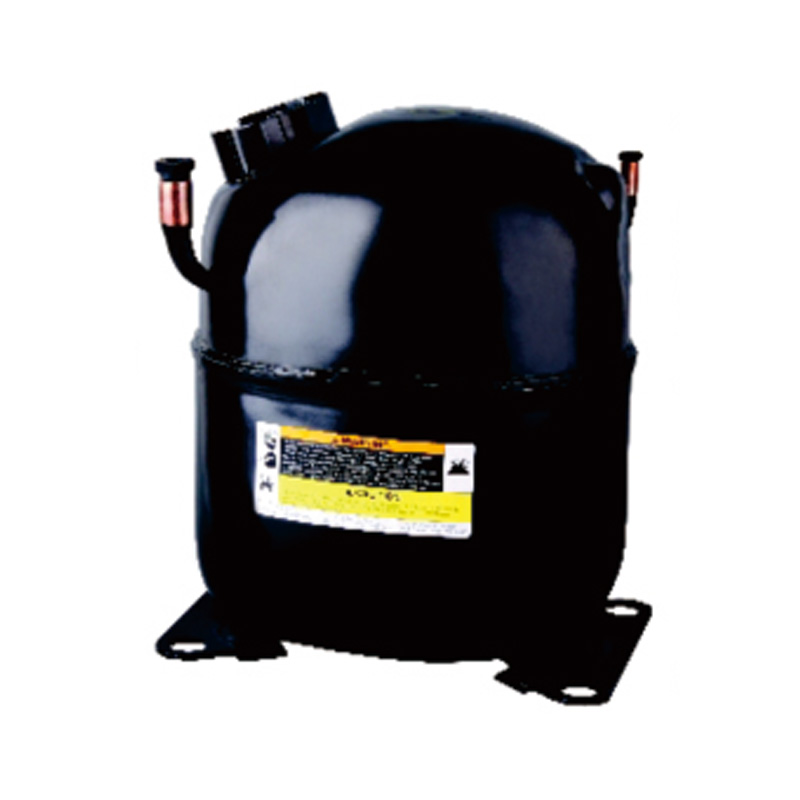
The PL-130A is specified with a temperature range of 7°C to 12°C. This range is intended for chilled beverage service and provides operators with a practical target for maintaining juice at a refreshing serving condition. The refrigeration-only design keeps the machine’s main purpose clear: cooling and dispensing rather than freezing or making ice.
Temperature stability is important for several reasons. First, customers generally expect chilled juice to remain cold throughout the service period. Second, consistent temperature helps preserve the intended sensory quality of the beverage. Third, a stable operating range allows staff to establish a repeatable service routine instead of constantly adjusting or replacing containers.
The European refrigeration technology referenced for this model supports the machine’s emphasis on dependable cooling. The unit’s design combines refrigeration with spray circulation so that cooling is not treated as an isolated function. The system works toward maintaining the beverage throughout the tank rather than cooling only a limited area.
Actual cooling results can be influenced by several operating conditions. These include the starting temperature of the beverage, the temperature of the surrounding room, how frequently the tank is opened or disturbed, the amount of product loaded, and the clearance around the machine. For best results, operators should place the dispenser in a suitable indoor service area, avoid blocking ventilation spaces, and follow recommended operating instructions.
Pre-chilling the beverage before filling the tank may also help reduce the initial refrigeration load, particularly during busy periods. The machine is designed to maintain chilled product, and operating practices should support that role. Staff should avoid treating the dispenser as a rapid-cooling replacement for proper beverage preparation.
6. Stainless Steel Construction and Commercial Appearance
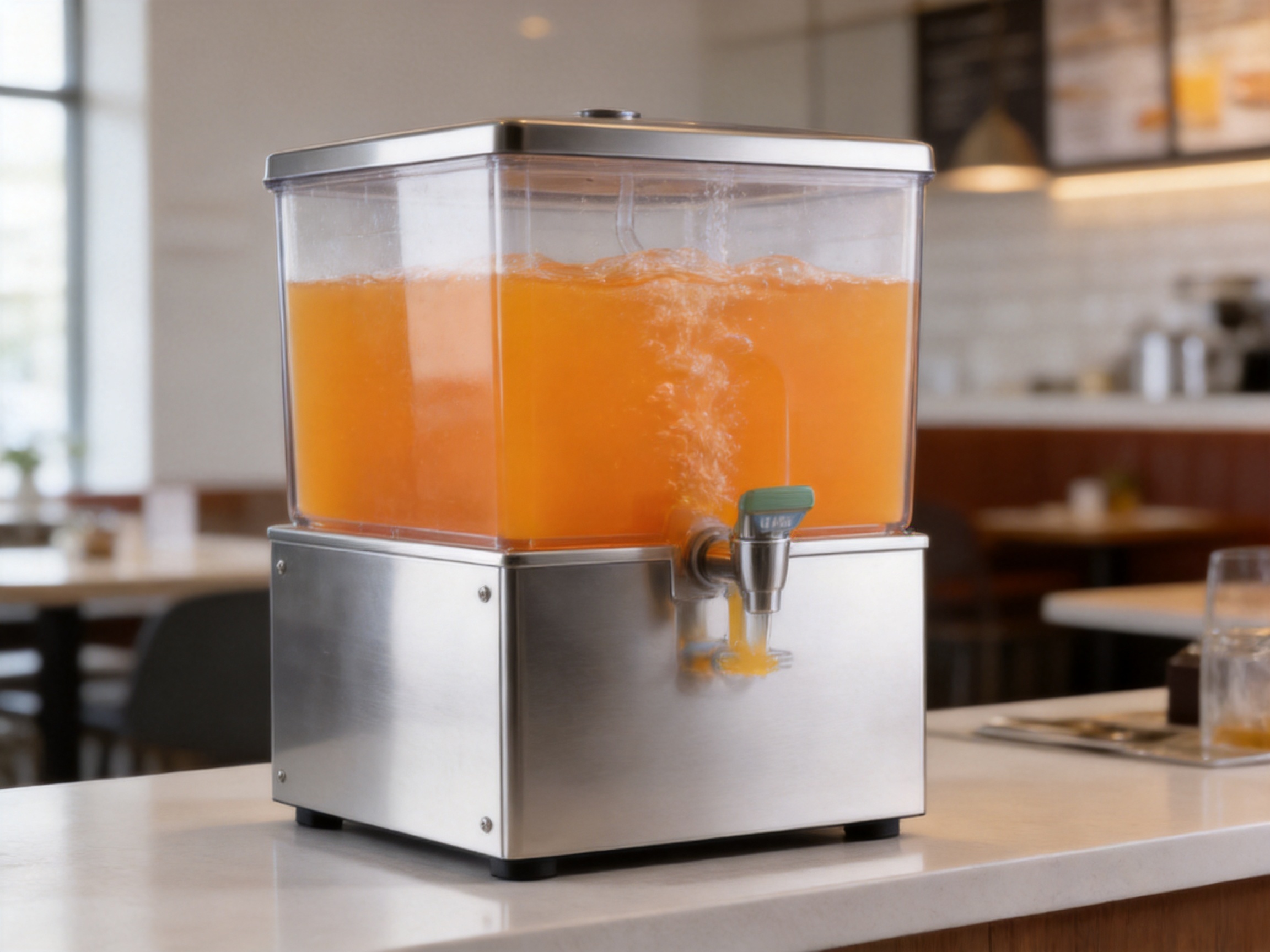
Commercial beverage equipment must present a clean appearance while also tolerating daily handling. The PL-130A uses stainless steel panels for the main body. This material supports a professional visual impression and is compatible with the cleaning routines expected in foodservice settings.
Stainless steel panels are beneficial in busy environments because they can be wiped and maintained without the appearance becoming quickly worn. They also coordinate with other commercial equipment, including refrigeration cabinets, preparation tables, cooking equipment, buffet fixtures, and service counters. A consistent stainless steel appearance can help businesses create an organized and professional front-of-house environment.
The construction is also designed for use in different conditions. Restaurants, buffets, cafés, and snack shops may have different layouts, traffic patterns, and cleaning schedules. A durable external structure helps the dispenser remain suitable across these varied applications.
The transparent tank complements the stainless steel body. It creates a visual contrast between the clear beverage container and the metal housing, while also providing an operational benefit. Staff and customers can see the beverage level, and operators can more easily assess whether the tank requires replenishment or cleaning.
Appearance is not merely a decorative consideration. When beverage equipment is positioned in a customer-facing area, its condition contributes to perceptions of cleanliness and service quality. A well-maintained stainless steel machine with a clear, properly cleaned tank can support confidence in the beverage station.
7. Compact Design and Space Efficiency
Commercial kitchens and service counters often contain many appliances in limited areas. A high-capacity machine that is too large may create workflow problems, block access, or reduce space for other equipment. The PL-130A addresses this issue through a compact 450 × 450 millimeter footprint.
The square base makes the unit relatively straightforward to position. It can be placed at the end of a buffet counter, alongside other beverage equipment, or within a dedicated drink station. The 665-millimeter height provides a visible and accessible tank while keeping the overall equipment profile suitable for many counter-based layouts.
Space efficiency is especially valuable for small and medium-sized businesses. A café may not have the floor area for a large beverage system. A snack shop may need to use one counter for several product categories. A buffet operator may want to add a chilled juice station without rebuilding the entire service line. In these situations, the combination of large capacity and a compact external size can improve layout flexibility.
The 24-kilogram net weight also supports practical installation and repositioning. The machine is not a lightweight portable dispenser, but it remains manageable for commercial equipment when moved by appropriately trained staff. Before positioning, operators should confirm that the counter or support surface can safely bear the equipment, product weight, and any additional operational loads.
8. Ease of Operation
The dispenser is designed for straightforward use. Its primary functions are refrigeration, circulation, and dispensing. This focused operating structure can reduce the learning curve for staff and make it easier to establish consistent procedures across shifts.
Simple operation is important in foodservice environments where employees may need to manage multiple tasks at the same time. A beverage machine that is easy to understand can reduce operational delays during busy periods. New staff can be trained on the basic steps of filling, starting, monitoring, dispensing, and cleaning without needing to learn a complicated menu of functions.
The transparent tank supports operational awareness. Staff can quickly check the liquid level, observe the general condition of the beverage, and determine when replenishment is necessary. The visible tank also helps supervisors verify whether the machine is being used as planned.
The product’s refrigeration-only configuration provides another form of simplicity. Operators do not need to choose among several temperature modes intended for unrelated products. The machine is focused on maintaining chilled beverage service within its stated range.
Safety is also identified as one of the unit’s advantages. As with all commercial electrical refrigeration equipment, operators should follow the supplied instructions, use the appropriate electrical supply, keep the machine dry in areas not designed for water exposure, and ensure that cleaning is performed with the equipment handled correctly.
9. Advantages Compared with Alternative Beverage Equipment
Commercial buyers often compare a single-tank spraying dispenser with gravity dispensers, static beverage containers, multi-tank dispensers, frozen beverage machines, and improvised refrigeration solutions. Each equipment type has a suitable application, but the PL-130A offers a specific combination of capacity, cooling, circulation, and simplicity.
9.1 Compared with Static Beverage Containers
A static container may be inexpensive and easy to place, but it generally does not provide active refrigeration or circulation. The beverage may need to be pre-chilled and replaced more frequently, especially in warm surroundings or during long service periods. The PL-130A offers active refrigeration and spray circulation, helping maintain a more consistent chilled condition during service.
9.2 Compared with Small-Capacity Dispensers
Small dispensers may fit narrow counters, but they often require more frequent refilling. For high-volume locations, repeated replenishment can increase labor demands and interrupt customer service. The 30-liter capacity gives the PL-130A an advantage when the priority is longer service intervals and fewer refilling operations.
9.3 Compared with Multi-Tank Systems
Multi-tank equipment is useful when several beverage flavors must be served simultaneously. However, it usually occupies more space and may involve higher purchase, cleaning, and maintenance requirements. A single-tank machine is more suitable when the business has one primary chilled beverage or when space and budget must be controlled.
9.4 Compared with Frozen Beverage Machines
Frozen beverage machines are designed for slush, granita, or semi-frozen drinks. They are not the most efficient choice when the required product is simply chilled juice. The PL-130A avoids the unnecessary complexity of freezing mechanisms and focuses on refrigeration within a liquid-serving temperature range.
9.5 Compared with Non-Commercial Beverage Equipment
Household or light-duty equipment may not be designed for repeated foodservice use, visible customer placement, or large-volume service. The PL-130A is built around commercial requirements, including a stainless steel body, substantial capacity, a professional appearance, and a refrigeration system intended for foodservice applications.
These comparisons do not mean that one machine is suitable for every business. The correct selection depends on beverage type, expected volume, available space, service style, and operating schedule. The PL-130A is strongest where one chilled beverage must be stored, circulated, and served in a reliable commercial format.
10. Benefits for Different Foodservice Applications
10.1 Restaurants
Restaurants can use the dispenser for breakfast juice, lunch beverages, buffet service, or self-service drink stations. The 30-liter capacity can reduce interruptions during meal periods, while the stainless steel body matches the professional appearance of a commercial dining area.
10.2 Cafés and Snack Shops
Cafés and snack shops often operate in compact spaces. The dispenser’s 450 × 450 millimeter footprint allows operators to provide chilled juice without dedicating a large area to beverage equipment. It can complement coffee machines, tea equipment, dessert displays, and other counter-based products.
10.3 Buffets
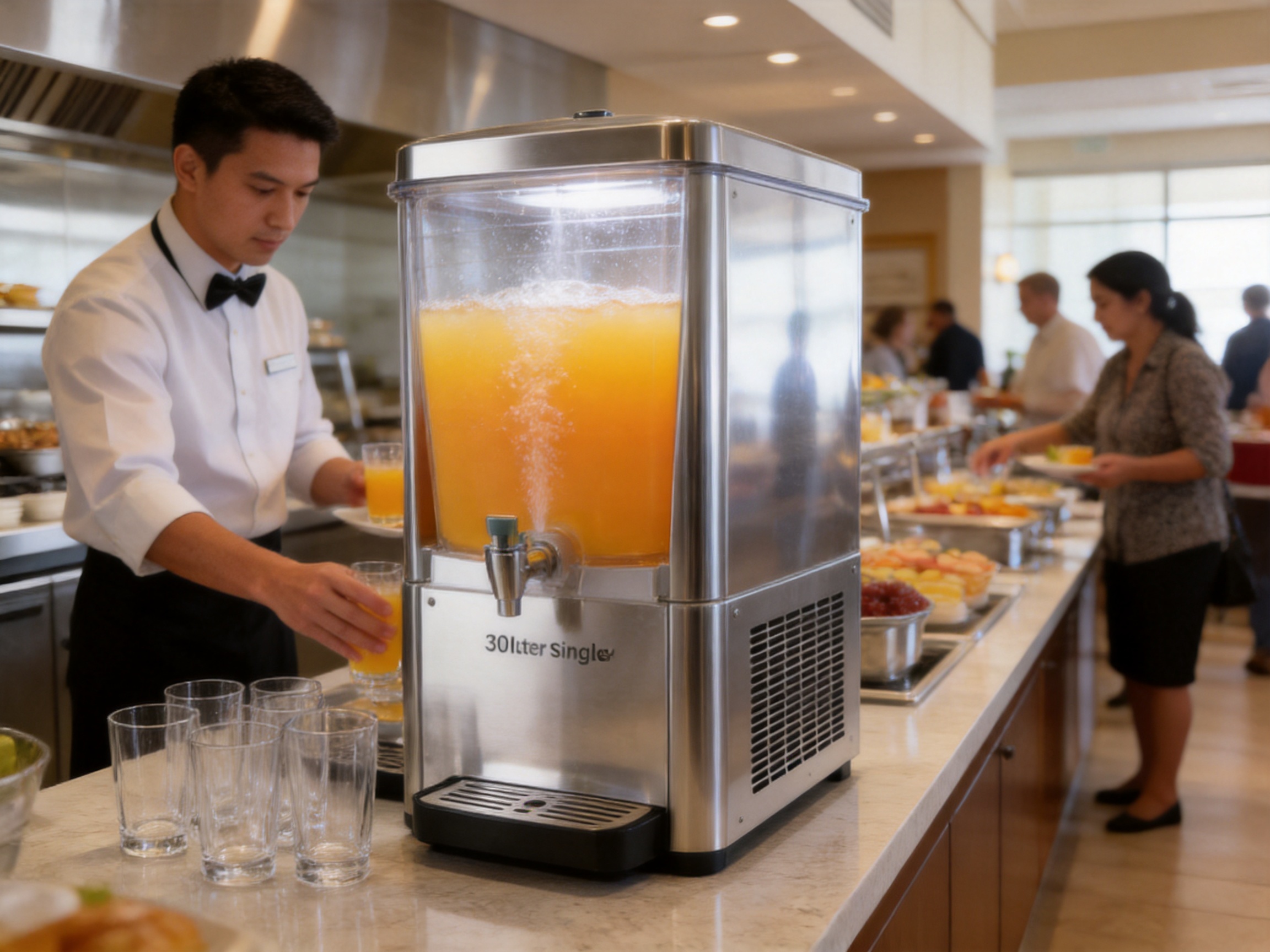
Buffet operations benefit from equipment that can remain available throughout a service window. A 30-liter tank helps support continuous access to chilled juice, while the transparent tank allows staff to monitor consumption from a distance. The circulating system can help maintain an even beverage condition as guests serve themselves.
10.4 Hotels and Breakfast Areas
Hotels frequently serve large numbers of guests during concentrated breakfast periods. Reducing the need for repeated refilling can improve staff efficiency and help keep the beverage area organized. The machine can be incorporated into a breakfast line or dedicated drinks station, provided the layout allows convenient access for guests and staff.
10.5 Supermarkets and Institutional Facilities
Supermarkets, offices, schools, hospitals, and other institutions may need a dependable chilled beverage unit for a staff dining room, prepared-food area, cafeteria, or event space. The product’s simple operation and visible liquid level can support routine service by employees who may not specialize in beverage preparation.
10.6 Catering and Events
For catering and event applications, the dispenser can provide a high-capacity beverage point in a service area. Event operators should consider transport, access to suitable power, surface stability, and cleaning facilities when planning deployment. The compact dimensions can make placement more manageable than larger multi-tank equipment.
11. Manufacturing Strengths
The performance and commercial value of a foodservice machine depend not only on its visible design but also on the manufacturer’s production capabilities. Spelor Electrical Appliances (Zhejiang) Co., Ltd. integrates design, research and development, manufacturing, sales, and service. This integrated structure supports coordination between product engineering, production planning, quality management, and customer support.
The company operates more than 60,000 square meters of modern production facilities. A manufacturing base of this scale can support organized production processes, equipment assembly, inventory management, product testing, and the development of multiple equipment categories. It also provides a foundation for serving larger orders and supporting customers who need consistent product supply.
Spelor specializes in commercial refrigeration, kitchen, and buffet equipment. Its product range includes ice cream machines, juice dispensers, fried ice cream machines, refrigeration cabinets, slush machines, flake ice machines, cooking equipment, griddles, fryers, insulation products, barbecue equipment, and buffet solutions. This broader product experience is relevant to buyers seeking coordinated foodservice equipment rather than a single isolated appliance.
Experience across several equipment categories can help a manufacturer understand the practical requirements of commercial operators. Beverage equipment must often work alongside refrigeration cabinets, preparation stations, cooking equipment, buffet fixtures, and serving systems. A supplier familiar with these environments may be better positioned to discuss layout, product matching, logistics, and customization requirements.
The company also provides OEM and ODM services based on customer drawings or requirements. For distributors, importers, restaurant groups, and project contractors, this can support private-label programs, specification adjustments, appearance changes, packaging requirements, and other project needs. Any customization should be confirmed through technical review, quotation, sample approval, and production documentation.
12. Design and Development Approach
Product development for commercial foodservice equipment must consider more than basic operation. Designers need to evaluate capacity, external dimensions, component arrangement, cleaning access, user interaction, appearance, energy use, transportation, and serviceability. The PL-130A reflects this type of practical design approach through the combination of a large tank, compact footprint, visible beverage level, stainless steel body, and focused refrigeration function.
A user-oriented development philosophy places attention on the daily experience of operators. Staff need to fill the machine efficiently, monitor the beverage, maintain an appropriate temperature, and clean the equipment without unnecessary difficulty. Managers need equipment that fits the service layout and supports predictable operating costs. Distributors need a product with clear specifications and a broad commercial application range.
Research and development also supports adaptation to different market requirements. Foodservice conditions may vary by region, electrical standard, beverage preference, climate, logistics system, and regulatory expectations. When buyers require specific configurations, the manufacturer’s engineering and project-support capabilities can help determine whether the requested adjustment is technically and commercially appropriate.
Design development is closely connected with manufacturing quality. A well-designed product must be translated into repeatable production processes. Consistent materials, controlled assembly procedures, inspection routines, and clear documentation all contribute to stable product output.
13. Production and Quality Considerations
Commercial refrigeration equipment should be produced through organized processes that control material selection, fabrication, component installation, electrical assembly, refrigeration integration, appearance inspection, and functional testing. Stainless steel panels must be processed accurately so that the finished body is stable, visually consistent, and suitable for routine cleaning.
The tank, spraying mechanism, refrigeration components, control elements, and electrical structure must work together as a complete system. Performance depends on the relationship between these parts rather than on any single component. Production teams therefore need to follow defined assembly procedures and verify that the finished machine operates as intended.
Functional inspection may include checking the machine’s start-up behavior, spraying operation, cooling response, dispensing action, electrical safety, structural condition, and general appearance. The precise inspection process depends on the manufacturer’s internal standards, customer requirements, and destination-market expectations.
Quality management is also important for OEM and ODM orders. When a buyer requests customized colors, logos, packaging, dimensions, electrical specifications, or functional changes, the requirements should be documented clearly before production begins. Sample approval and production confirmation can help reduce misunderstandings and support consistent delivery.
Spelor’s integrated manufacturing and service structure provides a basis for coordinating these activities. Customers can communicate with a supplier that handles product development, manufacturing, sales, and after-sales support rather than relying on disconnected parties for each stage of the purchasing process.
14. Cleaning and Maintenance Practices
Regular cleaning is essential for any commercial beverage dispenser. Juice residues can accumulate around the tank, dispensing outlet, seals, and circulation components if the equipment is not cleaned according to an established schedule. Proper cleaning helps maintain hygiene, appearance, and reliable operation.
Operators should follow the manufacturer’s instructions for disassembly, cleaning agents, rinsing, sanitizing, drying, and reassembly. The exact procedure may vary depending on beverage ingredients, operating frequency, local hygiene rules, and the design of individual components.
A practical routine may include the following general steps:
• Turn off the machine and follow the required safety procedure before cleaning.
• Remove remaining beverage in accordance with the operator’s food-handling procedures.
• Disassemble removable beverage-contact components as instructed.
• Wash and rinse the tank, outlet, seals, and relevant circulation parts using approved methods.
• Clean the stainless steel exterior with a suitable foodservice-safe product.
• Dry or drain components as required before reassembly.
• Inspect seals, outlets, and moving parts for wear or residue.
• Reassemble the machine correctly and verify operation before the next service period.
Maintenance should also include keeping ventilation areas clear, checking the power cord and plug, observing unusual noise or vibration, and arranging professional service when necessary. Operators should not attempt refrigeration or electrical repairs without appropriate training.
The transparent tank can make routine inspection easier. Staff can identify visible residue, changes in beverage appearance, or abnormal circulation more quickly. However, visual inspection does not replace scheduled cleaning and sanitation.
15. Energy and Operating Efficiency
Energy efficiency in a commercial appliance depends on the machine’s design as well as the way it is used. The PL-130A is described as compact, lightweight relative to its capacity, energy-saving, and designed with refrigeration technology intended for commercial beverage service.
The 300-watt spraying power specification provides a clear reference for the circulation function. Total operating energy may depend on the refrigeration system, ambient conditions, duty cycle, and other components. Buyers should request the complete electrical data required for their market and installation plan.
Several operating practices can support efficient use:
• Place the machine away from direct heat sources and excessive sunlight.
• Maintain adequate clearance around ventilation areas.
• Avoid opening or disturbing the tank unnecessarily.
• Load beverage at a suitable starting temperature when possible.
• Keep the tank and circulation system clean so that operation is not hindered by residue.
• Turn off the machine when it is not required for an extended period, following operational and hygiene procedures.
• Plan beverage quantities carefully to reduce unnecessary product waste.
A high-capacity dispenser can also improve labor efficiency. By reducing refill frequency, it may allow staff to spend more time on customer service, food preparation, cleaning, and other revenue-supporting tasks. Efficiency should therefore be considered in terms of both energy use and workflow.
16. Purchasing and Installation Considerations
Before purchasing the PL-130A, buyers should evaluate the expected beverage volume, service schedule, available counter space, power requirements, ambient conditions, and cleaning resources. A 30-liter machine is appropriate when demand justifies its capacity, but the business should have a clear plan for beverage preparation and daily sanitation.
The installation surface must be level, stable, and strong enough to support the empty machine, the beverage load, and normal operation. Since 30 liters of liquid adds considerable weight to the equipment, buyers should not evaluate support requirements using the 24-kilogram net weight alone.
The service area should provide enough clearance for staff to fill the tank, access the dispensing point, observe the beverage level, and perform cleaning. If the machine is installed within a buffet line, operators should consider customer access, queue flow, spill control, and staff replenishment routes.
Electrical compatibility must be confirmed before shipment or installation. Buyers should provide the destination country, voltage, frequency, plug requirements, and any relevant project specifications when requesting a quotation. These details are particularly important for international orders.
Commercial buyers should also clarify packaging, shipping dimensions, minimum order quantity, lead time, warranty terms, spare parts, documentation, and after-sales procedures. Spelor offers consultation, product customization, flexible logistics and payment solutions, and after-sales maintenance support as part of its broader service approach.
17. OEM and ODM Opportunities
Distributors and foodservice equipment brands may require more than a standard machine. They may need a private label, customized appearance, specific electrical configuration, packaging design, product documentation, or adjustments based on a larger equipment project. OEM and ODM services can help address these requirements.
Spelor supports OEM and ODM cooperation based on customer drawings or requirements. A successful customization project generally begins with a clear specification. The buyer should identify the desired capacity, tank arrangement, dimensions, materials, colors, branding, electrical conditions, packaging, operating environment, and target market.
Technical review is important before a customized design is approved. Changes to the tank, spraying system, refrigeration structure, or external dimensions may influence performance, manufacturing cost, shipping, cleaning, or serviceability. The manufacturer and buyer should therefore evaluate each requested change as part of the complete product system.
For larger restaurant groups or project contractors, customized equipment may help create a consistent visual identity across multiple locations. For importers and distributors, private-label production can support market positioning while using an established manufacturing platform. For hospitality projects, coordinated equipment solutions may simplify purchasing and installation.
The company’s product range across refrigeration, beverage, kitchen, and buffet categories can also support broader procurement programs. Buyers may be able to discuss multiple equipment requirements with one manufacturing partner, potentially simplifying communication and logistics.
18. Why Choose a Single-Tank Configuration?
The single-tank format is not a limitation for every application; in many situations, it is a deliberate operational advantage. Businesses often have one main juice flavor or one primary chilled beverage. In these cases, a single tank provides the required capacity without dedicating space and budget to additional containers.
A single-tank system can also simplify cleaning. Staff have one beverage chamber and one circulation path to manage rather than several independent tanks. This may make daily procedures easier to standardize, especially in small businesses with limited personnel.
The configuration can improve visual clarity as well. The transparent tank presents one clearly defined beverage offering, making it easy for customers to understand the product available. For a focused beverage station, this straightforward presentation may be preferable to a larger machine offering multiple choices.
Businesses that need different flavors at different times can also use the single tank flexibly, provided proper cleaning and beverage-change procedures are followed. This flexibility should always be balanced with hygiene requirements and the time needed to prepare the machine between products.
19. Service Value and Long-Term Business Benefits
The value of commercial equipment extends beyond its purchase price. A machine can support long-term business performance by reducing labor interruptions, improving service consistency, supporting a professional appearance, and helping operators manage busy periods.
The PL-130A’s combination of 30-liter capacity and compact dimensions can help businesses make better use of limited service space. Its refrigeration and spraying functions support chilled beverage quality, while its visible tank helps staff plan replenishment. Stainless steel construction contributes to the professional appearance expected in customer-facing environments.
For distributors, the product offers a clear commercial proposition: a high-capacity single-tank dispenser with a focused function, broad application range, and manufacturer support. For end users, it offers a practical way to introduce or expand chilled juice service without selecting a more complicated multi-function system.
Long-term value also depends on correct operation and maintenance. A well-designed machine should be supported by appropriate cleaning, timely inspection, correct installation, and access to service assistance. Spelor’s after-sales maintenance and customer-support capabilities are relevant to buyers evaluating the full ownership experience.
20. Frequently Asked Questions
Q1. What is the capacity of the dispenser?
The dispenser has a 30-liter single tank. This large capacity is intended for commercial locations that need a substantial volume of chilled juice available during service.
Q2. What type of beverage is the machine designed for?
It is designed primarily for chilled juice and similar non-carbonated beverages that can be served in liquid form. It is a refrigeration-only machine and is not intended to produce frozen drinks, slush, or ice.
Q3. What is the operating temperature range?
The specified temperature range is 7°C to 12°C. Actual results may vary according to beverage starting temperature, ambient conditions, loading practices, ventilation, and operating procedures.
Q4. What does the spraying system do?
The spraying system circulates the beverage within the tank. This supports more even cooling, helps maintain a consistent beverage condition, and creates visible movement in the tank.
Q5. How much power does the spraying function use?
The product specification lists spraying power of 300 watts. Buyers should request complete electrical information for their destination market and installation requirements.
Q6. Is the tank transparent?
Yes. The transparent tank allows staff to monitor the beverage level and observe the general condition of the product without opening the container.
Q7. What are the external dimensions?
The overall dimensions are 450 × 450 × 665 millimeters. Buyers should also allow sufficient working space for filling, dispensing, cleaning, and ventilation.
Q8. What is the net weight?
The net weight is 24 kilograms. The support surface must be able to bear the machine plus the weight of the beverage and any additional operational loads.
Q9. Is the machine suitable for buffets?
Yes. Its large capacity, visible tank, chilled beverage function, and customer-facing stainless steel appearance make it suitable for buffet service, provided the installation and cleaning arrangements are appropriate.
Q10. Can it be used in a café or snack shop?
Yes. The compact footprint makes it suitable for many cafés, snack shops, and small restaurants that need a commercial chilled beverage station without using a large amount of counter space.
Q11. Does the dispenser have multiple tanks?
No. Model PL-130A is a single-tank machine. This configuration is suitable for businesses that want to serve one primary beverage while keeping the equipment relatively simple.
Q12. How should the machine be cleaned?
Cleaning should follow the manufacturer’s instructions. Beverage-contact components should be removed, washed, rinsed, sanitized, and reassembled according to the approved procedure. The exterior should be cleaned with a suitable foodservice-safe product.
Q13. Can the machine be customized?
Spelor provides OEM and ODM services based on customer drawings or requirements. Potential customization should be discussed with the manufacturer so that technical feasibility, pricing, production, packaging, and performance implications can be confirmed.
Q14. What other equipment does the manufacturer produce?
The company produces commercial refrigeration, kitchen, buffet, ice cream, juice dispensing, fried ice cream, slush, flake ice, cooking, griddle, fryer, insulation, barbecue, and buffet equipment.
Q15. What should buyers confirm before ordering?
Buyers should confirm capacity, dimensions, electrical requirements, plug type, beverage application, delivery conditions, packaging, warranty, spare parts, lead time, documentation, and after-sales support. International buyers should also confirm destination-market requirements.
21. Conclusion
The 30L Single-Tank Spraying Commercial Juice Dispenser is designed for businesses that need a dependable, high-capacity solution for chilled juice service. Its main strengths are the 30-liter tank, spray-circulation system, 7°C to 12°C temperature range, food-grade stainless steel body, transparent tank, compact footprint, and straightforward refrigeration-only operation.
Compared with small-capacity dispensers, it reduces refill frequency. Compared with static containers, it provides active refrigeration and circulation. Compared with multi-tank systems, it offers a simpler and more space-conscious solution for businesses serving one primary beverage. Compared with frozen beverage machines, it provides a more focused and appropriate design for liquid chilled juice.
The product is suitable for restaurants, cafés, snack shops, buffets, hotels, supermarkets, institutions, catering operations, and other foodservice environments. Its value is further supported by Spelor Electrical Appliances (Zhejiang) Co., Ltd.’s integrated manufacturing structure, modern production facilities, broad commercial equipment experience, OEM and ODM capability, and customer service support.
For buyers seeking a practical combination of capacity, cooling, circulation, appearance, and operational efficiency, Model PL-130A provides a strong platform for commercial beverage service. Proper installation, cleaning, maintenance, and product handling will help operators obtain the best long-term performance from the equipment.
References
1. Spelor Electrical Appliances (Zhejiang) Co., Ltd. Product Specification Sheet: Model PL-130A 30L Single-Tank Spraying Commercial Juice Dispenser.
2. Spelor Electrical Appliances (Zhejiang) Co., Ltd. Commercial Refrigeration and Foodservice Equipment Product Information.
3. Commercial Foodservice Equipment Operation and Maintenance Principles, industry training reference material.
4. Foodservice Beverage Station Planning and Hygiene Practices, professional equipment management reference.
5. General Stainless Steel Fabrication and Cleaning Practices for Commercial Kitchen Equipment, foodservice maintenance reference.
Product: 30L Single Tank Spraying Commercial Juice Dispenser

For exclusive deals and latest offers, sign up by entering your email address below.


-
spelor@spelor.com
-
+86-576-85229688
-
No.528, Changxi Road, Linhai City, Zhejiang Province, China
Commercial Refrigeration Equipment Manufacturer China
Copyright © 2025 by Spelor Electrical Appliances (Zhejiang) Co., Ltd. Rights Reserved.
