


 中文简体
75kg/24H Countertop Ice Maker for Business and Commercial Applications
Admin 2026-08-25Reliable ice production is essential for many foodservice businesses. Cafes, convenience stores, restaurants, bars, hotels, supermarkets, and institutional kitchens all require a steady supply of clean ice for beverages, food presentation, preparation, and customer service. When ice production is inconsistent, staff must purchase emergency supplies, storage space becomes difficult to manage, and daily operations can become less efficient. A commercial ice machine must therefore deliver dependable output while remaining practical to install, simple to operate, and economical to maintain.
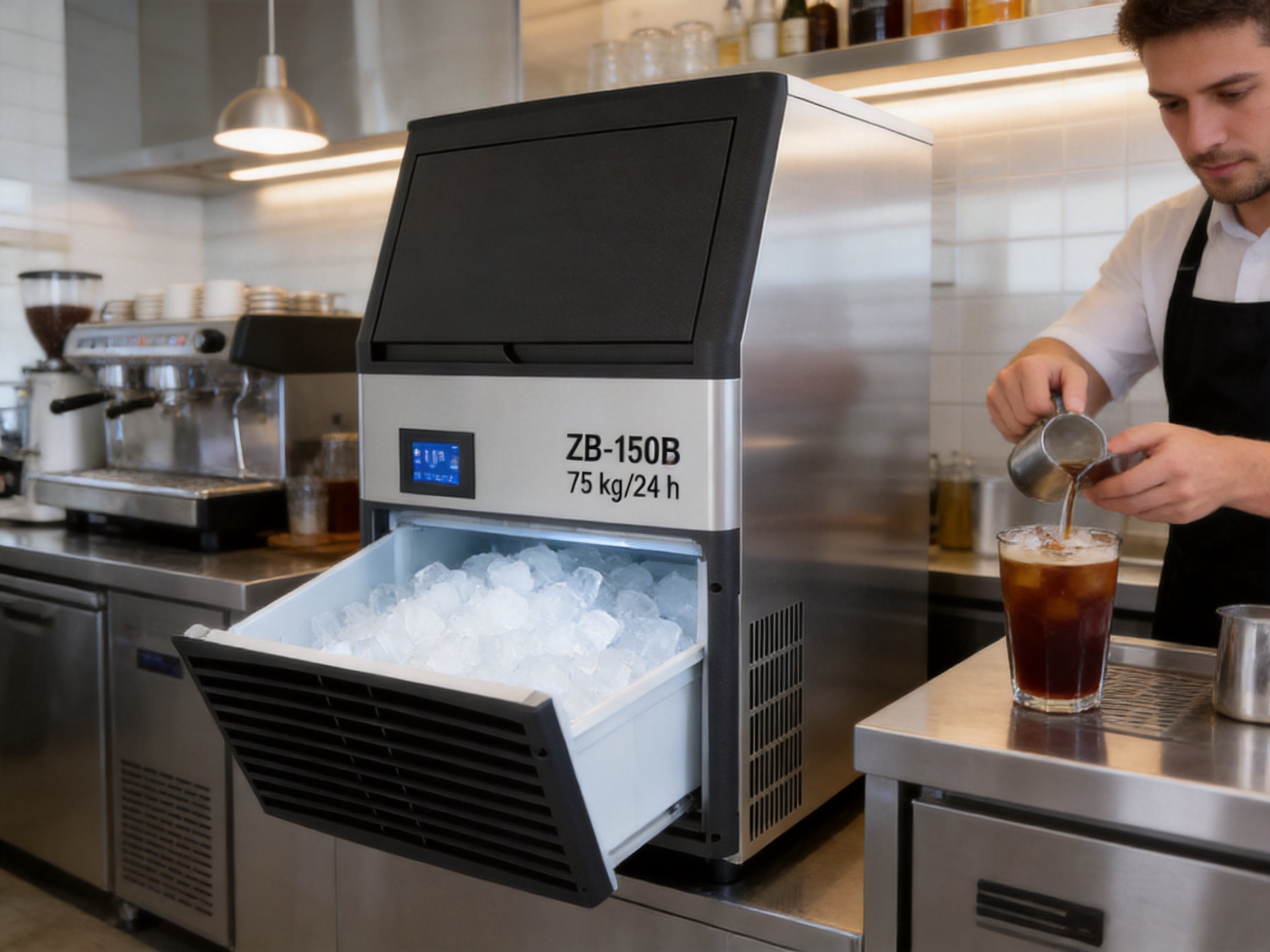
The ZB-150B 75kg/24H Countertop Ice Maker is designed for businesses that need continuous small-to-medium-volume ice production in a relatively compact footprint. With a maximum daily production capacity of 75 kilograms and a 40-kilogram storage bin, it offers a useful balance between production performance and built-in reserve capacity. Its air-cooled condensation system, R290 refrigerant, stainless-steel construction, automatic cleaning function, and straightforward operating design make it suitable for demanding commercial environments.
This article examines the machine’s construction, operating advantages, capacity, commercial applications, manufacturing background, maintenance requirements, and purchasing considerations. It also explains how a professional equipment manufacturer can support OEM and ODM projects for distributors, hospitality groups, foodservice contractors, and international buyers.

75Kg/24H Countertop Ice Maker for Business Commercial
Product Overview
The ZB-150B is a commercial ice machine with a maximum daily production capacity of 75 kilograms. Its rated power consumption is 600 watts, and its storage bin can hold up to 40 kilograms of ice. The machine uses air cooling for condensation and R290 as its refrigerant. Its stated overall dimensions are 500 × 577 × 855 millimeters, giving it a practical vertical format for commercial locations where floor space is limited.
The machine is described as a countertop or stand commercial ice maker. In actual installation planning, buyers should confirm whether the selected counter, equipment stand, or floor position can safely support the loaded machine. The unit should be installed on a stable, level surface with adequate ventilation around the air-cooled condenser. Sufficient space should also be left for cleaning, service access, electrical connection, and ice removal.
| Model | ZB-150B |
| Maximum daily production | 75 kg per 24 hours |
| Storage bin capacity | 40 kg |
| Rated power consumption | 600 W |
| Condensation method | Air cooling |
| Refrigerant | R290 |
| Overall dimensions | 500 × 577 × 855 mm |
| Construction | Food-grade stainless steel and sprayed steel components |
| Cleaning function | Automatic cleaning function |
| Recommended use | Cafes, convenience stores, small restaurants, bars, and other foodservice applications |
The combination of production capacity and storage capacity is particularly useful for businesses with changing demand throughout the day. The machine can produce ice during operating hours while the storage bin helps accommodate short-term peaks, such as lunch service, evening beverage sales, weekend traffic, or special promotions.
Stable Daily Ice Production for Commercial Use
One of the most important advantages of the ZB-150B is its stated maximum daily output of 75 kilograms. This capacity is suitable for businesses that require more ice than a household appliance can provide but do not need the very high output of a large central ice plant. For many smaller commercial operations, this middle-capacity range can help reduce the need to purchase packaged ice while keeping the machine’s size and operating requirements manageable.
A 75-kilogram daily rating should be understood as a maximum production figure under appropriate operating conditions. Actual output can vary according to ambient temperature, water temperature, ventilation, installation conditions, cleaning status, and operating schedule. Buyers should evaluate their expected ice demand and allow a reasonable operating margin rather than sizing the machine exactly to their average consumption.
For example, a cafe may use ice for cold coffee, iced tea, fruit drinks, smoothies, and display beverages. A convenience store may need ice for fountain drinks, bottled beverages, takeaway cups, and food display. A small restaurant may use ice for table service, beverage preparation, seafood presentation, and food storage support. In these environments, a machine with a 75-kilogram daily rating can provide a practical supply without requiring the footprint or infrastructure associated with a much larger system.
The 40-kilogram storage bin adds another important operational benefit. Production and consumption do not always occur at the same time. Ice may be produced gradually during the day, while demand may rise sharply during meal periods or peak customer traffic. A built-in storage reserve helps bridge this difference. It also reduces the frequency with which staff must transfer ice from an external freezer or purchase replacement bags from a third party.
Compact Format for Space-Conscious Businesses
Commercial kitchens and beverage service areas often have limited space. Every appliance competes for room with refrigerators, sinks, preparation tables, shelving, dispensers, ovens, and storage containers. The ZB-150B has a stated width of 500 millimeters, a depth of 577 millimeters, and a height of 855 millimeters. This vertical format allows businesses to plan the unit within a compact equipment zone instead of dedicating a large area to an oversized ice-production system.
Its compact dimensions may be advantageous for cafes located in shopping centers, convenience stores with narrow back rooms, restaurant bars, food courts, kiosks, and small hotel service areas. The machine can also be considered for businesses that are expanding gradually and need additional ice capacity without redesigning their entire kitchen layout.
Compared with purchasing and storing large quantities of packaged ice, an on-site machine can make better use of available back-of-house space. Packaged ice requires delivery handling, freezer capacity, inventory rotation, and protection from contamination during storage. Producing ice on demand can simplify supply planning and help staff maintain a more consistent workflow.
Although the machine is compact, ventilation must not be overlooked. Air-cooled equipment releases heat into the surrounding environment, and blocked air inlets or outlets can reduce performance. A proper installation should include adequate clearance, protection from excessive heat sources, and a location that allows routine access to the condenser, water system, drain, and electrical components.
Food-Grade Stainless-Steel Construction
The product description specifies that the plate body is made of food-grade stainless steel and colorful sprayed steel. This combination is intended to balance hygiene, durability, appearance, and manufacturing flexibility. Stainless steel is widely used in commercial foodservice equipment because it is resistant to corrosion, relatively easy to clean, and suitable for environments where water, condensation, cleaning agents, and frequent handling are present.
A cleanable external surface is particularly valuable for an ice machine. Ice is a food product, so the equipment must be maintained with the same attention given to beverage dispensers, preparation surfaces, and refrigeration interiors. Smooth metal panels can help reduce the accumulation of dirt and make visual inspection easier. The sprayed steel elements can also provide an attractive finish that allows the machine to fit into different commercial interiors.
Construction quality is not determined only by the external material. It also depends on panel fit, internal layout, insulation, drainage, component mounting, sealing, electrical protection, and the accessibility of service parts. A professional manufacturing process should control these details through standardized assembly procedures and inspection checkpoints.
The stainless-steel body also supports the machine’s professional appearance. For front-of-house or semi-visible installations, appearance can influence how customers perceive cleanliness and operational quality. A well-maintained machine with a neat exterior can integrate into beverage counters, cafe service areas, and open commercial kitchens more effectively than an appliance designed only for domestic use.
Air-Cooled Condensation for Practical Installation
The ZB-150B uses air cooling for condensation. In an air-cooled refrigeration system, a fan moves ambient air across the condenser to release heat from the refrigeration cycle. This avoids the need for a separate condenser water circuit, cooling tower, or continuous water supply dedicated to heat rejection.
For many smaller commercial sites, air cooling simplifies installation. Operators may only need to plan for the water supply used in ice production, a suitable drain arrangement, electrical power, and adequate airflow. This can be helpful in rented premises, compact shops, temporary foodservice locations, and businesses where plumbing modifications must be kept to a minimum.
Air cooling also offers a straightforward maintenance routine. The condenser should be kept free of dust, grease, paper, packaging, and other debris that could restrict airflow. In a busy restaurant or convenience store, airborne grease and dust can accumulate more quickly than expected. Regular inspection and cleaning can help preserve heat transfer efficiency and reduce the burden on the compressor.
Every air-cooled installation has environmental limitations. High room temperatures, insufficient ventilation, and proximity to ovens or other heat-producing equipment may reduce ice production or increase operating stress. The installation location should therefore be selected carefully. The machine should not be enclosed in a tightly sealed cabinet unless the cabinet is specifically designed to provide proper ventilation.
R290 Refrigerant and Refrigeration System Considerations
The machine uses R290 refrigerant. R290 is propane refrigerant, a hydrocarbon refrigerant used in various modern refrigeration and commercial cooling applications. It is valued in refrigeration design for its low global warming potential compared with many older refrigerant options. Its use reflects the wider industry movement toward refrigerants with reduced environmental impact.
Because R290 is flammable, installation, servicing, recovery, charging, and component replacement must be performed in accordance with applicable safety requirements and by qualified personnel. Operators should follow the product manual, local regulations, and the instructions provided by the supplier. The refrigerant circuit should not be opened by untrained personnel.
From a procurement perspective, buyers should confirm the refrigerant specification for their destination market, including labeling, documentation, service requirements, and shipping rules. Distributors should also ensure that their technicians understand the correct procedures for hydrocarbon refrigeration systems.
The use of R290 is one of the machine’s modern refrigeration features, but it should be evaluated together with the full system design. Compressor selection, evaporator construction, condenser performance, insulation, controls, water flow, and assembly precision all influence the final result. A refrigerant alone does not determine machine quality; reliable performance depends on the interaction of every refrigeration component.
Automatic Cleaning and Hygienic Operation
The product information states that the machine includes an automatic cleaning function. This feature can make routine operation easier, particularly in businesses where employees have limited time for manual equipment care. A guided or automatic cleaning cycle can help circulate cleaning solution or rinse water through relevant internal pathways, depending on the machine’s specific program and design.
Automatic cleaning does not eliminate the need for regular manual care. Staff should still wipe accessible surfaces, clean the ice storage area, inspect the water inlet and drain, clean the condenser, and follow the recommended sanitation schedule. The exact cleaning chemicals and procedures should be taken from the operating manual because unsuitable chemicals may damage metal, seals, plastic components, or internal surfaces.
Hygienic ice production depends on water quality as well as machine cleanliness. If local water contains high mineral content, scale may accumulate on water-contact surfaces and refrigeration components. Sediment, odor, or microbiological contamination can also affect ice quality. Depending on local conditions, a suitable water filter or treatment system may be advisable. Filters must be replaced according to their service interval so that they do not become a source of contamination or reduced water flow.
For foodservice operators, a consistent cleaning routine can improve confidence in the machine’s output. Staff training should cover hand hygiene, ice scoop handling, storage bin access, cleaning frequency, and the correct response when ice appears cloudy, has an unusual odor, or shows signs of contamination. The machine’s automatic cleaning function is most effective when it forms part of a complete sanitation program.
Advantages Compared with Smaller or Less Specialized Alternatives
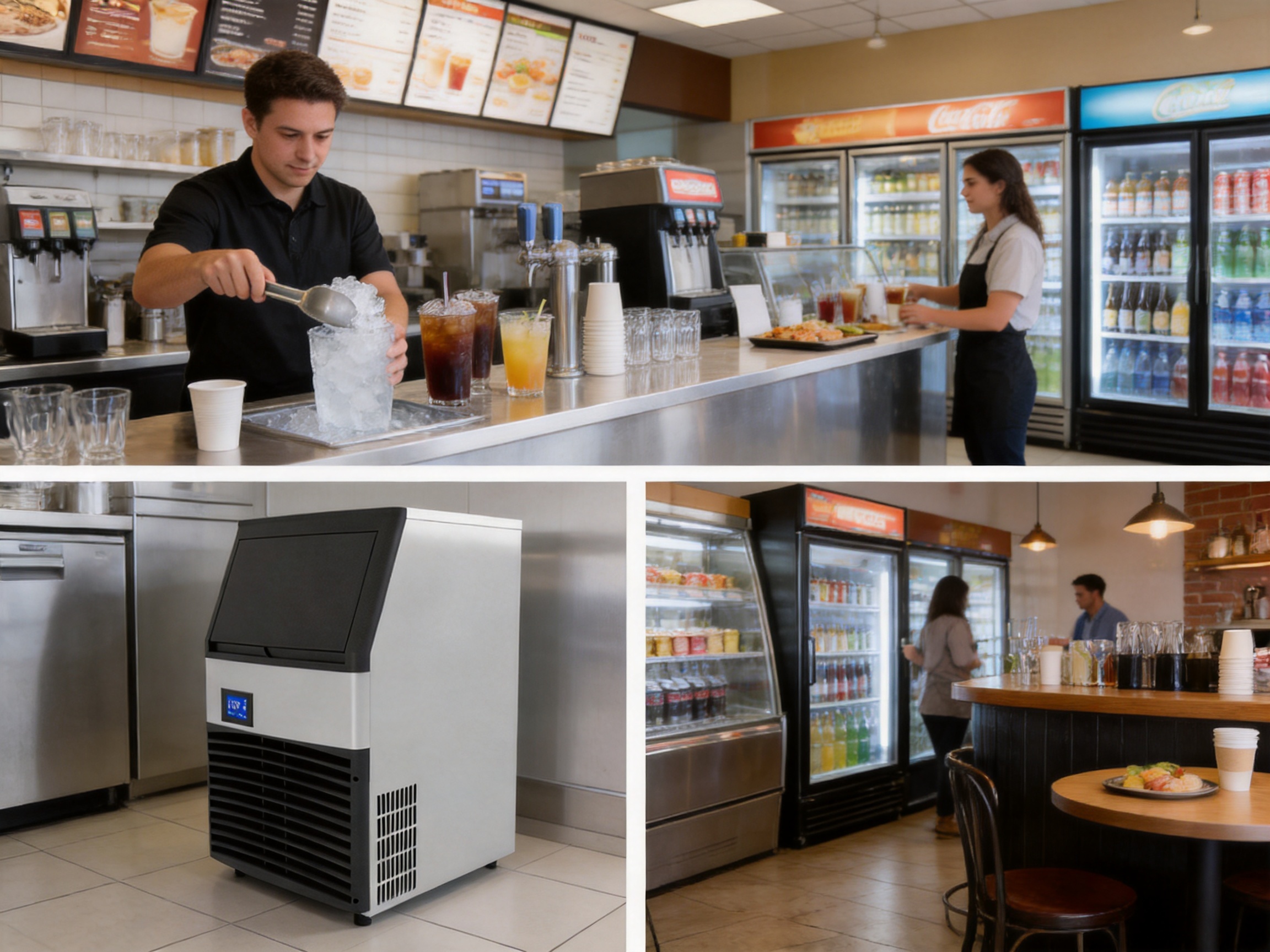
Businesses comparing ice equipment often consider household ice makers, compact retail units, large floor-standing systems, and packaged ice purchases. The ZB-150B occupies a practical position between these options. Its 75-kilogram daily capacity is significantly oriented toward commercial use, while its 40-kilogram storage bin provides more reserve than many small countertop appliances.
Compared with household ice makers, the ZB-150B is designed around higher-volume operation, commercial storage, stainless-steel construction, and business use. Household appliances may be suitable for occasional use but can become impractical when demand is continuous throughout a working day. Commercial equipment is generally better suited to repeated cycles, staff operation, cleaning routines, and integration into a professional workflow.
Compared with purchasing packaged ice, on-site production can provide more control over availability. Operators do not need to rely entirely on delivery schedules or retail stock. This can be especially valuable during busy seasons, hot weather, local events, or periods when nearby suppliers experience shortages. The business can produce ice according to its own operating pattern rather than depending on external inventory.
Compared with a larger industrial ice maker, the ZB-150B may require less installation space and may be easier to accommodate in a small commercial premises. A high-output machine can be unnecessary for a cafe or small restaurant and may involve greater power, water, drainage, ventilation, and investment requirements. Matching machine capacity to actual demand can support better use of capital and space.
Compared with basic low-cost commercial machines, the ZB-150B offers a combination of automatic cleaning, R290 refrigerant, food-grade stainless-steel construction, air cooling, and a relatively large storage bin. Buyers should still compare warranty terms, service availability, ice shape, cycle time, noise level, voltage, water requirements, and documentation before selecting a final model.
Advantages for Cafes and Beverage Service
Cafes often experience fluctuating ice consumption. Morning coffee service may create demand for iced coffee and cold brew, while afternoon beverage traffic can increase the need for iced tea, fruit drinks, smoothies, and blended beverages. A machine that produces ice continuously and stores a substantial reserve can support these changing patterns.
The ZB-150B can be positioned near a beverage preparation area if the installation conditions permit. This may reduce the distance staff need to carry ice and help keep the service workflow organized. Its stainless-steel appearance can also suit visible or semi-visible installations where equipment presentation matters.
For cafes that sell seasonal drinks, production capacity can be particularly important. Summer promotions, outdoor seating, special events, and delivery orders may increase ice consumption beyond normal averages. The 75-kilogram daily rating gives the operator additional capacity compared with a small domestic appliance, although actual demand should always be calculated before purchase.
Staff should establish a routine for checking the storage bin, water supply, cleaning status, and condenser condition. The machine should not be treated as a “set and forget” appliance. Regular observation helps identify unusual noise, slow production, water leakage, poor ice quality, or temperature-related performance changes before they become serious problems.
Advantages for Convenience Stores and Small Restaurants
Convenience stores need dependable equipment that can operate in a busy retail environment. Ice may be used for cold drinks, takeaway beverages, food displays, customer service, and internal preparation. A 40-kilogram storage bin can provide a useful buffer during customer peaks, while the 75-kilogram daily production capacity supports ongoing replenishment.
Small restaurants can benefit from the same balance. Restaurants may not require the output of a large hotel or banquet operation, but they still need reliable ice during lunch, dinner, weekends, and special events. The machine can support beverage service, chilled ingredients, food displays, and certain preparation tasks, subject to the restaurant’s hygiene procedures and local regulations.
The unit’s air-cooled design may be convenient where a dedicated condenser water system is not available. However, a store or restaurant must ensure that the machine is not placed next to fryers, ovens, steam-producing equipment, or poorly ventilated refrigeration clusters. Heat and grease can affect performance and increase cleaning requirements.
Manufacturing Capabilities and Factory Strengths
Spelor Electrical Appliances (Zhejiang) Co., Ltd. is described as a professional manufacturer integrating design, research and development, manufacturing, sales, and service. The company operates more than 60,000 square meters of modern production facilities and specializes in commercial refrigeration, kitchen, and buffet equipment.
This integrated structure is valuable for commercial equipment buyers because product development, production, quality control, technical support, and after-sales service can be coordinated within one organization. Instead of treating each order as an isolated transaction, an experienced manufacturer can evaluate the equipment’s application, configuration, packaging, documentation, and service needs as part of a complete project.
The company’s product range includes ice cream machines, juice dispensers, fried ice cream machines, refrigeration cabinets, slush machines, flake ice machines, cooking equipment, griddles, fryers, insulation products, barbecue equipment, and buffet solutions. This broad product portfolio provides a useful foundation for buyers that need several categories of foodservice equipment from one supplier.
For distributors, a broad product range can simplify sourcing and support coordinated product launches. A buyer may be able to develop a complete equipment package for cafes, snack shops, fast-food chains, bars, supermarkets, institutions, and hospitality projects. The ability to discuss refrigeration, beverage, cooking, and buffet products with one manufacturing partner can reduce communication complexity.
Design and Research and Development Support
A commercial machine must be designed around real working conditions rather than only laboratory specifications. Design teams need to consider user access, cleaning, component serviceability, noise, heat dissipation, water routing, electrical safety, packaging, transport, and the operating habits of different markets.
By integrating design and research and development, a manufacturer can assess these requirements before production. For the ZB-150B, relevant design considerations include fitting the refrigeration system into a compact body, providing sufficient space for the storage bin, managing airflow for air cooling, supporting automatic cleaning, and using materials appropriate for foodservice environments.
OEM and ODM capability can further extend this process. OEM projects may involve producing equipment under a customer’s brand or according to an established specification. ODM projects may involve adapting an existing platform or developing a customized product based on drawings, technical requirements, target markets, or operating conditions.
Customization may include exterior color, panel design, control interface, electrical voltage, frequency, plug type, packaging, language, labels, manuals, logo placement, water connections, drainage arrangements, or other commercially relevant details. Any customization should be reviewed through a formal technical process to ensure that changes do not compromise refrigeration performance, airflow, safety, hygiene, or serviceability.
Production Process for Commercial Refrigeration Equipment
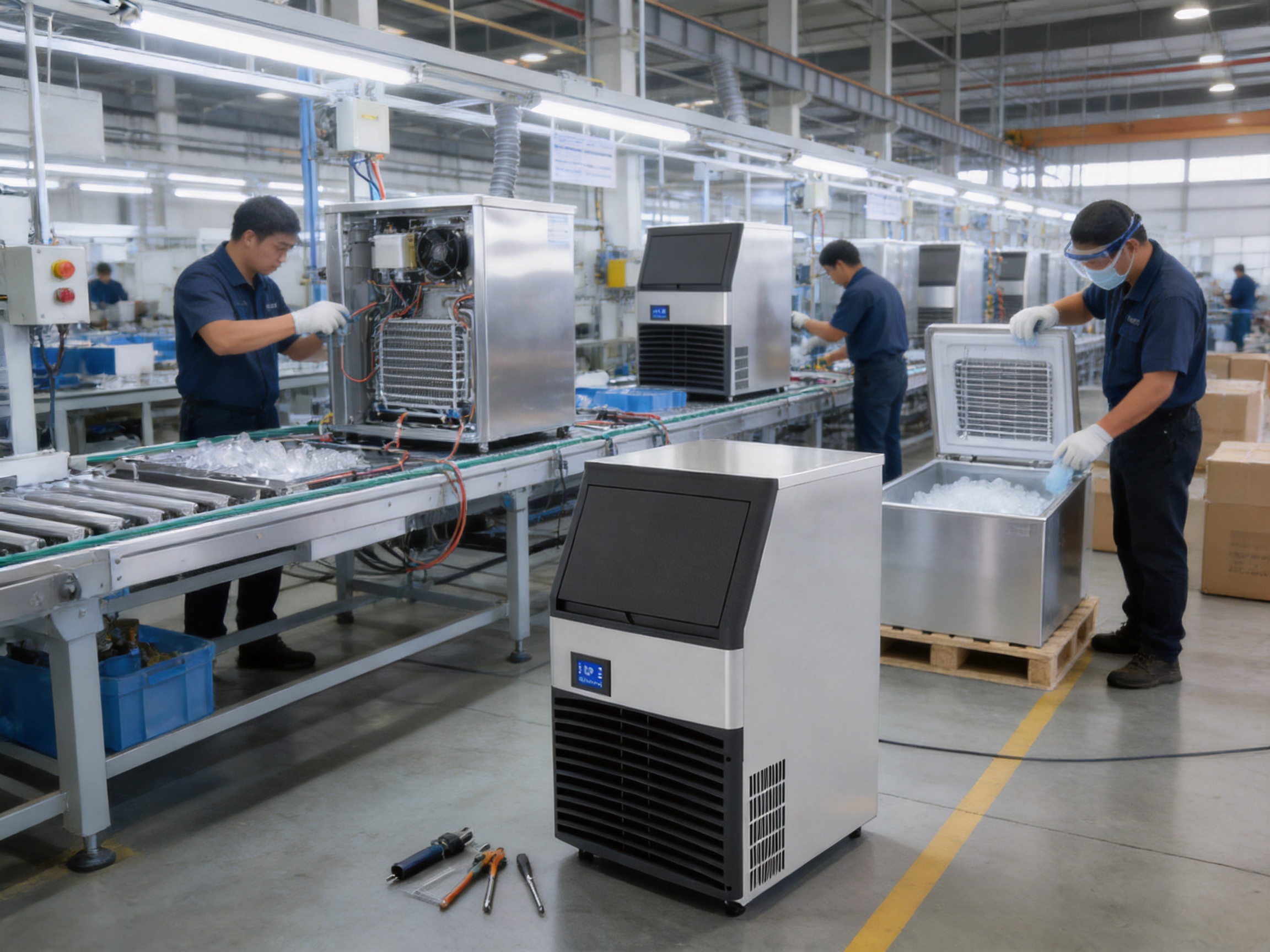
Advanced manufacturing is not limited to the final assembly line. It begins with material selection and continues through fabrication, component installation, refrigeration assembly, electrical testing, functional testing, cleaning, packaging, and shipment preparation.
Material Preparation and Sheet-Metal Processing
Stainless-steel and sprayed-steel panels must be prepared accurately so that the finished cabinet has consistent dimensions and clean edges. Sheet-metal operations can include cutting, forming, bending, drilling, and surface treatment. Accurate processing supports proper panel alignment and helps reduce gaps that could collect dirt or moisture.
For commercial equipment, the external finish must also withstand repeated cleaning and routine handling. Surface quality inspection can identify scratches, deformation, uneven coating, or other defects before the cabinet moves to final assembly.
Cabinet Assembly and Insulation
The cabinet assembly stage brings together the outer panels, internal structure, storage bin, insulation, doors or access panels, and mounting points. Insulation helps reduce unwanted heat transfer and supports refrigeration efficiency. Proper alignment is important because a poorly fitted panel or seal may affect appearance, cleanliness, or thermal performance.
The storage bin requires particular attention because it is repeatedly exposed to ice, moisture, scoops, and staff access. Its design should support drainage, cleaning, and regular inspection. The internal surface should be maintained according to the machine’s sanitation instructions.
Refrigeration System Installation
The refrigeration system includes the compressor, condenser, evaporator, refrigerant lines, filters, controls, and related components. Assembly quality is essential. Tubing must be routed securely, joints must be properly formed and sealed, and components must be mounted to limit unwanted vibration.
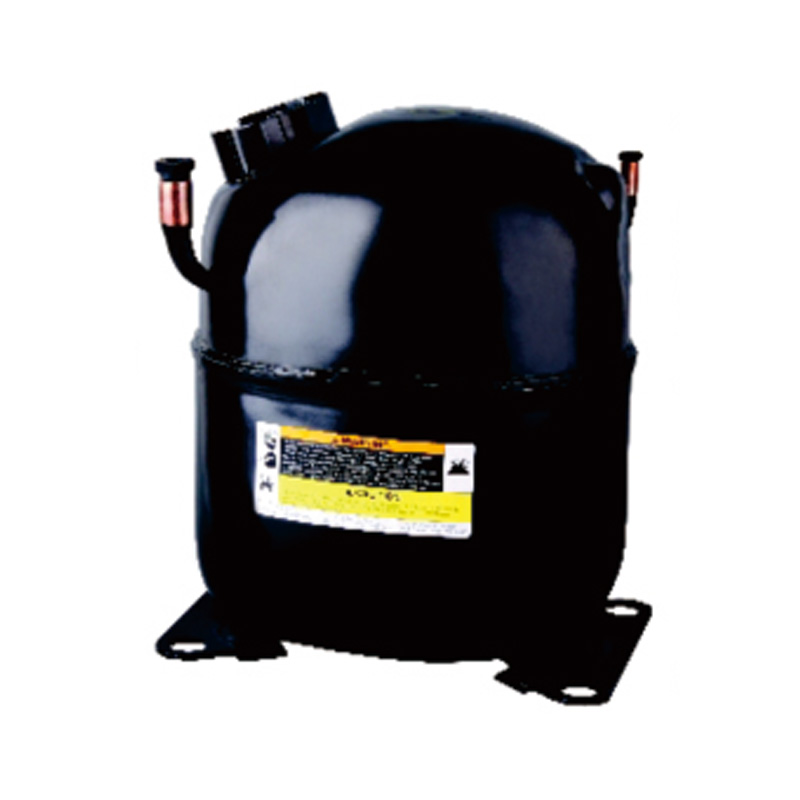
The product information identifies a Chinese compressor as part of the specification. Compressor selection should be matched to the refrigeration load, refrigerant type, ambient conditions, and intended operating cycle. During production, the refrigeration circuit should undergo appropriate vacuum, pressure, leakage, and performance checks before the machine is released.
Electrical and Control Assembly
Electrical components must be installed with attention to wiring organization, insulation, grounding, protection, and control logic. A commercial ice machine may operate for extended periods, so reliable electrical assembly is essential for safe and stable use. Control systems should coordinate water filling, ice production, storage status, cleaning functions, and protective shutdowns according to the product design.
Functional Testing
Functional testing is used to confirm whether the assembled machine performs as intended. Testing may include startup operation, water circulation, refrigeration response, ice formation, storage-bin behavior, cleaning-cycle operation, power consumption, abnormal-condition protection, and leakage inspection.
Testing should be conducted under controlled conditions, while buyers should remember that actual site performance depends on local water temperature, room temperature, ventilation, voltage stability, and maintenance. A professional factory can provide operating guidance so that distributors and end users understand the difference between nominal specifications and field conditions.
Quality Control and Commercial Reliability
Quality control is especially important for equipment used in foodservice because a failure can affect both revenue and customer satisfaction. A dependable quality system should cover incoming materials, supplier components, production processes, assembly accuracy, refrigeration performance, electrical safety, exterior finish, packaging, and final documentation.
For the ZB-150B, key quality checkpoints may include stainless-steel panel condition, storage-bin fit, compressor installation, refrigerant circuit integrity, condenser airflow, water drainage, automatic cleaning operation, and overall production performance. The exact inspection procedures depend on the manufacturer’s quality system and the requirements of the destination market.
Commercial buyers should request appropriate technical documents before placing an order. Useful documents may include product specifications, electrical information, installation instructions, cleaning procedures, spare-parts lists, warranty conditions, packaging details, and applicable compliance documentation. These materials help importers, service technicians, and end users manage the equipment correctly.
Reliability also depends on spare-parts planning. Common service items may include filters, pumps, fans, sensors, control components, water valves, seals, and refrigeration-related parts. A manufacturer that can provide technical support and replacement components can help reduce downtime over the equipment’s working life.
Installation Planning
Before installation, the buyer should verify the required electrical specification for the destination country. The supplied product information lists a rated power consumption of 600 watts, but voltage, frequency, plug configuration, current draw, and protective requirements should be confirmed for the exact order configuration.
The water supply should be clean and suitable for ice production. Water pressure and connection size should be checked against the product manual. The drain should be routed safely so that standing water does not accumulate around the machine or create a slip hazard. If a water filter is installed, it should be accessible for replacement.
The installation surface must be level and strong enough to support the machine, the water system, and the maximum ice load. Operators should avoid placing the machine where it can be splashed by cooking oil, exposed to direct sunlight, or affected by excessive heat. Adequate clearance around the air-cooled condenser is essential.
After installation, the machine should be run through its initial operating and cleaning procedures before ice is served to customers. Staff should become familiar with the control panel, water shutoff, cleaning cycle, storage-bin access, and emergency procedures. A written daily and weekly maintenance checklist can make responsibilities clear.
Maintenance and Long-Term Operating Value
Routine maintenance protects the machine’s production capacity and helps preserve ice quality. The storage bin should be cleaned and sanitized at the intervals recommended by the supplier and local food safety requirements. Staff should use a dedicated scoop and avoid touching ice directly with bare hands.
The water system should be inspected for scale, sediment, unusual odor, low flow, or leakage. Mineral buildup can reduce the efficiency of water-contact components and may affect the appearance of the ice. Where water hardness is high, the cleaning schedule may need to be more frequent than the standard recommendation.
The condenser should be inspected regularly because dust and grease reduce airflow. A blocked condenser can raise operating temperatures, increase energy consumption, lengthen ice-making cycles, and place additional stress on the compressor. The condenser should be cleaned using an appropriate method that does not damage fins or electrical components.
Operators should also monitor changes in performance. Warning signs may include reduced daily output, unusually long cycles, excessive noise, water leaks, frost in unexpected locations, repeated shutdowns, or changes in ice consistency. Early service intervention can prevent a minor issue from developing into a major refrigeration or electrical failure.
When R290 service is required, only qualified technicians familiar with flammable refrigerants should open the refrigeration system. The repair area must be managed according to applicable safety procedures. Correct tools, ventilation, leak detection, and refrigerant-handling practices are important parts of responsible service.
Purchasing for Distributors and Project Buyers
Distributors should evaluate more than the machine’s headline production figure. A successful commercial equipment product must be easy to explain, install, operate, maintain, and support. The ZB-150B has several features that can be communicated clearly to customers: 75-kilogram maximum daily production, 40-kilogram storage capacity, 600-watt rated power, air cooling, R290 refrigerant, compact dimensions, stainless-steel construction, and automatic cleaning.
Project buyers should examine the intended application in detail. A cafe chain may need consistent branding and standardized electrical configurations across multiple locations. A hotel or restaurant group may require service agreements, spare-parts availability, and coordinated delivery. A supermarket may prioritize storage capacity, noise control, and integration into a high-traffic retail environment.
OEM and ODM customers should provide drawings, target output, preferred ice format, local electrical requirements, packaging expectations, labeling rules, language requirements, and commercial forecast information as early as possible. Clear specifications reduce delays and help the factory determine whether an existing model can be adapted or whether a new design is required.
It is also advisable to confirm the meaning of all performance figures. Buyers should ask whether the 75-kilogram rating is measured under a particular ambient temperature and water temperature, whether the 40-kilogram figure represents usable storage, and what operating conditions are required to achieve the stated output. Transparent technical communication supports better product selection and fewer misunderstandings after delivery.
Why a Factory Partnership Matters
Working directly with a professional manufacturer can provide advantages beyond the initial purchase price. A factory with design, research and development, production, sales, and service capabilities can help customers select appropriate configurations and solve application-specific problems.
Spelor’s stated manufacturing focus covers commercial refrigeration, kitchen equipment, and buffet solutions. This gives the company experience across several related product categories. For a foodservice project, that broader knowledge can support equipment matching, layout discussions, product bundling, and coordinated procurement.
The company also describes one-stop support covering pre-sales consultation, product customization, flexible logistics and payment solutions, and after-sales maintenance. For international customers, this type of support can be important because commercial equipment must be considered from the beginning of the project through installation and long-term operation.
A factory partnership can also improve communication about product changes. If a distributor receives recurring feedback about control labels, packaging, service access, exterior color, or electrical configuration, an integrated manufacturer may be better positioned to review those requirements and implement practical improvements.
Application Recommendations
The ZB-150B is most appropriate for businesses with regular ice requirements that fall within a small-to-medium commercial range. It may be a suitable choice for cafes, juice bars, convenience stores, small restaurants, snack shops, beverage counters, bars, and institutional foodservice areas.
Before ordering, operators should estimate daily ice consumption by category. Beverage ice, display ice, preparation ice, and emergency reserve should be counted separately. Demand should also be adjusted for seasonal peaks, weekends, promotional events, and future business growth.
For a location with very high demand, an additional machine or a higher-capacity model may be more appropriate. For a business with only occasional ice use, the investment may not be justified. The best equipment choice is determined by the relationship between production capacity, storage capacity, space, utilities, service access, and total operating requirements.
| Business type | Potential use of the machine | Important planning point |
| Cafe | Iced coffee, tea, smoothies, cold drinks, and takeaway beverages | Place near beverage preparation while maintaining airflow |
| Convenience store | Cold beverages, customer service, food display, and internal use | Allow room for cleaning and routine stock-area access |
| Small restaurant | Table beverages, bar service, preparation, and chilled presentation | Keep away from cooking heat and grease |
| Bar | Cocktails, soft drinks, chilled service, and peak-period reserve | Confirm output against evening and weekend demand |
| Snack shop | Cold drinks, dessert service, and food preparation support | Use water filtration where local water quality requires it |
| Institutional kitchen | Staff dining, beverage service, and food presentation | Coordinate sanitation schedules with kitchen procedures |
Frequently Asked Questions
What is the maximum production capacity of the ZB-150B?
The stated maximum daily production is 75 kilograms in 24 hours. Actual output can vary according to ambient temperature, water temperature, ventilation, water quality, voltage, cleaning status, and other installation conditions.
How much ice can the storage bin hold?
The storage bin capacity is listed as 40 kilograms. The usable amount may depend on how the machine manages storage, the ice format, and the operating instructions. Buyers should confirm the practical storage specification with the supplier.
Is the machine air-cooled or water-cooled?
The ZB-150B uses air cooling for condensation. It does not require a dedicated condenser water circuit, but it does require sufficient airflow around the condenser and should be installed away from excessive heat.
What refrigerant does the machine use?
The machine uses R290 refrigerant. Because R290 is flammable, refrigeration service must be completed by qualified personnel using procedures and equipment suitable for hydrocarbon refrigerants.
Does the machine have an automatic cleaning function?
Yes. The product information states that the machine includes an automatic cleaning function. Automatic cleaning should be used together with manual sanitation, surface cleaning, water-system inspection, and condenser maintenance.
Is the machine suitable for a cafe?
It can be suitable for cafes that require regular small-to-medium-volume ice production. The 75-kilogram daily rating and 40-kilogram storage capacity can support iced beverages and peak service periods, provided the machine is installed and maintained correctly.
Can the machine be used in a convenience store?
Yes. Convenience stores may use it for cold beverages, takeaway service, food displays, and internal operations. The installation area should provide stable flooring, suitable water and drainage connections, electrical compatibility, and adequate condenser ventilation.
What maintenance does an air-cooled ice machine require?
Routine maintenance includes cleaning and sanitizing the storage bin, checking the water system, using the automatic cleaning function, inspecting the drain, cleaning the condenser, monitoring ice quality, and arranging qualified service when refrigeration or electrical problems occur.
Can the product be customized for OEM or ODM orders?
The manufacturer offers OEM and ODM solutions based on drawings or requirements. Possible project details may include branding, colors, packaging, electrical configuration, labels, manuals, and other specifications, subject to technical review and order conditions.
What should buyers confirm before placing an order?
Buyers should confirm output conditions, ice type, voltage, frequency, plug, water pressure, drainage, dimensions, ventilation clearance, warranty, spare parts, packaging, certifications or compliance documents, lead time, and after-sales service arrangements.
Conclusion
The ZB-150B 75kg/24H Countertop Ice Maker is designed to address the practical needs of businesses that require reliable ice production without installing a large industrial system. Its 75-kilogram maximum daily output, 40-kilogram storage bin, compact 500 × 577 × 855-millimeter format, 600-watt rated power, air-cooled condensation, R290 refrigerant, stainless-steel construction, and automatic cleaning function form a balanced commercial equipment solution.
Its main advantages are its capacity-to-footprint ratio, built-in storage reserve, practical air-cooled installation, modern refrigerant choice, cleanable foodservice construction, and suitability for continuous small-to-medium-volume use. Compared with household appliances, it is more oriented toward commercial operation. Compared with larger systems, it can be easier to install in space-constrained businesses. Compared with packaged ice purchasing, it can give operators greater control over supply and daily availability.
The machine’s value also depends on the manufacturer behind it. Spelor Electrical Appliances (Zhejiang) Co., Ltd. combines product development, manufacturing, sales, and service across a broad commercial equipment portfolio. Its more than 60,000-square-meter production base and OEM/ODM capabilities provide a foundation for customized foodservice projects and international distribution programs.
For the best result, buyers should match the machine to their actual demand, confirm destination-market requirements, prepare the installation area correctly, follow sanitation procedures, and arrange qualified service for refrigeration maintenance. With appropriate selection and care, the ZB-150B can support dependable ice availability for cafes, convenience stores, restaurants, bars, snack shops, and other professional foodservice operations.
References
1. Spelor Electrical Appliances (Zhejiang) Co., Ltd. Product information for model ZB-150B 75kg/24H Countertop Ice Maker.
2. Spelor Electrical Appliances (Zhejiang) Co., Ltd. Commercial refrigeration and foodservice equipment manufacturing information.
3. General commercial refrigeration equipment installation and maintenance principles.
4. General foodservice equipment sanitation and ice-handling practices.
5. General technical guidance for the safe handling and servicing of R290 refrigeration systems.
Product: 75Kg/24H Countertop Ice Maker for Business Commercial

For exclusive deals and latest offers, sign up by entering your email address below.


-
spelor@spelor.com
-
+86-576-85229688
-
No.528, Changxi Road, Linhai City, Zhejiang Province, China
Commercial Refrigeration Equipment Manufacturer China
Copyright © 2025 by Spelor Electrical Appliances (Zhejiang) Co., Ltd. Rights Reserved.
