


 中文简体
Food-Grade Stainless Steel Commercial Desktop Soft Serve Ice Cream Machine
Admin 2026-09-11Soft serve ice cream remains one of the most attractive products in the foodservice industry because it combines broad customer appeal, simple menu integration, attractive presentation, and the potential for repeat purchases. Cafés, bakeries, dessert counters, convenience stores, snack shops, and small restaurants can use soft serve to expand their menus without requiring the floor space or production infrastructure associated with a large-scale frozen dessert line.
The BQL-9200ST food-grade stainless steel commercial desktop soft serve ice cream machine is designed for this type of application. It combines a compact countertop format with a stated production capacity of 10 liters per hour, a 1,000-watt input rating, a 3.6-liter hopper, and a 1.6-liter freezing tank. Its design is intended for operators who need dependable small-batch production, straightforward control, hygienic construction, and efficient use of limited commercial space.
Unlike many basic entry-level machines that concentrate only on freezing performance, this model brings together food-contact stainless steel construction, a colorful sprayed-steel exterior, an LCD touch screen, self-cleaning functionality, and pre-cooling capability. These features are relevant not only to product quality but also to daily workflow, employee training, sanitation routines, and service continuity.
Manufactured by Spelor Electrical Appliances (Zhejiang) Co., Ltd., the machine reflects the capabilities of a company focused on commercial refrigeration, kitchen equipment, and buffet solutions. Spelor operates modern production facilities covering more than 60,000 square meters and provides design, research and development, manufacturing, sales, and service. Its broader product portfolio includes ice cream machines, juice dispensers, fried ice cream machines, refrigeration cabinets, slush machines, flake ice machines, cooking equipment, griddles, fryers, insulation products, barbecue equipment, and buffet equipment.
This article examines the machine in detail, including its construction, refrigeration functions, operating advantages, commercial applications, maintenance requirements, purchasing considerations, and the manufacturing strengths behind it.
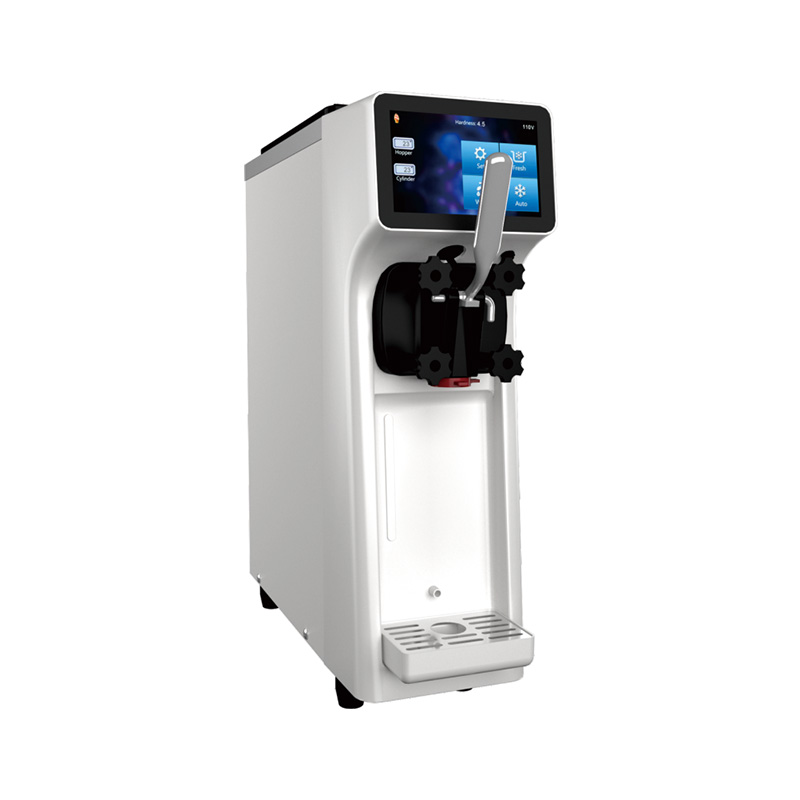
Food-Grade Stainless Steel Commercial Desktop Soft Serve Ice Cream Machine
1. Product Overview and Commercial Positioning
The BQL-9200ST is a desktop soft serve ice cream machine intended for commercial environments that require a practical balance between capacity and compactness. It is not positioned as a high-volume industrial production system. Instead, it is suited to businesses that need regular fresh output while preserving valuable counter and preparation space.
With a listed production capacity of 10 liters per hour, the machine can support steady service during normal café, bakery, restaurant, snack-shop, and dessert-counter operations. Actual output will depend on mix formulation, ambient temperature, serving size, operating conditions, and the desired firmness of the finished product. Nevertheless, the stated capacity places the machine in a useful range for small and medium commercial applications.
The desktop format is particularly important for businesses operating inside compact premises. A countertop machine can be positioned near a checkout counter, dessert preparation area, beverage station, or front-of-house serving zone. This can reduce the need for dedicated floor installation and may shorten the distance between preparation and customer service.
The equipment uses one 3.6-liter hopper and one 1.6-liter freezing tank. This configuration supports controlled small-batch production and can be appropriate for operators who want to limit excess mix exposure or manage production according to customer demand. A single-tank structure can also simplify operation for businesses that do not require multiple flavors from one machine.
The machine’s product category is commercial soft serve ice cream equipment. Its intended use is different from that of a domestic countertop appliance. Commercial construction, sanitation requirements, refrigeration stability, operating controls, and serviceability are all important factors when a machine is expected to work repeatedly during business hours.
2. Food-Grade Stainless Steel Construction
One of the most important advantages of this machine is its use of food-grade stainless steel in the plate body and product-contact construction. Stainless steel is widely used in professional foodservice equipment because it offers a combination of durability, corrosion resistance, smooth surfaces, and practical cleanability.
In a commercial dessert environment, equipment is exposed to milk, cream, sugar, flavoring ingredients, moisture, cleaning solutions, and frequent handling. A suitable exterior and food-contact structure must withstand this environment without becoming difficult to sanitize. Stainless steel helps provide a stable surface that is less likely to absorb odors or retain food residue when properly cleaned.
The material also contributes to a professional appearance. The supplied design combines stainless steel with colorful sprayed steel, creating an exterior that is both functional and visually suitable for front-of-house use. This is valuable for cafés and dessert shops where the machine may be visible to customers rather than hidden in a back room.
Compared with painted low-grade sheet metal or unsuitable materials, stainless steel generally offers stronger resistance to everyday wear and moisture-related deterioration. It can support a longer service life when operators follow correct cleaning, inspection, and operating procedures. Its smooth appearance also makes it easier for staff to identify spills and maintain a clean presentation throughout the day.
The construction is especially useful for businesses that need to balance hygiene with appearance. A machine can be technically capable yet unsuitable for customer-facing use if its outer panels are difficult to clean or deteriorate rapidly. The food-grade stainless steel body helps address both requirements.
Hygiene Benefits in Daily Operation
Soft serve mix is a sensitive food product. Residual mix left in unsuitable areas can become difficult to remove and may create sanitation risks. For this reason, the machine’s surfaces, freezing components, dispensing areas, seals, and removable parts should be cleaned according to a documented foodservice sanitation procedure.
The stainless steel structure does not eliminate the need for cleaning, but it supports a more efficient cleaning routine. Operators can wipe external surfaces, remove visible splashes, and inspect the machine more easily. The self-cleaning function adds another layer of support by helping reduce the labor required for routine internal cleaning procedures.
Businesses should still follow the manufacturer’s instructions for disassembly, detergent selection, sanitizing, rinsing, lubrication, and storage. Self-cleaning is a useful function, but it should not be treated as a substitute for manual inspection or complete sanitation when required.
3. Intelligent LCD Touch Screen Operation
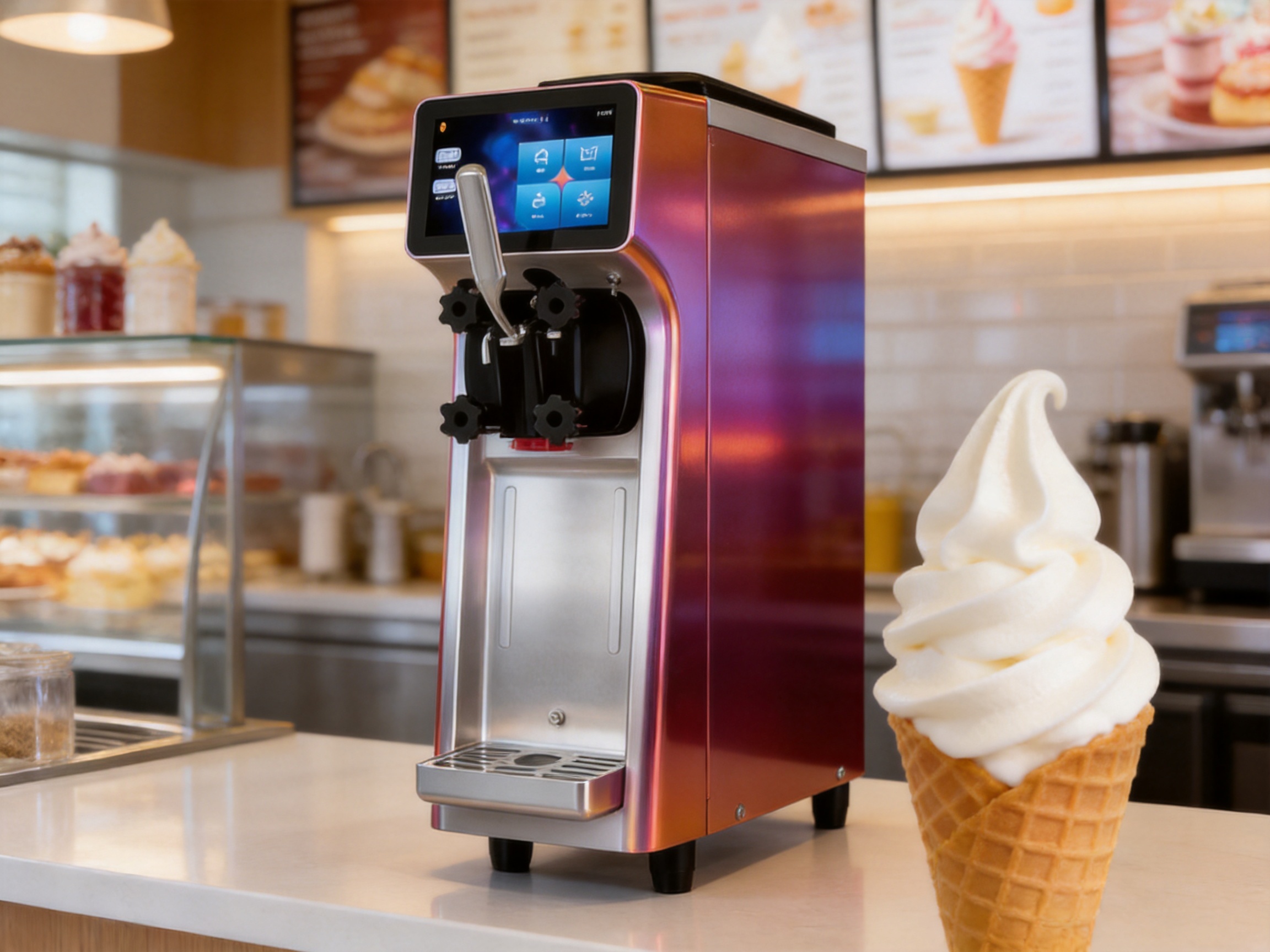
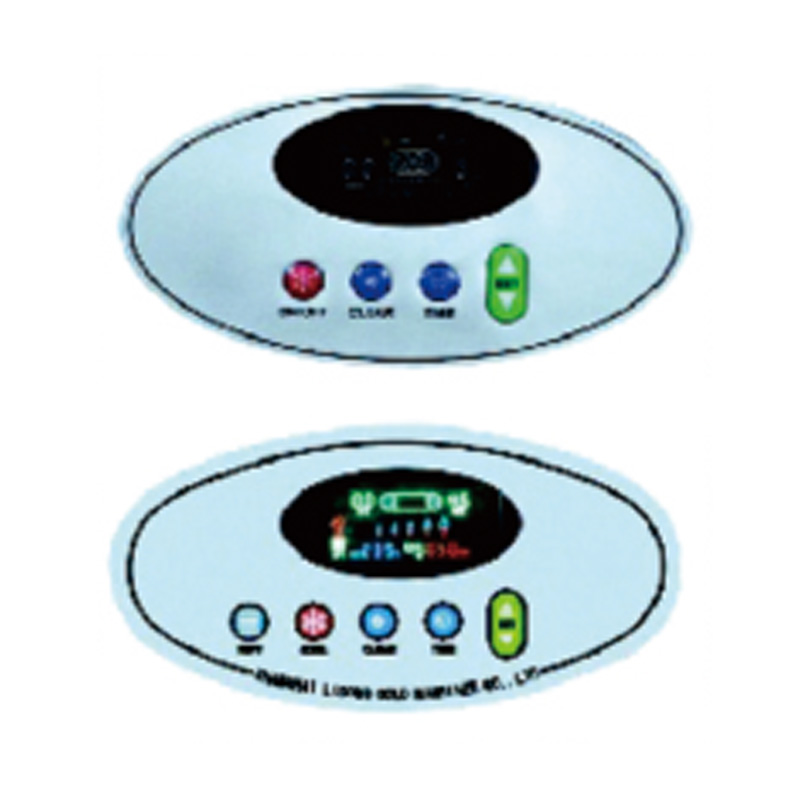
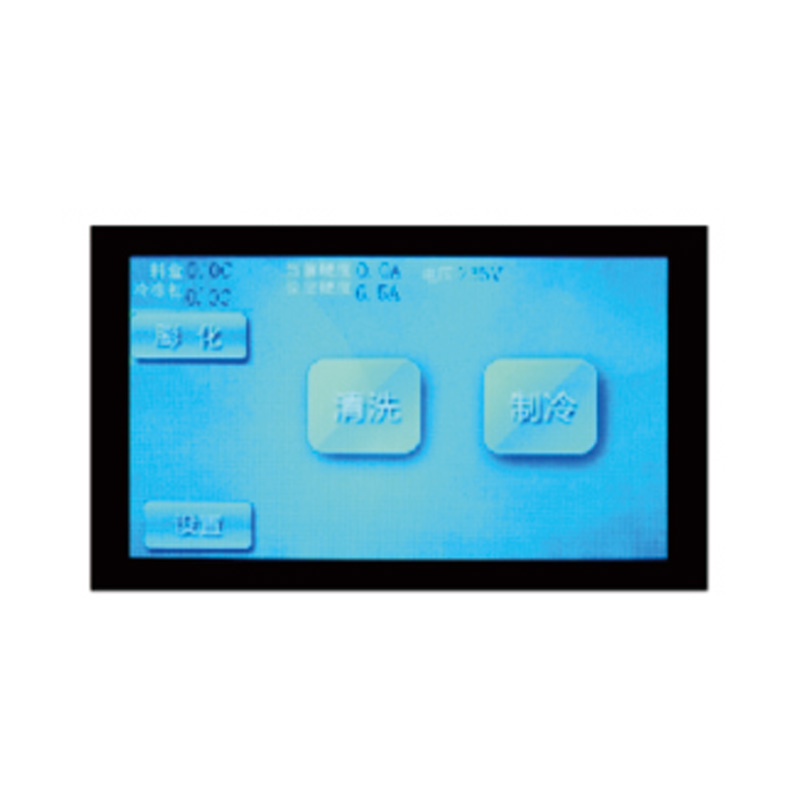
The BQL-9200ST is equipped with an LCD touch screen designed to make operation more visual and intuitive. Traditional commercial machines often rely on mechanical switches, indicator lights, or complicated combinations of buttons. While these controls can be reliable, they may increase the time required for training and make operating status less immediately visible.
An LCD touch interface can provide clearer access to operational settings and machine information. The supplied description identifies intelligent operation and real-time visualization as key features. In a busy commercial environment, this may help staff understand whether the machine is preparing, freezing, holding, cleaning, or ready for service.
Visual feedback is particularly useful when several pieces of foodservice equipment are operating simultaneously. Employees can check the machine more quickly without relying only on sound, temperature assumptions, or memorized button sequences. This can support more consistent handover between shifts and reduce the risk of incorrect operation by inexperienced staff.
For owners and managers, a visual interface can also contribute to standardized procedures. A business may create simple operating instructions covering startup, mix filling, freezing, serving, cleaning, and shutdown. When the machine presents information in a direct format, new employees may become familiar with normal operation more quickly.
Improved Workflow and Staff Training
Commercial equipment should not only produce the desired result; it should also be practical for the people who use it. A touch screen with real-time visualization can make the machine easier to understand at a glance. This matters in cafés and snack shops where employees may serve drinks, prepare food, handle cash, and operate frozen dessert equipment during the same shift.
The control system can help reduce unnecessary interruptions. Staff can monitor the machine while completing other tasks and return when the operating status indicates that service is ready. Clear controls may also reduce the likelihood of selecting the wrong operating mode or overlooking a cleaning requirement.
Touch screens should be kept clean and dry, especially in foodservice areas. Operators should use the cleaning method recommended for the control panel and avoid allowing water or cleaning chemicals to enter the electronic components.
4. Self-Cleaning Function and Sanitation Support
The self-cleaning function is one of the machine’s most practical features for commercial users. Cleaning a soft serve machine is essential, but it can be time-consuming when performed entirely through manual procedures. A self-cleaning cycle can assist with rinsing or circulating cleaning solution through relevant internal passages, depending on the machine’s detailed operating instructions.
Reducing cleaning complexity can have several business benefits. First, it may help staff complete routine sanitation tasks more consistently. Second, it can reduce downtime between production cycles or at the end of a service period. Third, it can support more efficient labor allocation in businesses where every employee performs multiple roles.
Operators should understand the difference between a self-cleaning cycle and a complete cleaning program. Internal components such as dispensing valves, seals, gaskets, nozzles, scrapers, and product-contact surfaces may still need to be removed, inspected, washed, sanitized, and reassembled manually. The exact frequency depends on the mix used, local food safety rules, operating hours, and the manufacturer’s instructions.
A good sanitation routine should include checking for hardened mix, inspecting seals for wear, cleaning the hopper, flushing product passages, sanitizing contact surfaces, and ensuring that parts are fully dry or correctly lubricated before reassembly. If the machine is used continuously, the business should maintain written records of cleaning and maintenance.
Why Cleaning Convenience Matters Commercially
Cleaning affects more than hygiene. It also affects product consistency, equipment reliability, customer confidence, and the useful life of the machine. Old mix residue can influence flavor and texture. Accumulated material can place additional stress on components or restrict product flow. Poor cleaning practices can also cause avoidable service interruptions.
By providing a self-cleaning function, the BQL-9200ST addresses a common concern among small foodservice operators: how to maintain professional sanitation without committing excessive labor or complicated procedures. This is a meaningful advantage over very basic machines that offer limited cleaning assistance.
5. Pre-Cooling and Product Freshness Management
The machine includes a pre-cooling function described as helping keep the product fresh for up to one week. This feature is intended to support temperature management when the machine is not actively dispensing soft serve or when mix must be held between service periods.
Pre-cooling can be useful for businesses with variable demand. A café may experience a busy lunch period followed by a quieter afternoon. A bakery may sell more dessert products on weekends than weekdays. A small restaurant may need to prepare the machine before peak service rather than operating it continuously. In each situation, a holding or pre-cooling function can help the operator manage the mix more effectively.
The stated one-week freshness period should be interpreted together with the type of mix, storage temperature, hygiene conditions, local food safety regulations, and the manufacturer’s operating guidance. Food safety requirements always take priority. Operators should follow approved storage limits for the specific ingredients used and should never retain product beyond the permitted period simply because a machine function is available.
Effective pre-cooling may also reduce preparation time before service. If the internal system is appropriately cooled in advance, the machine can be ready for production or dispensing more efficiently when business begins. This can be particularly valuable for shops with predictable opening schedules.
Compared with a basic machine that only freezes during active operation, a pre-cooling function offers more flexibility in daily planning. It supports a more organized workflow and may reduce the need to discard usable mix caused by poor temperature management.
6. Refrigeration System and R290 Refrigerant
The BQL-9200ST uses R290 refrigerant and is listed with a Chinese compressor. R290 is propane refrigerant, a natural refrigerant increasingly used in commercial refrigeration because of its low global warming potential compared with many traditional refrigerants.
The selection of refrigerant is an important part of modern refrigeration equipment design. Environmental regulations and market expectations are encouraging manufacturers to develop systems that provide effective cooling while reducing the climate impact associated with refrigerant choice. R290 can support this direction when the refrigeration system is properly engineered, installed, operated, and serviced.
Because R290 is flammable, safety remains essential. Only trained and qualified technicians should service the refrigeration circuit. Operators should not modify the refrigeration system, puncture refrigerant lines, or use unauthorized components. The machine should be installed in accordance with applicable electrical, ventilation, and refrigeration safety requirements.
The compressor and refrigeration system must work together to remove heat from the freezing tank and maintain stable operating conditions. In a commercial soft serve machine, cooling stability affects more than temperature. It influences texture, dispensing performance, production speed, and the ability to maintain consistent product quality throughout a service period.
Cooling Performance for Small-Batch Production
For a compact machine, stable cooling is especially important. A countertop unit may be used in warm café interiors, near ovens, under-counter appliances, or in areas with frequent customer traffic. Adequate ventilation around the machine is therefore necessary. Operators should avoid placing it against walls or objects that block air circulation unless the installation instructions specifically permit that arrangement.
Regular cleaning of ventilation areas and condenser surfaces, where applicable, can help preserve cooling performance. Dust and grease buildup can reduce heat transfer and increase the workload placed on the compressor. A preventive maintenance schedule should include visual inspection, airflow checks, and professional refrigeration servicing when needed.
7. Capacity, Size, and Space Efficiency
The machine is specified at 10 liters per hour, with a 3.6-liter hopper and a 1.6-liter freezing tank. This capacity is appropriate for businesses that want a fresh soft serve offering without investing in a large, high-output system.
The compact size is one of the product’s strongest competitive benefits. The product information lists dimensions of 210 x 580 x 700 millimeters, while another supplied specification lists 213 x 555 x 720 millimeters. These figures may reflect different measurement methods, design revisions, or packaging and production records. Buyers should confirm the final machine dimensions, clearance requirements, and shipping dimensions with the supplier before installation.
Regardless of the precise final measurement, the desktop configuration is clearly designed to conserve space. A small footprint can help businesses use their existing counters more efficiently. It may also reduce renovation requirements because the machine does not necessarily require a dedicated floor position.
Space efficiency does not mean that the machine should be placed without planning. The installation area must provide adequate support for the 45-kilogram net weight, sufficient ventilation, access for cleaning, convenient electrical connection, and room for opening covers or removing components. Operators should also allow enough space for mix handling and serving operations.
| Specification | Stated Value | Commercial Relevance |
| Model | BQL-9200ST | Identifies the desktop soft serve machine configuration |
| Type | Desktop | Suitable for counters and compact commercial spaces |
| Production capacity | 10 liters per hour | Supports regular small-batch service |
| Input power | 1,000 watts | Provides a reference for electrical planning and operating cost analysis |
| Hopper capacity | 1 x 3.6 liters | Supports controlled mix loading |
| Freezing tank | 1 x 1.6 liters | Provides the active freezing chamber for one product line |
| Net weight | 45 kilograms | Requires a stable, load-bearing countertop |
| Refrigerant | R290 | Natural refrigerant with low global warming potential |
| Compressor | Chinese compressor | Part of the integrated refrigeration system |
| Dimensions | Approximately 210 x 580 x 700 millimeters; another record lists 213 x 555 x 720 millimeters | Final dimensions should be confirmed before installation |
8. Advantages Over Basic and Larger Alternatives
Every commercial machine should be evaluated according to the application rather than judged only by capacity. The BQL-9200ST offers several advantages over basic soft serve equipment, particularly for operators seeking a more complete feature set in a compact format.
Compared with Basic Entry-Level Machines
Basic machines may provide freezing and dispensing functions but offer fewer tools for monitoring, cleaning, and product holding. The BQL-9200ST adds an LCD touch screen, real-time visualization, self-cleaning, and pre-cooling. These features can reduce the amount of manual intervention required during daily operation.
The use of food-grade stainless steel also gives the machine a more professional construction profile than products made primarily from low-grade or difficult-to-clean materials. For customer-facing businesses, appearance and hygiene can have a direct effect on perceived quality.
The 10-liter-per-hour capacity also provides a practical middle ground. A very small domestic-style appliance may not withstand repeated commercial use or may require frequent refilling. The BQL-9200ST is designed specifically for commercial environments and offers a larger operating capability while retaining a countertop form.
Compared with Large Floor-Standing Machines
Large floor-standing machines may be better suited to high-volume chains, amusement venues, hotels, or locations with continuous demand. However, they typically require more floor space, greater investment, and more complex installation planning. A small café or bakery may not use enough product to justify that level of capacity.
The desktop format of the BQL-9200ST helps smaller businesses avoid paying for unused capacity. It can be placed closer to the point of sale, operated by a smaller team, and incorporated into an existing work area. Lower physical scale can also make training and routine cleaning more manageable.
Choosing the right machine depends on demand forecasts. Operators should consider peak hourly sales, average serving size, menu variety, available space, electrical supply, and expected future expansion. The product is strongest where compactness and practical capacity are more important than maximum throughput.
Compared with Multi-Flavor Machines
A multi-flavor machine can offer greater menu variety, but it may also require more space, more mix management, more cleaning procedures, and a higher purchase price. The BQL-9200ST uses a single hopper and single freezing tank, making it suitable for businesses that want one dependable soft serve flavor or a focused rotating menu.
A single-product configuration can simplify inventory planning and reduce the complexity of flavor changeovers. It may also be appropriate for signature vanilla, chocolate, yogurt, or seasonal products that form one part of a broader dessert menu.
9. Applications Across Foodservice Businesses
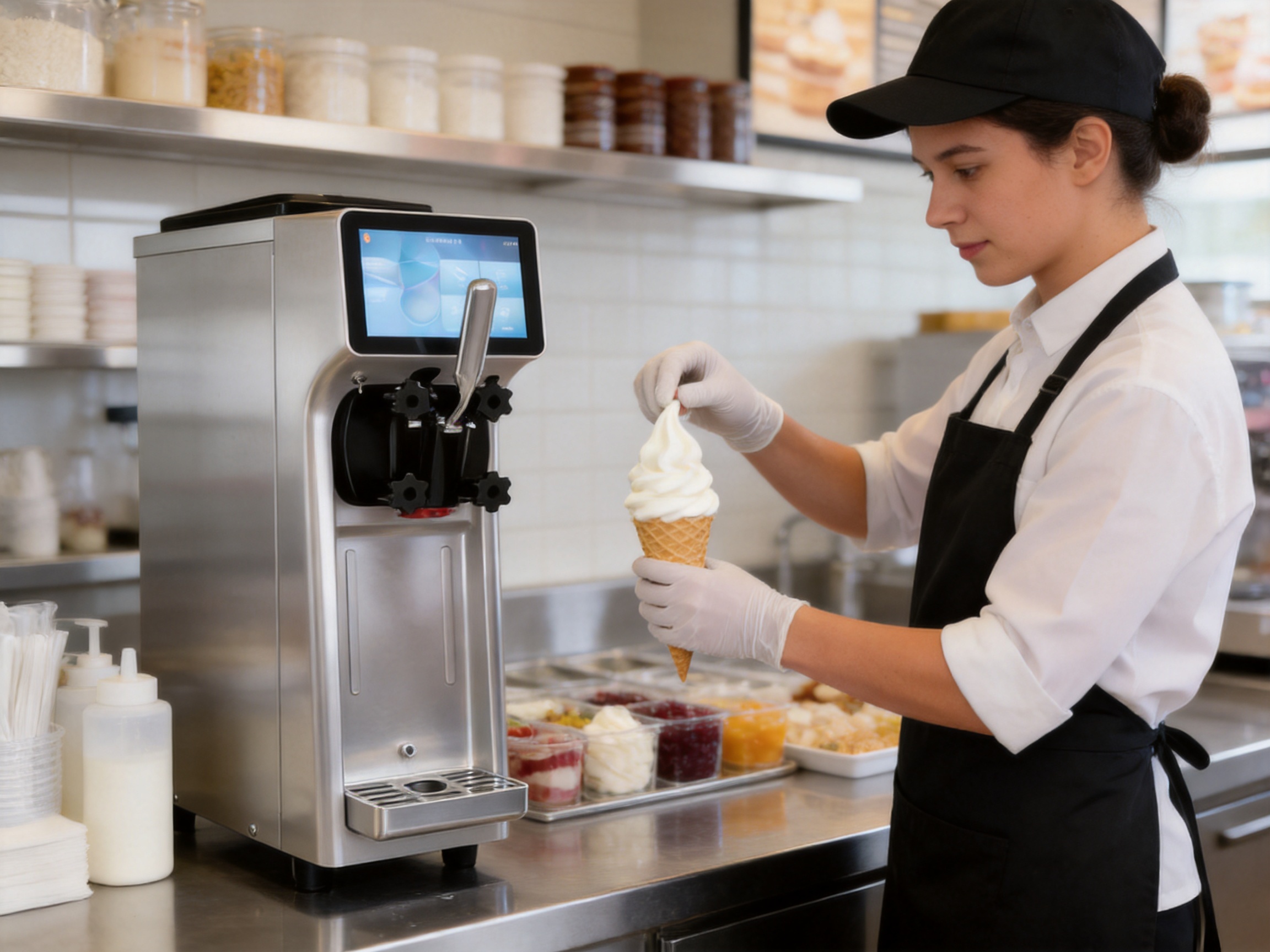
The BQL-9200ST can be used in a variety of commercial settings. Its combination of compact dimensions and small-batch output makes it particularly relevant to businesses that want to add frozen desserts without redesigning their entire operation.
Cafés and Coffee Shops
Cafés can use soft serve as a standalone dessert, an accompaniment to coffee, or a base for specialty creations. It can be served in cones, cups, affogato-style desserts, milkshakes, or layered dessert beverages. The machine can be positioned near the beverage counter to support quick service while maintaining a visible presentation.
Because cafés often operate in limited spaces, a desktop model can be more appropriate than a large floor-standing unit. The operator can produce according to anticipated demand and use pre-cooling to prepare the machine before peak periods.
Bakeries and Dessert Shops
Bakeries can pair soft serve with waffles, brownies, pastries, fruit, cookies, and cakes. A soft serve offering can increase the range of products available during afternoon and evening periods when demand for traditional baked goods may change.
The stainless steel exterior is suitable for customer-facing dessert counters where visual cleanliness is important. The LCD touch screen can also help staff control the equipment while managing other preparation tasks.
Small Restaurants and Snack Shops
Restaurants and snack shops can add soft serve as a simple dessert option without creating a dedicated production kitchen. It can complement burgers, fried foods, grilled meals, or casual dining menus. The machine’s capacity is suitable for regular service where demand is steady but not industrial in scale.
Convenience Stores and Retail Counters
Retail operators can use the machine to create an impulse-purchase product near checkout areas. The compact design allows the machine to be integrated into a sales counter or foodservice zone, provided that sufficient ventilation and sanitation space are maintained.
Seasonal and Event-Based Businesses
Seasonal stores, kiosks, and event foodservice operations may benefit from the machine’s manageable size. Operators should evaluate transport, electrical requirements, ambient conditions, and local regulations before using it in temporary locations. When properly planned, it can support fresh soft serve service at markets, family venues, recreational sites, and seasonal dessert counters.
10. Manufacturing Strengths and Production Capabilities
The performance of commercial foodservice equipment depends not only on the visible product design but also on the manufacturing systems behind it. Spelor Electrical Appliances (Zhejiang) Co., Ltd. integrates design, research and development, manufacturing, sales, and service. This integrated structure can support better coordination between product engineering, production planning, quality control, and customer support.
With more than 60,000 square meters of modern production facilities, the company has the physical scale to support a broad commercial equipment portfolio. A large manufacturing base can provide access to specialized production areas, assembly capacity, testing resources, material handling systems, and dedicated teams for different equipment categories.
The company’s product range covers refrigeration, beverage, cooking, frozen dessert, and buffet applications. This breadth is significant because many foodservice customers need more than one type of equipment. A manufacturer with expertise across several categories can better understand the practical relationship between refrigeration, preparation, display, service, and cleaning in a commercial kitchen.
Design and Research and Development
Design and research and development are essential for creating equipment that is both functional and commercially practical. For a soft serve machine, engineering decisions include the shape of the freezing system, hopper arrangement, product flow, refrigeration performance, control interface, materials, service access, and cleaning process.
Product development must also consider the realities of foodservice work. Employees may have limited training time, counters may be crowded, and equipment may be used repeatedly under changing ambient conditions. Features such as an LCD interface, pre-cooling, and self-cleaning reflect attention to these operational requirements.
Manufacturing and Assembly
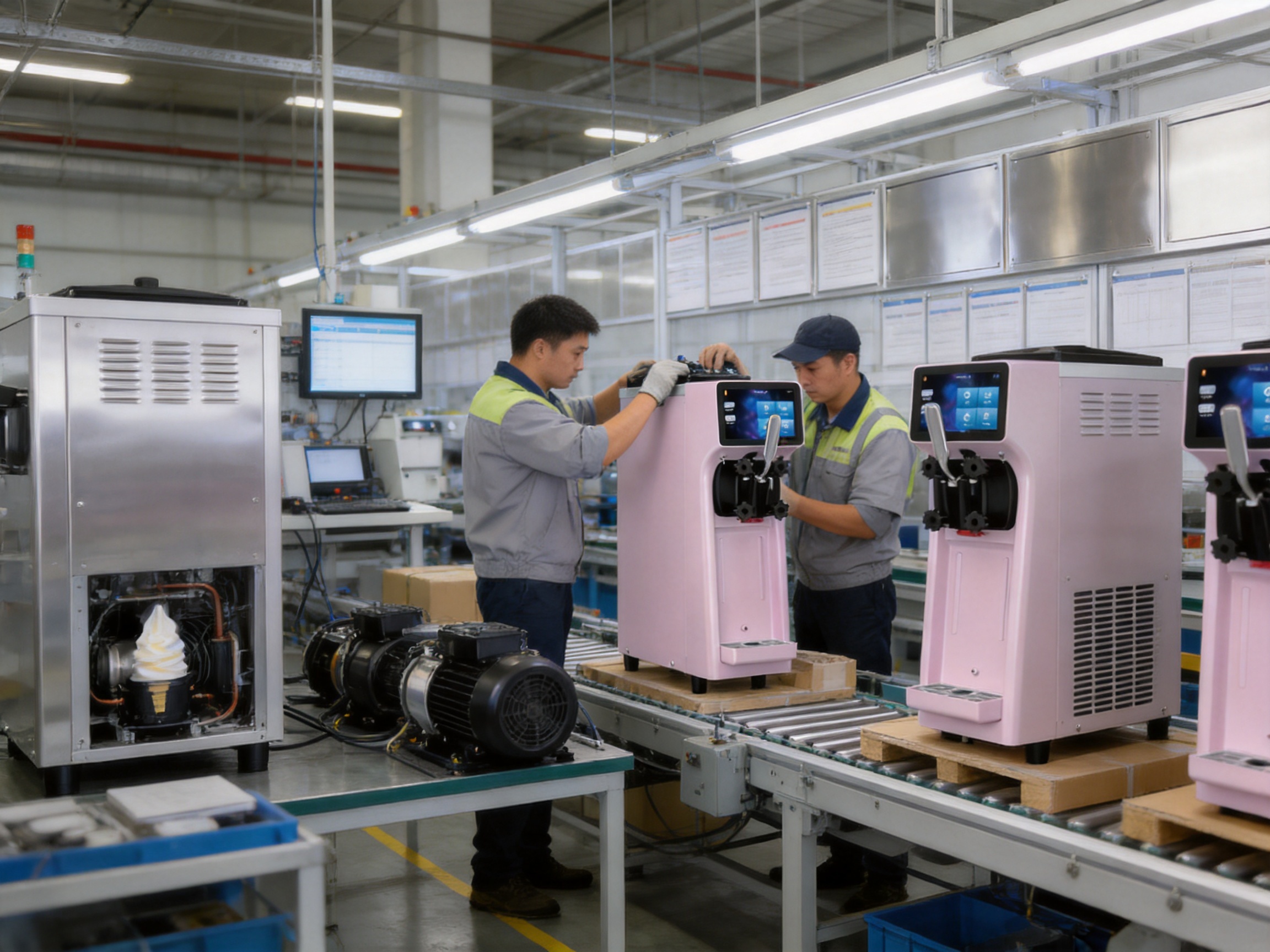
The production of commercial refrigeration equipment involves multiple stages, including material preparation, sheet-metal forming, surface treatment, component installation, refrigeration assembly, electrical integration, inspection, and final testing. Consistency at each stage is important because small deviations can influence fit, airflow, sealing, vibration, and service reliability.
Stainless steel panels must be processed accurately so that edges, joints, access areas, and internal supports align correctly. Electrical and refrigeration components must be installed according to the design requirements. The finished machine should be inspected for appearance, operational function, cooling behavior, control response, and general assembly quality before shipment.
Quality-Oriented Production
A quality-oriented manufacturer should maintain procedures for incoming materials, component verification, assembly inspection, performance testing, and final release. These processes help reduce the possibility of defects reaching customers and provide a more dependable foundation for after-sales service.
For international buyers, manufacturing consistency is especially important. Equipment may be shipped over long distances, installed by local technicians, and operated in different climates. Clear specifications, appropriate packaging, replacement-part support, and responsive communication all contribute to a successful commercial equipment program.
11. OEM and ODM Cooperation
Spelor offers OEM and ODM services based on customer drawings or requirements. This capability is relevant to distributors, foodservice equipment brands, restaurant chains, project contractors, and importers that need products adapted to a particular market or business model.
OEM cooperation may involve manufacturing equipment according to a customer’s branding, packaging, labeling, or specified configuration. ODM cooperation can involve a deeper product development relationship in which the manufacturer supports design adaptation, technical changes, appearance development, or application-specific features.
For a soft serve machine, customization may relate to external color, control language, electrical configuration, packaging, logo placement, operating documentation, or other approved specifications. Any customization should be confirmed through technical drawings, samples, written requirements, and production approval procedures.
A capable OEM and ODM partner can help customers shorten procurement cycles and avoid coordinating multiple suppliers for design, production, and technical support. However, buyers should carefully define certification requirements, voltage and frequency, refrigerant regulations, warranty terms, spare parts, minimum order quantities, lead times, and inspection standards before placing an order.
12. Installation and Operating Recommendations
Correct installation is essential for preserving performance and safety. The machine should be placed on a stable, level countertop capable of supporting at least its 45-kilogram net weight, together with the product load and any operational forces.
Adequate ventilation must be maintained around the refrigeration system. The machine should not be placed in a location where heat from ovens, direct sunlight, or other appliances significantly raises the surrounding temperature. Restricted airflow may reduce cooling efficiency and place additional stress on the compressor.
The electrical supply should match the machine’s required voltage, frequency, and rated power. Since the supplied information identifies an input power of 1,000 watts but does not specify the complete electrical configuration, buyers should confirm these details before installation. A qualified electrician should evaluate the outlet, grounding, circuit protection, and local compliance requirements.
Before first use, operators should inspect the machine for shipping damage, confirm that all removable parts are correctly installed, clean and sanitize product-contact components, and verify that the machine is positioned according to the operating manual.
Operators should use an appropriate commercial soft serve mix and follow the recommended preparation procedure. Incorrect mix concentration, excessive solids, insufficient liquid, or unsuitable ingredients can influence freezing behavior and may increase stress on the product system.
Daily Operating Sequence
A typical operating routine may include checking cleanliness, loading prepared mix into the hopper, activating the appropriate cooling or freezing mode, confirming the operating status on the LCD screen, and allowing the machine to reach the required condition before dispensing.
During service, staff should monitor product texture, dispensing consistency, hopper level, unusual noises, and any warning information shown on the display. The machine should not be operated when abnormal vibration, leakage, overheating, or electrical problems are observed.
At the end of service, staff should follow the approved procedure for product holding, pre-cooling, cleaning, sanitizing, and shutdown. The precise sequence must be based on the manufacturer’s instructions and local food safety requirements.
13. Maintenance and Service Considerations
Routine maintenance helps protect the machine’s performance and extends its useful service life. Operators should establish a schedule that includes cleaning, inspection, and professional technical checks.
Daily attention should focus on product-contact surfaces, dispensing components, hopper cleanliness, control-panel hygiene, visible spills, and ventilation openings. Seals and gaskets should be checked for cracks, deformation, or loss of elasticity. Worn components should be replaced with approved parts.
Periodic maintenance may include inspection of electrical connections, compressor operation, refrigerant-system performance, condenser cleanliness, fan operation, temperature behavior, and structural fasteners. Refrigeration work involving R290 must be performed by qualified personnel with suitable equipment and safety procedures.
Maintaining service records can help identify recurring issues. Records may include cleaning dates, component replacements, error messages, technician visits, and unusual operating conditions. This information is useful for both internal management and warranty or after-sales support.
Spelor’s broader service approach includes pre-sales consultation, product customization, flexible logistics and payment solutions, and after-sales maintenance. For commercial buyers, this type of support can be as important as the initial machine specification. A reliable equipment supplier should be able to help with technical questions, spare parts, operating guidance, and maintenance coordination.
14. Purchasing Considerations for Distributors and End Users
Before purchasing the BQL-9200ST, buyers should define the intended application clearly. Important questions include the expected number of servings per hour, the length of daily operating periods, the available counter space, the local power supply, the desired product mix, and the level of staff experience.
Capacity should be evaluated using actual serving sizes rather than liters alone. A business selling small cups may achieve more servings from the same hourly volume than a business serving large portions. Peak demand is also important. A machine that is sufficient during average periods may be undersized during weekends, holidays, or promotional events.
Buyers should confirm the final technical specification because the supplied product records contain two different dimension listings. They should also request confirmation of voltage, frequency, plug type, refrigerant charge, packaging dimensions, warranty coverage, delivery conditions, and available replacement parts.
For distributors, the product’s compact size and broad application range may make it suitable for different customer segments. It can be marketed to cafés, bakeries, restaurants, kiosks, dessert shops, and convenience stores. The stainless steel construction, self-cleaning function, and touch-screen control provide clear selling points for customers seeking more than a basic freezing appliance.
For restaurant chains and foodservice groups, OEM or ODM discussions may provide opportunities for standardized appearance, documentation, packaging, and operating procedures across multiple locations. A consistent machine configuration can simplify staff training, spare-parts management, and maintenance planning.
15. Total Value Beyond the Purchase Price
The purchase price is only one part of the total cost of owning commercial foodservice equipment. Buyers should also evaluate electricity consumption, cleaning labor, mix waste, maintenance, replacement parts, downtime, installation, shipping, and staff training.
The BQL-9200ST can contribute to operational value through several design features. Its desktop format may reduce space-related costs. Its visual touch interface may reduce training time. Its self-cleaning function may improve cleaning efficiency. Its pre-cooling capability may support better product management. Its stainless steel construction may simplify daily care and preserve a professional appearance.
These advantages do not guarantee a specific return on investment because commercial results depend on sales volume, pricing, local labor costs, menu design, and operating discipline. However, they can improve the machine’s practical value by addressing common sources of inefficiency in small foodservice operations.
A business may also create additional revenue by serving soft ice cream in multiple formats. Cones, cups, sundaes, dessert toppings, combo meals, shakes, and seasonal specials can all use the same base product. The machine can therefore support menu expansion without requiring a completely separate production process.
16. Product Selection by Business Scenario
| Business Scenario | Why the Machine May Be Suitable | Key Planning Point |
| Small café | Compact countertop format and manageable production capacity | Confirm counter load, ventilation, and electrical access |
| Bakery or dessert shop | Can complement pastries, waffles, cakes, and specialty desserts | Plan mix storage and customer-facing sanitation |
| Snack shop | Provides an additional impulse-purchase product | Estimate peak demand during meal periods |
| Small restaurant | Adds a simple dessert line without a large floor machine | Coordinate cleaning with kitchen closing procedures |
| Convenience store | Can be positioned near a retail or checkout foodservice area | Provide staff training and clear daily sanitation records |
| Distributor program | Broad application range and professional feature package | Confirm regional certifications, voltage, and spare parts |
| OEM or ODM project | Manufacturer can work from drawings or customer requirements | Define technical specifications and approval stages in writing |
17. Why the Manufacturer’s Broader Portfolio Matters
Spelor’s experience extends beyond one category of frozen dessert equipment. Its portfolio includes commercial refrigeration, beverage dispensers, ice machines, cooking equipment, buffet products, and other foodservice solutions. This broader background can be valuable for buyers planning a complete store, kitchen, buffet line, or restaurant project.
A customer may need a soft serve machine together with ice makers, juice dispensers, slush machines, refrigerated cabinets, cooking equipment, or display solutions. Working with a manufacturer that understands several equipment categories can simplify communication and support a more coordinated procurement process.
Integrated product knowledge may also help when equipment must operate together in a limited space. Refrigeration loads, electrical demands, customer flow, cleaning zones, and service access all influence the final layout. A supplier with a wide range of commercial equipment can contribute more effectively to a complete foodservice solution than a supplier focused on one isolated appliance.
The company’s stated user-oriented and quality-driven philosophy is consistent with this approach. Commercial buyers generally require more than a shipment of equipment. They need consultation before purchase, reliable production, documentation, logistics coordination, and after-sales support. These services can affect the long-term success of a project.
18. Sustainability and Responsible Equipment Use
The use of R290 reflects the growing importance of refrigerant selection in commercial equipment. Natural refrigerants can support lower environmental impact when handled responsibly and used in properly engineered systems. Businesses should ensure that technicians understand the specific safety requirements associated with R290.
Responsible operation also involves reducing product waste, maintaining correct temperatures, cleaning equipment efficiently, and servicing the refrigeration system before performance declines. A well-maintained machine can operate more reliably and may avoid unnecessary energy use caused by dirty heat-transfer surfaces or blocked ventilation.
Operators should load only the amount of mix required for expected demand whenever appropriate. Better production planning can reduce unused product while maintaining availability during peak periods. Pre-cooling may assist this planning, but it must always be applied in accordance with food safety requirements.
19. Overall Assessment
The BQL-9200ST is a practical commercial soft serve ice cream machine for businesses that need reliable small-batch production in a compact format. Its combination of stainless steel construction, colorful sprayed-steel appearance, LCD touch-screen operation, self-cleaning, pre-cooling, R290 refrigerant, and 10-liter-per-hour capacity gives it a stronger feature profile than a basic entry-level unit.
Its main competitive advantage is balance. It offers commercial functionality without the size and complexity of a large floor-standing machine. It provides more operational assistance than a simple freezer-and-dispenser appliance. It is also suitable for visible placement in cafés, bakeries, dessert shops, snack stores, and other customer-facing environments.
The machine is particularly appropriate for businesses with moderate demand, limited floor space, and a need for straightforward operation. It may be less suitable for locations requiring multiple flavors, very high continuous output, or extensive unattended automation. Those applications should be assessed separately through capacity planning and technical consultation.
Spelor’s manufacturing infrastructure strengthens the product proposition. The company combines engineering, production, sales, and service, operates large modern facilities, offers OEM and ODM cooperation, and supports a broad portfolio of commercial foodservice equipment. These capabilities can benefit both individual operators and larger buyers seeking a long-term equipment supplier.
20. Questions and Answers
Q1: What type of machine is the BQL-9200ST?
The BQL-9200ST is a desktop commercial soft serve ice cream machine designed for small-batch production in cafés, bakeries, restaurants, snack shops, convenience stores, and similar foodservice environments.
Q2: What is its stated production capacity?
The stated production capacity is 10 liters per hour. Actual output may vary according to mix formulation, serving size, ambient temperature, operating conditions, and product firmness settings.
Q3: How much mix can the hopper hold?
The machine has one hopper with a stated capacity of 3.6 liters. It also has one freezing tank with a stated capacity of 1.6 liters.
Q4: Is the machine suitable for a small café?
Yes. Its desktop format, moderate production capacity, visual control interface, and compact design make it suitable for many small cafés, provided that the business has adequate counter strength, ventilation, electrical supply, and cleaning space.
Q5: What materials are used in the machine?
The plate body is made of food-grade stainless steel and colorful sprayed steel. Stainless steel supports durability, corrosion resistance, hygiene, and ease of cleaning.
Q6: Does the machine include a cleaning function?
Yes. The product includes a self-cleaning function. Operators should still follow the complete cleaning and sanitation procedure, including manual inspection and cleaning of removable product-contact components when required.
Q7: What is the purpose of pre-cooling?
Pre-cooling helps maintain a suitable low-temperature condition before or between service periods. The supplied description states that it can help keep the product fresh for up to one week. Local food safety rules and the specific mix manufacturer’s instructions must always be followed.
Q8: Which refrigerant does the machine use?
The machine uses R290 refrigerant. Since R290 is flammable, refrigeration servicing must be performed by qualified technicians using appropriate safety procedures.
Q9: What is the machine’s rated power?
The stated input power is 1,000 watts. Buyers should confirm the required voltage, frequency, plug type, and electrical specifications for their market before ordering.
Q10: How much does the machine weigh?
The stated net weight is 45 kilograms. The countertop must be stable and strong enough to support the machine, the mix, and normal operating conditions.
Q11: What are the machine dimensions?
One product record lists 210 x 580 x 700 millimeters, while another lists 213 x 555 x 720 millimeters. Buyers should confirm the final production dimensions, clearance requirements, and shipping dimensions with the supplier before installation.
Q12: Can the machine be customized?
Spelor offers OEM and ODM cooperation based on customer drawings or requirements. Potential customization should be discussed in detail, including appearance, branding, electrical configuration, documentation, packaging, certifications, and production approval procedures.
Q13: Is this a multi-flavor machine?
The supplied specifications identify one hopper and one freezing tank. It is therefore intended as a single-product-line machine rather than a multi-flavor configuration.
Q14: What businesses can use this machine?
Potential users include cafés, bakeries, dessert shops, small restaurants, snack shops, convenience stores, kiosks, seasonal stores, and other foodservice businesses that need moderate soft serve production.
Q15: What should buyers confirm before placing an order?
Buyers should confirm final dimensions, voltage, frequency, plug type, production capacity under local conditions, warranty terms, spare-parts availability, shipping details, certifications, cleaning instructions, installation requirements, and after-sales support.
Conclusion
The food-grade stainless steel commercial desktop soft serve ice cream machine offers a well-balanced solution for businesses that want to add fresh frozen desserts without occupying excessive space. Its 10-liter-per-hour capacity, 1,000-watt input rating, 3.6-liter hopper, 1.6-liter freezing tank, compact desktop design, and 45-kilogram net weight make it appropriate for many small and medium commercial applications.
The product’s value is enhanced by its LCD touch screen, real-time visualization, self-cleaning function, pre-cooling capability, stainless steel construction, and R290 refrigerant. These features address important business priorities, including hygiene, workflow efficiency, product management, appearance, and responsible refrigeration design.
Behind the machine is a manufacturer with extensive experience in commercial refrigeration, kitchen, beverage, frozen dessert, and buffet equipment. Spelor’s modern production facilities, integrated design and manufacturing structure, OEM and ODM capabilities, and international service orientation provide a strong foundation for both individual equipment purchases and broader foodservice projects.
For buyers seeking a compact commercial soft serve machine with practical automation and professional construction, the BQL-9200ST deserves consideration. Final suitability should be confirmed through demand analysis, installation planning, electrical verification, food safety review, and technical consultation with the supplier.
References
1. Product specification sheet for the BQL-9200ST commercial desktop soft serve ice cream machine.
2. Product information supplied for the food-grade stainless steel commercial soft serve ice cream machine.
3. Commercial refrigeration equipment design and maintenance principles.
4. Foodservice sanitation practices for frozen dessert equipment.
5. General technical guidance on natural refrigerants and R290 safety.
6. Commercial kitchen equipment planning and countertop installation principles.
7. Manufacturer-provided information concerning Spelor Electrical Appliances (Zhejiang) Co., Ltd., its production facilities, product portfolio, OEM services, ODM services, and after-sales support.
Product: Food-Grade Stainless Steel Commercial Desktop Soft Serve Ice Cream Machine

For exclusive deals and latest offers, sign up by entering your email address below.


-
spelor@spelor.com
-
+86-576-85229688
-
No.528, Changxi Road, Linhai City, Zhejiang Province, China
Commercial Refrigeration Equipment Manufacturer China
Copyright © 2025 by Spelor Electrical Appliances (Zhejiang) Co., Ltd. Rights Reserved.
