


 中文简体
How a Three-Flavor Self-Cleaning Soft Serve Machine Improves Commercial Dessert Operations
Admin 2026-08-27Soft serve ice cream remains one of the most adaptable and profitable dessert products in commercial foodservice. It can be served in cones, cups, sundaes, milkshakes, specialty desserts, and combination menus. However, the quality and profitability of a soft serve program depend heavily on the equipment behind it. A machine must produce a consistent texture, support efficient service, remain hygienic during repeated use, and withstand the demands of a busy commercial environment.
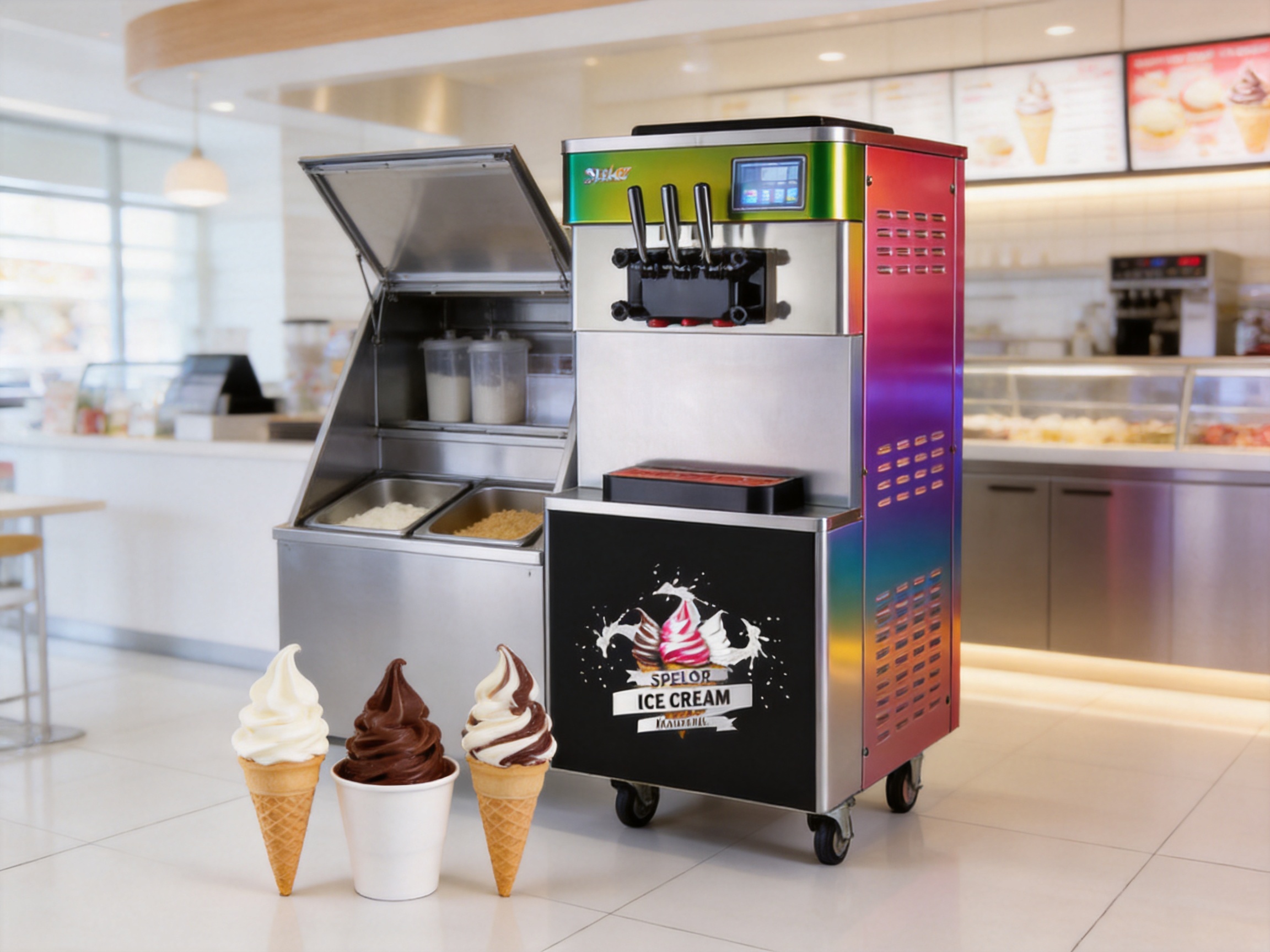
The Spelor BQL-825B three-flavor soft serve ice cream machine is designed for businesses that need more flexibility than a basic single-flavor unit can provide. With three flavor outputs, automatic self-cleaning, an LCD control panel, food-grade stainless steel construction, a rated production capacity of 25 liters per hour, and a compact vertical form, it offers a practical combination of product variety, operational efficiency, and space-conscious design.
This article examines the machine’s construction, working advantages, commercial applications, technical specifications, maintenance considerations, manufacturing background, and competitive value. It also explains how a professional equipment manufacturer can support buyers through product development, customization, production, logistics, and after-sales service.
1. The Role of Soft Serve Equipment in Modern Foodservice
Soft serve equipment is no longer limited to traditional ice cream parlors. Today, machines are commonly found in cafes, fast-food restaurants, snack shops, dessert counters, buffet operations, convenience stores, supermarkets, hotels, amusement venues, and institutional dining facilities. The appeal comes from the product’s speed of service and broad customer acceptance.
Compared with pre-portioned frozen desserts, soft serve allows operators to produce a fresh serving at the point of sale. This creates a more interactive customer experience and gives businesses greater control over portion sizes, flavor combinations, toppings, and menu pricing. A reliable commercial machine can therefore become a central revenue-producing asset rather than simply another piece of kitchen equipment.
At the same time, soft serve production introduces several operational challenges. The freezing system must maintain a stable temperature while product is being dispensed. The mixing and freezing process must create a smooth texture without excessive ice crystal formation. The hopper must hold enough mix for busy periods, while the dispensing system must be easy to refill and sanitize. Finally, the machine must be simple enough for staff to operate correctly during peak service.
The BQL-825B addresses these needs by combining three dispensing flavors, two mix hoppers, automatic cleaning, electronic controls, and a vertical commercial design. Its configuration is particularly useful for businesses that want to offer multiple choices without installing several separate machines.
2. Product Overview
The BQL-825B is a commercial soft serve ice cream machine with three flavor outputs. Its two independent mix hoppers are listed with a combined hopper capacity of 2 x 5.5 liters, while the freezing tanks are listed as 2 x 1.6 liters. This arrangement generally supports two independent side flavors together with a combined center flavor, allowing customers to choose either side flavor or a swirl combination, depending on the selected dispensing configuration.
Three-flavor dispensing is a major advantage for commercial operators. A single-flavor machine limits menu choice and may require frequent product changes if an operator wants to offer different recipes. A two-flavor machine provides more flexibility, but a three-output configuration can create a more attractive customer experience by offering a combination option in addition to the two individual flavors.
The machine is rated at a production capacity of 25 liters per hour. Actual output can vary according to mix formulation, ambient conditions, serving size, operating practices, and the time required for the product to recover its desired consistency. Nevertheless, the stated capacity places the machine in a useful range for small and medium-sized commercial dessert operations.
The exterior combines food-grade stainless steel with colorful sprayed steel components. Stainless steel is widely used in professional food equipment because it is durable, relatively easy to clean, resistant to corrosion, and suitable for areas where hygiene is important. The colored exterior elements can also help the machine fit a branded service counter or attract attention in a customer-facing environment.
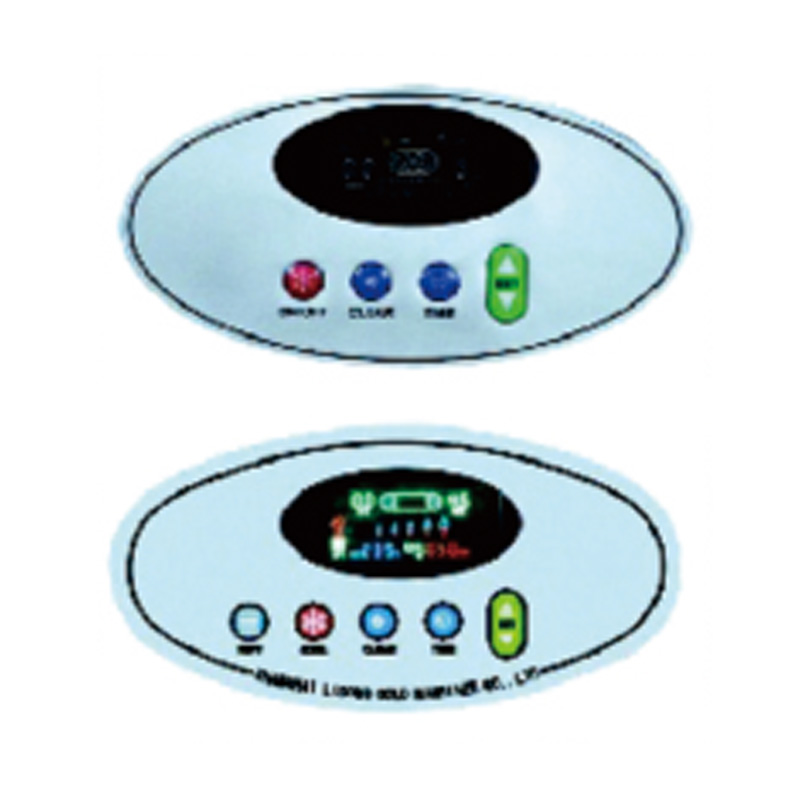
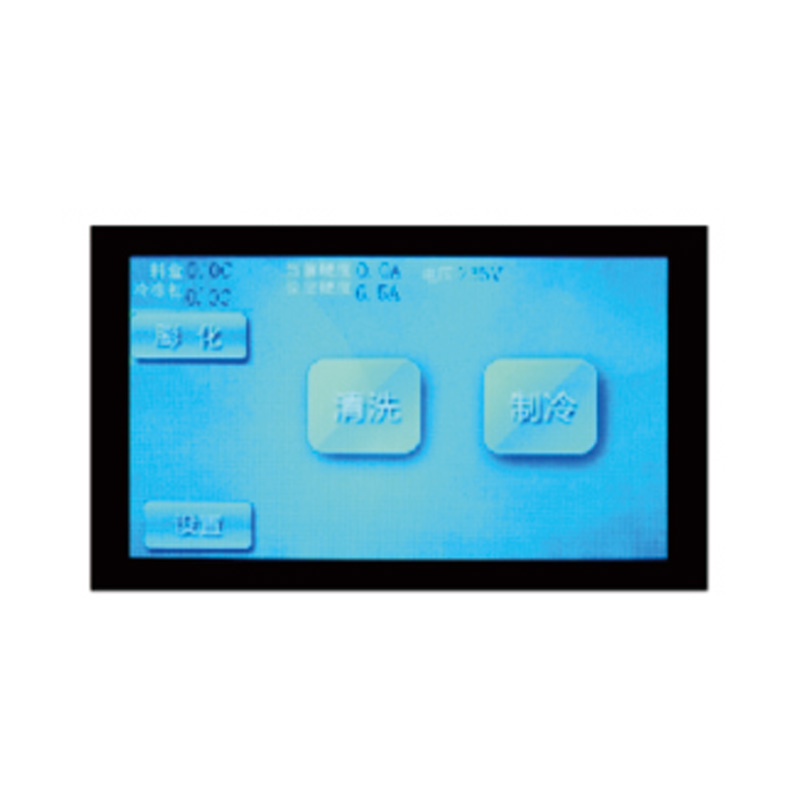
An LCD panel provides an electronic interface for operation and monitoring. While the exact control functions depend on the final configuration, an LCD interface can make operating settings easier to understand than purely mechanical switches. Clear controls are especially valuable when different employees share responsibility for preparation, dispensing, cleaning, and shutdown procedures.

Spelor 3 Flavors Soft Serve Ice Cream Machine with Self-Cleaning Function
3. Three Flavors for Greater Menu Flexibility
The most visible advantage of the BQL-825B is its three-flavor dispensing capability. For many dessert businesses, flavor variety directly influences customer choice and repeat visits. A machine that serves two individual flavors plus a mixed option can support a broader menu without requiring three separate pieces of equipment.
For example, an operator may place vanilla in one side, chocolate in the other side, and offer a vanilla-chocolate swirl from the center. The same arrangement can be adapted to fruit flavors, seasonal recipes, yogurt-style mixes, or other approved soft serve formulations. This flexibility enables businesses to change their menu according to season, customer demand, promotions, or local preferences.
Three outputs also make the machine suitable for shared service environments. A cafe can offer a traditional flavor, a premium flavor, and a combination serving. A buffet can provide guests with more choice while using one main machine. A fast-food restaurant can coordinate flavor selection with promotional menus. A snack shop can create signature combinations using toppings, sauces, fruit, cookies, or beverages.
Compared with purchasing multiple single-flavor machines, one three-flavor unit can reduce the amount of floor space required for the dispensing station. It may also simplify staff training because employees work with one control system and one overall equipment platform. The final savings will depend on purchase price, power requirements, installation conditions, and production needs, but the integrated configuration is inherently space-efficient.
Flavor separation is also important from a product-quality perspective. When each side has its own mix supply, operators can manage recipes more consistently and reduce the need to empty and replace a tank whenever the menu changes. Proper handling procedures remain essential, especially when changing flavors or cleaning the machine, but the design gives operators more flexibility than a basic single-hopper system.
Menu Applications
The three-flavor layout can support several commercial menu formats:
• Classic soft serve: Offer two popular flavors and a swirl combination.
• Premium dessert service: Pair a standard flavor with a specialty flavor and a mixed option.
• Seasonal promotion: Use one side for a permanent flavor and the other side for limited-time recipes.
• Yogurt and fruit concepts: Provide separate bases or complementary flavor combinations where permitted by the recipe and equipment requirements.
• Family-oriented service: Give customers individual choices while maintaining a shared center option.
• Catering and events: Offer a compact self-contained dispensing solution with multiple selections.
Operators should always confirm that the chosen mix is compatible with the machine, freezing system, food safety program, and local regulations. Recipe compatibility is as important as equipment capacity when seeking consistent results.
4. Automatic Self-Cleaning and Hygiene Management
Cleaning is one of the most important responsibilities in any soft serve operation. Product residue can accumulate in hoppers, freezing chambers, dispensing valves, seals, and other contact areas. If cleaning is delayed or performed incorrectly, the machine may experience poor product quality, unpleasant odors, sanitation risks, or mechanical problems.
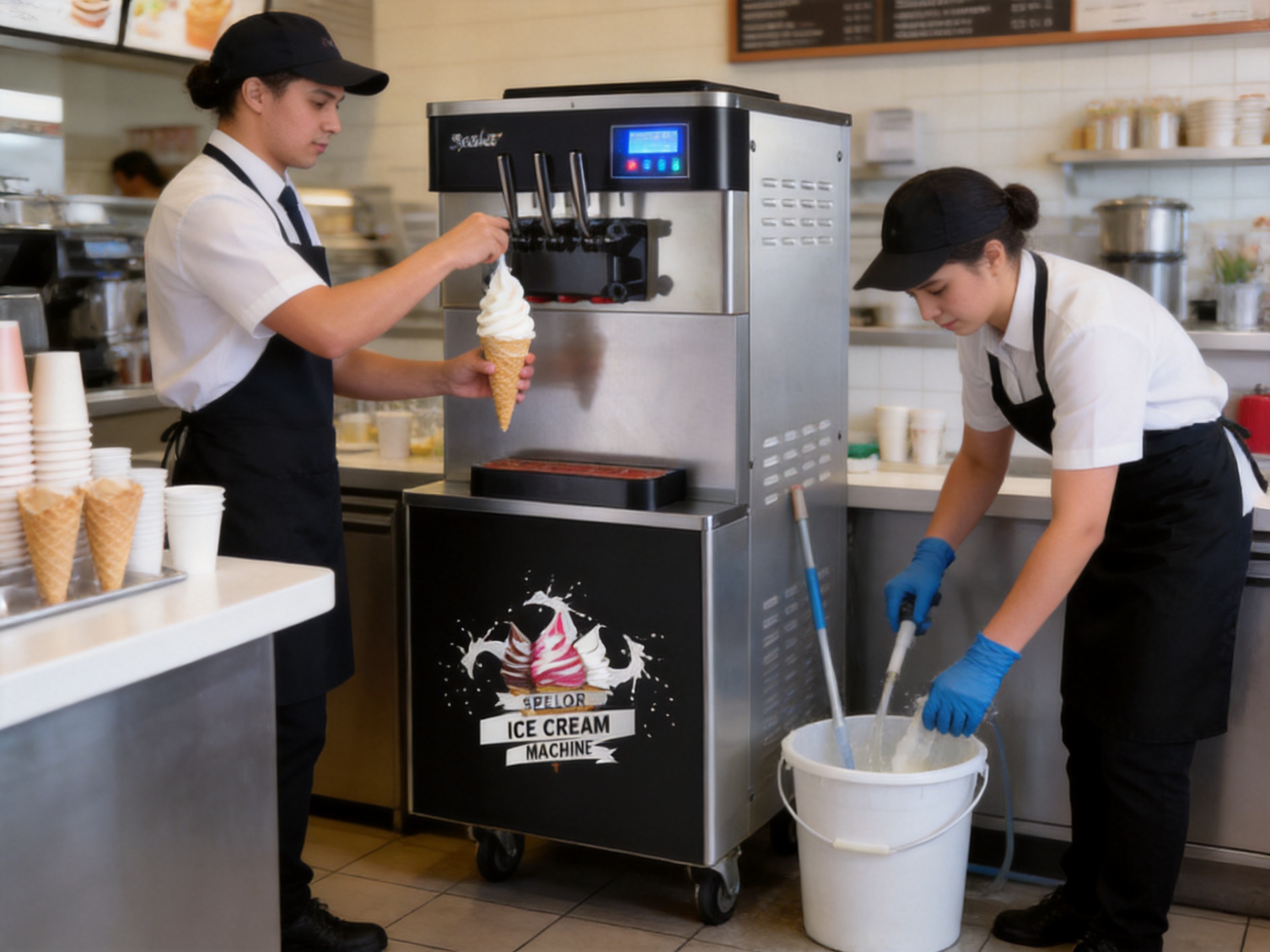
The BQL-825B includes an automatic self-cleaning function designed to make this process easier and less time-consuming. Automated cleaning does not eliminate the need for responsible food safety procedures, but it can reduce the amount of repetitive manual work and help staff follow a more consistent cleaning routine.
A self-cleaning cycle can be particularly valuable in businesses where equipment is used throughout the day. Employees can complete a programmed cleaning process after service or during scheduled maintenance periods instead of relying entirely on manual flushing and disassembly. This may improve compliance with internal sanitation schedules, especially when the machine is operated by multiple shifts.
Automatic cleaning can also support operational efficiency. Manual cleaning often requires more time, more water handling, and more direct interaction with product-contact components. A guided or automated process can help reduce variation between employees. It may also make staff onboarding easier because the basic cleaning sequence can be standardized.
However, self-cleaning should be viewed as one part of a complete sanitation program. Operators must follow the manufacturer’s instructions regarding cleaning agents, water temperature, cycle frequency, component removal, lubrication, inspection, and final sanitizing. Product-contact parts may still need to be disassembled, inspected, washed, sanitized, and air-dried at intervals determined by the operating environment and applicable food safety rules.
Practical Hygiene Benefits
The automatic self-cleaning function can offer several practical benefits:
• More consistent cleaning routines between shifts.
• Reduced labor time during daily equipment care.
• Easier training for new employees.
• Lower risk of leaving product residue in difficult-to-reach areas.
• Better support for high-frequency commercial use.
• A more organized closing procedure at the end of the business day.
Cleanliness also affects the customer’s perception of quality. A well-maintained machine with a clean exterior, organized controls, and properly managed dispensing area helps communicate professionalism. In customer-facing foodservice, equipment appearance can contribute to trust just as much as product presentation.
5. Food-Grade Construction and Commercial Durability
The BQL-825B uses a plate body made from food-grade stainless steel and sprayed steel components. This combination balances sanitary design, durability, and visual appeal. Stainless steel is a practical material for commercial kitchens because it tolerates regular cleaning and is less likely than many alternative materials to absorb odors or retain moisture.
A foodservice machine must withstand more than occasional use. It may be touched repeatedly by staff, exposed to splashes, cleaned several times per week, and operated in a warm environment. The exterior should therefore be stable, accessible, and straightforward to wipe down. The BQL-825B’s stainless steel construction supports these daily requirements.
The vertical form also helps use floor space efficiently. Measuring approximately 540 x 615 x 1430 millimeters, the machine has a relatively narrow footprint compared with the service capacity offered by a three-flavor unit. The height creates a visible presence at the counter or service line, which can be useful when the equipment is intended to attract customer attention.
Because the machine is approximately 1.43 meters high, operators should plan the installation site carefully. Adequate ventilation, access for cleaning, clearance around the refrigeration system, a level floor, and a suitable power supply are all important. The machine should not be placed where heat sources, direct sunlight, water spray, or blocked airflow could reduce refrigeration performance.
The colorful sprayed steel exterior may be useful for businesses that want equipment to support their visual identity. A plain stainless steel machine can suit many professional kitchens, while a colored exterior may be more appropriate for a dessert counter, retail shop, or open service area. The exterior design can help turn functional equipment into part of the customer-facing environment.
6. Refrigeration and Product Consistency
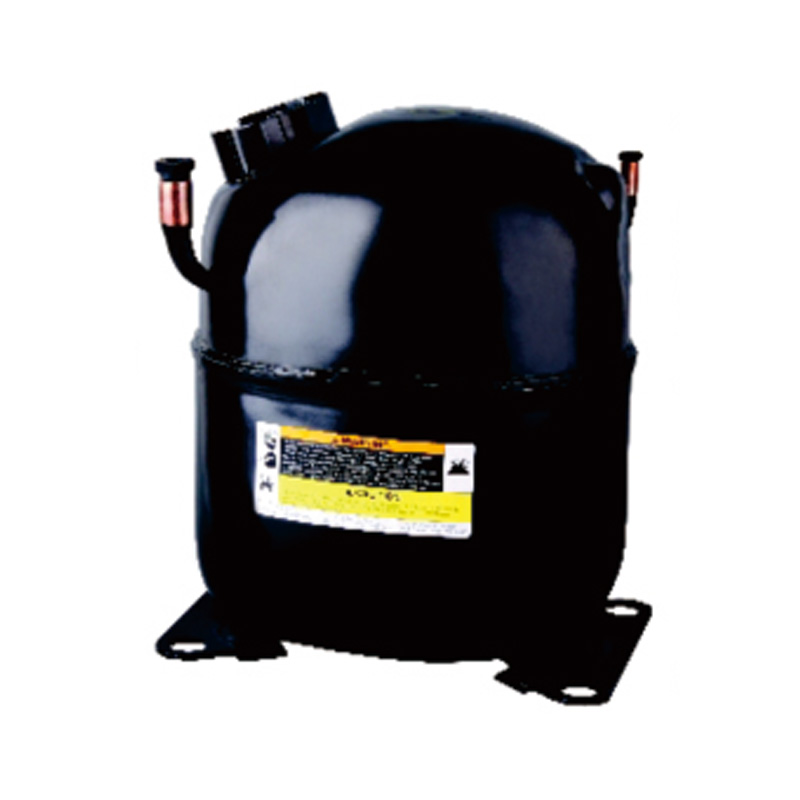
Soft serve quality depends on stable refrigeration and controlled freezing. The BQL-825B has a stated input power of 2000 watts and uses R404 refrigerant according to the supplied product specifications. The machine is also listed with a Chinese compressor. These components work together to remove heat from the mix and maintain the conditions needed for soft serve production.
The freezing system must balance two requirements. It needs to cool the mix sufficiently to create the desired semi-frozen texture, but it must also allow the product to be dispensed smoothly. Excessive freezing can make the product too firm or create dispensing difficulties, while insufficient freezing can lead to a thin or unstable texture.
Stable cooling is particularly important when demand fluctuates. During a busy period, repeated servings introduce new mix and increase the heat load on the freezing system. A commercial machine must recover efficiently so that later servings remain close to the expected texture. The stated 25-liter-per-hour capacity provides an indication of the machine’s production range, although actual results should be confirmed under local operating conditions.
The product information describes the machine as offering even cooling and low noise. These features are valuable in cafes, dessert shops, and open retail environments where the machine may operate close to customers. Lower perceived noise can improve the atmosphere of the service area, while even cooling can help maintain more uniform product characteristics across the working cycle.
Operators can further improve performance by controlling mix temperature, maintaining appropriate fill levels, cleaning the condenser area when required, avoiding blocked ventilation, and following recommended operating intervals. Equipment performance is always influenced by the surrounding environment, so correct installation and maintenance are essential to achieving the best possible result.
7. Technical Specifications
The following table summarizes the principal technical data supplied for the BQL-825B model.
| Specification | Supplied Value |
|---|---|
| Model | BQL-825B |
| Flavor outputs | Three flavors |
| Production capacity | 25 liters per hour |
| Voltage and frequency | 220 volts / 50 hertz |
| Input power | 2000 watts |
| Hopper capacity | 2 x 5.5 liters |
| Freezing tank capacity | 2 x 1.6 liters |
| Machine dimensions | 540 x 615 x 1430 millimeters |
| Refrigerant | R404 |
| Compressor | Chinese compressor |
| Construction | Food-grade stainless steel and sprayed steel |
| Control interface | LCD panel |
| Cleaning function | Automatic self-cleaning |
The supplied materials contain two different net weight figures: 135 kilograms in one specification section and 114 kilograms in another information section. Buyers should confirm the final shipping weight, net weight, gross weight, and packaging dimensions with the supplier before arranging transport, installation, or lifting equipment. This clarification is especially important for upper-floor locations, narrow entrances, and sites with weight restrictions.
The voltage and frequency specification is 220V/50Hz. Customers operating in regions with different electrical standards should confirm whether a compatible version is available and whether local electrical installation requires a dedicated circuit, protective device, grounding, or professional commissioning. Electrical compatibility should be established before purchase rather than addressed after delivery.
8. Advantages Compared with Basic Competitor Configurations
Commercial soft serve machines vary widely in price, capacity, controls, cleaning functions, and flavor options. The BQL-825B’s competitive strengths are most apparent when it is compared with entry-level machines that provide only one flavor, manual cleaning, limited capacity, or less user-friendly controls.
Three Outputs Instead of One
A single-flavor machine may be suitable for a very small operation, but it limits menu flexibility. The BQL-825B supports two side choices and a center combination, making it easier to serve different customer preferences from one unit. This can help operators create a broader menu without dedicating space to multiple machines.
Automatic Cleaning Instead of Fully Manual Maintenance
Many basic units require a more labor-intensive cleaning routine. The BQL-825B’s self-cleaning function can reduce daily handling and promote greater consistency. Although manual inspection and sanitation remain necessary, automation helps make maintenance more manageable in busy operations.
LCD Operation Instead of Basic Mechanical Controls
An LCD panel can present operating information and settings in a clearer format than a collection of simple switches. Digital controls may assist with staff training and reduce confusion during routine operation. They can also help operators understand the machine’s status more quickly.
Commercial Capacity in a Compact Vertical Body
The machine combines a 25-liter-per-hour rated capacity with a footprint of approximately 540 x 615 millimeters. This makes it appropriate for businesses that need commercial output but cannot dedicate a large area to a wide, multi-unit installation.
Customer-Facing Appearance
The stainless steel and colorful sprayed steel construction provides a more finished appearance than purely utilitarian equipment. For an open counter or retail dessert area, a visually appealing machine can contribute to the overall presentation of the business.
Operational Convenience
The combination of multiple flavors, electronic controls, self-cleaning, and a vertical layout reduces the number of separate tasks required to operate a dessert station. Convenience does not replace product quality or employee discipline, but it can improve the efficiency of a well-managed operation.
9. Recommended Commercial Applications
The BQL-825B is suitable for a variety of foodservice scenarios. Its best application depends on customer volume, available space, menu strategy, and local power conditions.
Dessert Shops
Dessert shops can use the three dispensing options to create a dedicated soft serve menu. The machine can serve cones and cups directly while supporting toppings, sauces, fruit, wafers, and specialty presentations. The attractive exterior may also suit an open counter where customers can see the preparation process.
Cafes
Cafes often need equipment that adds a new menu category without occupying excessive space. Soft serve can be incorporated into coffee-and-dessert combinations, seasonal specials, milkshakes, affogato-style offerings, or children’s menus. The machine’s vertical design can help preserve valuable counter and back-of-house space.
Snack Shops and Fast-Food Locations
Fast-moving snack shops and quick-service restaurants benefit from equipment that is simple to operate and capable of producing consistent servings. Three flavors can support a broader customer offer, while self-cleaning can help streamline end-of-shift procedures.
Buffet Operations
Hotels, restaurants, and institutional buffets can use a three-flavor machine to give guests multiple selections. The equipment should be positioned where staff can monitor hygiene, refill mix, manage customer traffic, and clean the dispensing area regularly.
Supermarkets and Convenience Stores
Retail businesses can use soft serve as an impulse-purchase product. A visible machine near a checkout, food court, or prepared-food section can encourage additional sales. In these environments, ease of operation and consistent cleaning are particularly important because employees may have varied levels of equipment experience.
Events and Recreational Venues
Amusement venues, family entertainment centers, and event spaces can use soft serve as a high-appeal refreshment. Before selecting the machine for mobile or temporary use, the operator must verify transportation requirements, electrical availability, floor stability, and the time needed for setup and cleaning.
10. Installation and Commissioning Considerations
Correct installation is essential for reliable refrigeration and safe operation. The machine should be placed on a stable, level surface capable of supporting its weight. Since the supplied net weight information differs between product sections, the buyer should use the confirmed shipping documentation when evaluating the floor and access route.
Ventilation clearance should be maintained around the refrigeration system. Blocking air intake or exhaust areas can increase operating temperatures and reduce cooling performance. The machine should be kept away from ovens, fryers, steam-producing equipment, and direct sunlight. A cooler, well-ventilated installation environment generally helps refrigeration equipment operate more efficiently.
The electrical supply must match the specified 220V/50Hz requirement unless an approved alternative version has been supplied. The 2000-watt input rating should be considered when planning the circuit. Installation should be completed in accordance with local electrical regulations by a qualified professional where required.
Before first production, the operator should inspect the machine for shipping damage, confirm that all parts and accessories are present, clean and sanitize product-contact areas, and review the control sequence. The mix should be prepared according to an approved recipe and loaded only after the machine has been correctly installed and prepared.
Initial commissioning is also an opportunity to train employees. Staff should learn how to start and stop the machine, select flavors, monitor product consistency, refill the hoppers, respond to abnormal sounds or temperatures, begin the cleaning cycle, and identify when manual disassembly or service is required.
11. Operating Practices for Consistent Results
Consistent soft serve quality begins with consistent mix handling. Ingredients should be stored at suitable temperatures and mixed according to the recipe. Powdered mixes must be fully dissolved, while liquid mixes should be checked for separation or spoilage before use. Operators should avoid loading product that is outside the recommended temperature or formulation range.
Hopper levels should be monitored during service. Allowing a hopper to run too low may introduce air or interrupt the freezing process, depending on the machine design. Overfilling can also create unnecessary spillage or make cleaning more difficult. Staff should follow the recommended minimum and maximum fill levels provided in the operating manual.
Portion control is another important factor. Excessively large servings increase mix consumption and may reduce the number of servings available during a busy period. Consistent portion sizes help protect margins and provide customers with a predictable experience.
The dispensing area should be kept clean throughout service. Drips should be removed promptly, handles should be checked regularly, and cones or cups should be stored in a clean, organized manner. The machine’s exterior should be wiped with suitable foodservice cleaning materials without damaging the sprayed finish.
Operators should pay attention to changes in texture, dispensing speed, unusual noise, excessive condensation, or inconsistent flavor output. These signs may indicate a need for cleaning, adjustment, or technical inspection. Early attention can prevent a minor issue from becoming a larger interruption during peak business hours.
12. Maintenance and Service Planning
Automatic self-cleaning can reduce the workload associated with routine care, but long-term machine reliability still depends on scheduled maintenance. A maintenance plan should include daily, weekly, monthly, and periodic technical checks appropriate to the usage level.
Daily Care
Daily tasks may include wiping the exterior, cleaning the dispensing outlets, checking for product residue, completing the recommended cleaning cycle, sanitizing removable contact components, and confirming that the machine is ready for the next service period.
Regular Inspection
Seals, gaskets, dispensing components, and connections should be inspected for wear. Damaged seals can lead to leaks, air entry, product contamination, or reduced machine performance. Replacement intervals depend on usage, cleaning chemicals, operating conditions, and component quality.
Refrigeration Maintenance
The refrigeration area should remain free of excessive dust and obstruction. Condenser cleaning, airflow inspection, and refrigeration system checks should be completed according to the manufacturer’s maintenance recommendations. Qualified technicians should handle refrigerant-related service and sealed-system repairs.
Long-Term Storage
If the machine will not be used for an extended period, it should be thoroughly cleaned, sanitized, dried, and protected according to the operating instructions. Leaving mix inside the system for an extended shutdown can create serious hygiene and maintenance problems.
A service plan is especially valuable for businesses that depend on the machine every day. Preventive maintenance can help reduce unplanned downtime, protect product consistency, and extend the working life of major components.
13. Manufacturing Capability and Quality Orientation
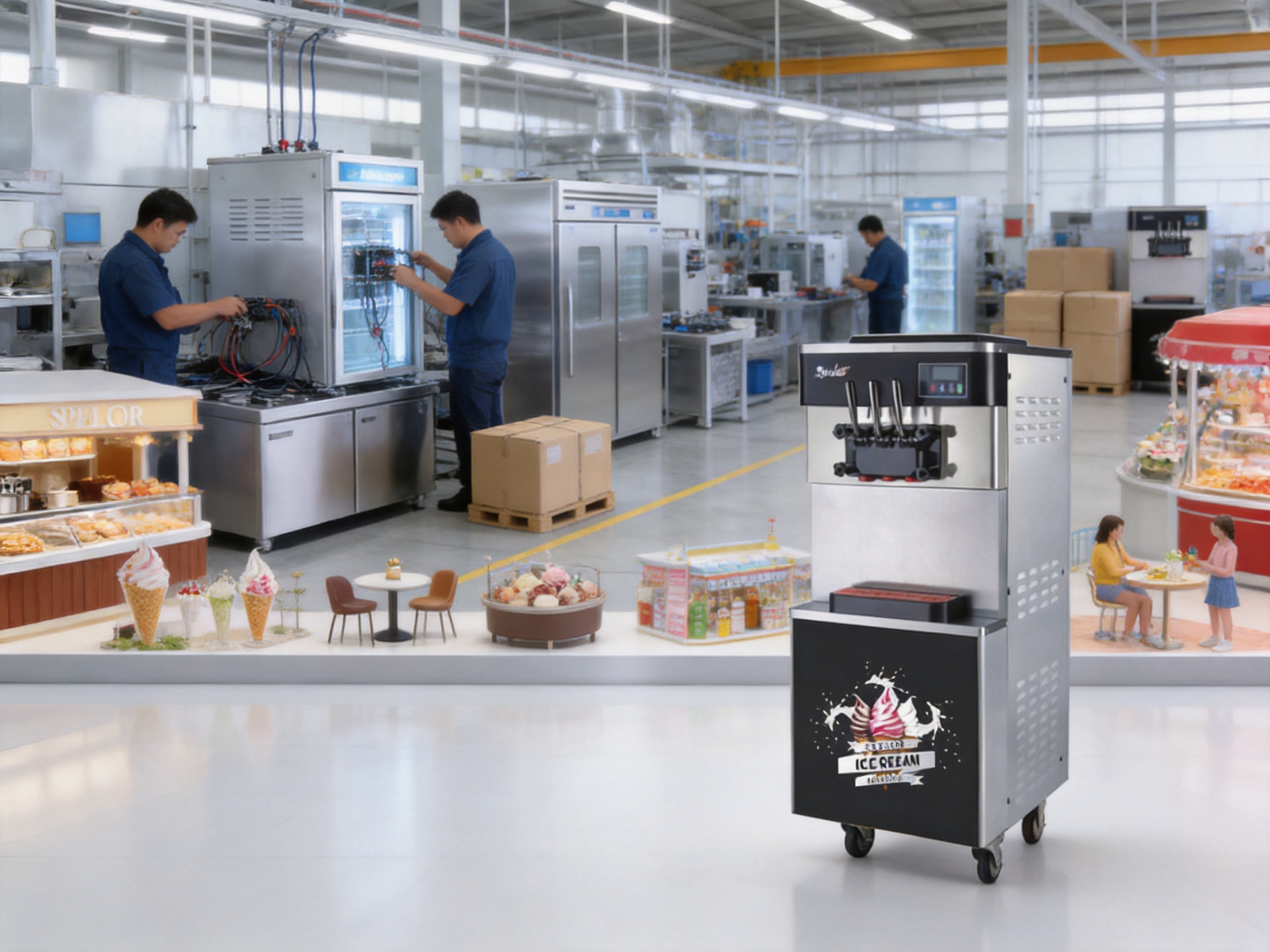
The manufacturer, Spelor Electrical Appliances (Zhejiang) Co., Ltd., is described as a professional producer integrating design, research and development, manufacturing, sales, and service. This integrated structure is important for commercial equipment because product performance depends on coordination between engineering, production, quality control, logistics, and after-sales support.
The company operates more than 60,000 square meters of modern production facilities and specializes in commercial refrigeration, kitchen equipment, and buffet equipment. Its broader product range includes ice cream machines, juice dispensers, fried ice cream machines, refrigeration cabinets, slush machines, flake ice machines, cooking equipment, griddles, fryers, insulation products, barbecue equipment, and buffet solutions.
A broad product portfolio can strengthen manufacturing knowledge because different equipment categories share common technical requirements. These include sheet-metal fabrication, stainless steel processing, refrigeration integration, electrical assembly, temperature control, surface finishing, packaging, and product testing. Experience across related product lines can help a manufacturer understand the practical requirements of foodservice operators.
The BQL-825B reflects several manufacturing priorities relevant to commercial buyers. Its body uses food-grade stainless steel and sprayed steel, its refrigeration system is integrated into a compact vertical cabinet, and its controls include an LCD panel and self-cleaning function. These features require coordination between mechanical design, electrical engineering, refrigeration assembly, and user-interface planning.
Design and Development
In-house design and research and development capabilities allow a manufacturer to refine machines according to customer feedback, regional requirements, and changing foodservice trends. For example, operators may request different flavor configurations, voltage standards, exterior colors, dimensions, control languages, or packaging arrangements.
Product development also involves evaluating access for cleaning, component placement, serviceability, operating noise, cooling efficiency, and production consistency. These details often determine whether a machine performs well in a real commercial setting. A strong development process looks beyond appearance and considers the full operating life of the equipment.
Production Integration
Integrated manufacturing can provide greater control over production scheduling and assembly coordination. Sheet-metal parts, exterior panels, refrigeration components, electrical systems, and final assembly must come together accurately for the finished machine to operate correctly. A dedicated factory environment can help manage these stages through standardized procedures.
Commercial equipment production also benefits from repeatable processes. Consistent welding, forming, surface treatment, wiring, insulation, and final assembly can reduce variation between units. Quality checks at multiple stages are preferable to relying only on a final visual inspection.
Testing and Quality Control
Before shipment, commercial soft serve equipment should be checked for electrical safety, control operation, refrigeration performance, dispensing function, cleaning-cycle operation, leakage, unusual vibration, and exterior finish. The exact inspection program depends on the factory’s internal standards and the target market’s regulatory requirements.
Testing is particularly important for a machine with multiple flavor outputs. Each dispensing path should be evaluated for correct operation, and the freezing system should be checked under suitable conditions. Controls and cleaning functions should also be verified so that the machine reaches the customer ready for commissioning.
14. OEM and ODM Support for Global Buyers
The company’s stated service capabilities include OEM and ODM solutions based on customer drawings or requirements. This is valuable for importers, distributors, restaurant groups, supermarket chains, and established foodservice brands that need equipment aligned with a specific commercial program.
OEM production generally involves manufacturing equipment according to a buyer’s brand, labeling, packaging, or approved specification. ODM cooperation can involve adapting an existing design or developing a solution around a customer’s operational needs. In both cases, technical communication is essential.
Potential Customization Areas
Depending on project requirements and technical feasibility, customization may involve exterior color, branding, control-panel language, voltage and frequency, plug type, packaging, dimensions, flavor configuration, accessories, or regional documentation. Buyers should define all requirements before production begins so that drawings, samples, and approval procedures can be established clearly.
For chain operators, customization can help create consistent equipment across multiple locations. A standardized exterior can support brand identity, while a common operating interface can simplify training and maintenance. Distributors may also request packaging or product documentation suited to their local market.
Customization should be balanced against production complexity. Changes to refrigeration, electrical systems, internal structure, or control programming may require additional testing and certification. Professional buyers should request a formal technical review and confirm which modifications are included in the quoted scope.
15. Procurement, Logistics, and After-Sales Support
Purchasing a commercial soft serve machine involves more than comparing the initial price. Buyers should evaluate capacity, flavor configuration, power requirements, cleaning procedures, spare parts availability, installation support, warranty terms, packaging, shipping conditions, and technician access.
The company describes its service as including pre-sales consultation, product customization, flexible logistics and payment solutions, and after-sales maintenance. These services can be important for international customers who need help selecting the correct configuration or coordinating delivery to a different country.
Before placing an order, buyers should confirm the following information:
• Final model and flavor configuration.
• Confirmed net weight and gross shipping weight.
• Machine dimensions and packaging dimensions.
• Voltage, frequency, plug, and electrical requirements.
• Refrigerant specification and local service considerations.
• Hopper and freezing-cylinder capacities.
• Rated capacity and recommended operating conditions.
• Cleaning procedure and required cleaning materials.
• Included accessories and spare parts.
• Warranty coverage and response process.
• Installation and commissioning responsibilities.
• Replacement component lead times.
Clarifying these details in advance reduces the risk of delays, installation problems, or mismatched expectations. International shipments should also be reviewed for packaging strength, moisture protection, lifting points, customs documentation, and destination-country compliance.
16. Cost Efficiency and Business Value
The value of a soft serve machine should be assessed through its total cost of ownership rather than only its purchase price. A machine may create value by increasing menu variety, improving service speed, reducing labor, limiting cleaning time, and supporting consistent portion control.
The three-flavor arrangement can help generate additional sales by giving customers more options. A swirl selection may be particularly attractive because it creates a product that looks different from a standard single-flavor serving. Seasonal flavors can also encourage repeat visits and promotional purchases.
The automatic self-cleaning function may reduce the labor burden associated with equipment care. Labor savings depend on local wage levels, operating frequency, cleaning schedules, and how the function is implemented, but the practical benefit is clear: staff can follow a more structured maintenance routine with less repetitive intervention.
Energy consumption should also be considered. The machine has a stated input power of 2000 watts, but actual energy use depends on operating time, ambient temperature, refrigeration cycling, product load, and standby practices. Proper ventilation and maintenance can help the refrigeration system work more effectively.
Reliability is another part of business value. Equipment downtime can result in lost sales, wasted mix, dissatisfied customers, and emergency service costs. A manufacturer with integrated design, production, sales, and service capabilities may be better positioned to support replacement parts, troubleshooting, and future equipment needs.
17. Choosing Between a Three-Flavor Machine and Other Configurations
A single-flavor machine may be sufficient for a very small kiosk with one signature product. A two-flavor machine may suit operators that need two choices but do not require a mixed output. A three-flavor machine becomes more attractive when variety, customer choice, or menu presentation is a priority.
The BQL-825B is especially appropriate when the operator wants to maximize flavor flexibility within a relatively compact footprint. It may not be the correct choice for every operation. Very high-volume facilities may require larger capacity, multiple machines, or continuous-production systems. Mobile operators may need a lighter unit or a design specifically intended for transport.
Buyers should estimate peak-hour demand rather than relying only on average daily sales. The machine’s stated production capacity should be compared with expected serving size, rush-period volume, operating temperature, and recovery requirements. A machine that appears adequate based on daily totals may be undersized if most sales occur within a short period.
Businesses should also consider whether their staff can manage multiple flavors without cross-contamination, whether the service area has enough clearance, and whether the cleaning schedule can be followed consistently. The best equipment choice is the one that matches both production requirements and operational discipline.
18. Practical Questions for Potential Buyers
How many flavors does the machine serve?
The BQL-825B is described as a three-flavor soft serve machine. Its configuration includes two 5.5-liter hoppers and two 1.6-liter freezing tanks, supporting two side flavors and a combined center output in the specified design.
What is the rated production capacity?
The listed production capacity is 25 liters per hour. Actual output may vary with mix formulation, ambient temperature, serving size, loading conditions, and operating practices.
Does the machine have a self-cleaning function?
Yes. The machine is equipped with an automatic self-cleaning function. Operators must still follow the complete cleaning and sanitizing instructions, including any required manual disassembly and inspection.
What controls are included?
The machine includes an LCD panel. The final operating functions should be confirmed in the user manual or technical documentation supplied for the purchased version.
What materials are used for the body?
The plate body is made from food-grade stainless steel and colorful sprayed steel. These materials provide a combination of sanitary cleanability, durability, and customer-facing appearance.
What electrical supply does it require?
The supplied specification lists 220V and 50Hz, with an input power of 2000 watts. Customers in other electrical regions should ask whether an alternative specification is available and consult a qualified installer.
What is the machine’s size?
The listed dimensions are approximately 540 x 615 x 1430 millimeters. Buyers should allow additional clearance for ventilation, cleaning, servicing, and safe customer or staff movement.
What is the confirmed machine weight?
The provided materials list both 135 kilograms and 114 kilograms as net weight figures. This discrepancy should be confirmed with the supplier before purchase and shipping arrangements.
Is the machine suitable for a cafe or dessert shop?
Yes. Its three-flavor output, compact vertical design, LCD control panel, and automatic self-cleaning function make it suitable for cafes, dessert shops, snack stores, and other small or medium-sized foodservice operations, subject to local installation conditions.
Can the machine be customized?
The manufacturer states that it provides OEM and ODM services based on drawings or customer requirements. Potential customization should be discussed in detail, including technical feasibility, minimum order quantities, certification, delivery time, and approval procedures.
19. Final Evaluation
The BQL-825B three-flavor soft serve ice cream machine combines several features that are highly relevant to modern foodservice operations. Its three flavor outputs support menu variety, while the 25-liter-per-hour rating provides a useful production range for many cafes, dessert shops, snack stores, buffets, and retail food counters.
The automatic self-cleaning function is one of its most practical advantages. Cleaning remains a management responsibility, but automation can reduce repetitive labor and encourage more consistent sanitation routines. The LCD panel contributes to ease of operation, while the stainless steel and sprayed steel construction supports hygiene, durability, and customer-facing presentation.
Its vertical dimensions help conserve floor space compared with installing multiple separate flavor machines. The product information also identifies even cooling and low noise as operating benefits, making the unit appropriate for environments where equipment is located near customers.
The manufacturer’s integrated capabilities in design, research and development, manufacturing, sales, and service provide an additional advantage for commercial buyers. With a broad product portfolio, modern production facilities, OEM and ODM support, and international customer service, the company is positioned to serve both individual equipment purchasers and larger procurement programs.
Before ordering, buyers should confirm the final weight, electrical version, included accessories, installation requirements, cleaning instructions, warranty terms, and any desired customization. Once these details are verified, the BQL-825B can provide a flexible and efficient foundation for a professional soft serve dessert program.
20. Conclusion
A commercial soft serve machine should do more than freeze product. It should help a business serve customers quickly, offer attractive menu choices, maintain hygiene, control labor, and operate reliably over time. The BQL-825B is designed around these goals through its three-flavor dispensing arrangement, automatic self-cleaning function, LCD panel, food-grade stainless steel body, compact vertical form, and commercial refrigeration system.
For operators seeking a balance between variety and space efficiency, the machine offers a strong alternative to multiple single-flavor units or basic manually cleaned models. Its value is further supported by the manufacturer’s experience in commercial refrigeration and foodservice equipment, broad production capabilities, and stated OEM, ODM, logistics, and after-sales services.
With appropriate installation, compatible mix, regular sanitation, preventive maintenance, and trained staff, the machine can support a dependable soft serve operation across a wide range of foodservice environments.
References
1. Product specification sheet for the BQL-825B three-flavor soft serve ice cream machine.
2. Manufacturer-provided technical information concerning production capacity, electrical requirements, hopper capacity, freezing tanks, dimensions, construction, refrigerant, and cleaning function.
3. Manufacturer-provided company profile for commercial refrigeration, kitchen, buffet, and foodservice equipment manufacturing.
4. General foodservice equipment sanitation and preventive maintenance principles.
5. General commercial refrigeration installation, ventilation, electrical safety, and operator training practices.
Product: Spelor 3 Flavors Soft Serve Ice Cream Machine with Self-Cleaning Function

For exclusive deals and latest offers, sign up by entering your email address below.


-
spelor@spelor.com
-
+86-576-85229688
-
No.528, Changxi Road, Linhai City, Zhejiang Province, China
Commercial Refrigeration Equipment Manufacturer China
Copyright © 2025 by Spelor Electrical Appliances (Zhejiang) Co., Ltd. Rights Reserved.
