


 中文简体
300-Lb Commercial Automatic Self-Cleaning Ice Maker: Reliable High-Capacity Ice Production for Foodservice Operations
Admin 2026-10-04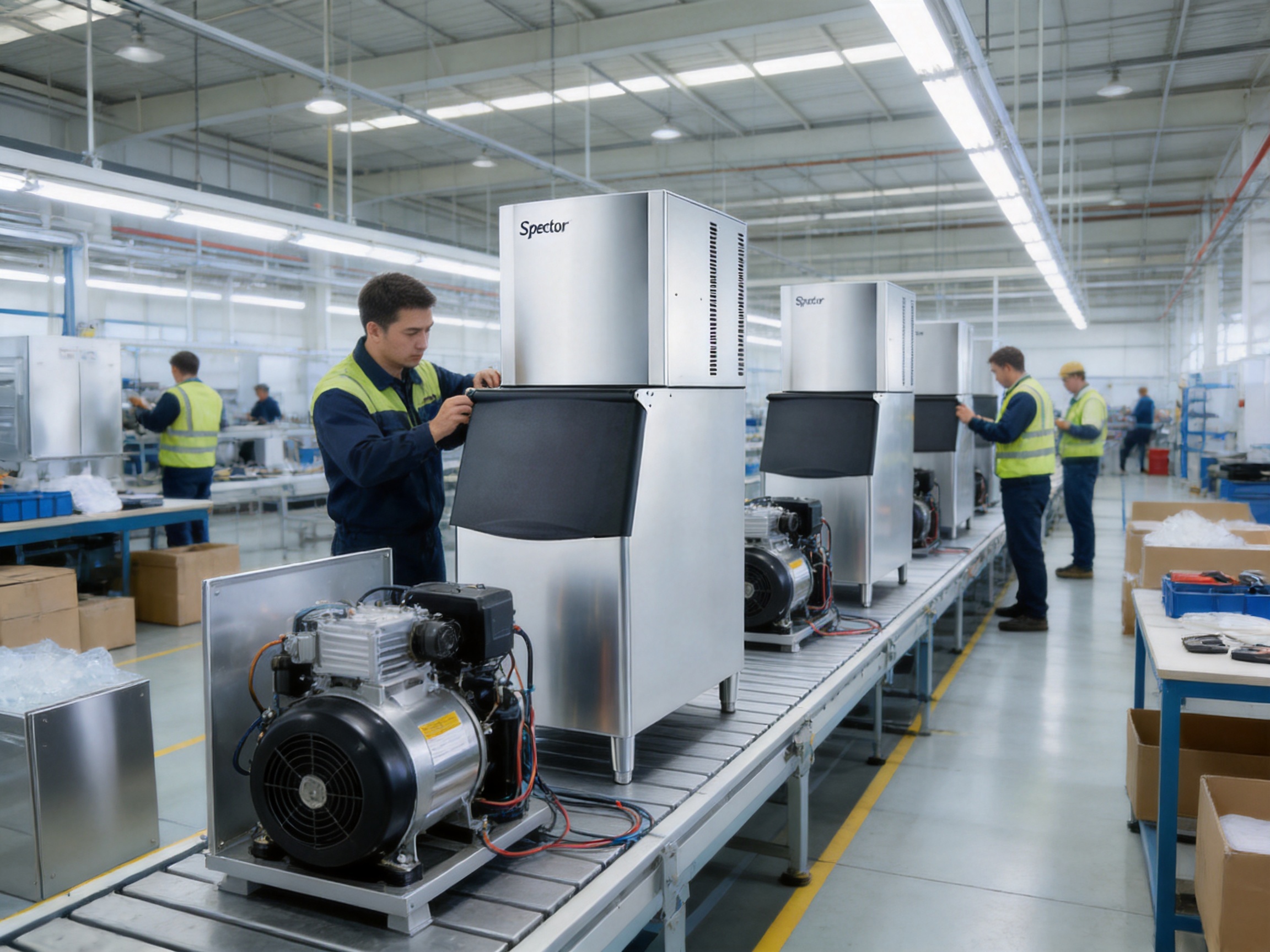
Reliable ice production is essential for restaurants, cafés, bars, hotels, supermarkets, catering companies, and other foodservice businesses. Ice is used for chilled beverages, food presentation, buffet service, seafood displays, cocktail preparation, cold storage, and customer-facing hospitality. When an ice machine cannot keep up with demand, the result may be delayed service, warm drinks, emergency purchases, higher operating costs, and unnecessary pressure on staff.
The 300LBS/24H Commercial Auto Self-Cleaning Ice Maker Machine with Gree Compressor is designed to provide a dependable solution for medium-sized and high-demand commercial environments. With a maximum daily production capacity of 300 pounds, a storage capacity of approximately 220 pounds, automatic self-cleaning functionality, air-cooled condensation, and a Gree compressor, the machine combines production capacity with practical operating convenience.
Its design focuses on the main requirements of commercial ice production: stable refrigeration, efficient use of space, hygienic construction, large-volume storage, simple maintenance, and reliable performance during busy operating periods. The food-grade stainless-steel plate body and colorful sprayed steel exterior also give the machine a professional appearance that is suitable for visible service areas, back-of-house kitchens, beverage stations, bars, and retail food environments.
Overview of the Commercial Ice Maker
The machine is identified as model ZB-300 and is engineered for a maximum output of approximately 300 pounds, or 150 kilograms, of ice within 24 hours under appropriate operating conditions. Its integrated storage bin can hold up to approximately 220 pounds, or 100 kilograms, of finished ice. This combination allows operators to produce ice continuously while maintaining a ready reserve for peak service periods.
The equipment uses a 750-watt rated power specification and air-cooling technology to remove heat from the refrigeration system. Its large vertical format measures approximately 585 by 850 by 1,632 millimeters. The upright configuration helps provide a substantial production and storage capacity without requiring an excessively wide floor footprint.
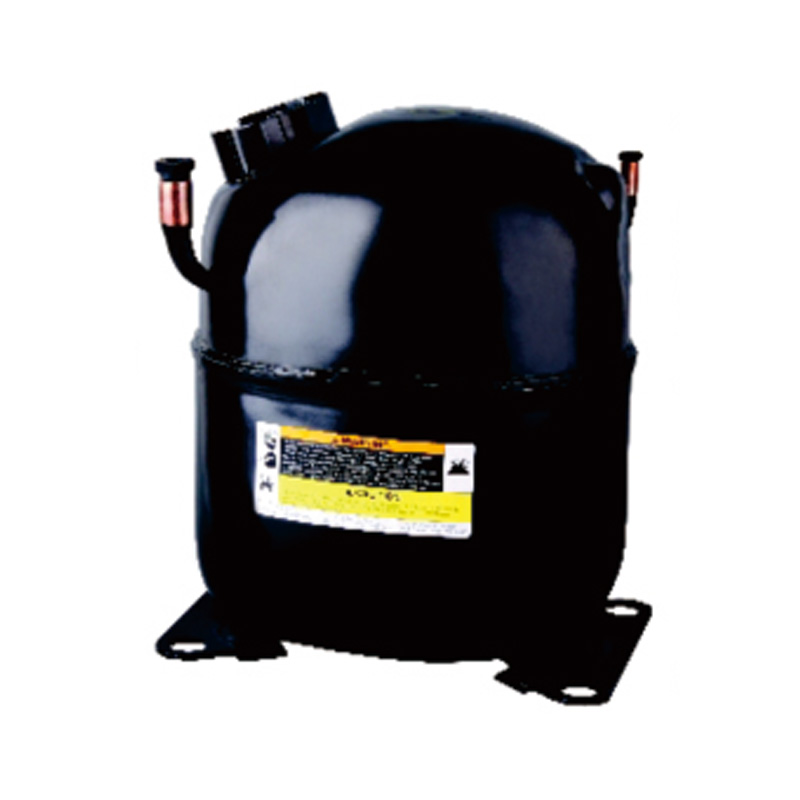
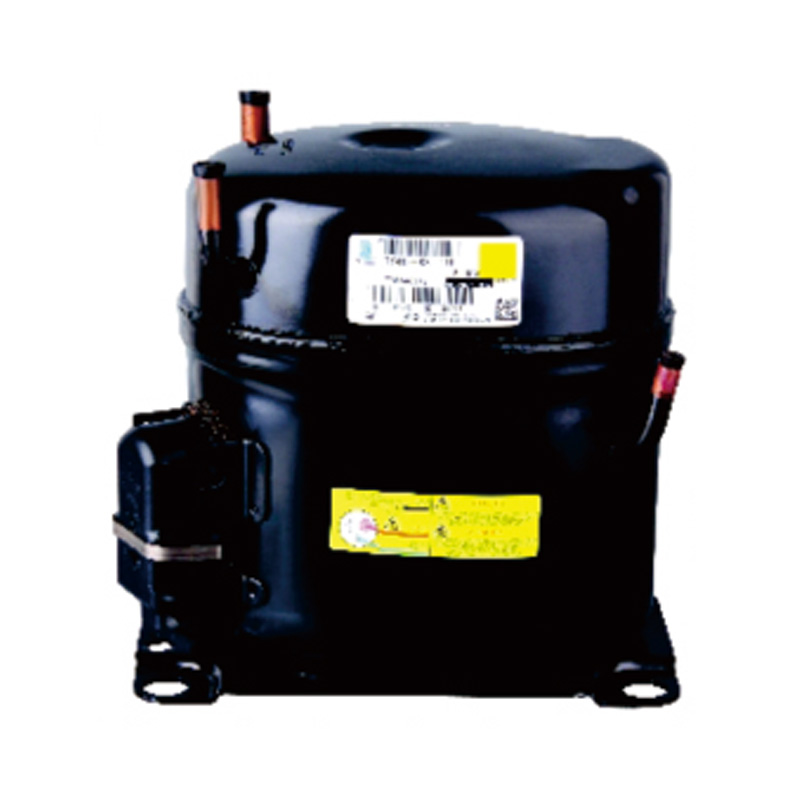
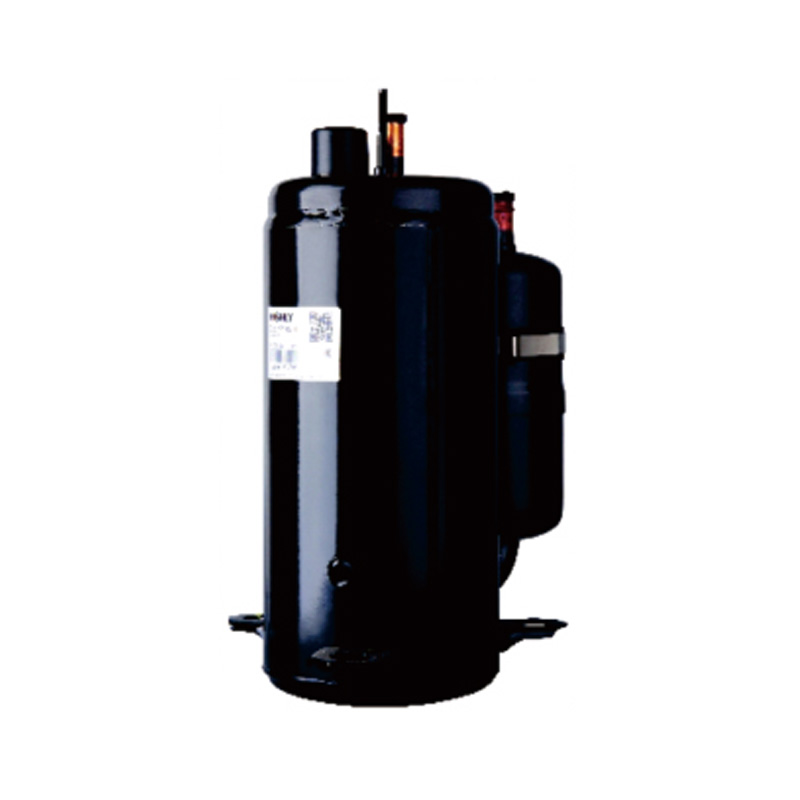
A Gree compressor is included as a central component of the refrigeration system. The compressor is responsible for circulating refrigerant through the cooling cycle, supporting the low temperatures required for ice formation. A dependable compressor is especially important in commercial equipment because the machine may be expected to operate repeatedly throughout the day and during demanding service periods.
The product also includes an automatic self-cleaning function. This feature helps reduce the amount of routine manual cleaning required from employees. It does not eliminate the need for sanitation inspections or periodic deep cleaning, but it can make daily care more convenient and help maintain a cleaner internal operating environment.
| Product Category | Commercial Ice Machine |
| Model | ZB-300 |
| Maximum Daily Production | 300 lb, approximately 150 kg per 24 hours |
| Storage Bin Capacity | 220 lb, approximately 100 kg |
| Rated Power | 750 W |
| Compressor | Gree compressor |
| Refrigerant Information | R410 or R404a configuration, subject to the final product specification |
| Condensation Method | Air cooling |
| Overall Dimensions | 585 × 850 × 1,632 mm |
| Cleaning Function | Automatic self-cleaning |
| Primary Applications | Restaurants, cafés, bars, hotels, supermarkets, catering operations, and foodservice facilities |
Production performance can vary according to ambient temperature, incoming water temperature, water quality, ventilation conditions, electrical supply, installation method, and the frequency of ice removal. Buyers should confirm the final refrigerant, voltage, frequency, ice type, connection requirements, and regional configuration before placing an order.

300LBS/24H Commercial Auto Self-Cleaning Ice Maker Machine with Gree Compressor
Why High-Capacity Ice Production Matters
Commercial operators often underestimate the amount of ice consumed during a normal business day. A beverage-focused café may use ice for iced coffee, tea, smoothies, soft drinks, and takeaway beverages. A bar may need ice continuously for cocktails, spirits, soft drinks, display buckets, and table service. A restaurant may use ice for drinks, salad bars, seafood displays, food preparation, and front-of-house presentation.
Demand can increase significantly during lunch and dinner rushes, weekends, holidays, outdoor events, warm weather, and promotional campaigns. A machine with limited production may appear sufficient during quiet periods but become inadequate when customer traffic rises. A higher-capacity machine provides additional operational security and reduces the risk of running out of ice at the moment it is most needed.
The ZB-300 is designed for businesses that need a larger daily supply than small countertop or light-duty ice makers can provide. Its stated maximum output of 300 pounds per day places it in a capacity range suitable for medium-sized foodservice operations and other commercial users that require a steady supply without installing multiple small units.
Large production capacity can also simplify equipment planning. Instead of purchasing several small machines, maintaining multiple water connections, and coordinating several separate cleaning schedules, a business may be able to centralize ice production in one high-capacity unit. This can help reduce installation complexity and make staff responsibilities easier to organize.
The storage bin adds another layer of protection against demand fluctuations. The machine does not need to produce ice at exactly the same rate as consumption at every moment. Ice can be accumulated during lower-demand periods and held for later service. When the storage bin is adequately filled, the business has a reserve available for rush periods, delivery delays, or temporary increases in demand.
Large Storage Capacity for Peak Service Periods
Production capacity and storage capacity serve different purposes. Daily production indicates how much ice the machine can make over a 24-hour period under specified conditions. Storage capacity indicates how much finished ice can be held and accessed at one time. A commercial machine needs both capabilities to support real-world service.
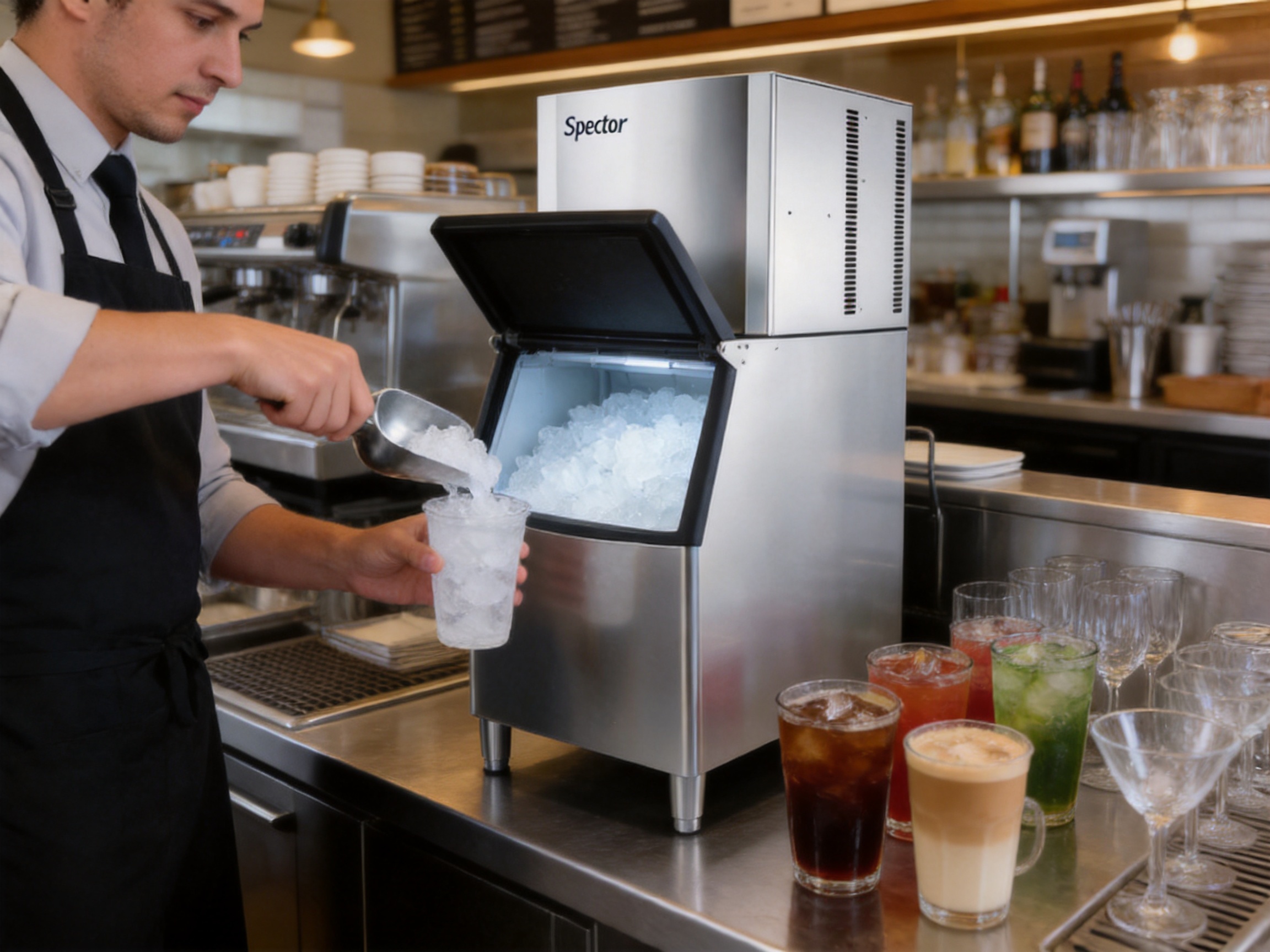
The approximately 220-pound storage capacity of the ZB-300 provides a substantial reserve for busy operations. The bin can support beverage service when production and consumption do not occur at the same pace. For example, the machine may produce and store ice overnight, allowing employees to begin the morning with a prepared supply. During the day, the machine can continue producing ice as the stored quantity is used.
A large bin is also valuable for businesses with predictable peaks. Restaurants often experience concentrated demand during lunch and dinner. Bars may have their highest consumption in the evening. Hotels and catering operations may require large quantities at specific scheduled times. A properly managed storage bin helps bridge these busy intervals.
Operators should use hygienic ice-handling practices when working with a large storage compartment. Ice scoops should be clean, dedicated, and stored in a sanitary position. Employees should avoid touching ice with bare hands, placing objects inside the bin, or allowing packaging materials to contact the ice. A large bin provides capacity, but proper handling is still essential for food safety.
Gree Compressor for Stable Refrigeration Performance
The compressor is one of the most important components in any commercial ice machine. It drives the refrigeration cycle by compressing and circulating refrigerant. The cooling system must remove heat efficiently so that water can freeze on the ice-making surface and the finished ice can be released for collection.
This model is equipped with a Gree compressor. The inclusion of a recognized compressor platform can be an important consideration for buyers who prioritize stable refrigeration performance, component familiarity, and long-term serviceability. Compressor performance influences freezing speed, operating stability, energy behavior, and the ability of the machine to continue working under regular commercial workloads.
A reliable compressor also supports consistent production. If the refrigeration system struggles to maintain the required temperature, freezing cycles may become slower or less predictable. This can reduce daily output and make it difficult for staff to plan ice availability. A properly matched compressor helps the machine maintain the cooling conditions needed for repeated ice-making cycles.
Commercial users should remember that compressor performance depends on the complete installation environment. Adequate ventilation, correct electrical supply, clean air passages, suitable ambient temperature, and proper clearance around the machine are important. Even a well-designed compressor system can lose efficiency if the condenser cannot release heat or if the machine is installed in an excessively hot, enclosed space.
The use of a branded compressor is one potential advantage over low-cost machines that rely on unidentified or poorly supported components. However, buyers should evaluate the complete equipment package rather than judging the compressor alone. Refrigeration design, controls, insulation, water circulation, condenser maintenance, cabinet construction, and after-sales support all contribute to the overall value of a commercial ice machine.
Automatic Self-Cleaning for Easier Daily Maintenance
Cleaning is a central part of commercial ice machine ownership. Water-contact surfaces, storage areas, distribution components, and internal channels must be maintained regularly because ice is used directly in food and beverages. If cleaning is neglected, mineral deposits, residue, odors, and microbial contamination may affect the machine and the quality of the ice.
The automatic self-cleaning function of the ZB-300 is designed to make routine maintenance more convenient. With a self-cleaning cycle, the machine can assist in flushing and refreshing internal areas according to the operating instructions. This reduces the amount of manual effort required for ordinary cleaning tasks and encourages staff to follow a more consistent maintenance routine.
Automatic cleaning is particularly useful in busy kitchens where employees have limited time between service periods. A machine that requires lengthy manual procedures every day may be neglected or cleaned inconsistently. A guided automatic program can simplify the process and help integrate cleaning into the daily operating schedule.
The self-cleaning function should be considered a maintenance aid rather than a replacement for complete sanitation. Operators should still follow the equipment manual, inspect the storage bin, clean accessible surfaces, check water lines, remove scale when necessary, and use approved cleaning or sanitizing products. The frequency of deep cleaning may depend on water hardness, usage intensity, local food safety requirements, and the manufacturer’s recommendations.
Automatic self-cleaning also contributes to maintenance cost control. By reducing routine labor requirements and helping prevent the accumulation of deposits, the function may reduce the time required for service interventions. Consistent cleaning can support more stable operation and help extend the useful life of water-contact and refrigeration-related components.
Food-Grade Materials and Hygienic Construction
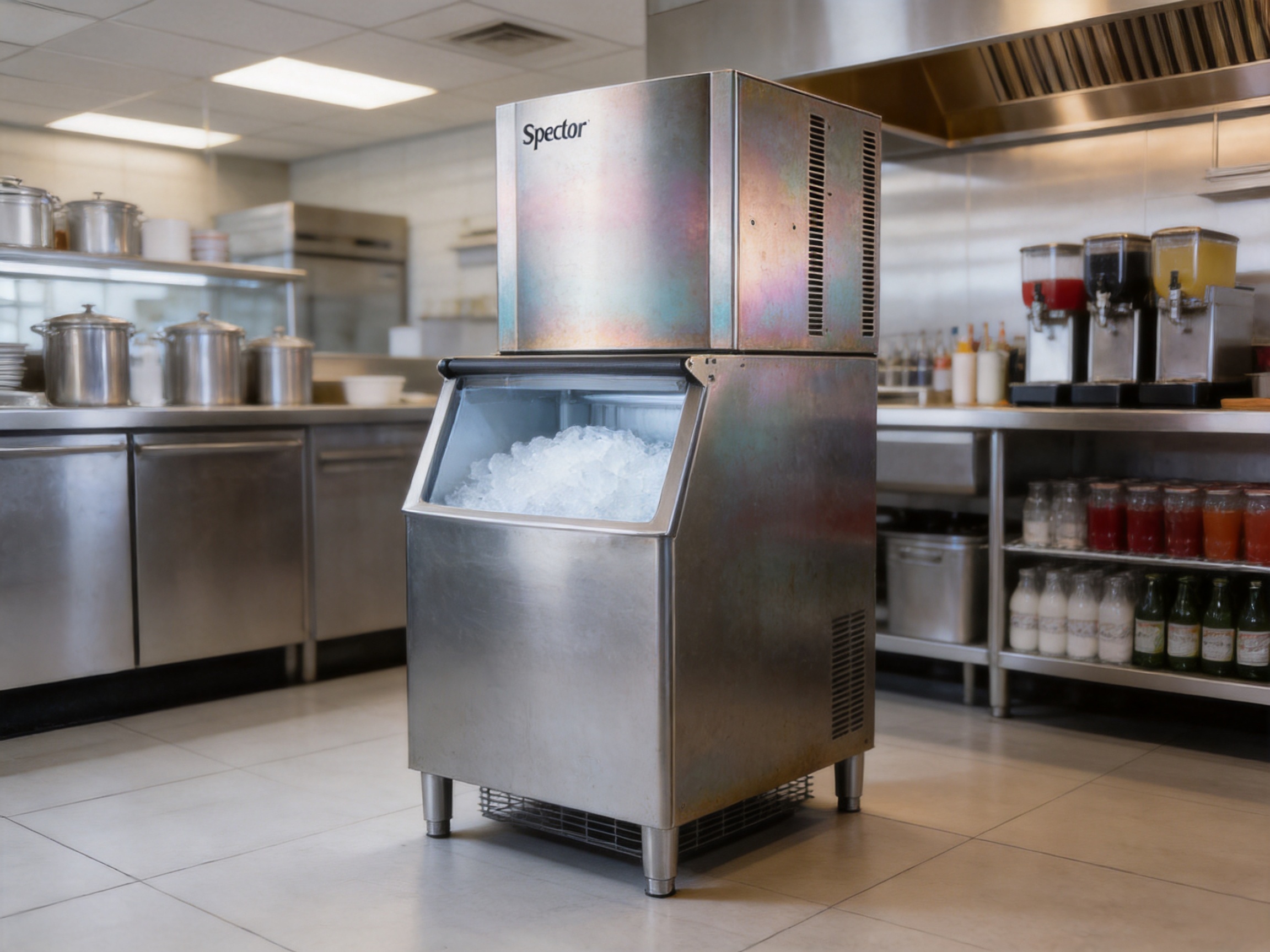
The plate body is made from food-grade stainless steel and colorful sprayed steel. Stainless steel is widely used in commercial kitchen equipment because it is durable, easy to wipe clean, resistant to corrosion under normal conditions, and suitable for environments where water and food contact are common.
A stainless-steel body also contributes to the machine’s professional appearance. Commercial customers often see ice equipment in beverage stations, open kitchens, bars, hotel service areas, and retail environments. A clean, well-finished exterior can support the overall impression of hygiene and professionalism.
The colorful sprayed steel elements provide an additional finish option while maintaining a commercial appearance. The combination of materials allows the machine to balance durability, sanitation, and visual presentation. This can be useful for businesses that want equipment that is functional but not visually out of place in a customer-facing area.
Material selection affects more than appearance. Smooth, accessible surfaces are easier for employees to inspect and clean. Durable external panels can withstand the normal movement and contact associated with commercial kitchens. Proper construction also helps protect internal components from the surrounding environment.
Even with food-grade construction, daily cleaning practices remain important. Spills, dust, grease, airborne particles, and water deposits should be removed promptly. Operators should avoid abrasive tools or unsuitable chemicals that could damage the surface finish. Proper care helps preserve both hygiene and appearance over the machine’s service life.
Air-Cooled Condensation and Installation Considerations
The ZB-300 uses air cooling for condensation. In an air-cooled system, ambient air passes across the condenser to remove heat from the refrigeration circuit. This configuration avoids the additional water consumption associated with water-cooled condensers and can simplify installation where suitable ventilation is available.
Air-cooled equipment is often practical for restaurants, cafés, bars, and other locations where water availability or drainage capacity may be limited. It can also make operating costs easier to manage because the condenser does not require a continuous cooling-water supply.
However, air-cooled equipment must be installed with sufficient clearance. The condenser needs access to reasonably cool, clean air, and the heated exhaust air must be able to leave the surrounding area. If the machine is placed directly against a wall, inside a sealed cabinet, beside a heat-producing appliance, or in an area with poor ventilation, the refrigeration system may operate under greater stress.
Installation planning should account for the machine’s dimensions of approximately 585 by 850 by 1,632 millimeters. The floor must be level, stable, and capable of supporting the operating weight of the equipment and its ice load. Employees should also have enough space to open access panels, clean the machine, remove ice, and perform routine inspections.
Water supply and drainage should be planned before installation. The exact connections depend on the final configuration and local requirements, so the technical documentation should be checked carefully. Water filtration may be advisable in areas with hard water or high mineral content. Cleaner incoming water can help reduce scale accumulation and support better ice quality.
Refrigerant Information and Technical Confirmation
The supplied product information references R410 in the specification table and R404a/R410 in the detailed information. Because these refrigerants have different technical characteristics and regulatory considerations, the exact refrigerant used in a particular production configuration should be confirmed with the supplier before purchase, installation, or service.
This point is important for international buyers. Refrigerant requirements can vary by market, product version, environmental regulation, and production date. Service technicians need to know the correct refrigerant type before carrying out charging, recovery, or repair work. Buyers should request the final nameplate data, technical sheet, and installation instructions for the specific unit being ordered.
Confirming the refrigerant is part of responsible equipment procurement. The same model name may be supplied in different electrical or refrigeration configurations for different regions. Voltage, frequency, plug type, compressor specification, refrigerant, control system, and safety requirements should all be reviewed before shipment.
Clear technical documentation helps reduce installation errors and improves long-term serviceability. It also enables distributors, contractors, and maintenance teams to prepare the correct tools and replacement materials. A professional manufacturer should be able to provide configuration details during the quotation and order-confirmation process.
Advantages Compared with Lower-Capacity Competitors
The first major advantage of this machine over small commercial or residential-style competitors is its output capacity. A maximum production level of approximately 300 pounds per day is substantially more suitable for regular foodservice demand than a compact unit designed for occasional use. Businesses can support more customers without depending as heavily on bagged ice or emergency purchases.
The second advantage is the combination of production and storage. Some machines may advertise a high daily output but have limited storage, requiring operators to transfer ice frequently. The ZB-300 combines approximately 150 kilograms of daily production with approximately 100 kilograms of bin capacity. This creates a more balanced solution for operations that need both ongoing production and a ready reserve.
The third advantage is automatic self-cleaning. Entry-level machines may require employees to perform more manual cleaning tasks. By including an automatic cleaning function, this model helps reduce routine labor and makes maintenance easier to schedule. This feature can be particularly valuable in businesses with high staff turnover or limited back-of-house labor.
The fourth advantage is the use of a Gree compressor. A known compressor platform can offer greater confidence than an unbranded component, especially when the equipment is expected to operate repeatedly in a commercial environment. Buyers should still verify service availability in their market, but the compressor specification provides useful information when comparing products.
The fifth advantage is its commercial construction. Food-grade stainless steel and sprayed steel panels are more appropriate for demanding kitchen conditions than lightweight materials often found on household appliances. The construction is intended for repeated use, frequent cleaning, and integration into professional foodservice environments.
The sixth advantage is the vertical form factor. The machine provides substantial capacity within a relatively narrow width of approximately 585 millimeters. This may help businesses use floor space more efficiently, particularly where kitchen layouts are crowded and every section of available space must be planned carefully.
Finally, the machine is supported by a manufacturer with experience across commercial refrigeration, kitchen equipment, beverage equipment, and buffet solutions. This broader product capability can be valuable for buyers seeking coordinated procurement, private-label development, customized specifications, or a single supplier for several categories of foodservice equipment.
Applications in Restaurants and Cafés
Restaurants require ice for beverage service, table-side presentation, food preparation, salad bars, seafood displays, chilled storage, and special events. Consumption may vary considerably from one day to the next, so a machine with substantial storage can help accommodate unpredictable demand.
For cafés, ice is commonly used in iced coffee, cold brew, iced tea, fruit beverages, blended drinks, milkshakes, and takeaway orders. The machine’s capacity is suitable for cafés that have moved beyond small-scale beverage sales and need a dedicated back-of-house ice supply.
The automatic cleaning function may be especially useful in cafés because staff members often perform multiple roles. Employees may serve customers, prepare drinks, clean equipment, and restock supplies during the same shift. Simplifying the ice machine’s maintenance routine can help reduce operational interruptions.
Restaurants and cafés should estimate actual ice demand before installation. Important factors include average customer count, beverage sales, climate, takeaway volume, event frequency, display requirements, and whether ice is also used for food storage or preparation. The 300-pound rating provides substantial capacity, but the final choice should be based on the full operation rather than a single specification.
Applications in Bars and Hospitality Businesses
Bars depend heavily on consistent ice availability. Cocktails, mixed drinks, soft drinks, table service, bottle presentation, and chilled containers can all consume large quantities. Running out of ice during an evening service can affect both revenue and customer satisfaction.
The ZB-300 can support bars that need a dependable supply throughout the day and evening. Its storage bin can be filled before peak hours, while continuous production helps replenish the reserve as service continues. The upright format may also fit into a dedicated bar support area, beverage preparation room, or back-of-house utility section.
Hotels, banquet facilities, and catering companies can also benefit from centralized ice production. These businesses may have scheduled demand for meetings, weddings, conferences, room service, breakfast service, and large gatherings. A high-capacity machine can form part of a broader foodservice support system.
For hospitality applications, staff training is important. Employees should understand how to use the ice scoop, how to recognize a cleaning alert, how to keep ventilation areas clear, and how to report unusual noises, temperature changes, water leaks, or production interruptions. Simple operating procedures help protect the equipment and maintain ice availability.
Manufacturing Capabilities and Production Strengths
The manufacturer behind this product operates as an integrated commercial equipment producer with design, research and development, manufacturing, sales, and service capabilities. Its stated production facilities cover more than 60,000 square meters, providing a substantial base for organized manufacturing, component handling, assembly, inspection, and logistics.
An integrated manufacturing structure can provide several advantages over trading companies that source finished products from unrelated factories. Product development, engineering communication, production scheduling, quality coordination, and after-sales support can be managed more directly. This may help reduce communication delays and make it easier to develop equipment according to market or customer requirements.
The company’s product portfolio includes commercial refrigeration equipment, ice cream machines, juice dispensers, fried ice cream machines, refrigeration cabinets, slush machines, flake ice machines, cooking equipment, griddles, fryers, insulation products, barbecue equipment, and buffet solutions. This breadth indicates experience across several connected foodservice categories.
For distributors and commercial kitchen project contractors, a broad product range can simplify sourcing. A single manufacturing partner may be able to supply complementary equipment for snack shops, fast-food chains, bars, supermarkets, institutions, hotels, and other foodservice projects. Coordinated procurement can make it easier to match finishes, confirm technical requirements, organize packaging, and plan shipments.
Manufacturing strength is not limited to facility size. It also includes engineering capability, component management, process control, product testing, documentation, packaging, and service responsiveness. A commercial machine must be assembled consistently because small differences in water routing, insulation, electrical connections, or refrigeration components can affect field performance.
The company’s stated user-oriented and quality-driven approach supports a product development model based on practical customer needs. For an ice machine, those needs include daily output, sanitation, space utilization, easy maintenance, stable refrigeration, spare parts availability, and reliable operation in different foodservice settings.
OEM and ODM Potential for International Buyers
International distributors, importers, chain restaurants, hospitality groups, and foodservice equipment brands may require more than a standard catalog product. They may need a private label, a specific exterior finish, adjusted electrical specifications, customized packaging, regional documentation, or a product configuration based on a project requirement.
The manufacturer offers OEM and ODM support based on drawings or customer requirements. OEM production generally involves manufacturing according to an established customer specification or brand program. ODM development may involve adapting an existing platform or creating a product solution around a customer’s intended market and application.
For the ZB-300 platform, customization discussions may involve product labeling, control-panel language, packaging design, electrical configuration, plug style, refrigerant version, water connections, accessory selection, and exterior details. The feasibility of each request depends on engineering review, order volume, compliance requirements, and production planning.
Professional buyers should provide clear technical information at the beginning of the project. Useful details include the target market, voltage and frequency, expected output, preferred ice form, ambient conditions, installation environment, applicable regulations, packaging requirements, branding instructions, and expected annual volume.
OEM and ODM cooperation can also support product differentiation. Instead of competing solely on price with identical equipment, a distributor may create a more focused range for cafés, bars, hotels, supermarkets, or institutional kitchens. A reliable manufacturing partner can help transform a general product platform into a more market-specific solution.
Quality, Service, and Long-Term Business Value
Commercial equipment value should be evaluated over its operating life rather than only by purchase price. The initial cost is important, but downtime, maintenance labor, energy use, emergency ice purchases, replacement parts, and service response can have a significant effect on total ownership cost.
The ZB-300 is designed to create business value through high capacity, large storage, automatic cleaning, durable materials, and a commercial refrigeration system. These features can help reduce the operational risks associated with inadequate ice supply and complicated maintenance.
After-sales support is another important consideration. The manufacturer states that it provides pre-sales consultation, product customization, flexible logistics and payment solutions, and after-sales maintenance. For international customers, buyers should confirm the available service channels, warranty terms, spare-parts process, technical documentation, and responsibility allocation before finalizing an order.
Good service begins before shipment. The supplier should help confirm electrical specifications, installation conditions, water and drainage requirements, packaging details, and the final technical configuration. Clear communication at this stage can prevent avoidable problems after the machine reaches the customer’s facility.
Long-term support may include troubleshooting guidance, replacement components, cleaning recommendations, maintenance schedules, and technical assistance for distributors or local service partners. A manufacturer that understands the complete equipment lifecycle can provide more value than a supplier focused only on shipment.
Operating Practices for Reliable Performance
The machine should be installed by qualified personnel in accordance with the supplied instructions and local requirements. Before operation, the user should confirm that the floor is level, the water supply is suitable, the drainage arrangement is correct, the electrical supply matches the nameplate, and sufficient clearance is available for air circulation and service access.
The air inlet and exhaust areas should remain free from dust, packaging, grease, and other obstructions. Condenser surfaces should be inspected and cleaned according to the recommended maintenance interval. In a commercial kitchen, airborne grease and flour can accumulate quickly, so the inspection interval may need to be more frequent than in a cleaner environment.
Water quality has a direct effect on ice machine maintenance. Hard water can cause mineral scale on water-contact surfaces and internal components. A suitable filtration or water-treatment solution may help reduce scale formation, improve cleaning intervals, and maintain more consistent operation.
Employees should follow a written cleaning schedule. The automatic self-cleaning cycle should be used as instructed, while manual inspections should verify that the storage bin, ice scoop, accessible surfaces, and drainage areas remain clean. If the ice develops an unusual taste, odor, appearance, or texture, the machine should be checked before continued use.
Operators should also monitor production behavior. A gradual reduction in output, longer freezing cycles, unusual compressor noise, excessive heat, water leakage, or repeated control alerts may indicate a maintenance issue. Early attention can prevent a minor problem from becoming a major interruption.
How to Select the Right Configuration
Before purchasing, the buyer should estimate daily ice demand rather than relying only on the machine’s maximum rating. Demand should include normal use, peak periods, seasonal increases, events, and any ice used for display or food preparation. A machine with additional capacity is often preferable when demand is difficult to predict.
The required ice form should also be confirmed. Different businesses prefer different types of ice depending on beverage style, food presentation, storage, and customer expectations. The supplied information identifies the unit as a commercial ice maker but does not specify the exact ice shape, so this detail should be clarified during the purchasing process.
Electrical and refrigeration configurations must be matched to the destination country. Buyers should confirm voltage, frequency, phase, plug, rated current, compressor model, refrigerant, control system, and applicable compliance documentation. A product intended for one market may require adjustments before it can be installed in another.
Space planning should include not only the external dimensions but also service clearance, door opening, bin access, ventilation, drainage, and employee movement. A machine that fits the available width may still be unsuitable if staff cannot clean it or if hot air cannot escape.
Finally, buyers should consider logistics. The packaging must protect stainless-steel panels, controls, refrigeration components, and storage areas during transportation. Importers should confirm carton or crate dimensions, gross weight, loading method, spare-parts arrangements, and shipping documentation.
Q&A: Frequently Asked Questions
What is the daily ice production capacity?
The stated maximum production capacity is 300 pounds per 24 hours, equivalent to approximately 150 kilograms. Actual output depends on ambient temperature, incoming water temperature, ventilation, water quality, electrical supply, and operating conditions.
How much ice can the storage bin hold?
The storage capacity is stated as approximately 220 pounds, or 100 kilograms. This reserve allows the machine to hold a significant quantity of finished ice for peak service periods.
Is the machine suitable for a restaurant or café?
Yes. Its capacity and storage volume are intended for commercial applications such as restaurants, cafés, bars, hotels, supermarkets, catering operations, and other foodservice businesses that require a regular supply of ice.
Does the machine clean itself completely?
The machine includes an automatic self-cleaning function that helps simplify routine maintenance. It should not be interpreted as eliminating all cleaning responsibilities. Operators should still follow the manual, inspect the bin and water-contact areas, perform periodic deep cleaning, and comply with local sanitation requirements.
What type of compressor does it use?
The machine is equipped with a Gree compressor. The compressor supports the refrigeration cycle required for stable ice production.
What condensation method does it use?
The unit uses air-cooled condensation. It requires suitable ventilation and adequate clearance so that the condenser can release heat effectively.
What refrigerant does the machine use?
The supplied information references R410 in one specification and R404a/R410 in another. The exact refrigerant should be confirmed from the final nameplate and technical documentation for the specific production configuration before installation or servicing.
What are the machine’s dimensions?
The stated overall dimensions are approximately 585 millimeters wide, 850 millimeters deep, and 1,632 millimeters high.
Is stainless steel used in the construction?
Yes. The plate body is made from food-grade stainless steel and colorful sprayed steel. These materials support a hygienic, durable, and professional commercial appearance.
Can the product be customized for OEM or ODM projects?
The manufacturer offers OEM and ODM services based on drawings or customer requirements. Potential customization should be discussed during the quotation stage because feasibility depends on the requested specification, order volume, market requirements, and engineering review.
What should be confirmed before ordering?
Buyers should confirm daily output conditions, ice type, voltage, frequency, plug, refrigerant, water connections, drainage, dimensions, packaging, warranty, spare parts, installation requirements, and the availability of technical support in the destination market.
How can the machine be protected from premature performance loss?
Install it in a well-ventilated location, keep the condenser clean, use suitable water quality, follow the cleaning schedule, avoid overloading the storage bin with foreign objects, and arrange professional service when unusual noise, leakage, or reduced production occurs.
Conclusion
The 300LBS/24H Commercial Auto Self-Cleaning Ice Maker Machine with Gree Compressor is designed for foodservice operators that need dependable, high-volume ice production. Its approximately 300-pound daily output, 220-pound storage capacity, automatic self-cleaning function, air-cooled condensation, food-grade stainless-steel construction, and Gree compressor make it a practical solution for demanding commercial environments.
Compared with lower-capacity competitors, the machine offers a stronger combination of production, reserve storage, maintenance convenience, and commercial construction. Its vertical format can help businesses use floor space efficiently, while its durable exterior is appropriate for both back-of-house and selected customer-facing areas.
The manufacturer adds further value through integrated design, research and development, production, sales, and service capabilities. Its large manufacturing base, broad foodservice equipment portfolio, OEM and ODM support, customization options, and international service approach make it suitable for distributors, contractors, restaurant groups, hospitality companies, and commercial kitchen project buyers.
For the best purchasing decision, customers should confirm the final refrigerant, electrical configuration, ice type, installation requirements, local compliance needs, and service arrangements. When correctly specified, installed, cleaned, and maintained, this commercial ice maker can help businesses maintain a stable ice supply, support efficient service, and reduce the operational risks associated with insufficient production capacity.
References
1. Product specification sheet for the ZB-300 commercial ice maker, including production capacity, storage capacity, rated power, dimensions, compressor, refrigerant information, and condensation method.
2. Commercial refrigeration equipment maintenance principles, including condenser ventilation, water quality management, cleaning schedules, and preventive service practices.
3. Foodservice equipment sanitation guidance concerning ice storage bins, ice scoops, water-contact surfaces, and routine cleaning procedures.
4. Commercial kitchen planning principles for equipment clearance, ventilation, drainage, electrical connection, service access, and workflow design.
5. Manufacturer information concerning commercial refrigeration, kitchen equipment, OEM and ODM production, integrated manufacturing, customer support, and after-sales service.
6. General refrigeration engineering references covering compressor operation, air-cooled condensation, refrigerant handling, and commercial ice-making cycles.
7. Foodservice operations management references concerning demand forecasting, peak-period inventory, equipment utilization, and total cost of ownership.
Product: 300LBS/24H Commercial Auto Self-Cleaning Ice Maker Machine with Gree Compressor

For exclusive deals and latest offers, sign up by entering your email address below.


-
spelor@spelor.com
-
+86-576-85229688
-
No.528, Changxi Road, Linhai City, Zhejiang Province, China
Commercial Refrigeration Equipment Manufacturer China
Copyright © 2025 by Spelor Electrical Appliances (Zhejiang) Co., Ltd. Rights Reserved.
