


 中文简体
25Kg/24H Commercial Ice Maker for Efficient Foodservice Operations
Admin 2026-08-29Reliable ice production is essential in cafés, convenience stores, bars, small restaurants, beverage counters, and many other foodservice environments. Ice supports beverage preparation, food presentation, ingredient cooling, buffet service, and daily customer operations. When an establishment depends on manually purchased ice, it may face unpredictable supply, transportation inconvenience, storage limitations, inconsistent hygiene, and rising operating costs. A dedicated commercial ice machine can solve these challenges by producing a dependable supply of ice directly on site.
The ZB-50B 25kg/24H commercial ice maker is designed for businesses that need continuous small-to-medium volume ice production without installing a large industrial system. With a maximum daily production capacity of 25 kilograms, a 25-kilogram storage bin, air-cooled condensation, R290 refrigerant, and a rated power consumption of 350 watts, the machine provides a balanced solution for compact foodservice operations.
Its stainless-steel and sprayed-steel construction gives the equipment a clean professional appearance while supporting the sanitary requirements of commercial use. Its compact footprint helps businesses use valuable floor space efficiently, while its automatic cleaning function and straightforward operating design reduce daily maintenance effort.
Manufactured by Spelor Electrical Appliances (Zhejiang) Co., Ltd., the machine benefits from the capabilities of a company specializing in commercial refrigeration, kitchen equipment, buffet equipment, and related foodservice solutions. Spelor operates modern production facilities covering more than 60,000 square meters and integrates product design, research and development, manufacturing, sales, and service within one organization.
This article explains the machine’s operating value, technical specifications, application advantages, construction features, energy considerations, maintenance requirements, purchasing factors, and the manufacturing strengths behind the product.

25Kg/24H Countertop Ice Maker for Business Commercial
1. Product Overview
The ZB-50B is a compact commercial ice machine intended for businesses that require a regular supply of ice throughout the day. Its maximum daily production is 25 kilograms, making it suitable for moderate demand rather than large-scale industrial distribution. The storage bin is also rated at 25 kilograms, allowing the unit to hold a substantial amount of finished ice before staff need to transfer it for use.
The combination of production capacity and storage capacity is useful for operations with changing demand. During busy periods, the machine can continue making ice while previously produced ice is being used. During quieter periods, the storage bin can maintain a ready supply for drinks, food displays, or preparation tasks.
The machine uses air cooling for condensation. Air-cooled systems do not require a separate water-cooling circuit, cooling tower, or additional condenser-water installation. This can simplify setup for small businesses and reduce the number of external systems required for operation.
The refrigeration system uses R290 refrigerant. R290 is propane-based refrigerant commonly used in modern refrigeration equipment because of its low global warming potential compared with many traditional refrigerants. As with any flammable refrigerant, installation, servicing, ventilation, and handling must follow applicable local regulations and qualified service procedures.
The rated power consumption is 350 watts. Actual energy use can vary according to ambient temperature, water temperature, ventilation, cleaning frequency, ice production demand, and operating conditions. Nevertheless, the rating indicates a comparatively modest electrical requirement for a machine serving commercial daily production needs.
| Specification | Product Information |
|---|---|
| Model | ZB-50B |
| Maximum daily production | 25 kilograms per 24 hours |
| Storage bin capacity | 25 kilograms |
| Rated power consumption | 350 watts |
| Condensation method | Air cooling |
| Refrigerant | R290 |
| Overall dimensions | 500 × 432 × 810 millimeters |
| Equipment category | Commercial ice machine |
| Cleaning feature | Automatic cleaning function |
2. Why On-Site Ice Production Matters
For many foodservice businesses, ice is a daily operating material rather than an occasional accessory. Beverage shops need ice for cold drinks, cafés use it for iced coffee and tea, bars require it for cocktails and soft drinks, and convenience stores may need it for customer beverages and product displays. Restaurants can also use ice for seafood presentation, ingredient storage, buffet service, and chilled preparation.
Purchasing packaged ice may appear simple, but it creates several dependencies. Staff must monitor inventory, place orders, receive deliveries, allocate storage space, and manage product rotation. Purchased ice can also be affected by delivery delays, seasonal demand, transportation conditions, and supplier availability.
An on-site machine changes this operating model. Water is converted into ice where it is needed, reducing reliance on external ice deliveries. Staff can monitor the machine’s production and storage status as part of normal daily operations. This can help improve supply planning and reduce the risk of running out during busy service periods.
On-site production may also support greater consistency. When the water supply, cleaning routine, and equipment operation are properly controlled, the business can establish a repeatable process for producing ice. This is particularly useful for businesses that want a stable standard across several locations or need predictable preparation procedures.
The ZB-50B is well suited to this type of operation because it offers a moderate output level without the size or infrastructure requirements of a high-capacity industrial machine. It can provide a practical balance between production capability, storage volume, installation simplicity, and space efficiency.
3. Main Product Advantages
3.1 Balanced 25-Kilogram Production Capacity
The 25-kilogram daily output is appropriate for small and medium-sized businesses with regular but not extreme ice demand. This capacity can support cafés, small restaurants, beverage counters, convenience stores, snack shops, and similar environments.
A machine that is too small may require frequent manual intervention or external ice purchases. A machine that is too large may occupy unnecessary space and introduce a higher initial investment than the business requires. The ZB-50B addresses the middle ground by offering sufficient production for many everyday commercial applications in a compact configuration.
Production rates are affected by environmental conditions. Higher room temperatures, warmer incoming water, restricted airflow, or frequent opening of the storage area can reduce practical output. For this reason, users should evaluate the machine against real operating conditions rather than relying only on a nominal capacity figure.
3.2 Large Integrated Storage Capacity
The 25-kilogram storage capacity is equal to the machine’s maximum daily production rating. This arrangement gives the operator room to build an ice reserve during lower-demand periods and maintain availability during peak service.
A generous storage bin can reduce the frequency with which staff must transfer ice manually. It also helps create a buffer between the production cycle and the actual moment of use. For example, a café may produce ice during the morning preparation period and draw from the bin during lunch service.
Storage capacity should always be considered together with the business’s daily consumption pattern. If usage is concentrated within a short peak period, the business should consider both the machine’s production speed and the amount of ice available before service begins.
3.3 Compact Equipment Footprint
The overall dimensions are 500 millimeters wide, 432 millimeters deep, and 810 millimeters high. This compact format is useful for establishments where every square meter has operational value. It may fit into a beverage preparation area, back-of-house zone, service counter environment, or other designated commercial equipment location, subject to appropriate clearance and installation requirements.
Compared with larger ice production systems, a compact machine can reduce layout complexity. It may be easier to position near a water supply and drainage point, and it can help preserve space for refrigerators, preparation tables, shelves, or customer-facing service equipment.
Even with a compact design, users must not place the machine in a way that blocks ventilation openings. Air-cooled equipment requires sufficient airflow around the condenser and must be protected from excessive heat, grease, dust, and moisture.
3.4 Air-Cooled Condensation
The ZB-50B uses air cooling to remove heat from the refrigeration system. This configuration is especially practical for small businesses because it avoids the need for a separate condenser-water circuit.
Air-cooled equipment can simplify installation and reduce plumbing complexity. It is also easier to relocate than a water-cooled system when a business changes its layout. For foodservice operators with limited technical infrastructure, this can be an important advantage.
Proper ventilation remains essential. The machine should be installed in a clean, dry location with sufficient clearance around the air intake and exhaust areas. Dust accumulation on the condenser can reduce efficiency and make the refrigeration system work harder, so regular inspection and cleaning should form part of the operating routine.
3.5 R290 Refrigerant
The use of R290 reflects a modern approach to commercial refrigeration design. R290 has a low global warming potential and is increasingly adopted in refrigeration and foodservice equipment where regulations and technical requirements permit its use.
Environmental performance is only one part of refrigerant selection. R290 is classified as flammable, so the equipment must be installed and serviced in accordance with applicable safety standards. Operators should never attempt refrigerant repairs without qualified technical support.
For purchasers, the presence of R290 can support long-term compliance planning in markets that are reducing reliance on refrigerants with higher environmental impact. It also indicates that the refrigeration platform is aligned with a significant direction in contemporary commercial cooling technology.
3.6 Automatic Cleaning Function
Ice is a consumable product, so cleanliness is central to customer safety and product quality. The automatic cleaning function helps simplify the cleaning process by supporting a more consistent maintenance routine.
Automatic cleaning does not eliminate the need for responsible sanitation. Operators should still follow the manufacturer’s instructions, use approved cleaning materials, inspect the water-contact components, clean accessible surfaces, and maintain the storage bin. The function is best understood as a tool that reduces operational complexity and encourages regular maintenance.
For businesses with multiple staff shifts, a clear automatic cleaning program can also make procedures easier to standardize. Employees can follow a scheduled cleaning cycle rather than relying entirely on manual disassembly or informal reminders.
3.7 Food-Grade Stainless-Steel Construction
The machine’s plate body is made from food-grade stainless steel and colorful sprayed steel. Stainless steel is widely used in foodservice equipment because it offers a durable, professional, and easy-to-clean surface when properly maintained.
A stainless-steel exterior can support hygiene management by providing smooth surfaces that are easier to wipe and inspect. It can also resist the everyday wear associated with commercial environments, including frequent cleaning, contact with moisture, and routine staff handling.
The sprayed-steel elements add visual flexibility while maintaining a professional appearance. This allows the machine to function not only as back-of-house equipment but also as part of a visible beverage or service area, depending on the business layout.
4. Advantages Compared with Alternative Solutions
4.1 Compared with Purchased Bagged Ice
Purchased bagged ice requires external logistics. The business must depend on a supplier, schedule deliveries or make regular collection trips, and allocate space for temporary storage. An on-site ice machine reduces these dependencies by producing ice from the business’s own water supply.
The ZB-50B can also improve planning. Instead of estimating how many bags will be needed for a particular day, the operator can manage production and storage through a repeatable equipment routine. This may reduce emergency purchases during busy periods.
Purchased ice can remain useful for businesses with highly seasonal demand, limited operating hours, or no suitable water and drainage infrastructure. However, for businesses that use ice consistently, on-site production can offer greater control and convenience.
4.2 Compared with Larger Industrial Ice Machines
Large industrial machines are designed for higher production volumes and may be necessary for hotels, distribution centers, large bars, seafood operations, or major catering facilities. However, they often require more floor space, stronger utilities, more complex installation, and a larger capital investment.
The ZB-50B focuses on a different requirement: practical daily production for smaller commercial premises. Its 25-kilogram output and compact dimensions can be more suitable when the business needs reliable ice but does not require hundreds of kilograms per day.
Selecting a machine that matches actual demand can help avoid underutilization. A properly sized machine may be easier to operate, clean, and integrate into the existing workflow.
4.3 Compared with Basic Non-Commercial Ice Makers
Domestic ice makers are generally designed for household use and lower duty cycles. They may not provide the storage capacity, construction quality, sanitation features, or continuous operating capability required by a business.
The ZB-50B is designed as commercial equipment, with a 25-kilogram storage bin, foodservice-oriented construction, air-cooled refrigeration, and an automatic cleaning function. These features make it more appropriate for repeated daily operation in a professional environment.
Commercial equipment also allows businesses to establish clearer maintenance and staff training procedures. This is important because equipment reliability depends not only on its technical design but also on how consistently it is used and maintained.
5. Suitable Applications
5.1 Cafés and Coffee Shops
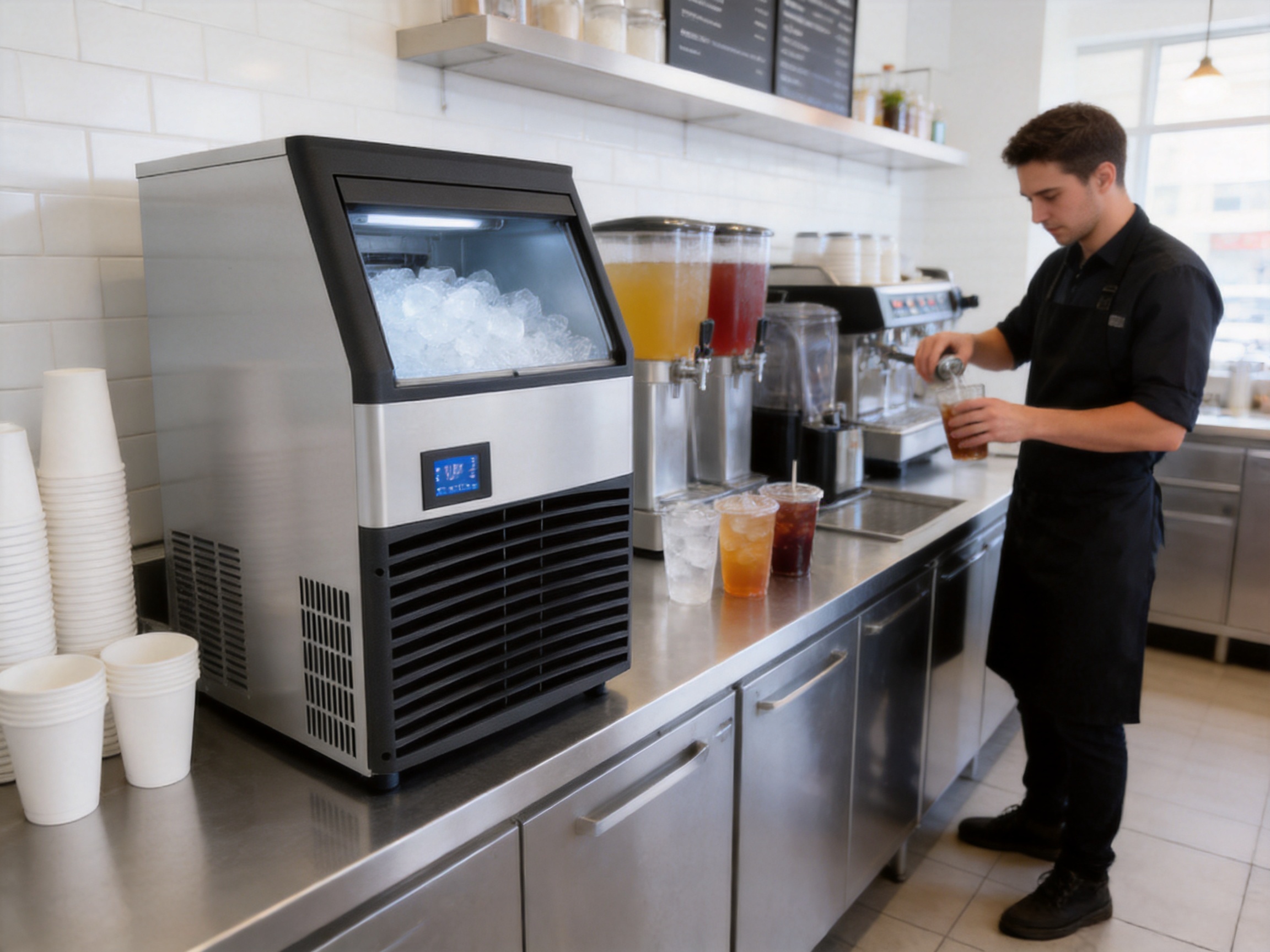
Cafés use ice for iced coffee, cold tea, fruit beverages, blended drinks, and customer service. Demand may vary significantly between morning, lunch, and afternoon periods. The ZB-50B can produce ice throughout the day and hold a reserve in its storage bin.
Its compact dimensions may help cafés place the machine near the beverage preparation area without using the space required by a large ice production system. The stainless-steel exterior can also suit a clean, modern service environment.
5.2 Convenience Stores
Convenience stores may need ice for fountain drinks, prepared beverages, chilled products, and customer service. A dedicated machine can reduce reliance on packaged ice and provide a continuous source for daily operations.
Because convenience stores often have limited back-room space, equipment size is an important consideration. The ZB-50B offers a moderate capacity that may fit the requirements of smaller stores and local retail outlets.
5.3 Small Restaurants
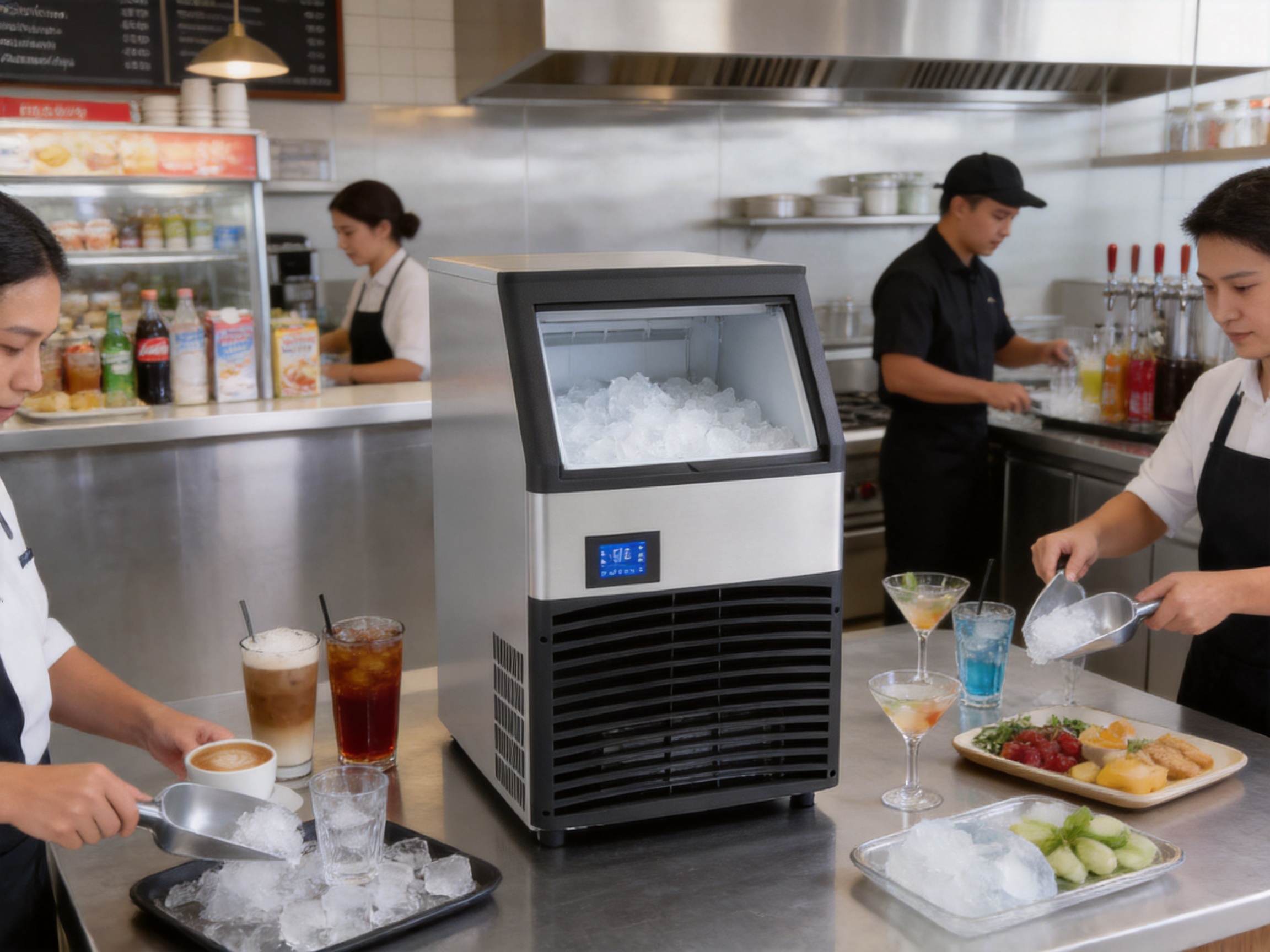
Restaurants may use ice in the dining area, bar section, kitchen, food preparation zone, and buffet display. The machine can support beverage service while also providing ice for selected preparation and presentation tasks.
Restaurants should calculate their peak demand carefully. A location with extensive cocktail service, high table turnover, or large outdoor events may require additional storage or a higher-capacity model. For small restaurants with moderate beverage sales, the ZB-50B can provide an appropriate level of supply.
5.4 Snack Shops and Beverage Counters
Snack shops and beverage counters frequently prepare cold drinks in short service cycles. Ice availability can directly affect order speed, customer satisfaction, and menu consistency.
The machine’s storage capacity helps staff prepare ahead of busy periods. Its automatic cleaning function can also support a clearer maintenance routine in fast-moving workplaces where employees have limited time for complicated equipment procedures.
5.5 Bars and Small Hospitality Venues
Bars depend on ice for mixed drinks, soft drinks, water service, and bottle presentation. A reliable supply is especially important during evenings and weekends, when demand may increase quickly.
For small bars, the machine can support routine service without the space and installation burden of a larger industrial unit. Businesses with intensive cocktail programs should compare expected peak consumption against the machine’s output and storage ratings before purchase.
5.6 Institutional and Commercial Foodservice
Schools, offices, clinics, canteens, and other institutions may use ice for beverages, food displays, or controlled preparation tasks. A compact machine can be useful where the facility requires regular production but has limited equipment space.
Institutional users may also benefit from the machine’s standardized operating routine. Maintenance responsibilities can be assigned to specific personnel, and cleaning schedules can be incorporated into existing sanitation procedures.
6. Manufacturing Strengths Behind the Product
The performance of commercial equipment depends on more than the visible product specifications. Manufacturing systems, quality control, engineering support, component selection, assembly consistency, and after-sales service all influence the customer’s long-term experience.
Spelor Electrical Appliances (Zhejiang) Co., Ltd. integrates design, research and development, manufacturing, sales, and service. This integrated structure allows the company to coordinate product development with production and customer requirements rather than treating each stage as an isolated activity.
The company operates more than 60,000 square meters of modern production facilities. A large manufacturing base can support organized production areas, equipment assembly, testing, warehouse management, and product development activities. It also provides a foundation for serving customers with different market requirements and order volumes.
Spelor’s product portfolio includes commercial refrigeration equipment, ice cream machines, juice dispensers, fried ice cream machines, refrigeration cabinets, slush machines, flake ice machines, cooking equipment, griddles, fryers, insulation products, barbecue equipment, and buffet solutions.
This broad product range is valuable because many foodservice buyers need more than one type of equipment. A supplier with experience across refrigeration, beverage, cooking, and buffet categories can better understand how individual machines must work within a complete commercial kitchen or service environment.
6.1 Design and Research Capability
Product design begins with understanding the operating environment. Commercial equipment must balance capacity, durability, energy consumption, safety, cleaning requirements, installation conditions, and appearance. The ZB-50B reflects this balance through its compact dimensions, moderate production, air-cooled system, automatic cleaning function, and foodservice-oriented exterior.
Research and development capability also supports product adaptation. Different markets may require different electrical standards, refrigerant regulations, packaging requirements, user interfaces, documentation, or exterior finishes. An integrated manufacturer is better positioned to coordinate such changes with production and technical teams.
6.2 Manufacturing Integration
Integrated manufacturing can improve communication between design engineers, production personnel, quality teams, and service departments. When feedback from customers or technicians is collected systematically, it can contribute to future product improvements and more effective operating instructions.
For OEM and ODM customers, this integration is particularly important. Buyers may request customized dimensions, branding, colors, packaging, electrical specifications, or product configurations. Spelor states that it provides OEM and ODM solutions based on drawings or customer requirements, allowing businesses and distributors to explore customized equipment programs.
6.3 Quality-Oriented Production
Commercial ice machines must operate in demanding environments that may include long working hours, frequent cleaning, temperature changes, water exposure, and repeated user interaction. Consistency in assembly and inspection is therefore essential.
A professional production process should include checks for refrigeration-system integrity, electrical safety, component installation, water-system function, control operation, exterior finish, and packaging protection. The exact inspection procedures may vary by production model and market, but the goal is to ensure that the finished machine is suitable for commercial service.
Quality is also connected to design simplicity. Features such as automatic cleaning and accessible operating controls can reduce the likelihood of user error. A machine that is easier to understand and maintain is more likely to deliver stable performance over its working life.
6.4 One-Stop Customer Support
Spelor provides pre-sales consultation, product customization, logistics and payment solutions, and after-sales maintenance support. This one-stop approach can simplify procurement for importers, distributors, contractors, restaurant groups, and foodservice businesses.
Pre-sales consultation helps customers compare capacity, dimensions, cooling method, refrigerant, electrical requirements, and application suitability. Customization support can help align equipment with a particular market or business format. After-sales support is important for troubleshooting, spare parts, service procedures, and long-term equipment management.
7. Installation and Operating Considerations
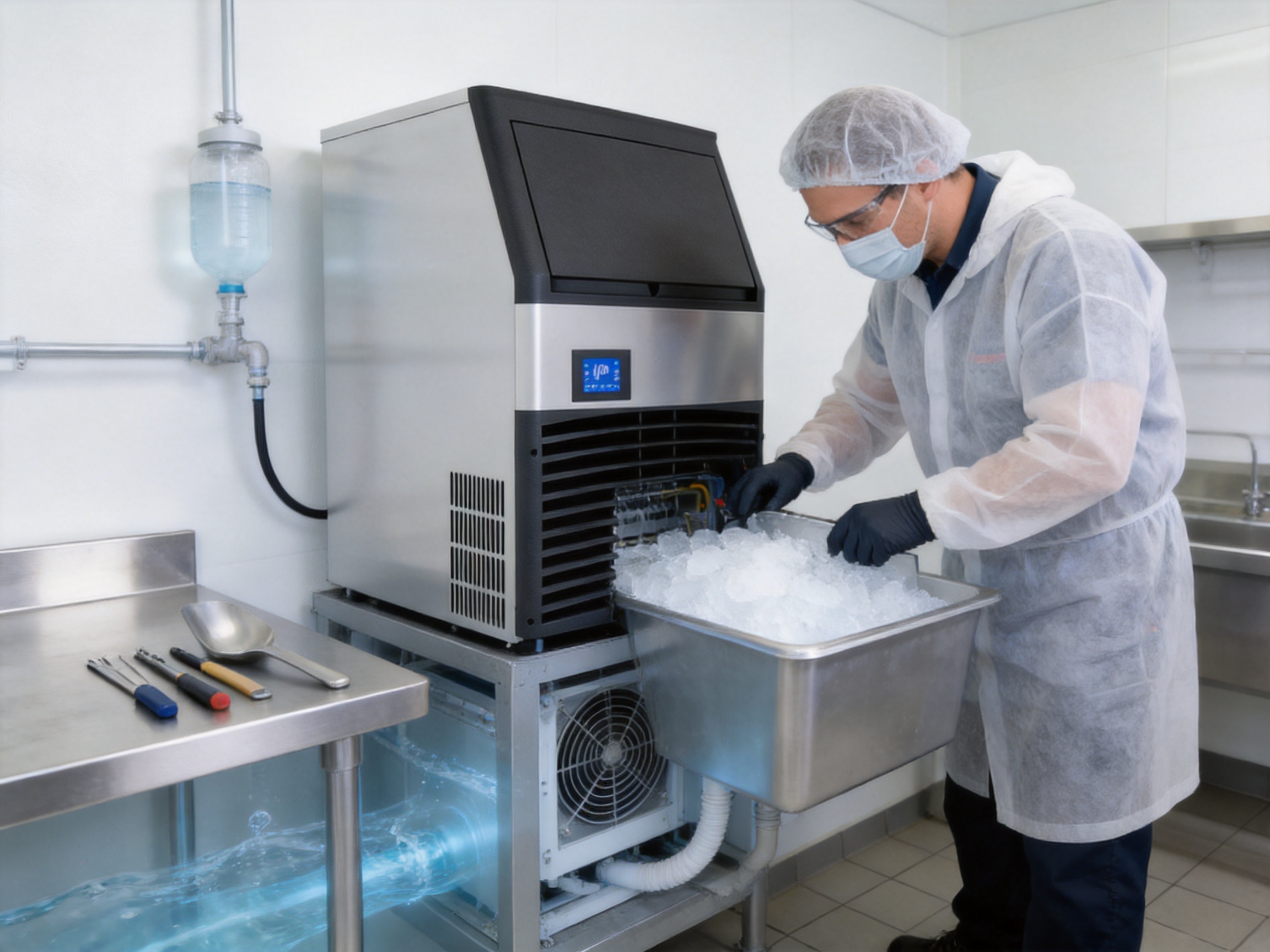
Correct installation is essential for safe and efficient operation. The machine should be placed on a stable, level surface capable of supporting its operating weight. The surrounding area should be clean, dry, and protected from excessive heat, cooking grease, direct sunlight, and sources of contamination.
Because the condenser is air cooled, the machine needs adequate airflow. Users should maintain the clearance recommended by the manufacturer and avoid positioning the unit directly against a wall or beside another heat-producing appliance. Restricted airflow can increase operating temperature and reduce refrigeration performance.
The water supply should meet applicable drinking-water and foodservice requirements. Water quality can affect ice appearance, taste, machine cleanliness, and scale accumulation. Where local water is hard or contains significant mineral content, the operator may need to use an appropriate filtration or water-treatment solution.
Drainage should be planned before installation. Meltwater, cleaning water, and other discharge must be directed safely and in accordance with local plumbing requirements. Improper drainage can create standing water, slippery floors, odors, and sanitation problems.
Electrical connection must match the machine’s rating and local regulations. The equipment should be connected to a suitable grounded supply by qualified personnel where required. Operators should not use damaged cords, overloaded outlets, or unsuitable extension arrangements.
Before normal production begins, the machine should be cleaned according to the operating instructions. Initial flushing helps remove manufacturing residues, packaging dust, or installation debris. Ice produced during initial setup should be discarded if required by the manufacturer’s instructions.
8. Cleaning and Maintenance Best Practices
Clean ice depends on clean water-contact surfaces, clean storage areas, and a well-maintained refrigeration system. The automatic cleaning function helps organize the process, but operators remain responsible for following the complete sanitation routine.
A daily visual inspection can identify spills, unusual odors, excessive water accumulation, damaged surfaces, or abnormal operating sounds. Staff should check whether the storage bin is clean and whether ice is being handled with dedicated sanitary utensils.
The storage bin should not be used for storing food, packaging materials, cleaning tools, or unrelated objects. Ice should be transferred only with clean equipment, and employees should avoid touching finished ice directly with their hands.
The condenser and air-intake areas should be inspected regularly for dust and grease. In a restaurant or snack-shop environment, airborne grease may accumulate faster than in a clean retail area. Cleaning frequency should reflect the actual operating environment.
Water-contact components should be inspected for mineral deposits or scale. Scale can affect water flow, ice quality, cleaning performance, and system efficiency. The appropriate descaling process and chemical products should be determined according to the manufacturer’s instructions and local sanitation requirements.
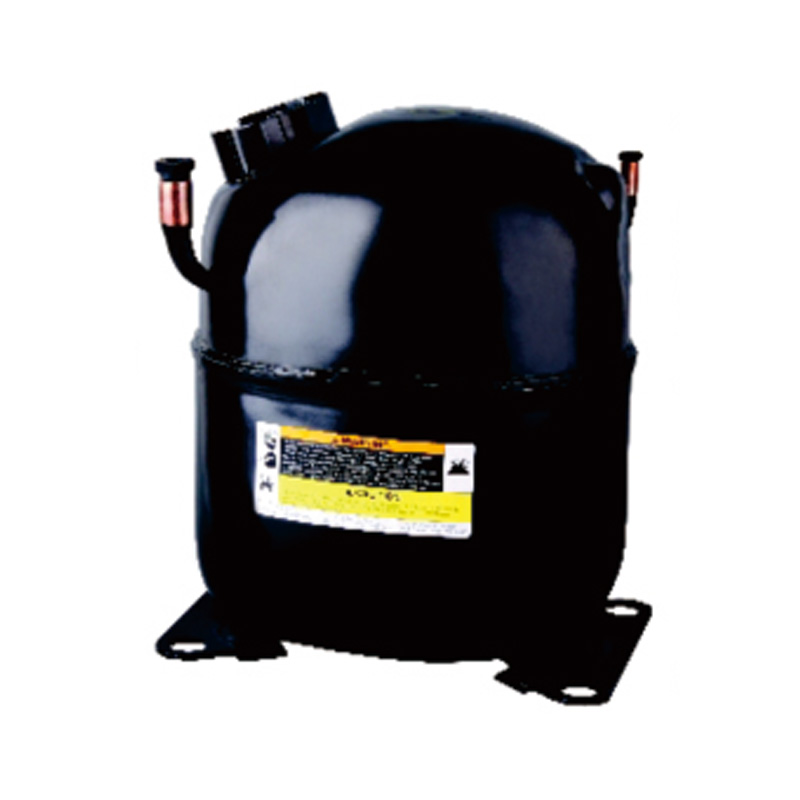
R290 refrigeration systems must be serviced only by qualified technicians familiar with flammable refrigerants. Operators should not puncture, modify, or attempt to recharge the refrigeration circuit. Any suspected leak, unusual smell, or refrigeration failure should be handled through approved technical service procedures.
9. Energy and Operating Efficiency
The rated power consumption of the ZB-50B is 350 watts, but the actual energy used over a day depends on production demand and environmental conditions. Businesses can improve efficiency by installing the machine in a cool, well-ventilated location and keeping the condenser clean.
Warm water requires more refrigeration work than cool water. Where permitted by the installation instructions, using an appropriate water supply temperature can support more efficient ice production. However, operators should never exceed the equipment’s specified water temperature or pressure range.
Opening the storage area unnecessarily can allow warm air into the bin and increase the refrigeration load. Staff should remove only the ice required for immediate use and keep the storage area closed whenever possible.
Regular cleaning can also support efficiency. Dust, scale, blocked airflow, and poor drainage can all place additional stress on the system. A preventative maintenance schedule is often less disruptive and less costly than waiting for an equipment failure during peak service.
Energy efficiency should be assessed together with usable production. A machine that produces the required amount of ice reliably may provide better practical value than a lower-rated unit that requires frequent supplemental purchases or produces insufficient ice during busy periods.
10. Purchasing Guidance for Distributors and End Users
Before purchasing the ZB-50B, buyers should evaluate their actual ice consumption. Review daily sales volumes, peak service periods, beverage menu requirements, seasonal fluctuations, and the amount of ice used for kitchen or presentation purposes.
Buyers should also verify the available installation conditions. Important factors include electrical supply, water quality, drainage, room temperature, ventilation, access for delivery, and service clearance. The machine’s 500 × 432 × 810-millimeter dimensions should be compared with the proposed installation location, including space for operation and maintenance.
Distributors should consider market-specific requirements such as certification, labeling, packaging, instruction manuals, refrigerant regulations, warranty terms, and replacement-part availability. These requirements may differ between countries and regions.
For restaurant groups or franchise operators, standardizing the same model across multiple locations can simplify staff training, maintenance planning, inventory control, and spare-parts management. It may also make it easier to establish consistent cleaning procedures.
OEM and ODM customers can discuss customization requirements with the manufacturer. Potential topics may include exterior colors, logos, packaging, electrical specifications, product documentation, order quantities, and market-specific configurations. The feasibility of each request should be confirmed during technical and commercial review.
| Evaluation Area | Questions for the Buyer |
|---|---|
| Demand | How many kilograms of ice are needed each day and during peak service? |
| Storage | Is a 25-kilogram storage bin sufficient for the busiest operating period? |
| Space | Can the site accommodate 500 × 432 × 810 millimeters plus required clearances? |
| Ventilation | Is there enough airflow for an air-cooled condenser? |
| Water | Does the site provide suitable water quality and pressure? |
| Drainage | Can cleaning water and meltwater be discharged safely? |
| Electrical supply | Does the local power supply match the equipment requirements? |
| Maintenance | Can staff follow cleaning and inspection procedures consistently? |
| Service | Are qualified technicians and appropriate spare parts available? |
11. Why Choose an Experienced Foodservice Equipment Manufacturer?
Choosing a commercial ice machine is not only a product decision; it is also a supplier decision. The manufacturer’s experience can influence product development, production consistency, technical communication, packaging, delivery coordination, warranty handling, and after-sales support.
A company with experience across multiple foodservice categories may understand the operational relationships between ice production, beverage dispensing, refrigeration, cooking, buffet presentation, and customer service. This broader knowledge can help buyers develop complete equipment solutions instead of purchasing unrelated machines from multiple sources.
Spelor’s product portfolio reflects this cross-category experience. Its equipment range serves snack shops, fast-food chains, bars, supermarkets, institutions, and other foodservice applications. This allows the company to work with different business models, operating scales, and procurement structures.
The company’s OEM and ODM capability is another advantage for importers and distributors. Buyers may require products that fit a local brand identity, a specific retail format, or a particular technical standard. A manufacturer capable of working from drawings or documented requirements can help turn those needs into a coordinated production project.
Long-term value also depends on communication. Clear technical specifications, responsive pre-sales support, realistic delivery planning, and dependable after-sales service all reduce procurement risk. These factors are especially important for commercial equipment because downtime can affect sales and customer satisfaction.
12. Practical Limitations and Proper Expectations
The ZB-50B is designed for a maximum daily production of 25 kilograms, not for heavy industrial output. Buyers with large hotels, major event venues, high-volume cocktail bars, seafood processing operations, or centralized ice distribution requirements should evaluate higher-capacity equipment.
Actual production may be lower than the maximum stated figure in hot environments or when incoming water is warm. Ventilation, cleaning, water quality, and installation conditions also affect performance. Proper site planning is therefore necessary before purchase.
The 25-kilogram storage bin is useful for moderate operations, but businesses with sudden demand spikes should establish a backup plan. This may include additional storage, a secondary ice machine, or emergency supply arrangements, depending on the importance of uninterrupted ice availability.
R290 provides environmental advantages but requires responsible handling because it is flammable. The refrigerant designation should be communicated to installers and service technicians, and all applicable safety procedures must be followed.
Finally, automatic cleaning is a maintenance aid rather than a complete replacement for sanitation management. Staff still need to maintain the bin, utensils, water-contact areas, condenser, drainage system, and surrounding environment.
13. Frequently Asked Questions
Q1: What is the maximum production capacity of the machine?
The ZB-50B has a maximum daily production capacity of 25 kilograms under specified operating conditions. Actual output can vary according to room temperature, water temperature, airflow, water quality, and maintenance status.
Q2: How much ice can the storage bin hold?
The storage bin capacity is 25 kilograms. This allows the machine to retain a significant quantity of finished ice and create a useful buffer between production and service demand.
Q3: Is the machine suitable for a small restaurant?
Yes. The machine is intended for small and medium-sized commercial applications, including small restaurants, cafés, convenience stores, snack shops, beverage counters, and similar businesses. The buyer should compare the 25-kilogram daily capacity with actual peak demand.
Q4: Does the machine use air cooling or water cooling?
The machine uses air-cooled condensation. It does not require a separate condenser-water system, although it still needs proper ventilation and sufficient clearance around the air-intake and exhaust areas.
Q5: What refrigerant does the ice maker use?
The machine uses R290 refrigerant. R290 has a low global warming potential, but it is flammable and must be handled by qualified personnel according to applicable safety requirements.
Q6: Does it have an automatic cleaning function?
Yes. The product information specifies an automatic cleaning function. Operators should still follow the complete cleaning and sanitation instructions, including storage-bin cleaning, water-system inspection, and condenser maintenance.
Q7: What are the machine’s overall dimensions?
The overall dimensions are 500 millimeters by 432 millimeters by 810 millimeters. Buyers should also reserve additional space for ventilation, connections, operation, cleaning, and service access.
Q8: What is the rated power consumption?
The rated power consumption is 350 watts. Actual daily energy use depends on operating conditions, production volume, ambient temperature, water temperature, ventilation, and maintenance.
Q9: Is the exterior suitable for a customer-facing area?
The plate body is made from food-grade stainless steel and colorful sprayed steel, giving the unit a clean and professional appearance. Whether it is placed in a customer-facing area depends on the layout, noise considerations, ventilation, and local design requirements.
Q10: Can the product be customized?
Spelor provides OEM and ODM services based on drawings or customer requirements. Potential customization may include branding, colors, packaging, electrical configurations, documentation, or other approved design details. Each request should be reviewed with the manufacturer for technical feasibility and minimum order requirements.
Q11: What type of businesses can benefit from this machine?
Typical applications include cafés, convenience stores, small restaurants, bars, snack shops, beverage counters, fast-food outlets, supermarkets, institutional kitchens, and other foodservice businesses with moderate daily ice demand.
Q12: How should the machine be maintained?
Operators should use the automatic cleaning program as instructed, keep the storage bin and water-contact surfaces sanitary, inspect the condenser and airflow areas, monitor water quality, maintain drainage, and arrange qualified technical service for refrigeration or electrical repairs.
Q13: Does the machine require a special installation environment?
It requires a stable, level, clean, and dry location with suitable electrical power, water supply, drainage, and airflow. It should not be installed near excessive heat, grease, direct sunlight, or blocked ventilation areas.
Q14: Is the machine appropriate for high-volume industrial use?
The machine is designed for moderate commercial production of up to 25 kilograms per day. High-volume operations should conduct a separate capacity assessment and may require a larger machine or multiple units.
14. Conclusion
The ZB-50B 25kg/24H commercial ice maker offers a practical solution for businesses that need reliable daily ice production in a compact format. Its 25-kilogram maximum production capacity, 25-kilogram storage bin, 350-watt rated power consumption, air-cooled condensation, R290 refrigerant, stainless-steel construction, and automatic cleaning function create a balanced package for small and medium-sized foodservice operations.
Its primary advantage over purchased ice is greater control over daily supply. Compared with larger industrial machines, it offers a more space-conscious and appropriately scaled option for moderate demand. Compared with household equipment, it provides commercial-oriented capacity, construction, storage, and operating features.
The product is supported by Spelor Electrical Appliances (Zhejiang) Co., Ltd., a manufacturer with more than 60,000 square meters of modern production facilities and experience across commercial refrigeration, beverage, cooking, buffet, and foodservice equipment categories. Its integrated design, research and development, manufacturing, sales, customization, logistics, and after-sales structure supports both standard product procurement and OEM or ODM cooperation.
For the best results, buyers should match the machine to actual demand, confirm site conditions, provide adequate ventilation, maintain water quality, follow cleaning procedures, and arrange qualified service for refrigeration-system work. When properly selected and maintained, the ZB-50B can help cafés, shops, restaurants, bars, and institutional foodservice operations maintain a stable supply of clean ice while using space and resources efficiently.
References
1. Product specification sheet for the ZB-50B commercial ice machine, including production capacity, storage capacity, dimensions, rated power, condensation method, and refrigerant information.
2. Spelor Electrical Appliances (Zhejiang) Co., Ltd. company information and commercial foodservice equipment portfolio.
3. Manufacturer-provided product information regarding automatic cleaning, compact design, commercial applications, and operating characteristics.
4. General commercial refrigeration maintenance principles covering airflow, condenser cleaning, water quality, drainage, and preventive service.
5. General foodservice sanitation principles for ice storage, utensil handling, water-contact surfaces, and routine equipment cleaning.
6. General technical and safety guidance for commercial equipment using R290 hydrocarbon refrigerant.
Product: 25Kg/24H Countertop Ice Maker for Business Commercial

For exclusive deals and latest offers, sign up by entering your email address below.


-
spelor@spelor.com
-
+86-576-85229688
-
No.528, Changxi Road, Linhai City, Zhejiang Province, China
Commercial Refrigeration Equipment Manufacturer China
Copyright © 2025 by Spelor Electrical Appliances (Zhejiang) Co., Ltd. Rights Reserved.
