


 中文简体
High-Capacity Three-Flavor Soft Serve Ice Cream Machine for Professional Foodservice
Admin 2026-08-22In modern foodservice, soft serve ice cream is more than a dessert. It is a high-margin menu category, a visual attraction, and a practical way for bakeries, restaurants, cafés, snack shops, and hospitality businesses to increase customer satisfaction. However, serving consistent soft ice cream at commercial speed requires more than an attractive machine. Operators need dependable cooling, sufficient capacity, convenient controls, hygienic construction, simple cleaning, and a design that can withstand continuous daily use.
The BQL-830C three-flavor soft serve ice cream machine is designed for these demanding conditions. Equipped with a large-capacity Tecumseh compressor, two ingredient hoppers, two freezing tanks, and a three-flavor dispensing configuration, it supports continuous production for businesses that need to serve more customers during busy periods. Its stated production capacity of 30–35 liters per hour gives commercial operators the output needed for bakeries, medium- to large-sized restaurants, dessert shops, and other foodservice locations.
The machine combines a food-grade stainless-steel plate body with colorful sprayed steel, an LCD control panel, self-cleaning functionality, and pre-cooling capability. These features are intended to simplify operation while supporting food hygiene and product freshness. The overall design reflects a balance between capacity, usability, durability, and professional presentation.
This article examines the machine’s construction, operating advantages, cooling system, production performance, hygiene features, manufacturing background, customization potential, and suitability for different commercial applications. It also explains why a professional equipment supplier with integrated design, research and development, manufacturing, sales, and service capabilities can offer more value than a basic equipment reseller.

Spelor Large Capacity Tecumseh Compressor 3 Flavors Soft Serve Ice Cream Machine for Bakery Store
1. The Role of Soft Serve Equipment in Commercial Foodservice
Soft serve products are popular because they are easy to customize, visually appealing, and suitable for a wide range of customers. A single machine can support traditional vanilla and chocolate products, mixed flavors, seasonal recipes, promotional combinations, and specialty desserts served in cones, cups, waffles, sundaes, milkshakes, and bakery creations.
For a small shop, the machine may be used as a compact dessert station. For a bakery, it can complement cakes, pastries, waffles, and beverages. In a restaurant, soft serve can become a profitable dessert option without requiring a large kitchen area. In a fast-food environment, speed and repeatability are particularly important because customers expect short waiting times and consistent portions.
Commercial production also creates requirements that are not present in household equipment. A professional machine must manage larger ingredient volumes, maintain stable freezing performance, support frequent dispensing, and tolerate repeated cleaning cycles. It must also provide operators with practical controls rather than requiring complex manual adjustment.
The BQL-830C is positioned for this commercial environment. Its 30–35-liter-per-hour production range is considerably more appropriate for professional service than the output of a small domestic unit. The two 10-liter hoppers provide a combined hopper capacity of 20 liters, allowing staff to prepare a meaningful quantity of mix before refilling. This reduces unnecessary interruptions during service and supports a smoother workflow.
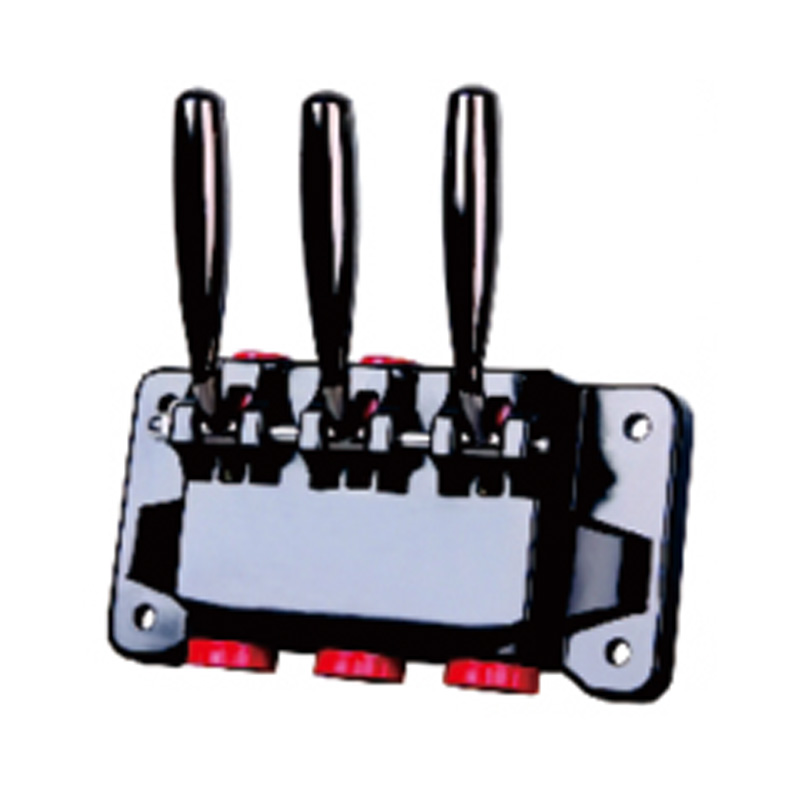
The three-flavor format is another important advantage. Two individual flavors can be dispensed separately, while the central option can combine both flavors. This gives the operator three serving choices without requiring three independent machines. The arrangement is especially useful for businesses that want menu variety but must carefully manage floor space, investment, utilities, and maintenance.
2. Product Overview and Main Specifications
The BQL-830C is a commercial soft serve ice cream machine developed for high-volume and continuous foodservice production. It uses a Tecumseh compressor and R404 refrigerant, with a rated input power of 2,650 watts. The machine has a net weight of 142 kilograms and measures 565 × 640 × 1,470 millimeters.
Its vertical format makes practical use of floor space while providing enough internal capacity for commercial work. At 1,470 millimeters high, the machine presents the dispensing area at a convenient operating level for staff and customers. Its relatively narrow width and moderate depth can make it easier to position in a bakery, café, dessert shop, or restaurant service line, subject to local installation requirements and available ventilation space.
| Specification | Details | Commercial Significance |
| Model | BQL-830C | Identifies the three-flavor commercial configuration |
| Production capacity | 30–35 L/H | Supports continuous service and high-volume periods |
| Hopper capacity | 2 × 10 L | Provides a combined ingredient capacity of 20 liters |
| Freezing tank capacity | 2 × 2 L | Supports two independent freezing channels |
| Input power | 2,650 W | Reflects the electrical demand of a commercial cooling system |
| Net weight | 142 kg | Indicates a substantial professional machine structure |
| Dimensions | 565 × 640 × 1,470 mm | Useful for planning placement and service-line layout |
| Compressor | Tecumseh | Supports stable commercial refrigeration performance |
| Refrigerant | R404 | Specified refrigeration medium for the stated model |
| Control system | LCD panel | Provides a clear interface for operation and monitoring |
| Cleaning function | Self-cleaning function | Helps streamline routine sanitation procedures |
| Freshness function | Pre-cooling function | Helps maintain mix freshness for up to one week according to the product information |
Specifications should always be checked against the final technical quotation, electrical standard, local regulations, and configuration selected for a particular market. Installation conditions, ambient temperature, mix formulation, serving style, and operating practices can influence actual output.
3. Three-Flavor Production for Greater Menu Flexibility
One of the machine’s most important competitive advantages is its three-flavor dispensing configuration. A two-flavor machine may offer useful variety, but the additional central mixed-flavor option allows an operator to serve more combinations using one piece of equipment. Customers can choose a single flavor or a blended serving, while staff can maintain a relatively simple production process.
This feature can improve menu design in several ways. A bakery might offer vanilla, chocolate, and twist soft serve alongside waffles or cakes. A restaurant might pair one flavor with fruit toppings and another with chocolate-based desserts. A snack shop may use seasonal recipes in one side while keeping a standard flavor on the other. The mixed option can then become a signature combination that encourages repeat visits.
Three-flavor production can also support more efficient use of shop space. Instead of installing separate equipment for every flavor, the business can consolidate several menu possibilities into one machine footprint. This is valuable in compact stores, where every square meter must contribute to service capacity or customer experience.
Compared with lower-capacity units, the BQL-830C is better suited to businesses that experience strong demand during lunch breaks, afternoons, weekends, holidays, and special promotions. A machine that offers only limited hourly output may create queues or require frequent pauses for recovery. The stated 30–35-liter-per-hour capacity is intended to provide a stronger production base for busy commercial operation.
Operators should remember that production capacity is not the same as guaranteed sales volume. Actual results depend on the recipe, initial mix temperature, ambient temperature, draw frequency, serving size, machine settings, and maintenance condition. Nevertheless, the combination of large hoppers, dual freezing tanks, and a commercial compressor provides a strong foundation for sustained output.
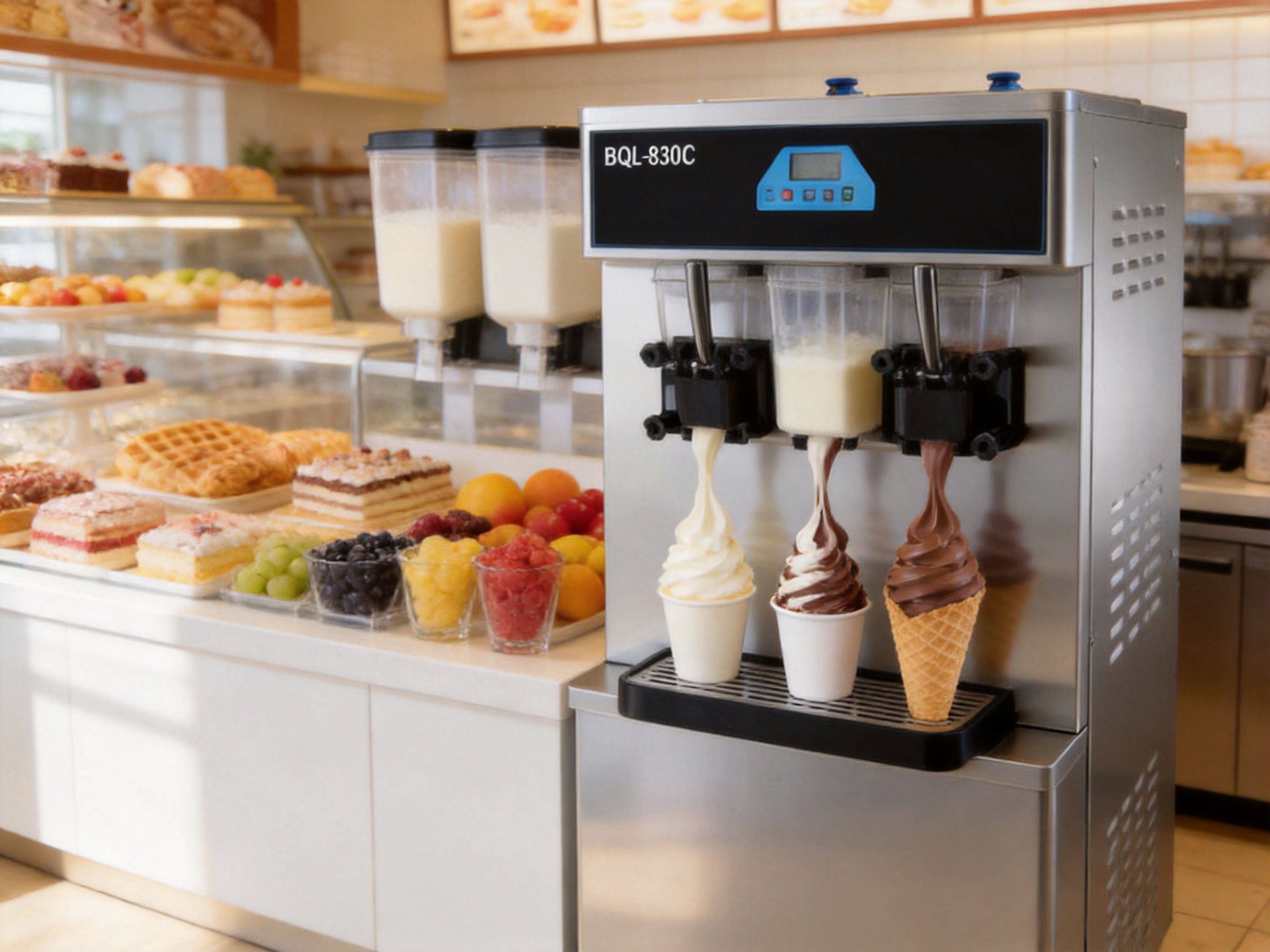
4. Large-Capacity Tecumseh Compressor and Cooling Stability
Cooling performance is central to the quality of soft serve. If the refrigeration system cannot remove heat efficiently, the product may become too soft, production may slow down, and the operator may experience inconsistent texture. A commercial machine therefore requires a refrigeration system designed for repeated service rather than occasional domestic use.
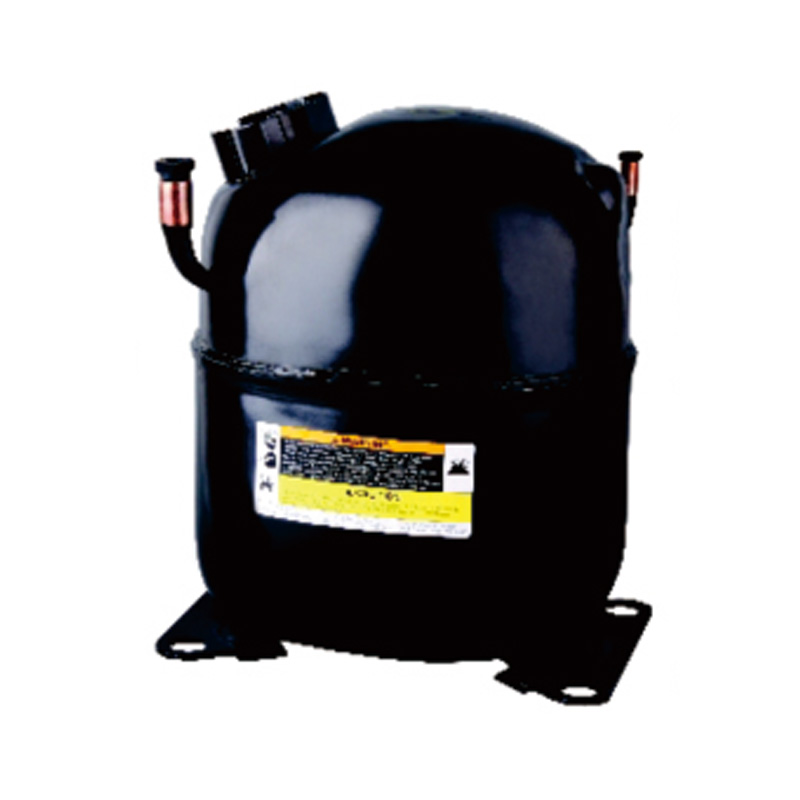
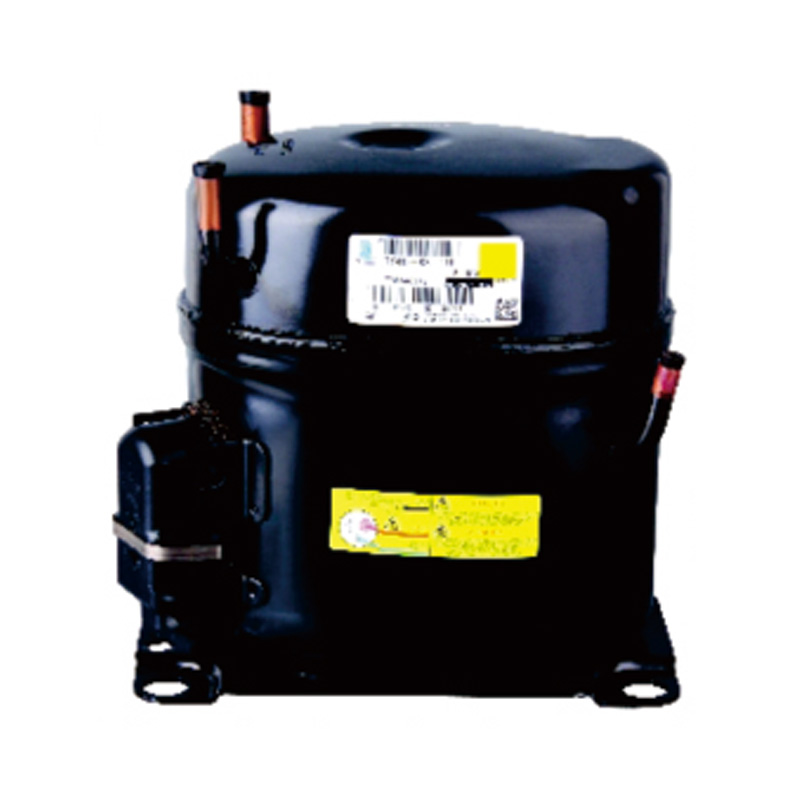
The BQL-830C features a large-capacity Tecumseh compressor. The compressor is the driving component of the refrigeration cycle, and its capacity is important when the machine must repeatedly freeze liquid mix into a stable soft serve texture. A robust compressor can help the machine respond to ongoing product demand and recover cooling performance between dispensing cycles.
The use of a recognized compressor component can also simplify equipment evaluation for buyers who compare commercial refrigeration products. Procurement teams often examine the compressor brand, electrical rating, refrigerant, heat dissipation design, service access, and replacement-part availability before approving a machine. A clearly specified compressor gives buyers more information than a product description that simply states “high performance” without identifying the refrigeration component.
The machine uses R404 refrigerant according to the supplied product information. Because refrigerant requirements can differ by country and may change over time, buyers should confirm local compliance, service procedures, and the refrigerant configuration of the final machine before ordering. Professional installation and maintenance should be performed by qualified technicians familiar with the relevant refrigeration regulations.
Cooling stability is also influenced by factors outside the compressor. Adequate ventilation around the machine is essential. The condenser must be kept clean, the machine must be placed on a suitable level surface, and staff should follow the recommended mix and operating procedures. When the refrigeration system is supported by proper installation and routine care, the machine can provide more consistent performance over its service life.
5. Large Hoppers and Reduced Refill Interruptions
The BQL-830C includes two 10-liter hoppers. Each hopper can hold a substantial quantity of liquid mix, creating a total stated hopper capacity of 20 liters. For commercial operators, this capacity is valuable because refill frequency affects labor, service speed, and product handling.
Frequent refilling can interrupt the operator’s work during peak periods. Staff may need to leave the service counter, open packaged ingredients, prepare the mix, sanitize a container, and restart production. These steps take time and may create inconsistency if they are performed under pressure. Larger hoppers help reduce the number of such interruptions, although the exact interval between refills depends on sales volume and serving size.
The two-hopper structure also supports flavor separation. Each side can be prepared with a different mix, giving the operator better control over the menu. This can be useful when one flavor is sold more quickly than another, when a business offers dairy and non-dairy formulations subject to the machine’s compatibility requirements, or when different recipes are used for different promotions.
Ingredient management remains important. Mix should be stored according to food safety requirements, and staff should monitor temperature, expiration dates, allergen information, and cross-contact risks. The machine’s capacity supports production efficiency, but it does not replace correct food handling procedures.
6. Food-Grade Construction and Professional Appearance
The plate body is made from food-grade stainless steel and colorful sprayed steel. This combination addresses two important commercial needs: hygiene and appearance. Stainless steel is widely used in professional food equipment because it is durable, relatively easy to clean, and suitable for surfaces exposed to foodservice activity.
A sanitary surface can help staff remove splashes, drips, and routine residue more efficiently. Smooth, accessible exterior panels also support a cleaner presentation in customer-facing areas. In a bakery or dessert shop, the machine is often part of the visual identity of the store. A colorful sprayed-steel finish can make the equipment appear more coordinated with the shop’s interior, signage, or brand colors.
Appearance should not be considered merely decorative. A clean and well-presented machine gives customers confidence that the business takes food handling seriously. In open-kitchen formats and front-counter service, equipment becomes part of the customer experience. A professional finish can therefore contribute to perceived product quality and store image.
The machine’s 142-kilogram net weight also suggests a substantial structure designed for commercial placement. The weight can help provide stability during operation, especially when staff repeatedly load mix, draw product, and clean the dispensing area. Because of this weight, businesses should plan delivery, positioning, and floor access in advance. Equipment movement should be handled safely using appropriate personnel and tools.
7. LCD Control Panel and Easier Daily Operation
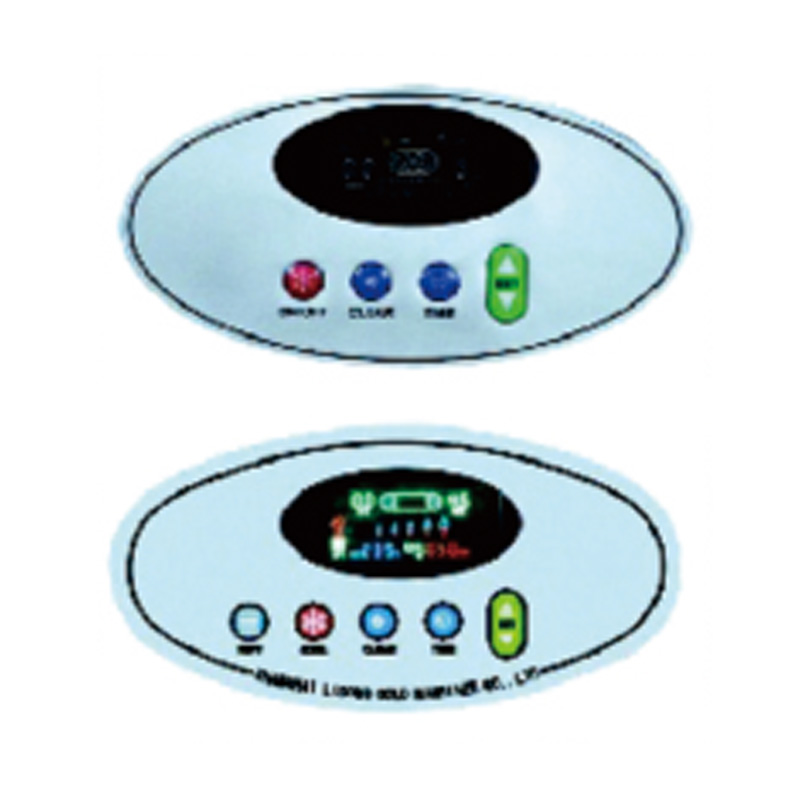
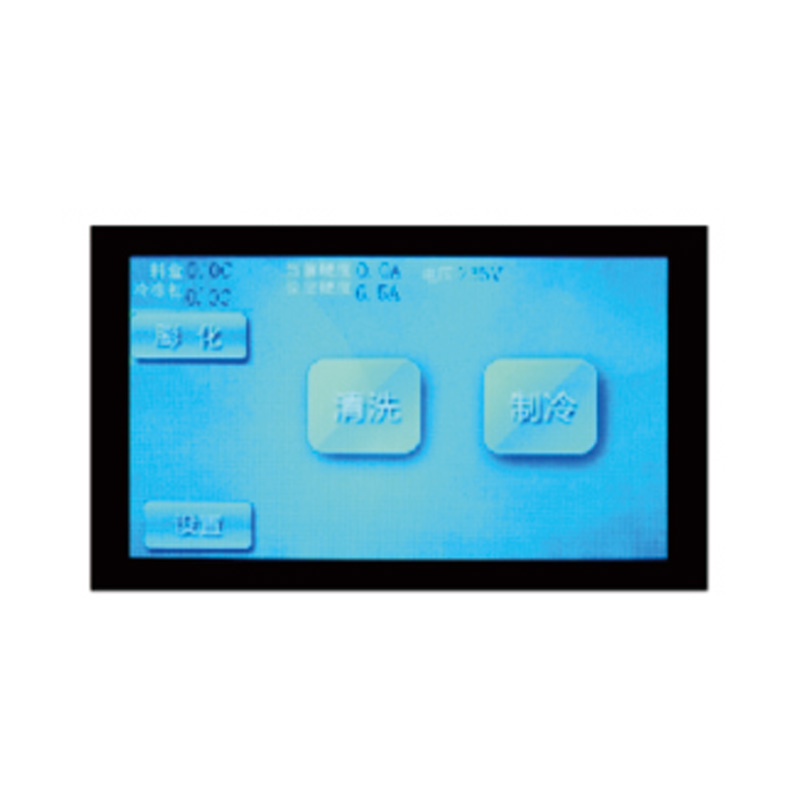
Commercial equipment is most effective when staff can learn to use it quickly. The BQL-830C includes an LCD panel that provides a modern control interface. A display-based panel can make operating information easier to read than a collection of basic switches, particularly when staff need to select functions, check settings, or follow cleaning procedures.
For businesses with multiple employees or changing shifts, a clear interface can reduce training time. New staff can be introduced to the machine through a consistent operating sequence, while managers can establish standard procedures for startup, production, standby operation, cleaning, and shutdown.
The control system also supports better operational discipline. Employees can be instructed to check the machine display at the beginning of a shift, observe any alerts, and record unusual conditions. This approach helps turn equipment operation into a repeatable process rather than an activity based entirely on personal experience.
Simple operation does not mean that training is unnecessary. Staff should understand the purpose of each function, the correct mix preparation process, the safe handling of refrigerated ingredients, and the cleaning steps required after use. Operators should follow the manufacturer’s manual and local food safety rules. The LCD panel is a tool for clarity and convenience, not a substitute for responsible operation.
8. Self-Cleaning Function and Sanitation Efficiency
Cleaning is one of the most important responsibilities in soft serve service. Milk-based and other food mixes can leave residue inside product pathways, freezing cylinders, dispensing valves, and seals. If cleaning is delayed or incomplete, residue can affect taste, texture, hygiene, and component performance.
The BQL-830C includes a self-cleaning function intended to simplify routine cleaning. Automated cleaning support can reduce manual effort and help staff follow a more consistent cleaning sequence. It may also improve productivity by reducing the time required for certain cleaning stages, although the exact process must be confirmed in the operating manual.
A self-cleaning function should be viewed as part of a complete sanitation program. Staff still need to prepare cleaning solutions correctly, remove and inspect applicable parts, rinse according to instructions, sanitize food-contact components, and verify that no residue remains. Gaskets, dispensing components, product tubes, and other removable parts may require manual attention.
Cleaning frequency depends on the ingredients used, local regulations, operating hours, and the manufacturer’s instructions. Businesses serving dairy products should establish a documented routine that identifies who cleans the machine, when the work is performed, which cleaning agents are approved, and how the procedure is verified.
Compared with a machine that provides no dedicated cleaning assistance, the BQL-830C can offer a more convenient daily workflow. This is a meaningful advantage for busy businesses, where cleaning time competes with service time. Easier cleaning can also support more reliable staff compliance, which is essential for maintaining product quality and customer trust.
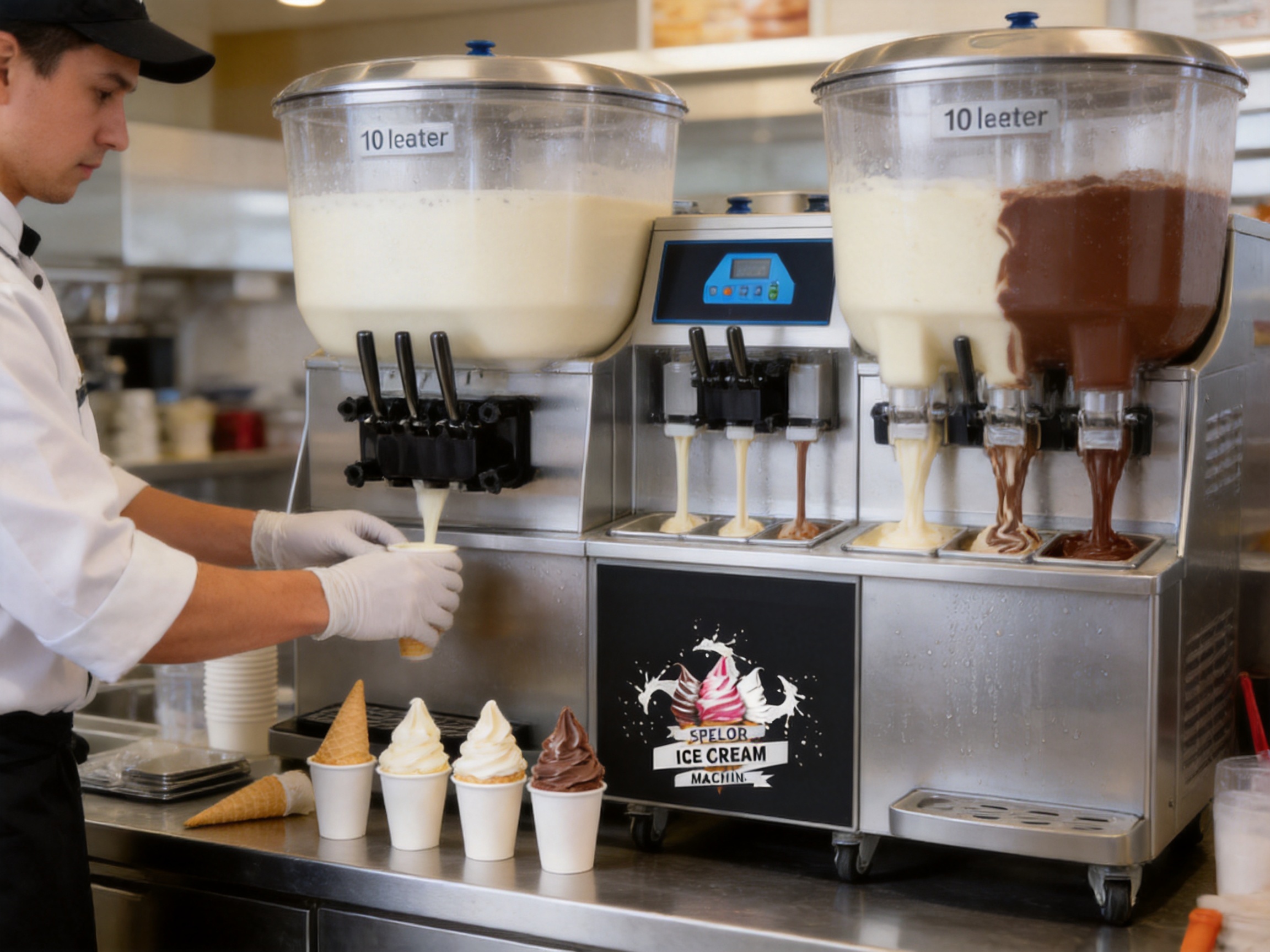
9. Pre-Cooling and Product Freshness Management
The machine includes a pre-cooling function described in the product information as helping keep the mix fresh for one week. This function is designed to maintain a colder storage environment in the hopper when the machine is not actively dispensing product. The purpose is to help protect mix freshness and reduce unnecessary waste between service periods.
Pre-cooling can be particularly useful for businesses that operate across several service periods rather than continuously throughout the day. A bakery may experience strong demand in the afternoon and evening, while a restaurant may serve dessert primarily after meals. Maintaining the mix in a controlled cold condition can help the operator manage these changes more efficiently.
However, the stated one-week freshness period should not be interpreted as a universal food safety guarantee. Freshness and safe storage depend on the formulation, pasteurization method, ingredient handling, storage temperature, local regulations, and the condition of the machine. Operators must follow the mix supplier’s instructions and applicable food safety requirements. If there is any uncertainty about the product, it should not be served.
Pre-cooling can also reduce the thermal load placed on the freezing system when production begins. Starting with colder mix may support a smoother transition into service, although actual performance varies according to conditions. Staff should load ingredients at the recommended temperature and avoid placing warm or improperly handled mix into the hopper.
10. Advantages Compared with Lower-Capacity or Less Integrated Machines
Commercial buyers often compare machines based on purchase price alone. A more useful approach is to evaluate total operating value. A low-cost machine may appear attractive initially, but limited capacity, difficult cleaning, unstable cooling, and frequent service interruptions can create higher costs over time.
The BQL-830C offers several advantages when compared with smaller or less integrated alternatives:
First, its 30–35-liter-per-hour production capacity is designed for stronger commercial demand. A small machine may be sufficient for occasional service, but it may struggle when customer traffic increases. The BQL-830C gives businesses more room to handle peak periods.
Second, the three-flavor system creates menu flexibility without requiring three separate machines. This can reduce equipment duplication and help the operator make better use of available floor space.
Third, the two 10-liter hoppers reduce the need for constant refilling. Large ingredient capacity is useful for busy service periods and can simplify staff scheduling.
Fourth, the Tecumseh compressor provides a clearly specified refrigeration component for buyers who require dependable cooling performance and transparent technical information.
Fifth, the LCD panel, self-cleaning function, and pre-cooling function address daily workflow rather than focusing only on output. These features can make the machine easier to operate, clean, and manage.
Sixth, the food-grade stainless-steel and sprayed-steel construction is appropriate for a customer-facing commercial environment. It supports both hygienic maintenance and a more polished store presentation.
These advantages do not mean that the machine is suitable for every application. A very small kiosk with limited electrical capacity may prefer a more compact unit. A factory-scale producer may require a different industrial system. The BQL-830C is best matched with businesses that need meaningful commercial capacity, three flavor options, and a professional machine footprint.
11. Applications in Bakeries and Dessert Shops
Bakeries can use soft serve to expand their product range without building a separate frozen-dessert production area. Soft serve pairs naturally with waffles, pastries, brownies, cakes, fruit, and specialty toppings. A bakery can create combination offers that increase average transaction value, such as a dessert plate with one baked item and one freshly dispensed soft serve serving.
The machine’s three-flavor arrangement is useful for bakeries that want to maintain a classic flavor while testing new recipes. For example, one side may remain dedicated to vanilla, the second side may offer chocolate or a seasonal flavor, and the central outlet may provide a twist combination. This arrangement supports menu experimentation without changing the whole equipment setup.
Dessert shops can also use the machine as a visual point of service. The vertical design and colorful exterior may help draw attention to the preparation area. When customers can see the product being dispensed, the process becomes part of the purchasing experience.
Because bakeries may have several production activities occurring simultaneously, ease of operation and cleaning are especially valuable. Staff need equipment that can be integrated into a broader workflow without creating unnecessary complexity. The LCD panel and self-cleaning function can support this goal when used according to the manufacturer’s procedures.
12. Applications in Restaurants, Cafés, and Fast-Food Locations
Restaurants can use soft serve as an efficient dessert solution. Unlike plated desserts that may require extensive preparation, soft serve can be dispensed quickly and customized with sauces, toppings, fruit, cookies, or beverage combinations. The machine can therefore support both dine-in and takeaway service.
In cafés, the machine can complement coffee, tea, smoothies, and baked products. A café may offer soft serve in cups or cones during warm seasons and use it in affogato-style or dessert beverages where appropriate. The two independent flavor channels give the operator flexibility in designing these combinations.
Fast-food locations and snack shops often require speed, consistency, and straightforward staff training. The BQL-830C’s commercial capacity and large hoppers are aligned with these needs. During periods of high demand, the ability to dispense three flavor options from one unit can help maintain customer choice while keeping the service counter organized.
Operators in these sectors should consider the machine’s electrical input of 2,650 watts when planning installation. The site should have a suitable power supply, adequate ventilation, sufficient counter or floor clearance, and safe access for cleaning and maintenance. A professional equipment supplier can help confirm these requirements before shipment.
13. Manufacturing Strength and Integrated Company Capabilities
The value of commercial equipment depends not only on the product specification but also on the manufacturer’s ability to develop, produce, inspect, customize, and support the machine. Spelor Electrical Appliances (Zhejiang) Co., Ltd. is described as a professional manufacturer integrating design, research and development, manufacturing, sales, and service.
This integrated structure is important for international buyers. When design and manufacturing are connected, product development can be informed by actual production experience. Engineering teams can consider assembly practicality, component integration, maintenance access, material selection, and customer requirements during the development process.
An integrated manufacturer can also manage communication more efficiently. Buyers do not have to rely entirely on separate intermediaries for technical questions, production arrangements, and after-sales coordination. A direct factory relationship can help clarify specifications, packaging requirements, electrical standards, branding details, delivery schedules, and spare-parts needs.
The company operates more than 60,000 square meters of modern production facilities. This scale indicates a substantial manufacturing base for commercial refrigeration, kitchen, buffet, and related foodservice equipment. A large production environment can support organized material handling, dedicated assembly areas, product testing, warehousing, and coordinated order management, subject to the specific factory processes used for each product.
The company’s product range includes ice cream machines, juice dispensers, fried ice cream machines, refrigeration cabinets, slush machines, flake ice machines, cooking equipment, griddles, fryers, insulation products, barbecue equipment, and buffet solutions. This broad portfolio can benefit buyers seeking a coordinated equipment program for a new store, restaurant chain, hotel, snack shop, or institutional foodservice project.
Rather than purchasing each category from an unrelated supplier, a buyer may be able to consolidate communication, logistics planning, product documentation, and service coordination through a manufacturer with a wider product range. This can reduce procurement complexity and help create a more consistent equipment strategy across multiple locations.
14. Advanced Manufacturing Approach for Commercial Equipment
Advanced manufacturing is not limited to automated machinery. For commercial foodservice equipment, it includes the coordinated management of product design, material selection, refrigeration integration, electrical assembly, component matching, functional testing, cleaning considerations, packaging, and after-sales support.
The BQL-830C reflects an equipment development approach that combines refrigeration engineering with foodservice usability. The large-capacity compressor must work with the freezing tanks, hopper arrangement, controls, and cabinet structure. The food-contact areas must be designed for cleaning and routine operation. The exterior must provide a professional appearance while protecting internal components.
A manufacturer with design and research capabilities can evaluate the product as a complete system rather than treating each component in isolation. This system-based approach is important because commercial reliability often depends on the interaction of many details: thermal performance, airflow, sealing, drainage, electrical protection, component accessibility, and operator behavior.
Manufacturing strength also supports consistency between production batches. Standardized assembly procedures, defined component specifications, inspection routines, and controlled documentation can help reduce variation. Buyers should request the applicable quality documents, test records, manuals, and configuration details for their order.
For OEM and ODM projects, an integrated factory can use its existing technical and production resources as a starting point. Customization may involve exterior color, labeling, control language, packaging, voltage, plug type, configuration, or other requirements, depending on feasibility. The final scope should be confirmed through drawings, samples, specifications, and written approval before mass production.
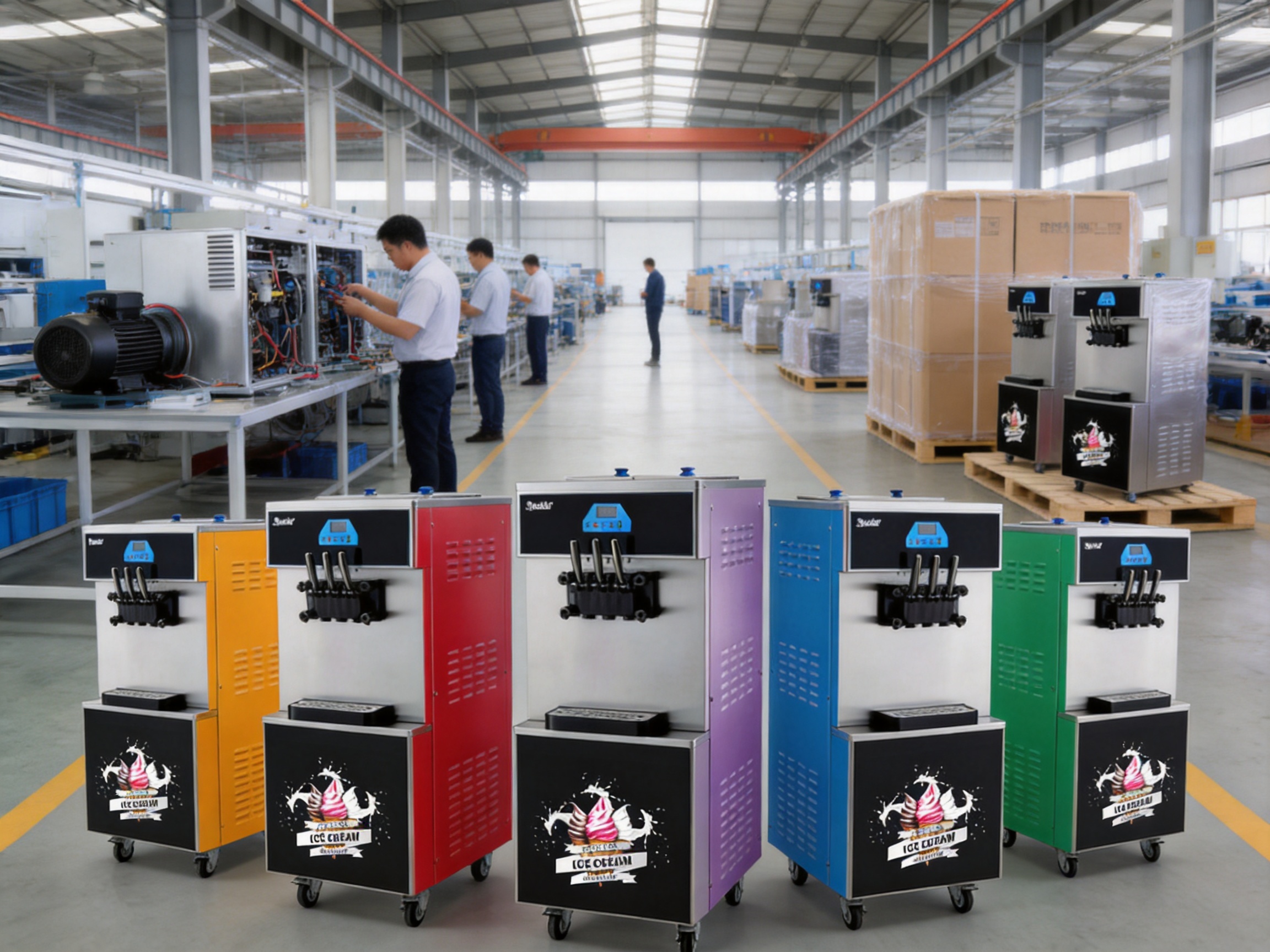
15. OEM and ODM Support for Global Foodservice Markets
Foodservice markets differ by region. Electrical standards, plug configurations, countertop layouts, menu preferences, refrigerant rules, packaging requirements, and language needs may vary from one country to another. A supplier that offers OEM and ODM services can help buyers adapt equipment to their commercial plans.
OEM service generally allows a buyer to order equipment manufactured according to an agreed specification, branding arrangement, or product configuration. ODM service may involve developing or adapting a product based on the buyer’s drawings, performance requirements, appearance concepts, or market objectives.
For a three-flavor soft serve machine, potential project discussions may include cabinet color, logo placement, display language, voltage and frequency, dispensing accessories, packaging, operating manuals, spare-parts packages, and shipping protection. Not every request will be technically or commercially practical, so a structured evaluation is necessary.
A professional customization process should begin with a clear requirement sheet. The buyer should identify the target market, expected daily output, available power, installation location, flavor strategy, service schedule, branding needs, and preferred delivery terms. The supplier can then review the requirements and determine whether the standard BQL-830C configuration is appropriate or whether modifications are needed.
Before production, the buyer should approve the final technical drawing or specification. Important points include machine dimensions, net and gross weight, electrical requirements, refrigerant information, component brands, color references, packaging dimensions, warranty conditions, and documentation. This process reduces misunderstandings and creates a clear basis for quality inspection.
16. Installation and Site Planning Considerations
Because the machine has a net weight of 142 kilograms, the installation site should be prepared before delivery. The floor must be able to support the equipment, and access routes should be wide and strong enough for safe movement. Doorways, elevators, ramps, stairs, and loading areas should be checked in advance.
The stated dimensions are 565 × 640 × 1,470 millimeters. These measurements should be used for preliminary planning, but additional clearance may be required around the machine for ventilation, cleaning, electrical connection, and service access. The exact clearance depends on the final design and the supplier’s installation recommendations.
Commercial refrigeration equipment produces heat during operation. The machine should not be placed in a tightly enclosed area without adequate airflow. Excessive ambient heat or blocked ventilation can reduce cooling efficiency and increase stress on the refrigeration system.
The power requirement is 2,650 watts. Buyers should have a qualified electrician confirm that the site’s voltage, frequency, circuit capacity, grounding, and protective devices are appropriate for the machine. Electrical configuration should be confirmed before ordering, especially for export projects.
The machine should be positioned on a level surface. Uneven placement may affect stability, drainage, or component alignment. The dispensing area should be accessible to staff, while the rear and side areas should remain reachable for cleaning and maintenance.
17. Operating Practices for Consistent Results
Consistent soft serve quality depends on both machine performance and operating discipline. Staff should use the correct mix formulation and prepare it according to the instructions supplied by the ingredient manufacturer. Incorrect viscosity, sugar content, fat content, or solids level can affect freezing behavior and product texture.
Before opening for service, employees should inspect the machine, confirm that the hopper contains properly handled mix, check the display, and ensure that the dispensing area is clean. The machine should be allowed to reach the appropriate operating condition before large-volume service begins.
During service, staff should monitor product appearance, dispensing speed, and unusual sounds or alerts. If the texture changes significantly, the operator should follow the troubleshooting instructions rather than making unapproved adjustments. Overfilling, running the machine without sufficient mix, or ignoring a warning can affect performance.
At the end of a service period, staff should follow the correct standby, pre-cooling, or cleaning procedure. Mix storage decisions should comply with food safety requirements. If the machine will not be used for an extended period, a complete cleaning and shutdown procedure may be necessary.
These practices can help the BQL-830C deliver the benefits of its capacity and refrigeration system. They also help protect the investment by reducing avoidable wear and maintaining food-contact hygiene.
18. Maintenance and Service Planning
Preventive maintenance is essential for commercial refrigeration equipment. Routine tasks may include cleaning external surfaces, keeping the condenser area free from dust, checking seals and gaskets, inspecting dispensing components, verifying electrical connections, and observing the machine for changes in sound or performance.
Cleaning should be performed according to the product manual and local regulations. Wear components should be replaced when they show signs of damage or loss of sealing performance. Delaying replacement can lead to leakage, product waste, reduced hygiene, or additional stress on the machine.
Operators should keep records of cleaning and maintenance. A simple log can show when the machine was cleaned, which parts were inspected, what issues were observed, and when service was completed. These records are useful for internal management and can help technicians diagnose recurring problems.
When purchasing from an integrated manufacturer, buyers should discuss spare parts and service support before shipment. A recommended spare-parts package may include seals, gaskets, dispensing components, and other consumable or service items. The exact parts depend on the final configuration and should be confirmed with the supplier.
Responsive after-sales support is especially important for businesses that depend on daily dessert sales. Spelor describes its service offering as including pre-sales consultation, product customization, flexible logistics and payment solutions, and dependable after-sales maintenance. Buyers should confirm warranty scope, response procedures, technician support, and parts availability in the commercial agreement.
19. Procurement Evaluation for Distributors and Project Buyers
Distributors should evaluate the BQL-830C from both a product and market perspective. The machine’s three-flavor configuration can appeal to bakeries, cafés, dessert shops, restaurants, and snack chains. Its 30–35-liter-per-hour capacity places it in a category suitable for businesses with more than occasional demand.
Before adding the machine to a product portfolio, distributors should confirm target-market electrical specifications, language requirements, packaging, import documentation, service resources, and expected spare-parts demand. They should also understand the difference between rated production capacity and actual field performance under local conditions.
Restaurant groups and chain operators may benefit from standardizing on one commercial soft serve platform. Standardization can simplify staff training, maintenance procedures, spare-parts stocking, and store rollout. If a group requires private labeling or a specific exterior design, the OEM and ODM discussion should be completed before the production schedule is finalized.
Project buyers should consider the entire equipment package rather than one individual machine. Since the manufacturer also supplies juice dispensers, slush machines, ice machines, refrigeration cabinets, cooking equipment, and buffet products, the buyer may be able to coordinate multiple categories through one factory. This can support more organized planning for new stores, hotels, canteens, food courts, and franchise projects.
20. Total Value Beyond the Purchase Price
The total value of a soft serve machine includes much more than its initial price. Buyers should consider production capacity, menu flexibility, labor requirements, cleaning time, energy demand, maintenance, product waste, service response, spare parts, and expected operating life.
A three-flavor machine may provide more selling opportunities than a single-flavor machine. Larger hoppers may reduce refill labor. A self-cleaning function may streamline sanitation. A pre-cooling function may help manage mix between service periods. A recognized compressor may support buyer confidence when assessing refrigeration performance. Food-grade construction may improve long-term usability and store presentation.
These factors can influence the return on investment. For example, if the machine allows a business to sell more servings during peak demand, the additional revenue may justify a higher initial investment. If the machine reduces interruptions and simplifies cleaning, staff can spend more time serving customers. If the equipment supports several menu formats, the business can adapt its offering as customer preferences change.
Financial analysis should still be based on realistic local conditions. Buyers should estimate expected servings, average selling price, ingredient cost, labor, electricity, cleaning supplies, maintenance, and seasonal demand. The BQL-830C can provide the production platform, but commercial success depends on menu planning, location, pricing, product quality, and service execution.
21. Why Manufacturer Communication Matters
Clear communication is a major part of successful equipment procurement. Buyers should provide detailed information about the intended use, target country, power standard, daily output, available floor space, climate, service capability, and branding requirements.
The supplier should respond with accurate technical information, including the final model, capacity, dimensions, electrical data, compressor details, refrigerant, material specifications, included accessories, packaging, lead time, and warranty terms. Any differences between standard and customized configurations should be clearly recorded.
For international orders, communication should also cover shipping marks, export packaging, documentation, insurance, payment arrangements, and delivery responsibilities. The company describes flexible logistics and payment solutions as part of its service approach, but the precise terms must be agreed for each transaction.
A strong factory relationship is built through transparent information. Buyers should request product photographs, technical drawings, operating manuals, inspection procedures, and, where applicable, samples or pre-shipment inspection arrangements. These steps help protect both parties and reduce the risk of avoidable delays.
22. Practical Limitations and Responsible Expectations
The BQL-830C is designed for commercial production, but every machine has operating limits. Its performance may vary with ambient conditions, ingredient temperature, recipe composition, voltage stability, ventilation, cleaning quality, and frequency of use.
The machine requires a substantial electrical input of 2,650 watts. Businesses with limited power availability must verify the electrical installation before purchase. Its 142-kilogram weight and vertical dimensions also require proper delivery planning and a suitable permanent location.
R404 refrigerant is listed for this model, but local environmental and service requirements should be confirmed. Regulations can vary between markets, and buyers should ensure that the final configuration is suitable for the intended country.
The pre-cooling function is described as helping keep mix fresh for one week, but storage safety must always be governed by the ingredient supplier’s instructions and local food regulations. Operators should never rely on a machine function alone to determine whether food is safe to serve.
These considerations do not reduce the value of the machine. They clarify the conditions required for responsible and effective operation. The best commercial equipment investment is one that is correctly matched with the site, menu, staff, electrical system, and expected demand.
23. Recommended Buyer Checklist
Before purchasing the BQL-830C, buyers should review the following points:
Confirm the exact three-flavor configuration and understand how the two independent flavors and central mixed flavor are produced.
Verify the rated production capacity and discuss the expected output under the buyer’s local climate, recipe, and service conditions.
Confirm the two 10-liter hopper arrangement and the two 2-liter freezing tanks.
Check the 2,650-watt input power against the available electrical supply.
Confirm the compressor brand, refrigerant, voltage, frequency, plug type, and safety requirements.
Review the machine dimensions, net weight, required ventilation space, delivery route, and installation position.
Request the operating manual and cleaning instructions before staff training begins.
Discuss the self-cleaning procedure and identify which components still require manual removal or sanitation.
Clarify the pre-cooling function and confirm that food storage procedures comply with local requirements.
Ask about warranty conditions, spare parts, after-sales response, technical support, and maintenance recommendations.
For OEM or ODM orders, approve the final drawings, colors, labels, packaging, electrical specifications, and inspection requirements in writing.
Compare total operating value rather than only the purchase price. Consider labor, capacity, menu flexibility, maintenance, and expected sales.
24. Frequently Asked Questions
Q1: How many flavors can the BQL-830C dispense?
The machine is designed for three-flavor service. It can provide two individual flavors and a central mixed flavor, allowing businesses to offer separate and twist-style combinations from one unit.
Q2: What is the stated production capacity?
The stated production capacity is 30–35 liters per hour. Actual output can vary depending on mix formulation, ambient temperature, initial mix temperature, serving size, operating settings, and maintenance condition.
Q3: What is the total hopper capacity?
The machine has two hoppers, each with a capacity of 10 liters, for a combined stated hopper capacity of 20 liters.
Q4: What type of compressor does the machine use?
The BQL-830C uses a large-capacity Tecumseh compressor. Buyers should confirm the final compressor configuration and electrical specifications in the quotation for their market.
Q5: What refrigerant is specified for this model?
The supplied product information lists R404 refrigerant. Local refrigerant rules and the final export configuration should be confirmed before ordering.
Q6: Is the machine suitable for a bakery?
Yes. Its capacity, three-flavor format, food-grade construction, and professional design make it suitable for bakeries that serve soft ice cream with cakes, waffles, pastries, fruit, and other desserts.
Q7: Does the machine have a cleaning function?
Yes. The machine includes a self-cleaning function intended to simplify routine cleaning. Staff must still follow the operating manual and complete any manual disassembly, inspection, rinsing, and sanitation steps required for food-contact parts.
Q8: What is the purpose of the pre-cooling function?
Pre-cooling helps maintain a colder environment for the mix when the machine is not actively dispensing. The product information states that it can help keep the mix fresh for one week, but operators must follow food safety requirements and ingredient supplier instructions.
Q9: What materials are used for the machine body?
The plate body is made of food-grade stainless steel and colorful sprayed steel. This combination supports hygienic maintenance, durability, and a professional customer-facing appearance.
Q10: How much space is required for installation?
The stated machine size is 565 × 640 × 1,470 millimeters. Additional clearance may be required for ventilation, cleaning, electrical connections, and service access. The installation layout should be confirmed with the supplier.
Q11: Is the machine suitable for high-demand service?
Its 30–35-liter-per-hour capacity, large hoppers, dual freezing tanks, and commercial compressor make it suitable for bakeries, medium- to large-sized restaurants, dessert shops, and other foodservice businesses with regular demand. Actual performance depends on operating conditions.
Q12: Can the product be customized?
The manufacturer offers OEM and ODM support based on drawings or requirements. Potential customization may include branding, color, packaging, electrical configuration, language, or other details, subject to technical and commercial evaluation.
Q13: What should buyers confirm for export orders?
Export buyers should confirm voltage, frequency, plug type, refrigerant compliance, documentation, packaging, dimensions, shipping weight, warranty, spare parts, delivery terms, and local installation requirements.
Q14: What makes an integrated manufacturer valuable?
An integrated manufacturer combines design, research and development, production, sales, and service. This can simplify technical communication, support customization, improve procurement coordination, and provide a more direct path for after-sales assistance.
Q15: What should staff do to maintain product quality?
Staff should use the correct mix, follow safe ingredient handling procedures, monitor machine operation, clean the equipment at the required frequency, inspect food-contact parts, keep the condenser area clean, and report unusual performance promptly.
25. Conclusion
The BQL-830C is a commercial three-flavor soft serve ice cream machine designed for businesses that need capacity, flexibility, and practical daily operation. Its 30–35-liter-per-hour production rating, two 10-liter hoppers, two 2-liter freezing tanks, and large-capacity Tecumseh compressor provide a strong foundation for continuous service.
The machine’s advantages extend beyond output. Its food-grade stainless-steel and sprayed-steel body supports hygiene and professional presentation. The LCD panel helps make operation more accessible. The self-cleaning function can streamline sanitation work, while the pre-cooling function can support mix management between service periods when used with proper food safety controls.
Compared with smaller, single-flavor, or less integrated alternatives, the machine offers broader menu potential and a more commercial operating profile. It can help bakeries, dessert shops, restaurants, cafés, snack stores, and foodservice groups serve more customers while maintaining a practical equipment footprint.
The manufacturer’s integrated capabilities are another important consideration. With design, research and development, manufacturing, sales, and service combined within one organization, Spelor can support standard product supply as well as OEM and ODM projects. Its more than 60,000 square meters of modern production facilities and broad foodservice equipment portfolio provide a foundation for serving individual businesses, distributors, chain projects, and international buyers.
For the best result, buyers should evaluate the machine as part of a complete operating system. Correct electrical planning, ventilation, mix handling, cleaning, staff training, preventive maintenance, and after-sales support are all essential. When these factors are properly managed, the BQL-830C can become a productive and attractive centerpiece for professional soft serve sales.
References
1. Product specification sheet for the BQL-830C three-flavor soft serve ice cream machine.
2. Manufacturer-provided information on hopper capacity, freezing tank capacity, production output, compressor, refrigerant, dimensions, and operating functions.
3. Manufacturer company profile describing integrated design, research and development, manufacturing, sales, and service capabilities.
4. General commercial refrigeration and foodservice equipment maintenance principles.
5. General food hygiene guidance for refrigerated ingredients, food-contact equipment, and soft serve dispensing systems.
6. General equipment procurement practices for OEM, ODM, export configuration, installation planning, warranty, and spare-parts support.
Product: Spelor Large Capacity Tecumseh Compressor 3 Flavors Soft Serve Ice Cream Machine for Bakery Store

For exclusive deals and latest offers, sign up by entering your email address below.


-
spelor@spelor.com
-
+86-576-85229688
-
No.528, Changxi Road, Linhai City, Zhejiang Province, China
Commercial Refrigeration Equipment Manufacturer China
Copyright © 2025 by Spelor Electrical Appliances (Zhejiang) Co., Ltd. Rights Reserved.
