


 中文简体
Soft Ice Cream Machine Control Valve Distributor with Plastic Handle: Design, Applications, and Manufacturing Value
Admin 2026-09-26A soft ice cream machine depends on many coordinated components to deliver consistent portions, smooth texture, and reliable service during busy operating hours. While the freezing cylinder, refrigeration system, mixing assembly, and dispensing head often receive the most attention, the control valve distributor is equally important in the final stage of product delivery. It regulates the movement of soft ice cream from the machine toward the dispensing outlet and allows the operator to start, stop, and manage the flow with a simple handle movement.
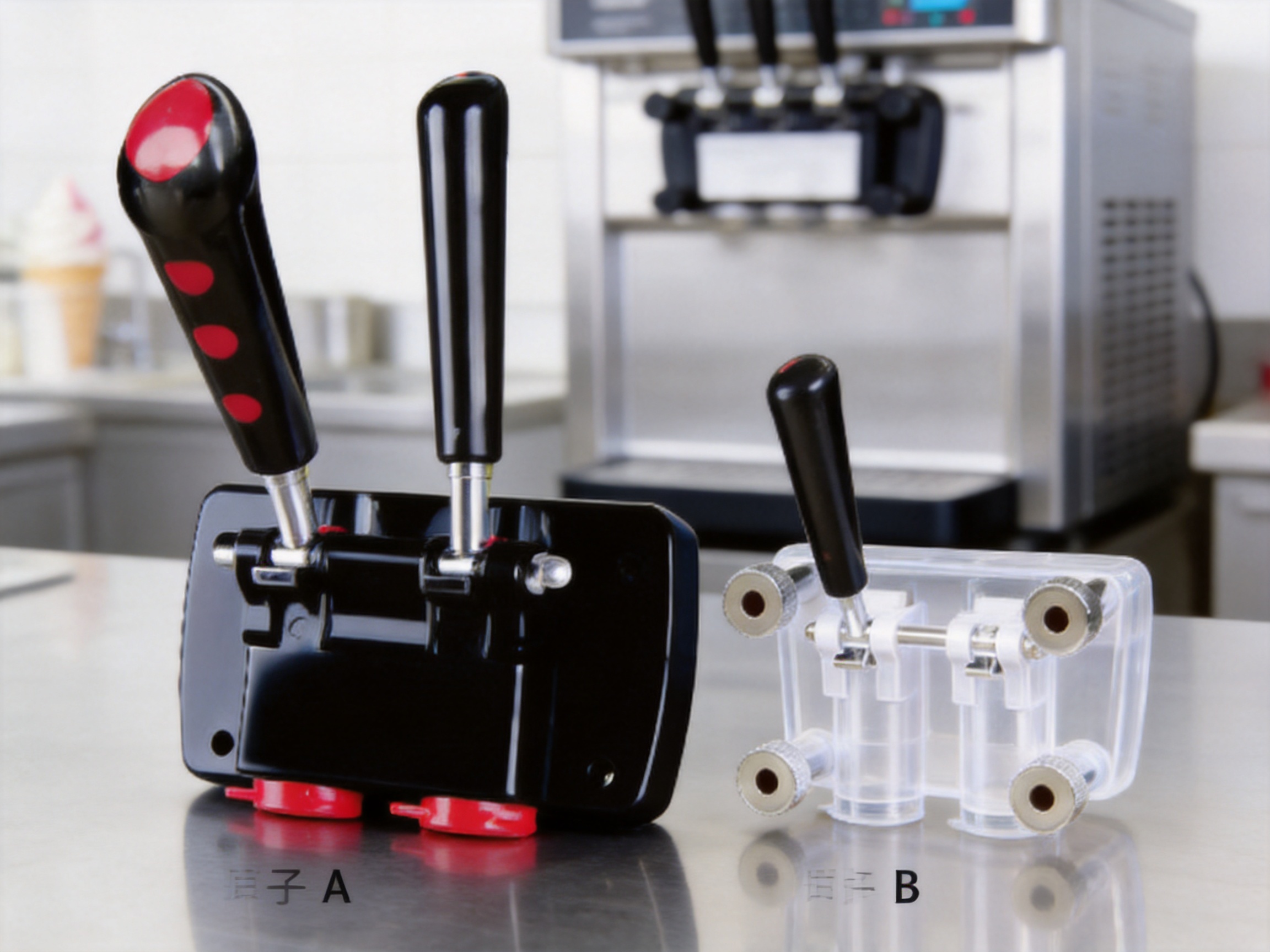
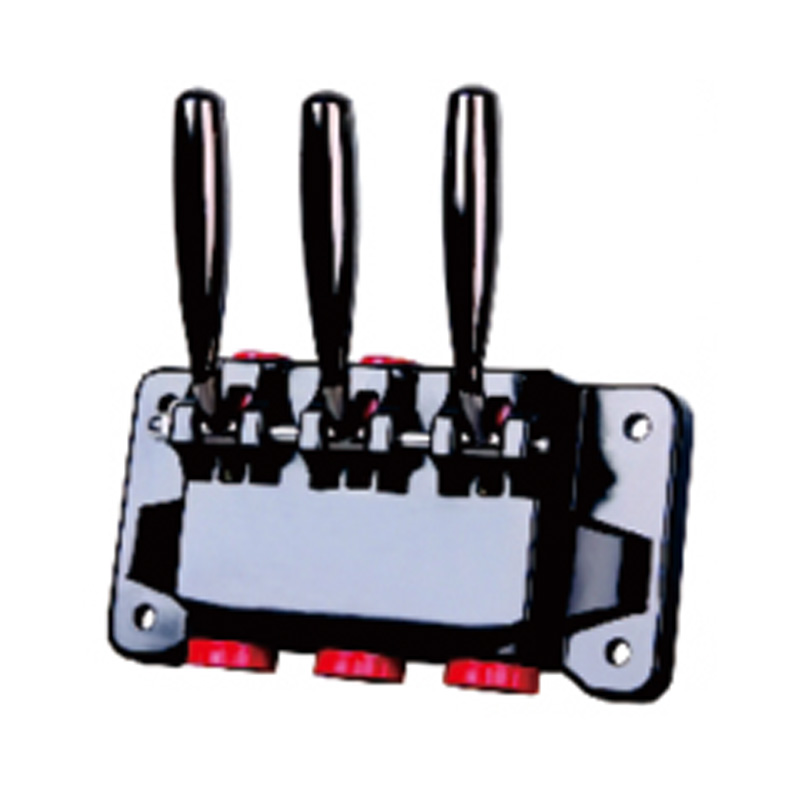
The soft ice cream machine control valve distributor with plastic handle is a practical replacement and maintenance component designed for commercial ice cream equipment. It is available in two configurations. Type A is black and features a longer plastic handle, while Type B is transparent and features a shorter plastic handle. Both versions are designed to control the flow and distribution of ice cream through a rotating handle mechanism.
This component is supplied as an optional spare part and is not sold separately. It is intended to be selected as part of a complete equipment or spare-parts purchasing program, helping commercial operators, equipment distributors, maintenance teams, and foodservice businesses keep compatible machines in service.
Its straightforward structure, easy-to-clean surfaces, and practical handle design make it suitable for a variety of commercial soft ice cream machines. At the same time, the manufacturing capabilities behind the component provide important value for customers seeking stable quality, OEM or ODM cooperation, and dependable support for foodservice applications.
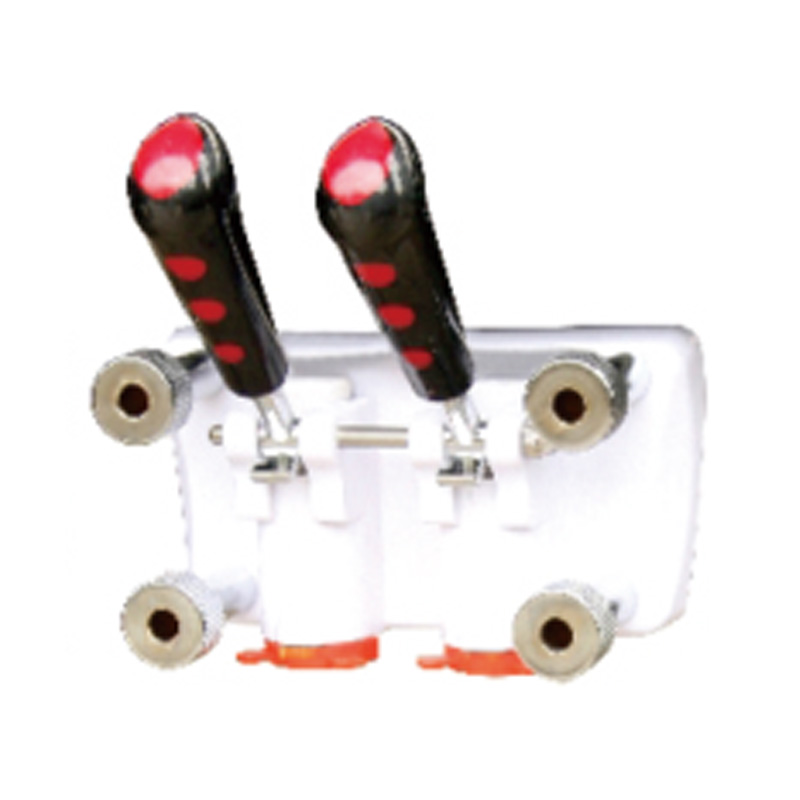
Soft Ice Cream Machine Control Valve Distributor With Plastic Handle(Not sold separately)
Understanding the Function of a Soft Ice Cream Control Valve Distributor
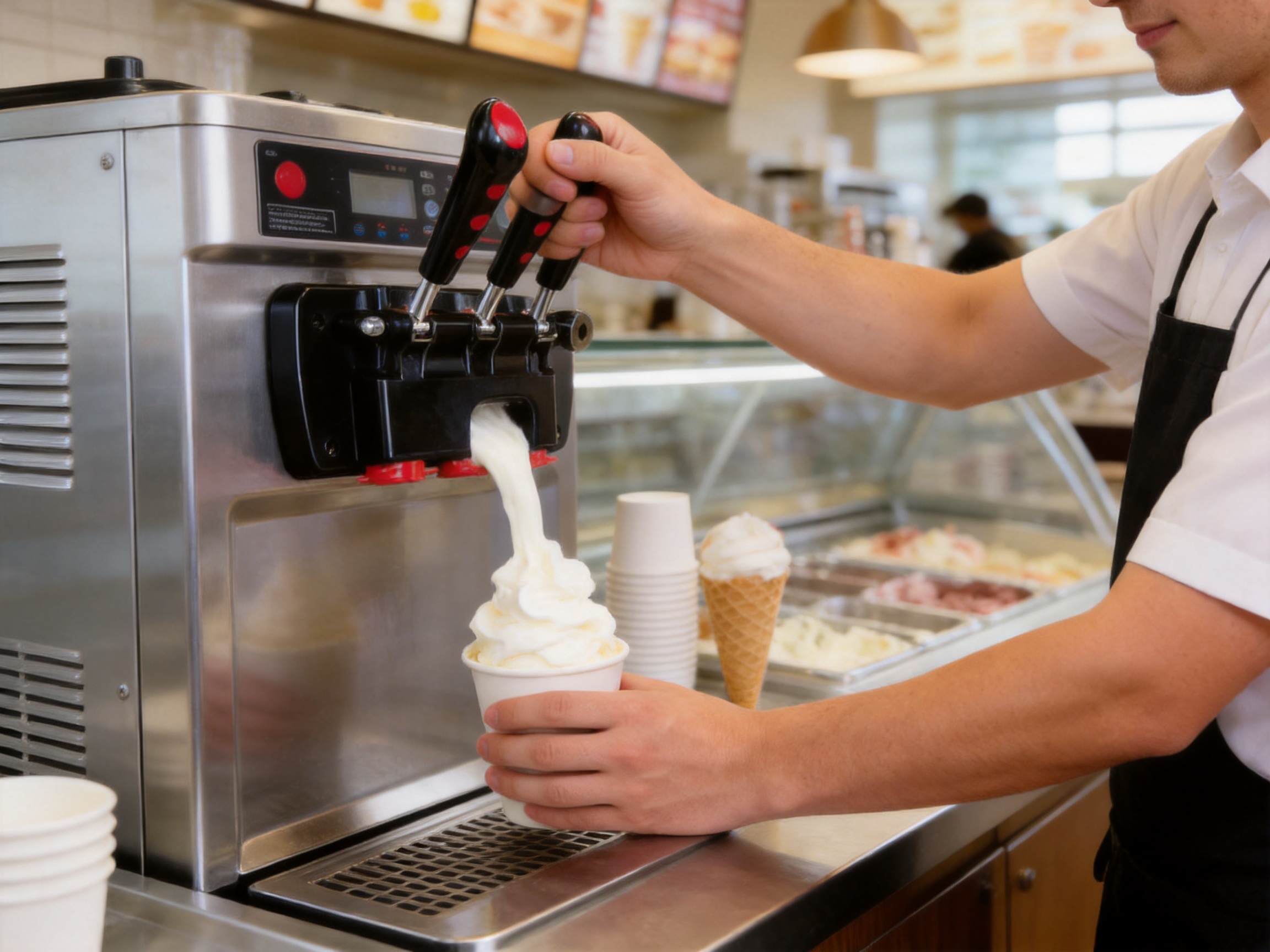
A control valve distributor is positioned within the dispensing system of a soft ice cream machine. Its core function is to control the passage of frozen dessert product and help direct it toward the dispensing outlet. By rotating the handle, the operator changes the valve position, allowing the product flow to begin, stop, or be adjusted according to the serving process.
Although the component has a relatively simple appearance, it performs an important operational task. A dispenser must respond quickly when an operator opens or closes it. It must also remain practical to clean and maintain because soft ice cream contains dairy or other food ingredients that may leave residue on surfaces and within contact areas.
The valve distributor contributes to portion control, serving consistency, and operator convenience. When it is correctly installed and maintained, it helps the machine deliver product in a controlled manner. This can support more uniform servings, reduce unnecessary product loss, and improve the working experience at snack shops, fast-food restaurants, dessert counters, supermarkets, and other commercial locations.
The component should not be viewed as an isolated decorative accessory. It forms part of the product-contact and dispensing pathway, meaning that its design must work with the overall architecture of the ice cream machine. Compatibility, correct installation, suitable cleaning procedures, and regular inspection are therefore essential for effective operation.
Flow control through handle rotation
The operating principle is simple. The plastic handle is connected to the valve mechanism, and the user rotates the handle to change the internal opening. When the valve is opened, soft ice cream can move through the distributor. When the valve is closed, the flow is interrupted.
This direct mechanical action is one of the component’s main advantages. It does not require a complex electronic control system for the final dispensing movement. Operators can understand and use the mechanism quickly, which is especially valuable in high-volume foodservice environments where speed and simplicity influence productivity.
Importance in commercial service
In a commercial setting, a dispenser may be operated many times throughout the day. Repeated opening and closing places demands on the handle, valve body, connection points, and internal sealing areas. A suitable replacement component can help restore the operating performance of a machine when an existing dispenser becomes worn, damaged, difficult to operate, or unsuitable for continued service.
Keeping compatible control valve distributors available can also reduce equipment downtime. Instead of waiting for a complete dispensing assembly or replacing an entire machine, a maintenance team may be able to address the affected component as part of a planned service process. This supports a more economical and sustainable approach to equipment management.
Two Practical Configurations for Different Operating Preferences
The product is offered in two different configurations. Both types are intended to control ice cream flow, but they differ in appearance and handle proportions. Offering more than one configuration provides flexibility for equipment matching, replacement planning, and operator preference.
| Configuration | Appearance | Handle Design | Typical Value |
|---|---|---|---|
| Type A | Black valve distributor | Longer plastic handle | Provides a more extended gripping position and clear mechanical operation |
| Type B | Transparent valve distributor | Shorter plastic handle | Offers a compact appearance and convenient operation in suitable machine layouts |
Type A: black distributor with longer handle
Type A has a black body and a longer plastic handle. The extended handle can provide a clear gripping area for frequent operation. Depending on the machine structure and the operator’s working position, the longer handle may make it easier to reach and rotate the valve during service.
The black appearance also offers a practical visual contrast against many stainless-steel machine surfaces. This can help the handle and valve assembly remain visually distinct during busy operation. In addition, the conventional appearance of a black mechanical component may be suitable for equipment where a durable, professional visual style is preferred.
Type B: transparent distributor with shorter handle
Type B is transparent and uses a shorter plastic handle. Its compact configuration can be suitable for machines or dispensing areas where available space is limited. The transparent body also gives the component a different visual identity, which can be useful when distinguishing between replacement configurations during equipment servicing.
The shorter handle is designed for easier operation within a compact layout. The best choice between Type A and Type B depends on the original machine design, available clearance, mounting arrangement, operator preference, and replacement requirements. Customers should confirm compatibility before placing a spare-parts order.
Why offering two types creates purchasing flexibility
Commercial refrigeration and foodservice equipment often varies between models, production batches, regional configurations, and customer-specific requirements. A single universal component may not be appropriate for every machine. Providing two control valve distributor configurations allows purchasing teams and service personnel to identify a more suitable option for their equipment.
This approach can also support OEM and ODM programs. A distributor, importer, or equipment manufacturer may need a specific handle length, body appearance, or component arrangement for a particular product line. A supplier with manufacturing and customization capabilities can discuss requirements based on drawings, samples, or technical specifications.
Advantages of the Plastic Handle Design
The plastic handle is a central part of the user interface. It provides the gripping surface used to operate the valve and translates manual movement into control of the ice cream flow. Its design affects comfort, access, speed, and daily usability.
Simple and intuitive operation
A rotating handle is easy for staff to understand. New operators can quickly learn how to open or close the valve without extensive technical training. This is particularly useful in businesses with changing staff schedules, seasonal employees, or high customer traffic.
The direct mechanical relationship between handle movement and product dispensing also makes the valve easy to troubleshoot. If the flow does not stop correctly, if the handle becomes difficult to rotate, or if the valve does not respond normally, a technician can inspect the mechanical assembly and related sealing areas.
Comfortable access during repeated service
Soft ice cream machines may be used continuously during peak periods. A well-positioned handle allows an operator to dispense product quickly and return to the neutral or closed position without unnecessary movement. The longer handle on Type A can offer increased reach, while the shorter handle on Type B can fit more compact layouts.
Choice of handle configuration can therefore improve the relationship between the machine and its working environment. Equipment installed at a crowded dessert counter may benefit from a compact arrangement, while a high-volume serving station may favor an extended gripping position.
Practical material and maintenance characteristics
Plastic is commonly selected for handles because it can be formed into a practical gripping shape and is suitable for routine cleaning when the correct procedures are followed. It also helps separate the operator’s hand from the colder product-contact area and provides a lightweight operating interface.
The handle and distributor should be cleaned according to the machine manufacturer’s instructions. Cleaning should remove product residue without damaging the component or exposing it to unsuitable chemicals, excessive temperature, or rough handling. Regular inspection is recommended to identify cracks, looseness, discoloration, abnormal resistance, or other signs that replacement may be necessary.
Competitive Advantages Compared with Generic Replacement Components
Commercial customers generally evaluate a spare component by more than its purchase price. They also consider compatibility, operational convenience, service life, cleaning requirements, supply stability, and supplier support. The control valve distributor described here offers several practical advantages over poorly matched or low-quality generic alternatives.
Purpose-built commercial application
This component is intended for commercial soft ice cream machines rather than casual household use. Commercial equipment operates under repeated daily demand, and its replacement parts must be selected with the machine’s working conditions in mind. A component designed for foodservice applications is more likely to fit the operational expectations of snack shops, restaurants, supermarkets, and institutional kitchens.
Commercial suitability does not eliminate the need for compatibility verification. However, it provides a more appropriate starting point than using an unverified valve from an unrelated application. Customers can evaluate the body configuration, handle type, dimensions, connection arrangement, and intended machine model before ordering.
Two visual and functional options
Many generic replacement parts are available in only one configuration. The availability of a black long-handle Type A and a transparent short-handle Type B gives customers more choice. This may reduce the need to modify the machine or adapt an unsuitable handle arrangement.
The two options also support different priorities. Type A may be preferred where an extended handle is beneficial, while Type B may be selected where a shorter operating profile and transparent appearance are more appropriate. This flexibility can simplify spare-parts planning across different equipment models.
Easy-to-understand mechanical structure
Simple mechanisms are often advantageous in foodservice equipment. A rotating control valve can be inspected, cleaned, and operated without depending on complicated electronic controls at the point of dispensing. This can make routine service more manageable for technicians and reduce the learning curve for operators.
Simple design should not be confused with low performance. A well-designed mechanical component can provide dependable service precisely because it contains fewer unnecessary features. It allows attention to remain on fit, movement, sealing, cleanability, and compatibility with the machine.
Support for equipment uptime
A small replacement component can have a significant influence on equipment availability. If a damaged valve prevents normal dispensing, the machine may be unable to serve customers even though the refrigeration and freezing systems remain functional. A suitable control valve distributor can help maintenance teams address this specific issue without replacing larger assemblies unnecessarily.
For operators managing multiple machines, maintaining an organized spare-parts program can reduce delays. Replacement components can be ordered alongside machines or included in a broader equipment package. Because this product is not sold separately, it should be discussed as part of an equipment quotation, machine order, or complete spare-parts arrangement.
Professional appearance
The black and transparent options provide different visual styles while maintaining a practical commercial purpose. A clean, well-maintained dispenser contributes to the overall appearance of a customer-facing dessert station. In foodservice, visible equipment should look orderly and hygienic, particularly when customers can observe the serving process.
Manufacturing Strengths Behind the Component
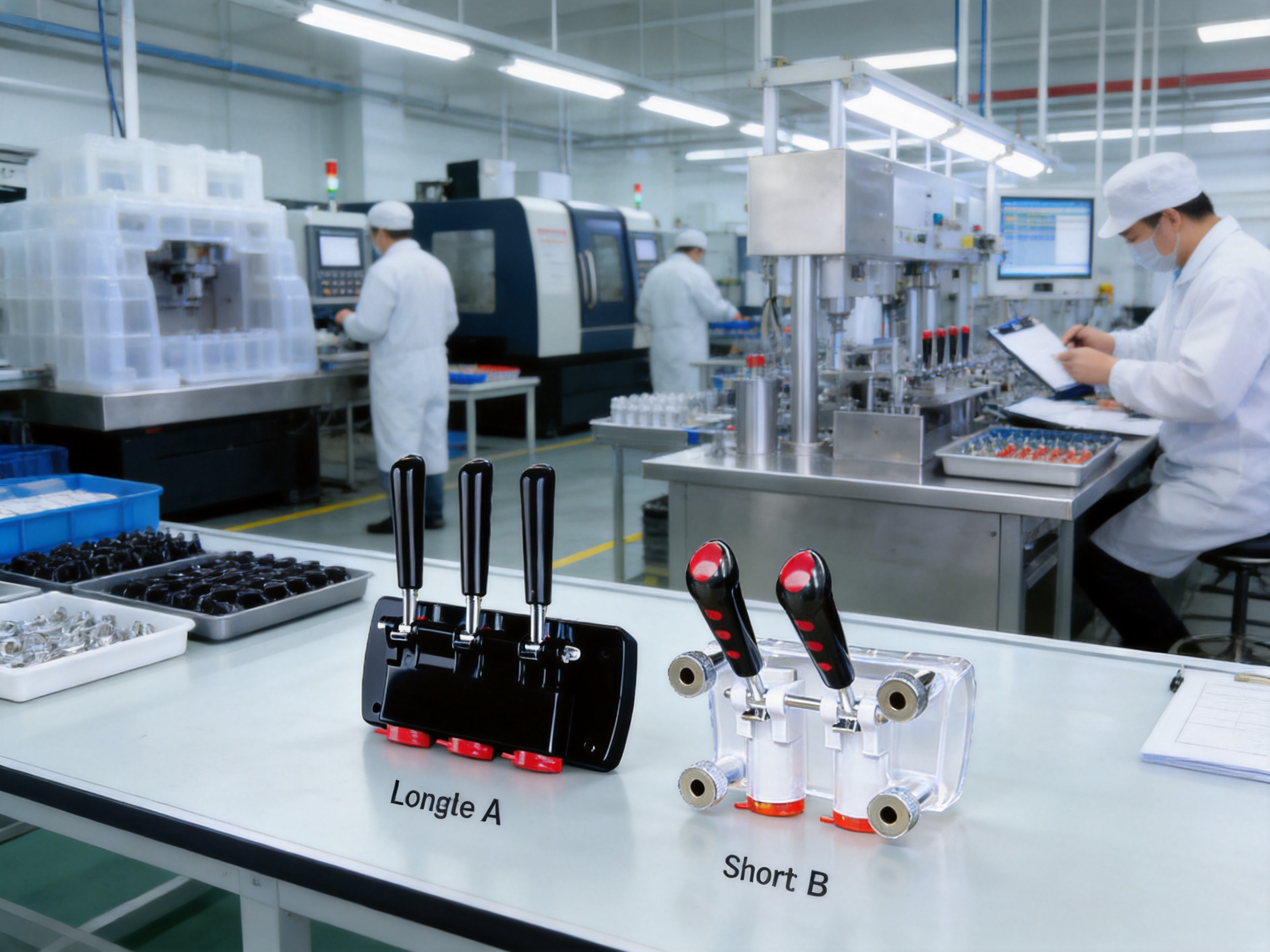
The value of a control valve distributor is closely connected to the manufacturing system that produces it. Spelor Electrical Appliances (Zhejiang) Co., Ltd. is a professional manufacturer integrating design, research and development, manufacturing, sales, and service. Its broader experience in commercial refrigeration, kitchen equipment, buffet equipment, and foodservice machinery supports the production and supply of components for demanding commercial applications.
The company operates more than 60,000 square meters of modern production facilities. This scale provides a foundation for coordinated product development, component production, assembly, inspection, warehousing, and customer support. It also enables the supplier to understand how individual spare parts relate to complete machines and real-world foodservice operations.
Integrated design and research capability
An integrated design and research process helps connect component development with machine performance. A control valve distributor must be considered in relation to dispensing pathways, operator access, product flow, cleaning routines, and equipment maintenance. A manufacturer experienced in complete commercial machines can evaluate these relationships more effectively than a supplier focused only on isolated plastic or metal parts.
Research and development also support product variation. The two handle configurations demonstrate the importance of adapting components to different machine layouts and operating expectations. For OEM and ODM projects, technical discussions may involve drawings, samples, dimensions, material requirements, handle geometry, or assembly details.
Modern production facilities
Modern production facilities provide space for organized manufacturing workflows. Depending on the product program, these workflows may include raw-material preparation, molding or forming, machining, surface treatment, assembly, inspection, packaging, and logistics coordination. A controlled process helps maintain consistency from one production batch to the next.
For a valve distributor, manufacturing control is important because small variations can influence fit and movement. Body dimensions, handle connection points, internal passageways, and sealing interfaces must work together. Stable processes can reduce the risk of inconsistent assembly or difficult installation.
Experience across commercial equipment categories
The company’s product range includes ice cream machines, juice dispensers, fried ice cream machines, refrigeration cabinets, slush machines, flake ice machines, cooking equipment, griddles, fryers, insulation products, barbecue equipment, and buffet solutions. This broad portfolio reflects an understanding of the different operating conditions found in foodservice environments.
For customers purchasing complete equipment and optional components, a broad product portfolio can simplify supplier management. Instead of coordinating unrelated suppliers for every category, buyers may discuss multiple requirements with one experienced manufacturing partner. This can improve communication, quotation efficiency, project coordination, and after-sales follow-up.
Quality-oriented manufacturing philosophy
A quality-oriented process focuses on repeatability, functional performance, and customer use rather than appearance alone. For a control valve distributor, quality considerations include smooth handle operation, secure assembly, suitable fit, cleanable surfaces, and reliable flow control when correctly installed.
Quality management should continue beyond production. Packaging must protect the component during transportation, documentation should support correct selection and installation, and after-sales communication should help customers address technical questions. A manufacturer that combines these stages can offer more value than a parts seller providing only a disconnected item.
Manufacturing Process Considerations for a Commercial Valve Distributor
The exact production sequence may vary according to the selected configuration and customer requirements, but several manufacturing stages are important for this type of component. Understanding these stages helps buyers evaluate supplier capability and identify the factors that influence long-term usability.
Material selection and preparation
The materials used for the body, handle, internal components, and sealing elements should be selected according to their intended function. The handle must provide a practical gripping surface and maintain its form during routine operation. The distributor body must support the flow path and connection arrangement. Internal and sealing components must work together to control movement and prevent unwanted leakage under normal operating conditions.
Material selection should also consider cleaning exposure, temperature conditions, mechanical movement, and contact with food equipment. Customers requiring a particular material specification should communicate this requirement before production, especially for OEM or ODM projects.
Forming and component production
Plastic components are typically produced through controlled forming processes suitable for the selected material and geometry. Consistent forming helps maintain the handle shape, body dimensions, connection points, and surface quality. For transparent Type B components, visual consistency may be especially important because imperfections can be more noticeable.
Black Type A components may require attention to color consistency and surface appearance. In both cases, the production process should support reliable assembly and smooth operation rather than focusing only on external appearance.
Assembly and fit verification
After individual parts are produced, they must be assembled according to the intended design. The handle should connect securely to the valve mechanism, and the moving elements should operate without excessive looseness or resistance. The assembly should also be checked for correct orientation and suitable interaction with associated machine parts.
Fit verification is important because a control valve distributor is not a universal part for every machine. The component must correspond to the relevant mounting and dispensing arrangement. When customers provide drawings, samples, or machine information, the manufacturer can better assess the required configuration.
Functional inspection
Functional inspection may include checking handle movement, valve opening and closing, component alignment, visible defects, and overall assembly quality. A functional check is more meaningful than a visual check alone because the product is intended to operate mechanically many times during a service day.
Inspection procedures should be defined according to the component design and customer requirements. For large OEM or ODM programs, buyers may also request agreed inspection standards, sample approval procedures, packaging specifications, or production documentation.
Packaging and shipment preparation
Even a well-produced component can be damaged if it is inadequately packaged. The distributor and handle should be protected from impact, scratching, crushing, contamination, and loss during transportation. Packaging should also make it easy for customers to identify different configurations, especially when Type A and Type B products are included in the same shipment.
As an international manufacturer, the supplier can coordinate logistics and payment solutions according to customer needs. This is particularly valuable for importers, commercial equipment distributors, and foodservice project contractors managing multiple delivery destinations.
Applications in Commercial Foodservice Environments
The control valve distributor is suitable for use with a variety of commercial soft ice cream machines, subject to compatibility confirmation. Its applications extend across different business formats where frozen dessert dispensing is part of the customer offering.
Snack shops and dessert counters
Snack shops often operate in compact spaces and need equipment that is straightforward to use. A suitable control valve distributor supports fast serving and can be incorporated into a regular cleaning and maintenance schedule. Type B may be attractive for compact counters, while Type A may be preferred when a longer handle is easier for staff to access.
Fast-food restaurants
Fast-food restaurants may serve soft ice cream as a dessert or promotional menu item. During busy periods, repeated dispensing places practical demands on the valve assembly. A dependable replacement program helps restaurants keep equipment available and reduces the operational impact of minor component damage.
Supermarkets and convenience food areas
Supermarkets may use soft ice cream equipment in prepared-food departments, food courts, seasonal promotions, or self-service areas managed by staff. The dispenser contributes to controlled serving and a clean, professional presentation. Spare components can be included in maintenance inventories to support long operating schedules.
Bars, cafés, and leisure venues
Bars, cafés, family entertainment centers, and leisure venues may add soft ice cream to their menu or customer experience. In these locations, equipment may be used alongside beverage dispensers, slush machines, or other countertop appliances. A manufacturer with experience across these categories can help buyers coordinate equipment and component sourcing more efficiently.
Institutions and catering operations
Schools, hospitals, company cafeterias, event venues, and institutional kitchens may use commercial frozen dessert equipment during scheduled meal services or special functions. Easy operation and maintainability are important because staff members may have different levels of technical experience. A practical control valve design supports consistent daily use when installed and maintained correctly.
Installation, Cleaning, and Maintenance Guidance
Correct installation is essential for the safe and effective operation of any control valve distributor. The component should be installed by qualified personnel or according to the equipment manufacturer’s service instructions. Before installation, the machine should be switched off, isolated from power where appropriate, and prepared in accordance with applicable sanitation and safety procedures.
Confirm compatibility before installation
Customers should compare the replacement component with the existing distributor or machine specifications. Important considerations may include the valve body shape, handle configuration, connection points, mounting arrangement, internal dimensions, and relationship to the dispensing outlet.
The presence of two product types makes this step particularly important. Type A has a black body and longer plastic handle, while Type B has a transparent body and shorter plastic handle. The correct selection should be based on machine compatibility rather than appearance alone.
Follow a controlled installation procedure
Technicians should use appropriate tools and avoid forcing the valve into position. Excessive force can damage the component, distort sealing areas, or create alignment problems. After assembly, the handle should be rotated carefully to confirm smooth movement before the machine returns to normal operation.
Any product-contact seals or related parts should be checked for proper placement. If a seal is worn or damaged, it should be replaced according to the machine’s maintenance instructions. A valve distributor cannot perform correctly if related components are incorrectly installed or unsuitable for service.
Clean after use and during scheduled maintenance
Soft ice cream residue should not be allowed to accumulate on the dispenser. Operators should follow the cleaning and sanitation schedule provided for the complete machine. The valve, handle, and surrounding dispensing area should be cleaned using approved procedures and suitable cleaning agents.
Avoid abrasive tools or chemicals that may scratch, weaken, discolor, or otherwise damage the component. Transparent Type B parts may show residue or surface changes more clearly, while black Type A parts may conceal some deposits; both types require the same level of attention to hygiene.
Inspect for wear and abnormal operation
Routine inspection should look for cracks, deformation, loose connections, leakage, unusual resistance, incomplete closure, or visible contamination. If the handle becomes difficult to rotate or the valve does not control the flow properly, the machine should be examined before continued use.
Replacing a worn distributor at an appropriate time can help prevent more extensive damage to related parts. It can also reduce the risk of inconsistent portions, product leakage, or disruption during peak service periods.
OEM and ODM Cooperation Opportunities
The control valve distributor can be included in OEM and ODM projects for commercial refrigeration and foodservice equipment. Customers may approach the manufacturer with drawings, samples, existing equipment details, or performance requirements. The project can then be evaluated according to product structure, materials, production volume, packaging, quality requirements, and delivery expectations.
Customization based on drawings or requirements
Some customers may require a specific handle length, color, body appearance, mounting arrangement, or connection specification. Others may need a replacement component that corresponds to an existing machine design. Providing accurate drawings, photographs, physical samples, and dimensional information can help shorten the technical evaluation process.
Customization should be discussed before mass production. Important questions may include whether the component is intended for a new machine, a replacement program, a private-label product, or a regional equipment range. The supplier can then assess tooling, sampling, testing, and production arrangements.
Support for commercial equipment manufacturers
Equipment manufacturers can integrate the valve distributor into a complete soft ice cream machine program. Coordinated sourcing may help maintain consistency between the machine, dispensing assembly, spare-parts list, and service documentation.
For distributors and importers, the product can be included in a broader portfolio of ice cream machines, juice dispensers, slush machines, ice machines, fried ice cream roll machines, and other commercial equipment. This creates an opportunity to purchase core equipment and optional components through an established manufacturing relationship.
Flexible project communication
OEM and ODM cooperation requires communication across technical, commercial, and logistical areas. Questions about specifications, sample approval, minimum order quantities, packaging, payment, shipping, and after-sales service should be addressed at the beginning of the project.
A manufacturer providing pre-sales consultation, customization assistance, flexible logistics and payment solutions, and after-sales maintenance can help customers manage the entire procurement process more efficiently.
Why Supplier Capability Matters to Total Cost of Ownership
The initial price of a control valve distributor is only one part of its total value. Commercial customers should also consider the cost of installation, downtime, cleaning, replacement frequency, inventory management, and technical support.
Reduced equipment downtime
A suitable spare part can help shorten the time required to return a machine to service. This is especially important for businesses that depend on soft ice cream sales during weekends, holidays, warm seasons, or promotional events. A supplier with stable manufacturing and logistics capabilities can support more predictable replacement planning.
Lower maintenance complexity
A simple mechanical structure can make inspection and routine service easier. Operators and technicians can focus on the condition of the handle, valve movement, seals, and connection points instead of troubleshooting unnecessary electronic complexity.
Better inventory organization
When spare parts are supplied through a coordinated equipment program, buyers can organize product codes, machine models, replacement quantities, and service schedules more effectively. The two available configurations should be identified clearly so that the correct type is selected when maintenance is required.
Long-term supplier relationship
Working with an experienced manufacturer can provide continuity beyond one order. Customers may require additional machines, repeat spare parts, custom products, or service support in the future. A supplier that understands the customer’s equipment program can respond more efficiently to follow-up requirements.
Selection Guide for Buyers and Maintenance Teams
Before ordering a soft ice cream machine control valve distributor, buyers should prepare relevant information about the equipment and intended application. This helps reduce the risk of receiving a component that is visually similar but mechanically unsuitable.
| Selection Point | Recommended Check | Reason |
|---|---|---|
| Machine application | Identify the soft ice cream machine model and dispensing arrangement | Confirms that the component is intended for the correct equipment category |
| Valve appearance | Compare the existing body color and configuration | Helps distinguish Type A from Type B |
| Handle length | Measure or compare the current handle | Ensures suitable access and clearance |
| Connection details | Check mounting, shaft, sealing, and flow-path interfaces | Reduces installation and leakage risks |
| Order structure | Confirm that the component is included with equipment or an approved spare-parts arrangement | The product is not sold separately |
| Service requirements | Review cleaning, inspection, and replacement procedures | Supports long-term operating reliability |
Purchasers should also clarify the required quantity, delivery location, packaging preferences, and documentation needs. For large commercial projects, it may be useful to request samples or technical confirmation before finalizing a purchase order.
Frequently Asked Questions
What is a soft ice cream machine control valve distributor?
It is a mechanical dispensing component that controls the flow and distribution of soft ice cream from a commercial machine. The operator rotates the handle to open or close the valve and manage product delivery.
What is the difference between Type A and Type B?
Type A is black and has a longer plastic handle. Type B is transparent and has a shorter plastic handle. Both types are designed for flow control, but the suitable choice depends on the machine design, available clearance, and replacement requirements.
Is the product sold separately?
No. The product is not sold separately. It is supplied as an optional component or spare part in connection with suitable commercial equipment or an approved equipment and spare-parts order.
Can either type be installed on any soft ice cream machine?
No. Compatibility must be confirmed before installation. Customers should compare the valve body, handle, connection points, dimensions, and machine dispensing arrangement with the proposed component.
Why is the handle made from plastic?
The plastic handle provides a practical gripping surface for rotating the valve. It can be formed into a convenient shape, offers lightweight operation, and is suitable for routine cleaning when handled according to the equipment’s maintenance instructions.
Which type is better for a busy commercial shop?
Neither type is universally better. Type A may be preferred when a longer handle offers easier reach, while Type B may be more suitable where a compact handle and transparent body fit the machine layout. The correct choice depends on compatibility and working conditions.
How should the distributor be cleaned?
It should be cleaned according to the soft ice cream machine manufacturer’s sanitation procedure. Product residue should be removed regularly, and suitable cleaning agents and tools should be used. Abrasive materials or unsuitable chemicals should be avoided.
What should be checked if the valve is difficult to operate?
Inspect the handle, valve mechanism, connection points, sealing areas, alignment, and possible product buildup. If the problem remains, stop using the machine and ask a qualified technician to examine the assembly.
Can the distributor be customized?
OEM and ODM customization may be discussed based on drawings, samples, dimensions, handle requirements, body appearance, or other technical specifications. Custom requirements should be confirmed before production.
What types of businesses can use this component?
It can support commercial soft ice cream machines used in snack shops, fast-food restaurants, supermarkets, cafés, bars, institutional kitchens, catering operations, and other foodservice environments, subject to equipment compatibility.
Why purchase from a manufacturer with a broad product range?
A broad product range can indicate experience across commercial refrigeration, kitchen equipment, and foodservice applications. It may also allow customers to coordinate complete machines, optional components, spare parts, logistics, and after-sales service with one supplier.
Conclusion
The soft ice cream machine control valve distributor with plastic handle is a small but essential component in the commercial dispensing system. By controlling product flow through a rotating handle, it supports practical operation, portion management, and daily service efficiency.
Type A provides a black body and longer plastic handle, while Type B offers a transparent body and shorter plastic handle. These two configurations give customers flexibility when matching replacement parts to different machine layouts and operating preferences. Both are designed with simplicity, cleanability, and commercial usability in mind.
Compared with poorly matched generic parts, a purpose-oriented commercial distributor can provide stronger value through appropriate configuration options, clear mechanical operation, practical maintenance, and support for equipment uptime. Its performance depends on correct compatibility, installation, cleaning, and inspection.
The manufacturing strength behind the product is equally important. With integrated design, research and development, production, sales, and service capabilities, modern facilities exceeding 60,000 square meters, and experience across commercial refrigeration and foodservice equipment, Spelor Electrical Appliances (Zhejiang) Co., Ltd. is positioned to support complete equipment programs as well as OEM and ODM requirements.
For foodservice operators, importers, equipment distributors, and commercial machine manufacturers, this component can form part of a reliable spare-parts strategy. By discussing machine specifications, handle preferences, technical requirements, packaging, logistics, and after-sales support in advance, customers can obtain a solution that contributes to stable operation and long-term business value.
References
1. Commercial Foodservice Equipment Maintenance Principles, guidance on routine inspection, cleaning, and replacement planning for professional kitchen equipment.
2. Food Equipment Sanitation and Hygiene Practices, general principles for maintaining clean product-contact and dispensing components.
3. Mechanical Valve Design Fundamentals, basic information on flow control, handle operation, sealing, alignment, and functional inspection.
4. Commercial Refrigeration and Foodservice Equipment Manufacturing Practices, overview of product development, component production, assembly, quality control, and logistics coordination.
5. Manufacturer Product Information, soft ice cream machine control valve distributor configurations, commercial equipment applications, and OEM or ODM support details.
6. Foodservice Equipment Procurement Guidelines, considerations for compatibility verification, spare-parts planning, supplier evaluation, and total cost of ownership.
Product: Soft Ice Cream Machine Control Valve Distributor With Plastic Handle(Not sold separately)

For exclusive deals and latest offers, sign up by entering your email address below.


-
spelor@spelor.com
-
+86-576-85229688
-
No.528, Changxi Road, Linhai City, Zhejiang Province, China
Commercial Refrigeration Equipment Manufacturer China
Copyright © 2025 by Spelor Electrical Appliances (Zhejiang) Co., Ltd. Rights Reserved.
