


 中文简体
High-Performance Refrigeration Compressor for Commercial Cold Drink Appliances
Admin 2026-09-22Commercial cold drink appliances depend on a stable refrigeration system to preserve beverage quality, maintain serving temperature, and support reliable daily operation. Whether installed in a juice dispenser, chilled beverage cabinet, slush machine, or another foodservice appliance, the compressor is one of the most important components in the refrigeration circuit. It provides the pressure difference required to circulate refrigerant, remove heat from the beverage compartment, and release that heat through the condenser.
The Hitachi refrigeration compressor for commercial cold drink appliances is designed for equipment manufacturers, professional distributors, and commercial refrigeration system integrators seeking dependable cooling performance. It is supplied as an optional component and spare part for compatible commercial beverage refrigeration equipment and is not sold separately as a standalone consumer appliance. Its intended value lies in integration with an appropriate refrigeration system, where the compressor can contribute to efficient temperature control, dependable operation, and a longer service life.
For commercial beverage businesses, refrigeration performance is directly connected with product quality and operating efficiency. Drinks that are not sufficiently chilled may be rejected by customers, while unstable temperatures can affect taste, freshness, and dispensing performance. At the same time, excessive energy consumption increases operating expenses across the life of the appliance. A suitable compressor helps balance these requirements by delivering effective cooling capacity, stable operation, and efficient use of electrical power.
This component is particularly suitable for commercial cold drink appliances used in restaurants, snack shops, fast-food chains, supermarkets, bars, institutional kitchens, and other foodservice environments. When correctly matched with the appliance design, refrigerant system, electrical specifications, and operating conditions, it can provide a reliable foundation for beverage refrigeration performance.
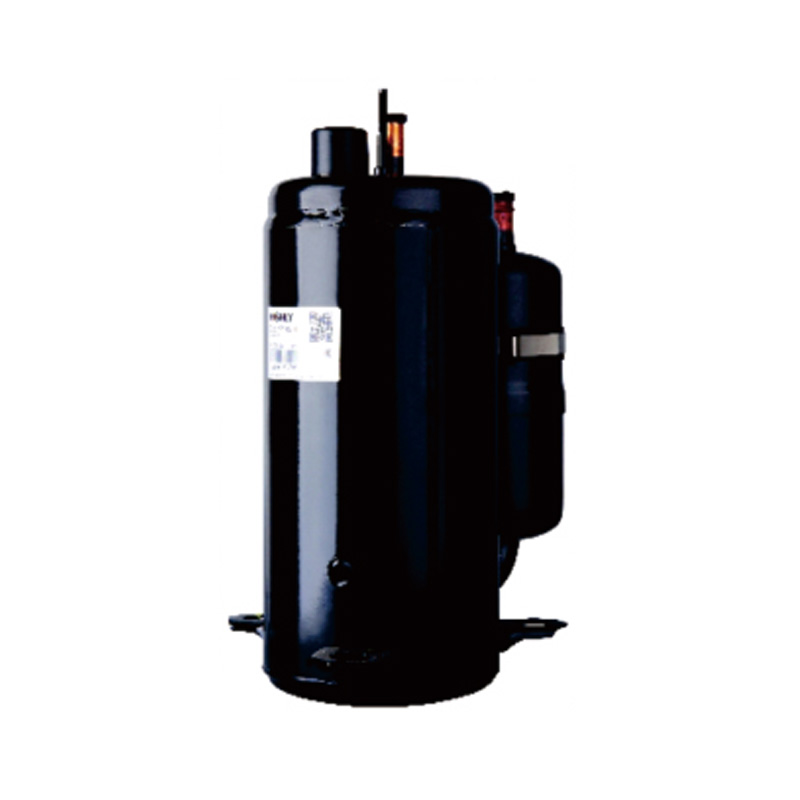
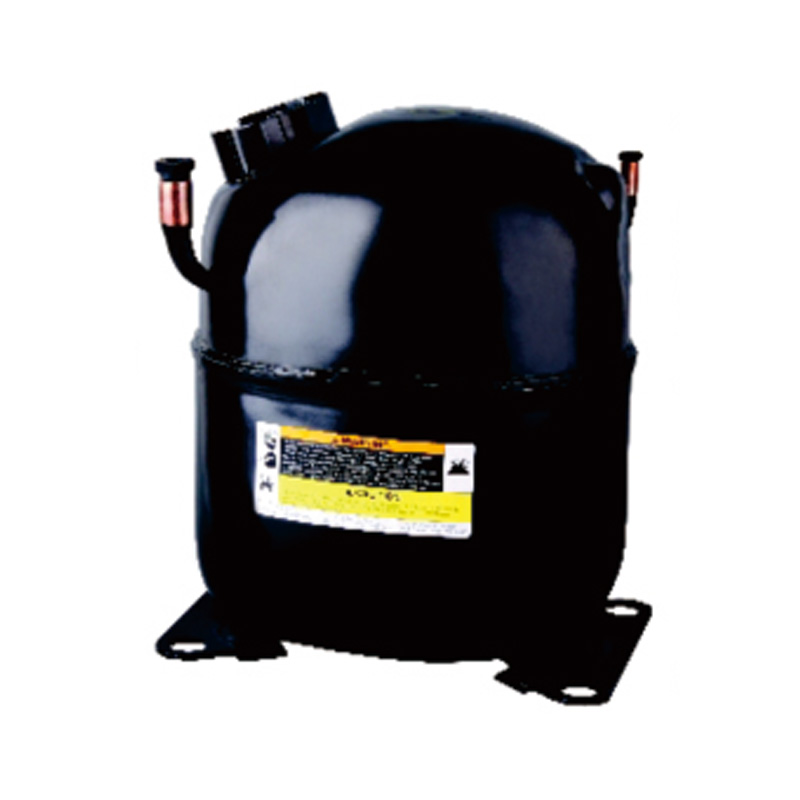
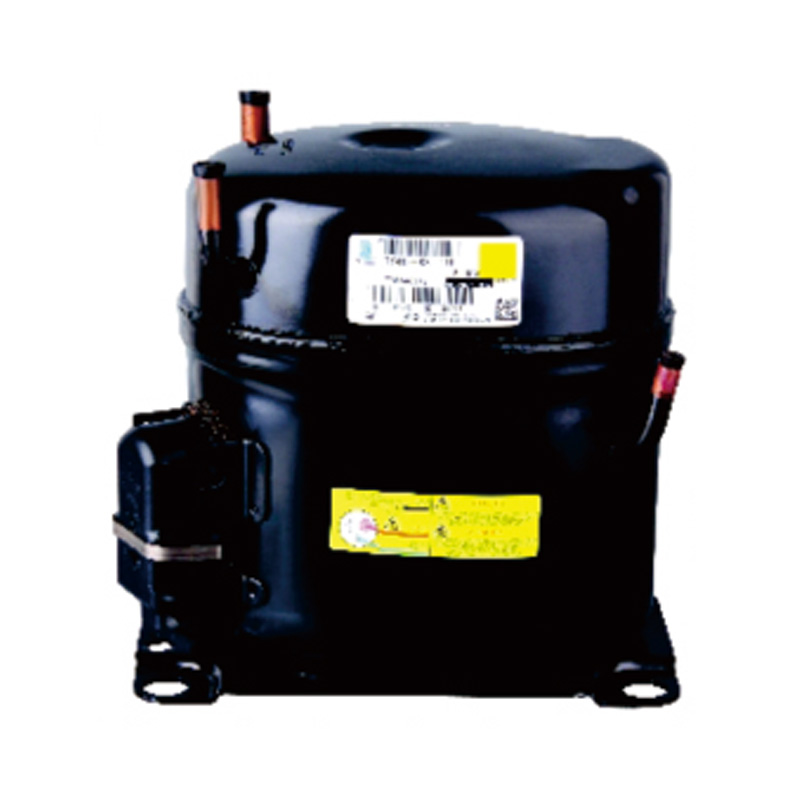
Hitachi Refrigeration Compressor for Commercial Cold Drink Appliances(Not sold separately)
Why the Compressor Matters in Commercial Beverage Equipment
A commercial beverage refrigeration system must repeatedly remove heat from an enclosed or semi-enclosed space. In a juice dispenser, for example, the refrigeration system may need to maintain a low and consistent temperature while the product is being dispensed throughout the day. In a slush machine, it must support cooling and freezing functions while the mixing mechanism operates continuously or intermittently. In a chilled drink cabinet, it must compensate for frequent door openings and the introduction of warmer products.
The compressor is responsible for compressing low-pressure refrigerant vapor and transferring it into the high-pressure side of the refrigeration circuit. This process enables the refrigerant to release heat through the condenser before returning to the evaporator to absorb additional heat. If the compressor is undersized, the appliance may cool slowly or fail to reach the intended temperature. If it is poorly matched, it may consume excessive energy, cycle improperly, or experience unnecessary mechanical stress.
A commercial compressor therefore needs to do more than simply start and run. It should operate consistently under changing loads, tolerate the demanding duty cycles common in foodservice equipment, and work harmoniously with the evaporator, condenser, expansion device, fan system, electrical controls, and cabinet design. The overall quality of the finished refrigeration appliance depends on the compatibility and coordination of these elements.
For equipment manufacturers, component selection also affects product development, maintenance planning, procurement, and after-sales support. A reliable compressor can reduce the frequency of service interventions and help manufacturers deliver more stable equipment to their customers. It can also simplify the design of replacement programs when the component is properly documented and matched to compatible appliance models.
Core Advantages of the Refrigeration Compressor
Efficient Cooling Capacity
The compressor is designed to provide effective cooling for commercial beverage refrigeration applications. Its cooling capacity supports the rapid reduction of temperature when the appliance is first switched on, after a door or cover has been opened, or when fresh beverages are introduced into the system. Faster temperature recovery is important in busy commercial settings because equipment may be used repeatedly during peak service periods.
Efficient cooling also helps protect the sensory quality of beverages. Juice, flavored drinks, soft drinks, and other cold products are generally more appealing when served at a consistent and appropriate temperature. Stable refrigeration reduces the risk of beverages becoming excessively warm during periods of frequent dispensing or high ambient temperature.
The correct cooling result depends on the complete system rather than the compressor alone. Cabinet insulation, condenser cleanliness, evaporator configuration, airflow, refrigerant charge, ambient conditions, and control settings all influence performance. When the compressor is integrated into a well-designed system, its capacity can support dependable temperature reduction without unnecessary operating time.
Stable Operation for Commercial Duty Cycles
Commercial appliances often operate for long hours and may experience multiple cooling cycles in a single day. Equipment installed in a restaurant or beverage shop cannot be treated like a lightly used household appliance. It must respond to changing demand and maintain dependable performance during busy service periods.
The compressor is intended for commercial refrigeration applications where operating stability is essential. A stable compressor helps the equipment maintain more consistent refrigeration conditions, reducing large temperature fluctuations that could affect beverage quality or customer satisfaction. Stable operation also supports the performance of related components, including temperature controls and fan assemblies.
When an appliance is properly engineered, the compressor works within suitable pressure and temperature ranges. This reduces unnecessary stress on the refrigeration circuit and supports predictable service behavior. Manufacturers and maintenance teams should always confirm that the selected compressor matches the appliance’s design requirements before installation.
Low Energy Consumption
Energy consumption is a major concern for foodservice operators. Beverage equipment may remain powered for many hours, and even a modest difference in energy use can become significant over months or years. A compressor designed with efficiency in mind can help reduce the electricity required to maintain refrigeration performance.
Lower energy consumption can provide several practical advantages. It may reduce operating expenses, support more economical equipment ownership, and help businesses manage energy usage across a larger kitchen or store. Efficient operation also reduces the amount of heat released into the surrounding environment, which can be beneficial in compact commercial kitchens or enclosed beverage service areas.
Efficiency should be evaluated as part of the entire appliance system. A clean condenser, appropriate insulation, correct refrigerant charge, and accurate temperature control are all necessary to achieve the intended result. The compressor provides an important foundation, but proper system design and maintenance are equally important.
Durability and Extended Service Life
Commercial refrigeration equipment is exposed to demanding conditions, including repeated starts, long operating periods, vibration, heat, dust, and fluctuations in ambient temperature. A durable compressor helps the appliance withstand these conditions and continue operating reliably over an extended service period.
Longer component service life can help reduce maintenance interruptions and replacement frequency. For operators, this may translate into less downtime and more predictable business operations. For equipment manufacturers, it can support a stronger product reputation and reduce the service burden associated with premature component failure.
Durability is also influenced by installation quality and operating conditions. The compressor should be mounted securely, supplied with the correct electrical input, and protected from conditions outside its intended operating range. Routine cleaning of the condenser and correct ventilation around the appliance are important measures for preserving compressor performance.
Intelligent Operating Control
The compressor system features intelligent control functions that can adjust operating conditions according to actual refrigeration needs. In practical terms, this helps the equipment respond to changes in temperature and cooling demand rather than operating without regard to the current conditions.
Automatic adjustment can contribute to more stable cooling and more efficient operation. When the refrigeration load is lower, the system may avoid unnecessary operation. When the load increases, the system can provide the required cooling response. This type of control is especially useful in commercial beverage equipment where demand changes throughout the day.
Control behavior depends on the appliance’s electrical system, sensors, controller, and refrigeration design. Proper commissioning is therefore important. Manufacturers should verify control compatibility during product development, while service technicians should follow the equipment’s technical instructions when checking sensors, wiring, and operating parameters.
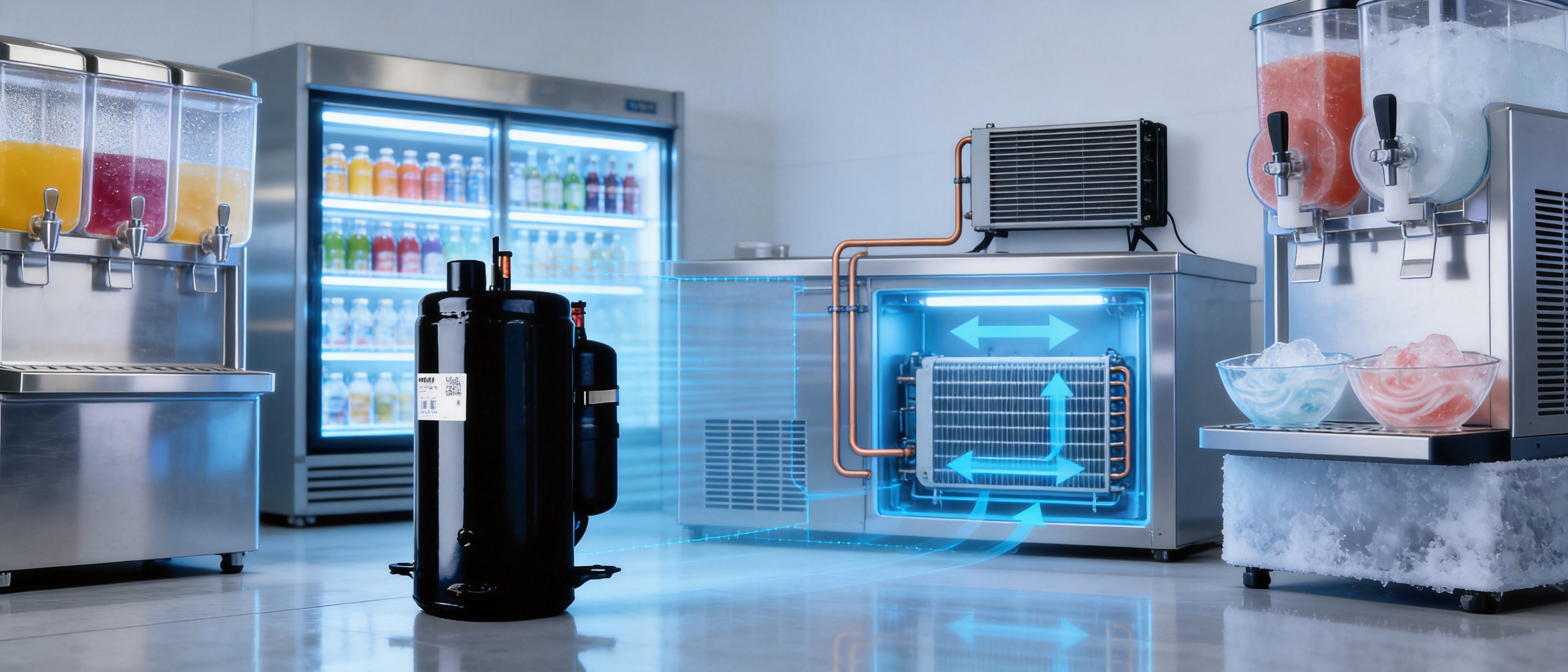
Comparison with Conventional Commercial Refrigeration Solutions
Commercial refrigeration compressors are not identical in their operating characteristics, efficiency, durability, or control compatibility. Selecting a component solely according to physical size or purchase price can create problems during operation. The most appropriate comparison should consider cooling performance, energy use, service requirements, reliability, and total ownership value.
| Evaluation Factor | Basic or Poorly Matched Compressor | Commercial Compressor for Compatible Beverage Equipment |
|---|---|---|
| Temperature recovery | May recover slowly after frequent use or warm product loading | Designed to support effective cooling response when properly matched |
| Operating stability | May experience irregular cycling or unstable refrigeration | Supports stable operation within the intended system design |
| Energy performance | May require longer running periods and consume more power | Designed with efficient cooling and lower energy use in mind |
| Durability | May be less suitable for extended commercial duty | Intended for demanding commercial beverage applications |
| Control integration | May offer limited compatibility with appliance control systems | Supports intelligent adjustment when integrated with compatible controls |
| Maintenance value | Frequent service can increase lifecycle costs | Reliable performance can help reduce maintenance burden |
| Application suitability | May be designed for a different load or usage pattern | Appropriate for selected commercial cold drink appliances when specifications match |
The comparison does not mean that one compressor is suitable for every commercial appliance. Refrigeration systems differ in capacity, refrigerant, voltage, frequency, cabinet volume, evaporator temperature, condenser arrangement, and duty cycle. A compressor that performs well in one product category may not be appropriate for another. Professional selection should therefore be based on technical requirements rather than general appearance.
Compared with low-cost components that are not engineered for commercial use, a properly selected commercial compressor can offer better long-term value. The initial purchase price is only one part of the total cost. Energy consumption, service visits, product losses, downtime, and replacement labor may have a greater financial impact over the life of the appliance.
Application in Commercial Cold Drink Appliances
Juice Dispensers
Commercial juice dispensers need to keep beverages chilled while allowing repeated dispensing during busy operating hours. A compressor used in this type of equipment supports heat removal from the beverage cooling area and helps the dispenser maintain a suitable serving temperature.
Stable cooling is important because juice and other prepared beverages may be exposed to ambient heat whenever the machine is opened, refilled, or used continuously. The compressor must work as part of a complete system that includes the beverage container, cooling surface, agitator or mixing mechanism, insulation, and temperature controller.
For operators, reliable refrigeration can contribute to better beverage presentation and a more consistent customer experience. For manufacturers, an appropriate compressor can support the development of dispensers that recover temperature efficiently and operate with manageable energy consumption.
Slush Machines
Slush machines place particular demands on refrigeration systems because they must cool a liquid mixture while maintaining the desired semi-frozen consistency. The compressor operates together with a freezing cylinder, scraper or mixing system, control panel, and heat rejection assembly.
The required operating conditions can vary according to the recipe, sugar content, ambient temperature, product volume, and selected consistency. A suitable compressor provides the cooling capacity needed by the system, while the controller manages operation according to temperature and product conditions.
Because slush machines may be used continuously in convenience stores, cinemas, amusement venues, snack shops, and beverage outlets, durability and stable performance are especially important. A component selected for the correct refrigeration design can help support reliable operation during extended service periods.
Chilled Beverage Cabinets
Chilled beverage cabinets frequently experience door openings, warm product loading, and changing internal loads. The compressor must help the cabinet recover its temperature after heat enters the refrigerated space. Efficient cooling is valuable because the cabinet may operate throughout the day and night.
Good system design combines the compressor with suitable insulation, door seals, evaporator airflow, condenser ventilation, and temperature control. When these elements are correctly coordinated, the refrigeration system can maintain more consistent product conditions while managing electricity consumption.
Other Commercial Beverage Refrigeration Equipment
The compressor may also be considered for compatible cold drink appliances used in restaurants, bars, supermarkets, institutional foodservice areas, fast-food chains, and specialty beverage shops. The exact suitability depends on the technical specifications of each appliance.
Equipment manufacturers can evaluate the component during prototype development, system replacement, or product improvement projects. Distributors and service organizations may also consider it for compatible spare-part planning, provided that the compressor’s specifications correspond with the original refrigeration design.
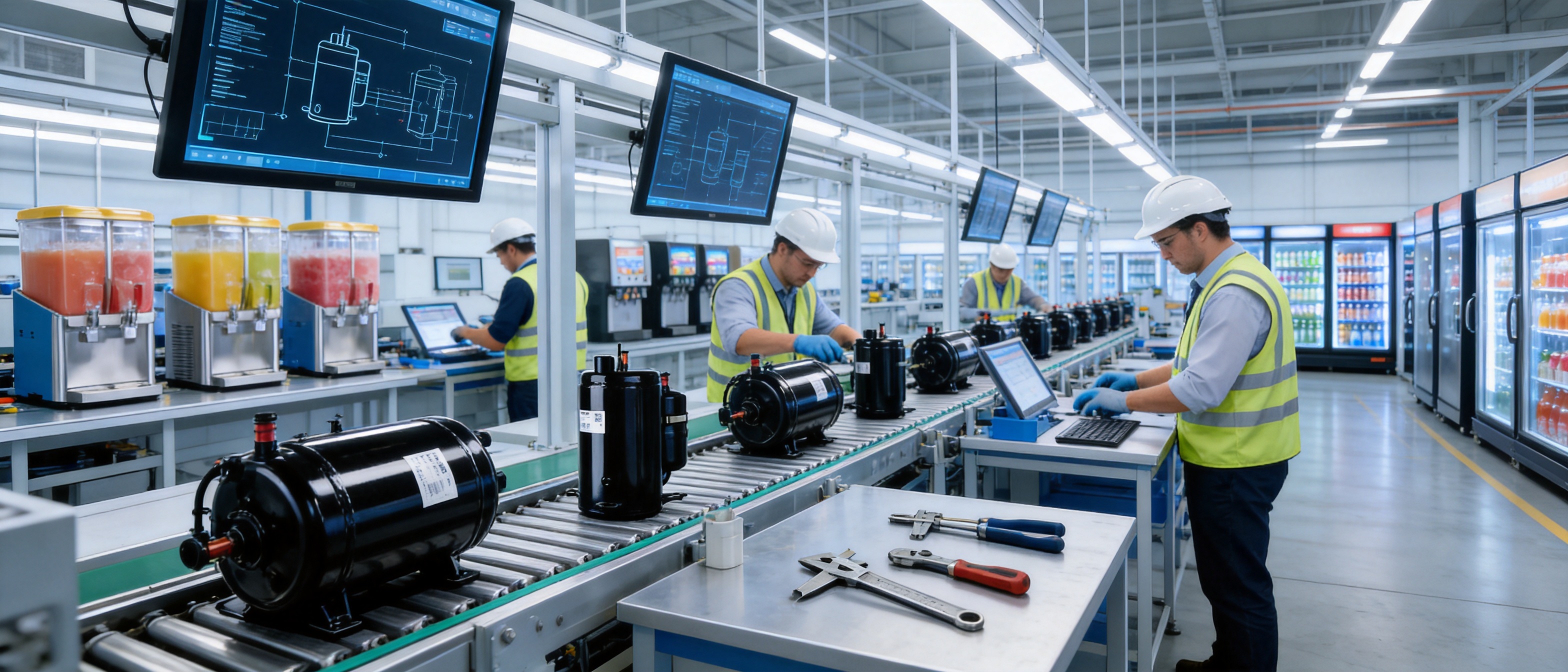
Manufacturing Strength and Engineering Support
The component is supplied by Spelor Electrical Appliances (Zhejiang) Co., Ltd., a professional manufacturer integrating design, research and development, manufacturing, sales, and service. The company operates more than 60,000 square meters of modern production facilities and specializes in commercial refrigeration, kitchen, and buffet equipment.
This broad manufacturing background is valuable because a refrigeration compressor is not used in isolation. It must be understood in relation to the appliance in which it is installed. A supplier with experience across commercial refrigeration and foodservice equipment can better appreciate the practical requirements of beverage dispensers, slush machines, ice machines, refrigeration cabinets, and related products.
The company’s product range includes ice cream machines, juice dispensers, fried ice cream machines, refrigeration cabinets, slush machines, flake ice machines, cooking equipment, griddles, fryers, insulation products, barbecue equipment, and buffet solutions. This range demonstrates experience with multiple categories of commercial equipment and different operating environments.
Integrated Product Development
Integrated design and development capabilities help connect component selection with finished equipment performance. During product development, engineers can consider cooling capacity, cabinet size, operating temperature, electrical requirements, control logic, noise expectations, installation space, and maintenance access.
This approach is more effective than treating the compressor as an isolated purchase. A component that appears suitable by dimension may still be inappropriate if its cooling output, pressure range, electrical characteristics, or control behavior does not match the system. Engineering evaluation helps reduce these risks before mass production.
For OEM and ODM customers, integrated development support can also simplify the transition from a concept or drawing to a finished commercial product. The company provides customized solutions based on customer drawings or requirements, allowing product specifications to be discussed according to the intended market and equipment application.
Modern Production Facilities
A production base of more than 60,000 square meters provides space for organized manufacturing, assembly, quality management, warehousing, and product development activities. Large-scale facilities can support more structured production planning and help manufacturers manage different equipment categories efficiently.
Modern production facilities are particularly important for commercial equipment customers who require repeatable quality and reliable delivery. Stable production processes help support consistency between batches, while organized logistics and warehousing can assist with component coordination and order fulfillment.
Manufacturing capability is not limited to the size of a factory. It also involves process control, engineering communication, inspection practices, production planning, employee experience, and responsiveness to customer requirements. These elements work together to create dependable value for OEM, ODM, and replacement-component customers.
Quality-Oriented Manufacturing Philosophy
The company follows a user-oriented and quality-driven philosophy. For commercial refrigeration equipment, this means considering how products perform in actual foodservice environments rather than focusing only on basic operation in controlled conditions.
Customers need equipment that is practical to install, straightforward to operate, manageable to maintain, and reliable under regular commercial use. A quality-oriented process considers these requirements during design, manufacturing, testing, packaging, and after-sales support.
For the compressor, quality considerations include correct component identification, proper integration, reliable electrical connections, suitable mounting, secure packaging, and clear technical communication. These details can influence the performance and serviceability of the complete appliance.
OEM and ODM Cooperation Advantages
Commercial equipment buyers often have requirements that differ from standard catalog purchasing. They may need a particular voltage, capacity range, appliance configuration, cabinet layout, control system, or regional market adaptation. OEM and ODM cooperation enables these requirements to be considered during the product development and manufacturing process.
Spelor offers OEM and ODM commercial refrigeration equipment based on drawings or customer requirements. This capability can be useful for distributors, restaurant equipment brands, supermarket equipment suppliers, foodservice project contractors, and importers developing products for specific markets.
When discussing a compressor application, customers should provide as much technical information as possible. Useful details may include the appliance type, internal volume, target temperature, refrigerant, evaporator temperature, condenser arrangement, power supply, ambient temperature range, expected operating hours, and current compressor model. These details help engineers evaluate compatibility more effectively.
Customization should not be understood as changing a component without technical review. Refrigeration systems are carefully balanced, and any change may affect pressure, cooling capacity, energy consumption, noise, defrost behavior, and system reliability. Professional evaluation is essential when developing a new appliance or replacing an original compressor.
OEM and ODM support may also include product appearance, control layouts, packaging requirements, documentation, logistics arrangements, and product configuration. By combining component knowledge with finished-equipment manufacturing experience, the supplier can provide a more coordinated procurement experience.
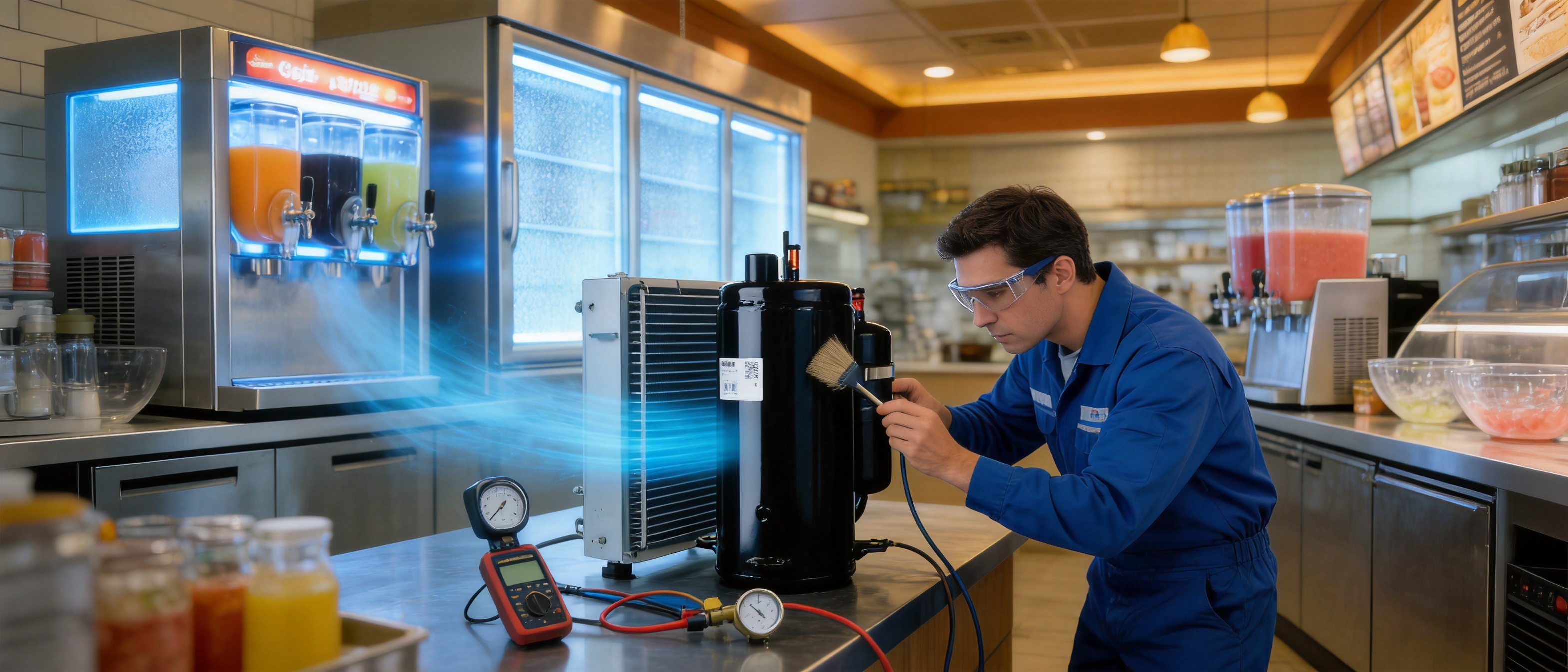
Service Life, Maintenance, and Operating Reliability
A durable compressor can support long-term equipment value, but maintenance remains essential. Even a high-quality component may perform poorly if the condenser is blocked, the refrigerant charge is incorrect, the cabinet is poorly ventilated, or the electrical supply is unstable.
Condenser Cleaning
Dust and grease accumulation on the condenser can restrict heat release and force the compressor to operate for longer periods. In commercial kitchens and beverage shops, airborne grease and dust may accumulate faster than expected. Regular cleaning helps the system reject heat more effectively and reduces unnecessary thermal stress.
Ventilation and Installation Space
The appliance should have sufficient clearance for ventilation around the condenser and compressor compartment. If hot air is trapped around the equipment, the refrigeration system may lose efficiency and operate at higher temperatures. Installation instructions should be followed carefully, especially when equipment is placed under counters, against walls, or near cooking appliances.
Electrical Protection
Correct voltage and frequency are necessary for safe and reliable compressor operation. Unstable power supplies, loose connections, undersized wiring, or inappropriate protective devices may cause starting difficulties or electrical damage. Qualified technicians should verify the electrical requirements before installation or replacement.
Refrigeration Circuit Service
Refrigerant charging, leak testing, evacuation, and system opening should be performed by trained refrigeration professionals. An incorrect refrigerant charge can result in poor cooling, excessive operating pressure, or damage to the compressor. The replacement component must be compatible with the refrigerant and oil requirements of the complete system.
Temperature and Load Management
Operators can also support compressor life by avoiding unnecessary thermal loads. Products should not be loaded into the appliance at temperatures beyond its intended capacity. Doors and covers should remain closed when possible, and beverage containers should not obstruct designed airflow paths.
These practices help the compressor work within more reasonable operating conditions. They also improve overall energy performance and help maintain the consistency of the beverages stored or dispensed by the equipment.
Selection Guidance for Equipment Manufacturers and Buyers
Selecting the correct compressor begins with understanding the application. The buyer should identify whether the component will be used in a juice dispenser, slush machine, chilled cabinet, ice-making appliance, or another type of commercial refrigeration equipment. Each application can have different temperature and capacity requirements.
The required cooling capacity should be evaluated in relation to product volume, cabinet dimensions, insulation, ambient temperature, door-opening frequency, and expected recovery time. A system intended for a small beverage dispenser may require a different compressor from a large commercial cabinet or a continuously operating slush machine.
Electrical specifications must also be confirmed. Voltage, frequency, phase, starting characteristics, running current, and control method should match the appliance design. A component that is mechanically compatible but electrically unsuitable should not be installed.
Refrigerant compatibility is another essential consideration. The compressor must be suitable for the refrigerant used in the system, and the oil, pressure range, tubing, expansion device, and controls must be evaluated together. Technicians should consult the relevant equipment documentation before beginning any replacement work.
Physical dimensions and mounting arrangements are important for practical installation. Buyers should confirm connection positions, mounting points, available compartment space, service access, and vibration-control requirements. These factors can influence both installation time and long-term reliability.
Finally, customers should consider supply support. A component supplier that also manufactures commercial refrigeration equipment may be able to provide more useful application guidance, customization assistance, technical communication, and after-sales coordination than a source focused only on isolated component trading.
Procurement and Project Support
Spelor provides one-stop service that includes pre-sales consultation, product customization, flexible logistics and payment solutions, and after-sales maintenance. This approach is useful for international customers who require more than a product quotation.
During the pre-sales stage, customers can discuss the intended appliance, technical requirements, order quantities, target market, and customization needs. Clear communication at this stage helps prevent misunderstandings about application, specifications, packaging, and delivery.
For larger equipment projects, flexible logistics support can help coordinate production and shipment planning. Commercial refrigeration projects may involve multiple product categories, replacement components, or customized equipment configurations. Coordinated supply can simplify purchasing and reduce the administrative burden associated with working with multiple sources.
After-sales support is also important because commercial equipment must remain operational after installation. Maintenance guidance, troubleshooting communication, spare-part planning, and technical coordination can help operators address issues more efficiently. The goal is to support stable operation and long-term business value rather than simply complete an initial transaction.
Benefits for Different Customer Groups
Foodservice Equipment Distributors
Distributors can use compatible refrigeration components to support equipment sales, maintenance programs, and replacement needs. A dependable supply source can help them serve customers across restaurants, cafés, bars, supermarkets, and institutional kitchens.
Commercial Appliance Manufacturers
Manufacturers can evaluate the compressor during product development or use it as a compatible replacement component in an existing refrigeration platform. Engineering cooperation may help improve cooling performance, operating efficiency, or product reliability.
Restaurant and Beverage Chains
Restaurant groups and beverage chains may benefit from stable equipment specifications across multiple locations. Reliable refrigeration components can support consistent service conditions and simplify maintenance planning when used in compatible appliances.
Foodservice Project Contractors
Contractors working on commercial kitchens, supermarkets, bars, hotels, or institutional facilities often need equipment that can operate reliably under practical site conditions. Technical consultation and coordinated equipment supply can help them select suitable solutions for each project.
Maintenance and Service Organizations
Professional service organizations can consider the compressor for compatible maintenance and replacement programs. Correct identification remains essential, and technicians should verify all system parameters before installation.
Frequently Asked Questions
What is the primary purpose of this product?
The product is a Hitachi refrigeration compressor intended for integration into compatible commercial cold drink appliances. It provides the compression function required for refrigerant circulation and heat removal in the refrigeration system.
Is the compressor sold as a standalone consumer product?
No. It is listed as an optional component and spare part and is not sold separately as a standalone consumer appliance. It should be supplied, selected, and installed as part of a compatible commercial refrigeration system.
Which appliances can use this compressor?
Potential applications include compatible commercial juice dispensers, chilled beverage cabinets, slush machines, and other commercial cold drink appliances. Actual suitability depends on cooling capacity, refrigerant, electrical requirements, operating temperature, and system design.
Can it be used as a replacement for any compressor?
No. Compressor replacement requires technical verification. The replacement must match the original system’s refrigerant, electrical specifications, cooling capacity, pressure conditions, mounting arrangement, and control system. A professional refrigeration technician should confirm compatibility before installation.
What are the main performance advantages?
The main advantages include effective cooling capacity, stable commercial operation, low energy consumption, durability, and intelligent adjustment according to actual operating needs when integrated with compatible equipment.
Does the compressor reduce maintenance costs?
Its durable and efficient design can help reduce maintenance demands and extend service life. However, maintenance results also depend on installation quality, condenser cleaning, electrical stability, refrigerant management, ventilation, and correct equipment use.
Can it support OEM and ODM projects?
The supplier provides OEM and ODM commercial refrigeration equipment based on drawings or customer requirements. Customers should provide detailed application and technical information so the engineering team can evaluate the appropriate configuration.
What information should be provided before requesting a quotation?
Useful information includes the appliance type, required temperature, cabinet or container volume, refrigerant, power supply, operating environment, expected duty cycle, compressor model being replaced, quantity, destination market, and any customization or packaging requirements.
Who should install the compressor?
Installation should be performed by a qualified refrigeration professional. The work may involve electrical connections, refrigerant recovery, leak testing, evacuation, charging, pressure verification, and system commissioning.
How can operators help extend compressor service life?
Operators should keep the condenser clean, provide sufficient ventilation, avoid overloading the appliance, maintain correct temperature settings, prevent unnecessary door opening, and arrange professional inspections when unusual noise, temperature instability, or extended running occurs.
What makes the supplier suitable for international customers?
The supplier combines design, research and development, manufacturing, sales, and service. It operates modern production facilities of more than 60,000 square meters, offers commercial refrigeration and foodservice equipment, and provides consultation, customization, logistics, payment coordination, and after-sales support.
Conclusion
The refrigeration compressor is a foundational component in commercial cold drink appliances. Its performance influences cooling speed, beverage quality, energy consumption, service continuity, and equipment service life. The Hitachi refrigeration compressor described here is designed for compatible commercial beverage refrigeration systems and offers effective cooling capacity, stable operation, durability, low energy consumption, and intelligent control support.
Its value is strengthened by the manufacturing and engineering capabilities of Spelor Electrical Appliances (Zhejiang) Co., Ltd. With more than 60,000 square meters of modern production facilities and experience across commercial refrigeration, kitchen, buffet, and foodservice equipment, the company can support customers from component selection through customized equipment production and after-sales service.
For the best result, the compressor should always be selected as part of a complete refrigeration system. Technical compatibility, professional installation, correct refrigerant management, suitable ventilation, and regular maintenance are essential. When these requirements are properly addressed, the component can help commercial beverage equipment achieve dependable cooling, efficient operation, and long-term business value.
References
1. Commercial refrigeration system design principles, including compressor, condenser, evaporator, expansion device, and control integration.
2. Professional guidelines for refrigeration compressor selection, electrical compatibility, refrigerant matching, and system commissioning.
3. Foodservice equipment maintenance practices for beverage dispensers, slush machines, chilled cabinets, and commercial refrigeration appliances.
4. Energy-efficiency considerations for continuously operating commercial refrigeration equipment.
5. Manufacturer-provided product information for commercial refrigeration components and compatible cold drink appliances.
6. Manufacturer-provided company information concerning commercial refrigeration, foodservice equipment manufacturing, OEM, ODM, customization, logistics, and after-sales support.
Product: Hitachi Refrigeration Compressor for Commercial Cold Drink Appliances(Not sold separately)

For exclusive deals and latest offers, sign up by entering your email address below.


-
spelor@spelor.com
-
+86-576-85229688
-
No.528, Changxi Road, Linhai City, Zhejiang Province, China
Commercial Refrigeration Equipment Manufacturer China
Copyright © 2025 by Spelor Electrical Appliances (Zhejiang) Co., Ltd. Rights Reserved.
