


 中文简体
How a 60Kg/24H Commercial Ice Maker Supports Efficient Foodservice Operations
Admin 2026-09-25Reliable ice production is essential for many modern foodservice businesses. Cafes, convenience stores, bars, small restaurants, beverage counters, hotels, and institutional kitchens all depend on a steady supply of clean ice for chilled drinks, food presentation, temporary storage, and customer service. When ice production is slow, inconsistent, difficult to manage, or too space-consuming, it can affect operating efficiency and customer satisfaction.
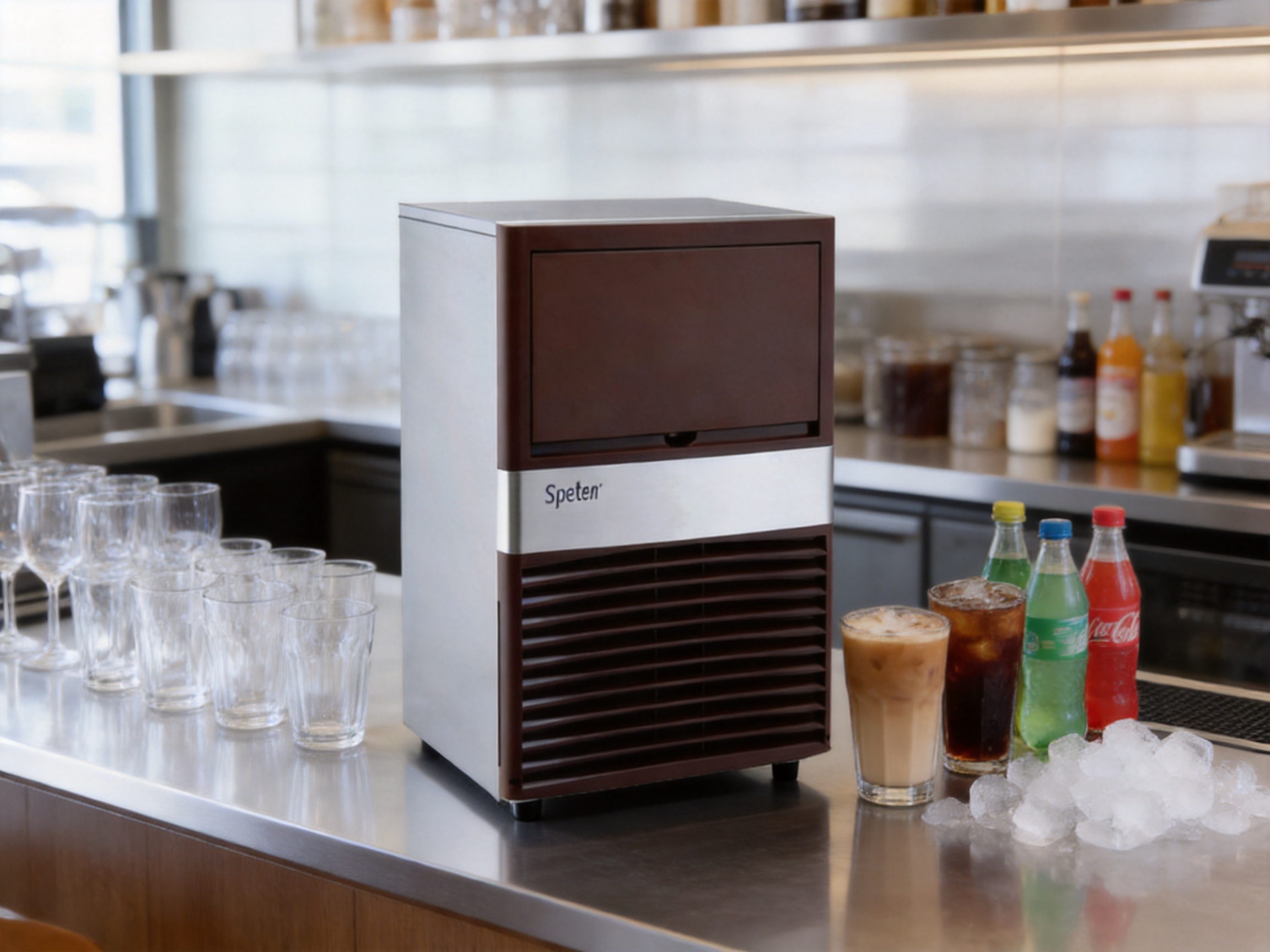
The ZB-120A 60Kg/24H Countertop Ice Maker with Stainless Steel Storage Bin is designed for businesses that require continuous daily ice production without installing a large industrial system. With a maximum daily production capacity of 60 kilograms and a 40-kilogram storage bin, the machine offers a practical balance between output, storage, footprint, and operating convenience. Its air-cooled condensation system, R290 refrigerant, automatic cleaning function, stainless steel construction, and compact dimensions make it suitable for small and medium-volume commercial applications.
More than a simple ice-producing appliance, this machine represents an integrated foodservice solution. It combines refrigeration technology, hygienic materials, automatic operation, internal storage, and a space-efficient structure in one unit. These features can help operators reduce manual handling, maintain a more organized service area, and respond more effectively to fluctuating ice demand.
Understanding the Role of a Commercial Ice Maker
Commercial ice makers are engineered for repeated production cycles over extended operating periods. Unlike domestic ice machines, which are generally designed for occasional household use, commercial units must support demanding environments where ice may be required throughout the day. They need to produce ice consistently, store it safely, and remain easy to operate during busy service periods.
A commercial machine also needs to fit the workflow of the establishment. A beverage shop may need ice for iced tea, coffee, fruit drinks, and blended beverages. A convenience store may use ice for takeaway drinks and chilled product displays. A restaurant may need ice for service counters, food preparation, seafood presentation, or banquet operations. In each setting, the machine should provide dependable output without taking up excessive floor area.
The ZB-120A is positioned for this type of requirement. Its maximum daily production is 60 kilograms, while the built-in storage bin holds up to 40 kilograms. This means the machine can continue producing ice while keeping a considerable quantity ready for use. The combination is particularly useful for businesses that experience repeated demand throughout the day rather than one single period of high-volume consumption.
Because ice is a food-contact product, sanitation is also a central consideration. The use of food-grade stainless steel on the plate body supports a cleaner and more durable working environment. The automatic cleaning function further helps operators maintain the equipment with less manual effort, provided that routine sanitation and maintenance procedures are followed.
Key Specifications of the 60Kg/24H Ice Maker
| Model | ZB-120A |
| Maximum daily production | 60 kilograms |
| Storage bin capacity | 40 kilograms |
| Rated power | 550 watts |
| Condensation method | Air cooling |
| Refrigerant | R290 |
| Overall dimensions | 500 × 577 × 855 millimeters |
| Construction highlights | Food-grade stainless steel and colored sprayed steel |
| Cleaning function | Automatic cleaning function |
| Recommended applications | Cafes, convenience stores, beverage counters, small restaurants, bars, and similar foodservice locations |
These specifications show that the machine is designed as a compact commercial system rather than a household appliance. The 550-watt rated power supports a useful output level while helping operators consider energy use as part of their operating budget. The 40-kilogram storage capacity also reduces the need for staff to transfer ice immediately after every production cycle.
Actual production performance can vary according to ambient temperature, water temperature, ventilation, cleaning condition, installation position, and operating practices. For this reason, the machine should be installed and used according to the supplier’s technical instructions. Adequate clearance around air inlets and outlets is especially important for an air-cooled unit.

60Kg/24H Countertop Ice Maker with Stainless Steel Storage Bin
Compact Design for Efficient Use of Commercial Space
Space is often one of the most valuable resources in a foodservice business. Beverage shops and small restaurants may have high customer traffic but limited back-of-house or counter space. A large ice system can interfere with staff movement, reduce available preparation space, or require expensive remodeling. The ZB-120A addresses this challenge through a compact form measuring 500 millimeters in width, 577 millimeters in depth, and 855 millimeters in height.
The machine’s vertical structure allows the operator to use floor and counter areas more efficiently. Instead of spreading equipment across a wide footprint, the unit concentrates ice production and storage within one organized enclosure. This can help businesses create a more orderly work area and reduce unnecessary movement between separate ice-making and storage locations.
The compact dimensions also make the unit easier to consider during new shop planning or equipment replacement projects. Operators can evaluate the available installation area, doorways, service paths, electrical connections, and ventilation clearances before delivery. Compared with a larger centralized ice system, a compact self-contained machine may offer a simpler solution for locations where output requirements are moderate and space is limited.
However, compact design should not be confused with reduced commercial capability. The machine still provides up to 60 kilograms of daily production and a 40-kilogram storage bin. This combination makes it suitable for businesses that need more than a small countertop appliance but do not require the capacity of a large industrial ice plant.
For operators comparing competing models, the relationship between physical size and usable output is especially important. A machine should not be judged solely by its maximum production figure. Storage volume, accessibility, service space, construction quality, and installation flexibility all influence practical value. The ZB-120A brings these factors together in a format intended for daily commercial use.
Stainless Steel Construction and Hygienic Operation
The plate body of the machine is made from food-grade stainless steel and colored sprayed steel. Stainless steel is widely used in commercial kitchens because it offers a smooth, durable, and easy-to-clean surface. It is also resistant to many forms of corrosion and can withstand the repeated cleaning routines expected in foodservice environments.
Hygiene is particularly important for ice equipment because the finished product is often placed directly into drinks or used near ready-to-serve food. The external construction cannot replace internal sanitation procedures, but a cleanable and durable body supports better overall equipment management. A well-maintained exterior also helps the machine retain a professional appearance in customer-facing locations.
The combination of stainless steel and colored sprayed steel provides both practical and visual benefits. Stainless steel contributes to a sanitary commercial appearance, while the sprayed steel elements can create a more finished and coordinated look. This is useful in cafes, beverage shops, and open-kitchen environments where equipment may be visible to customers.
Durable materials can also support a longer service life when the machine is correctly installed and maintained. Commercial equipment is exposed to moisture, temperature changes, cleaning chemicals, movement, and frequent handling. A robust external body helps protect internal components and reduces the likelihood that normal daily use will quickly affect the machine’s appearance.
Operators should still follow proper cleaning methods. Harsh chemicals, abrasive tools, or prolonged exposure to unsuitable cleaning agents may damage surfaces. Regular wiping, correct sanitation procedures, clean water supply, and prompt attention to spills can help preserve both hygiene and appearance.
60-Kilogram Daily Production for Small and Medium Businesses
The maximum daily production of 60 kilograms gives the ZB-120A a useful position between small light-duty ice makers and larger high-output commercial systems. This capacity is appropriate for businesses that need a reliable supply of ice every day but do not require several hundred kilograms of production.
In a cafe, the machine can support iced coffee, cold tea, fruit beverages, soft drinks, and blended drink preparation. In a convenience store, it can help keep takeaway beverage operations supplied during normal business hours. In a small restaurant or bar, the ice can serve table beverages, cocktails, chilled service items, and other daily requirements.
The stated maximum output should be considered a planning reference rather than a guarantee under every operating condition. Production may be influenced by the temperature of incoming water, surrounding air temperature, ventilation, frequency of door opening, condenser cleanliness, and the selected operating schedule. A properly installed machine in a suitable environment is more likely to approach its expected performance.
One advantage of a 60-kilogram rating is that it allows operators to plan purchasing and staffing more accurately. Instead of relying on delivered bagged ice or manually filling smaller machines, a business can produce a substantial portion of its daily requirement on site. This may reduce dependence on external ice deliveries and help improve availability during busy periods.
On-site production can also provide greater control over inventory. Staff can monitor the storage bin, adjust operating times, and organize production around expected demand. This is especially helpful for businesses whose ice requirements vary according to weekday traffic, seasonal weather, special events, or promotional campaigns.
40-Kilogram Integrated Storage Capacity
Production capacity and storage capacity serve different purposes. A machine may produce a large quantity of ice but still be inconvenient if it has insufficient room to hold the finished product. The ZB-120A includes a storage bin with a capacity of 40 kilograms, allowing ice to accumulate and remain available for service.
The integrated bin reduces the need for separate storage containers and limits the number of times staff must move ice from the machine to another location. Fewer transfers can simplify workflow, reduce handling time, and support a more organized preparation area. It may also reduce the risk of ice being exposed during unnecessary movement.
A 40-kilogram bin is particularly useful during periods when demand is uneven. The machine can produce ice ahead of the busiest service window, allowing staff to build a reserve. When customers arrive in greater numbers, the stored ice can be accessed without waiting for every individual production cycle to finish.
Storage management remains important. Operators should avoid allowing ice to remain unused for excessive periods, and the bin should be cleaned and sanitized according to the operating manual. Ice scoops and other contact tools should be kept clean, stored appropriately, and handled in a way that prevents contamination.
When comparing the ZB-120A with competing products, buyers should examine both the advertised daily production and the storage bin volume. A machine with high output but limited storage may not provide the same practical convenience as a balanced system. The combination of 60 kilograms of daily production and 40 kilograms of storage gives this model a useful operational profile for moderate-volume establishments.
Air-Cooled Condensation System
The ZB-120A uses air cooling for condensation. In an air-cooled refrigeration system, heat removed during the refrigeration cycle is released into the surrounding air through the condenser. This design avoids the need for a dedicated water-cooling circuit, which can simplify installation in locations where water consumption, drainage, or plumbing access must be minimized.
Air cooling can be advantageous for small businesses because it generally requires fewer utility connections than a water-cooled alternative. The machine can be considered for sites where adding extra water lines would be inconvenient or costly. This may be helpful in cafes, retail spaces, temporary foodservice areas, and compact commercial kitchens.
At the same time, air-cooled equipment must be installed with adequate ventilation. The surrounding area should not be excessively hot or enclosed, and the condenser air path must remain free from obstruction. If warm air cannot leave the machine efficiently, refrigeration performance may decline and operating stress may increase.
Regular condenser cleaning is also important. Dust, grease, lint, and airborne particles can accumulate on the condenser surface, particularly in kitchens or shops near cooking equipment. A maintenance schedule that includes inspection and cleaning can help preserve heat-transfer efficiency and support stable operation.
The air-cooled design is one of the practical features that distinguishes the machine from systems requiring more complex cooling infrastructure. For many moderate-volume applications, it offers a useful balance between installation simplicity and commercial performance.
R290 Refrigerant and Modern Refrigeration Considerations
The machine uses R290 refrigerant. R290 is propane used as a refrigerant in certain commercial refrigeration and ice-making applications. It is recognized for a low global warming potential compared with many traditional refrigerants, making it part of the broader movement toward more environmentally considerate refrigeration technologies.
Using R290 does not remove the need for responsible installation and servicing. Because it is classified as a flammable refrigerant, service work should be performed by qualified technicians using appropriate procedures and equipment. Operators should not attempt to open or repair the refrigeration circuit without the necessary technical training.
For purchasing teams, refrigerant selection is an increasingly important factor. Businesses may need to consider environmental policies, local regulations, future service requirements, and corporate sustainability goals when choosing commercial refrigeration equipment. R290 can support these considerations while providing the refrigeration performance required for ice production.
The use of R290 also demonstrates that the machine is designed with current refrigeration practices in mind. Along with the air-cooled condenser and compact construction, the refrigerant specification gives buyers useful information when evaluating long-term ownership and maintenance planning.
Automatic Cleaning Function for Daily Convenience
Cleaning is one of the most important responsibilities associated with an ice machine. Because ice is consumed directly or used with food and beverages, internal surfaces, water pathways, storage areas, and contact tools must be managed carefully. The ZB-120A includes an automatic cleaning function intended to make this process more convenient.
An automatic cleaning cycle can help reduce the time and effort required to begin routine maintenance. It may guide water through relevant internal pathways and support the removal of ordinary residue. This is valuable for busy foodservice staff who need a straightforward operating process and cannot spend excessive time on complicated cleaning procedures.
Automatic cleaning should be viewed as a support feature rather than a substitute for complete sanitation. Staff should still follow the manufacturer’s instructions regarding cleaning frequency, approved products, water quality, bin sanitation, exterior cleaning, and manual inspection. Areas that are not fully addressed by an automatic cycle may require direct cleaning.
Regular cleaning can also support performance. Mineral deposits, scale, dust, and organic residue may affect water flow, ice formation, sensors, and refrigeration efficiency. A clean machine is generally easier to inspect and more likely to operate consistently than equipment that is neglected until a problem appears.
For businesses comparing competing machines, an automatic cleaning function can provide a meaningful operational advantage. Ease of maintenance affects labor costs, staff compliance, hygiene management, and equipment availability. A feature that simplifies routine care can contribute to better long-term value even if it does not directly increase the rated production capacity.
Energy and Operating Efficiency
The rated power consumption of the ZB-120A is 550 watts. This figure provides a useful starting point for electrical planning and operating-cost estimation. The actual energy used over a day will depend on ambient conditions, production demand, operating duration, water temperature, machine condition, and other factors.
Energy efficiency in an ice maker is influenced by the entire refrigeration system rather than a single component. Condenser cleanliness, adequate ventilation, correct water supply, proper installation, and regular maintenance all affect how hard the compressor must work. When heat can be released efficiently and water pathways remain clear, the machine has a better opportunity to maintain stable operation.
The compact design may also support efficient site planning. When the ice maker is located close to the beverage preparation area, staff may spend less time transporting ice. Shorter movement routes can improve workflow and reduce unnecessary handling, especially during peak service periods.
Operators should avoid placing the machine beside ovens, fryers, hot equipment, or direct sunlight. Excessive ambient heat can increase refrigeration demand and may reduce production performance. Adequate clearance around the machine is a simple but important measure for maintaining operating efficiency.
Businesses should evaluate equipment using total operating value rather than only the initial purchase price. Production capacity, storage size, cleaning convenience, serviceability, material quality, refrigerant type, energy use, and expected working life all contribute to the overall cost of ownership.
Applications Across Foodservice and Retail Environments
Cafes and Beverage Shops
Cafes often have a varied ice demand that changes throughout the day. Iced coffee, cold brew, tea, fruit drinks, smoothies, soft drinks, and specialty beverages may all require ice. The ZB-120A can provide an on-site supply while its storage bin gives staff access to ready ice during high-demand service periods.
Its compact dimensions are suitable for locations where the beverage counter and preparation area must be carefully organized. The stainless steel exterior can also complement a clean, modern cafe environment, particularly when equipment is visible to customers.
Convenience Stores
Convenience stores frequently sell chilled takeaway drinks and may experience sharp demand increases during warm weather. An in-store ice maker can support beverage service without depending entirely on external ice deliveries. The 40-kilogram bin offers a practical reserve for routine operations, while the automatic cleaning function can simplify maintenance for staff who perform multiple duties.
Small Restaurants
Restaurants use ice in dining service, beverage preparation, food presentation, and sometimes short-term ingredient handling. A 60-kilogram daily production capacity may be appropriate for a small restaurant that needs a stable supply but does not operate a large banquet or catering program.
The machine can be included in a back-of-house equipment plan or placed near a beverage station, subject to ventilation and installation requirements. Its integrated storage reduces the need for separate ice bins and can help keep the preparation area organized.
Bars and Entertainment Venues
Bars may have concentrated ice demand during evening service. Cocktails, mixed drinks, soft beverages, and chilled bottles all require reliable access to ice. Producing ice on site can help reduce the operational disruption associated with empty external bags or delayed deliveries.
For venues with demand significantly above 60 kilograms per day, additional equipment or a higher-capacity model may be necessary. However, for small bars and moderate-volume beverage operations, the ZB-120A can provide a useful foundation for daily service.
Institutional and Specialty Foodservice
Schools, offices, clinics, small hotels, and other institutions may require ice for cafeterias, staff dining areas, guest service, or event support. The machine’s balanced production and storage capacity can suit locations that need regular ice availability but have limited equipment space.
Manufacturing Strengths Behind the Product
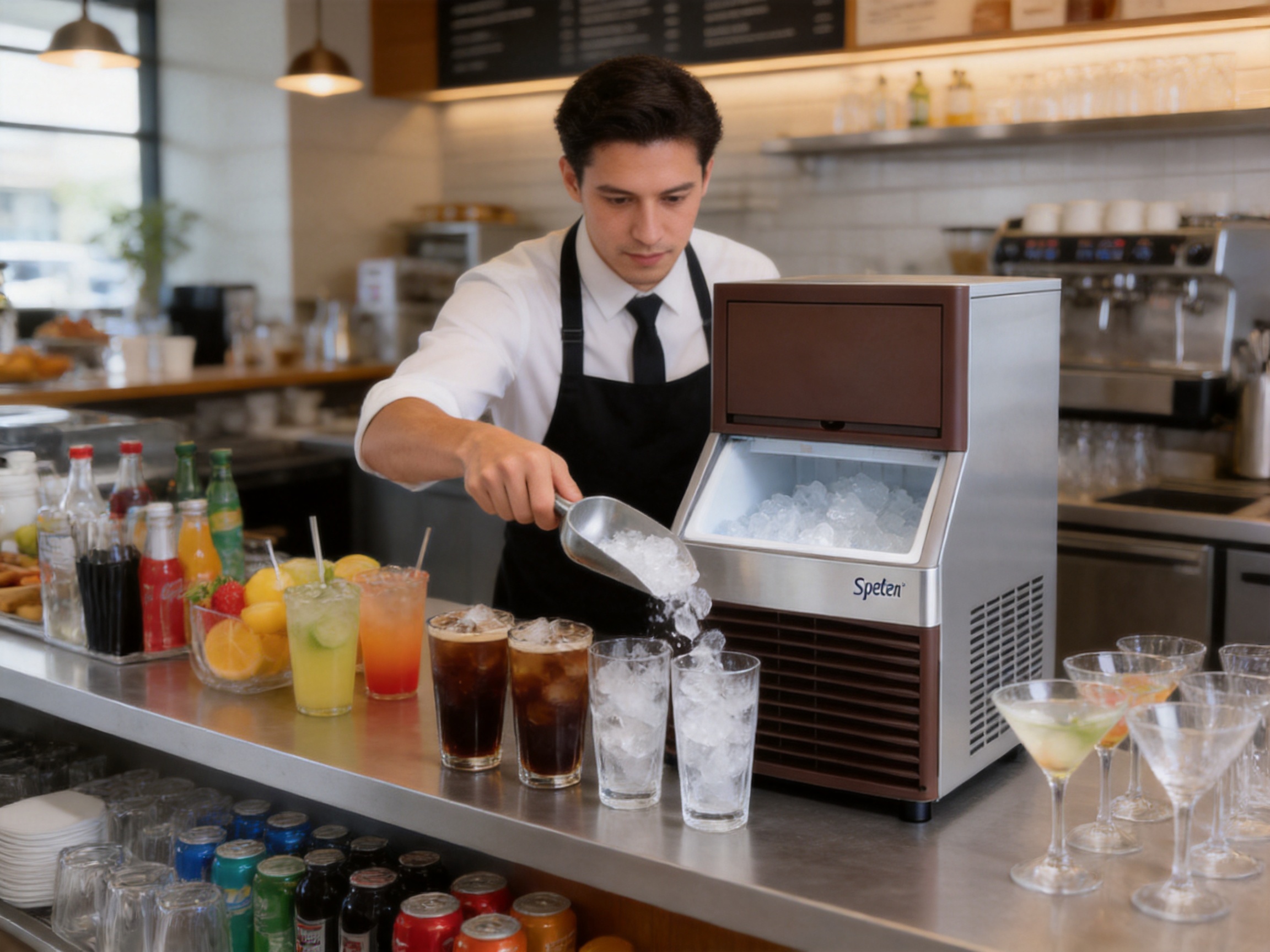
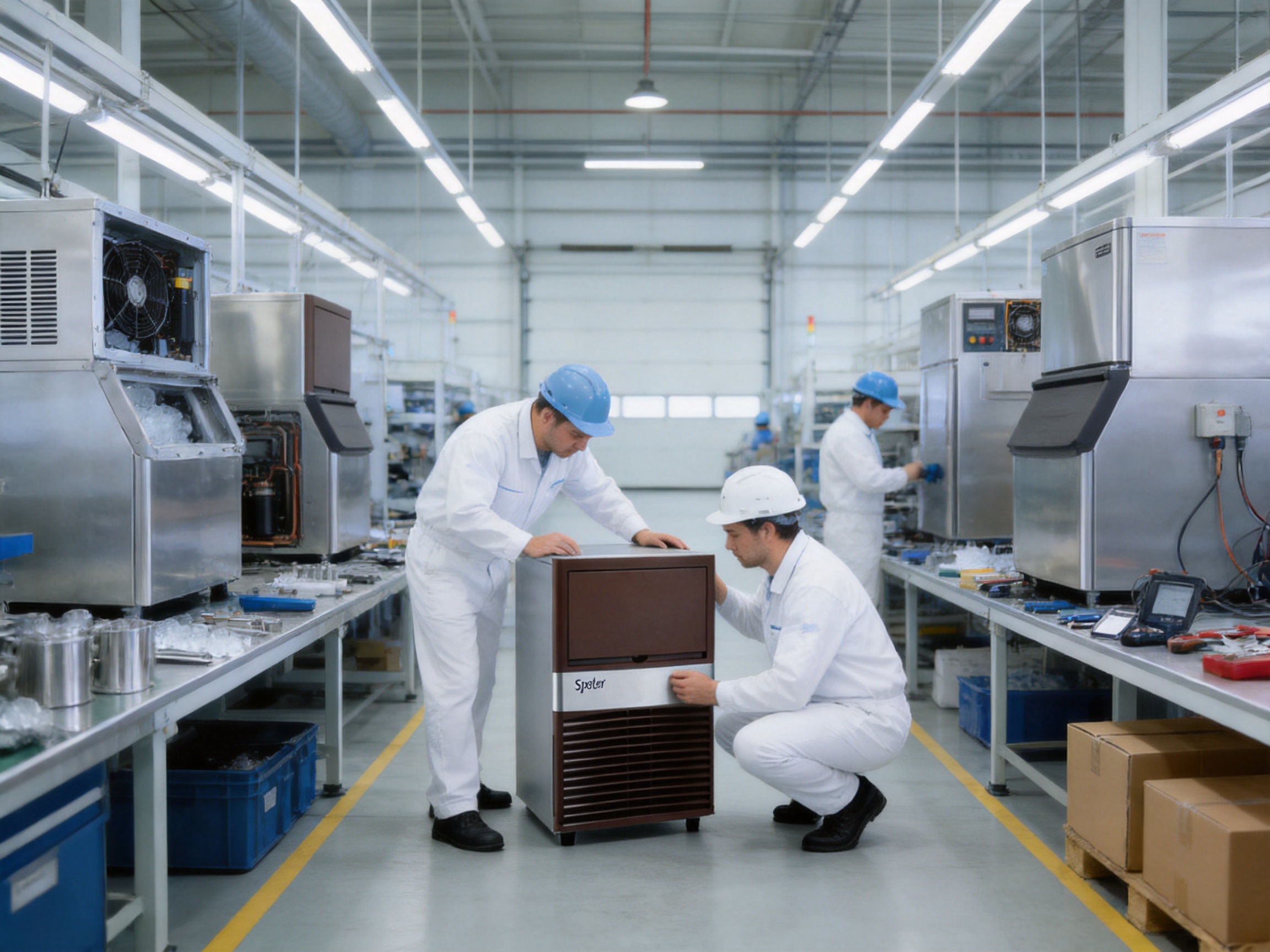
The product is manufactured by Spelor Electrical Appliances (Zhejiang) Co., Ltd., a professional producer that integrates product design, research and development, manufacturing, sales, and service. This integrated structure is important for commercial equipment because product performance depends not only on individual parts but also on engineering coordination, production control, assembly accuracy, testing, and after-sales support.
The company operates more than 60,000 square meters of modern production facilities. A production base of this scale can support organized manufacturing processes, dedicated production areas, equipment testing, warehouse coordination, and systematic quality management. It also gives the supplier the capacity to serve different product categories and customer requirements.
The manufacturer’s product range includes commercial ice machines, ice cream machines, juice dispensers, fried ice cream machines, refrigeration cabinets, slush machines, flake ice machines, cooking equipment, griddles, fryers, insulation products, barbecue equipment, and buffet solutions. This broad portfolio provides experience across several areas of commercial kitchen and foodservice equipment.
Manufacturing experience across related product categories can contribute to stronger engineering understanding. Refrigeration systems, cooling components, control systems, stainless steel fabrication, insulation, water management, and commercial equipment assembly are relevant to many of these products. Such knowledge can support practical product development and more coordinated customer service.
Design and Research and Development Capabilities
Commercial equipment must be designed around real operating conditions. A machine may have attractive specifications, but it also needs to be usable by staff, serviceable by technicians, compatible with foodservice layouts, and robust enough for repeated operation. Product research and development therefore involves more than creating a basic refrigeration circuit.
The design of the ZB-120A reflects several practical considerations: a daily production target suitable for moderate commercial demand, a storage bin large enough for routine service, a compact enclosure, an air-cooled system, a contemporary refrigerant, food-grade construction, and automatic cleaning. These elements work together as a complete equipment concept.
Research and development also supports customization. Different markets may have different voltage requirements, installation conditions, appearance preferences, packaging standards, labeling rules, or operating expectations. A manufacturer with integrated engineering and production resources can evaluate such requirements more effectively than a supplier that only performs trading or final-stage distribution.
The company offers OEM and ODM services based on customer drawings or requirements. This can be valuable for importers, distributors, restaurant groups, supermarket chains, hospitality projects, and equipment brands seeking products adapted to a specific market or sales channel.
Production Process and Quality Considerations
A commercial ice maker typically passes through multiple manufacturing stages. These may include material preparation, sheet-metal forming, surface treatment, component installation, refrigeration-system assembly, electrical wiring, insulation work, water-system installation, control-panel integration, final assembly, inspection, and functional testing.
Each stage can influence the finished machine. Accurate metal fabrication helps panels fit correctly. Proper insulation supports refrigeration performance. Correct installation of the compressor, condenser, evaporator, water components, sensors, and control system is essential for reliable operation. Electrical connections must be assembled carefully, and the completed machine should be checked before shipment.
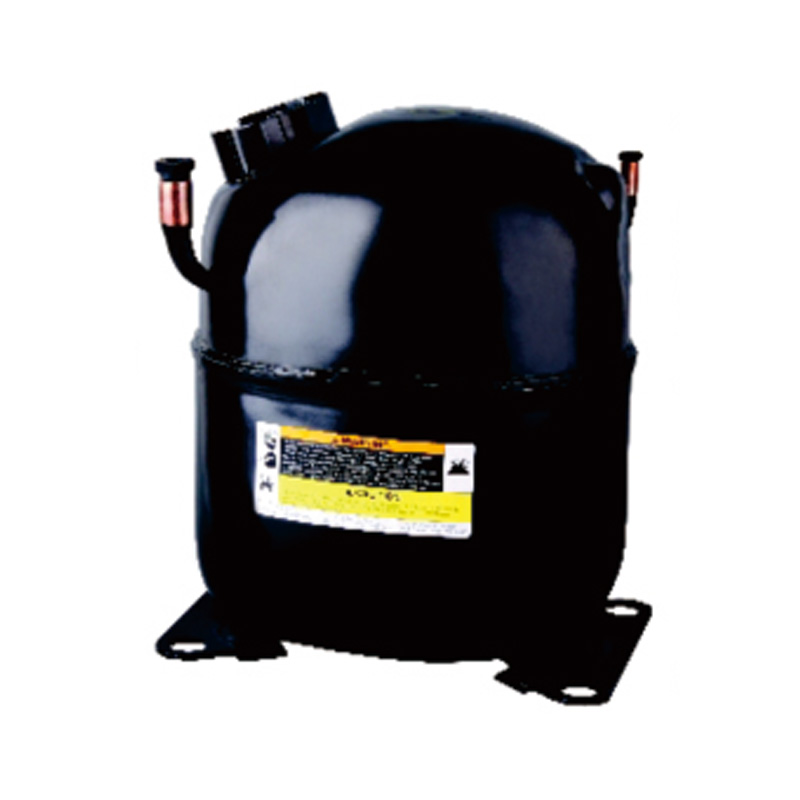
Testing is particularly important for refrigeration equipment. A manufacturer may need to evaluate ice production, water circulation, temperature behavior, compressor operation, condensation performance, storage-bin function, controls, and cleaning-cycle operation. While individual testing procedures depend on the factory’s quality system, systematic inspection helps identify problems before products reach customers.
Material selection is also a key part of production quality. Food-contact and splash-prone areas require appropriate materials and finishes. The use of food-grade stainless steel on the plate body supports durability and hygiene, while the sprayed steel sections provide additional structural and visual options.
For international buyers, manufacturing capability should be assessed together with documentation, packaging, spare-parts support, product consistency, communication, and warranty processes. A reliable factory supplier should be able to discuss not only the product’s headline specifications but also the practical details required for long-term commercial use.
Advantages Compared with Basic or Lower-Capacity Alternatives
The ZB-120A offers several advantages when compared with small household machines or basic low-capacity commercial models. Its 60-kilogram daily output is designed for continuous business use, while the 40-kilogram storage bin reduces the need for frequent manual transfer of ice.
Its construction is also more appropriate for foodservice environments than many domestic appliances. Food-grade stainless steel and colored sprayed steel provide a durable, professional enclosure that can withstand more demanding surroundings when properly maintained.
The automatic cleaning function adds convenience that may not be available on simpler machines. This can help staff follow regular maintenance routines and reduce the complexity of day-to-day operation. The air-cooled design can also simplify installation by avoiding the requirements associated with a dedicated water-cooling system.
R290 refrigerant is another point of differentiation for buyers considering environmental performance and future refrigeration requirements. While responsible servicing remains essential, the refrigerant specification aligns with current interest in lower-global-warming-potential alternatives.
The machine’s balance of output, storage, compactness, and features may be more attractive than purchasing separate low-capacity machines. One integrated unit can reduce equipment duplication, simplify staff training, and make the ice production area easier to manage.
Installation Planning and Best Practices
Before installation, the operator should confirm that the selected location can accommodate the machine’s 500 × 577 × 855 millimeter dimensions. Additional clearance is required for ventilation, cleaning, inspection, and service access. The machine should not be tightly enclosed if doing so would restrict airflow.
The installation surface should be stable, level, and capable of supporting the equipment and its operating load. The site should be away from direct sunlight, ovens, fryers, steam sources, and other equipment that produces excessive heat. An excessively warm installation environment may affect the efficiency of an air-cooled refrigeration system.
Electrical requirements should be checked before delivery. The power supply must be compatible with the machine’s specification and local regulations. Any installation involving electrical work, refrigeration components, or plumbing should be completed by appropriately qualified personnel.
Water quality can affect ice-machine performance. Hard water may contribute to mineral scale, while contaminated or poorly managed water can create sanitation concerns. Operators should follow the supplier’s guidance regarding water supply, filtration, cleaning, and maintenance.
After installation, staff should be trained in start-up, loading, ice handling, cleaning, shutdown, and basic fault awareness. Clear procedures help protect the equipment and promote consistent hygiene practices across different shifts.
Maintenance for Consistent Long-Term Performance
Regular maintenance is necessary for any commercial ice machine. Daily or routine tasks may include checking the exterior, observing unusual sounds or leaks, inspecting the storage bin, cleaning ice-contact tools, and confirming that the machine has adequate airflow.
Scheduled cleaning should address the water system, ice-making surfaces, storage bin, and other areas identified in the operating instructions. The automatic cleaning function can support this process, but staff should understand exactly what the cycle covers and what additional manual cleaning is required.
The air condenser should be inspected and cleaned at suitable intervals. A dirty condenser can restrict heat transfer, increase operating stress, and reduce ice production. The cleaning schedule should be adapted to the environment; a dusty retail area and a grease-heavy kitchen may require different frequencies.
Service records can help operators manage maintenance more systematically. A simple log may record cleaning dates, filter changes, inspections, unusual operating conditions, and service visits. Such records are useful for identifying patterns and demonstrating that food safety and equipment-care procedures are being followed.
When technical service is required, especially for the R290 refrigeration circuit, qualified technicians should be used. Unauthorized repairs may create safety risks, affect warranty coverage, or cause further equipment damage.
Procurement Support and OEM/ODM Opportunities
Different buyers may require different purchasing solutions. A local cafe owner may need one machine and installation guidance, while a distributor may need repeat orders, packaging coordination, product documentation, spare parts, and consistent production. A restaurant chain may request customized appearance, labeling, electrical specifications, or control arrangements.
Spelor provides OEM and ODM services based on drawings or customer requirements. This allows business clients to explore customized solutions rather than selecting only from standard catalog products. Customization may involve product appearance, branding, packaging, configuration, technical requirements, or market-specific details, subject to engineering and production evaluation.
The company also provides one-stop service that includes pre-sales consultation, product customization, logistics coordination, payment solutions, and after-sales maintenance support. This integrated approach can simplify international procurement and reduce the number of separate suppliers a buyer must manage.
For importers and distributors, factory support is especially valuable when entering a new market. Product specifications, manuals, packaging, spare-parts planning, delivery schedules, and service procedures all influence customer satisfaction after the sale. A manufacturer that understands these factors can contribute more effectively to long-term channel development.
Why Factory Capability Matters to Global Buyers
Commercial refrigeration and foodservice equipment are long-term business assets. Buyers need confidence that the supplier can support not only the first shipment but also future orders, technical questions, replacement components, and service requirements.
A manufacturer with modern production facilities, research and development resources, a broad product portfolio, and international customer experience can offer a stronger foundation for business cooperation. The company’s more than 60,000-square-meter production base and integrated design-to-service structure demonstrate a capacity intended for professional equipment manufacturing rather than short-term product sourcing alone.
Global buyers may also benefit from the supplier’s understanding of different foodservice applications. A cafe, supermarket, snack shop, fast-food chain, bar, hotel, institution, and catering company may all require different equipment combinations. Experience across ice machines, beverage equipment, cooking equipment, buffet solutions, and refrigeration products allows the supplier to consider the broader operational context.
For customers seeking OEM or ODM cooperation, this breadth can make project discussions more efficient. The manufacturer can evaluate how a new ice maker or customized unit should fit alongside other foodservice equipment, packaging requirements, and sales-market expectations.
Frequently Asked Questions
What is the maximum daily production of the machine?
The ZB-120A has a maximum daily production capacity of 60 kilograms. Actual output may vary according to water temperature, ambient temperature, ventilation, installation conditions, cleaning status, and operating practices.
How much ice can the storage bin hold?
The integrated storage bin has a capacity of 40 kilograms. This allows the machine to retain a substantial quantity of ice for service and reduces the need for immediate transfer to a separate container.
Is the machine suitable for a small restaurant?
Yes. The machine is designed for applications such as small restaurants, cafes, convenience stores, bars, beverage counters, and similar moderate-volume foodservice environments. Businesses with demand substantially above 60 kilograms per day should evaluate higher-capacity equipment or multiple units.
Does the machine use air cooling or water cooling?
The ZB-120A uses air cooling. This can simplify installation because it does not require the same type of dedicated water-cooling arrangement associated with water-cooled systems. Adequate ventilation and condenser clearance remain essential.
What refrigerant does it use?
The machine uses R290 refrigerant. Because R290 is flammable, refrigeration-system service should be carried out only by appropriately qualified technicians using suitable safety procedures.
Does it have an automatic cleaning function?
Yes. The machine includes an automatic cleaning function designed to make routine maintenance more convenient. Operators should still follow the complete cleaning and sanitation instructions and perform any manual cleaning required.
What are the machine’s dimensions?
The overall dimensions are 500 millimeters wide, 577 millimeters deep, and 855 millimeters high. Buyers should also allow additional space for ventilation, operation, cleaning, inspection, and service access.
What materials are used for the body?
The plate body is made from food-grade stainless steel and colored sprayed steel. These materials provide a professional appearance, durability, and surfaces that can be managed within normal commercial cleaning procedures.
What power does the machine require?
The rated power consumption is 550 watts. Electrical installation should be checked against the applicable local requirements and completed by qualified personnel where necessary.
Can the manufacturer provide OEM or ODM services?
Yes. The manufacturer offers OEM and ODM services based on customer drawings or requirements. Specific customization options depend on technical evaluation, order quantity, market requirements, and production feasibility.
How should the machine be maintained?
Maintenance should include regular cleaning, storage-bin sanitation, inspection of water-contact areas, condenser cleaning, airflow checks, and professional servicing when needed. The automatic cleaning function supports maintenance but does not eliminate the need for complete routine care.
What types of businesses can benefit from this ice maker?
Potential users include cafes, beverage shops, convenience stores, small restaurants, bars, snack shops, institutional kitchens, small hotels, and other businesses that require regular but moderate-volume ice production.
Conclusion
The 60Kg/24H Countertop Ice Maker with Stainless Steel Storage Bin is designed to meet the practical requirements of modern small and medium foodservice operations. Its 60-kilogram maximum daily production, 40-kilogram storage capacity, 550-watt rated power, compact dimensions, air-cooled condensation, R290 refrigerant, automatic cleaning function, and food-grade stainless steel construction create a balanced commercial solution.
Compared with basic household appliances or lower-capacity commercial units, it offers a stronger combination of continuous production, integrated storage, professional construction, maintenance convenience, and installation flexibility. These advantages can help businesses maintain a dependable ice supply while using valuable operating space efficiently.
The manufacturing support behind the product is equally important. Spelor Electrical Appliances (Zhejiang) Co., Ltd. combines design, research and development, manufacturing, sales, and service within an established production organization. Its more than 60,000-square-meter modern manufacturing facilities, broad foodservice equipment portfolio, OEM and ODM capabilities, and one-stop customer support provide a foundation for both standard purchasing and customized projects.
For businesses seeking a practical commercial ice-making system, the most important evaluation should consider the complete ownership experience: output, storage, hygiene, energy use, ventilation, maintenance, technical support, and supplier reliability. With the right installation and operating procedures, the ZB-120A can support stable daily ice production for a wide range of foodservice and retail applications.
References
1. Product specification sheet for the ZB-120A 60Kg/24H Countertop Ice Maker with Stainless Steel Storage Bin.
2. Manufacturer-provided product information covering rated power, daily production, storage capacity, dimensions, condensation method, refrigerant, and cleaning function.
3. Manufacturer profile and corporate information for Spelor Electrical Appliances (Zhejiang) Co., Ltd.
4. General commercial refrigeration equipment maintenance and sanitation principles for foodservice operations.
5. General technical guidance concerning air-cooled refrigeration systems and R290 refrigerant handling.
Product: 60Kg/24H Countertop Ice Maker with Stainless Steel Storage Bin

For exclusive deals and latest offers, sign up by entering your email address below.


-
spelor@spelor.com
-
+86-576-85229688
-
No.528, Changxi Road, Linhai City, Zhejiang Province, China
Commercial Refrigeration Equipment Manufacturer China
Copyright © 2025 by Spelor Electrical Appliances (Zhejiang) Co., Ltd. Rights Reserved.
