


 中文简体
15L Spraying and Stirring Commercial Juice Dispenser: A Practical Guide to Efficient Beverage Service
Admin 2026-09-07Commercial beverage service depends on more than attractive presentation. A successful juice station must maintain a consistent serving temperature, support hygienic handling, provide dependable circulation, and remain simple enough for staff to operate during busy periods. The 15L Spraying/Stirring Commercial Juice Dispenser is designed around these essential requirements. With a single 15-liter tank, stainless steel exterior panels, transparent product visibility, and two circulation options, the machine provides a compact solution for cafés, restaurants, convenience stores, snack shops, bars, and other foodservice locations.
Model PL-115A/AJ is available in spraying and stirring configurations. The spraying version uses a rated input power of 200W, while the stirring version uses 150W. Both operating modes are intended to promote even cooling and help maintain a consistent beverage texture. The refrigeration-only design works within a temperature range of approximately 7°C to 12°C, making the dispenser suitable for chilled juices and similar non-carbonated beverages.
This article examines the product’s design, operating principles, performance advantages, application value, maintenance requirements, purchasing considerations, and manufacturing background. It also explains why a compact commercial juice dispenser can be a valuable investment for businesses that need reliable service without the footprint or complexity of a large multi-tank beverage system.

15L Spraying/Stirring Commercial Juice Dispenser
1. Product Overview
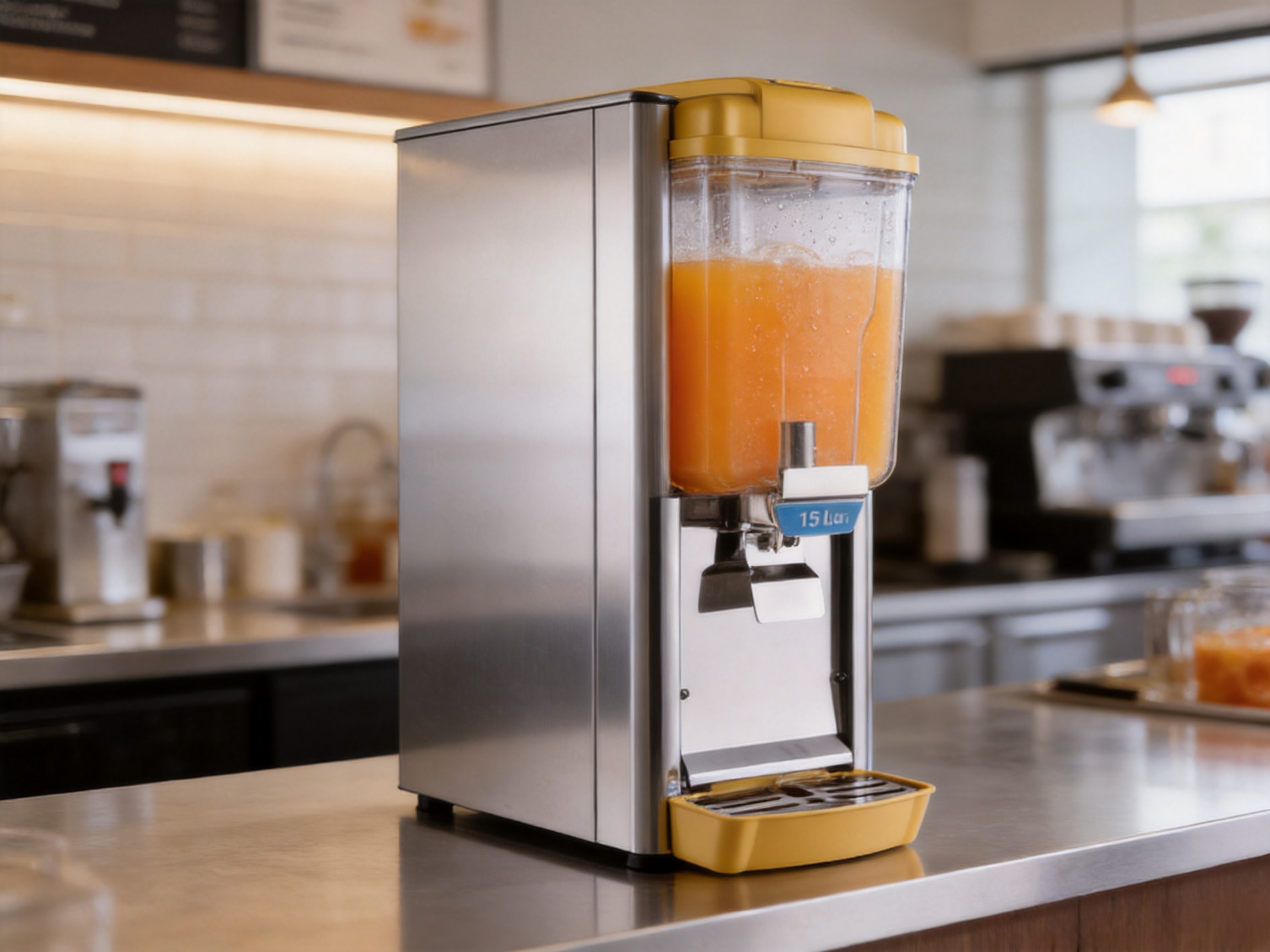
The 15L Spraying/Stirring Commercial Juice Dispenser is a single-tank refrigerated beverage dispenser intended for professional use. Its capacity is large enough for regular customer service while remaining compact enough for counters and beverage stations with limited available space. The transparent tank allows operators and customers to see the beverage level, while the stainless steel panels create a clean, professional appearance that suits commercial environments.
The central purpose of the machine is to cool and circulate prepared juice. It is not designed to cook, pasteurize, freeze, or produce ice. Its “refrigeration only” specification should therefore be understood clearly: the beverage must be prepared and handled according to the operator’s own food safety procedures before being placed in the dispenser.
The machine is supplied in a design that supports two circulation approaches. Spraying circulation moves the beverage through a spray-style distribution system, helping create an attractive visual effect while supporting movement throughout the tank. Stirring circulation uses a mechanical stirring action to keep the beverage moving and evenly distributed. The choice between the two depends on the beverage formulation, presentation preference, and operating requirements of the site.
| Item | Specification |
| Model | PL-115A/AJ |
| Product type | Commercial refrigerated juice dispenser |
| Tank capacity | 15 liters |
| Operating mode | Spraying or stirring circulation |
| Spraying power | 200W |
| Stirring power | 150W |
| Temperature range | Approximately 7°C to 12°C |
| Net weight | 15 kg |
| Overall dimensions | 210 × 450 × 665 mm |
| Refrigeration function | Refrigeration only |
The dimensions make the unit particularly suitable for locations where counter depth and vertical clearance must be considered carefully. Before ordering, operators should verify the available counter space, the location of electrical outlets, ventilation requirements, access for cleaning, and the clearance needed to remove or service the tank.
2. Design and Construction
Stainless Steel Exterior Panels
Commercial foodservice equipment is exposed to moisture, splashes, cleaning chemicals, frequent handling, and daily movement of staff. The stainless steel exterior panels of this dispenser are intended to provide a durable and easy-to-clean outer structure. Stainless steel also contributes to a professional appearance, which is important when equipment is positioned in front of customers.
The metallic finish can coordinate with other commercial equipment, including refrigerated counters, stainless steel worktables, ice machines, cooking appliances, and display fixtures. More importantly, smooth exterior panels reduce the number of areas where dust, spilled beverage, or residue can accumulate. Regular cleaning remains necessary, but the surface design supports practical sanitation routines.
Transparent Beverage Tank
The transparent tank provides continuous visibility of the beverage. Staff can quickly identify whether the machine needs to be refilled, while customers can see the available product and its presentation. This is useful in self-service areas, buffet lines, convenience stores, and beverage counters where quick visual communication encourages purchase decisions.
Visibility also supports inventory control. Instead of opening the machine repeatedly to check the remaining quantity, an operator can estimate the level from the outside. This helps staff plan replenishment during peak periods and reduces unnecessary interruptions to service.
Compact Single-Tank Layout
A single-tank design offers a practical balance between service capacity and equipment footprint. Large multi-tank dispensers may be appropriate for high-volume venues with several beverage varieties, but they also require more counter area, more cleaning time, and a larger initial investment. A 15-liter tank is often more suitable for businesses that serve one primary juice product or need a compact supplemental beverage station.
The narrow footprint is particularly useful for small cafés, independent restaurants, snack shops, food stalls, hotel breakfast areas, and retail counters. The machine can be placed near a checkout area, beside a food display, or within a dedicated beverage preparation zone, provided that sufficient ventilation and cleaning access are maintained.
3. Spraying and Stirring Circulation Modes
Spraying Circulation
The spraying version uses a circulation approach that moves the juice through a spray-style system. This movement helps distribute the beverage throughout the tank and can create a visually appealing display. For drinks that benefit from continuous circulation and an attractive presentation, spraying can contribute to the overall customer experience.
The spraying mode is rated at 200W. Power consumption in actual operation will depend on ambient temperature, beverage temperature at loading, usage frequency, ventilation, and the operating cycle of the refrigeration system. Operators should follow the equipment instructions and use appropriate electrical protection rather than relying only on the rated wattage when planning an installation.
Spraying circulation may be especially useful when the drink is relatively uniform and the visual movement of the product is part of the selling presentation. It is important, however, to ensure that the beverage formulation is compatible with the circulation system. Drinks containing large fruit pieces, seeds, excessive pulp, or rapidly settling particles should be evaluated before routine commercial use.
Stirring Circulation
The stirring version uses mechanical movement to support consistency throughout the tank. It operates at a listed power rating of 150W. Stirring can be a practical choice for beverages that need gentle, continuous movement to reduce separation and help maintain a more uniform taste from the beginning to the end of the service period.
Consistent circulation is important because some beverages naturally separate over time. Ingredients with different densities can settle or form layers, especially when the machine is used for several hours. A suitable stirring action helps reduce this effect, although it does not replace proper beverage preparation, filtration, recipe control, or cleaning.
The stirring mode may also be preferred where a quieter, less visually active presentation is desired. Operators should select the mode according to the beverage characteristics and the intended customer experience. Since the product information identifies both spraying and stirring configurations, buyers should confirm the required version when placing an order.
How Circulation Supports Beverage Quality
Cooling alone does not guarantee a consistent beverage. If the juice is cold at the bottom but warmer near the top, or if ingredients settle during service, customers may receive different taste experiences at different times. Circulation supports a more even distribution of temperature and ingredients within the tank.
The result can include more consistent flavor, improved visual appearance, and fewer manual interventions. Staff do not need to stir the beverage repeatedly with a separate tool, which can improve workflow and reduce unnecessary contact with the product. Even so, operators should inspect the beverage regularly and follow their own food safety and cleaning procedures.
4. Refrigeration Performance
The dispenser uses commercial refrigeration technology to maintain a chilled product temperature. Its stated temperature range is 7°C to 12°C. This range is appropriate for many chilled juice service applications, although the exact operating result will depend on the beverage starting temperature, room conditions, tank fill level, frequency of dispensing, and installation environment.
For best performance, operators should load the tank with properly chilled beverage whenever possible. Using the machine to cool a large quantity of warm liquid from room temperature can extend the time required to reach the desired serving range and may place unnecessary demand on the refrigeration system. Pre-chilling the beverage also supports more stable operation during busy service periods.
The machine is intended for refrigeration only. It should not be used as a substitute for a food preparation refrigerator or a pasteurization system. Prepared juice should be produced, stored, and handled in accordance with applicable local food safety requirements. The dispenser’s role is to maintain a chilled serving condition and present the beverage conveniently.
Temperature Stability in Daily Service
Temperature stability is influenced by several operating factors. A machine placed in direct sunlight, beside a hot cooking appliance, or in a poorly ventilated corner may require more time to cool and may experience reduced efficiency. Adequate space around the unit helps heat leave the refrigeration system and supports dependable performance.
Opening, dispensing, and refilling also affect temperature. Frequent service introduces warmer beverage and increases the thermal load. Staff should avoid adding large amounts of warm product to a tank that is already in service. Smaller, controlled replenishments using chilled product can make it easier to maintain a consistent serving temperature.
Regular cleaning is also connected to refrigeration performance. Residue on internal or external surfaces may interfere with proper operation, while blocked ventilation areas can reduce heat dissipation. A daily operating checklist should include product inspection, temperature verification, exterior cleaning, and confirmation that air passages remain unobstructed.
5. Advantages Over Less Specialized Alternatives
More Consistent Than Manual Beverage Containers
Some small businesses serve juice from open pitchers, insulated containers, or ordinary storage vessels. These approaches may have a low initial cost, but they often provide limited temperature control and no automatic circulation. The beverage can warm quickly, separate visibly, or require repeated manual stirring.
A refrigerated dispenser offers a more controlled service process. It keeps the beverage in a dedicated chilled tank and provides continuous circulation according to the selected configuration. This can improve consistency while reducing staff effort. The transparent tank also creates a more professional presentation than a covered container placed behind the counter.
More Compact Than Large Multi-Tank Systems
At the other end of the market, large multi-tank dispensers may offer greater total capacity but can be excessive for businesses that serve a limited menu. A 15-liter single-tank model uses less counter space and can reduce the number of components requiring cleaning. It is a suitable middle option between manual containers and large beverage systems.
Compact equipment can also simplify store layout. Small operators often need to allocate counter area to coffee machines, ovens, refrigerated displays, cash registers, cooking equipment, and packaging supplies. The 210 × 450 × 665 mm overall dimensions allow the dispenser to fit into a more focused beverage station without dominating the work area.
Lower Operational Complexity
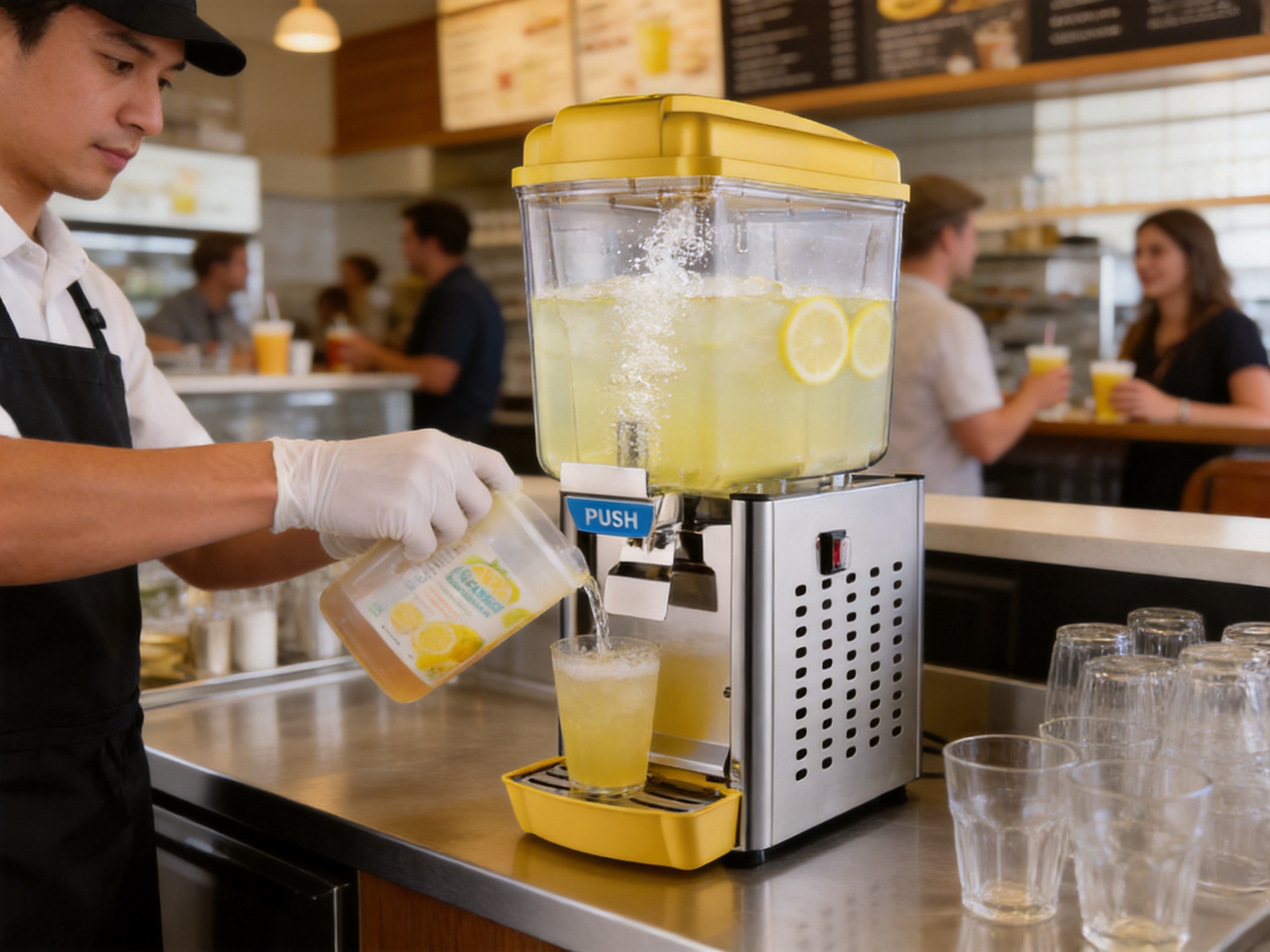
The product is designed for straightforward operation. Staff can fill the tank with prepared beverage, select the appropriate circulation mode, monitor the temperature and liquid level, and dispense the product as needed. A simpler operating process can reduce training time and make the equipment easier to transfer between shifts.
Simple operation does not mean that maintenance should be neglected. Commercial equipment must still be cleaned, inspected, and used within its intended limits. However, a focused refrigeration-and-circulation design can be easier to manage than a system with unnecessary functions that are not relevant to a small beverage menu.
Professional Appearance at a Practical Scale
The combination of stainless steel panels and a transparent tank gives the unit a commercial appearance without requiring a large installation. This can help a small business present chilled beverages in a way that appears organized and reliable. Customer-facing equipment contributes to perceived product quality, particularly in self-service or open-counter environments.
6. Benefits for Different Foodservice Businesses
Cafés and Coffee Shops
Cafés can use the dispenser for lemonade, fruit drinks, iced tea, flavored water, and other chilled beverages that complement coffee and bakery products. Its relatively small footprint allows it to occupy a designated cold-drink space without interfering with espresso preparation or pastry display areas.
A single 15-liter tank can support a focused beverage offering and allow the café to test a new juice product without committing to a larger system. Operators can also use it seasonally, increasing cold beverage sales during warmer months and repositioning the equipment when the menu changes.
Restaurants and Fast-Food Counters
Restaurants can place the dispenser near the order pickup area or within a front-of-house beverage station. The visible tank helps customers identify the available drink, while the circulation system supports a consistent product throughout meal periods.
For fast-food operations, the machine can serve as a supplemental beverage option alongside carbonated drink equipment. Since the tank is dedicated to one product, staff can maintain a specific recipe and reduce the risk of flavor crossover that may occur when the same container is used for multiple beverages.
Convenience Stores
Convenience stores often need equipment that can operate in a limited space while supporting impulse purchases. A visible refrigerated juice tank can attract attention near prepared foods, sandwiches, snacks, or the checkout area. The 15-liter capacity provides a manageable amount of product for locations with moderate daily demand.
Store employees can monitor the liquid level quickly and plan refills based on sales patterns. A compact dispenser may also be easier to integrate into a store remodeling project than a larger beverage station.
Hotels, Buffets, and Institutional Dining
In breakfast buffets and institutional dining facilities, a chilled juice dispenser can provide a dedicated service point for one beverage selection. The transparent tank allows guests and service staff to see the remaining product, while the circulation function supports an even presentation over the service period.
Facilities should establish clear cleaning, refilling, and temperature-check procedures because buffet equipment may be used continuously for several hours. The product’s simple format makes it suitable for inclusion in a standardized operating routine.
Bars, Snack Shops, and Dessert Businesses
Bars and snack shops can use the unit for fruit-based mixers, non-alcoholic refreshments, and chilled specialty drinks. Dessert businesses may pair it with ice cream, fried ice cream rolls, waffles, or other sweet products to create a broader menu.
The dispenser should be used only with beverages compatible with its circulation and dispensing system. Operators should evaluate viscosity, pulp content, sugar concentration, and the presence of solid ingredients before selecting a recipe for commercial service.
7. Manufacturing Strengths and Quality Approach
The manufacturer, Spelor Electrical Appliances (Zhejiang) Co., Ltd., is described as a professional producer integrating design, research and development, manufacturing, sales, and service. This integrated structure is valuable for commercial equipment buyers because product development, production control, customer support, and after-sales service can be coordinated within one business organization.
The company operates more than 60,000 square meters of modern production facilities and specializes in commercial refrigeration, kitchen equipment, and buffet equipment. Its broader product portfolio includes ice cream machines, juice dispensers, fried ice cream machines, refrigeration cabinets, slush machines, flake ice machines, cooking equipment, griddles, fryers, insulation products, barbecue equipment, and buffet solutions.
A broad product range can support stronger manufacturing experience across related equipment categories. Refrigeration knowledge, sheet-metal fabrication, foodservice design, electrical assembly, and product testing are relevant to multiple types of commercial appliances. For buyers seeking a long-term supplier, this breadth can be more useful than working with a company that produces only one isolated product type.
Integrated Design and Development
Integrated design and research and development allow the manufacturer to consider practical issues such as counter dimensions, component arrangement, cleaning access, operating simplicity, exterior appearance, and refrigeration performance during product development. These considerations are particularly important in foodservice equipment, where a product must perform reliably while fitting into a busy working environment.
The PL-115A/AJ reflects a focused design philosophy. It combines a moderate capacity, a compact structure, a transparent tank, stainless steel panels, and selectable circulation options. Rather than adding unnecessary functions, the design concentrates on chilled beverage service and ease of use.
Manufacturing Experience Across Commercial Equipment
Commercial refrigeration and foodservice equipment require repeatable production processes. Panels must be formed consistently, electrical components must be assembled correctly, refrigeration components must be installed carefully, and finished units must be checked before shipment. A manufacturer with dedicated facilities and experience across several product categories is positioned to develop standardized production procedures and quality checkpoints.
For international buyers, manufacturing capability also matters when discussing packaging, documentation, replacement parts, product variations, and future orders. A supplier with established production resources may be able to support more consistent purchasing than a small workshop operating without a structured product platform.
OEM and ODM Support
The company provides OEM and ODM services based on customer drawings or requirements. This is relevant for distributors, restaurant groups, equipment importers, and foodservice brands that need customized products. Possible project discussions may involve exterior colors, logos, electrical standards, packaging, labeling, tank configuration, operating instructions, or other commercial requirements.
Customization should be evaluated carefully. Any modification to refrigeration, circulation, electrical input, materials, or dimensions may affect performance, certification, production lead time, and cost. A responsible OEM or ODM project should therefore begin with a clear technical specification and a review of intended markets.
8. Production and Quality Considerations
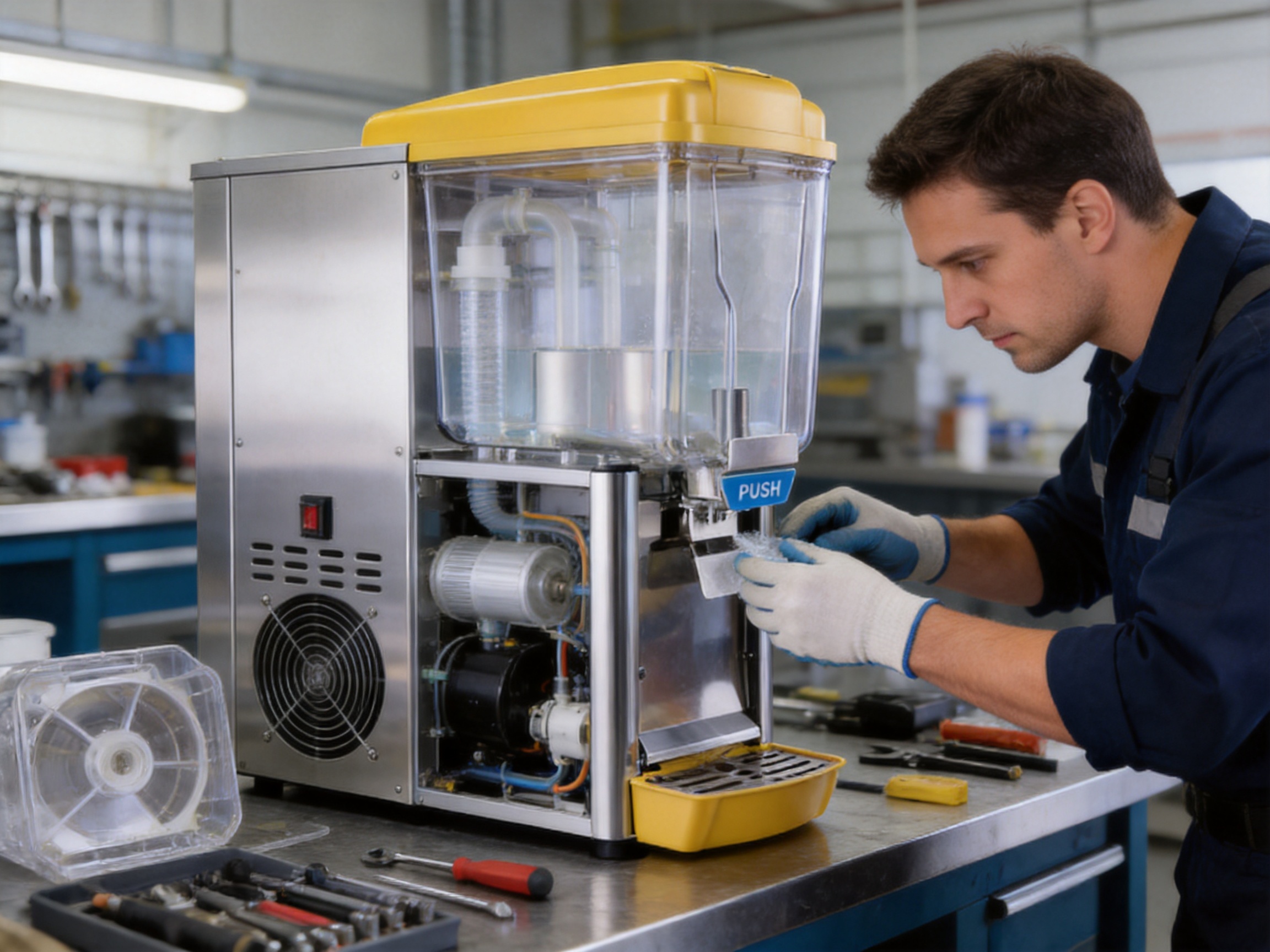
Although specific factory process details are project-dependent, commercial juice dispensers generally require coordinated work across several manufacturing stages. These stages may include material preparation, panel forming, surface finishing, tank and circulation assembly, refrigeration installation, electrical wiring, functional testing, cleaning inspection, packaging, and shipment preparation.
Material and Panel Preparation
Stainless steel panels must be cut and formed to the required dimensions. Accurate forming helps ensure that the exterior surfaces align correctly and that doors, covers, control areas, and service panels fit as intended. Smooth finishing is important for appearance and for routine cleaning.
Material selection should also be considered in relation to the intended foodservice environment. Surfaces exposed to water, juice, cleaning agents, and frequent handling need to be durable and practical. Food-contact components should be appropriate for their intended use and maintained according to the manufacturer’s instructions.
Refrigeration Assembly
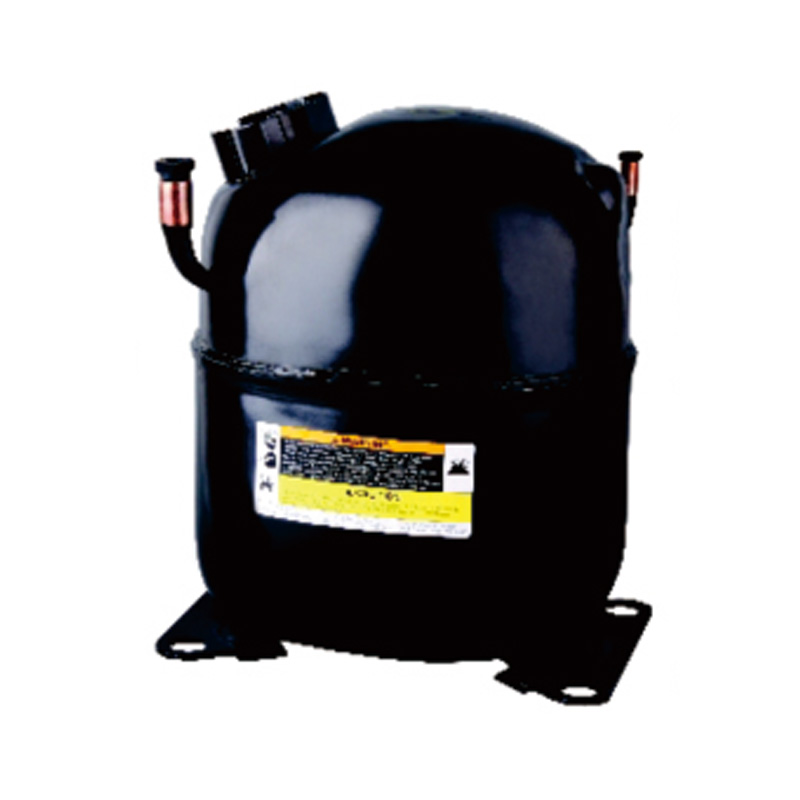
The refrigeration system is central to the machine’s purpose. Assembly quality can influence cooling stability, energy use, noise, service life, and operating reliability. Proper installation of refrigeration components, secure connections, suitable insulation, and appropriate testing are all important production considerations.
Factory testing should verify that the machine can operate correctly before packaging. Buyers may request information about inspection procedures, testing standards, electrical configurations, and documentation relevant to their market.
Circulation and Electrical Assembly
The spraying and stirring versions use different circulation arrangements and power ratings. Correct motor installation, wiring, control integration, and mechanical alignment are necessary for safe and consistent operation. Electrical components should be selected and assembled according to the destination market’s requirements.
Importers should confirm voltage, frequency, plug type, certifications, labeling, and user documentation before finalizing an order. These details are especially important when equipment is exported to multiple countries with different electrical standards.
Functional Inspection
A suitable inspection program may include checks for appearance, dimensions, tank condition, circulation function, refrigeration response, electrical safety, noise, leakage, and packaging integrity. The precise inspection method depends on the product configuration and customer requirements.
Buyers can improve procurement results by defining acceptance criteria in advance. A written specification should identify the model, capacity, dimensions, power ratings, temperature range, materials, accessories, packaging method, and documentation requirements. Clear requirements help reduce misunderstandings between the manufacturer, distributor, and end user.
9. Installation and Operating Guidance
Choosing the Installation Location
Place the dispenser on a stable, level surface capable of supporting its operating weight. The area should be clean, dry, and accessible for filling, dispensing, cleaning, and service. Avoid locations exposed to direct sunlight, excessive heat, water spray, or heavy grease.
Maintain appropriate clearance around ventilation areas and do not cover openings. The machine should not be pressed tightly against a wall if doing so restricts airflow or prevents access to service components. The installation site should also have a suitable electrical outlet and protection appropriate for commercial appliance use.
Preparing the Beverage
Use a beverage recipe that is compatible with the dispenser. Strain or process ingredients as necessary to remove large particles that could interfere with circulation or dispensing. The product information describes the dispenser as a refrigeration-only appliance, so beverage preparation, ingredient storage, and recipe control remain the responsibility of the operator.
Pre-chill the beverage before filling whenever possible. Do not exceed the tank’s rated 15-liter capacity. Avoid overfilling because sufficient space may be needed for circulation and to prevent spillage during operation.
Starting Service
Before service, inspect the tank, dispensing outlet, circulation system, power cord, and exterior surfaces. Confirm that the machine is clean and that the beverage is suitable for use. Select the spraying or stirring version appropriate to the product and switch on the equipment according to the operating instructions.
Monitor the beverage temperature and appearance during the first operating period. If unusual noise, leakage, odor, vibration, or electrical behavior occurs, stop using the machine and arrange an inspection. Staff should be trained to recognize these conditions instead of continuing operation until a minor problem becomes a major failure.
During Operation
Keep the tank covered or configured as intended by the manufacturer. Use clean utensils and follow hygienic procedures when refilling. Avoid mixing newly prepared product with old product unless the operator’s food safety procedure specifically permits it. A first-in, first-out approach can help control product rotation.
Check the liquid level at regular intervals and refill with chilled beverage when needed. Record temperature checks if required by the business’s food safety plan. Staff should also wipe spills promptly to prevent sticky residue and reduce slip or hygiene risks around the equipment.
10. Cleaning and Maintenance
Cleaning is essential for beverage quality, customer safety, and equipment longevity. Juice residue can contain sugar, pulp, flavoring, and other ingredients that may harden or support microbial growth if left inside the machine. The cleaning schedule should reflect the beverage recipe, operating hours, local regulations, and manufacturer instructions.
Routine Cleaning Steps
At the end of service, switch off and disconnect the machine according to the operating procedure. Drain any remaining beverage into an approved container or dispose of it according to the site’s food handling policy. Do not allow old beverage to remain in the tank simply because the machine is refrigerated.
Remove accessible components carefully and wash them with suitable food-contact cleaning materials. Rinse away detergent residue and allow parts to dry completely before reassembly. Clean the transparent tank, dispensing area, circulation components, seals, and exterior panels without using tools or chemicals that could damage the surfaces.
Never immerse electrical parts or refrigeration controls in water. If a component is difficult to remove or clean, consult the product manual or service provider rather than forcing it. Correct reassembly is important because improperly seated seals or circulation parts may cause leakage or uneven operation.
Preventive Maintenance
Inspect power connections, seals, tank condition, switches, and visible tubing or fittings at regular intervals. Keep ventilation areas free from dust and debris. If the machine becomes unusually noisy, takes longer to cool, cycles abnormally, or shows reduced circulation, arrange professional service.
Preventive maintenance is generally less expensive than emergency repair during a peak sales period. Businesses should keep a record of cleaning, inspections, service visits, and replacement components. This information can help identify recurring problems and support warranty or after-sales discussions.
11. Purchasing and Commercial Evaluation
When evaluating a commercial juice dispenser, buyers should consider more than the initial purchase price. The most suitable machine is the one that matches the beverage type, sales volume, available space, staff capability, electrical environment, and expected service life.
| Evaluation area | Questions for the buyer |
| Capacity | Is a 15-liter tank suitable for expected hourly and daily demand? |
| Circulation | Is spraying or stirring better suited to the selected beverage? |
| Temperature | Does the 7°C to 12°C range match the required serving condition? |
| Space | Can the site accommodate 210 × 450 × 665 mm plus service clearance? |
| Power | Does the local voltage and frequency match the ordered configuration? |
| Cleaning | Can staff access and clean all product-contact components efficiently? |
| Service | Are technical support and replacement parts available for the destination market? |
| Customization | Are OEM or ODM changes required for branding, labeling, or electrical standards? |
Buyers should also assess the total cost of ownership. This includes freight, installation, electricity, cleaning labor, replacement parts, service, downtime, and the expected operating life of the machine. A compact dispenser that reduces labor and maintains product consistency may provide stronger commercial value than a cheaper but less capable alternative.
12. OEM, ODM, and International Supply Opportunities
For distributors and foodservice equipment importers, the product can serve as a base model for broader commercial programs. A manufacturer offering OEM and ODM support may help adapt the dispenser to different customer segments, retail channels, and regional market requirements.
Potential customization discussions may include brand identification, carton printing, user manuals, product labels, control markings, colors, plug specifications, and packaging protection. More extensive modifications should be reviewed by technical teams because changes to the tank, refrigeration system, or circulation method may affect certification and performance.
International buyers should request complete commercial documentation before placing an order. Important documents may include product specifications, packing information, electrical data, operating instructions, warranty terms, spare-parts recommendations, and inspection records where applicable.
Logistics planning is also important. The buyer should confirm shipping dimensions, loading method, carton or crate protection, destination port requirements, insurance responsibilities, and procedures for handling the equipment after arrival. Clear communication at the purchasing stage helps prevent delays and protects the expected performance of the equipment.
13. Why Manufacturer Support Matters
A commercial appliance is part of an operating system rather than an isolated object. If the dispenser stops working during a high-demand period, the business may lose beverage sales, staff time, and customer confidence. Responsive manufacturer and distributor support can reduce the effect of unexpected problems.
The manufacturer’s stated service scope includes pre-sales consultation, product customization, flexible logistics and payment solutions, and after-sales maintenance. These capabilities are useful when a buyer needs help selecting the appropriate circulation type, preparing a repeat order, sourcing replacement components, or resolving an operational issue.
After-sales support should be evaluated before purchase. Buyers should ask how technical questions are handled, how spare parts are identified, what warranty coverage applies, and whether service documentation is available. A supplier that communicates clearly before the order is more likely to support a structured relationship after delivery.
14. Sustainability and Operating Efficiency
Efficient equipment use is relevant to both operating cost and environmental responsibility. The dispenser’s compact design requires less space than many larger beverage systems, which may support more efficient use of the store layout. The listed power ratings of 200W for spraying and 150W for stirring also provide a clear basis for estimating electrical requirements, although actual consumption depends on operating conditions.
Operators can improve efficiency by pre-chilling beverages, keeping the machine away from heat sources, maintaining clean ventilation areas, avoiding unnecessary door or cover opening, and switching the equipment off when it is not required. Overfilling, underfilling, or repeatedly loading warm product can reduce cooling efficiency and increase operating demand.
Durable construction and preventive maintenance may extend the useful life of the equipment. Longer service life can reduce the frequency of replacement and support better value from the materials and energy used in manufacturing. Proper cleaning also prevents premature damage caused by hardened sugar, corrosion, or neglected seals.
15. Recommended Use Cases and Limitations
The dispenser is well suited to chilled, relatively uniform beverages that benefit from continuous circulation and visible presentation. Examples may include prepared fruit drinks, lemonade, iced tea, flavored water, and other compatible non-carbonated beverages.
Operators should evaluate products containing heavy pulp, large particles, seeds, thick syrups, dairy ingredients, or rapidly separating components before using them commercially. The machine is not described as a slush machine, ice cream machine, freezer, cooking appliance, or pasteurizer. Using it outside its intended purpose may reduce performance and create safety or maintenance problems.
The 15-liter capacity is a strength for compact and moderate-volume operations, but businesses with very high demand may need multiple units or a larger multi-tank system. Similarly, a single tank is ideal for one beverage selection at a time but does not provide the menu flexibility of a multi-flavor dispenser.
16. Frequently Asked Questions
Q1: What is the capacity of the dispenser?
The tank capacity is 15 liters. This provides a practical volume for small to medium-sized cafés, restaurants, convenience stores, snack shops, buffet stations, and similar foodservice operations.
Q2: Does the machine spray or stir the beverage?
The product is available in spraying and stirring configurations. The spraying version is listed at 200W, while the stirring version is listed at 150W. Buyers should confirm the preferred configuration when ordering.
Q3: What temperature range does it provide?
The stated temperature range is approximately 7°C to 12°C. Actual performance depends on ambient conditions, beverage starting temperature, filling practices, ventilation, and usage frequency.
Q4: Can it freeze juice or make slush?
No. The product specification identifies it as a refrigeration-only dispenser. It is designed to chill and circulate prepared beverages, not to freeze juice or produce slush.
Q5: Is the tank transparent?
Yes. The transparent tank allows staff to monitor the beverage level and enables customers to see the product presentation.
Q6: What are the overall dimensions?
The listed overall dimensions are 210 × 450 × 665 mm. Buyers should also allow additional space for ventilation, filling, cleaning, and service access.
Q7: What is the net weight?
The net weight is approximately 15 kg. The installation surface should be stable and capable of supporting the machine and its beverage load.
Q8: What type of business can use this machine?
It can be used in cafés, restaurants, fast-food counters, convenience stores, bars, snack shops, hotel breakfast areas, buffet stations, institutional dining facilities, and other locations serving chilled beverages.
Q9: Can it be used for beverages with pulp?
Compatibility depends on the amount and size of the pulp and the beverage’s viscosity. Operators should evaluate the recipe carefully and avoid ingredients that could block or damage the circulation or dispensing system.
Q10: Does the machine replace food safety procedures?
No. The dispenser provides refrigeration and circulation, but operators remain responsible for beverage preparation, ingredient storage, temperature monitoring, cleaning, product rotation, and compliance with local food safety regulations.
Q11: What makes the product suitable for small businesses?
Its 15-liter capacity, compact dimensions, transparent tank, stainless steel exterior, straightforward operation, and refrigeration-only design make it easier to integrate into smaller beverage stations than many larger systems.
Q12: Does the manufacturer offer customization?
The manufacturer states that it provides OEM and ODM services based on customer drawings or requirements. Customization details should be discussed in advance, including branding, packaging, electrical specifications, documentation, and any technical changes.
Q13: What should be checked before ordering?
Buyers should confirm the circulation mode, capacity, dimensions, electrical requirements, temperature range, destination-market compliance, packaging, warranty, spare parts, lead time, and after-sales support arrangements.
Q14: How should the dispenser be cleaned?
It should be drained, disconnected, and cleaned according to the operating instructions. Product-contact parts should be washed and rinsed with suitable materials, while electrical components should be protected from water. The exact cleaning schedule should reflect the beverage and local requirements.
Q15: How can cooling performance be improved?
Use pre-chilled beverage, keep the equipment away from heat sources and direct sunlight, maintain ventilation clearance, avoid overfilling, and clean the machine regularly. These practices help reduce thermal load and support stable operation.
17. Final Assessment
The 15L Spraying/Stirring Commercial Juice Dispenser is a focused solution for businesses that need dependable chilled beverage service in a compact format. Its combination of 15-liter capacity, transparent product visibility, stainless steel panels, spraying or stirring circulation, and a 7°C to 12°C refrigeration range addresses the practical needs of many small and medium-sized foodservice operations.
Compared with manual beverage containers, the machine offers more consistent cooling and circulation. Compared with large multi-tank systems, it requires less space and may involve less operational complexity. These advantages make it particularly appropriate for businesses that want to improve beverage presentation and service efficiency without installing a large beverage platform.
The manufacturer’s integrated design, research and development, production, sales, and service capabilities provide additional value for commercial buyers. Its more than 60,000-square-meter manufacturing base and broader range of refrigeration, kitchen, and buffet equipment indicate experience relevant to professional foodservice applications. OEM and ODM support can also help distributors and foodservice brands develop solutions for different markets.
For the best result, buyers should select the correct circulation mode, verify the electrical configuration, plan adequate installation clearance, use compatible beverages, and establish disciplined cleaning and maintenance procedures. When these requirements are addressed, the dispenser can support consistent beverage quality, attractive presentation, efficient staff workflow, and long-term commercial value.
References
1. Product specification sheet for model PL-115A/AJ, 15L Spraying/Stirring Commercial Juice Dispenser.
2. Commercial refrigeration equipment operating and maintenance principles.
3. General foodservice equipment sanitation and beverage-handling practices.
4. Manufacturer-provided company profile and product portfolio information.
5. General guidance for OEM and ODM procurement of commercial foodservice equipment.
Product: 15L Spraying/Stirring Commercial Juice Dispenser

For exclusive deals and latest offers, sign up by entering your email address below.


-
spelor@spelor.com
-
+86-576-85229688
-
No.528, Changxi Road, Linhai City, Zhejiang Province, China
Commercial Refrigeration Equipment Manufacturer China
Copyright © 2025 by Spelor Electrical Appliances (Zhejiang) Co., Ltd. Rights Reserved.
