


 中文简体
中文简体High-Performance Refrigeration Compressors for Commercial Cold Drink Appliances
Admin 2026-08-14Commercial cold drink appliances depend on stable refrigeration to protect beverage quality, maintain serving temperatures, and support efficient daily operation. Whether installed in a juice dispenser, chilled beverage station, refrigerated cabinet, or other foodservice appliance, the compressor is one of the most important components in the refrigeration system. It provides the mechanical power required to circulate refrigerant, remove heat from the cabinet or beverage tank, and maintain the operating conditions required by the equipment.
The Hitachi refrigeration compressor offered for commercial cold drink appliances is designed as an optional component and spare part for professional refrigeration applications. It is not sold separately as a standalone consumer product. Instead, it is supplied as part of a complete equipment solution, replacement program, or customized procurement arrangement coordinated with Spelor Electrical Appliances (Zhejiang) Co., Ltd. This approach helps ensure that the compressor is selected according to the appliance design, refrigeration circuit, electrical requirements, and intended operating environment.
For beverage equipment manufacturers, distributors, service organizations, and commercial kitchen operators, the value of a refrigeration compressor is determined by more than cooling output alone. Long-term reliability, operating efficiency, compatibility, serviceability, and manufacturing consistency are equally important. A compressor that performs reliably under frequent door openings, repeated dispensing cycles, high ambient temperatures, and extended operating hours can help reduce interruptions and protect the quality of the beverages being served.
This article explains the role of the compressor, its principal advantages, the ways it can support commercial cold drink appliances, and the manufacturing strengths behind the overall equipment supply process. It also describes how Spelor supports OEM and ODM projects, replacement requirements, and integrated foodservice equipment procurement.
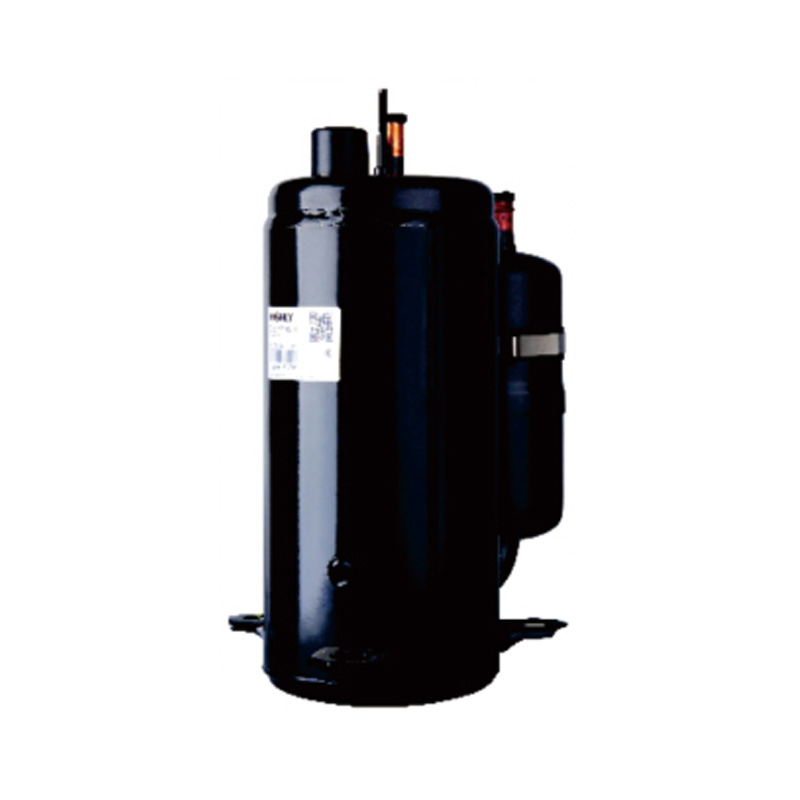
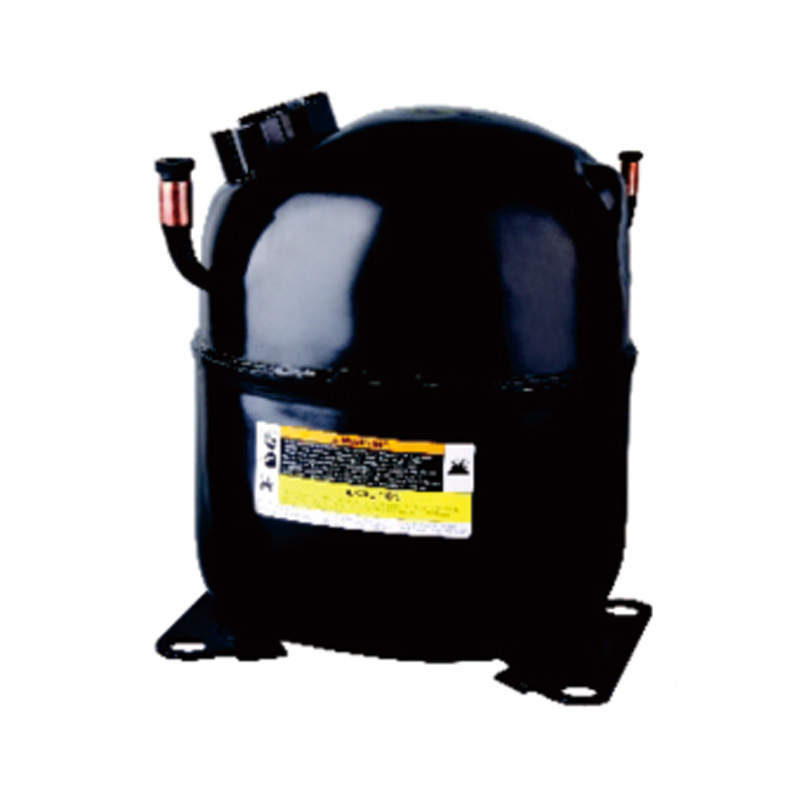
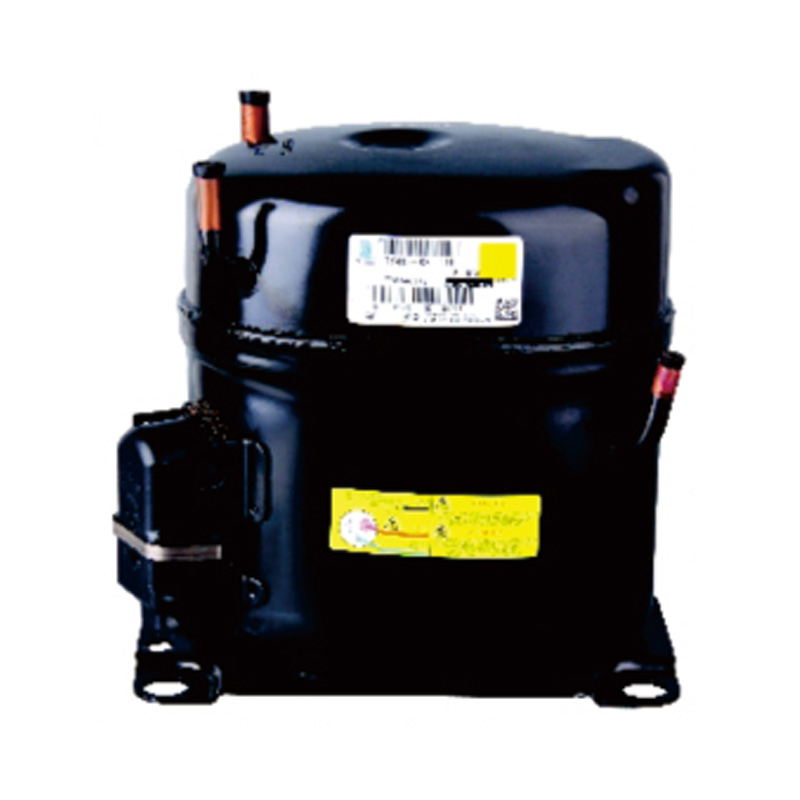
Hitachi Refrigeration Compressor for Commercial Cold Drink Appliances(Not sold separately)
1. The Role of a Compressor in Commercial Beverage Refrigeration
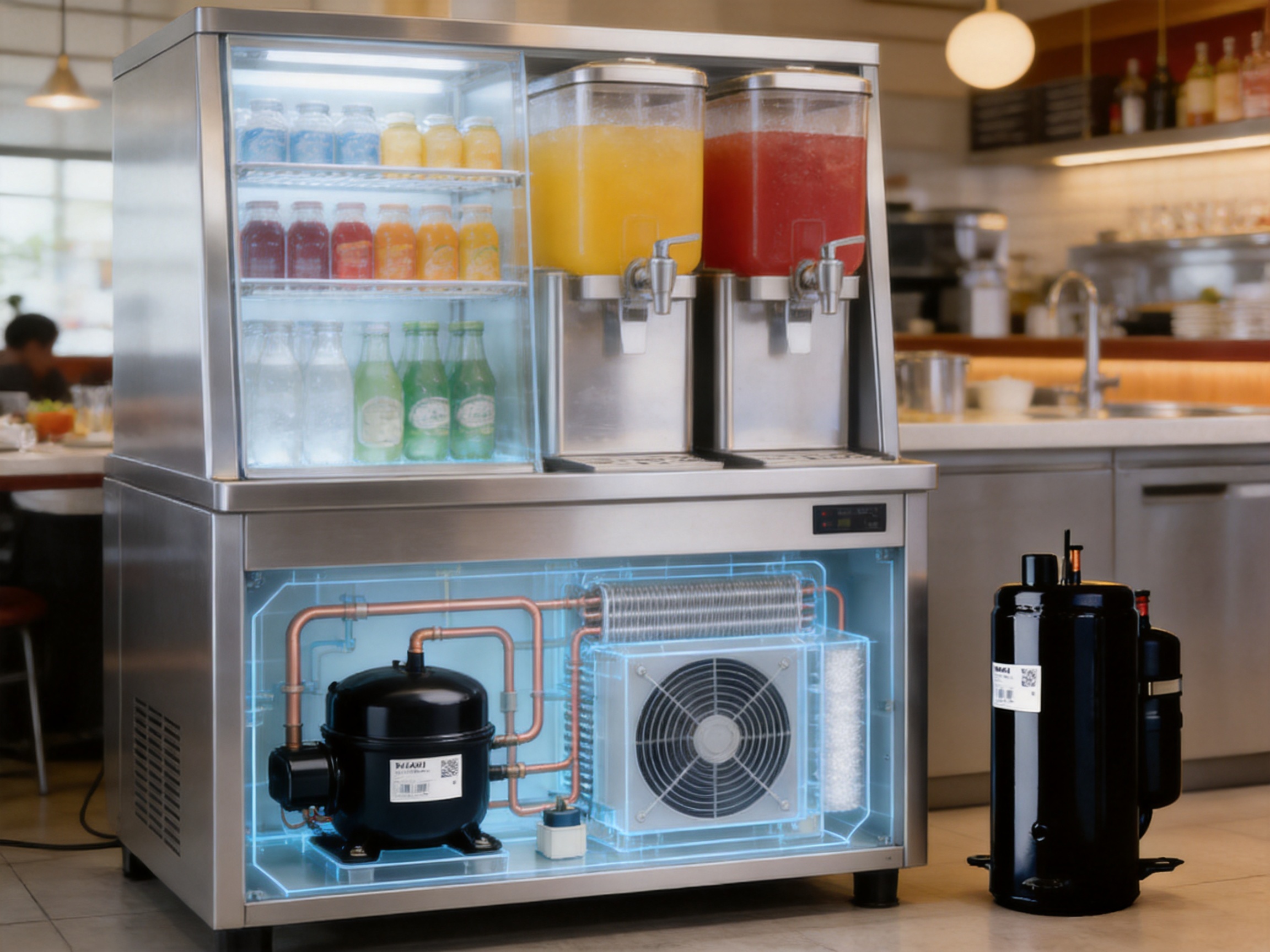
A refrigeration compressor is the driving element of a vapor-compression refrigeration system. It receives low-pressure refrigerant vapor from the evaporator and compresses it into a high-pressure, high-temperature vapor. The refrigerant then travels through the condenser, where heat is released to the surrounding environment. After passing through the expansion device, the refrigerant enters the evaporator at a lower pressure and temperature, allowing it to absorb heat from the beverage compartment or refrigerated space.
This cycle is repeated continuously while cooling is required. The compressor therefore influences the speed of temperature reduction, the stability of the target temperature, the energy consumption of the equipment, and the service life of other refrigeration components. An unsuitable compressor may cause slow cooling, excessive cycling, abnormal noise, unstable pressure, or unnecessary energy use. A properly matched compressor supports a balanced and dependable system.
Commercial cold drink appliances often experience conditions that are more demanding than those found in residential refrigeration. They may operate throughout the day, serve a large number of customers, and be installed in restaurants, convenience stores, beverage shops, bars, hotels, supermarkets, schools, hospitals, or institutional dining areas. The equipment may also be exposed to warm kitchens, crowded service counters, frequent cleaning, and fluctuating beverage loads.
In these environments, the compressor must work together with the condenser, evaporator, capillary tube or expansion device, refrigerant, fan, controller, insulation, and cabinet structure. Compressor selection is therefore a system-engineering decision. The rated cooling capacity, displacement, refrigerant type, voltage, frequency, starting characteristics, mounting dimensions, and operating temperature range should all be considered before installation.
1.1 Supporting Beverage Freshness and Serving Quality
Temperature has a direct effect on the taste, freshness, and serving quality of cold beverages. Juice, tea, flavored drinks, water, and other prepared beverages need suitable temperature control to provide a consistent customer experience. A refrigeration compressor with effective cooling performance can help the appliance return to its target temperature after dispensing or after warm beverages are loaded.
Rapid heat removal is particularly valuable in high-use locations. Every time a lid is opened, a drink is dispensed, or a container is refilled, heat can enter the refrigerated area. If the refrigeration system recovers too slowly, the beverage temperature may rise and remain unstable. A responsive compressor and correctly designed refrigeration circuit help the equipment recover more efficiently, supporting reliable service during busy periods.
1.2 Maintaining Stable Operating Conditions
Cooling capacity alone does not define a good commercial compressor. Stable operation is equally important. If the system repeatedly starts and stops unnecessarily, the electrical load may increase and the components may experience additional mechanical stress. If the compressor runs continuously because the system is undersized or poorly matched, energy use and wear may also increase.
A well-selected compressor operates within a coordinated control strategy. The control system monitors temperature and operating conditions and can adjust the refrigeration cycle according to actual demand. This type of intelligent control helps balance cooling performance and energy consumption. The precise control configuration depends on the complete appliance design, but the compressor must be suitable for the control logic and operating range used by the equipment manufacturer.
2. Main Advantages of the Hitachi Refrigeration Compressor
The Hitachi refrigeration compressor is selected for commercial beverage refrigeration applications because of its reputation for performance, reliability, and suitability for demanding equipment. When integrated into a compatible cold drink appliance, it can provide several practical advantages over generic or poorly matched alternatives.
2.1 Reliable Cooling Performance
Commercial beverage equipment must produce consistent cooling over long operating periods. The compressor is designed to deliver dependable refrigeration performance, helping remove heat efficiently from beverage tanks, refrigerated compartments, or cold storage areas. This supports faster temperature reduction after loading and improved temperature recovery during repeated service cycles.
Compared with low-cost compressors selected only by nominal power, a properly specified Hitachi compressor can provide a more dependable match between cooling demand and system design. The objective is not simply to install the largest available compressor. Instead, the compressor should deliver suitable capacity within the operating range required by the appliance. Correct matching can help prevent both insufficient cooling and unnecessary overcapacity.
For commercial users, reliable cooling contributes to operational continuity. Beverage equipment that reaches and maintains the intended temperature can reduce product waste, limit service interruptions, and provide a more predictable customer experience.
2.2 Stable Temperature Control
Cold drink appliances may need to maintain a narrow temperature range while beverage demand changes throughout the day. The compressor supports the refrigeration cycle that allows the controller to manage these temperature changes. When combined with suitable sensors and control components, it helps maintain steady operating conditions rather than allowing excessive temperature swings.
Stable temperature control is useful for both product quality and equipment management. Consistent beverage temperature can improve flavor perception and customer satisfaction. It can also reduce the risk that an operator will need to make frequent manual adjustments. For multi-unit installations, stable performance across equipment can simplify operating procedures and staff training.
2.3 Efficient Energy Consumption
Energy consumption is a major operating cost for commercial foodservice businesses. Refrigeration equipment may run for many hours each day, and the compressor is one of the principal users of electrical energy. The Hitachi compressor is designed with efficiency in mind, helping the refrigeration system achieve the required cooling output without unnecessary energy use.
Energy efficiency depends on the complete refrigeration system, including condenser cleanliness, ambient temperature, refrigerant charge, insulation, airflow, control settings, and usage patterns. Even so, selecting a compressor with suitable performance characteristics provides an important foundation for efficient operation. A compressor that is properly matched to the evaporator and condenser can reduce wasted capacity and support more economical daily operation.
Lower energy consumption may provide benefits beyond the electricity bill. It can reduce heat released into the surrounding room, lower the workload on air-conditioning systems, and contribute to a more comfortable working environment. In large commercial kitchens or stores with multiple refrigerated appliances, these benefits can become significant over time.
2.4 Durability for Commercial Use
Commercial equipment is expected to operate more frequently and for longer periods than many household appliances. The compressor must therefore be able to withstand repeated starts, extended running cycles, vibration, temperature variation, and the normal demands of professional foodservice environments.
Hitachi compressors are recognized for dependable construction and long-term operating stability. When the compressor is installed according to the equipment design and maintained correctly, it can help extend the service life of the refrigeration system. Durable components may also reduce the likelihood of unexpected shutdowns and help operators plan maintenance more effectively.
Durability does not eliminate the need for proper installation and service. Adequate ventilation, correct electrical protection, clean condenser surfaces, proper refrigerant charging, and suitable mounting are all essential. A quality compressor performs best when the entire system is designed and maintained to professional standards.
2.5 Reduced Maintenance Pressure
Unexpected refrigeration failures can create operational difficulties. A beverage shop may need to stop selling a product, a restaurant may need to discard prepared drinks, and a supermarket may need to remove an appliance from service. A reliable compressor can reduce the risk of such disruptions and support more predictable maintenance planning.
The compressor is also supplied through a professional equipment manufacturer rather than being promoted as an isolated, universal replacement. This allows technical teams to consider the appliance model, refrigeration circuit, electrical supply, and installation requirements before confirming the correct component. Proper identification helps prevent failures caused by using an incompatible compressor.
When a replacement is needed, coordinated component sourcing can shorten the time required to identify the correct part. It can also reduce the risk of repeated service visits, incorrect wiring, or modifications that may compromise system performance.
2.6 Intelligent Operating Coordination
Modern commercial refrigeration systems increasingly use intelligent control strategies to respond to actual operating requirements. The controller may consider cabinet temperature, beverage load, ambient conditions, compressor runtime, and recovery demand. The compressor works within this control system to provide cooling when required and reduce unnecessary operation when the target temperature has been reached.
This approach can improve the balance between performance and efficiency. Instead of operating at maximum output at all times, the system can respond to real demand. Such coordination may help reduce temperature fluctuations, lower energy use, and support longer component life. The final control function depends on the complete appliance and should be confirmed during product development or replacement evaluation.
3. Comparison with Generic Compressor Alternatives
Commercial refrigeration buyers often compare recognized compressor brands with generic alternatives based on initial purchase price. Initial price is important, but it is only one part of the total cost of ownership. A compressor that appears less expensive may create additional costs if it provides inadequate cooling, consumes more electricity, requires frequent service, or fails prematurely.
| Evaluation Area | Properly Matched Hitachi Compressor | Unverified Generic Alternative |
|---|---|---|
| Cooling performance | Selected according to the intended refrigeration application and operating conditions | May have uncertain capacity or unsuitable operating range |
| Temperature stability | Can support coordinated control in a compatible appliance | May cause unstable cycling or slow temperature recovery |
| Energy use | Designed with efficient operation in mind | Efficiency may vary and may not match the system design |
| Reliability | Recognized for dependable commercial performance | Quality and service life may be inconsistent |
| Replacement support | Can be confirmed through the equipment manufacturer | Technical information may be incomplete |
| System compatibility | Can be evaluated with the appliance circuit and control system | May require unplanned modifications |
| Long-term value | Supports stable operation and predictable maintenance | Lower initial cost may lead to higher operating risk |
The most important competitive advantage is system suitability. A compressor should not be judged solely by its brand name or physical size. It should be evaluated according to the complete application. Spelor can help customers confirm whether the selected compressor is appropriate for a specific commercial cold drink appliance, replacement requirement, or OEM project.
Another advantage is manufacturing coordination. When the compressor is incorporated into equipment produced by the same professional supplier, the refrigeration layout, cabinet design, electrical controls, and assembly process can be evaluated together. This is more effective than purchasing an unknown component and attempting to adapt it after the equipment has already been built.
4. Application Areas for Commercial Cold Drink Appliances
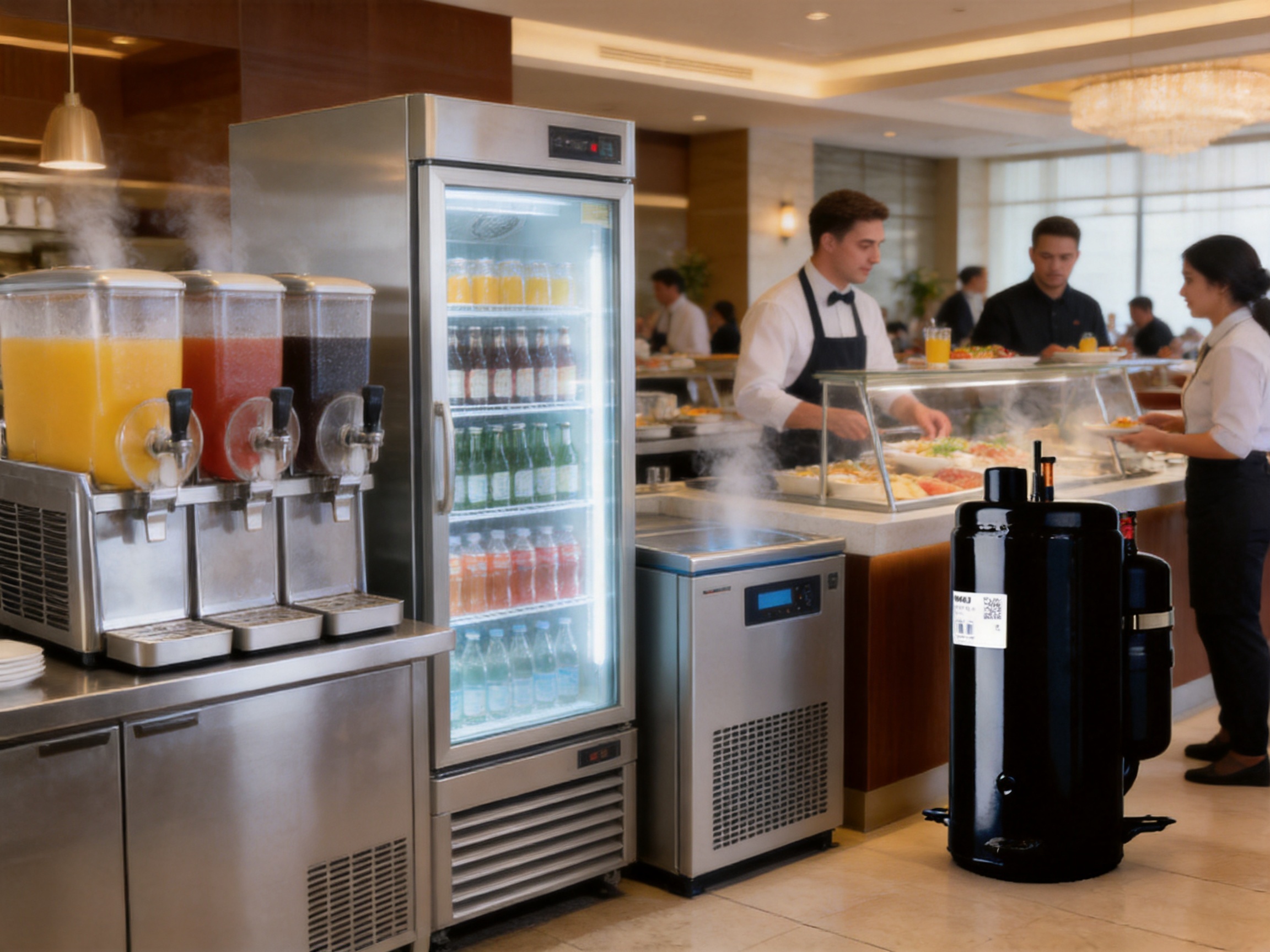
The compressor can be used in refrigeration systems for various commercial beverage applications, subject to technical confirmation. These applications may include juice dispensers, chilled beverage dispensers, refrigerated drink cabinets, beverage preparation stations, and other cold drink appliances requiring dependable temperature control.
4.1 Juice Dispensers
Juice dispensers are frequently used in breakfast restaurants, hotels, cafeterias, buffets, beverage shops, and catering facilities. They may need to keep one or more beverage tanks cool while allowing frequent dispensing throughout the service period. The refrigeration compressor supports the removal of heat from the beverage area and helps the dispenser recover after repeated use.
In multiple-tank equipment, the refrigeration system must be designed to distribute cooling effectively among the beverage compartments. Compressor selection should consider the number and volume of tanks, the desired temperature, ambient conditions, insulation, and expected customer traffic. The Hitachi compressor may be integrated into a system designed around these factors.
4.2 Refrigerated Beverage Cabinets
Refrigerated beverage cabinets must maintain suitable temperatures for bottled or packaged drinks. They may be installed in supermarkets, convenience stores, restaurants, bars, hotels, and institutional foodservice areas. Frequent door openings can introduce warm air and increase the cooling load. A reliable compressor helps the cabinet recover efficiently and maintain product availability.
For glass-door cabinets, lighting, door seals, airflow, and display requirements also affect the refrigeration load. The compressor should be selected after evaluating the entire cabinet design. When used within a properly engineered cabinet, it can support reliable display cooling while helping manage energy consumption.
4.3 Beverage Counters and Service Stations
Bars, fast-food restaurants, coffee shops, and snack stores may require compact under-counter or countertop refrigeration. These appliances often operate in busy spaces where ventilation and installation clearances are limited. A compressor with dependable performance and suitable dimensions can help the equipment function consistently without occupying unnecessary service space.
Compact commercial appliances still require careful engineering. The condenser must receive sufficient airflow, the compressor must be securely mounted, and the electrical system must be protected. Professional manufacturing helps ensure that these elements are considered together.
4.4 Customized Beverage Equipment
Some customers require nonstandard beverage capacity, cabinet dimensions, voltage configurations, branding, control panels, or installation arrangements. In these cases, the compressor becomes part of an OEM or ODM development project. Spelor can review drawings, product requirements, target markets, and operating conditions to help determine an appropriate refrigeration solution.
Customization may involve more than changing the external appearance. It can include modifications to the refrigeration layout, storage volume, cooling method, control interface, insulation structure, electrical configuration, and service access. Component selection should be completed during the engineering stage so that performance and reliability are protected.
5. Manufacturing Strengths Behind the Equipment Solution
Spelor Electrical Appliances (Zhejiang) Co., Ltd. is a professional manufacturer integrating design, research and development, manufacturing, sales, and service. Formerly known as Zhejiang Spelor Refrigeration Equipment Co., Ltd., the company operates modern production facilities covering more than 60,000 square meters.
The company specializes in commercial refrigeration, commercial kitchen equipment, and buffet equipment. Its product range includes ice cream machines, juice dispensers, fried ice cream machines, refrigeration cabinets, slush machines, flake ice machines, cooking equipment, griddles, fryers, insulation products, barbecue equipment, and buffet solutions.
This broad product scope provides an important manufacturing advantage. The company is not limited to one isolated appliance category. It has experience with multiple types of foodservice equipment, each involving different requirements for temperature management, materials, user interaction, cleaning, safety, serviceability, and commercial durability.
5.1 Integrated Product Development
Integrated design and manufacturing allow the company to evaluate the complete product rather than focusing on a single component. For a commercial cold drink appliance, this may include the cabinet structure, beverage tank, refrigeration circuit, fan arrangement, control system, drainage, electrical wiring, insulation, exterior panels, and user interface.
The compressor is considered within this wider system. Engineers can review cooling demand, available installation space, airflow, vibration control, maintenance access, and operating conditions before finalizing the design. This reduces the possibility that a component will be selected without considering how it interacts with the rest of the appliance.
5.2 Research and Development Capability
Commercial foodservice equipment must respond to changing market requirements. Customers may request improved energy performance, different capacity options, updated control systems, new appearance designs, or compatibility with regional electrical standards. A manufacturer with in-house research and development capability can respond more efficiently to these requirements.
For OEM and ODM customers, development support may include requirement analysis, drawing review, prototype coordination, component selection, testing arrangements, production preparation, and revision management. These activities help transform a general product concept into a manufacturable commercial appliance.
5.3 Production Process Coordination
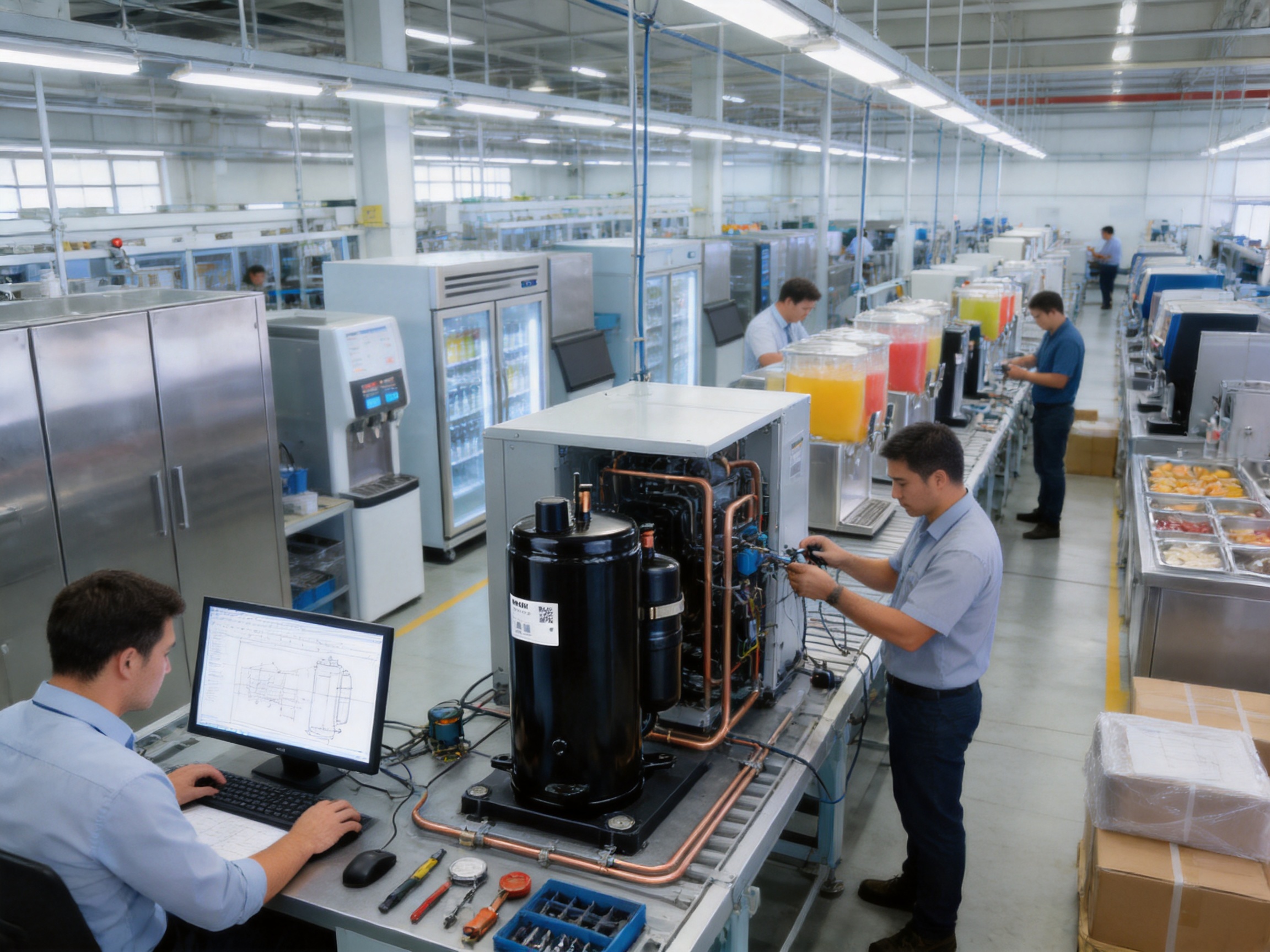
Reliable refrigeration equipment depends on consistent production processes. Typical manufacturing stages may include material preparation, sheet-metal processing, forming, welding or fastening, surface treatment, insulation installation, refrigeration assembly, electrical wiring, component installation, functional inspection, cleaning, final assembly, and packaging.
Each stage contributes to the final performance of the product. Accurate cabinet dimensions support proper insulation and assembly. Correct refrigeration pipework supports efficient refrigerant flow. Secure compressor mounting helps control vibration. Proper wiring and inspection support safe operation. Organized production procedures help ensure that the equipment delivered to different customers maintains consistent quality.
Specific process details may vary according to product model, order volume, and customer requirements. However, the overall objective remains the same: to create commercial equipment that is stable, serviceable, and suitable for continuous foodservice use.
5.4 Quality-Oriented Assembly
Refrigeration assembly requires attention to cleanliness, pipe connections, component positioning, electrical protection, and system testing. Contamination or moisture in a refrigeration circuit can affect performance. Poorly secured connections may lead to leakage. Incorrect wiring may create operational or safety problems. These risks are reduced through controlled assembly and inspection procedures.
Compressor installation also requires correct mounting, proper tubing connections, suitable vibration isolation, and verification of the electrical supply. During equipment production, the compressor can be evaluated together with the condenser, evaporator, fan, controller, and other components. This integrated inspection is more meaningful than testing the compressor alone.
5.5 Manufacturing Scale and Supply Stability
A production facility exceeding 60,000 square meters gives Spelor the physical capacity to support a broad product portfolio and organized manufacturing operations. Scale can help coordinate material purchasing, production scheduling, assembly resources, quality inspection, packaging, and shipment preparation.
For distributors and commercial project buyers, supply stability is an important consideration. A supplier capable of producing multiple categories of foodservice equipment may support consolidated purchasing and reduce the number of separate vendors involved in a project. This can simplify communication, documentation, logistics, and after-sales coordination.
6. OEM and ODM Support for Global Foodservice Markets
Spelor provides OEM and ODM commercial refrigeration equipment based on customer drawings, specifications, or functional requirements. This service is useful for importers, distributors, chain stores, equipment brands, contractors, and foodservice businesses that need products adapted to a particular market or operating model.
6.1 OEM Production Based on Drawings
In an OEM project, the customer may provide drawings, technical specifications, branding instructions, packaging requirements, or an existing product reference. The manufacturer reviews these materials and coordinates production according to the approved requirements. The refrigeration compressor can be selected or confirmed as part of the technical review.
Drawing-based production is most effective when the documentation includes cabinet dimensions, cooling capacity, target temperature, electrical supply, refrigerant requirements, control logic, materials, finish, and installation conditions. If some information is not available, Spelor can help identify the missing technical details before production begins.
6.2 ODM Product Development
In an ODM project, the customer may provide a general concept rather than a complete technical drawing. For example, the customer may need a compact juice dispenser for a retail counter, a high-capacity beverage cabinet for a supermarket, or a customized refrigeration unit for a restaurant chain. The manufacturer can assist with design development and practical engineering decisions.
ODM cooperation may include product structure, capacity planning, refrigeration selection, control arrangement, exterior appearance, user interface, cleaning access, service access, packaging, and production preparation. The final design should balance appearance, performance, cost, manufacturability, durability, and local market requirements.
6.3 Flexible Project Communication
Successful customization depends on clear communication. Customers should provide information about the intended application, climate, operating hours, beverage type, capacity, target temperature, installation space, voltage, frequency, preferred materials, and expected order volume. The more complete the requirements, the more accurately the manufacturer can evaluate the compressor and the overall equipment design.
Spelor offers pre-sales consultation and technical communication to help customers move from initial inquiry to confirmed solution. This one-stop approach can be especially useful for customers who are purchasing several types of equipment for one project.
6.4 Logistics and Payment Solutions
International commercial equipment procurement involves more than factory production. Customers may need assistance with packaging, shipment planning, delivery coordination, documentation, and payment arrangements. Spelor provides flexible logistics and payment solutions intended to support global foodservice customers.
When the compressor is supplied as part of an appliance or replacement arrangement, logistics planning should also consider protection against vibration, impact, moisture, and incorrect handling. Proper packaging and clear identification help reduce the risk of damage during transportation and simplify receiving procedures.
7. Installation and Compatibility Considerations
Because this compressor is an optional component or spare part and is not sold separately, buyers should confirm compatibility before placing an order. Refrigeration compressors are not universally interchangeable. Two compressors may look similar but differ in cooling capacity, refrigerant, voltage, frequency, displacement, starting method, oil type, connection size, mounting position, or operating temperature range.
7.1 Technical Information to Confirm
Before replacement or integration, the following information should be reviewed:
1. The commercial appliance model and intended application.
2. The required cooling capacity and evaporating temperature.
3. The refrigerant used in the existing or planned system.
4. The rated voltage and frequency of the installation location.
5. The electrical phase and starting requirements.
6. The compressor displacement and operating range.
7. The condenser and evaporator specifications.
8. The physical dimensions and mounting arrangement.
9. The refrigerant pipe connection sizes and positions.
10. The control system, overload protection, and temperature sensors.
11. The ambient temperature and ventilation conditions.
12. The service history and reason for replacing the original compressor.
Providing this information allows the manufacturer or qualified refrigeration technician to assess suitability. It also helps identify whether the original problem was caused by the compressor or by another part of the system, such as a blocked condenser, refrigerant leak, failed fan, damaged thermostat, or inadequate airflow.
7.2 Professional Installation
Compressor replacement should be performed by a qualified refrigeration technician. The technician should recover refrigerant safely, inspect the system, replace or repair defective components, evacuate the circuit, charge the correct refrigerant, test for leakage, and verify electrical operation. The compressor should not be installed by connecting it to an unrelated appliance without engineering confirmation.
Correct installation protects both the equipment and the operator. It also helps preserve the performance advantages associated with the compressor. Even a high-quality component can perform poorly if the refrigerant charge is incorrect, the condenser is blocked, the tubing is contaminated, or the electrical supply is unsuitable.
7.3 Maintenance Practices
Regular maintenance helps preserve refrigeration performance. Operators should keep condenser surfaces clean, maintain adequate ventilation, inspect door seals and cabinet insulation, monitor abnormal noise or vibration, and avoid placing the appliance in excessively hot or poorly ventilated locations.
Temperature performance should be checked at suitable intervals. If the appliance requires increasingly long cooling cycles, fails to reach the target temperature, or shows unusual electrical behavior, service should be arranged promptly. Early inspection may prevent a minor issue from developing into a major refrigeration failure.
8. Benefits for Different Commercial Buyers
8.1 Foodservice Operators
Restaurants, beverage shops, hotels, bars, cafeterias, and fast-food businesses need equipment that supports daily service without creating unnecessary operational complexity. A reliable compressor helps protect beverage temperature, reduce service interruptions, and support predictable energy use.
Operators can also benefit from equipment supplied by a manufacturer with experience across refrigeration and kitchen categories. If a business is expanding, it may be possible to coordinate juice dispensers, slush machines, ice cream machines, ice machines, refrigeration cabinets, and other equipment through one supplier.
8.2 Distributors and Importers
Distributors need products that are reliable, competitive, and supported by responsive communication. A manufacturer with OEM and ODM capability can provide product variations for different customer segments, markets, and installation conditions. The compressor option can be incorporated into a defined product platform rather than treated as an uncertain aftermarket component.
Consolidated manufacturing can also help distributors organize product catalogs, spare-part planning, packaging, and technical documentation. The exact commercial arrangement depends on the project, but a professional factory relationship can improve supply coordination.
8.3 Equipment Brands
Foodservice equipment brands may use OEM production to expand their product range without building every manufacturing capability internally. Spelor can support branded commercial refrigeration solutions based on approved specifications, product concepts, or drawings.
For branded equipment, consistent performance is essential. The compressor, controls, cabinet, and refrigeration system should be tested as a complete product. This supports more reliable field performance and can reduce customer complaints associated with inconsistent cooling or difficult maintenance.
8.4 Institutional and Project Buyers
Schools, hospitals, factories, public institutions, catering contractors, and large hospitality projects may require multiple equipment categories and coordinated delivery. A one-stop supplier can simplify procurement by providing refrigeration, kitchen, buffet, and beverage equipment through a unified project channel.
Project buyers should define the expected operating schedule, local climate, service capability, installation space, electrical standards, and replacement-part requirements at the beginning of the procurement process. These details help ensure that the selected compressor and appliance design are suitable for the real operating environment.
9. Why Component Quality Matters in Total Operating Cost
The total cost of a commercial cold drink appliance includes purchase price, installation, energy, maintenance, spare parts, downtime, product loss, and eventual replacement. A compressor that provides stable performance may reduce several of these costs even if its initial purchase price is not the lowest available.
Energy consumption accumulates over the entire operating life of the equipment. A small difference in daily electricity use can become meaningful when multiplied by several years and multiple appliances. Similarly, a single refrigeration failure during a busy service period may create lost sales and product waste that exceed the initial price difference between a recognized component and an unverified alternative.
Maintenance planning is another part of total cost. Components with dependable operating characteristics can make preventive maintenance more effective. Service technicians can identify abnormal conditions earlier, replacement schedules can be organized more accurately, and operators can reduce the risk of emergency repairs.
The strongest value comes from a complete system rather than from one component considered in isolation. Compressor quality, cabinet insulation, condenser design, fan performance, controls, installation, and maintenance all influence the final result. This is why Spelor emphasizes integrated equipment manufacturing and technical coordination.
10. Purchasing Guidance for the Optional Component
Customers considering this Hitachi refrigeration compressor should begin by identifying the appliance and the purpose of the purchase. Is the compressor intended for a new customized beverage appliance, a factory replacement, an after-sales spare-part program, or a technical upgrade? The answer affects the information required and the appropriate supply arrangement.
For a new equipment project, compressor selection should take place during the design stage. The customer and manufacturer can evaluate cooling demand, cabinet size, target temperature, refrigerant, power supply, ambient conditions, and control strategy together. This helps avoid late-stage redesign.
For a replacement, the original compressor model and appliance specifications should be provided whenever possible. Photographs, nameplate information, wiring details, and service history may also be useful. The goal is to confirm that the replacement will work with the existing refrigeration circuit without compromising performance or safety.
For a spare-part program, distributors may need a list of appliance models, annual quantities, packaging requirements, labeling, and delivery schedules. Spelor can discuss a suitable supply plan and help coordinate the component with the relevant commercial refrigeration equipment.
Since the item is not sold separately, inquiries should be directed through Spelor as part of an equipment or service requirement. The company can evaluate the application and confirm availability, compatibility, and the appropriate procurement method.
11. Questions and Answers
Q1: Is this refrigeration compressor sold as a standalone product?
No. It is listed as an optional component and spare part for commercial cold drink appliances and is not sold separately as an independent consumer product. Customers should contact Spelor with the relevant appliance or project details so that compatibility and supply arrangements can be evaluated.
Q2: What types of equipment can use this compressor?
It is intended for compatible commercial beverage refrigeration equipment, such as juice dispensers, chilled beverage appliances, refrigerated drink cabinets, and related cold drink systems. The exact application depends on cooling capacity, refrigerant, electrical specifications, and the complete refrigeration circuit.
Q3: Can it be used to replace any existing compressor?
No. Refrigeration compressors are application-specific components. The appliance model, original compressor data, refrigerant, voltage, frequency, cooling capacity, mounting arrangement, and system design should be checked before replacement. A qualified technician or the equipment manufacturer should confirm suitability.
Q4: What are the main advantages of the Hitachi compressor?
Its principal advantages include reliable cooling performance, stable operation, efficient cooling capacity, durability, low energy consumption, and suitability for commercial beverage refrigeration applications. These benefits are achieved most effectively when the compressor is correctly matched to the complete appliance.
Q5: Can the compressor help beverages cool faster?
A suitable compressor can help the refrigeration system remove heat efficiently and recover temperature after beverage loading or frequent dispensing. Actual cooling speed also depends on the evaporator, condenser, refrigerant charge, insulation, ambient temperature, beverage volume, and control settings.
Q6: Does the compressor include an intelligent control system?
The compressor is used within a refrigeration system that may include intelligent control functions. The control system can adjust operating conditions according to actual cooling demand. The exact functions and components depend on the appliance model and should be confirmed for each project.
Q7: Can Spelor provide OEM or ODM equipment?
Yes. Spelor provides OEM and ODM commercial refrigeration equipment based on customer drawings, specifications, or functional requirements. The company can support design communication, product customization, manufacturing coordination, logistics, and after-sales service.
Q8: What information should be included in an inquiry?
Useful information includes the appliance type, model, required temperature, beverage capacity, operating environment, voltage, frequency, refrigerant, original compressor model if applicable, installation dimensions, order quantity, and destination market. Drawings or photographs can also help technical evaluation.
Q9: Why should the compressor be purchased through the equipment manufacturer?
Purchasing through the equipment manufacturer helps ensure that the component is evaluated in relation to the refrigeration circuit, controls, cabinet, and operating conditions. This reduces the risk of installing an incompatible part and makes it easier to obtain technical and after-sales support.
Q10: What other equipment does Spelor manufacture?
Spelor manufactures commercial refrigeration, kitchen, and buffet equipment, including ice cream machines, juice dispensers, fried ice cream machines, refrigeration cabinets, slush machines, flake ice machines, cooking equipment, griddles, fryers, insulation products, barbecue equipment, and buffet solutions.
Q11: Does a reliable compressor eliminate maintenance requirements?
No. Routine maintenance remains necessary. Condenser cleaning, adequate ventilation, electrical inspection, temperature monitoring, seal inspection, and professional servicing help preserve system performance and extend equipment life.
Q12: Can Spelor support international customers?
Yes. Spelor serves customers worldwide and provides pre-sales consultation, customized solutions, flexible logistics and payment arrangements, and after-sales maintenance support for global foodservice markets.
12. A Practical Selection Checklist
Before confirming a compressor or commercial cold drink appliance, buyers can use the following checklist:
Application: Identify whether the component will serve a juice dispenser, refrigerated cabinet, beverage counter, or another cold drink appliance.
Cooling demand: Confirm the required beverage capacity, target temperature, recovery time, and expected usage frequency.
Climate: Evaluate the ambient temperature, humidity, ventilation, and installation location.
Electrical supply: Confirm voltage, frequency, phase, protection devices, and regional requirements.
Refrigeration circuit: Check the refrigerant, evaporator, condenser, expansion device, tubing, and control method.
Physical installation: Confirm dimensions, mounting points, connection positions, airflow, and service access.
Maintenance: Establish cleaning, inspection, repair, and spare-part procedures before the equipment enters service.
Supply planning: Discuss order quantity, packaging, shipment timing, documentation, and after-sales support.
Customization: For OEM or ODM projects, approve drawings, samples, specifications, appearance, labeling, and testing requirements before mass production.
This checklist helps customers make a technical decision based on long-term operating value rather than initial component price alone.
Conclusion
The refrigeration compressor is the core power source of a commercial cold drink appliance. Its performance affects cooling speed, temperature stability, energy consumption, reliability, maintenance requirements, and the overall customer experience. The Hitachi refrigeration compressor is a suitable option for compatible commercial beverage refrigeration systems because it combines dependable cooling performance, efficient operation, durability, and stable operating characteristics.
Its advantages are strongest when it is selected and installed as part of a complete, properly engineered appliance. Compatibility with the refrigeration circuit, control system, refrigerant, electrical supply, condenser, evaporator, and cabinet design must be confirmed before use. Because the item is not sold separately, customers should work with Spelor to identify the correct equipment or replacement solution.
Spelor Electrical Appliances (Zhejiang) Co., Ltd. adds value through integrated design, research and development, manufacturing, sales, and service. With more than 60,000 square meters of modern production facilities and a broad commercial foodservice equipment portfolio, the company can support individual appliance requirements as well as larger OEM, ODM, and project-based orders.
For restaurants, beverage shops, hotels, supermarkets, institutions, distributors, and equipment brands, this combination of recognized refrigeration components and coordinated factory manufacturing can support reliable procurement and long-term operating value. Customers seeking a compressor solution should provide complete technical information so Spelor can evaluate the application, confirm compatibility, and recommend the appropriate supply arrangement.
References
1. Commercial Refrigeration System Design and Application Principles, technical reference material for foodservice refrigeration.
2. Refrigeration Compressor Selection and System Matching Guidelines, professional HVAC and refrigeration engineering reference.
3. Foodservice Equipment Maintenance Practices, guidance on condenser cleaning, airflow, temperature monitoring, and service planning.
4. Commercial Beverage Equipment Engineering Considerations, reference material covering beverage temperature control and equipment integration.
5. Manufacturer product information for Hitachi refrigeration compressors used in compatible commercial beverage refrigeration equipment.
6. Spelor Electrical Appliances (Zhejiang) Co., Ltd. company information, product portfolio, manufacturing capabilities, and OEM and ODM service profile.
Product: Hitachi Refrigeration Compressor for Commercial Cold Drink Appliances(Not sold separately)
For exclusive deals and latest offers, sign up by entering your email address below.


-
spelor@spelor.com
-
+86-576-85229688
-
No.528, Changxi Road, Linhai City, Zhejiang Province, China
Commercial Refrigeration Equipment Manufacturer China
Copyright © 2025 by Spelor Electrical Appliances (Zhejiang) Co., Ltd. Rights Reserved.
