


 中文简体
Single-Slot Commercial Fried Ice Cream Roll Cart Machine for Market Stalls
Admin 2026-08-16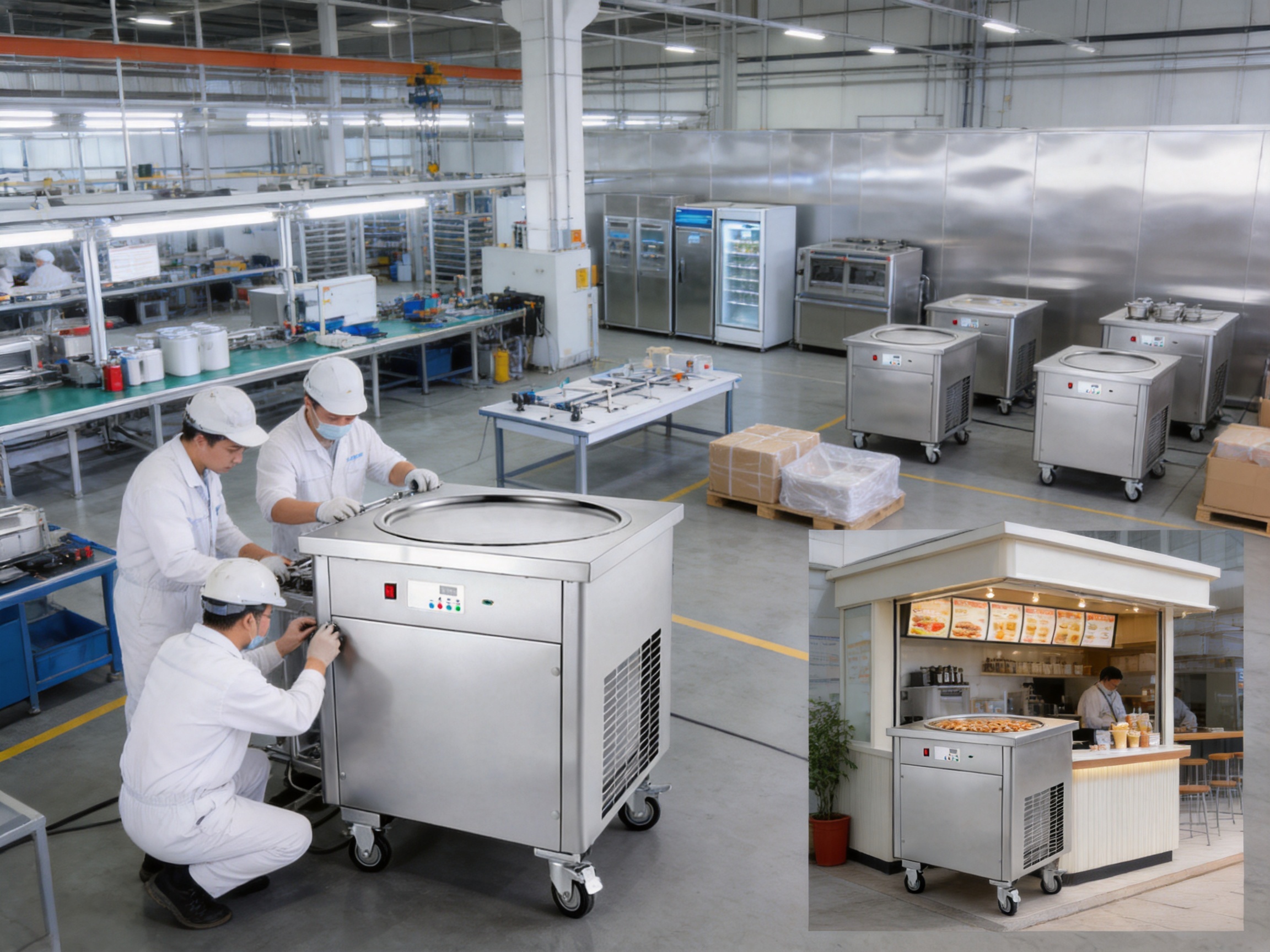
Fried ice cream rolls have become a popular live-preparation dessert because they combine entertainment, customization, and fast service in one compact foodservice operation. Customers can watch the dessert base spread across a chilled pan, freeze, mix with selected ingredients, and form into attractive rolls. For operators, the concept offers a visually engaging product that can be adapted to local tastes, seasonal menus, and different business formats.
The CB-550Y single-slot commercial fried ice cream roll cart machine is designed for this type of application. With a 55-centimeter working pan, 1,500-watt input power, compact dimensions, and a net weight of approximately 58 kilograms, it is intended for start-up snack shops, market stalls, kiosks, mobile food businesses, cafés, and other low- to medium-volume locations. Its straightforward structure supports practical operation, efficient cleaning, and flexible placement.
This article examines the machine’s construction, operating advantages, commercial value, maintenance requirements, and suitability for different business scenarios. It also explains how an experienced foodservice equipment manufacturer can contribute through product development, production control, customization, logistics support, and after-sales service.
1. Product Overview
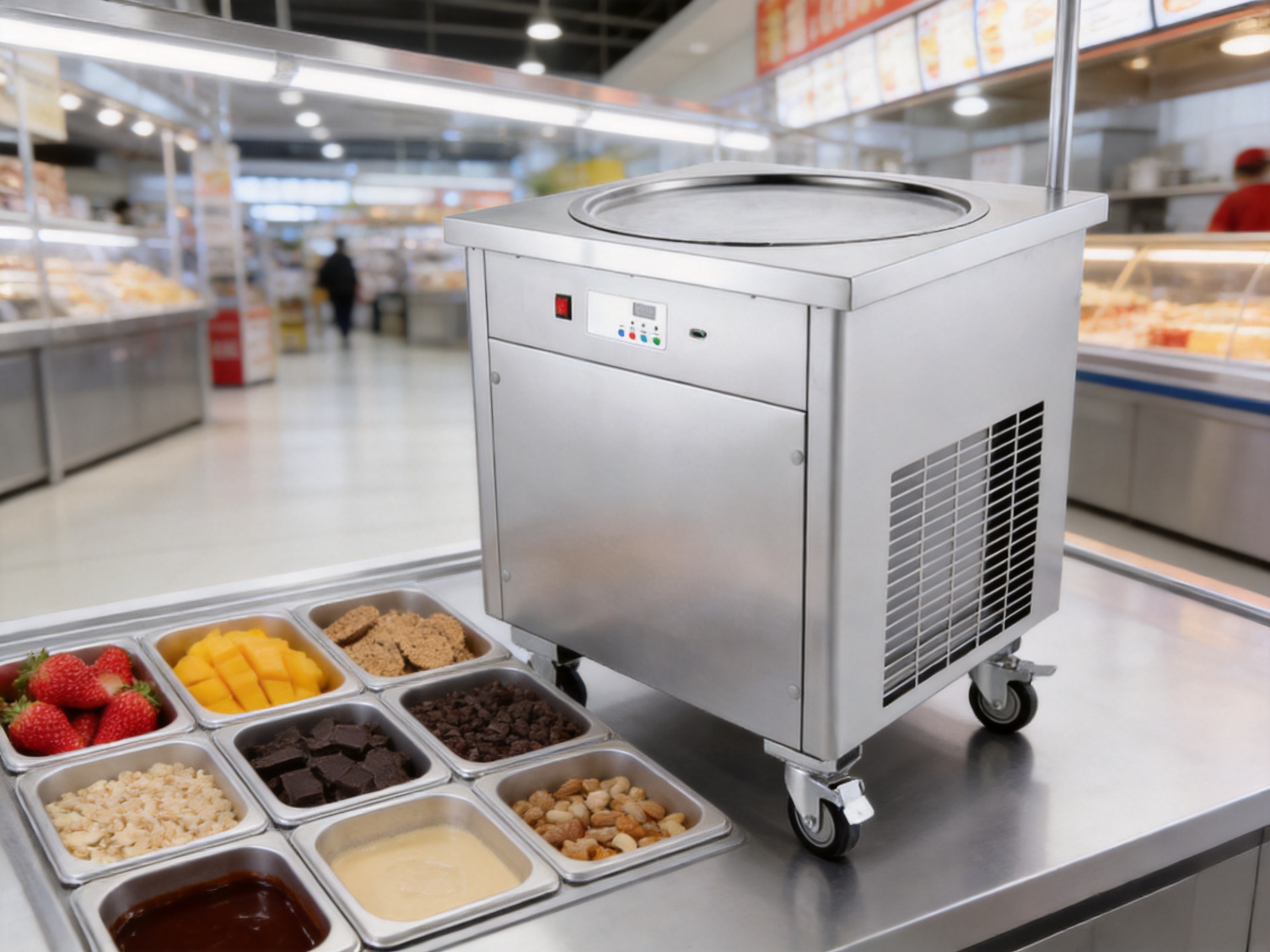
The machine is a single-slot fried ice cream roll unit with a rectangular cooling pan. Although the product is sometimes described as a round fried ice cream roll cart machine in commercial listings, the supplied technical specification identifies the working surface as a square pan measuring 55 centimeters. For purchasing and installation purposes, buyers should confirm the final pan shape, dimensions, and configuration with the supplier before production or shipment.
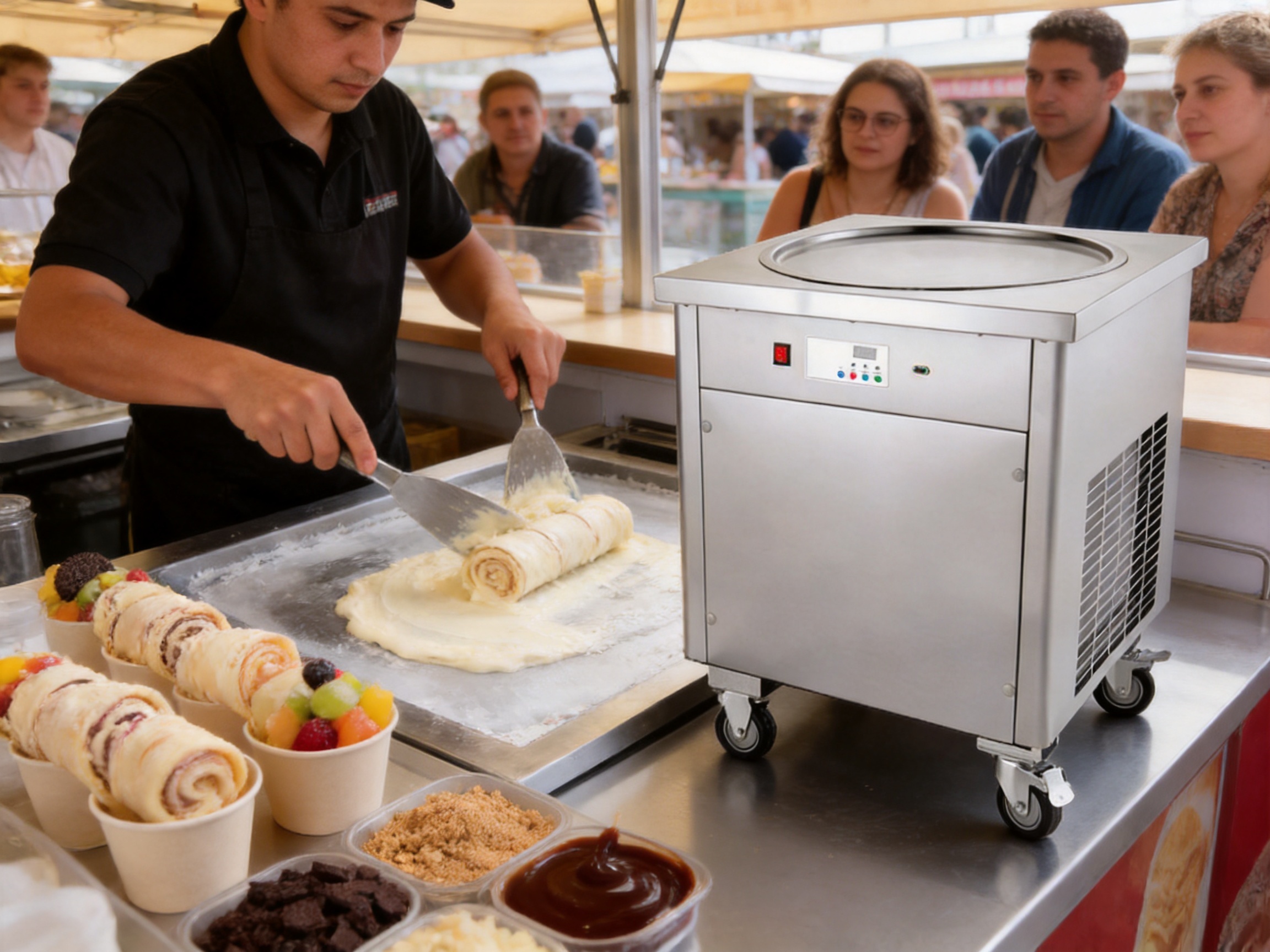
The equipment is built around a chilled preparation surface. A liquid ice cream mixture or dessert base is poured onto the pan, where it is rapidly cooled. Operators then add fruit, biscuits, chocolate, nuts, sauces, or other ingredients before mixing and spreading the product. Once the mixture reaches the required consistency, it can be divided and rolled with spatulas.
The single-slot design is especially appropriate for operators who want to start with one production area rather than invest immediately in a larger multi-pan machine. It occupies less space than many high-capacity alternatives and can be easier to transport through narrow entrances, market-stall aisles, small kitchens, and compact service counters.
Its minimalist form is also commercially useful. In a live dessert business, the machine itself becomes part of the customer experience. A clean, visible, well-organized working surface allows customers to observe preparation while the operator maintains a consistent workflow.
| Item | Specification |
| Product model | CB-550Y |
| Machine type | Single-slot commercial fried ice cream roll machine |
| Working pan | 55 cm square pan according to the supplied specification |
| Pan depth | 2 cm |
| Input power | 1,500 W |
| Power supply | 220 V / 50 Hz |
| Temperature range | -17°C to -20°C according to the supplied information |
| Refrigerant information | R410 in one specification; R22/R404A in another supplied description. Final configuration should be confirmed before ordering. |
| Compressor | Chinese compressor according to the supplied specification |
| Net weight | Approximately 58 kg |
| Machine dimensions | 680 × 680 × 810 mm |
2. How the Machine Works
The operating principle is simple but highly effective. The refrigeration system removes heat from the working pan, creating a sufficiently cold surface for liquid dessert mixtures to freeze or semi-freeze quickly. The operator pours a measured quantity of prepared mixture onto the pan and spreads it over the chilled area.
When the mixture begins to thicken, ingredients are incorporated through scraping and folding. The operator can create a smooth base or a textured product depending on the recipe and customer preference. The mixture is then flattened into a thin layer. Once the desired consistency is achieved, the operator uses two spatulas to scrape the layer into cylindrical rolls.
The 2-centimeter pan depth provides a defined working area while helping the operator control the product during preparation. A suitable depth can reduce unnecessary spillage and make it easier to collect ingredients during mixing. It also supports a clear separation between the frozen preparation surface and the surrounding counter area.
Because the process is performed in front of the customer, preparation technique has a direct effect on perceived product quality. The operator must manage the quantity of mixture, ingredient distribution, spreading speed, and rolling pressure. A stable cold surface gives the operator more control and makes it easier to reproduce the same visual result throughout the service period.
The machine does not replace the need for proper recipe preparation. Ingredients should be selected and stored in accordance with food safety requirements. Dairy products, fruit, sauces, and other toppings should be kept at appropriate temperatures before use. The pan should also be cleaned between recipes or whenever allergen control requires it.

Single Round Commercial Fried Ice Cream Roll Cart Machine for Market Stall
3. Main Advantages for Start-Up Businesses
Compact Footprint
One of the machine’s most important benefits is its compact external size. Measuring approximately 680 × 680 × 810 millimeters, it can fit into many small commercial environments where a larger frozen dessert line would be impractical. This makes it suitable for shopping-center kiosks, market stalls, cafés, food courts, roadside snack shops, and temporary event locations.
A smaller footprint can help reduce the amount of rented service space required. It also leaves room for ingredient containers, packaging, refrigeration, utensils, and a point-of-sale area. For a new business, preserving usable counter space can be as important as selecting the machine itself.
Lower Entry Barrier
A single-slot machine generally requires a lower initial investment than a multi-pan production system. It allows a new operator to test demand before expanding to a larger installation. This is particularly useful for businesses that are introducing fried ice cream rolls as a new menu item rather than operating a dedicated dessert factory.
Starting with one machine also simplifies training. A new employee can learn the operating sequence, cleaning routine, recipe control, and customer-service process without having to manage multiple independent pans at the same time.
Live Customer Appeal
Fried ice cream rolls are not only a food product; they are also a performance. Customers can watch the transformation from liquid mixture to finished rolls. This visual process can encourage impulse purchases, increase dwell time, and create opportunities for social media content.
The single working pan keeps the preparation area easy to observe. Operators can maintain direct communication with customers while selecting ingredients, explaining flavors, and presenting the finished dessert. This interaction can help a small stall differentiate itself from packaged desserts and conventional ice cream counters.
Flexible Menu Development
The machine can support a broad menu concept. Operators may offer classic vanilla, chocolate, strawberry, mango, cookie, coffee, yogurt, or tropical fruit combinations. Seasonal ingredients can be introduced without changing the basic equipment. This flexibility is valuable in markets where customer preferences vary by region or season.
Portion size, flavor intensity, topping selection, and presentation can all be adjusted. A business may offer simple low-cost combinations for high-volume service and premium combinations with imported ingredients or decorative toppings for higher-margin sales.
Practical Mobility
With a stated net weight of approximately 58 kilograms, the unit is not a lightweight tabletop appliance, but it is more manageable than many large commercial refrigeration systems. Its relatively compact body can support relocation during store rearrangement, event preparation, or seasonal changes in service position.
Any movement should be carried out carefully and according to safe handling procedures. The machine should be placed on a stable, level surface, and the refrigeration system should be allowed to settle for the period recommended by the supplier after transportation before being switched on.
4. Advantages Compared with Larger or Less Specialized Alternatives
Businesses evaluating equipment may compare a dedicated fried ice cream roll machine with chest freezers, cold plates, general-purpose refrigeration tables, or large multi-pan systems. Each category serves a different purpose, but the single-slot machine offers several practical advantages for focused applications.
Compared with Conventional Freezers
A conventional freezer can store finished products, but it is not designed for live preparation. It does not provide the same visible transformation, direct mixing surface, or customer-facing rolling process. A dedicated cold pan is better suited to made-to-order preparation and interactive service.
Using a specialized machine can also improve workflow. Ingredients can be combined directly on the work surface rather than transferred between bowls, trays, and separate freezing equipment. This may reduce handling steps and make the preparation process more engaging for customers.
Compared with Multi-Pan Machines
Multi-pan machines can produce several portions or flavors simultaneously, but they require more floor space, higher investment, and greater operational coordination. They may be unnecessary for a start-up stall or a location with uncertain demand.
A single-slot unit offers a more controlled path to market entry. Once sales volume has been proven, the operator can consider adding another machine, expanding the menu, or upgrading to a larger configuration. This staged approach may reduce financial risk.
Compared with Improvised Cooling Surfaces
Improvised chilled surfaces can produce inconsistent results because their temperature control, insulation, drainage, and refrigeration performance may not be designed for continuous foodservice use. A commercial unit is developed around repeated operation, cleaning, electrical connection, and service requirements.
The supplied temperature range of approximately -17°C to -20°C provides a clear operating reference for the intended application. Actual performance can depend on ambient temperature, ingredient temperature, mixture composition, portion size, operating frequency, and ventilation conditions.
Compared with Generic Countertop Equipment
Generic countertop refrigeration equipment may not provide a pan depth, working area, or operating arrangement suitable for rolling desserts. A dedicated machine allows the operator to develop a predictable preparation routine. The 55-centimeter pan provides a practical balance between working area and compact installation.
Specialized equipment can also help with visual branding. The machine can be positioned as the central feature of a stall, with flavor boards and ingredient displays placed around it. This arrangement is more difficult to achieve with hidden or enclosed refrigeration appliances.
5. Refrigeration and Temperature Performance
Refrigeration performance is central to the success of fried ice cream rolls. The mixture must cool quickly enough to form a workable layer, but the operator must still have time to mix ingredients and create an attractive finish. A stable pan temperature helps produce more consistent results between portions.
The supplied product information lists a temperature range of -17°C to -20°C. This range should be treated as a reference rather than an absolute result under every operating condition. Ambient heat, airflow around the machine, pan loading, ingredient temperature, and continuous service can all affect cooling performance.
The unit is listed with a 1,500-watt input power rating. This level of power is appropriate for a commercial single-slot unit, but the installation must provide a suitable electrical supply. Operators should verify voltage, frequency, plug type, circuit capacity, grounding, and local electrical requirements before use.
Ventilation is equally important. Refrigeration systems discharge heat from the condenser area. Blocking ventilation openings or placing the unit directly against a heat-producing appliance may raise operating temperatures and reduce cooling efficiency. Adequate clearance should be maintained in accordance with the supplier’s installation instructions.
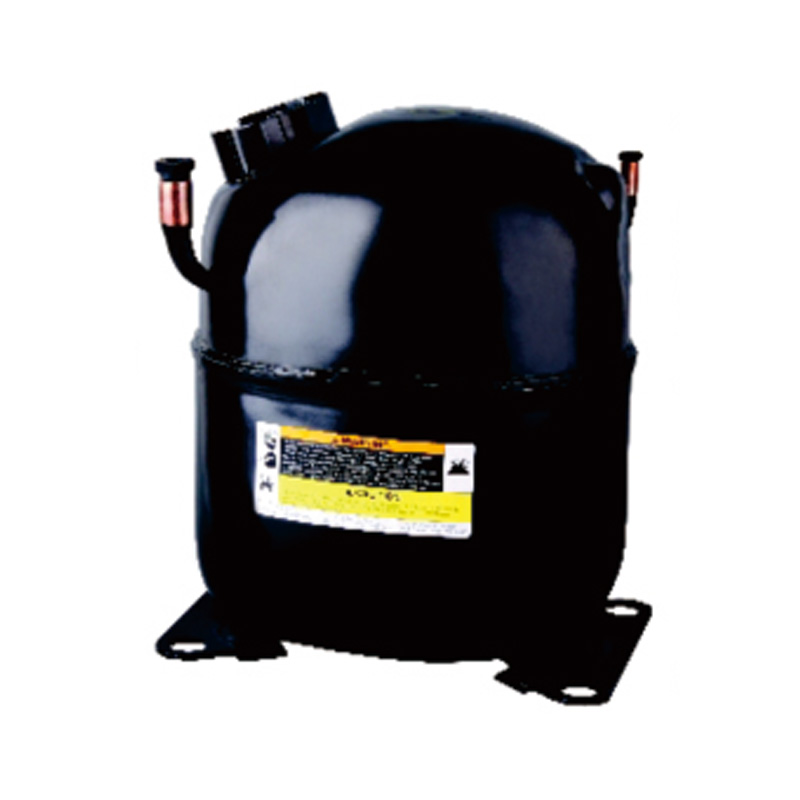
The supplied materials contain different refrigerant references: one specification lists R410, while another lists R22/R404A. Refrigerant selection is a critical technical detail and should not be assumed. Buyers should request confirmation of the final refrigerant type, compressor specification, labeling, service requirements, and regulatory compliance for the destination country.
Different markets may have restrictions on certain refrigerants because of environmental regulations, phaseout schedules, safety classifications, or import requirements. The final product documentation should therefore match the actual machine configuration shipped to the customer.
6. Pan Design and Working Area
The machine is supplied with a 55-centimeter square pan and a stated depth of 2 centimeters. This working surface is large enough for practical single-portion preparation while remaining compact enough for small commercial counters.
A square pan provides clearly defined corners that can help operators organize the mixture during spreading and scraping. It may also simplify the placement of ingredient containers around the machine. Buyers who specifically require a round pan or a different layout should confirm whether an alternative configuration is available before placing an order.
The surface should be kept clean, dry, and free from scratches that could interfere with scraping. Operators should use suitable foodservice spatulas and avoid aggressive tools that may damage the working surface. The pan should not be struck with heavy utensils or used as a cutting board.
Because the pan is relatively shallow, operators should control the volume of liquid mixture poured during each cycle. Overfilling can slow cooling, increase spillage, and make rolling more difficult. Consistent portion control is therefore important for both product quality and operating efficiency.
7. Workflow for Commercial Operation
Preparation Before Opening
Before service begins, the operator should inspect the machine, confirm that the pan is clean, and check that the electrical connection is secure. Ingredient containers should be prepared and positioned so that the operator can reach them without crossing the working surface unnecessarily.
The machine should be started with enough time to reach its operating condition. The actual pre-cooling time depends on ambient temperature and the supplier’s operating guidance. A test portion can be useful during initial setup, especially when a new recipe or ingredient combination is introduced.
Portioning and Mixing
Recipes should be standardized by weight or volume. Consistent portioning helps maintain predictable freezing time, ingredient cost, appearance, and selling price. A measured ladle or dispensing container can reduce variation between employees.
Ingredients should be cut or prepared before service. Large fruit pieces, hard toppings, or excessive quantities can slow mixing and reduce the visual quality of the finished rolls. Ingredients should also be arranged according to the expected order of use.
Rolling and Presentation
The operator should spread the mixture into a thin, even layer and allow it to reach a suitable consistency before scraping. Rolling too early may create soft or uneven rolls, while waiting too long can make the layer difficult to shape. Training and recipe testing are important for finding the correct timing.
Finished rolls can be placed in cups or bowls and decorated with toppings, sauces, fruit, wafers, or other garnishes. Packaging should be selected to withstand the product temperature and support convenient consumption.
Cleaning Between Service Periods
After each service period, the working surface should be cleaned according to food-contact equipment procedures. Residual dairy, fruit, chocolate, and syrup should not be allowed to accumulate around edges or in seams. Cleaning materials should be compatible with the pan and external surfaces.
The machine should be disconnected before any cleaning procedure that involves areas near electrical components. Water should never be poured directly into control panels, ventilation openings, or other sensitive areas.
8. Manufacturing Strengths Behind the Product
The value of commercial equipment depends not only on its visible design but also on the systems used to develop, assemble, test, and support it. The manufacturer identified in the supplied materials operates as a professional producer integrating design, research and development, manufacturing, sales, and service.
The company has more than 60,000 square meters of modern production facilities. A production base of this scale can support organized material handling, dedicated assembly areas, testing processes, warehousing, and coordination between engineering and commercial teams.
Its product range covers commercial refrigeration, kitchen equipment, and buffet equipment. Listed categories include ice cream machines, juice dispensers, fried ice cream machines, refrigeration cabinets, slush machines, flake ice machines, cooking equipment, griddles, fryers, insulation products, barbecue equipment, and buffet solutions.
This broader product portfolio can be valuable to distributors and foodservice project buyers. Instead of sourcing every category from a different supplier, customers may be able to coordinate related equipment through one manufacturing partner. This can simplify product selection, packaging, communication, and after-sales coordination.
Integrated Product Development
Design and research capability allows equipment to be developed around practical usage requirements rather than appearance alone. For a fried ice cream machine, this includes working-surface dimensions, refrigeration performance, electrical configuration, cleaning access, operator ergonomics, transport considerations, and serviceability.
Integrated development also supports improvements based on customer feedback. Changes may involve control placement, insulation, pan configuration, body structure, component selection, packaging, or documentation. A manufacturer that combines engineering and production functions can evaluate these changes more efficiently.
Production Organization
Commercial equipment requires repeatable assembly. Refrigeration systems, electrical components, structural panels, controls, insulation, and working surfaces must be assembled in a coordinated sequence. Organized production helps reduce variation between units and supports more predictable inspection.
For international supply, production organization is particularly important because equipment may need different voltage configurations, plug standards, labels, manuals, packaging formats, and compliance documents. These requirements should be discussed during the quotation and order-confirmation stages.
Quality-Oriented Manufacturing
A quality-oriented approach covers more than checking the finished exterior. It includes incoming component inspection, assembly control, refrigeration-system testing, electrical safety checks, temperature verification, appearance inspection, and packaging review.
For this machine category, testing should focus on whether the pan reaches the expected temperature range, whether the refrigeration system operates consistently, whether controls respond correctly, and whether the machine remains stable during normal use. The exact inspection standards and test records should be confirmed with the supplier for commercial projects.
OEM and ODM Capability
The supplied company information states that OEM and ODM services are available based on drawings or customer requirements. This can benefit importers, restaurant groups, distributors, and project contractors that need equipment adapted to a particular market or brand system.
OEM work may involve private labeling, packaging, documentation, colors, control-panel graphics, or other defined changes. ODM work may involve broader design adjustments based on a performance brief. In either case, the customer should provide clear technical requirements and approve drawings or samples before mass production.
Customization should be evaluated carefully. Changes to refrigeration components, electrical systems, pan dimensions, body structure, or control logic can influence performance, certifications, lead time, spare parts, and service procedures. A professional supplier should identify these effects before production begins.
9. OEM and ODM Project Considerations
For a successful customized order, the buyer should prepare a complete specification sheet. Important details include destination country, voltage and frequency, plug type, preferred pan shape, working temperature, external dimensions, branding requirements, packaging, language of manuals, expected order quantity, and target delivery schedule.
Branding requirements should be separated into mandatory and optional items. A mandatory item may be a private label on the front panel, while an optional item may be a custom color or promotional sticker. This distinction helps the manufacturer calculate cost and lead time accurately.
Product approval should include drawings, technical data, photographs, sample units where appropriate, and documentation. If a distributor plans to sell the machine under its own catalog, the distributor should verify that all published specifications match the final configuration.
Refrigerant information deserves particular attention in OEM and ODM projects. The supplied materials present more than one refrigerant reference, so the final purchase contract should state the exact refrigerant, compressor model or performance class, and any required service limitations. This prevents confusion between catalog versions and delivered units.
10. Installation and Site Planning
The machine should be installed on a level, robust surface capable of supporting its weight and handling vibration during operation. The surrounding area should permit the operator to work comfortably with two spatulas and access ingredients without obstruction.
The machine dimensions are approximately 680 × 680 × 810 millimeters, but the required service area will be larger after allowing space for operator movement, ingredient storage, customer visibility, ventilation, and cleaning. A stall planner should not design the counter around the machine’s external dimensions alone.
Electrical installation should be performed in accordance with local requirements. The 220-volt, 50-hertz specification must be compatible with the destination market. A properly grounded circuit and suitable protection device are important for commercial operation.
The condenser and ventilation area should remain unobstructed. The machine should not be positioned beside ovens, fryers, direct sunlight, or other sources of heat unless the site has been designed to manage the combined thermal load.
After installation, the operator should check for unusual noise, vibration, abnormal odor, unstable temperature, or electrical irregularities. Any concern should be reported to the supplier or qualified service personnel rather than ignored.
11. Maintenance and Serviceability
Regular maintenance helps protect refrigeration performance and extend equipment life. The external surfaces should be cleaned regularly, while the condenser area should be inspected for dust or grease buildup. In a foodservice environment, airborne grease can accumulate quickly if the machine is installed near cooking equipment.
Operators should follow the supplier’s maintenance schedule for condenser cleaning, electrical inspection, refrigerant-system service, and control checks. Refrigeration work should be performed by qualified technicians with appropriate tools and knowledge of the refrigerant used in the specific unit.
Spare parts availability is an important purchasing consideration. Buyers should ask whether replacement controls, electrical components, compressor-related parts, sensors, seals, switches, and other service items can be supplied. Keeping commonly required spare parts available can reduce downtime for busy foodservice operations.
The manufacturer’s product categories include optional components and spare parts as a broader business area. This indicates that buyers may discuss replacement and accessory requirements as part of the procurement process. Exact availability depends on the machine configuration and order details.
Good after-sales service begins with accurate records. Operators should retain the model number, serial number, purchase documentation, electrical data, refrigerant information, and maintenance history. These details can help technicians diagnose issues more quickly.
12. Food Safety and Operator Training
The machine creates a cold food-contact surface, but it does not remove the operator’s responsibility for food safety. Ingredients should be sourced from approved suppliers, stored correctly, and protected from cross-contamination. Dairy and other temperature-sensitive ingredients should not remain at room temperature longer than permitted by local regulations.
Employees should be trained to wash hands, use clean utensils, separate allergen-containing ingredients, and clean the pan between products when necessary. Separate containers may be appropriate for nuts, gluten-containing toppings, and other common allergens.
Training should also cover safe use of spatulas, correct portioning, emergency shutdown, electrical safety, cleaning procedures, and customer communication. A written opening and closing checklist can help maintain consistency when multiple employees share the machine.
13. Commercial Applications
Market Stalls
Market stalls often require equipment that is visually attractive, compact, and relatively easy to reposition. The machine’s single-slot design can fit a focused dessert menu while allowing customers to observe preparation. Its 55-centimeter working area provides sufficient room for one operator to produce customized portions.
Snack Shops
Small snack shops can use the machine to add a distinctive dessert category without building a large frozen-food production area. Fried ice cream rolls can be sold alongside beverages, waffles, crepes, fried snacks, or other quick-service products.
Cafés and Beverage Stores
Cafés may position the machine near the front counter to create a fresh-preparation dessert station. The menu can be coordinated with coffee, tea, fruit drinks, or milk-based beverages. A compact machine can be especially useful where seating and service space are limited.
Events and Temporary Operations
Food festivals, school events, fairs, exhibitions, and private functions can benefit from an interactive dessert format. Before using the machine in a temporary location, operators should confirm transport procedures, power availability, ventilation, food storage, and local event regulations.
Retail and Franchise Concepts
Retail groups and franchise operators may use a standardized single-slot machine as part of a small-format dessert concept. Consistent equipment can make employee training, recipe control, procurement, and store layout easier to manage across multiple locations.
14. Cost and Business Planning
The machine’s commercial value should be assessed through total operating economics rather than purchase price alone. Important factors include ingredient cost, portion size, selling price, labor time, electrical consumption, cleaning supplies, packaging, maintenance, shipping, and expected daily sales.
A simple break-even calculation can help determine suitability. The operator can estimate the contribution margin per serving and divide the equipment investment by the expected daily contribution. This does not provide a complete business forecast, but it can clarify how many portions must be sold to recover the initial investment.
Menu engineering is also important. A basic fruit or cookie roll may attract price-sensitive customers, while premium products with specialty sauces or imported toppings can increase average transaction value. The operator should monitor preparation time to ensure that premium recipes do not slow the queue excessively.
Energy consumption depends on operating conditions and compressor cycling. The 1,500-watt input rating should not automatically be treated as constant energy use throughout the day. Actual consumption can vary based on ambient conditions, pre-cooling time, usage frequency, insulation, and thermostat operation.
Packaging and presentation can influence profitability. Attractive cups, clear menu boards, and topping displays may support higher perceived value, but packaging costs must be included in the calculation. A standardized serving size helps control both food cost and customer expectations.
15. Product Selection Checklist
| Selection area | Questions for the buyer |
| Pan configuration | Is the final pan square or round, and is the working size 55 cm? |
| Temperature | What operating range is guaranteed under defined ambient conditions? |
| Electrical supply | Does the 220 V / 50 Hz specification match the destination site? |
| Refrigerant | Which refrigerant is installed in the final machine? |
| Compressor | What compressor specification and service information are provided? |
| Dimensions | Is there sufficient space for operation, ventilation, cleaning, and service? |
| Customization | Are private labeling, packaging, colors, or design changes required? |
| Documentation | Are manuals, electrical data, parts lists, and test documents available? |
| After-sales support | What are the procedures for technical assistance and spare-parts supply? |
| Shipping | What are the packed dimensions, gross weight, and transport requirements? |
16. Why Manufacturer Support Matters
Commercial equipment buyers need more than a product photograph and a basic price quotation. They need reliable technical information, clear communication, and support before and after delivery. A manufacturer that offers consultation, customization, logistics coordination, payment solutions, and maintenance assistance can reduce procurement complexity.
Pre-sales consultation is especially useful when the customer is uncertain about pan size, capacity, electrical requirements, installation layout, or menu plans. The supplier can help compare configurations and identify requirements that might otherwise be missed.
Flexible logistics support can also be important for international buyers. The final shipping method, packaging, export documents, customs requirements, and delivery schedule should be coordinated before production. Proper packaging is essential because refrigeration equipment contains working surfaces, structural panels, electrical components, and compressor assemblies that require protection during transport.
After-sales service supports long-term business value. If a machine is difficult to diagnose or spare parts are unavailable, a minor fault can become a lengthy interruption. A responsive manufacturer can help identify the problem, recommend safe checks, and provide replacement components or technician guidance when necessary.
The manufacturer’s experience across commercial refrigeration and foodservice categories may provide additional value to customers planning a complete store, kiosk, or buffet project. Related equipment can be coordinated according to the customer’s menu, space, and service model.
17. Practical Limitations to Consider
A single-slot unit is not intended to replace a high-capacity production line. Businesses with very high order volumes may eventually require multiple machines, larger pan systems, or a different production layout. Capacity planning should consider peak demand rather than average demand alone.
The machine also requires trained operation. Attractive rolls depend on recipe control and timing, and inexperienced staff may need practice before achieving consistent results. Training time should be included in the launch plan.
Refrigeration performance is affected by the environment. A hot, poorly ventilated stall can place more demand on the system than a climate-controlled shop. Operators should plan the installation carefully and avoid placing the unit beside heat-generating appliances.
Finally, technical specifications must be confirmed before purchase because the supplied materials contain inconsistent refrigerant references and describe the pan in different ways. A written final specification is the best way to ensure that the machine delivered matches the buyer’s expectations.
18. Recommended Procurement Process
The first step is to define the intended application. The buyer should identify the expected daily volume, available counter space, target market, menu style, operating climate, electrical supply, and level of customization required.
The second step is to request a confirmed technical quotation. The quotation should state the model, pan configuration, dimensions, power, voltage, frequency, temperature range, refrigerant, compressor information, packing details, warranty terms, and delivery conditions.
The third step is to review documentation and compliance requirements. Depending on the destination market, the buyer may need electrical declarations, food-contact information, safety documents, labeling, or other import materials.
The fourth step is to approve the final configuration before production. Any changes to the pan, body, controls, branding, or refrigerant should be recorded in writing. Photographs or drawings can help avoid misunderstandings.
The final step is to prepare the installation and service plan. The buyer should arrange a suitable electrical circuit, stable counter, ventilation clearance, ingredient storage, cleaning supplies, operator training, and spare-parts strategy before the machine arrives.
19. Overall Assessment
The CB-550Y is a practical entry-level solution for businesses that want to offer fried ice cream rolls in a compact commercial format. Its single-slot structure, 55-centimeter stated working pan, 1,500-watt power rating, and approximately 680 × 680 × 810-millimeter body make it appropriate for small stalls, snack shops, cafés, and other limited-space applications.
Its primary competitive advantage is the balance between a visible live-dessert experience and manageable equipment requirements. It offers more specialized functionality than a conventional freezer while avoiding the larger footprint and higher investment associated with multi-pan systems.
The manufacturer adds value through integrated design, research and development, manufacturing, sales, and service capabilities. Its large production facilities and broad foodservice equipment portfolio can support both individual machine purchases and larger commercial projects. OEM and ODM services may also help distributors and operators adapt the equipment to specific market requirements.
Before ordering, buyers should confirm the final pan description, refrigerant type, electrical configuration, temperature performance, documentation, warranty, and spare-parts arrangements. With these points clarified, the machine can serve as a flexible foundation for a visually engaging and potentially profitable frozen dessert business.
20. Questions and Answers
Q1: What type of business is this machine best suited for?
It is best suited for start-up snack shops, market stalls, cafés, kiosks, food courts, mobile dessert businesses, and other locations with low to medium production requirements. It can also be used as an additional dessert station in an existing foodservice operation.
Q2: How many working pans does the machine have?
The supplied product information describes it as a single-slot machine with one working pan. Buyers needing multiple simultaneous flavors or higher output should consider multiple units or a larger multi-pan configuration.
Q3: What is the size of the working pan?
The specification lists a 55-centimeter square pan with a depth of 2 centimeters. The product wording refers to a round machine in one place, so the final pan shape should be confirmed in writing before purchase.
Q4: What power supply does it require?
The supplied information states 220 volts and 50 hertz, with an input power of 1,500 watts. The buyer should verify that this configuration matches the destination country and installation site.
Q5: What temperature can the machine reach?
The supplied information lists a temperature range of approximately -17°C to -20°C. Actual performance may vary with ambient temperature, ventilation, ingredient temperature, recipe composition, and operating conditions.
Q6: Which refrigerant does the machine use?
Two different refrigerant references appear in the supplied materials: R410 in one specification and R22/R404A in another. The exact refrigerant must be confirmed with the supplier for the final machine configuration, especially because regulations differ between countries.
Q7: Is the machine easy to move?
Its approximately 58-kilogram net weight and compact external dimensions make it more manageable than many larger commercial refrigeration systems. However, safe lifting, transport, placement, and post-transport refrigeration procedures are still required.
Q8: Does the machine include ingredients or serving tools?
The supplied information describes the refrigeration machine only. Ingredients, spatulas, cups, toppings, and other accessories should be confirmed separately with the supplier.
Q9: Can the machine be customized?
The manufacturer states that OEM and ODM services are available based on drawings or requirements. Possible customization should be discussed in detail because changes may affect price, lead time, testing, documentation, spare parts, and compliance.
Q10: How should the machine be cleaned?
The pan and food-contact areas should be cleaned regularly using suitable foodservice cleaning procedures. Water should not enter electrical or ventilation components. The supplier’s cleaning instructions should be followed for the exact model.
Q11: Can the machine operate continuously during busy service?
It is designed for commercial use, but the actual suitable workload depends on environmental conditions, recipe volume, portion size, and service frequency. Buyers with heavy peak demand should discuss capacity expectations with the supplier before ordering.
Q12: What should be checked before purchase?
Buyers should confirm the final pan shape and size, voltage, frequency, power, temperature range, refrigerant, compressor details, dimensions, warranty, packaging, certifications, spare-parts availability, and after-sales support.
References
1. Supplied product specification for the CB-550Y single-slot commercial fried ice cream roll machine.
2. Supplied product information covering power supply, operating temperature, dimensions, weight, and refrigerant references.
3. General commercial refrigeration equipment selection and installation principles.
4. General foodservice sanitation and food-contact equipment maintenance practices.
5. General guidance on OEM and ODM manufacturing coordination for commercial foodservice equipment.
6. General principles of cold-surface dessert preparation, portion control, operator training, and menu engineering.
Product: Single Round Commercial Fried Ice Cream Roll Cart Machine for Market Stall

For exclusive deals and latest offers, sign up by entering your email address below.



-
spelor@spelor.com
-
+86-576-85229688
-
No.528, Changxi Road, Linhai City, Zhejiang Province, China
Commercial Refrigeration Equipment Manufacturer China
Copyright © 2025 by Spelor Electrical Appliances (Zhejiang) Co., Ltd. Rights Reserved.
