


 中文简体
15L Single-Tank Commercial Slush Machine for Bars, Cafés, and Restaurants
Admin 2026-11-07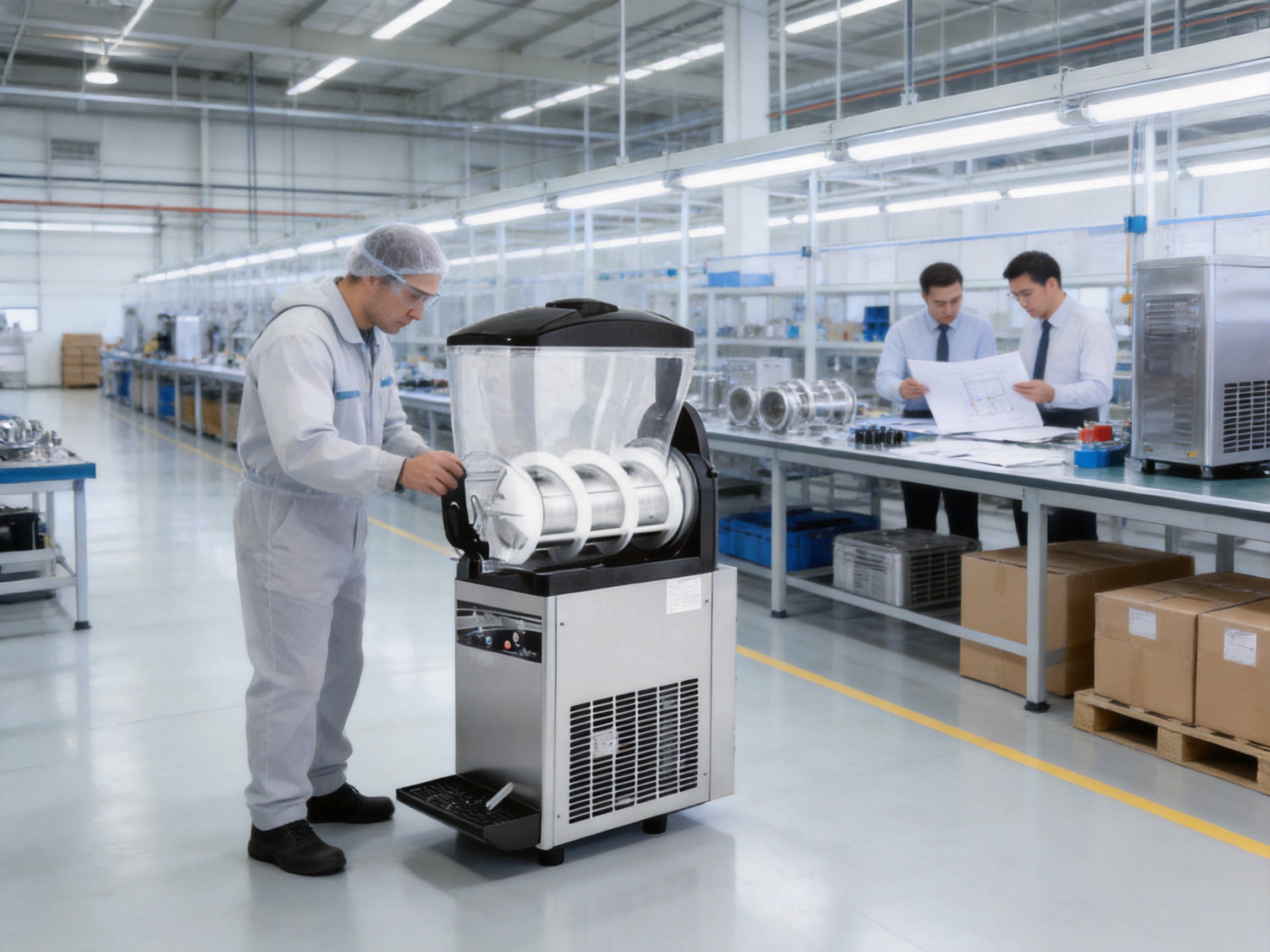
Commercial beverage operators need equipment that can produce attractive frozen drinks consistently, operate efficiently during busy service periods, and fit into practical countertop or service-area layouts. The 15L Single-Tank Commercial Slush Machine is designed for these requirements. With a compact single-tank configuration, food-grade stainless steel construction, efficient refrigeration, and continuous stirring, the X-150 model provides a practical solution for bars, cafés, restaurants, snack shops, and other foodservice businesses.
This commercial frozen drink machine is intended for establishments that need dependable daily production without investing in a large multi-tank system. Its 15-liter tank provides useful capacity for regular service, while its relatively compact footprint helps businesses make better use of limited counter and back-bar space. The machine can support frozen beverages such as fruit slush, flavored frozen drinks, non-alcoholic cocktails, and other suitable chilled beverage recipes.
Beyond the product itself, the equipment is supported by a manufacturer with extensive experience in commercial refrigeration, kitchen equipment, buffet equipment, and foodservice solutions. The company operates modern production facilities covering more than 60,000 square meters and integrates product design, research and development, manufacturing, sales, and service. This combination gives buyers access to both standard equipment and potential OEM or ODM customization.
Product Overview
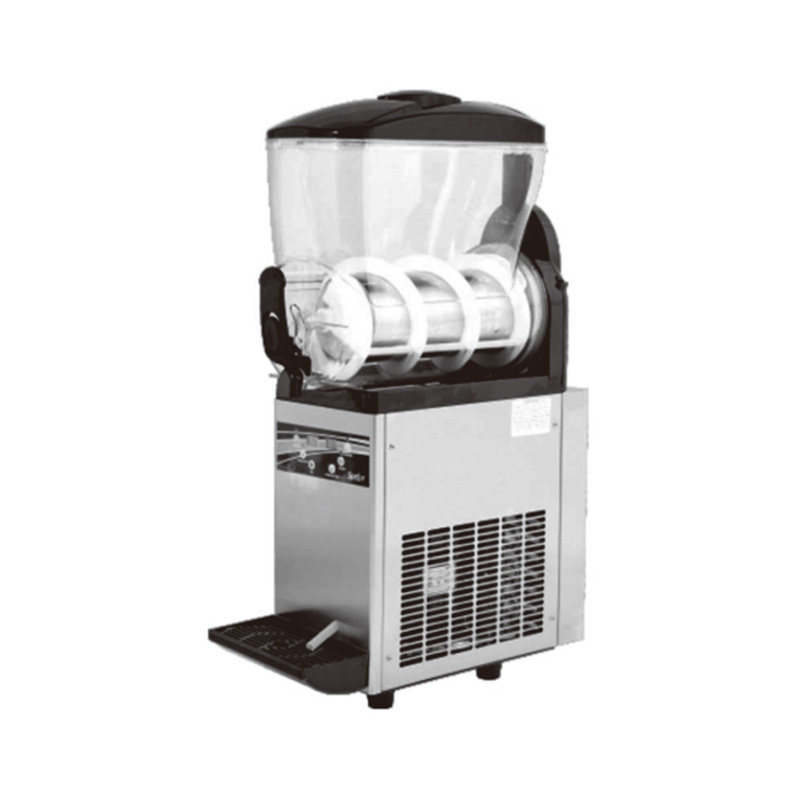
The X-150 is a single-tank commercial slush machine with a nominal capacity of 15 liters. It is designed for small to medium-sized commercial operations that require a steady supply of frozen beverages but do not need the capacity or footprint of a large multi-tank dispenser.
| Product Type | Commercial single-tank slush machine |
| Model | X-150 |
| Tank Capacity | 15 liters |
| Rated Output | 500W or 550W, depending on the supplied specification version |
| Refrigerant | R290 or R290a, as specified for the configuration |
| Net Weight | Approximately 26 kg |
| Dimensions | Approximately 205 × 510–535 × 810 mm |
| Construction | Food-grade stainless steel and sprayed steel body |
| Primary Applications | Bars, cafés, restaurants, snack shops, beverage counters, and catering operations |
The supplied product information lists two closely related sets of technical data. One specification identifies a rated output of 550W, R290a refrigerant, and dimensions of 205 × 510 × 810 mm. Another identifies 500W, R290 refrigerant, and dimensions of 205 × 535 × 810 mm. These differences may reflect regional electrical configurations, production revisions, or documentation for related versions. Buyers should confirm the final rating, refrigerant designation, and exact dimensions with the supplier before ordering.
Why a 15L Single-Tank Design Is Practical
A single-tank slush machine is often the right choice for businesses with a focused beverage menu. Instead of requiring multiple tanks for several flavors, the operator can use one tank for a signature product, a seasonal beverage, or a high-demand frozen drink. This approach simplifies inventory planning, recipe control, cleaning, and staff training.
The 15-liter capacity offers a useful balance between production volume and space efficiency. A tank that is too small may require frequent refilling during peak periods, while a much larger tank may occupy valuable counter space and create unnecessary product waste when demand is limited. The X-150 is positioned between these extremes, making it suitable for businesses serving steady but moderate customer traffic.
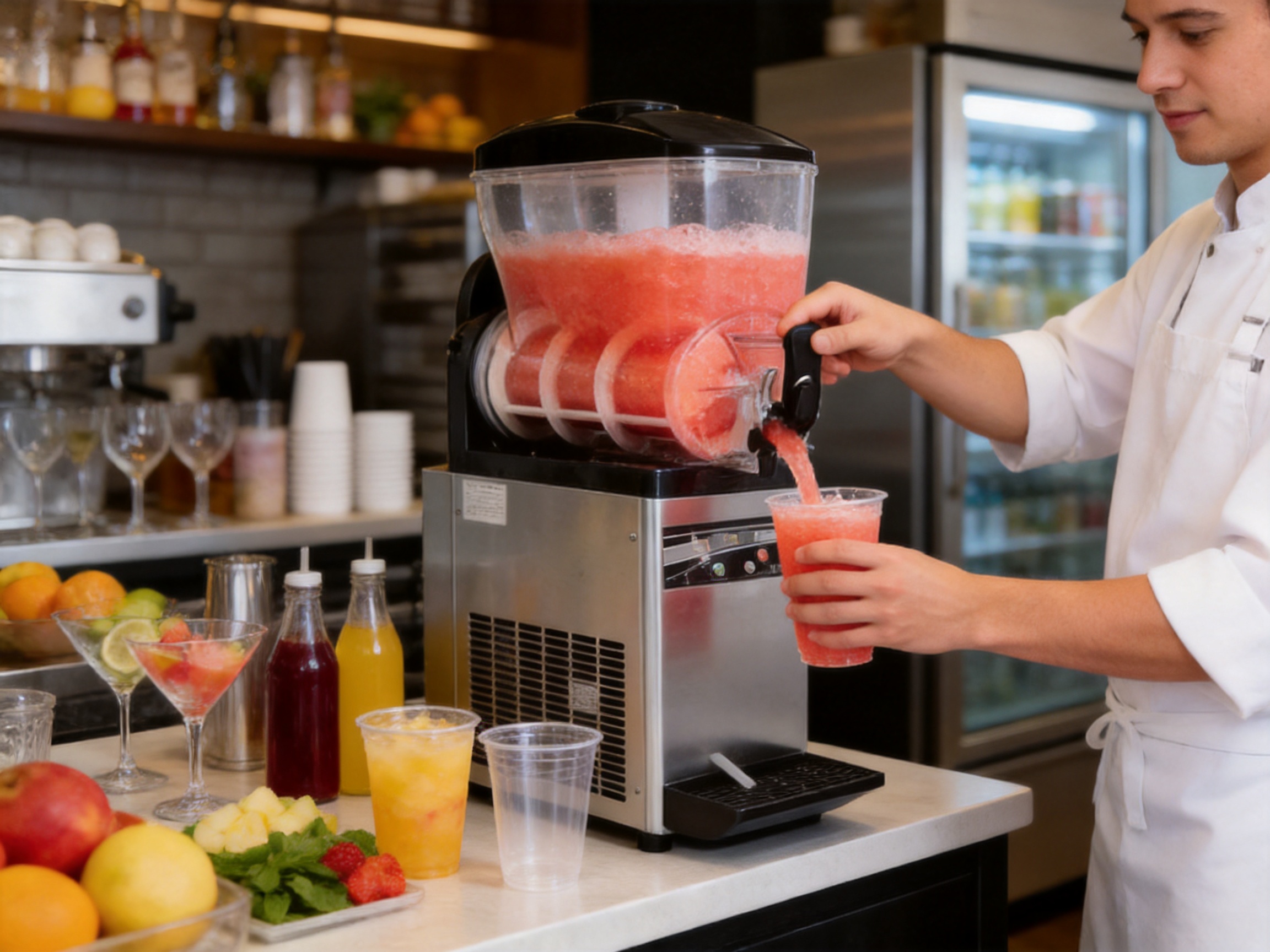
For a café, the machine can add frozen lemonades, fruit slushes, iced tea slushes, and seasonal specialty beverages to the menu. For a bar, it can support frozen cocktails or non-alcoholic drinks, subject to recipe compatibility and local operating requirements. In a restaurant or snack shop, it can provide an additional impulse-purchase product near the front counter.
The single-tank arrangement can also be useful for promotional campaigns. An operator may dedicate the machine to a limited-time flavor, a branded event drink, or a new recipe under market testing. If the product performs well, the business can later expand its frozen beverage program with additional machines or multi-tank models.
15L Single Tank Commercial Slush Machine for Bar Cafe Restaurant
Construction and Exterior Design
The machine body uses food-grade stainless steel together with sprayed steel components. This combination supports a professional appearance while providing surfaces that are appropriate for commercial foodservice environments. Stainless steel is widely used in food equipment because it is durable, relatively easy to clean, and resistant to many common forms of commercial wear.
The exterior finish is designed to look elegant and sanitary. A clean appearance is important in open-counter service because customers can see the equipment while beverages are being prepared. A well-finished machine can contribute to a more organized and professional impression, especially in cafés, bars, dessert shops, and self-service beverage areas.
The construction also reflects the practical demands of daily operation. Commercial equipment must withstand repeated handling, regular cleaning, and long operating schedules. Compared with light-duty domestic appliances, a commercial slush machine needs a more suitable structure for foodservice workflows, where staff may operate and clean the unit several times each day.
When installing the equipment, the operator should place it on a stable, level surface with sufficient ventilation around the refrigeration system. The exact clearance requirements should follow the operating manual and the supplier’s installation instructions. Adequate airflow helps the refrigeration system work efficiently and supports stable operation.
Food-Grade and Sanitary Considerations
Frozen beverages come into direct contact with the tank, mixing components, dispensing areas, and other internal surfaces. For this reason, material selection and cleaning procedures are essential. The food-grade stainless steel body helps provide a hygienic foundation for commercial use, while routine cleaning remains necessary to protect product quality and food safety.
Operators should establish a cleaning schedule based on product type, operating frequency, local health regulations, and the manufacturer’s instructions. Sugary beverages can leave residue on surfaces and components. If the machine is used for dairy-based or alcohol-containing recipes, additional cleaning attention may be required. Staff should be trained to disassemble, wash, sanitize, rinse, and reassemble removable parts correctly.
Sanitation is not only a regulatory issue. It also influences flavor, odor, appearance, and machine performance. Residue around seals or dispensing components can affect the quality of subsequent batches. A clear cleaning checklist can help employees maintain consistent procedures during shift changes and closing operations.
Cooling and Stirring Performance
A commercial slush machine must do more than simply chill liquid. It must create and maintain the semi-frozen texture customers expect from a slush beverage. Efficient refrigeration lowers the temperature of the beverage, while even stirring helps distribute the cold and prevents the product from settling unevenly.
The X-150 is designed with cooling and stirring functions for smooth frozen beverage production. Continuous or controlled agitation helps maintain a more uniform texture throughout the tank. This is particularly important when the beverage contains sugar, fruit ingredients, syrups, or other components that may otherwise separate during storage.
Stable temperature control also contributes to serving consistency. Customers generally expect the same drink to have a similar texture from one order to the next. If a beverage is too liquid, it may not deliver the desired slush experience. If it is too hard, dispensing can become difficult and the product may not be pleasant to consume. Proper machine adjustment and recipe control help the operator reach a balanced result.
Actual freezing speed and texture depend on several factors, including starting temperature, recipe composition, sugar concentration, alcohol content, ambient temperature, ventilation, and quantity loaded into the tank. The machine should be operated with recipes suitable for frozen beverage equipment. Very low-sugar or high-alcohol mixtures may freeze differently from standard slush formulations.
Energy and Refrigerant Considerations
The listed rated output is approximately 500W to 550W, depending on the product specification. This power range is appropriate for a compact commercial frozen drink machine and allows the unit to combine refrigeration with mixing in a relatively small package.
The product information identifies R290 or R290a as the refrigerant designation. R290 is commonly known as propane refrigerant and is valued in refrigeration applications for its low global warming potential compared with many older refrigerants. Its use reflects the industry’s continuing movement toward more environmentally considerate refrigeration technologies.
Because R290 is classified as a flammable refrigerant, installation, servicing, transportation, and repair must be performed according to applicable safety regulations and the manufacturer’s instructions. Only qualified technicians should open the refrigeration system or work on refrigerant-related components. Operators should never attempt unauthorized modifications.
Energy performance in actual operation depends on the surrounding environment and usage pattern. A machine located in a hot, poorly ventilated area may work harder than one installed in a cool, open service area. Frequent opening, warm product loading, blocked ventilation, or incorrect maintenance can also affect energy consumption and cooling results.
Compact Footprint for Commercial Spaces
Space is a major consideration for many foodservice businesses. Bars and cafés often need to accommodate espresso equipment, ice makers, refrigerators, POS systems, display cases, and preparation tools in a limited area. A machine that delivers commercial functionality without taking up excessive room can improve the efficiency of the entire service counter.
The listed dimensions are approximately 205 mm wide, 510–535 mm deep, and 810 mm high. The narrow width may make the machine suitable for counters where horizontal space is restricted, although the operator must verify the exact measurement of the final configuration. The height should also be checked against overhead shelves, signage, cabinets, and service clearances before installation.
The 26 kg net weight provides a balance between stability and manageability. The machine is substantial enough for regular commercial use but may be easier to position than larger multi-tank systems. Moving the machine should still be performed carefully by trained personnel, especially when placing it on an elevated counter.
A proper site assessment should consider access through doors, elevators, corridors, and service entrances. Buyers should also allow space for cleaning, ingredient loading, dispensing, electrical connection, ventilation, and maintenance access. A compact machine is most useful when the entire working area is planned correctly.
Advantages Compared with Larger or Less Specialized Equipment
Efficient Capacity for Moderate Demand
Large multi-tank machines can be valuable for high-volume operations, but they may be excessive for a small café, startup beverage shop, or restaurant with limited frozen drink sales. The 15L capacity provides a practical alternative for moderate demand, reducing the risk of overinvestment and unnecessary product holding time.
Lower Menu Complexity
A single-tank unit allows the operator to focus on one recipe at a time. This can make training easier and reduce the chance of cross-contamination between flavors when compared with a larger system containing multiple active tanks. It also supports a clear signature product strategy.
Better Use of Limited Space
The compact structure is advantageous where every section of the counter has a defined purpose. Instead of allocating space to a large machine with unused capacity, businesses can select equipment closer to their actual operating needs.
Professional Commercial Construction
The use of food-grade stainless steel and sprayed steel gives the unit a more suitable construction for foodservice environments than many consumer-focused frozen drink appliances. The commercial design is intended for frequent use, organized cleaning, and visible placement in customer-facing areas.
Modern Refrigeration Direction
The use of R290 or R290a reflects a modern refrigerant approach. Subject to local regulations and the final configuration, this can support businesses seeking equipment aligned with current refrigeration trends and environmental considerations.
Flexible Application
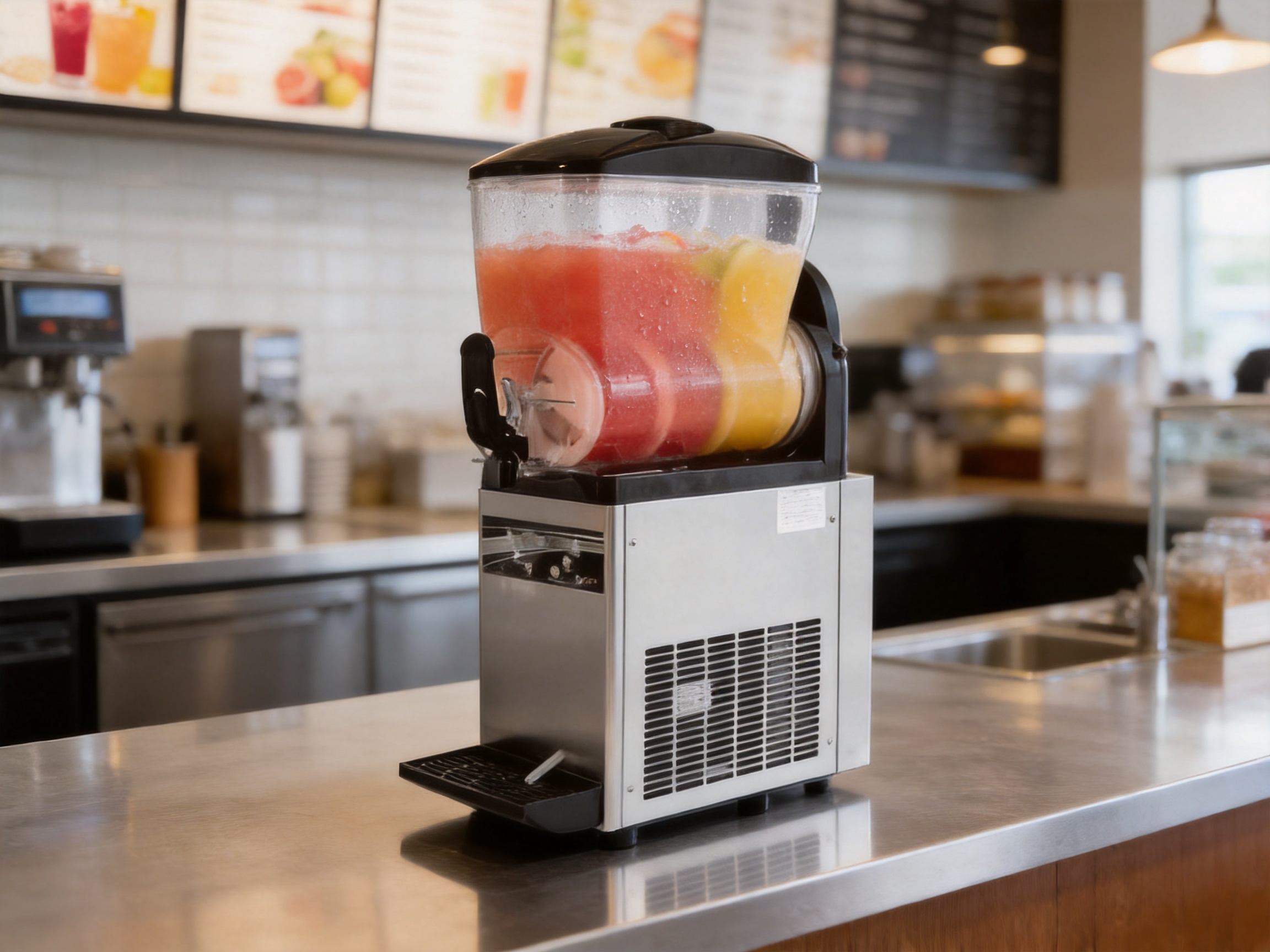
The machine can be applied across multiple foodservice formats. Its use is not limited to one type of beverage business. A bar may use it for cocktails, a café may use it for fruit drinks, and a restaurant may use it for dessert beverages or seasonal promotions.
Applications in Different Foodservice Businesses
Bars and Nightlife Venues
Bars can use the machine to prepare frozen cocktails, mocktails, fruit-based drinks, and themed beverages. A single-tank configuration is especially useful when the venue has one high-demand signature drink or changes its menu according to events and seasons.
Operators should confirm that the selected recipe is suitable for freezing. Alcohol concentration can influence freezing behavior, and recipes should be developed carefully to achieve the intended texture. The machine should also be cleaned thoroughly when changing between different beverages.
Cafés and Coffee Shops
Cafés can use the machine to expand beyond hot coffee and standard iced drinks. Frozen lemonades, fruit slushes, tea-based drinks, and non-dairy refreshments can attract customers during warm weather and create additional opportunities for add-on sales.
The compact footprint is helpful for cafés where the service counter already contains brewing equipment, grinders, refrigeration units, and pastry displays. A narrow commercial machine may be easier to integrate than a larger beverage station.
Restaurants and Quick-Service Locations
Restaurants can place the machine near the beverage preparation area or customer pickup counter. Frozen drinks can complement fast-food menus, grilled foods, desserts, and family meal offerings. Because the machine is designed for commercial operation, it can support regular service without requiring a separate frozen beverage preparation process.
Snack Shops and Dessert Stores
Snack shops can combine slush beverages with fried foods, ice cream, frozen desserts, or other impulse purchases. The visual presence of a frozen drink machine can help communicate the availability of cold refreshments to passing customers.
Catering and Event Service
For selected catering applications, the machine may support event-specific frozen beverage service. The operator must consider transportation, power availability, setup conditions, cleaning access, and local health requirements. The machine is most suitable for stable installations where it can be operated on a secure, level surface.
Operating Workflow
A consistent workflow helps the machine deliver reliable results and extends service life. Before use, the operator should inspect the tank, dispensing area, seals, and visible components. The machine should be clean, correctly assembled, and positioned with adequate ventilation.
The operator should prepare a recipe that is compatible with frozen beverage production. Ingredients should be mixed according to a controlled formula rather than added inconsistently from batch to batch. Consistent ingredient ratios make it easier to maintain the desired taste and texture.
After loading the product, the operator can select the appropriate cooling and stirring settings according to the model instructions. The initial freezing period may vary according to the starting temperature and recipe. Warm product generally requires more time and may increase the refrigeration workload.
During service, staff should monitor the beverage level and texture. The tank should not be allowed to run empty if the operating manual requires a minimum product level. At the same time, overfilling should be avoided because the product needs room for movement and expansion.
At the end of service, the operator should follow the recommended shutdown and cleaning procedure. Leaving sugary beverage residue in the tank or dispensing system can create sanitation problems and may make later cleaning more difficult.
Maintenance Recommendations
Regular maintenance is essential for commercial refrigeration equipment. Daily cleaning should normally address the product-contact areas, dispensing components, tank surfaces, and removable parts. The exact procedure should follow the instruction manual and local food safety requirements.
Staff should inspect seals and gaskets for wear. Damaged or incorrectly installed seals can lead to leakage, reduced hygiene, or difficulty maintaining the correct product condition. Replacement parts should be sourced from the supplier or an approved service channel whenever possible.
The external condenser and ventilation areas should be kept free from dust and obstructions. A blocked condenser can reduce heat dissipation and place additional strain on the refrigeration system. Cleaning frequency depends on the operating environment, but busy kitchens and dusty locations may require more frequent inspection.
Electrical connections should be checked by qualified personnel. The machine should be connected to a suitable power supply that matches the final product specification and local electrical requirements. Extension cords, overloaded circuits, or ungrounded connections can create safety risks.
Refrigeration repairs and refrigerant handling should only be performed by trained technicians. Because the equipment uses R290 or R290a, service work must account for the characteristics of the refrigerant and comply with applicable safety procedures.
Quality Control and Manufacturing Strengths
The manufacturer is a professional producer integrating design, research and development, manufacturing, sales, and service. This integrated structure can support closer coordination between product engineering, production planning, quality control, and customer support.
Operating more than 60,000 square meters of modern production facilities provides a substantial platform for manufacturing commercial equipment. Large-scale facilities can support organized production lines, component storage, assembly operations, inspection procedures, testing areas, and logistics coordination.
The company’s product portfolio covers commercial refrigeration, kitchen equipment, buffet equipment, ice cream machines, juice dispensers, fried ice cream machines, refrigeration cabinets, slush machines, flake ice machines, cooking equipment, griddles, fryers, insulation products, barbecue equipment, and buffet solutions.
This broad range is valuable for buyers developing complete foodservice projects. Instead of sourcing every category from unrelated suppliers, commercial customers may be able to coordinate several equipment requirements through one manufacturing partner. This can simplify communication, documentation, packaging, and procurement planning.
Product development experience across different equipment categories can also contribute to practical engineering knowledge. Refrigeration systems, food-contact materials, controls, structural design, commercial cleaning requirements, and service considerations all influence the performance of foodservice equipment.
OEM and ODM Capabilities
Commercial buyers often need equipment adapted to a specific market, brand identity, electrical standard, packaging requirement, or operating environment. The manufacturer offers OEM and ODM services based on customer drawings or requirements, creating opportunities for customized commercial refrigeration and foodservice solutions.
OEM projects may include private labeling, exterior color changes, packaging design, control-panel adjustments, product identification, and market-specific documentation. ODM projects may involve deeper collaboration on structure, capacity, functional configuration, or product development.
Customization should be discussed at the beginning of the purchasing process. Important details include target market, voltage and frequency, plug type, refrigerant requirements, language of labels, packaging standards, certification needs, order quantity, delivery schedule, and after-sales support.
A clear technical specification helps reduce misunderstandings. Buyers should request drawings, samples, photographs, test records, packing details, and confirmation of the final rated output. For this product, the difference between the listed 500W and 550W versions should be resolved before production or shipment.
Procurement Considerations for Commercial Buyers
Before purchasing, buyers should evaluate expected daily demand rather than selecting equipment based only on tank capacity. Consider the number of servings required per hour, peak service periods, menu rotation, storage practices, and available staff. A 15L machine is well suited to moderate demand, but a higher-volume operation may require multiple units or a larger system.
Installation conditions should also be reviewed. Confirm the machine’s final dimensions, counter load capacity, ventilation clearance, power supply, drainage requirements if applicable, and access for maintenance. The listed dimensions vary slightly between the supplied specification records, so the final technical drawing should be treated as the purchasing reference.
Buyers should ask about warranty coverage, spare parts availability, technical documentation, packaging, inspection procedures, and service response. The manufacturer’s product range includes optional components and spare parts, which may support planned maintenance and long-term operation.
For importers and distributors, product presentation is another consideration. The machine’s compact form and commercial appearance may be suitable for catalogs, showroom displays, and customer-facing installations. Distributors should prepare accurate information regarding capacity, rated output, refrigerant, dimensions, and operating requirements.
It is also advisable to calculate total ownership cost. Purchase price is only one factor. Energy use, cleaning labor, consumables, spare parts, downtime, transport, and service should be included in the evaluation. Equipment with suitable capacity and reliable support can provide better long-term value than a cheaper unit that does not match the application.
Product Positioning Against Competitors
The X-150 competes most directly with compact commercial slush machines and entry-level multi-purpose frozen beverage dispensers. Its main point of differentiation is the combination of moderate 15-liter capacity, narrow commercial form, professional materials, efficient refrigeration, and suitability for a broad range of foodservice environments.
Compared with domestic frozen drink appliances, the X-150 is more appropriate for businesses that require visible commercial equipment, repeated operation, and structured cleaning routines. Its food-grade stainless steel construction and commercial design support a more professional installation.
Compared with larger multi-tank units, the single-tank machine can reduce space requirements and simplify operation. It may also be more appropriate for businesses that sell one primary frozen beverage rather than several flavors at the same time.
Compared with very small dispensers, the 15-liter tank provides greater service capacity and may reduce the frequency of refilling during normal commercial periods. The balance between capacity and compactness is one of the product’s strongest practical advantages.
Compared with equipment using older refrigerant approaches, the R290 or R290a specification represents a more current refrigerant direction. However, buyers must confirm the exact refrigerant designation, safety documentation, and local compliance requirements for the final version.
Menu and Recipe Opportunities
The machine can support a wide variety of frozen beverage concepts. Fruit slushes can be made with suitable fruit bases, syrups, or concentrates. Lemonade slushes can provide a refreshing non-carbonated option. Tea-based frozen drinks can help cafés create products that complement their existing beverage menu.
Bars may develop frozen cocktails, mocktails, and event beverages. The recipe must be tested for freezing performance, sweetness, alcohol concentration, and serving temperature. A professional recipe sheet should identify ingredient weights, mixing order, batch size, holding time, and cleaning requirements.
Seasonal menus can make the machine more valuable throughout the year. Citrus and tropical drinks may be popular in warm weather, while specialty dessert beverages or holiday flavors can support promotional campaigns during other seasons.
Operators should avoid assuming that every liquid can be frozen successfully. Excessive alcohol, insufficient sugar, large solid particles, or incompatible ingredients may affect texture or damage components. Recipes should be tested in controlled quantities before commercial launch.
Staff Training and Daily Management
Even a well-designed machine depends on correct operation. Staff training should cover ingredient preparation, loading limits, controls, dispensing, texture monitoring, cleaning, emergency shutdown, and basic troubleshooting.
Employees should understand the difference between a product problem and a machine problem. For example, a beverage that remains too liquid may be affected by recipe composition, initial temperature, ambient heat, or insufficient operating time. A machine fault may involve unusual noise, leakage, electrical issues, or failure to cool.
A daily log can help management identify patterns. The log may record startup time, product type, batch size, cleaning completion, unusual observations, and service requirements. This information supports preventive maintenance and helps ensure that different shifts follow consistent procedures.
Staff should also be instructed not to use sharp tools or excessive force inside the tank. Improper handling can damage food-contact surfaces, seals, mixing components, or dispensing parts. Any unusual condition should be reported promptly rather than ignored.
Safety and Compliance
Commercial equipment should be installed and operated in accordance with the supplier’s manual and local regulations. Electrical requirements, food safety rules, ventilation, refrigerant handling, and workplace safety standards may differ between countries and regions.
The machine should remain dry around electrical connections. Operators should keep the surrounding area organized and should not place unrelated objects on top of ventilation openings. The equipment should be positioned away from excessive heat sources whenever possible.
R290 or R290a refrigerant requires specific service precautions. Refrigeration technicians must use suitable tools and procedures, and unauthorized modification of the refrigeration circuit should be avoided. Buyers should confirm the safety labeling and documentation supplied with the final machine.
Food safety procedures should cover ingredient storage, batch identification, cleaning chemicals, rinse practices, employee hygiene, and product holding times. The machine itself cannot replace a complete food safety management system.
Service, Parts, and Long-Term Support
Commercial customers benefit from support that extends beyond the initial shipment. The manufacturer provides pre-sales consultation, product customization, flexible logistics and payment solutions, and after-sales maintenance support. These services can help buyers plan projects and manage equipment over its operating life.
Spare parts planning is especially important for distributors, chain stores, and businesses located far from service centers. Common replacement items may include seals, dispensing components, switches, control parts, and other wear-related pieces. Buyers should discuss recommended spare parts and lead times when placing an order.
Preventive maintenance can reduce unexpected downtime. Establishing a service calendar based on operating hours, environmental conditions, and usage intensity helps identify issues before they affect customer service. A clean condenser, intact seal, stable electrical connection, and correctly operating mixing system all contribute to dependable performance.
For multi-location businesses, standardized procedures are valuable. The same cleaning checklist, recipe controls, staff training materials, and maintenance records can be used across locations. OEM or ODM buyers may also request customized manuals, labels, or service documentation for their distribution network.
Recommended Buyer Profile
This machine is a strong fit for small and medium-sized bars, cafés, restaurants, snack shops, dessert stores, beverage counters, and foodservice operators with moderate frozen drink demand. It is also suitable for startups that want to add a commercial frozen beverage product without immediately investing in a large multi-tank installation.
It may be less suitable for very high-volume venues that need several flavors available simultaneously or that serve frozen drinks continuously throughout the day at a high rate. Such operators should compare multiple single-tank units with larger multi-tank equipment based on labor, space, energy, and menu requirements.
The product is also a practical option for distributors seeking a compact commercial slush machine for different regional markets. The manufacturer’s OEM and ODM capabilities can support private-label programs, customized specifications, and broader foodservice equipment projects.
Frequently Asked Questions
What is the capacity of the machine?
The machine has a listed tank capacity of 15 liters. The usable operating quantity may depend on the recipe, minimum product level, maximum fill recommendation, and instructions for the final model.
Is this machine suitable for a café?
Yes. Its compact single-tank design is suitable for cafés that want to add frozen lemonades, fruit slushes, tea-based drinks, or other compatible beverages without using excessive counter space.
Can it be used in a bar?
Yes. Bars can use it for frozen cocktails, mocktails, and specialty drinks. Alcohol concentration and recipe composition should be tested carefully because they affect freezing behavior.
What refrigerant does the machine use?
The supplied specifications identify R290 or R290a. The exact designation should be confirmed with the supplier for the final configuration and destination market.
What is the rated power?
The product information lists both 500W and 550W. This may reflect different configurations or documentation versions. Buyers should confirm the final rated output before ordering and ensure that the local power supply is compatible.
What are the exact dimensions?
The supplied records list approximately 205 × 510 × 810 mm and 205 × 535 × 810 mm. The final drawing or confirmed commercial specification should be used for installation planning.
Is the body made of stainless steel?
The machine body is described as using food-grade stainless steel together with sprayed steel. The combination is intended to provide a sanitary, professional, and durable commercial exterior.
How should the machine be cleaned?
Cleaning should follow the manufacturer’s manual and local food safety requirements. Product-contact areas, removable parts, dispensing components, seals, and the tank should be cleaned and sanitized on a regular schedule.
Can the machine be customized?
The manufacturer offers OEM and ODM services based on customer drawings or requirements. Possible customization should be discussed in advance, including branding, appearance, packaging, electrical specifications, documentation, and order quantity.
Is it suitable for large-volume production?
The 15-liter machine is designed primarily for small to medium-sized commercial demand. High-volume operators should assess peak demand and may require multiple machines or a larger-capacity system.
What makes the machine different from a household frozen drink appliance?
It is designed for commercial foodservice use, with a 15-liter tank, commercial construction, food-grade materials, refrigeration, stirring, and a professional installation format. It is intended for repeated business operation rather than occasional household use.
What should buyers confirm before purchase?
Buyers should confirm the final capacity, rated output, refrigerant, dimensions, voltage, frequency, plug type, warranty, spare parts, packaging, certifications, delivery schedule, and after-sales support.
Conclusion
The 15L Single-Tank Commercial Slush Machine provides a balanced solution for foodservice operators that need reliable frozen beverage production in a compact format. Its 15-liter capacity is appropriate for moderate demand, while the single-tank layout simplifies recipe management and helps conserve space. Food-grade stainless steel, sprayed steel construction, cooling performance, and even stirring support the requirements of commercial beverage service.
The product is especially suitable for bars, cafés, restaurants, snack shops, dessert stores, and startups seeking to add frozen drinks to their menus. It offers a practical alternative to larger multi-tank equipment when the business needs one primary flavor or a focused seasonal beverage program.
The manufacturer’s integrated capabilities strengthen the overall value proposition. With extensive production facilities, experience across commercial refrigeration and foodservice equipment, OEM and ODM services, and support covering consultation, customization, logistics, and after-sales maintenance, the company can serve both individual operators and larger commercial procurement projects.
Before purchase, buyers should verify the final technical details because the supplied records contain small differences in rated output, refrigerant designation, and dimensions. Once the correct configuration is confirmed, the machine can provide an efficient foundation for consistent frozen drink production, menu expansion, and long-term commercial operation.
References
1. Product specification sheet for the X-150 15L single-tank commercial slush machine.
2. Manufacturer-provided product information covering capacity, rated output, refrigerant, weight, dimensions, construction, and applications.
3. Manufacturer company profile describing production facilities, product categories, research and development, manufacturing, sales, and service capabilities.
4. Manufacturer-provided OEM and ODM service information for commercial refrigeration and foodservice equipment.
5. General commercial foodservice equipment maintenance and sanitation principles.
6. General refrigeration safety principles for equipment using R290 or R290a refrigerant.
Product: 15L Single Tank Commercial Slush Machine for Bar Cafe Restaurant

For exclusive deals and latest offers, sign up by entering your email address below.


-
spelor@spelor.com
-
+86-576-85229688
-
No.528, Changxi Road, Linhai City, Zhejiang Province, China
Commercial Refrigeration Equipment Manufacturer China
Copyright © 2025 by Spelor Electrical Appliances (Zhejiang) Co., Ltd. Rights Reserved.
