


 中文简体
15L Single-Tank Commercial Slush Machine for Efficient Frozen Beverage Service
Admin 2026-09-24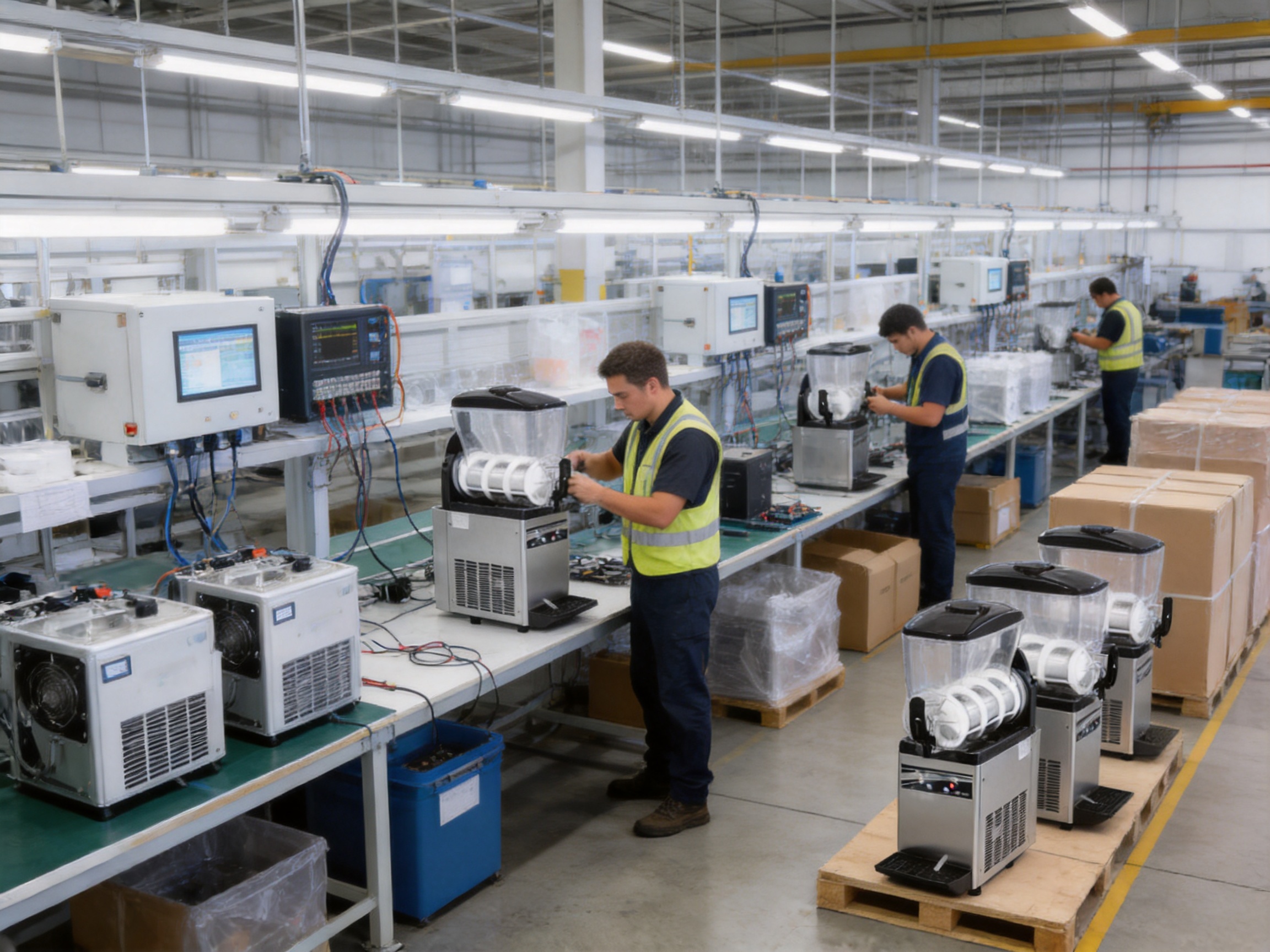
In busy bars, cafés, restaurants, snack shops, and compact foodservice locations, frozen beverages can create an attractive revenue opportunity without requiring a large production area. A reliable slush machine allows operators to serve chilled, colorful, and consistent drinks throughout the day while offering customers a visually appealing product. The 15L Single-Tank Commercial Slush Machine is designed for businesses that need practical capacity, efficient operation, compact placement, and dependable daily performance.
With a 15-liter tank, food-grade stainless steel construction, even stirring, efficient cooling, and environmentally considerate R290 refrigerant, this model is suitable for small to medium-sized commercial operations. It provides a straightforward solution for producing slush drinks, frozen fruit beverages, flavored ice drinks, and other semi-frozen refreshments. Its single-tank configuration is particularly suitable for locations that need one popular flavor or one core beverage formula without investing in a larger multi-tank system.
The machine is manufactured by Spelor Electrical Appliances (Zhejiang) Co., Ltd., a professional foodservice equipment manufacturer based in Zhejiang, China. The company integrates product design, research and development, manufacturing, sales, and service. Its broad product portfolio covers commercial refrigeration, ice cream equipment, juice dispensers, fried ice cream machines, ice machines, cooking equipment, buffet equipment, and related foodservice solutions.
This article examines the machine’s construction, operating advantages, commercial applications, maintenance requirements, purchasing considerations, and the manufacturing capabilities behind it. It also explains how a compact 15L slush machine can compare favorably with less specialized alternatives in terms of workflow, footprint, presentation, and operating flexibility.
15L Single Tank Commercial Slush Machine for Bar Cafe Restaurant
Product Overview
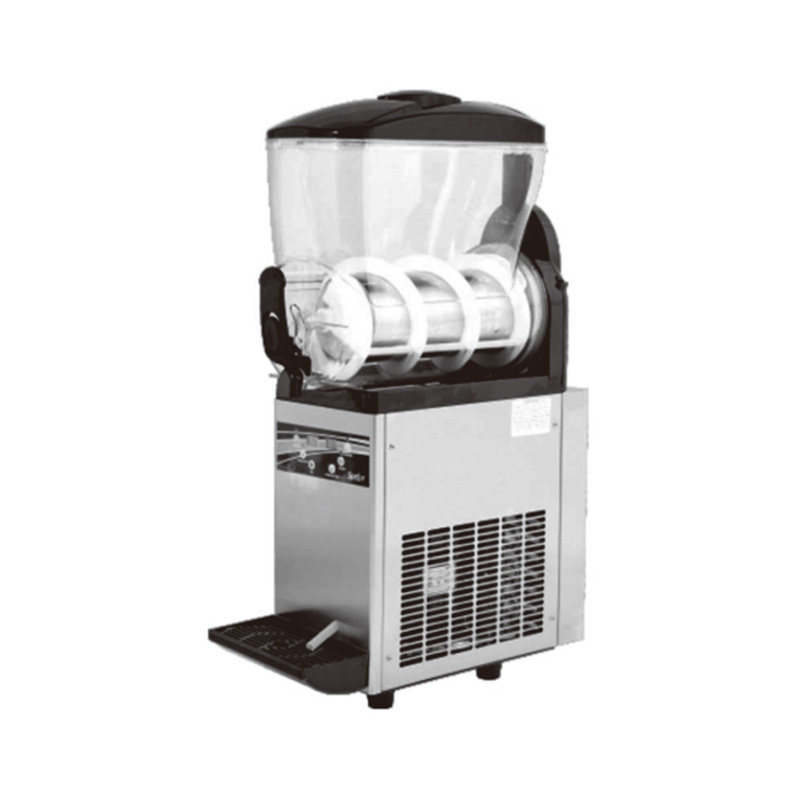
The 15L Single-Tank Commercial Slush Machine is identified as model X-150. Its main function is to cool and stir prepared beverage mixtures until they reach a smooth, semi-frozen consistency. The single transparent tank provides a practical service volume for daily commercial use while allowing staff and customers to see the product inside.
The model is intended for bars, cafés, restaurants, dessert shops, juice counters, convenience stores, snack shops, and other foodservice environments. It can be used for frozen lemonade, fruit slush, flavored ice drinks, non-alcoholic frozen beverages, and other compatible recipes. Depending on the formulation, the machine may also be used for selected frozen cocktails, although operators should confirm that the recipe and alcohol content are suitable for the equipment.
The tank capacity is 15 liters. This size offers a useful balance between service volume and space efficiency. Smaller countertop machines may require frequent refilling during busy periods, while large multi-tank machines can occupy considerable floor or counter space and may provide more capacity than a small venue needs. A 15-liter tank is therefore a practical middle option for businesses that want commercial functionality without excessive equipment scale.
The machine body is described as being made from food-grade stainless steel and colorful sprayed steel. Stainless steel is widely used in professional foodservice equipment because it is durable, easy to clean, resistant to routine moisture exposure, and suitable for hygienic workspaces. The sprayed steel exterior allows manufacturers to provide a visually attractive finish while supporting a professional appearance in customer-facing areas.
The listed rated output is presented as approximately 500 to 550 watts in the supplied specifications. The product information identifies 550W in one specification section and 500W in another. This difference may relate to a specification revision, regional electrical configuration, or document variation. Buyers should confirm the final nameplate rating, voltage, frequency, and electrical requirements before placing an order.
The product information also lists the refrigerant as R290 or R290a. These descriptions commonly refer to propane-based R290 refrigerant, but the exact designation and charge should be confirmed on the final technical documentation. R290 is recognized as a low-global-warming-potential refrigerant and is increasingly used in modern commercial refrigeration equipment when the system is correctly designed, assembled, tested, and serviced.
| Product Category | Commercial Slush Machine |
| Model | X-150 |
| Tank Capacity | 15 liters |
| Rated Output | Approximately 500–550 watts, subject to final confirmation |
| Refrigerant | R290/R290a, subject to final nameplate confirmation |
| Net Weight | Approximately 26 kilograms |
| Listed Dimensions | Approximately 205 × 510 × 810 mm or 205 × 535 × 810 mm, subject to final confirmation |
| Configuration | Single tank |
| Recommended Locations | Bars, cafés, restaurants, snack shops, dessert counters, and convenience stores |
Why a 15L Single-Tank Design Is Commercially Practical
Equipment capacity should match actual sales volume, available space, staff capability, and menu strategy. A machine that is too small may create constant refilling and inconsistent service, while a machine that is too large may consume valuable space and increase initial investment. The 15L format addresses the needs of many smaller and medium-sized foodservice businesses.
Balanced Service Capacity
A 15-liter tank provides enough product for regular service while remaining manageable for a compact operation. It can support a steady flow of drinks during ordinary service periods and can be replenished according to demand. Because the tank is not excessively large, operators can change flavors or recipes more frequently than they might with a high-capacity production unit.
This is especially useful for businesses that rotate seasonal flavors, test new recipes, or offer a limited selection of specialty drinks. A single tank can be dedicated to a signature lemonade, berry slush, mango beverage, cola-based frozen drink, or another high-demand item. The business does not need to commit to multiple flavors until customer demand justifies a larger machine.
Space Efficiency
The listed machine dimensions are approximately 205 mm wide, 510 to 535 mm deep, and 810 mm high. The relatively narrow width can help operators make better use of limited counters or service areas. Before installation, the buyer should account for ventilation clearance, electrical access, operator movement, cleaning access, and the space required to load ingredients and serve cups.
Compared with larger multi-tank systems, a single-tank machine can be easier to integrate into a compact café, bar, hotel breakfast area, restaurant counter, or mobile-style service setup. Its vertical layout can preserve valuable horizontal workspace for cups, toppings, syrup bottles, payment equipment, or other service tools.
Lower Menu Complexity
A one-tank configuration is an advantage when the business wants to standardize one popular beverage. Staff can focus on preparing and monitoring a single recipe rather than managing several tanks with different ingredients, textures, and cleaning schedules. This can simplify employee training and reduce the likelihood of flavor cross-contamination between tanks.
For a new business, a single-tank machine can also provide a lower-risk entry point into frozen beverage sales. Operators can evaluate demand, identify the most successful flavor, and expand later if sales justify additional equipment. The result is a more gradual investment strategy than purchasing a large multi-flavor machine at the beginning.
Construction and Hygiene Advantages
Food-Grade Stainless Steel Body
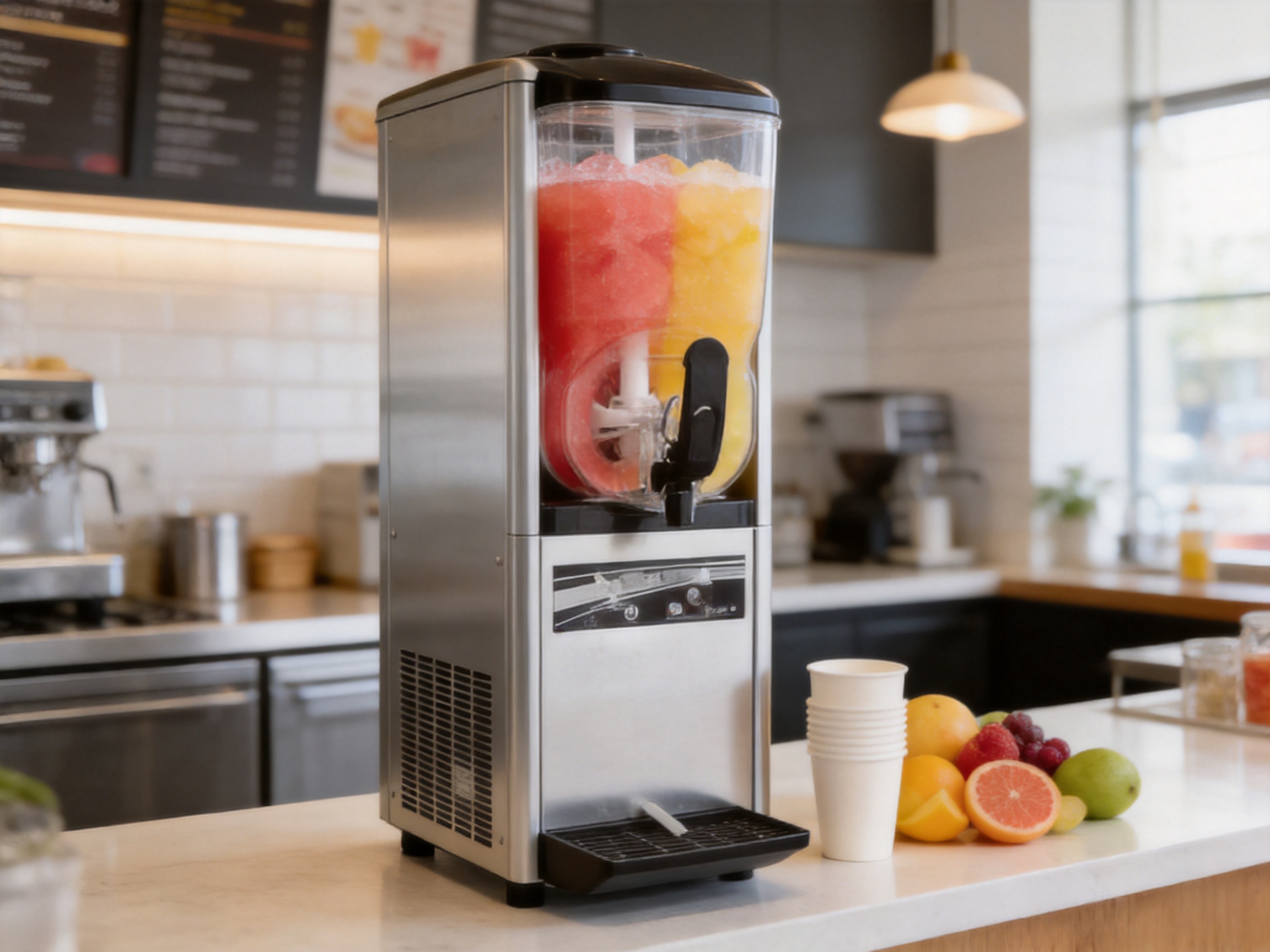
The use of food-grade stainless steel in the machine body supports the hygiene expectations of commercial foodservice environments. Stainless steel has a smooth, non-porous surface that can be wiped down efficiently. It is also resistant to many common forms of corrosion and can maintain a professional appearance when cleaned correctly.
In a busy service area, equipment surfaces may be exposed to beverage splashes, condensation, syrup, sugar, and frequent contact with staff. A stainless steel body helps operators maintain a clean working environment. The material also provides structural durability for routine commercial use, transportation, installation, and daily cleaning.
Colorful Sprayed Steel Finish
The colorful sprayed steel elements add visual appeal to the machine. Frozen beverage equipment is often placed where customers can see it, so appearance can influence the overall presentation of a bar, café, dessert shop, or restaurant. A clean and attractive machine can help reinforce the impression of product quality and operational professionalism.
The exterior finish also offers opportunities for businesses to coordinate equipment with their interior design or brand color scheme. For OEM and ODM projects, the manufacturer may be able to discuss customized colors, labels, panels, or other appearance-related requirements, subject to order quantity, technical feasibility, and approval of production samples.
Accessible Cleaning Workflow
Hygiene is not determined by material alone. It also depends on whether operators can access the tank, mixing components, dispensing area, seals, and surrounding surfaces. A commercial slush machine should be incorporated into a documented cleaning schedule that includes product removal, safe shutdown, disassembly where permitted, washing, rinsing, sanitizing, drying, and reassembly.
Operators should always follow the final instruction manual and local food safety regulations. Sweetened beverages can leave residue if they remain in the tank or dispensing pathway for too long. Regular cleaning helps control buildup, preserve beverage flavor, reduce odors, and support reliable machine operation.
Cooling and Stirring Performance
The quality of a slush beverage depends on more than low temperature. The product must generally be cooled and mixed in a controlled way so that it develops a smooth, pourable, semi-frozen texture. Excessive freezing may create hard ice or block dispensing, while insufficient cooling may result in a thin drink that does not meet customer expectations.
The X-150 is designed with an integrated cooling and stirring process. Efficient cooling reduces the time required to bring the beverage toward its serving condition, while continuous or controlled stirring helps distribute temperature and suspended ingredients throughout the tank. Even mixing is particularly important for beverages containing sugar, flavoring, fruit components, or other ingredients that may settle over time.
Consistent Product Texture
When the recipe is correctly formulated, even stirring can help maintain a consistent texture from the first serving to the last. A stable texture improves the customer experience and makes portioning more predictable. It can also help staff avoid repeatedly manually mixing the product during service.
Recipe design remains important. Sugar concentration, solids content, alcohol level, acidity, and ingredient viscosity can all affect freezing performance. Operators should use recipes that are compatible with the machine and avoid introducing ingredients that may damage the mixing system or obstruct the dispensing pathway.
Support for Daily Production
The machine is intended for everyday commercial use rather than occasional household preparation. Its 15L capacity, compact construction, and commercial cooling system make it suitable for serving during regular operating hours. However, expected output depends on ambient temperature, initial beverage temperature, recipe composition, loading volume, ventilation, electrical supply, and the number of consecutive batches.
For best results, operators should install the machine in a well-ventilated area away from direct heat sources. The air inlet and outlet areas should not be blocked. Adequate ventilation helps the refrigeration system release heat and can contribute to stable operation and efficient energy use.
Refrigerant and System Considerations
The supplied product information identifies R290 or R290a as the refrigerant. R290 is propane-based and has a low global warming potential compared with many older refrigerants. Its use reflects a broader industry movement toward refrigeration systems with reduced environmental impact.
Because R290 is classified as a flammable refrigerant, safety must be treated as a technical requirement rather than a marketing feature. The machine must be manufactured with an appropriate sealed refrigeration system, correct component selection, suitable electrical protection, proper labeling, and compliance with applicable safety standards. Installation, repair, refrigerant recovery, and charging should be performed only by qualified technicians familiar with flammable refrigerant systems.
Commercial buyers should request the applicable compliance documentation for their market. Depending on the destination, this may include electrical safety documentation, electromagnetic compatibility information, refrigeration safety testing, declarations of conformity, or other certification materials. Importers should also confirm whether local authorities require specific installation or operating conditions for equipment using R290.
From an operational perspective, the use of R290 can be considered one part of a modern refrigeration design. It does not eliminate the need for correct maintenance. Condenser cleanliness, airflow, electrical stability, door or tank sealing where applicable, and correct product loading all influence refrigeration performance.
Advantages Compared with Less Specialized Alternatives
Businesses considering frozen beverages may compare a commercial slush machine with household freezers, manually prepared ice drinks, countertop blenders, or larger multi-tank systems. Each alternative may have a place, but the X-150 offers several practical advantages for regular commercial service.
Compared with Household Freezers
A household freezer is not designed to continuously stir and dispense a semi-frozen beverage. It may freeze a prepared mixture, but staff would need to remove, mix, monitor, and portion the product manually. This approach can produce inconsistent texture and requires more labor during service.
A purpose-built slush machine is designed around the complete beverage process: cooling, mixing, holding, and serving. This can improve workflow and reduce the dependence on manual intervention. The commercial format is also more appropriate for customer-facing service and routine cleaning procedures.
Compared with Manual Ice Blending
Blenders can produce frozen drinks to order, but they require repeated staff attention for each serving. During busy periods, this may create queues, increase noise, and make portion consistency more difficult. Blending also requires ice storage and may produce a different texture from a continuously chilled slush beverage.
The X-150 holds a prepared beverage in a ready-to-serve state, allowing staff to dispense portions quickly. This is useful when a venue wants to serve a consistent signature product throughout the day. The operator can still adjust the recipe or change flavors between production cycles when necessary.
Compared with Larger Multi-Tank Machines
Multi-tank machines are useful for venues with high demand and several popular flavors. However, they typically require more installation space, a higher initial investment, and additional cleaning and maintenance. A single-tank model is often more suitable for businesses with a focused menu or limited counter area.
The choice should be based on actual sales projections rather than the maximum number of available flavors. If one signature beverage accounts for most frozen drink sales, a single-tank machine may offer a more efficient return on investment. The saved space can be used for other revenue-generating equipment or customer service functions.
Compared with Non-Commercial Beverage Equipment
Commercial equipment is built around repeated daily operation, foodservice workflow, and professional maintenance. Although the initial purchase price may be higher than that of a consumer appliance, a commercial machine can be more appropriate for continuous service, customer presentation, and business compliance requirements.
The stainless steel body, commercial refrigeration system, 15L capacity, and integrated stirring function position the X-150 as a dedicated foodservice tool rather than a general-purpose home appliance.
Applications in Different Foodservice Environments
Bars and Beverage Lounges
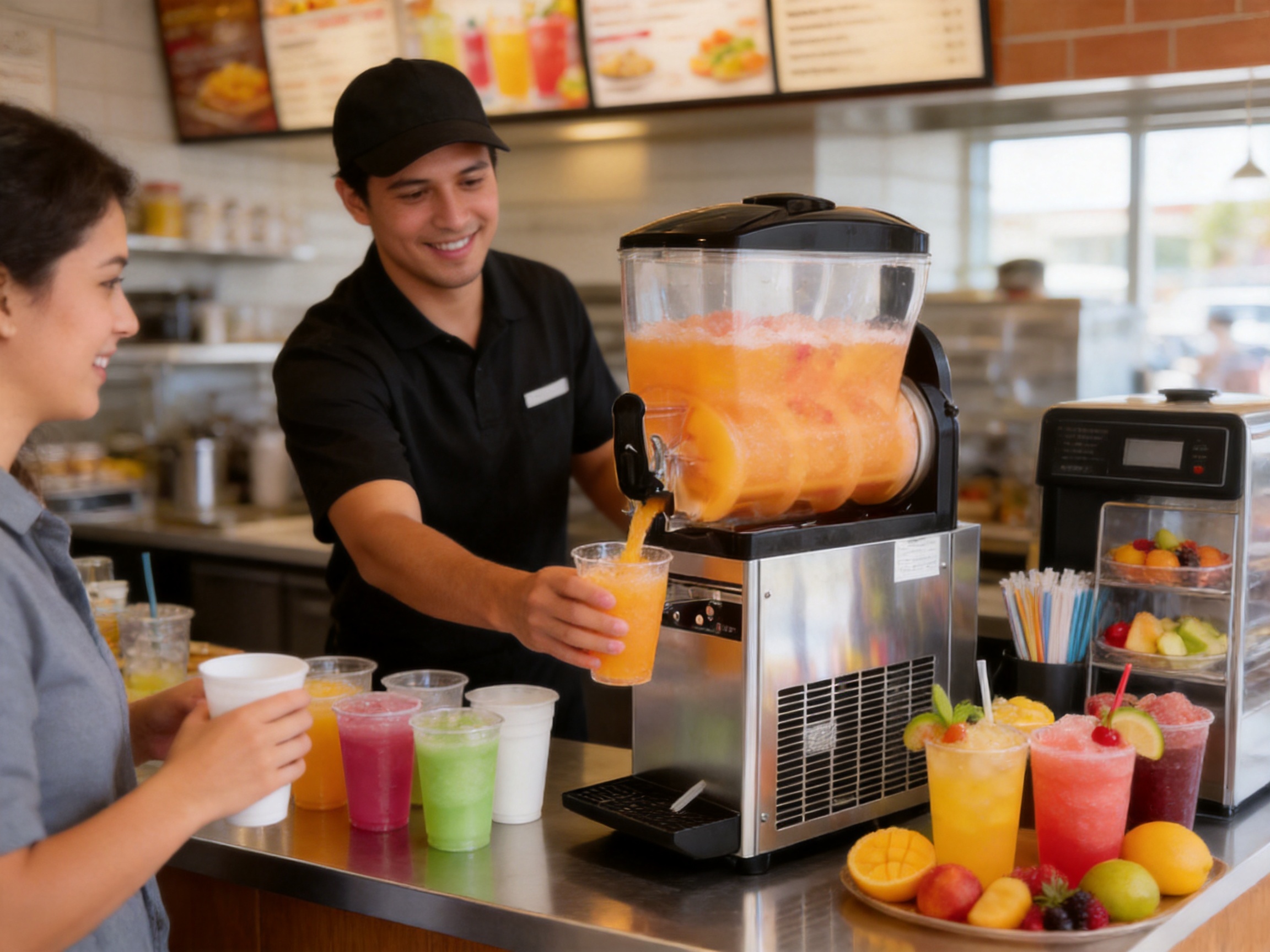
Bars can use the machine for frozen cocktails, alcohol-free slush drinks, frozen fruit beverages, and seasonal promotions. A visible slush machine can attract attention and encourage impulse purchases, particularly during warm weather. Before using alcohol-containing recipes, operators should confirm that the beverage formulation is compatible with the machine and that the freezing characteristics are suitable.
For bars with limited space, the single-tank arrangement makes it possible to offer one high-margin frozen drink without dedicating an entire service station to a large multi-flavor unit. Menu boards, garnish stations, and pre-portioned cups can be arranged around the machine to support fast service.
Cafés and Coffee Shops
Cafés can add frozen lemonade, fruit slush, iced tea blends, and non-dairy specialty drinks to their menu. These beverages can complement coffee sales, especially during warmer months when customers may prefer cold refreshments.
The 15L capacity is suitable for cafés that want to test frozen drinks without creating a complex beverage program. The machine can be positioned near the cold beverage station, provided that sufficient ventilation and cleaning access are maintained.
Restaurants and Fast-Food Counters
Restaurants can use the machine to add a distinctive beverage option to meal combinations. Frozen drinks may be especially attractive for family dining, casual restaurants, quick-service locations, and venues serving spicy or grilled foods.
A standardized recipe allows staff to produce consistent servings while the machine holds the product at a ready-to-serve condition. Operators can adjust cup sizes, flavor pricing, and promotional bundles according to their business model.
Snack Shops and Dessert Stores
Snack shops and dessert counters can pair slush beverages with fried snacks, ice cream, fried ice cream rolls, waffles, or other sweet products. The colorful appearance of a frozen beverage can complement a visually oriented dessert menu.
Since dessert businesses often operate in compact spaces, the relatively narrow machine width can be beneficial. The operator should still allow enough room for cleaning, ingredient preparation, cup storage, and customer movement.
Convenience Stores and Retail Counters
Convenience stores may use the machine to create an attractive self-service or staff-served beverage category. A single popular flavor can simplify inventory control and reduce the training required for employees who manage multiple product areas.
Retail operators should consider product visibility, customer access, spill prevention, cleaning frequency, and local rules regarding self-service equipment. Clear labeling of ingredients and allergens may also be required depending on the jurisdiction.
Operating Workflow
Efficient operation begins with appropriate preparation. Staff should inspect the machine, verify that the tank and dispensing components are clean, confirm that the unit is level and properly positioned, and check that ventilation openings are unobstructed.
The beverage mixture should be prepared according to a tested recipe. Ingredients need to be dissolved or blended sufficiently before being added to the tank. Undissolved solids may affect texture, settle in the tank, or place additional stress on the mixing system. The operator should avoid exceeding the recommended fill level and should follow the manufacturer’s guidance regarding minimum and maximum product quantities.
After the machine is switched on, the cooling and stirring cycle can begin. The time required to reach the desired consistency varies according to the starting temperature, recipe, room temperature, and quantity loaded. Staff should monitor the texture rather than relying on a fixed time for every recipe.
Once the beverage reaches the required condition, it can be dispensed into suitable cups. Staff should maintain clean serving practices, wipe spills promptly, and monitor product level throughout the service period. If the beverage becomes unusually thin, excessively hard, separated, or difficult to dispense, the operator should pause service and investigate the recipe, temperature, stirring function, and machine condition.
At the end of the operating period, the machine should be handled according to the cleaning and shutdown instructions. Product should not be left in the tank indefinitely. A planned closing procedure protects hygiene and helps the next service period begin efficiently.
Maintenance and Long-Term Reliability
Daily Cleaning
Daily cleaning is essential for any machine that handles sweetened or flavored beverages. Residue may accumulate around the tank, lid, dispensing outlet, seals, and mixing components. Operators should use approved cleaning materials and avoid abrasive products that could scratch surfaces or damage finishes.
Removable components should be handled carefully during disassembly and reassembly. Seals and gaskets should be inspected for wear, deformation, or damage. If a seal no longer fits correctly, it may allow leakage or make cleaning more difficult.
Surface Care
The stainless steel and sprayed exterior should be wiped regularly to remove splashes, fingerprints, and syrup residue. Excessive moisture should not be allowed to enter electrical areas. Operators should never spray water directly onto control panels, switches, motors, or refrigeration components unless the instruction manual specifically permits that method.
Ventilation and Condenser Care
Airflow is important to refrigeration performance. Dust and grease can accumulate around ventilation openings and heat-releasing components, particularly in restaurant kitchens or bar areas. Staff should inspect these areas as part of a routine maintenance schedule and clean them using safe procedures.
Blocked ventilation can cause longer cooling cycles, increased energy use, reduced product performance, and additional stress on the refrigeration system. Maintaining clearance around the machine is a simple but important way to support reliable operation.
Professional Servicing
Refrigeration repairs, electrical troubleshooting, and work involving R290 should be assigned to qualified technicians. Operators should not attempt to open the sealed refrigeration circuit or modify electrical components without appropriate training and authorization.
Businesses that depend on frozen beverage sales should maintain a service record containing cleaning dates, inspections, repairs, replacement parts, and technician information. This record can help identify recurring issues and support preventive maintenance.
Manufacturing Strength and Quality Control
The product is manufactured by a company with more than 60,000 square meters of modern production facilities. Its operations cover research and development, manufacturing, sales, and service. This integrated structure can support closer coordination between product design, production engineering, quality control, and customer support.
Manufacturing commercial refrigeration and foodservice equipment requires more than assembling individual parts. The production process must coordinate sheet-metal fabrication, surface treatment, refrigeration-system assembly, electrical installation, component matching, inspection, testing, packaging, and logistics.
Product Design and Research
A dedicated design and research capability allows the manufacturer to develop equipment around actual foodservice requirements. Important design considerations include tank capacity, product visibility, cleaning access, cooling performance, control layout, cabinet strength, serviceability, and transportation protection.
For international customers, design work may also involve regional electrical requirements, plug configurations, labeling, packaging specifications, language requirements, and documentation. OEM and ODM cooperation can allow buyers to discuss modifications based on drawings, market positioning, or application needs.
Integrated Production
In-house or closely managed production processes can improve coordination between different manufacturing stages. Sheet-metal parts must fit accurately, refrigeration components must be installed correctly, electrical wiring must be organized safely, and exterior panels must meet appearance expectations.
Integrated manufacturing may also help the company respond to customer requirements involving color, capacity, configuration, packaging, and accessory selection. Each customization request must be reviewed for technical feasibility, minimum order quantity, lead time, tooling requirements, and certification impact.
Inspection and Testing
Commercial refrigeration equipment should undergo inspection and functional testing before shipment. Depending on the production procedure, this may include appearance inspection, dimensional checks, electrical safety verification, refrigeration-system testing, leakage checks, control operation, stirring operation, and cooling performance assessment.
Testing is particularly important for export orders because equipment may travel long distances before installation. Proper packaging and final inspection help reduce the risk of transport damage, loose components, surface defects, or incorrect documentation.
One-Stop Foodservice Equipment Capability
The manufacturer’s product range extends beyond slush machines. It includes commercial ice cream machines, juice dispensers, fried ice cream machines, refrigeration cabinets, flake ice machines, griddles, fryers, insulation products, barbecue equipment, and buffet solutions.
This wider range can benefit distributors, foodservice groups, hotel suppliers, and project contractors that prefer to consolidate procurement. Instead of sourcing every product category from a separate factory, buyers may discuss coordinated equipment solutions with one experienced supplier. Consolidated procurement can simplify communication, shipment planning, spare-parts management, and after-sales coordination.
OEM and ODM Cooperation
Foodservice equipment buyers may have requirements that differ from standard catalog specifications. These can include a particular exterior color, private labeling, packaging design, electrical configuration, tank capacity, control arrangement, or market-specific documentation.
OEM cooperation generally involves producing equipment according to an established product specification and applying the buyer’s approved identity or packaging. ODM cooperation may involve greater participation in product development, adaptation, or design refinement. The appropriate model depends on the buyer’s sales channel, technical resources, expected order volume, and time to market.
When discussing a customized project, the buyer should provide complete information about the intended application. Useful details include target market, voltage and frequency, climate conditions, expected daily operating hours, preferred capacity, product recipes, counter dimensions, appearance requirements, compliance standards, packaging needs, and forecast order quantity.
Technical discussions should also clarify the final rated output, refrigerant designation, dimensions, net and gross weight, electrical plug, control method, warranty terms, spare parts, installation guidance, and inspection procedure. The supplied information contains minor differences in rated output and dimensions, so these details should be confirmed in the final quotation and approved technical drawing.
Purchasing and Installation Checklist
Before purchasing, commercial buyers should evaluate more than the basic tank capacity. The following checklist can help ensure that the equipment is suitable for the intended operation.
| Application | Identify the beverages, service hours, expected daily volume, and customer type. |
| Space | Measure the available width, depth, height, ventilation clearance, and operator access. |
| Electrical Supply | Confirm voltage, frequency, phase, plug type, circuit capacity, and local electrical requirements. |
| Recipe Compatibility | Verify sugar, solids, alcohol, acidity, viscosity, and ingredient compatibility. |
| Refrigerant | Confirm the exact refrigerant designation and ensure qualified servicing is available. |
| Cleaning | Review disassembly, sanitation, drainage, seal replacement, and daily maintenance procedures. |
| Documentation | Request manuals, technical specifications, certifications, spare-parts information, and warranty terms. |
| Logistics | Confirm packaging, shipping dimensions, delivery terms, insurance, and installation responsibilities. |
| Customization | Discuss private labeling, color, packaging, electrical configuration, and minimum order quantity if required. |
Installation should take place on a stable and level surface. The machine should not be placed directly beside ovens, grills, fryers, radiators, or other heat-producing equipment. There should be sufficient space around the unit to allow airflow and permit staff to clean the exterior and access service areas.
After installation, operators should allow the machine to settle according to the transportation and installation instructions before starting the refrigeration system, if such a waiting period is specified. The unit should be connected to a suitable electrical supply with appropriate protection. Any unusual noise, leakage, electrical odor, vibration, or failure to cool should be reported and investigated promptly.
Product Presentation and Return on Investment
A commercial slush machine can generate value in several ways. It can increase menu variety, encourage add-on purchases, support seasonal promotions, and create a visually distinctive product. Because the beverage is prepared in a visible tank, the equipment itself may contribute to customer interest.
Return on investment depends on selling price, ingredient cost, labor, electricity, cleaning supplies, maintenance, operating hours, and sales volume. A business should calculate realistic demand rather than assuming that all available capacity will be sold. The single-tank format can help control initial investment and simplify production while the operator builds a customer base.
Businesses can test different pricing strategies, such as standard cup pricing, meal combinations, premium flavors, seasonal promotions, and larger serving sizes. The most profitable recipe may not be the one with the lowest ingredient cost; customer appeal, repeat purchases, preparation time, and waste must also be considered.
Operators should monitor product waste carefully. Preparing too much product during slow periods can reduce profitability, while preparing too little during peak periods can cause missed sales. The 15L capacity provides a manageable scale for adjusting production to actual demand.
Frequently Asked Questions
What is the capacity of the machine?
The nominal tank capacity is 15 liters. Actual operating fill levels should follow the manufacturer’s instructions and should allow sufficient space for proper mixing and safe operation.
What beverages can be prepared?
The machine is suitable for compatible frozen beverages such as fruit slush, frozen lemonade, flavored ice drinks, and other semi-frozen refreshments. Recipe compatibility should be confirmed, especially for beverages containing alcohol, high solids, unusual ingredients, or high viscosity.
Is the machine suitable for a small café?
Yes. Its compact single-tank design is intended for small to medium-sized bars, cafés, restaurants, snack shops, and similar locations. The machine can be a practical choice where space and menu complexity are limited.
What is the rated power?
The supplied materials list both 500W and 550W. This may reflect different specification documents or configurations. Buyers should confirm the final rated output on the quotation, nameplate, and technical datasheet before purchase.
What refrigerant does it use?
The supplied information identifies R290 or R290a. Buyers should confirm the exact designation on the final product documentation. Any service involving the refrigerant circuit should be performed by a qualified technician trained to work with flammable refrigerants.
What are the machine dimensions?
The supplied dimensions are approximately 205 × 510 × 810 mm in one section and 205 × 535 × 810 mm in another. The final packing, installation, and product dimensions should be confirmed with the supplier before preparing the installation area.
How heavy is the machine?
The listed net weight is approximately 26 kilograms. Gross shipping weight will be higher because it includes packaging and protective materials.
Can the machine be used for alcoholic drinks?
It may be possible to use suitable frozen cocktail recipes, but alcohol can change freezing behavior. The operator should confirm the permitted alcohol concentration and recipe requirements with the supplier before commercial use.
How often should the machine be cleaned?
Cleaning frequency depends on the product, operating schedule, local regulations, and manufacturer instructions. In most foodservice applications, the tank, dispensing pathway, mixing components, and contact surfaces require regular cleaning and sanitation, often daily or according to a documented schedule.
Does the manufacturer support OEM and ODM orders?
The company offers OEM and ODM foodservice equipment solutions based on drawings or customer requirements. Custom projects should be discussed in detail, including specifications, appearance, documentation, minimum order quantity, lead time, packaging, and certification requirements.
What other products does the manufacturer produce?
The product range includes ice cream machines, juice dispensers, fried ice cream machines, refrigeration cabinets, flake ice machines, cooking equipment, griddles, fryers, insulation products, barbecue equipment, buffet equipment, and other commercial foodservice solutions.
Conclusion
The 15L Single-Tank Commercial Slush Machine is a practical frozen beverage solution for businesses that need commercial functionality without the size and complexity of a large multi-tank system. Its 15-liter capacity supports regular service, while the compact design helps it fit into bars, cafés, restaurants, snack shops, dessert counters, and other limited-space environments.
The food-grade stainless steel construction supports hygienic operation and professional durability. The colorful sprayed steel finish can improve customer-facing presentation. Integrated cooling and stirring help produce a smoother and more consistent beverage texture, while the use of R290 or R290a reflects the modern movement toward lower-global-warming-potential refrigeration systems.
Its advantages over household freezers, manual blending, and oversized equipment are centered on workflow, consistency, space efficiency, and commercial suitability. The machine can help operators standardize one signature frozen beverage, simplify staff training, control initial investment, and test market demand before expanding to a larger multi-flavor setup.
Behind the product is a manufacturer with extensive production facilities, integrated research and development, broad foodservice equipment expertise, and OEM and ODM capabilities. For distributors, restaurants, foodservice groups, and project buyers, this combination can support both individual machine purchases and coordinated equipment procurement.
Before ordering, buyers should confirm the final electrical rating, refrigerant designation, exact dimensions, certification requirements, warranty coverage, spare-parts support, and installation conditions. With the correct recipe, proper ventilation, disciplined cleaning, and qualified maintenance, the 15L single-tank format can provide a dependable foundation for frozen beverage sales and long-term commercial operation.
References
1. Product specification sheet for the X-150 15L Single-Tank Commercial Slush Machine, supplied product materials.
2. Commercial refrigeration equipment design and maintenance principles, general foodservice engineering references.
3. Foodservice sanitation and equipment cleaning practices, general commercial kitchen hygiene guidance.
4. Refrigerant safety principles for equipment using R290 hydrocarbon refrigerant, general refrigeration safety references.
5. Commercial beverage service planning and menu engineering, general foodservice operations references.
6. Manufacturer information concerning commercial refrigeration, kitchen, buffet, and foodservice equipment production.
7. OEM and ODM project-planning principles for customized foodservice equipment procurement.
Product: 15L Single Tank Commercial Slush Machine for Bar Cafe Restaurant

For exclusive deals and latest offers, sign up by entering your email address below.


-
spelor@spelor.com
-
+86-576-85229688
-
No.528, Changxi Road, Linhai City, Zhejiang Province, China
Commercial Refrigeration Equipment Manufacturer China
Copyright © 2025 by Spelor Electrical Appliances (Zhejiang) Co., Ltd. Rights Reserved.
