


 中文简体
18L/H Commercial Stainless Steel Hard Ice Cream Machine for Restaurant Operations
Admin 2026-10-20Commercial dessert businesses need equipment that can maintain consistent quality while supporting fast service. A hard ice cream machine is not simply a refrigeration appliance; it is a production tool that affects product texture, serving speed, labor efficiency, food hygiene, and daily operating costs. For restaurants, dessert shops, cafés, snack bars, supermarkets, and other foodservice locations, the right machine can help transform a basic frozen dessert offering into a dependable and profitable menu category.
The BQL-128Y commercial hard ice cream machine is designed for businesses that need continuous production in a relatively compact format. With a stated capacity of approximately 18 liters per hour, air cooling, stainless steel construction, and a refrigeration system using R410 refrigerant, it is suitable for medium-volume commercial applications. Its design emphasizes practical operation, easy cleaning, durability, and stable production during regular and peak service periods.
Compared with many entry-level machines intended for occasional use, this model is positioned as a more capable foodservice solution. It combines a substantial 80-kilogram structure with a 1,600-watt power system, a 625 × 535 × 840 mm footprint, and a body made from food-grade stainless steel and sprayed steel components. These characteristics make it appropriate for operators who need dependable output without installing a large industrial production line.
Commercial Hard Ice Cream Production for Daily Foodservice Use
Hard ice cream differs from soft serve in both production method and final serving style. The mix is frozen into a firm product that can be stored, portioned, displayed, and served in scoops or prepared desserts. Restaurants can use hard ice cream as a standalone menu item or as a component in sundaes, waffles, pancakes, milkshakes, cakes, fruit desserts, and specialty frozen products.
For these applications, production consistency is essential. Customers expect the same smoothness, firmness, flavor, and appearance each time they order. A machine that is too small may struggle during busy periods, while a system that is difficult to clean can create unnecessary labor and hygiene risks. The BQL-128Y is designed to address these operational requirements through a commercial refrigeration structure and a robust stainless steel body.
The machine’s approximate 18-liter-per-hour capacity gives operators the ability to prepare a meaningful volume of product within a working shift. Actual output can vary depending on mix formulation, ambient temperature, initial mix temperature, freezing parameters, cleaning intervals, and operating practices. Nevertheless, the rated capacity places the machine in a useful range for medium-sized restaurants and dessert shops that require more than occasional batch production.
Its single-tank configuration is particularly suitable for businesses that want a straightforward production workflow. Operators can focus on one primary recipe or use the machine to produce a core flavor consistently. This format may also simplify training, ingredient planning, and cleaning compared with a larger multi-tank installation.

18L/h Commercial Stainless Steel Hard Ice Cream Machine for Restaurant
Key Product Specifications
The following specifications summarize the information supplied for the BQL-128Y model. Some source materials list slightly different values for capacity, power, and dimensions. These differences may reflect configuration options, revisions, or separate specification records. Buyers should confirm the final nameplate and technical configuration before placing an order.
| Model | BQL-128Y |
| Product Type | Commercial hard ice cream machine |
| Rated Capacity | Approximately 18 liters per hour |
| Additional Published Capacity Figures | 12 L/H and 15–20 L/H appear in one specification record |
| Condensation Method | Air cooling |
| Published Power | 1,600 W in the product information; 1,500 W in another specification record |
| Net Weight | 80 kg |
| Published Dimensions | 625 × 535 × 840 mm; another record lists 620 × 535 × 840 mm |
| Compressor Refrigerant | R410 |
| Main Body Materials | Food-grade stainless steel and sprayed steel |
| Cooling System | Commercial air-cooled refrigeration system |
These specifications make the machine relatively compact compared with larger production systems while still providing a substantial operating capacity. The 80-kilogram net weight indicates a solid commercial structure rather than a lightweight countertop appliance. This can be an advantage in busy kitchens where equipment must remain stable during repeated loading, operation, and cleaning.
Food-Grade Stainless Steel Construction
One of the most important advantages of the machine is its use of food-grade stainless steel in the body construction. Stainless steel is widely used in professional food equipment because it offers a practical balance of hygiene, strength, corrosion resistance, and cleanability. In a restaurant environment, surfaces are exposed to moisture, dairy ingredients, cleaning chemicals, temperature changes, and frequent handling. A suitable exterior material helps the equipment maintain a professional appearance over time.
The stainless steel body also supports a more hygienic working environment. Smooth metal surfaces are generally easier to wipe down than porous or heavily textured materials. When cleaning procedures are performed correctly, food residue and splashes can be removed efficiently from accessible surfaces. This is especially important for ice cream production because dairy-based mixes can leave residue that requires prompt attention.
The product description also refers to colorful sprayed steel. This allows the machine to combine the functional advantages of a metal structure with a more attractive visual appearance. For front-of-house installations, appearance can influence customer confidence. A well-maintained machine can look appropriate in an open dessert counter, café, restaurant dining area, or specialty shop.
Compared with low-cost equipment that may rely extensively on thin painted panels or less durable materials, a stainless steel commercial body can provide a stronger foundation for long-term use. It also makes the machine easier to integrate into professional kitchen cleaning routines. Operators should still follow the manufacturer’s recommended cleaning and sanitation instructions, particularly for all product-contact components.
Efficient Air-Cooled Refrigeration
The BQL-128Y uses air cooling, a practical choice for many restaurant environments. An air-cooled system removes heat through airflow rather than requiring a separate water supply. This can simplify installation because the machine does not need dedicated cooling-water plumbing. It may also reduce water consumption and make relocation easier when the shop layout changes.
For many medium-sized businesses, air cooling provides an effective balance between installation convenience and operating performance. The machine can be placed in a suitable ventilated area with access to an appropriate electrical supply. Operators should leave sufficient clearance around air intake and exhaust areas so that heat can dissipate properly. Restricted airflow can reduce refrigeration efficiency and may increase stress on the compressor.
Air cooling is also useful in locations where water availability, water quality, or drainage infrastructure is limited. A restaurant in a shopping center, a dessert kiosk, or a compact café may not have the flexibility to add new water lines. An air-cooled machine can often be installed with fewer site modifications, subject to local electrical and ventilation requirements.
At the same time, air-cooled equipment should not be installed next to ovens, fryers, steam-producing appliances, or other significant heat sources. High ambient temperatures can affect refrigeration performance and may reduce actual production capacity. Good ventilation, regular condenser cleaning, and sensible equipment placement are therefore essential for achieving reliable operation.
Refrigerant and Compressor Configuration
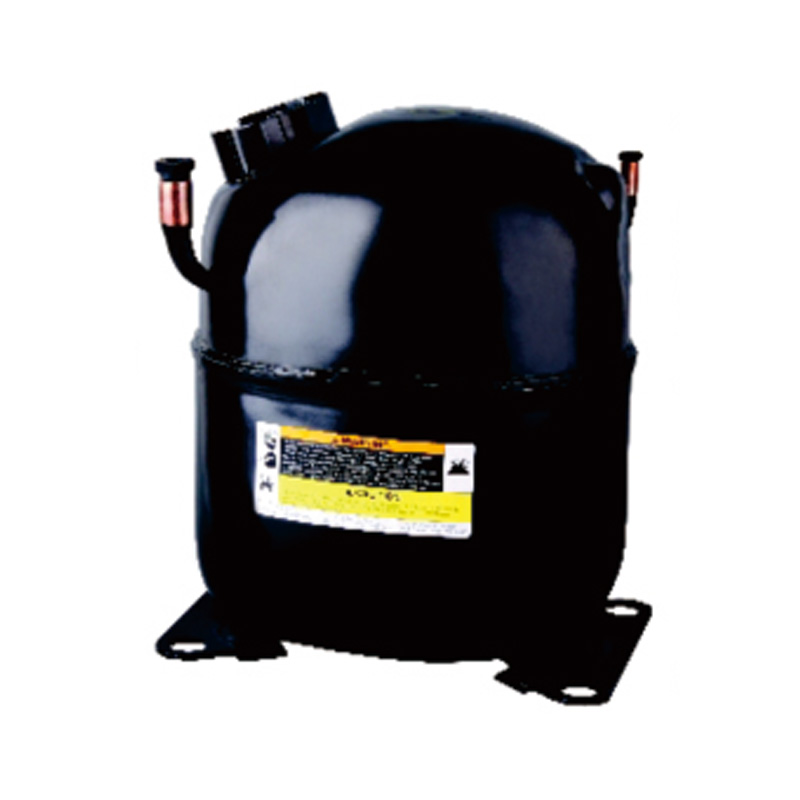
The supplied specifications identify R410 as the compressor refrigerant. Refrigerant selection is an important part of the refrigeration system because it influences pressure characteristics, system design, service procedures, and regulatory considerations. The exact service requirements should be handled by qualified refrigeration technicians who are familiar with the equipment and local regulations.
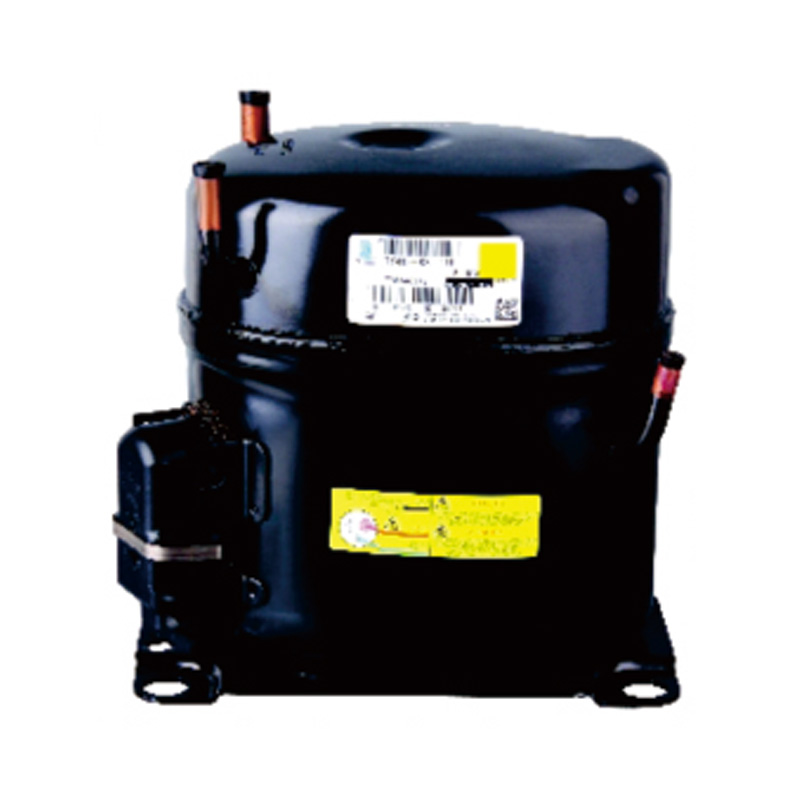
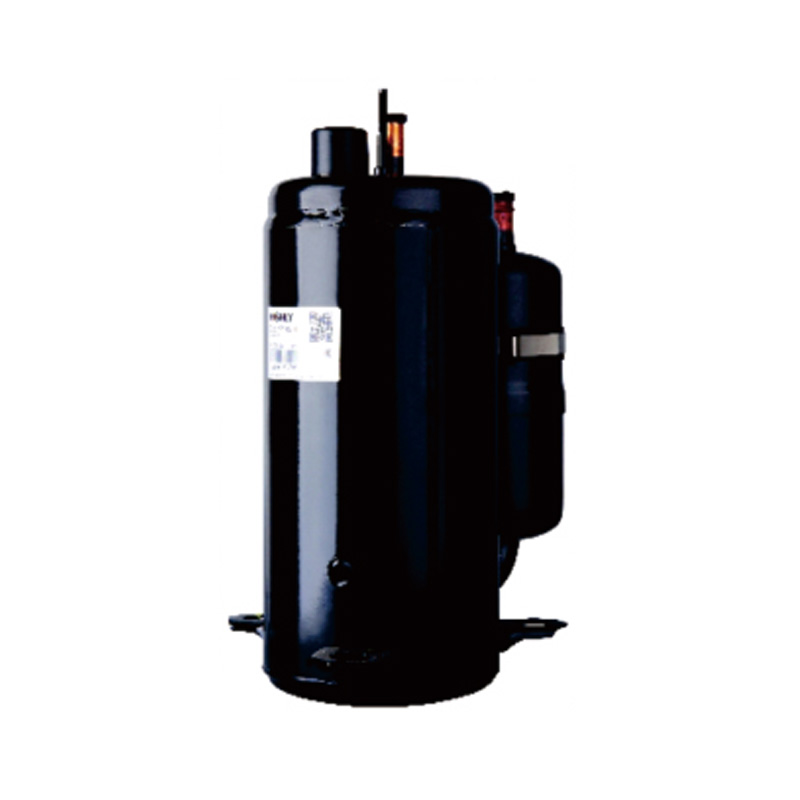
The compressor is a central component in the hard ice cream machine because it drives the refrigeration cycle needed to remove heat from the mix. During production, the system must support the freezing process while the machine is being used repeatedly. A properly matched compressor and refrigeration circuit can help maintain stable operating conditions under normal commercial workloads.
Operators should avoid treating the machine’s rated hourly capacity as an unlimited production guarantee. Capacity depends on more than compressor size. Ingredient temperature, mix composition, room temperature, heat rejection, batch intervals, and cleaning practices all influence results. The best performance comes from operating the machine within the recommended parameters and allowing proper airflow around the refrigeration system.
For buyers comparing different machines, it is useful to evaluate the complete refrigeration design rather than focusing only on a single power figure. A machine with an appropriate compressor, well-designed freezing system, practical body layout, and accessible service points may provide better real-world value than a machine with a higher advertised wattage but weaker overall construction.
Production Capacity for Restaurants and Dessert Shops
An approximately 18-liter-per-hour capacity is suitable for a broad range of foodservice applications. A medium-sized restaurant may use the machine to prepare a house dessert after lunch and dinner services. A dessert shop may operate it for steady afternoon and evening demand. A café can use it to produce ice cream for cones, cups, sundaes, and beverage combinations.
The capacity is also useful for businesses that experience variable demand. During slower periods, operators can plan production according to expected sales. During peak periods, the machine can support continuous output and reduce the risk of empty display pans or delayed customer orders. This flexibility can be valuable for businesses with seasonal traffic, weekend peaks, or event-related demand.
Production planning remains important. Operators should estimate the quantity required for each service period and prepare ingredients in a controlled manner. Overproduction can increase waste, while underproduction may cause lost sales. A machine in this capacity range gives businesses a practical tool for balancing those competing concerns.
The single-tank layout may be especially attractive for operators with one signature recipe. A focused product offering can simplify purchasing and reduce inventory complexity. It also allows staff to develop familiarity with one production process. Businesses that require several flavors simultaneously may need additional equipment or a different configuration, but for a focused menu, the single-tank design can be efficient and easy to manage.
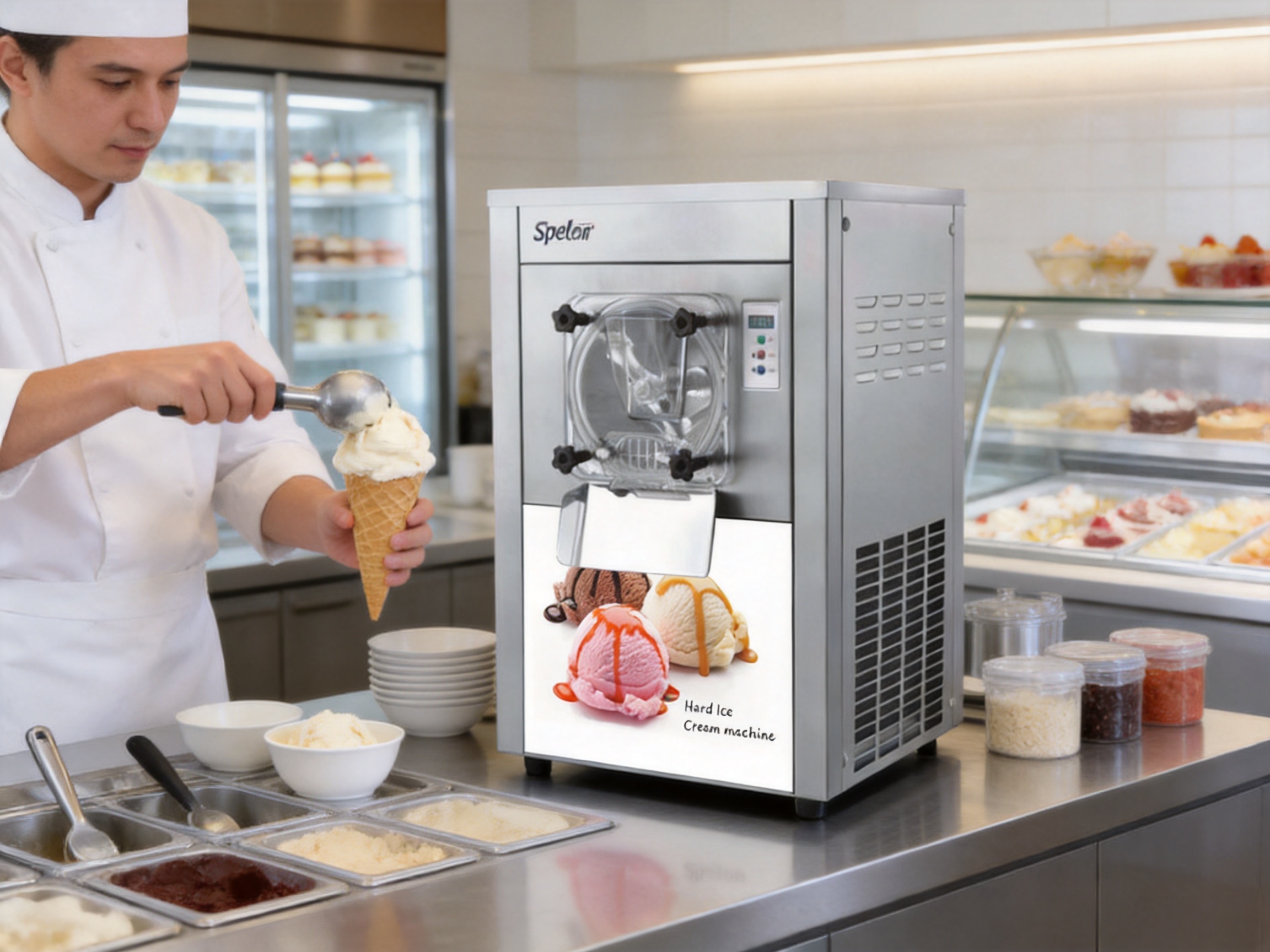
Texture, Consistency, and Product Quality
Customers generally judge hard ice cream by its texture as much as by its flavor. A high-quality product should be smooth, creamy, and sufficiently firm for scooping or portioning. It should not be excessively icy, unevenly frozen, or inconsistent from one batch to another. A commercial machine helps standardize the freezing process, but the final result also depends on recipe balance and ingredient handling.
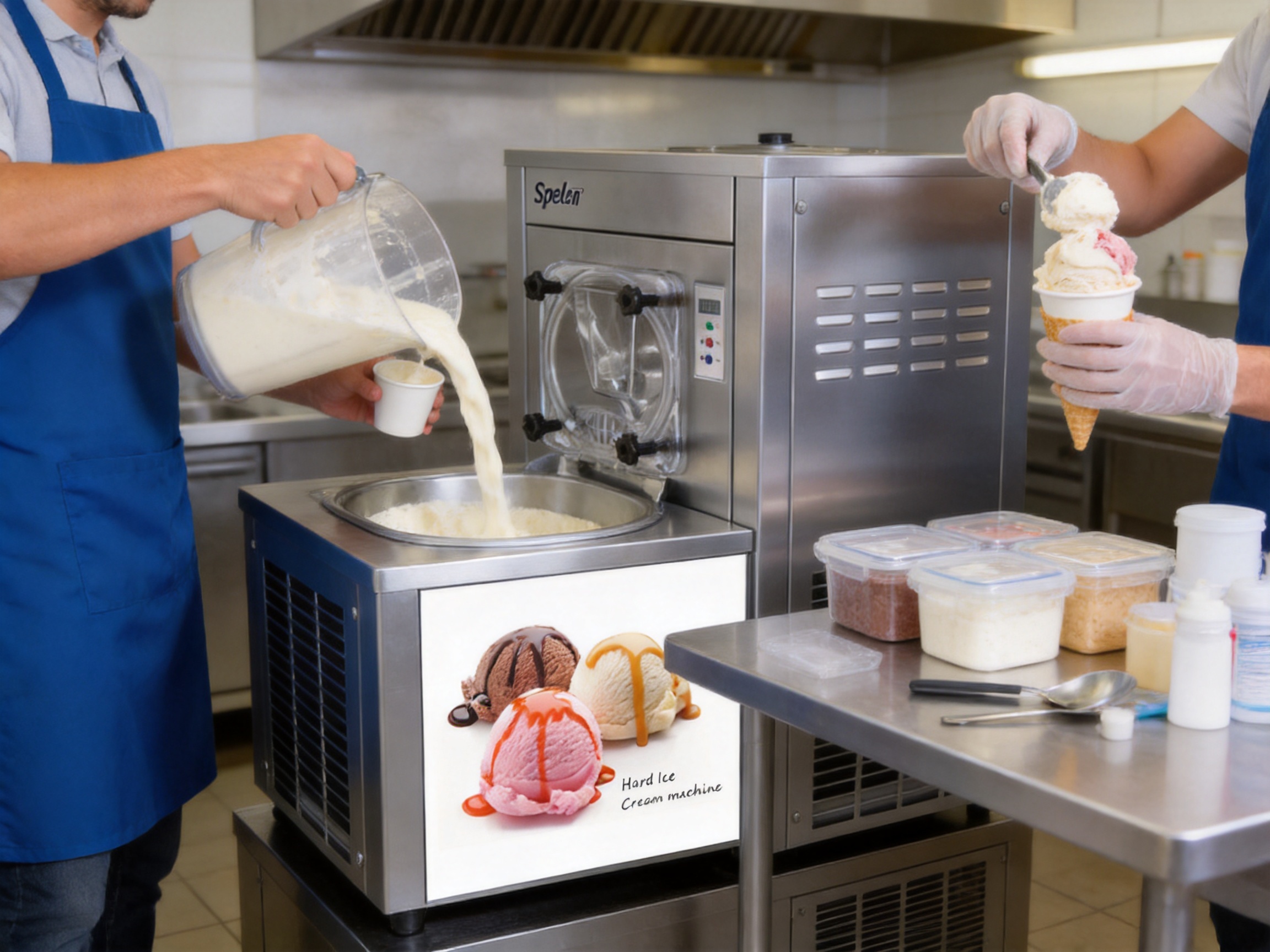
The BQL-128Y is described as providing smooth and creamy ice cream texture through its efficient refrigeration system. Consistent refrigeration can support more repeatable freezing conditions than improvised or small-scale methods. When the mix is properly prepared and the machine is maintained, operators can work toward a stable product profile that customers recognize.
Recipe formulation remains a critical factor. The amount of fat, sugar, milk solids, stabilizer, water, and flavoring affects freezing behavior and mouthfeel. Ingredients should be accurately weighed and mixed according to a tested formula. Operators should also ensure that the mix is stored at a safe temperature before production and that the machine is not loaded with a mixture that is too warm or incorrectly formulated.
Consistency is one of the machine’s commercial advantages. A restaurant can establish a standard operating procedure covering mix preparation, loading, freezing, serving, cleaning, and storage. This reduces variation between employees and helps protect the customer experience. Over time, the business can monitor output, texture, and operating conditions to refine its process.
Advantages Over Entry-Level and Less Suitable Alternatives
Businesses comparing commercial ice cream equipment may encounter low-priced machines designed for light use, household equipment adapted for commercial purposes, or large industrial systems intended for high-volume production. The BQL-128Y occupies a practical middle position for operators that need genuine foodservice capability without the scale and complexity of a large factory system.
Compared with household or light-duty equipment, the BQL-128Y offers a heavier commercial structure, a larger rated output, and a body designed for professional foodservice conditions. Its 80-kilogram net weight and stainless steel construction suggest greater stability and durability for repeated daily use. Household machines may be suitable for occasional preparation but can become inefficient when exposed to continuous restaurant demand.
Compared with very small countertop units, this machine provides more production capacity and may reduce the number of separate batches required during a busy service. Fewer interruptions can help staff concentrate on serving customers, preparing toppings, managing orders, and maintaining the rest of the kitchen.
Compared with oversized industrial systems, the BQL-128Y may require less floor space and a simpler installation. Its dimensions allow it to fit into many commercial kitchens and dessert counters while still delivering a useful production volume. A smaller physical footprint can be especially important for businesses operating in leased premises or compact urban locations.
Its air-cooled design can also be an advantage over water-cooled alternatives where water access and drainage are inconvenient. The absence of a dedicated cooling-water connection may simplify installation and reduce certain operating requirements. However, proper ventilation remains essential, and buyers should evaluate the local room conditions before selecting air cooling.
The machine’s combination of stainless steel construction, commercial refrigeration, moderate capacity, and straightforward single-tank operation gives it a balanced profile. It is not presented as a high-output industrial plant, nor is it limited to occasional home use. Its primary strength is practical suitability for restaurants, dessert shops, and other medium-volume applications.
Space Planning and Installation Considerations
Before delivery, the operator should measure the intended installation area and compare it with the final confirmed machine dimensions. The supplied records list dimensions of either 625 × 535 × 840 mm or 620 × 535 × 840 mm. This small difference should be resolved with the supplier before finalizing cabinetry, counter openings, access routes, or transport arrangements.
Although the listed dimensions are relatively compact, the machine requires more than its exact outer footprint. Clearance should be left around ventilation areas, service panels, electrical connections, and cleaning access points. The machine should be positioned on a stable, level surface capable of supporting its weight. A clear route should also be planned for moving the 80-kilogram unit into the kitchen or sales area.
Electrical requirements should be confirmed before installation. The product information lists 1,600 watts, while another specification record lists 1,500 watts. Voltage, frequency, plug type, circuit protection, and local electrical compliance should be verified for the destination country. The machine should be connected by qualified personnel when required by local regulations.
Placement near heat-generating equipment should be avoided. Ovens, ranges, fryers, dishwashers, and direct sunlight can raise the surrounding temperature and make heat rejection more difficult. Good air circulation helps the refrigeration system work efficiently and can support more consistent production performance.
Businesses should also consider workflow. The machine should be close enough to the preparation and serving areas to reduce unnecessary movement, but not so close to sinks, splash zones, or waste areas that contamination risks increase. A well-planned location can improve productivity and make cleaning easier.
Cleaning and Sanitation Practices
Hard ice cream equipment requires disciplined cleaning because dairy-based mixes can support bacterial growth if residues remain in product-contact areas. Cleaning schedules should follow the manufacturer’s instructions and local food safety requirements. Staff should be trained to identify removable components, use appropriate cleaning agents, rinse correctly, and complete sanitation procedures before the next production cycle.
The stainless steel exterior supports routine cleaning of the machine body. Operators should use methods appropriate for stainless steel and avoid harsh abrasives that may scratch the surface. The product-contact system requires particular care. Any mix residue should be removed promptly, and components should be inspected for buildup, damaged seals, or areas that are difficult to clean.
Cleaning should not be treated only as an end-of-day task. During operation, staff should wipe spills, keep ingredient containers covered, and prevent product from accumulating around handles, controls, and access points. A clean working environment contributes to both food safety and the professional appearance of the equipment.
Maintenance and sanitation are closely connected. Condenser areas should be kept free from dust and grease, especially in kitchens where airborne oil is common. Blocked airflow can increase operating temperatures and reduce refrigeration efficiency. A regular inspection program can identify problems before they cause an unexpected interruption during peak service.
Businesses should create a written cleaning checklist. It may include pre-operation inspection, mix-contact cleaning, exterior wiping, condenser inspection, seal inspection, end-of-shift sanitation, and periodic technician servicing. Clear responsibility assignments make it more likely that procedures will be completed consistently.
Operational Workflow for Better Efficiency
A reliable workflow begins with ingredient preparation. Mixes should be measured accurately, blended according to the approved recipe, and stored under appropriate conditions before loading. Staff should verify the machine’s cleanliness and operating status before beginning production. This reduces the possibility of introducing contamination or wasting a batch.
During operation, the machine should be monitored for unusual noise, vibration, heat, leakage, or changes in freezing behavior. Operators should avoid exceeding the recommended filling level and should not force the equipment to process unsuitable ingredients. If the texture changes suddenly or the machine behaves abnormally, production should be paused and the cause investigated.
Serving procedures should be standardized. Portion size, scoop technique, storage time, topping preparation, and display practices all affect customer perception. A machine can provide stable product, but staff must handle the finished ice cream correctly to preserve its texture and appearance.
At the end of a production period, remaining mix should be handled according to food safety procedures. Depending on the recipe, storage conditions, and local rules, product may need to be discarded, refrigerated, or processed according to an approved plan. The equipment should then be cleaned and prepared for the next use.
Standard operating procedures can also help reduce energy consumption. Operators should avoid leaving the machine running unnecessarily when no production is planned, while also following the manufacturer’s guidance for shutdown and restart. Regular condenser cleaning, proper ventilation, and timely maintenance can support efficient operation over the equipment’s service life.
Manufacturing Strength and Factory Capabilities
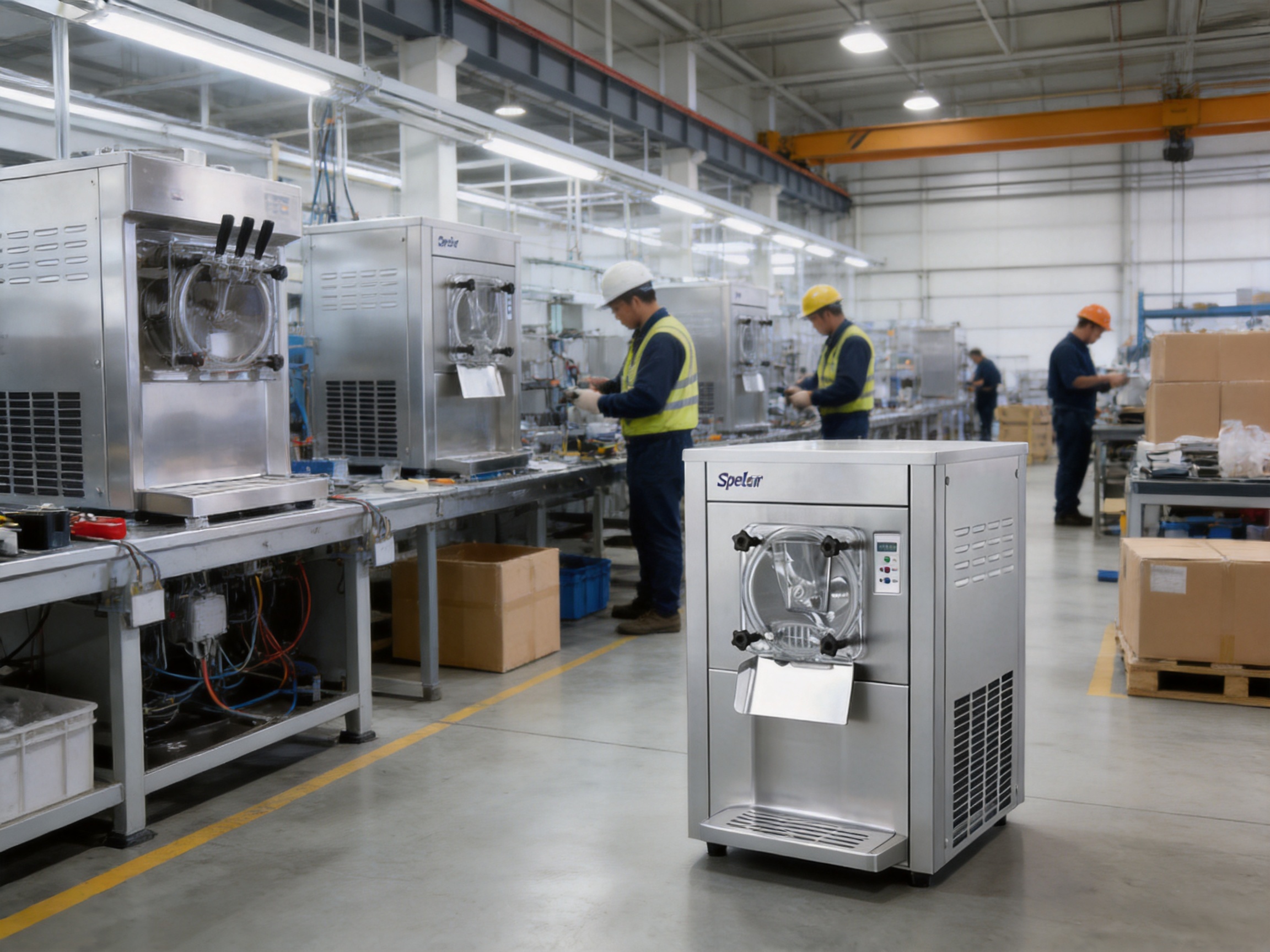
The machine is supplied by a company that integrates product design, research and development, manufacturing, sales, and service. Its reported production base covers more than 60,000 square meters of modern facilities. This scale provides an important foundation for developing and producing commercial refrigeration and foodservice equipment across multiple categories.
The company’s product portfolio includes ice cream machines, juice dispensers, fried ice cream machines, refrigeration cabinets, slush machines, flake ice machines, cooking equipment, griddles, fryers, insulation products, barbecue equipment, and buffet solutions. A broad product range can support more coordinated procurement for distributors, restaurant groups, foodservice contractors, and international buyers.
Manufacturing strength is valuable because commercial equipment performance depends on the consistency of many processes. Sheet-metal forming, cutting, welding, surface finishing, component assembly, refrigeration integration, electrical installation, inspection, packaging, and shipment preparation must work together. A manufacturer with experience across several equipment categories can develop practical knowledge of restaurant workflows and commercial operating requirements.
The use of stainless steel and sprayed steel requires controlled fabrication and finishing processes. Panels must be formed accurately, edges should be handled carefully, and surfaces must be finished to support both appearance and cleanability. The refrigeration system must be integrated into the cabinet without compromising service access, airflow, or structural stability.
Research and development capability is also important for OEM and ODM customers. Different markets may require adjustments to voltage, frequency, plug standards, appearance, controls, packaging, documentation, or capacity. The company states that it can provide customized solutions based on drawings or customer requirements. Buyers should discuss the technical scope, minimum order quantities, testing requirements, and approval process at the quotation stage.
Factory scale alone does not guarantee product quality, but it can support more organized production planning, purchasing, process control, and after-sales coordination. Customers should evaluate the complete supplier relationship, including technical communication, sample confirmation, quality inspection, spare-parts availability, packaging, and response time.
OEM and ODM Opportunities
For distributors and foodservice equipment brands, the machine can serve as a platform for market-specific customization. OEM projects may involve private labeling, exterior color, control panel design, packaging, documentation, and product identification. ODM projects may involve deeper changes to dimensions, operating functions, configuration, or appearance based on a customer’s market strategy.
Customization should be approached systematically. The buyer should define the target market, required capacity, electrical standard, environmental conditions, preferred materials, branding requirements, service expectations, and compliance documentation. A detailed technical specification helps prevent misunderstandings between the buyer and factory.
Sample approval is an important stage. Before mass production, the customer should review the physical appearance, dimensions, operating behavior, packaging, label information, and user documentation. Any changes should be recorded and approved in writing. This process is especially important when the product will be sold under a private brand or distributed across several countries.
The company’s wider manufacturing portfolio may also create opportunities for customers seeking a complete foodservice equipment package. A restaurant project might require an ice cream machine together with a juice dispenser, slush machine, refrigeration cabinet, or buffet equipment. Coordinated sourcing can simplify communication and logistics, although each item should still be evaluated according to its own technical and quality requirements.
After-Sales Support and Long-Term Value
Commercial equipment is a long-term operating asset. Its value depends not only on the purchase price but also on uptime, ease of maintenance, spare-parts support, energy use, cleaning labor, and product consistency. A supplier that provides pre-sales consultation and after-sales maintenance can help customers manage the equipment throughout its working life.
Before purchasing, buyers should ask about the warranty period, covered components, recommended spare parts, service procedures, troubleshooting documentation, and availability of technical assistance. They should also confirm whether local technicians can service refrigeration and electrical components or whether remote factory support will be required.
Common spare parts may include seals, gaskets, switches, electrical components, sensors, and refrigeration-related items, depending on the final configuration. Keeping appropriate service parts available can reduce downtime. Distributors may wish to establish a spare-parts plan that reflects the number of machines installed in their market.
Training is another part of long-term value. Staff should understand correct loading, production, cleaning, shutdown, and basic fault reporting procedures. Small operating errors can become expensive if they are repeated daily. Proper training protects product quality and reduces avoidable stress on the machine.
The supplier describes its service approach as including pre-sales consultation, product customization, logistics and payment solutions, and after-sales maintenance. These capabilities are relevant to overseas buyers who may need assistance with shipping arrangements, documentation, installation guidance, and communication across different time zones.
Commercial Applications
Restaurants
Restaurants can use the machine to add a dependable frozen dessert option without building a large production department. Hard ice cream can be served as a dessert course, paired with baked products, or incorporated into signature dishes. The machine’s capacity can support regular menu demand while its stainless steel body suits a professional kitchen environment.
Dessert Shops
Dessert shops may use the machine as a central production tool for scoops, cups, cones, sundaes, and specialty combinations. A consistent base product allows the shop to focus on flavor development, toppings, presentation, and customer experience. The capacity is suitable for shops that need continuous output but do not require an industrial-scale plant.
Cafés and Beverage Businesses
Cafés can combine hard ice cream with coffee, waffles, milkshakes, and cold beverages. A single machine can support menu diversification and increase the value of existing customer visits. Because the machine is air-cooled, café operators should pay close attention to ventilation in compact indoor spaces.
Supermarkets and Food Counters
Supermarkets and food counters can use the equipment for freshly produced dessert service or prepared frozen products. A visible, well-maintained machine can support a more engaging customer experience. Operators should design clear procedures for display management, portion control, labeling, and sanitation.
Catering and Institutional Foodservice
Catering operations, schools, hotels, and institutions may use a machine of this type when frozen desserts are required as part of scheduled menus or events. The most appropriate configuration will depend on service volume, transportation, electrical access, and staff availability. A capacity assessment should be completed before purchase.
Purchasing Checklist
Buyers should confirm the rated capacity and understand whether it refers to an ideal laboratory condition, a standard operating condition, or a recommended commercial output. The supplied documents contain several capacity figures, including 12 L/H, 15–20 L/H, and 18 L/H. The final quotation, nameplate, and technical specification should identify the exact rating for the purchased configuration.
Power information should also be confirmed because the documents list both 1,500 watts and 1,600 watts. Voltage and frequency are equally important. A machine designed for one electrical market may require a different configuration for another market. Buyers should not rely on a generic product page when preparing installation plans.
Dimensions should be verified before the machine is shipped. The listed width varies slightly between records, while the depth and height are shown as approximately 535 mm and 840 mm. Allowance must be made for ventilation, service, doors, handles, electrical connections, and safe movement.
Purchasers should request details about the final refrigerant configuration, compressor brand or specification where applicable, operating temperature range, recommended ambient conditions, noise level, cleaning procedure, warranty, and spare-parts availability. These details help create a more complete comparison between suppliers.
Importers should also examine packaging and logistics. The machine weighs approximately 80 kilograms before any additional packaging materials are included. The shipping carton or crate should protect the stainless steel panels, controls, refrigeration system, and removable components. Handling instructions should be communicated to warehouse and installation staff.
Maintenance Recommendations
Daily maintenance should include exterior cleaning, inspection for leaks or residue, checking accessible product-contact areas, and confirming that ventilation openings are unobstructed. Staff should report unusual sounds, excessive heat, unstable operation, or changes in freezing performance.
Periodic maintenance should include condenser cleaning, inspection of electrical connections by qualified personnel, examination of seals and gaskets, and verification that the machine remains level and stable. The service interval depends on operating hours, kitchen conditions, dust, grease, ambient temperature, and local maintenance practices.
In a greasy commercial kitchen, condenser cleaning may be needed more frequently than in a clean dessert counter. Dust and grease can accumulate on heat-transfer surfaces and restrict airflow. Preventive maintenance is generally less disruptive than emergency repair during a busy service period.
Operators should keep records of cleaning, maintenance, repairs, and parts replacement. These records can help identify recurring problems and support warranty or service discussions. They also provide useful information when calculating the machine’s total operating cost.
Why This Machine Fits a Medium-Volume Business Model
The most compelling feature of the BQL-128Y is its balance. It offers a commercial construction and approximately 18-liter-per-hour production level without requiring the footprint of a large industrial system. For a medium-sized restaurant or dessert shop, this can provide enough capacity for daily service while preserving valuable kitchen space.
The stainless steel body supports hygiene and durability. The air-cooled refrigeration system can simplify installation. The single-tank configuration can make operation and training straightforward. The 80-kilogram structure gives the equipment a stable commercial presence. Together, these features address the practical issues that operators face every day.
The machine also benefits from being part of a wider commercial equipment manufacturing program. The supplier’s experience in refrigeration, kitchen, buffet, and beverage equipment may support more coordinated product development and procurement. Its stated OEM and ODM capabilities can be valuable for distributors and foodservice groups that require customized solutions.
No machine eliminates the need for proper recipes, cleaning, ventilation, maintenance, and trained operators. However, equipment that is designed around commercial use can make these responsibilities easier to manage. By combining appropriate capacity with a durable body and professional refrigeration system, this model provides a practical foundation for a reliable hard ice cream program.
Conclusion
The 18L/H commercial stainless steel hard ice cream machine is designed for restaurants, dessert shops, cafés, supermarkets, and other foodservice businesses that require steady frozen dessert production. Its key advantages include a commercial stainless steel and sprayed steel body, air-cooled refrigeration, an approximate 18-liter-per-hour capacity, a stable 80-kilogram structure, and a compact footprint suitable for many medium-volume operations.
Compared with household units and light-duty machines, it offers a more appropriate platform for daily commercial use. Compared with larger industrial systems, it can provide a more accessible balance of capacity, installation simplicity, and space efficiency. Its single-tank format is especially suitable for operators who want a focused product range and a straightforward production process.
The manufacturing capabilities behind the product add further value. A supplier with design, research and development, production, sales, customization, logistics, and after-sales experience can support customers beyond the initial equipment purchase. For buyers seeking private-label products, customized configurations, or coordinated foodservice equipment procurement, this broader capability may be an important advantage.
Because the supplied records contain variations in capacity, power, and dimensions, the final technical configuration should always be confirmed before ordering. Once the machine is correctly installed, ventilated, cleaned, maintained, and operated according to its instructions, it can support consistent hard ice cream production and help foodservice businesses expand their dessert offerings.
Questions and Answers
What type of product is this machine designed to make?
It is designed to produce hard ice cream for commercial foodservice applications. The finished product can be served in cups, cones, scoops, sundaes, waffles, desserts, and other menu formats.
What is the production capacity?
The product information identifies the model as having an approximate capacity of 18 liters per hour. Other supplied specification records mention 12 L/H and 15–20 L/H. Because capacity may vary by configuration or document version, buyers should confirm the final rated output with the supplier before purchase.
Is the machine suitable for a restaurant?
Yes. It is described as suitable for medium-sized restaurants and dessert shops. Its capacity, stainless steel construction, and commercial refrigeration system are appropriate for regular foodservice use, provided that the installation environment and electrical supply meet the required conditions.
Does it use air cooling or water cooling?
The machine uses air cooling. It does not require a dedicated cooling-water connection, but it does require adequate ventilation and clearance around the air intake and exhaust areas.
What refrigerant is listed for the compressor?
The supplied specification lists R410 as the compressor refrigerant. Refrigeration servicing should be completed by qualified technicians in accordance with local regulations and the final equipment documentation.
What are the machine dimensions?
The main product information lists dimensions of approximately 625 × 535 × 840 mm. Another record lists 620 × 535 × 840 mm. The exact dimensions should be confirmed before installation, especially where the machine will be placed beneath counters or inside a planned equipment line.
What is the machine’s net weight?
The listed net weight is approximately 80 kilograms. Buyers should plan suitable transportation, handling equipment, and a stable installation surface.
What power rating should buyers use for installation planning?
The product information lists 1,600 watts, while another specification record lists 1,500 watts. Buyers should confirm the final power rating, voltage, frequency, and plug configuration from the quotation or nameplate before arranging electrical installation.
Why is stainless steel important for this equipment?
Food-grade stainless steel provides a durable, professional, and relatively easy-to-clean surface. It is suitable for commercial environments where equipment is exposed to moisture, dairy ingredients, cleaning procedures, and frequent daily use.
Can the machine be used in an open customer-facing area?
It may be suitable for a front-of-house dessert counter if local ventilation, electrical, hygiene, and safety requirements are met. Its stainless steel and sprayed steel construction can provide a professional appearance, but the installation should still allow convenient cleaning and service access.
Is it suitable for multiple flavors at the same time?
The supplied information describes it as a single-tank machine. It is therefore most naturally suited to one primary mix or flavor at a time. Businesses requiring simultaneous multi-flavor production should discuss alternative configurations with the supplier.
How can operators maintain stable production?
Operators should use consistent recipes, control ingredient temperatures, avoid overfilling, maintain clear airflow around the machine, clean product-contact parts correctly, and inspect the refrigeration system regularly. Proper staff training also helps reduce operating errors.
What should be checked before buying?
Buyers should confirm capacity, power, voltage, frequency, dimensions, refrigerant, warranty, cleaning procedures, service support, spare-parts availability, packaging, delivery terms, and any required certifications or documentation for the destination market.
Does the supplier offer OEM and ODM services?
The supplied company information states that OEM and ODM solutions are available based on customer drawings or requirements. The exact scope should be discussed in detail, including branding, appearance, electrical configuration, packaging, documentation, minimum order quantities, and sample approval.
What businesses can benefit most from this machine?
Restaurants, dessert shops, cafés, snack shops, supermarkets, food counters, hotels, catering operations, and institutions with medium-volume hard ice cream demand may benefit from its capacity and commercial construction.
References
1. Product specification sheet for the BQL-128Y commercial hard ice cream machine.
2. Product information describing the machine’s construction, capacity, cooling method, power, weight, dimensions, and refrigerant.
3. Commercial refrigeration equipment installation and maintenance principles.
4. General foodservice equipment sanitation and preventive maintenance practices.
5. Manufacturer profile and supplied company information concerning design, research and development, manufacturing, OEM, ODM, logistics, and after-sales service.
Product: 18L/h Commercial Stainless Steel Hard Ice Cream Machine for Restaurant

For exclusive deals and latest offers, sign up by entering your email address below.


-
spelor@spelor.com
-
+86-576-85229688
-
No.528, Changxi Road, Linhai City, Zhejiang Province, China
Commercial Refrigeration Equipment Manufacturer China
Copyright © 2025 by Spelor Electrical Appliances (Zhejiang) Co., Ltd. Rights Reserved.
