


 中文简体
60L/h Commercial Stainless Steel Hard Ice Cream Maker for High-Volume Foodservice
Admin 2026-09-14For restaurants, dessert shops, hotels, cafés, catering operations, and other busy foodservice businesses, reliable ice cream production is essential. Customers expect smooth texture, consistent flavor, attractive presentation, and quick service during every operating period. A commercial hard ice cream machine must therefore do more than freeze a mixture. It must support continuous production, maintain dependable refrigeration performance, withstand intensive daily use, and remain practical to clean and operate.
The BQL-8160 is a high-capacity commercial hard ice cream maker designed for professional environments that require substantial output. With a rated production capacity of 60 liters per hour, a powerful 5,400-watt input, water-cooled condensation, and a durable stainless-steel-oriented construction, it is intended for large restaurants and commercial catering venues. Its configuration combines high production efficiency with an industrial structure suitable for long-term foodservice operation.
Unlike small countertop machines designed for occasional preparation, this model is built around the requirements of businesses that serve ice cream continuously. Its large production capacity can help reduce waiting times, improve service consistency, and support a wider menu of frozen desserts. The machine is also designed with operational simplicity in mind, allowing staff to focus on recipe preparation and customer service rather than complicated equipment management.

60L/h Commercial Stainless Steel Hard Ice Cream Maker for Business Restaurant
Designed for Commercial Ice Cream Production
Commercial hard ice cream production requires a balance of freezing power, mechanical reliability, product quality, and workflow efficiency. A machine may have a strong compressor, but if its freezing chamber is too small, the operator may still face frequent interruptions. Similarly, a machine with a large hopper may not provide satisfactory results if the refrigeration system cannot remove heat quickly enough. The BQL-8160 addresses these practical requirements through a high-output configuration intended for professional use.
Its 60-liter-per-hour capacity places it in a category suitable for high-demand applications. This output can be valuable for businesses serving large numbers of customers, especially during lunch periods, evening service, weekends, holidays, and seasonal peaks. A restaurant may use the machine to supply plated desserts, cones, cups, sundaes, or specialty ice cream products. A dessert shop may use it as a central production unit for multiple sales points. A catering company may also benefit from the capacity when preparing frozen desserts for events.
High production capacity has a direct effect on business workflow. When staff can produce larger quantities in a shorter period, they spend less time waiting for batches to freeze. This makes it easier to maintain stock during busy hours and reduces the risk of disappointing customers because a preferred flavor is temporarily unavailable. The machine can also support more consistent portion planning because operators can estimate output according to the expected demand of a service period.
Commercial output should not be evaluated only by the number printed on a specification sheet. Real-world performance also depends on mixture formulation, ambient temperature, operating practices, cleaning procedures, and the condition of the electrical and water systems. Nevertheless, the stated 60L/H capacity gives professional buyers a clear indication that the BQL-8160 is intended for significantly higher demand than domestic or light-duty equipment.
Key Specifications at a Glance
| Product Type | Commercial hard ice cream machine |
| Model | BQL-8160 |
| Production Capacity | 60 liters per hour |
| Input Power | 5,400 watts |
| Condensation Method | Water cooling |
| Compressor Refrigerant | R410 |
| Net Weight | 227 kilograms |
| Machine Dimensions | 578 × 1,098 × 1,390 millimeters |
| Main Construction Materials | Food-grade stainless steel and sprayed steel components |
| Typical Applications | Restaurants, dessert shops, cafés, hotels, catering venues, and other commercial foodservice locations |
The machine’s 227-kilogram net weight reflects a substantial commercial structure rather than a lightweight portable appliance. A heavier construction can contribute to stability during operation and may help reduce unwanted movement caused by internal mechanical activity. Because of the machine’s size and weight, installation planning is important. Buyers should confirm that the floor, doorway, service route, electrical supply, and water-cooling connections are suitable before delivery.
Advantages of a 60-Liter-Per-Hour Configuration
Support for High-Traffic Service
A high-volume restaurant needs equipment that matches its customer flow. A small machine may be sufficient for a café with limited frozen dessert sales, but it can become a bottleneck in a busy restaurant. The BQL-8160 is designed to provide a larger supply of hard ice cream so that staff can serve more customers without repeatedly stopping for small production cycles.
The 60L/H specification is especially relevant to venues that include ice cream as a regular part of the menu. It can support dessert counters, buffet services, family restaurants, hotel dining areas, and specialty shops. Operators can produce a larger quantity during preparation periods and maintain supply during active service. This provides greater flexibility than equipment intended only for occasional batches.
Improved Menu Flexibility
Commercial hard ice cream equipment can help businesses develop multiple revenue opportunities. In addition to conventional scoops, operators may offer cones, cups, sundaes, mixed desserts, milkshakes, ice cream sandwiches, and plated dessert combinations. The machine’s capacity provides a practical foundation for introducing frozen items without relying entirely on pre-packaged products.
Freshly produced ice cream can also help a business adapt its menu to local preferences or seasonal demand. Operators may change recipes, offer rotating flavors, or create signature products that distinguish the business from nearby competitors. The ability to produce in-house may provide greater control over texture, sweetness, ingredients, and portion sizes, subject to the operator’s formulation and food-safety procedures.
Reduced Production Interruptions
One common weakness of low-capacity equipment is the need for frequent pauses. A small batch may be consumed quickly during peak service, forcing the operator to wait for another cycle. A higher-capacity commercial machine can reduce the frequency of such interruptions. This does not eliminate the need for preparation and replenishment planning, but it can make the overall workflow more stable.
For foodservice managers, stable workflow can be as important as maximum output. When ice cream supply is predictable, staff can coordinate preparation, serving, storage, and cleaning more effectively. This may improve labor utilization and help prevent rushed operation during periods of high customer demand.
Food-Grade Stainless Steel Construction
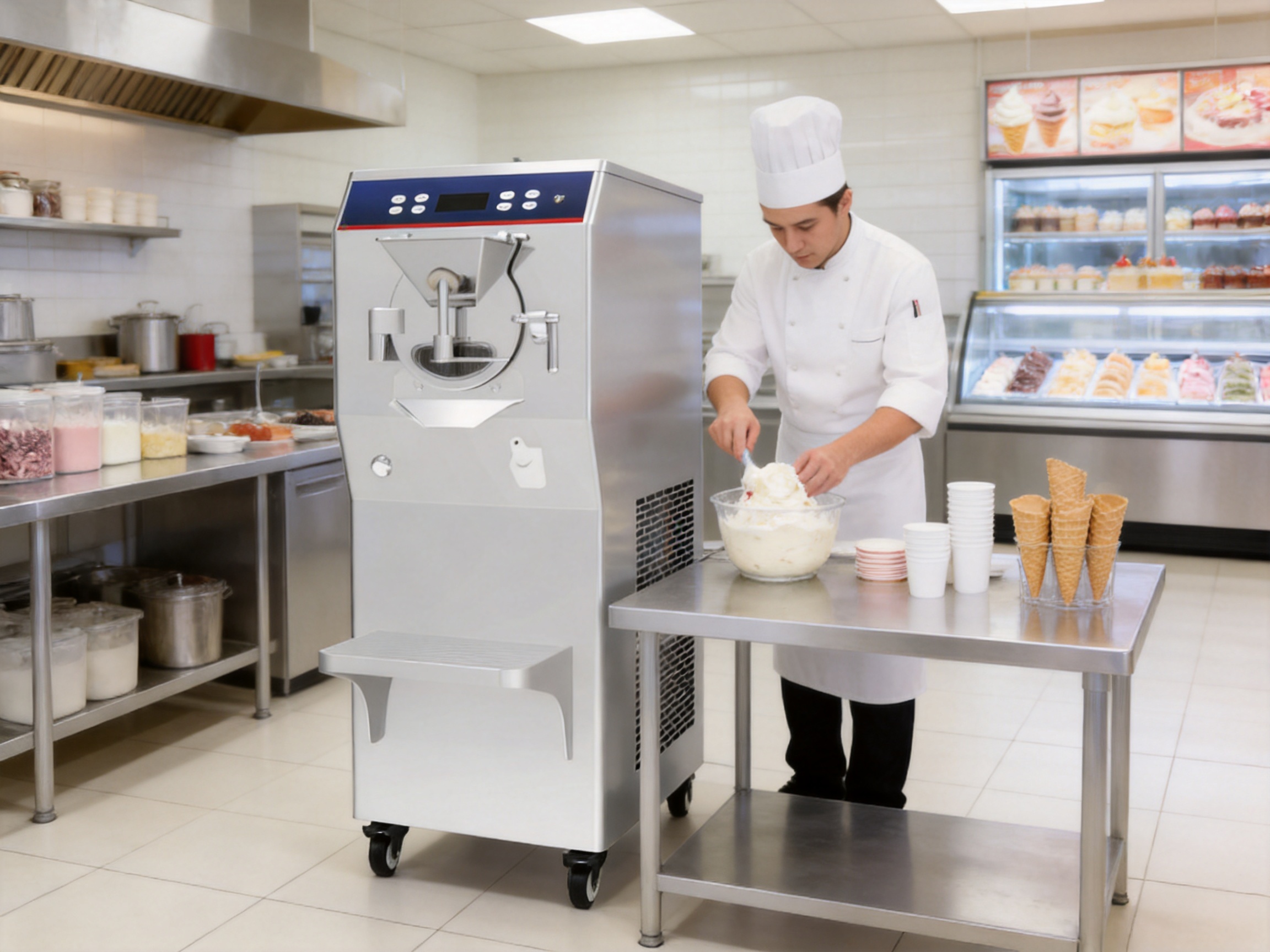
Material selection is one of the most important factors in commercial food equipment. The BQL-8160 uses food-grade stainless steel as a major construction material, together with sprayed steel components. Stainless steel is widely used in professional kitchens because it offers a combination of corrosion resistance, structural strength, and a smooth surface that can be maintained under demanding working conditions.
A sanitary exterior helps the machine fit naturally into professional foodservice environments. Restaurant kitchens, dessert counters, and catering facilities require equipment that can be wiped down regularly and inspected easily. Smooth metal surfaces are generally more practical for routine cleaning than porous or fragile materials. They also provide a professional appearance that can support the overall presentation of a customer-facing operation.
Stainless steel construction can provide advantages over low-cost painted or plastic-heavy alternatives. Plastic components may be appropriate for selected parts, but an entire commercial machine must withstand repeated handling, exposure to moisture, cleaning agents, temperature variation, and mechanical vibration. A robust metal structure can provide greater confidence for long-term use when it is properly maintained.
The supplied product information describes the plate body as being made from food-grade stainless steel and colorful sprayed steel, emphasizing both hygiene and appearance. Other product information identifies the overall machine as made from food-grade stainless steel. Buyers should confirm the exact material specification for individual panels, internal components, and food-contact parts during the procurement process. Regardless of the exterior finish, food-contact surfaces should be cleaned and sanitized according to applicable local food-safety requirements.
Water-Cooled Condensation for Commercial Environments
The BQL-8160 uses a water-cooled condensation method. In a refrigeration system, the condenser must release heat removed from the product and freezing chamber. Water-cooled systems use a controlled water supply to transfer heat away from the refrigeration circuit. This approach can be valuable in commercial environments where ambient temperatures are high or where the machine is installed in a busy kitchen.
Compared with air-cooled equipment, a water-cooled configuration may be less dependent on the temperature and cleanliness of the surrounding air. Commercial kitchens can contain heat from ovens, fryers, grills, and other appliances. They may also contain airborne grease and dust that can accumulate on air-cooled condenser surfaces. A water-cooled system can reduce the effect of those environmental conditions on condenser heat transfer, provided that the water supply and drainage arrangements are correctly installed.
Water cooling can also be useful where the equipment is located in a compact area. Air-cooled machines require adequate clearance and ventilation to discharge warm air. In a crowded kitchen, the additional heat released into the room may affect staff comfort and the performance of nearby equipment. A water-cooled machine may help manage that issue, although it requires proper plumbing, water pressure, drainage, and routine inspection.
Water-cooled operation is not maintenance-free. Operators should follow the manufacturer’s recommendations for water quality, connection requirements, cleaning, and scale control. Hard water may cause mineral deposits that reduce heat-transfer efficiency or restrict internal passages. A planned maintenance schedule is therefore important for preserving refrigeration performance.
Why Condensation Method Matters to Buyers
When comparing commercial ice cream machines, buyers often focus on capacity and power while overlooking the condensation method. This can lead to installation difficulties after delivery. A water-cooled machine requires access to an appropriate water connection and drainage point. It may also require additional attention to local plumbing regulations and water consumption.
For a purpose-built commercial kitchen, these requirements are often manageable and can be outweighed by the advantages of stable heat rejection. Before ordering, the buyer should confirm the available water supply, drainage design, installation position, service access, and local utility standards. Proper planning allows the water-cooled configuration to perform as intended.
Powerful 5,400-Watt Input
The BQL-8160 has an input power rating of 5,400 watts. This high power level reflects the machine’s commercial capacity and refrigeration requirements. Producing hard ice cream at a high rate requires the system to remove a substantial amount of heat while operating mechanical components reliably. The power rating indicates that the machine is not intended to be treated as a standard household appliance.
A powerful electrical system can support faster freezing and more consistent production when the machine is installed under suitable conditions. It can also help the refrigeration system recover more effectively during continuous operation. This is particularly important in a commercial setting where the equipment may be used for extended periods rather than for a single small batch.
Because the machine uses substantial power, electrical planning is essential. The installation should be completed by qualified personnel who can confirm voltage, phase, frequency, circuit protection, grounding, and local compliance requirements. The precise electrical configuration should be verified with the supplier before purchase, especially for export orders. An unsuitable power supply can affect performance and may create safety risks.
Energy use should also be considered as part of the operating budget. High-capacity equipment may consume more electricity than a small machine, but the relevant comparison is production efficiency and business output rather than wattage alone. A small machine may have a lower nominal power rating but require multiple cycles, more staff intervention, or additional equipment to meet the same demand. For high-volume businesses, a properly sized commercial machine can provide better operational value.
Refrigeration Performance and Product Texture
Hard ice cream quality depends on more than freezing temperature. The final product is influenced by the recipe, fat and solids content, sugar balance, mix preparation, aging, overrun, freezing rate, storage conditions, and serving temperature. The machine provides the mechanical and refrigeration foundation, while the operator controls the recipe and production process.
The BQL-8160 is designed to support the production of rich, creamy, and smooth ice cream through an efficient refrigeration system. Consistent freezing can help develop a desirable texture by controlling the formation of ice crystals. When the mixture is frozen at an appropriate rate and handled correctly, the finished product can be smoother and more pleasant to serve.
Texture consistency is especially important for commercial brands. Customers expect the same quality whether they visit on a quiet weekday or during a busy weekend. A stable machine can help reduce variations caused by inconsistent freezing conditions. Operators should still monitor mix temperature, batch volume, cleaning status, and serving conditions to achieve the best results.
Recipe and Operating Factors
The rated capacity should not be interpreted as a guarantee of identical performance for every formulation. Dense mixtures, high-solids recipes, inclusions, and unusual ingredient combinations can affect freezing time and output. Operators should develop recipes that are compatible with the machine and follow recommended filling and operating procedures.
Ingredients should be measured accurately and prepared under controlled hygienic conditions. The mixture should be filtered or blended as appropriate for the recipe. If the formulation requires aging, the aging period should be managed in a refrigerated environment. These practices help the equipment perform consistently and also contribute to food safety and product quality.
Operators should avoid overfilling the machine or introducing ingredients that can damage the freezing mechanism. Hard pieces, excessive inclusions, or unsuitable viscosity may place unnecessary stress on internal components. Staff training is therefore an important part of protecting the investment.
Practical Advantages Over Smaller or Less Specialized Equipment
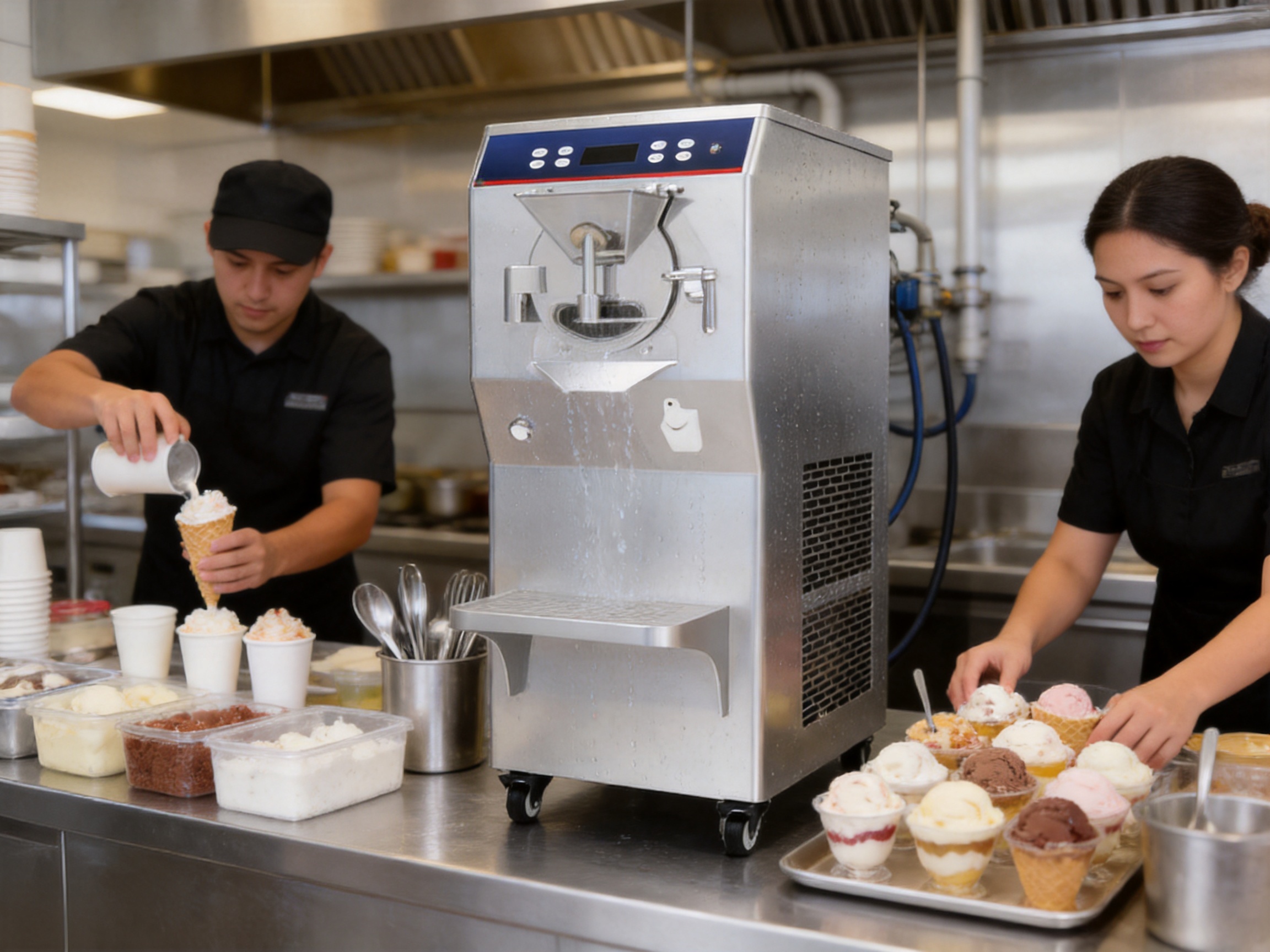
The BQL-8160 offers several practical advantages when compared with small batch machines and equipment designed for light commercial use. The first is production scale. A 60L/H unit is better suited to businesses that need continuous availability rather than occasional dessert preparation. Its capacity can reduce dependence on multiple low-output machines and simplify the production area.
The second advantage is commercial construction. A machine with a 227-kilogram net weight and a substantial metal body is designed for a more demanding environment than a lightweight domestic appliance. Its physical structure, high-power refrigeration system, and water-cooled condenser reflect professional use. These characteristics can improve stability and provide a more suitable foundation for long service life when maintenance is performed correctly.
The third advantage is workflow efficiency. A high-capacity machine can reduce the number of production cycles required during a service period. It may also decrease the amount of staff time spent transferring small batches, monitoring several units, and coordinating multiple cleaning routines. A centralized machine can make the process easier to manage.
The fourth advantage is commercial presentation. Stainless steel construction gives the machine a professional appearance appropriate for restaurants, open kitchens, dessert counters, and high-end catering environments. A clean and well-maintained machine can reinforce customer confidence in the business’s food-preparation standards.
These advantages should be considered alongside the machine’s installation requirements. A high-capacity unit requires more space, a stronger electrical supply, water connections, and a suitable operating area. It is not necessarily the best choice for a small café with very limited ice cream demand. Proper equipment selection depends on actual production volume, available utilities, floor space, labor capacity, and business plans.
Manufacturing Strengths of the Supplier
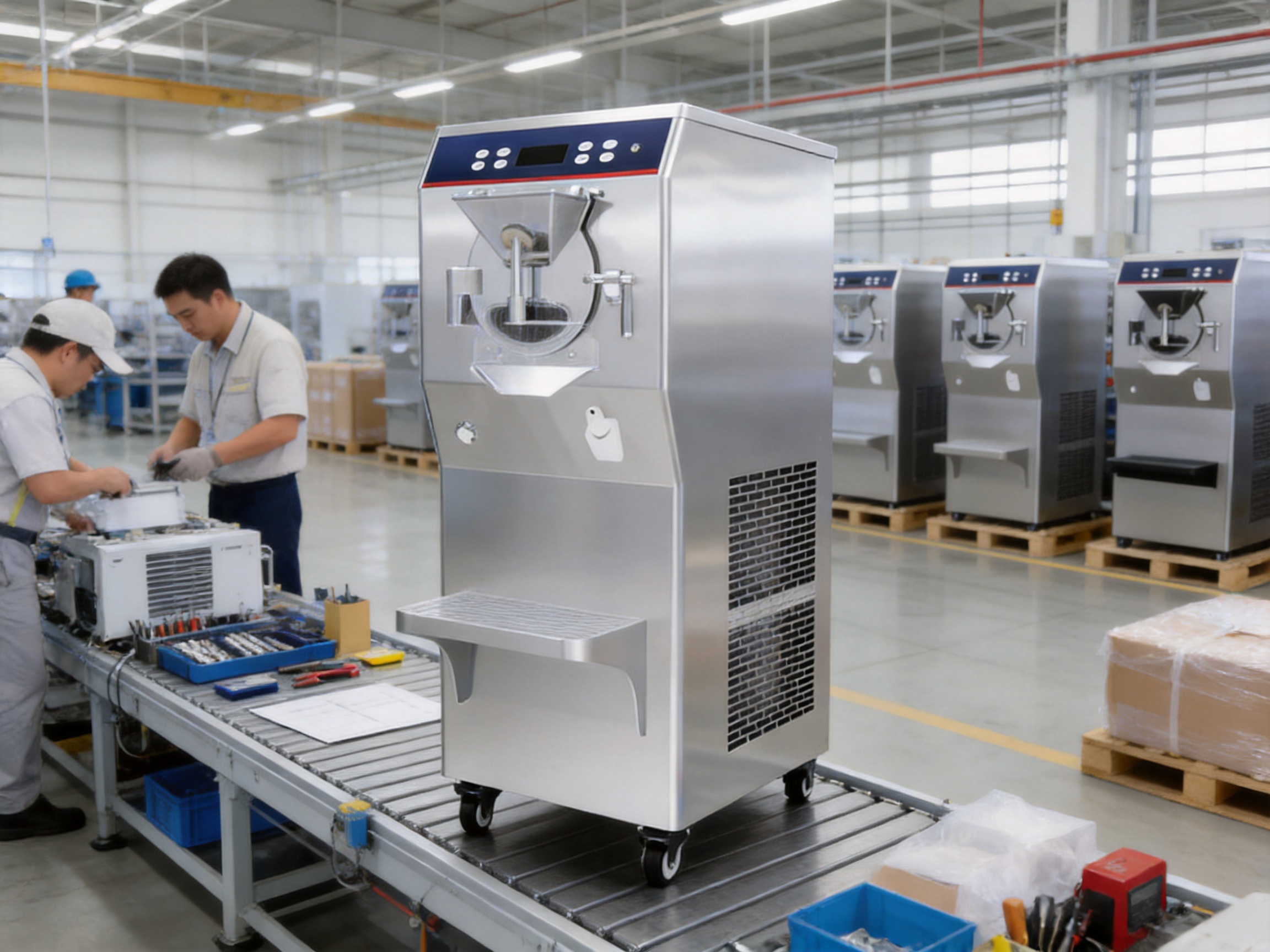
Spelor Electrical Appliances (Zhejiang) Co., Ltd. is a professional manufacturer that integrates design, research and development, manufacturing, sales, and service. The company operates more than 60,000 square meters of modern production facilities and specializes in commercial refrigeration, kitchen, and buffet equipment.
This integrated structure is important for commercial equipment buyers. Product design, manufacturing, quality control, sales support, and after-sales service are closely connected in a full-service manufacturing organization. Such integration can make it easier to communicate technical requirements, coordinate customization, manage production schedules, and resolve service questions after delivery.
The supplier’s product range includes ice cream machines, juice dispensers, fried ice cream machines, refrigeration cabinets, slush machines, flake ice machines, cooking equipment, griddles, fryers, insulation products, barbecue equipment, and buffet solutions. This breadth indicates experience across multiple categories of professional foodservice equipment. For buyers developing a complete restaurant or catering facility, a broad product portfolio can simplify sourcing and equipment coordination.
Design and Research Capability
Commercial equipment must be designed around actual operating conditions. A professional manufacturer needs to consider refrigeration performance, food-contact materials, mechanical durability, cleaning access, operator safety, serviceability, and shipping requirements. The supplier’s design and research function supports the development of equipment intended for restaurants, snack shops, fast-food chains, bars, supermarkets, institutions, and other foodservice applications.
Experience across several equipment categories can also support practical design decisions. Refrigeration, cooking, dispensing, and buffet equipment frequently share common requirements, including sanitation, temperature control, energy management, ease of operation, and resistance to intensive use. A manufacturer familiar with these demands can apply a broader understanding to the development of commercial ice cream machines.
Modern Production Facilities
The company’s more than 60,000 square meters of modern production facilities provide a substantial base for manufacturing and product assembly. Facility scale can support organized production processes, component management, testing, packaging, and shipment preparation. It may also enable the supplier to handle larger orders and coordinate different product categories for global customers.
Factory capability is especially important for OEM and ODM projects. Buyers may need changes to exterior color, branding, controls, packaging, dimensions, electrical configuration, or product specifications. A manufacturer with engineering, production, and service resources can be better positioned to evaluate these requirements than a trading company with limited control over production.
OEM and ODM Support
The supplier offers OEM and ODM commercial refrigeration and foodservice equipment solutions based on customer drawings or requirements. For distributors, restaurant groups, hospitality companies, and private-label brands, this can create opportunities to develop equipment that matches a specific market position.
OEM production generally involves manufacturing according to a customer’s approved specifications or brand requirements. ODM projects may involve adapting an existing platform or developing a customized solution with the supplier’s design and engineering support. In both cases, a clear technical document is important. It should define capacity, electrical requirements, materials, dimensions, controls, refrigeration configuration, packaging, testing standards, labeling, and documentation.
Customization should be evaluated carefully because changes may affect lead time, minimum order quantity, certification, tooling, spare parts, and service procedures. A professional supplier can help customers identify which changes are practical and which may create unnecessary cost or technical risk.
Quality, Reliability, and Service-Oriented Production
Commercial foodservice equipment is a long-term operating asset. Reliability affects not only repair costs but also customer satisfaction, staff productivity, and daily revenue. A machine that stops during a busy service period can disrupt the entire operation. For this reason, buyers should assess the manufacturer’s production capability and service structure in addition to the product specification.
The BQL-8160 is designed with durability and reliability as central considerations. Its stainless-steel-oriented structure, high-capacity refrigeration system, water-cooled condenser, and commercial power configuration are all aligned with long-term professional operation. Reliable performance still depends on correct installation, proper cleaning, suitable recipes, scheduled maintenance, and the use of appropriate replacement parts.
Spelor provides pre-sales consultation, product customization, flexible logistics and payment solutions, and after-sales maintenance support. These services can be valuable to international buyers who need assistance before and after shipment. Pre-sales consultation can help determine whether the machine is appropriate for the intended site. After-sales support can help operators address installation questions, maintenance requirements, and replacement-part needs.
A strong service relationship is particularly important for export customers. International buyers may need technical documents, packing information, spare-parts planning, warranty procedures, and remote troubleshooting. Establishing these details before purchase can reduce misunderstandings and help ensure that the machine is supported throughout its operating life.
Cleaning and Maintenance Considerations
Cleaning is a fundamental part of operating any commercial ice cream machine. Dairy-based and other frozen dessert mixtures can leave residues in product pathways, freezing chambers, seals, dispensing components, and removable parts. If residues are not removed promptly and correctly, they can affect hygiene, odor, taste, texture, and equipment performance.
The operator should follow the manufacturer’s cleaning instructions and applicable local food-safety regulations. A typical maintenance program may include product removal, disassembly of accessible food-contact components, washing, rinsing, sanitizing, inspection, drying, and reassembly. The exact procedure depends on the machine design and should be confirmed through the official manual.
Cleaning chemicals should be suitable for food equipment and compatible with stainless steel, seals, gaskets, and other materials. Excessively aggressive chemicals or incorrect concentrations may damage surfaces and components. Staff should also avoid using abrasive tools that could scratch food-contact areas or create places where residue can accumulate.
Routine Inspection Points
Operators should inspect seals, gaskets, fasteners, dispensing components, and visible connections on a regular basis. Any unusual noise, vibration, temperature change, water leakage, electrical smell, or drop in production should be investigated promptly. Small problems can become more serious if the machine continues to operate under abnormal conditions.
Because the BQL-8160 uses water cooling, the water supply, drainage, hoses, and related connections should be checked routinely. Mineral scale and water-quality problems should be managed according to local conditions and supplier recommendations. The condenser system must be kept in an operating condition that allows effective heat transfer.
Preventive maintenance should be scheduled during planned downtime whenever possible. The maintenance interval may depend on operating hours, water quality, recipe type, ambient conditions, and usage intensity. High-volume businesses should maintain written service records so that recurring issues can be identified early.
Installation Planning for Commercial Buyers
Before purchasing the BQL-8160, the buyer should assess the proposed installation location. The machine measures 578 millimeters wide, 1,098 millimeters deep, and 1,390 millimeters high. Additional clearance may be required for service access, water connections, cleaning, ventilation around associated components, and safe movement of staff.
The delivery route should also be checked. With a net weight of 227 kilograms, the machine may require specialized handling equipment, a suitable loading area, and a stable route from the receiving point to the final operating position. Door widths, elevator capacity, floor strength, ramps, and turning areas should be confirmed in advance.
Utility planning is equally important. The electrical supply must match the machine’s required configuration and 5,400-watt input. The water-cooling system needs an appropriate water source and drainage arrangement. Local regulations may require specific plumbing devices, backflow prevention, grounding, or installation by licensed professionals.
Installation should not be treated as an afterthought. Correct positioning and connection help protect the machine, improve serviceability, and reduce the risk of operating interruptions. Buyers should request installation documentation and technical drawings from the supplier before finalizing the site layout.
Choosing the Right Business Application
The BQL-8160 is best suited to businesses with meaningful demand for hard ice cream. Large restaurants can use it to support dessert menus and family dining services. Dessert shops can use it as a central production machine for scoops, sundaes, and specialty products. Hotels and catering operations can benefit from the higher output when serving groups and events.
It may also be suitable for supermarkets, institutional foodservice operations, resort facilities, and entertainment venues that require a dependable frozen dessert supply. The model can support businesses that want to produce in-house rather than depend exclusively on packaged products or external suppliers.
For a very small café with limited demand, the capacity may be more than necessary. In that case, a lower-output model could require less space, power, water, and investment. The correct decision should be based on expected hourly demand, peak-period requirements, menu strategy, available utilities, and projected growth.
| Business Requirement | How the BQL-8160 Can Help |
| High customer traffic | Provides a stated production capacity of 60 liters per hour for larger-volume service. |
| Continuous dessert availability | Reduces dependence on repeated small-batch production cycles. |
| Professional kitchen use | Offers a substantial foodservice-oriented structure with stainless-steel construction. |
| Warm or crowded installation areas | Uses water-cooled condensation to support heat removal under suitable conditions. |
| Menu development | Supports in-house production of scoops, cups, cones, sundaes, and specialty desserts. |
| Private-label sourcing | Can be discussed as part of OEM and ODM cooperation based on drawings or requirements. |
Procurement Questions to Ask Before Ordering
Commercial buyers should request complete technical information before placing an order. The product title and basic specifications provide a useful starting point, but the final purchase should confirm the exact electrical configuration, refrigerant details, water requirements, packaging dimensions, control system, warranty terms, and spare-parts availability.
It is also important to clarify whether the stated 60L/H capacity applies under specific test conditions. Production can vary according to mix temperature, formulation, ambient temperature, water temperature, and operating cycle. A supplier should explain the basis of the capacity rating so that the buyer can compare models fairly.
Buyers should confirm which components are included with the machine and which are optional. They should also ask about recommended cleaning products, replacement seals, service tools, installation procedures, and technical manuals. Planning for spare parts at the time of purchase can reduce downtime later, particularly for overseas installations.
For customized orders, the buyer should approve drawings, labels, packaging artwork, color samples, electrical details, and inspection standards before production. Clear documentation protects both parties and helps ensure that the delivered equipment matches the approved requirements.
Why Manufacturer Experience Matters
Choosing commercial refrigeration equipment is not only a product decision; it is also a supplier decision. A machine may have attractive specifications, but the long-term value depends on manufacturing consistency, quality control, documentation, parts availability, and service responsiveness. A manufacturer with experience across refrigeration and foodservice equipment can provide a more complete support structure.
Spelor’s combined capabilities in design, research and development, manufacturing, sales, and service allow it to address the product lifecycle as a whole. Its more than 60,000-square-meter production base supports commercial-scale operations, while its portfolio across refrigeration, kitchen, buffet, and dispensing equipment provides broad industry experience.
The company’s user-oriented and quality-driven approach is intended to help customers achieve reliable procurement and stable operation. Its one-stop service model covers pre-sales consultation, customization, logistics and payment support, and after-sales maintenance. These capabilities are relevant to both individual foodservice operators and larger distributors seeking a long-term manufacturing partner.
Q&A
What type of machine is the BQL-8160?
The BQL-8160 is a commercial hard ice cream machine designed for professional foodservice applications. It is intended for restaurants, dessert shops, hotels, catering businesses, and other venues that require higher-volume ice cream production.
What is its stated production capacity?
The stated production capacity is 60 liters per hour. Actual output can vary according to recipe formulation, mix temperature, ambient conditions, operating procedures, and maintenance status.
Is this machine suitable for a busy restaurant?
Yes. Its high capacity, 5,400-watt input, commercial construction, and water-cooled refrigeration configuration are suitable for high-traffic restaurants and commercial catering venues. The buyer should confirm that the site has adequate space, electrical service, water supply, drainage, and floor support.
What condensation method does it use?
The machine uses water cooling. This method can be useful in warm or crowded commercial kitchens because heat is transferred through a water-cooled condenser rather than being discharged primarily into the surrounding air. Proper water supply, drainage, and scale control are required.
What refrigerant is listed for the compressor?
The supplied product information lists R410 as the compressor refrigerant. Buyers should confirm the final refrigerant specification, local regulatory requirements, and service procedures with the supplier before installation or maintenance.
What are the machine’s dimensions?
The listed dimensions are 578 millimeters by 1,098 millimeters by 1,390 millimeters. Buyers should allow additional clearance for installation, cleaning, utility connections, and service access.
How heavy is the machine?
The listed net weight is 227 kilograms. Delivery and installation may require appropriate handling equipment and a planned route through doors, elevators, ramps, and other access points.
What materials are used in its construction?
The product information identifies food-grade stainless steel and sprayed steel components. Stainless steel supports durability, corrosion resistance, and practical cleaning in commercial environments. Buyers should confirm the specific material used for each food-contact and exterior component.
Can the machine produce different ice cream flavors?
The machine can support different recipes when operated according to its technical requirements. Flavor changes require proper cleaning and sanitation between products to avoid cross-contamination and unwanted flavor transfer.
Is the machine easy to clean?
The product information describes operation, cleaning, and maintenance as straightforward. As with all commercial ice cream equipment, ease of cleaning also depends on correct disassembly, suitable cleaning agents, regular schedules, and proper staff training.
Does the manufacturer provide OEM and ODM services?
Yes. The manufacturer offers OEM and ODM commercial refrigeration and foodservice equipment solutions based on customer drawings or requirements. Customized projects should define technical specifications, branding, packaging, electrical configuration, testing, and service arrangements in writing.
What businesses can benefit most from this machine?
Large restaurants, dessert shops, hotels, catering companies, supermarkets, institutional foodservice operations, and other high-demand venues can benefit from its production capacity and commercial construction. Smaller businesses should compare the machine’s output with their actual demand and available utilities.
What should be confirmed before purchase?
Buyers should confirm voltage, frequency, phase, water requirements, drainage, installation clearance, capacity test conditions, warranty, spare parts, packaging, delivery arrangements, manuals, and after-sales support. International buyers should also confirm import, certification, and local service requirements.
Conclusion
The BQL-8160 is a high-capacity commercial hard ice cream maker developed for businesses that require dependable production at scale. Its 60-liter-per-hour output, 5,400-watt input, water-cooled condensation, food-grade stainless-steel-oriented construction, and substantial 227-kilogram commercial structure make it a practical option for demanding foodservice environments.
Compared with smaller or less specialized machines, it offers greater production capacity, stronger suitability for continuous operation, and a more professional equipment configuration. It can help restaurants and dessert businesses maintain supply during peak periods, develop in-house frozen dessert menus, and organize production more efficiently.
The value of the equipment is supported by the manufacturer’s integrated design, research, production, sales, and service capabilities. With more than 60,000 square meters of modern production facilities and experience across commercial refrigeration, kitchen, buffet, and dispensing equipment, Spelor can support standard product procurement as well as OEM and ODM projects.
For the best results, buyers should evaluate the machine together with their recipes, expected demand, site utilities, installation conditions, cleaning procedures, maintenance resources, and service requirements. When correctly selected, installed, and maintained, the BQL-8160 can become a dependable production center for restaurants, dessert shops, catering operations, and other professional foodservice businesses.
References
1. Supplier Product Specification Sheet, BQL-8160 Commercial Hard Ice Cream Machine.
2. Supplier Technical Information, Commercial Refrigeration and Foodservice Equipment Product Range.
3. Supplier Company Profile, Manufacturing Facilities, OEM and ODM Capabilities, and Service Structure.
4. General Commercial Refrigeration Maintenance Principles for Foodservice Equipment.
5. General Food Hygiene and Sanitation Practices for Commercial Frozen Dessert Production.
Product: 60L/h Commercial Stainless Steel Hard Ice Cream Maker for Business Restaurant

For exclusive deals and latest offers, sign up by entering your email address below.


-
spelor@spelor.com
-
+86-576-85229688
-
No.528, Changxi Road, Linhai City, Zhejiang Province, China
Commercial Refrigeration Equipment Manufacturer China
Copyright © 2025 by Spelor Electrical Appliances (Zhejiang) Co., Ltd. Rights Reserved.
