


 中文简体
Advanced LCD Touchscreen Panels for Commercial Cold Drink Appliances
Admin 2026-10-19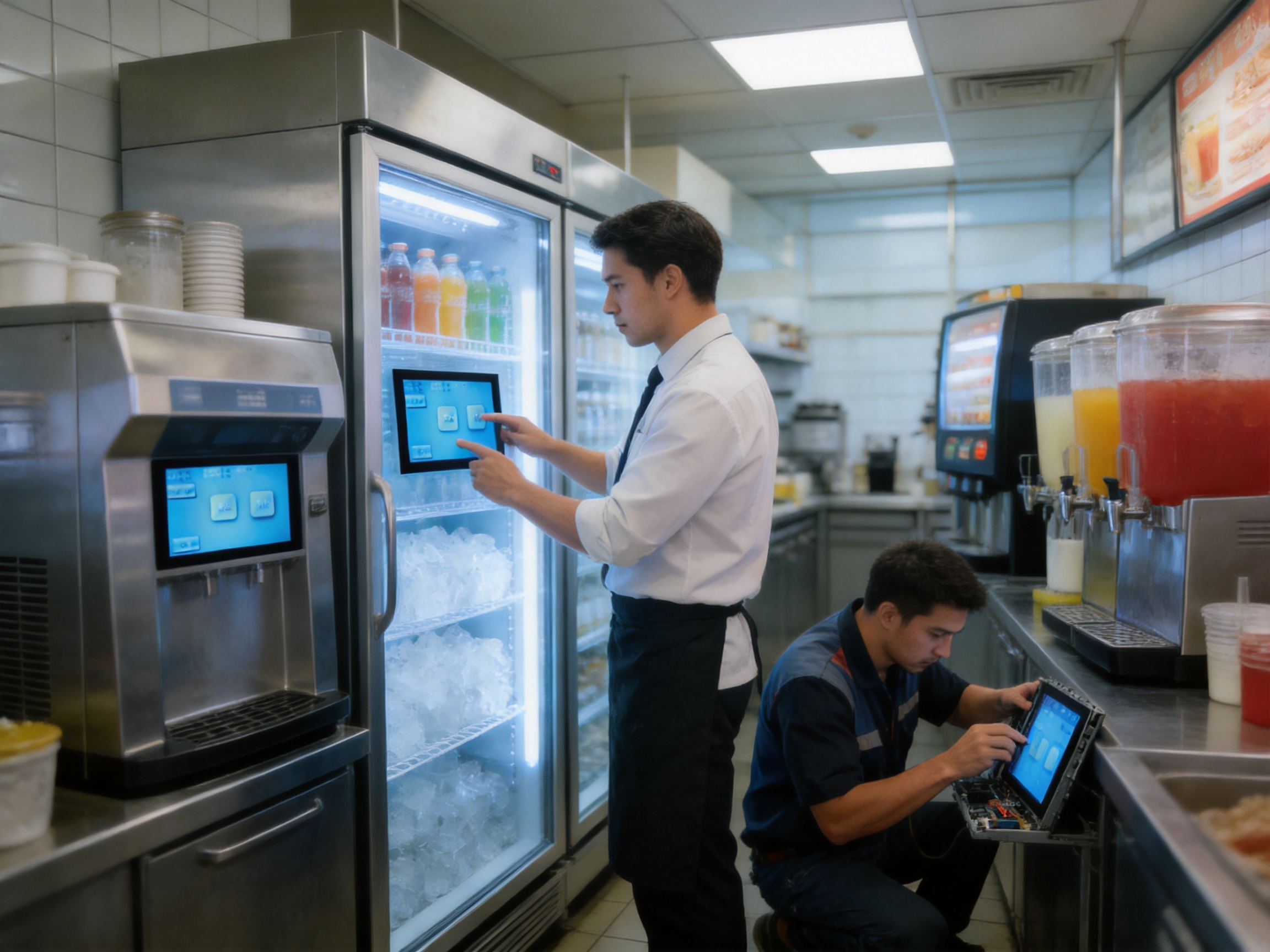
Modern foodservice equipment depends on controls that are clear, responsive, durable, and easy to maintain. A cold drink appliance may have excellent refrigeration performance, efficient temperature control, and dependable dispensing technology, but the operator still needs a practical interface to manage the equipment confidently. The LCD touchscreen panel described in this article is designed for commercial beverage coolers and related cold drink appliances, providing an intuitive control interface while supporting efficient equipment operation.
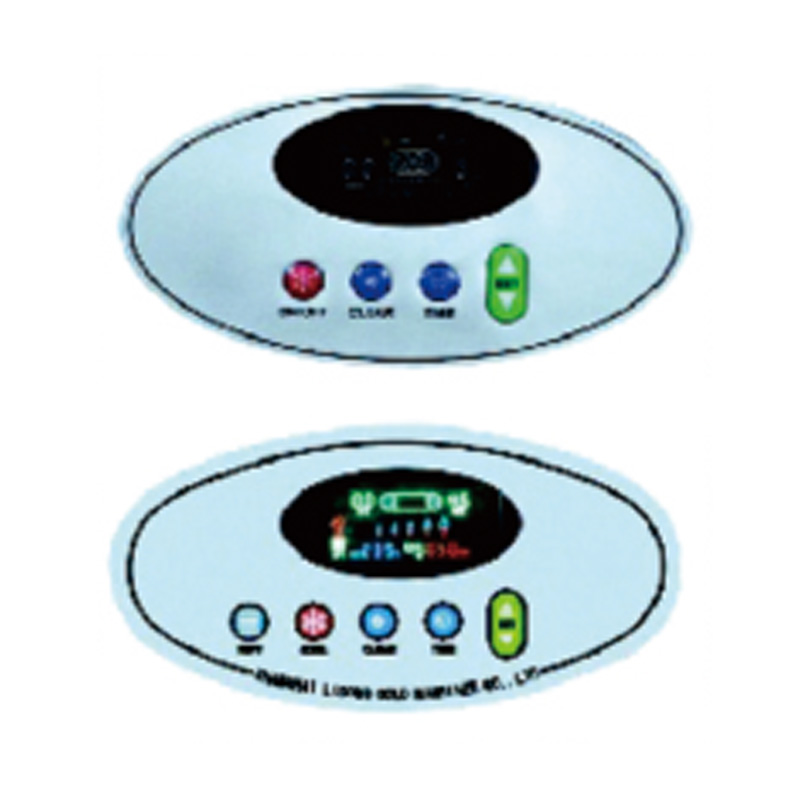
This panel belongs to the optional components and spare parts category and is not sold separately. It is intended to be supplied as part of a compatible commercial appliance or as an agreed replacement or configuration component for suitable equipment. Its design combines a high-definition display, responsive touch operation, durable plastic construction, compact installation characteristics, and energy-conscious operation. Depending on the appliance model, the control interface may be configured as a keypad screen or a five-inch touchscreen.
For commercial users, the value of a control panel extends beyond appearance. The interface must remain readable in busy working environments, respond accurately during repetitive use, and integrate correctly with the appliance’s electrical and refrigeration systems. It should also be straightforward for operators to understand, service personnel to replace, and equipment manufacturers to customize. These requirements make the panel an important part of the overall appliance design rather than a simple accessory.
Manufactured by Spelor Electrical Appliances (Zhejiang) Co., Ltd., this LCD touchscreen panel is supported by the company’s broader experience in commercial refrigeration, beverage equipment, ice-making machinery, and foodservice appliances. Spelor operates modern production facilities covering more than 60,000 square meters and integrates product design, research and development, manufacturing, sales, and service. This integrated structure helps the company coordinate appliance design and component selection more effectively.
The result is a control solution suitable for OEM and ODM projects, commercial beverage equipment, ice makers, and other compatible cold drink applications. Its configuration flexibility allows buyers to discuss display type, fastening materials, compressor options, and other equipment requirements according to the intended appliance model and market.
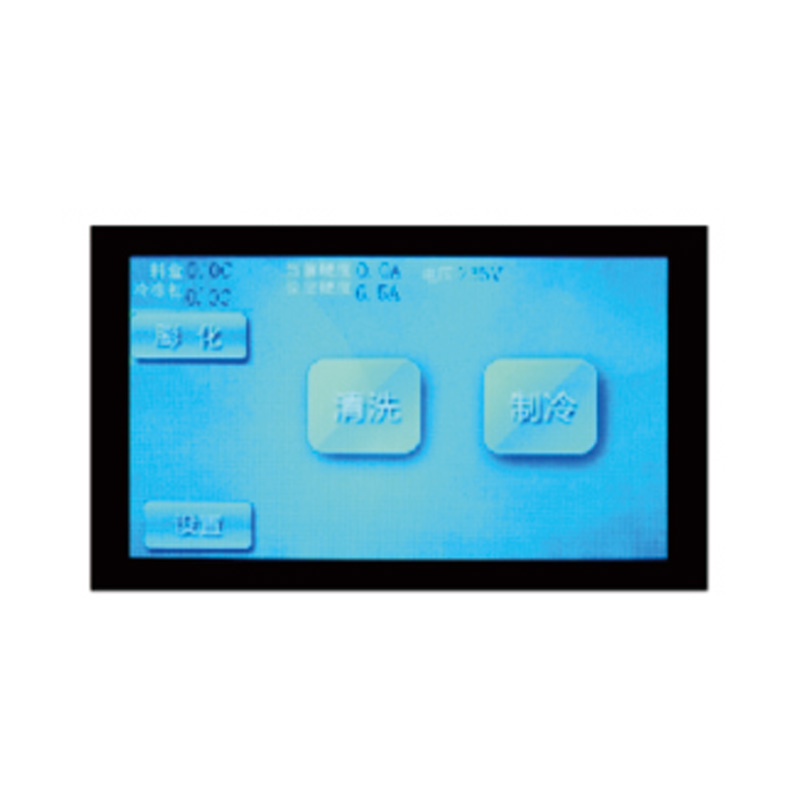
Cold Drink Appliance LCD Touch Screen Panel(Not sold separately)
Product Overview
The cold drink appliance LCD touchscreen panel is a control and display component designed to improve the user experience of commercial beverage equipment. It presents operating information in a clear format and allows users to interact with the appliance through either touch control or keypad-style input, depending on the selected configuration.
The panel is particularly suitable for beverage coolers and related equipment that require a compact, practical, and user-friendly control interface. It may also be used with compatible ice makers and other cold drink appliances that operate within a suitable temperature range. Because equipment designs differ, the exact size, resolution, electrical connection, and mounting method should be confirmed before production or replacement.
A 12V DC power supply is required. The operating temperature range is designed to support use in various commercial environments, although the final environmental suitability depends on the complete appliance design, insulation, ventilation, electrical protection, and installation conditions. The screen size and resolution may vary by model, allowing the interface to be matched to the appliance’s control requirements and available panel space.
The panel is not sold separately as a general standalone consumer product. Instead, it is supplied as an optional component or spare part for compatible foodservice equipment. This approach helps ensure that the display, wiring, control software, mounting structure, and appliance functions are properly matched.
Key Product Features
High-Definition Display
A clear display is essential in commercial environments where operators may need to check settings quickly. The high-definition display helps present temperature information, operating modes, status indicators, alarms, and other appliance data in a more legible format. Better visual clarity can reduce confusion during busy service periods and make routine equipment checks more efficient.
Compared with basic indicator lights or low-information control panels, an LCD interface can communicate more information in a compact area. It may support a more organized presentation of operating conditions and provide a clearer relationship between the selected function and the appliance response. The exact information displayed depends on the appliance model and control program.
Responsive Touch Operation
The responsive touch function is intended to provide convenient and intuitive operation. Users can select controls directly on the screen, reducing the need to memorize complex button combinations. A touchscreen interface can also make it easier for equipment manufacturers to organize multiple functions within one compact control area.
In commercial foodservice settings, simple operation is especially important because employees may have different levels of technical experience. An intuitive panel can shorten familiarization time and help staff perform common tasks consistently. It can also support a cleaner front-panel design by reducing the number of mechanical buttons and separate indicators.
Optional Keypad Screen Configuration
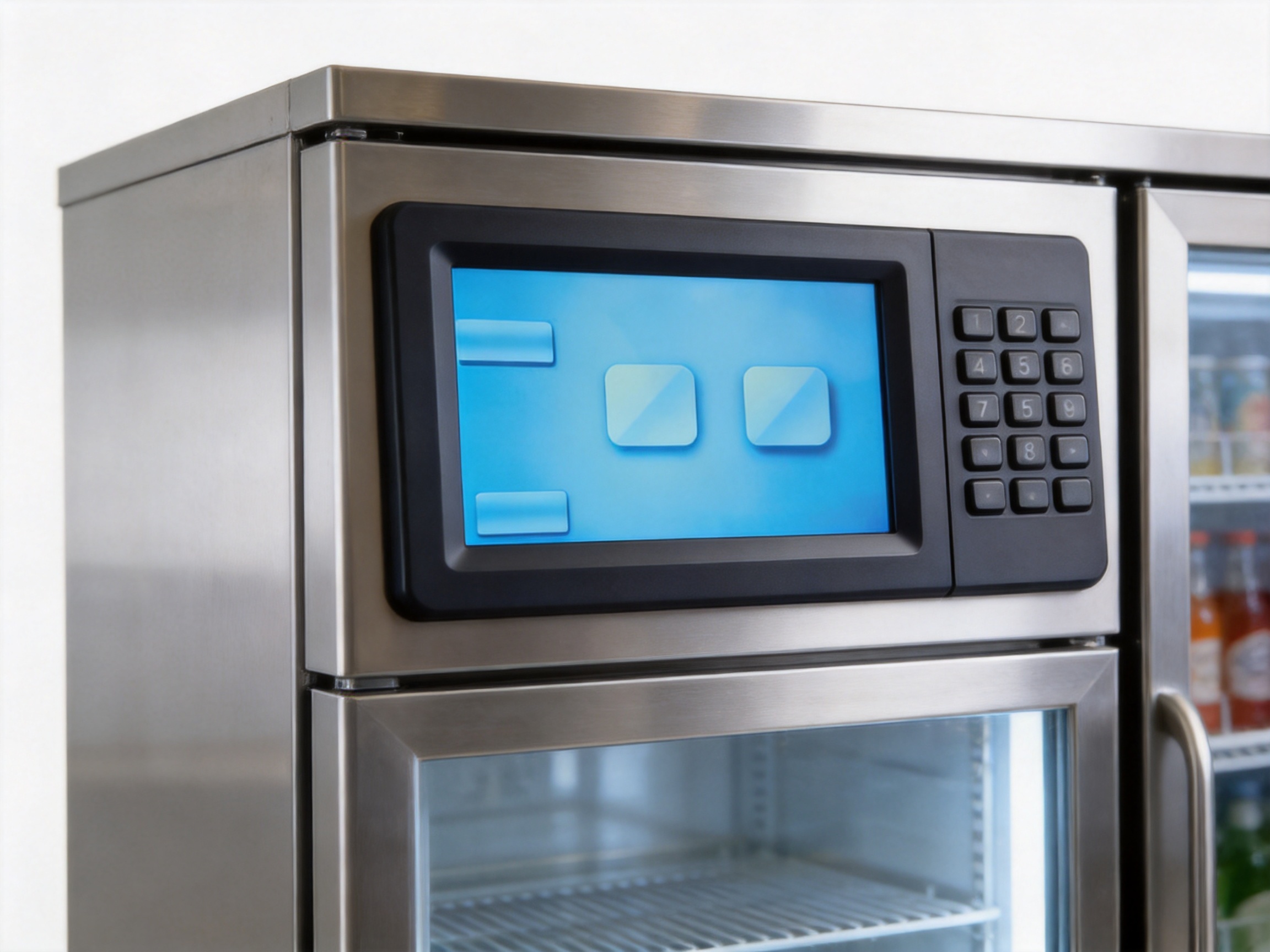
Not every operator requires a touchscreen. Some commercial users prefer physical keys because they offer tactile feedback and may be easier to operate when staff are wearing gloves or working in demanding conditions. For this reason, the panel can be configured as a keypad screen or as a five-inch touchscreen, depending on the appliance model and project requirements.
The keypad option can be suitable for equipment that uses straightforward functions, frequent repetitive operation, or a traditional control layout. The five-inch touchscreen option may be more appropriate for appliances with several operating modes, more detailed information, or a modern user interface. Offering both configurations allows OEM customers to select the control style that best matches their equipment and target market.
Durable Plastic Construction
The panel uses durable plastic materials selected to support wear resistance and impact resistance. Commercial appliances are exposed to repeated handling, cleaning, vibration, accidental contact, and continuous operation. A control component therefore needs to provide more than an attractive appearance; it must withstand the practical demands of foodservice use.
The plastic construction also supports a compact and relatively lightweight design. This can simplify integration into the appliance door, front panel, or control area. Material selection may vary according to the final model, so customers should confirm the exact material specification, surface treatment, color, and structural design during the technical review process.
Compact Installation Design
A compact panel can be integrated into a range of beverage cooler and cold drink appliance layouts. Space is often limited on commercial equipment because the front panel must accommodate refrigeration components, dispensing systems, ventilation structures, electrical parts, branding areas, and service access. A thoughtfully sized interface helps equipment designers use the available space more efficiently.
The panel is designed for quick and convenient installation on compatible appliances. This can support smoother assembly during production and help reduce replacement time during service. Correct installation still requires appropriate mounting dimensions, wiring, power compatibility, and control-system matching. The panel should be installed by qualified personnel or according to the equipment manufacturer’s technical instructions.
Energy-Conscious Operation
The panel incorporates energy-saving technology intended to reduce its own energy consumption and contribute to longer equipment service life. While a control panel is only one part of the total appliance energy system, efficient electronic operation can support the overall design objective of reducing unnecessary power use.
Lower component energy consumption may also help reduce heat generation within the control area. This can be beneficial in compact equipment where thermal management is important. Actual energy performance depends on the display configuration, brightness settings, control program, operating schedule, and complete appliance design.
Wide Temperature Suitability
Cold drink appliances and ice makers may operate in environments that vary significantly in ambient temperature. Equipment can be installed in restaurants, cafés, bars, supermarkets, convenience stores, snack shops, institutional kitchens, and other commercial spaces. The panel is designed for operation over a wide temperature range, making it suitable for various application environments when integrated into a compatible appliance.
Temperature performance should always be evaluated as part of the complete system. The final application must consider condensation, humidity, ventilation, electrical protection, cleaning procedures, and the appliance’s internal temperature conditions. Matching the panel to the intended operating environment helps protect reliability and user safety.
Advantages in Commercial Applications
Improved Operator Efficiency
Commercial operators need to complete tasks quickly and consistently. A clear LCD interface can make routine adjustments easier by presenting controls in a logical format. Instead of searching for individual switches or interpreting several indicator lights, users may be able to view appliance information and select functions from one organized control panel.
This is particularly useful in businesses with high customer turnover. During busy periods, employees may need to change settings, check operating status, or respond to an alert without interrupting service for a long time. A responsive interface can help shorten these interactions and support more consistent operation.
Better User Experience
The combination of a high-definition display and touch operation creates a more modern user experience than a basic mechanical interface. The panel can help make commercial cold drink appliances easier to understand for new employees and more convenient for experienced operators.
User feedback described in the product information indicates that the panel is easy to operate, intuitive, and user-friendly. These qualities are important for businesses that train multiple employees or operate several appliances across different locations. A consistent interface can make standard operating procedures easier to communicate.
Flexible Equipment Configuration
The availability of both keypad and touchscreen options is a practical advantage for appliance manufacturers. Different markets may prefer different control methods. A traditional keypad may be appropriate for a simple, cost-conscious model, while a five-inch touchscreen may support a premium product with more functions and a more advanced visual interface.
The optional component structure also allows OEM and ODM customers to discuss the panel as part of a complete equipment project. Instead of treating the interface as an isolated purchase, the customer can coordinate the screen type, appliance cabinet, refrigeration system, compressor selection, fastening components, and control logic as one solution.
Support for Service and Replacement
Commercial equipment must be maintainable over its working life. A panel that can be installed efficiently on a compatible appliance may help service teams complete replacement work more quickly. This can reduce equipment downtime, especially in locations where a beverage cooler or ice maker is central to daily sales.
Because the panel is supplied for compatible equipment rather than as an unrestricted universal product, technical matching remains important. The replacement process should confirm the screen configuration, power supply, connector arrangement, dimensions, control software, and mounting structure. Proper matching helps prevent installation errors and supports stable operation.
Comparison with Conventional Control Interfaces
Many commercial refrigeration and beverage appliances continue to use simple mechanical switches, indicator lamps, or basic segmented displays. These solutions can be reliable for limited functions, but they may provide less information and less flexibility than an LCD interface. A touchscreen panel can combine display and control functions in one component, reducing the need for multiple separate elements.
| Evaluation Area | LCD Touchscreen Panel | Basic Mechanical Interface |
|---|---|---|
| Information presentation | Can present organized operating information, status data, and selectable functions | Often limited to labels, indicator lights, or simple numerical information |
| Operating method | Direct touch interaction or optional keypad configuration | Physical switches, knobs, or push buttons |
| Interface flexibility | Screen layout and functions can be adapted to the appliance model | Function changes may require physical changes to the control panel |
| Front-panel appearance | Compact, modern, and integrated visual design | May require several separate buttons, labels, and indicators |
| User training | Icons, prompts, and organized menus may support intuitive operation | Users may need to learn the purpose of each switch or indicator |
| OEM customization | Suitable for model-specific display, control, and layout planning | Customization may depend on hardware and label changes |
| Service considerations | Replacement requires matching display, power, connectors, and control system | Individual switches may be simple to replace but offer fewer functions |
This comparison does not mean that every touchscreen is automatically superior in every application. A simple appliance may not need a complex interface, and some environments may prefer physical controls. The advantage of this product is its configuration flexibility. Customers can select a keypad screen or a five-inch touchscreen according to the operating requirements, market positioning, and appliance design.
Compared with generic replacement screens, a component developed for integration with commercial cold drink equipment can offer a more coordinated path from design to production. Compatibility, mounting, power, operating temperature, and user interface requirements can be reviewed together. This system-level approach can reduce the risk of selecting a screen that looks suitable but cannot function correctly with the appliance control architecture.
Optional Component Selection
The product information identifies several optional configurations that may be discussed as part of a complete appliance project. These include the screen type, nut material, and compressor selection. Such options allow the finished equipment to be adapted to different performance targets, production plans, and market requirements.
Screen Options
The first selection is the interface type: a keypad screen or a five-inch touchscreen. The keypad version may be selected for practical, tactile operation and a familiar control method. The touchscreen version may be selected where visual information, menu navigation, and a contemporary appearance are more important.
The screen choice should be evaluated together with the appliance’s control functions. If the equipment has only a few basic settings, a keypad may be efficient and economical. If the appliance includes multiple modes, detailed status information, programmable settings, or more advanced user prompts, a touchscreen may offer greater flexibility.
Nut Materials
The optional fastening components may be made from plastic or stainless steel. Plastic nuts can support lightweight assembly and may be suitable for applications where corrosion exposure and mechanical loading are limited. Stainless steel nuts can provide a more robust fastening solution and may be preferred where durability, repeated servicing, or environmental resistance is a higher priority.
The correct fastening material depends on the appliance structure, installation location, cleaning conditions, vibration level, and service expectations. Customers should confirm the final specification with the manufacturer during the engineering review.
Compressor Options
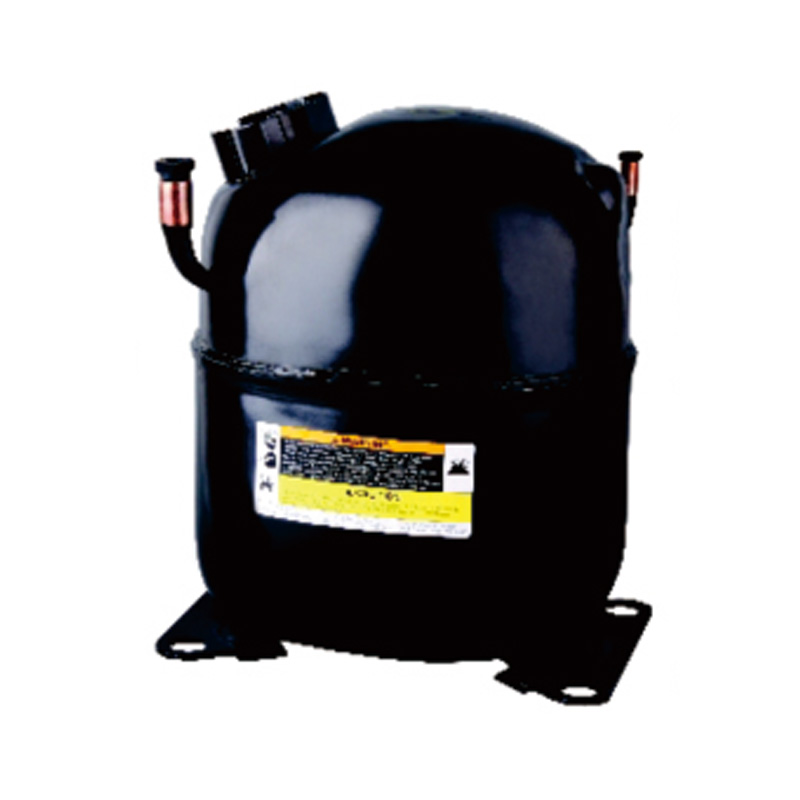
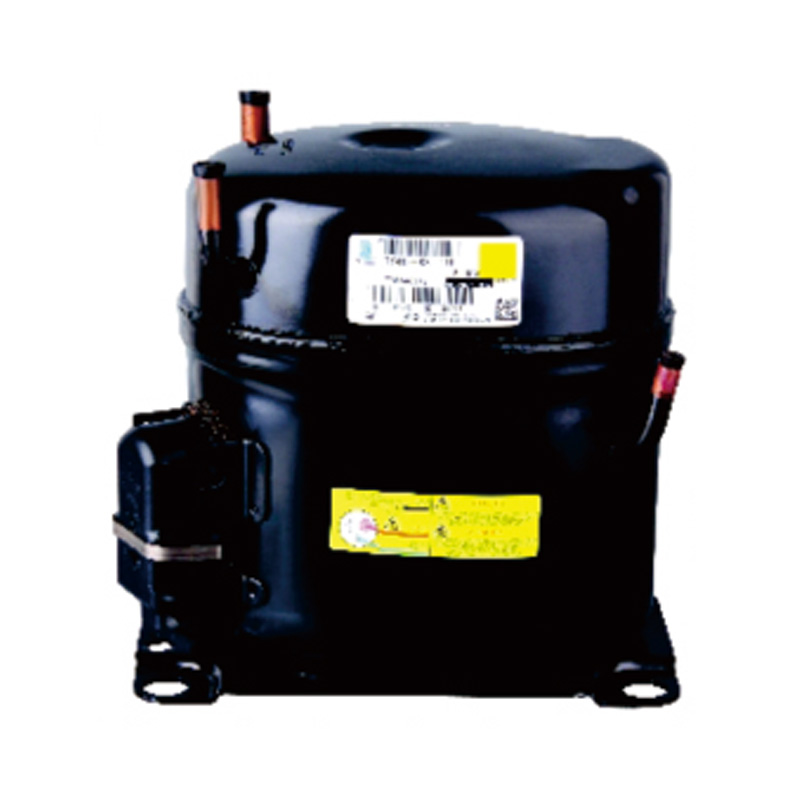
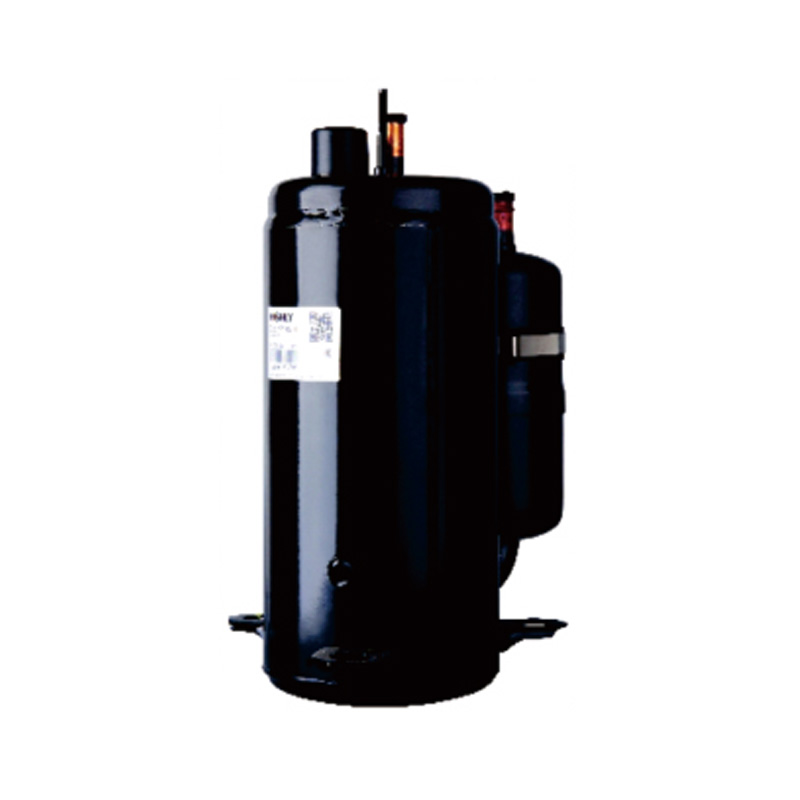
The product information also identifies domestic or imported compressor options, including Embraco and Tecumseh selections. Compressor choice affects refrigeration performance, energy use, noise characteristics, service availability, and regional procurement considerations. It should therefore be selected as part of the complete cold drink appliance design rather than independently of the control panel.
The LCD panel does not replace the refrigeration system; instead, it serves as part of the appliance’s operating interface. A properly coordinated system can connect the user interface with refrigeration controls, temperature management, alarms, and other functions required by the final equipment model.
Manufacturing Capabilities Behind the Product
Integrated Design and Development
Spelor Electrical Appliances (Zhejiang) Co., Ltd. integrates design, research and development, manufacturing, sales, and service. This structure is valuable for control components because the panel must work within a larger appliance system. A company that understands refrigeration equipment, beverage dispensers, ice machines, and foodservice applications can evaluate the panel from both the component and equipment perspectives.
Integrated product development can help align the interface with the appliance cabinet, wiring system, control board, refrigeration circuit, user requirements, and production process. It also allows technical questions to be discussed with teams familiar with the final equipment rather than being passed between unrelated component suppliers.
Modern Production Facilities
The company operates more than 60,000 square meters of modern production facilities. A substantial manufacturing base can support the production of multiple equipment categories and provide the space required for assembly, testing, quality control, warehousing, product development, and logistics coordination.
For OEM and ODM customers, production scale can be an important consideration. Commercial equipment projects may involve several product models, different configurations, seasonal demand, and international delivery requirements. A manufacturer with broad facilities and a diversified product portfolio may be better positioned to coordinate these demands than a small supplier focused on one isolated component.
Experience Across Foodservice Equipment
Spelor’s product range includes ice cream machines, juice dispensers, fried ice cream machines, refrigeration cabinets, slush machines, flake ice machines, cooking equipment, griddles, fryers, insulation products, barbecue equipment, and buffet solutions. This range provides experience across the operating environments where commercial cold drink and foodservice equipment is used.
Such experience can support better understanding of practical requirements, including frequent cleaning, extended operating hours, high ambient temperatures, repeated user interaction, space limitations, and the need for efficient service. The LCD panel can therefore be considered within a broader foodservice equipment ecosystem.
OEM and ODM Support
The company provides OEM and ODM services based on drawings or customer requirements. This is particularly relevant for buyers that need a customized control panel or a complete appliance with a specific interface. Customization discussions may cover screen type, dimensions, resolution, mounting structure, electrical supply, interface layout, appliance branding, control functions, compressor configuration, and production quantities.
OEM production generally requires accurate execution of a customer’s specifications, while ODM cooperation may involve adapting an existing design or developing a more complete product solution. In both cases, early technical communication is important. Drawings, sample units, electrical diagrams, operating requirements, and target-market expectations should be reviewed before mass production.
Production Coordination
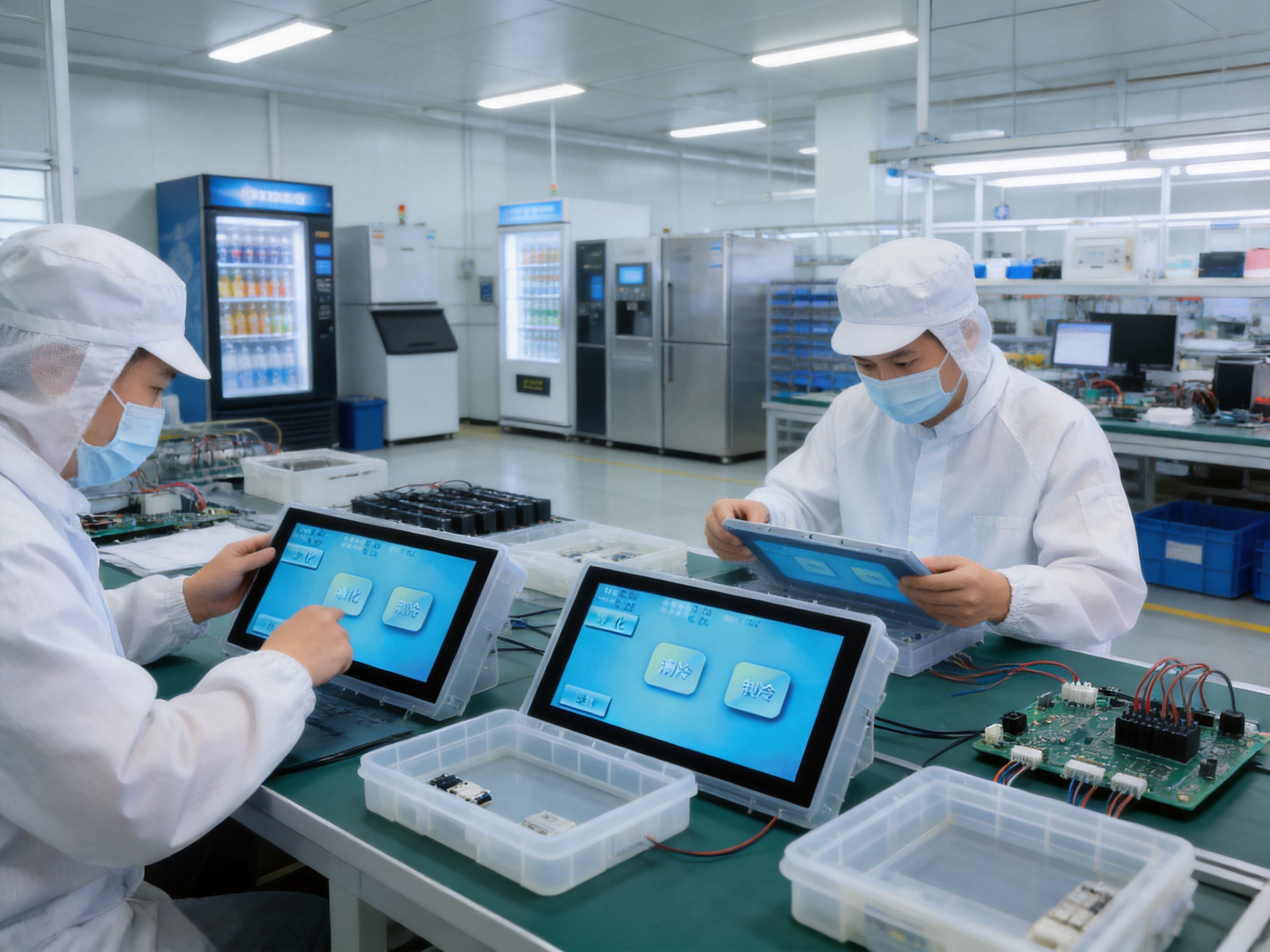
The manufacturing process for a commercial control panel involves more than assembling a display into a plastic housing. It may include material preparation, molding or housing production, display installation, wiring and connector assembly, electronic inspection, software or interface verification, appearance inspection, functional testing, packaging, and final integration into the appliance.
Each step can affect final performance. A housing that is not dimensionally consistent may create installation problems. An incorrectly fitted connector may cause intermittent operation. An unsuitable display setting may reduce readability. A panel that is not tested with the appliance control system may fail to communicate correctly. Coordinating these stages helps improve product consistency.
Quality-Oriented Manufacturing
Reliable commercial equipment depends on repeatable manufacturing and appropriate quality control. For the LCD panel, quality-oriented production should include inspection of the display, touch or keypad response, power input, wiring, fastening points, housing condition, and compatibility with the intended appliance model.
Testing requirements may vary according to the project. Customers can discuss inspection standards, sample approval procedures, environmental requirements, packaging expectations, and documentation during the procurement process. A clearly defined quality plan helps align the manufacturer and buyer before production begins.
Application Environments
Beverage Coolers
The panel is primarily designed for beverage coolers and cold drink appliances. In a restaurant, bar, café, or convenience store, the display can provide a convenient method for monitoring and controlling equipment functions. Its compact design supports integration into front-mounted or door-mounted control areas, subject to the final appliance structure.
A beverage cooler may be accessed frequently throughout the day, so the interface must accommodate repeated operation. Durable construction and responsive controls can help support a dependable user experience during continuous commercial use.
Ice Makers
The product information identifies ice makers as a suitable application. Ice-making equipment may require users to monitor production status, operating mode, temperature conditions, or alerts. An LCD control interface can provide more organized information than a small set of indicator lights, depending on the appliance’s control program.
Because ice makers often operate in humid and cool conditions, installation and environmental compatibility are important. The panel should be integrated according to the manufacturer’s specifications, with suitable protection against moisture, condensation, and improper cleaning practices.
Juice Dispensers and Slush Machines
Commercial juice dispensers and slush machines often operate in busy retail and foodservice environments. A clear interface may help employees manage temperature, operating mode, dispensing conditions, and routine settings. The exact functions depend on the equipment model, but the panel can be configured as part of a broader beverage equipment solution.
For slush machines and similar appliances, users may need an interface that remains easy to understand during extended operation. A touch panel can provide a modern appearance and flexible control layout, while a keypad configuration can offer tactile operation for customers who prefer physical buttons.
Snack Shops and Fast-Food Chains
Snack shops and fast-food chains commonly rely on equipment that must be easy to operate across multiple locations. A standardized control interface can support consistent employee training and equipment handling. When the same or similar panel configuration is used across a product range, operators may find it easier to transfer procedures from one machine to another.
For chain customers, the panel can also form part of a broader OEM project involving multiple appliance types. Coordinating the interface design across beverage coolers, ice machines, and related products may help create a consistent equipment experience.
Supermarkets and Institutional Facilities
Supermarkets, schools, hospitals, company canteens, and other institutions may require commercial cold drink equipment that operates reliably over extended periods. In such locations, equipment may be used by many employees with different levels of experience. A clear and intuitive panel can help make daily operation more straightforward.
Institutional and retail buyers may also place greater emphasis on service access, replacement planning, and long-term procurement. Since the panel is available as an optional component or spare part for compatible equipment, customers can discuss future maintenance and model continuity during the original equipment order.
Installation and Integration Considerations
Successful installation begins with confirming compatibility. The user should verify the appliance model, screen configuration, panel dimensions, mounting openings, connector type, control board, wiring arrangement, power supply, operating temperature, and software or control protocol. The required power supply for the panel is 12V DC, but the complete appliance must be designed to provide the correct regulated input.
The panel should not be connected to an unsuitable voltage source. Incorrect voltage, reversed polarity, incompatible connectors, or unapproved wiring modifications may damage the component or create a safety risk. Installation should be performed by qualified technicians who understand the appliance’s electrical and refrigeration systems.
Mechanical installation should ensure that the panel is seated correctly and that the fastening points are secure. Excessive force may damage the housing or display. The selected nut material, whether plastic or stainless steel, should be appropriate for the appliance structure and installation environment.
After installation, the technician should test the display, touch or keypad response, power stability, visual indicators, appliance communication, and relevant operating functions. If the panel is installed on an ice maker or beverage cooler, the appliance should also be checked under normal operating conditions to confirm that the interface remains stable during cooling, defrosting, dispensing, or ice production cycles.
Cleaning procedures should follow the equipment manufacturer’s instructions. Commercial operators should avoid spraying liquid directly onto the panel, using abrasive tools, or applying chemicals that may damage the screen surface, housing, labels, or seals. A soft, suitable cleaning material is generally preferable, but the approved method should be confirmed for the specific appliance.
Procurement Guidance for OEM and ODM Buyers
Businesses planning to purchase appliances with this panel should provide clear technical information during the quotation stage. Useful information includes the appliance category, intended market, operating temperature, power system, desired screen type, display size, control functions, mounting dimensions, compressor preference, expected production volume, packaging needs, and delivery destination.
Buyers should also explain whether the panel is intended for a new appliance, a model update, or a replacement program. A new appliance project may allow the cabinet, control board, wiring, and user interface to be designed together. A replacement project may require strict dimensional and electrical compatibility with an existing product.
Sample approval is recommended before mass production. A sample can be used to check visual appearance, display readability, mounting fit, touch sensitivity, keypad feel, cable routing, appliance communication, and operating performance. Any revisions should be recorded in an approved technical document or drawing.
For international foodservice markets, buyers may need to consider language, symbols, electrical requirements, packaging labels, service documentation, and regional operating conditions. A manufacturer offering OEM and ODM support can help coordinate these requirements, but the customer remains responsible for confirming the regulations and market requirements applicable to the final product.
Why Select an Integrated Equipment Manufacturer?
Purchasing a panel through an integrated commercial appliance manufacturer can provide several practical advantages. First, the supplier may understand how the panel interacts with refrigeration, dispensing, ice-making, and appliance control systems. Second, the customer can discuss the component as part of a complete machine rather than managing several unrelated suppliers. Third, the manufacturer may be able to coordinate customization, production, packaging, and after-sales support within one organization.
This can simplify communication during product development. When a problem involves panel dimensions, compressor selection, control logic, and appliance structure, a supplier with experience in all these areas may identify the relationship between the issues more quickly. It can also make responsibility clearer during sample approval and production follow-up.
Spelor’s combined product range and manufacturing structure support this integrated approach. The company serves foodservice applications ranging from beverage and refrigeration equipment to cooking and buffet products. Its stated service model includes pre-sales consultation, product customization, flexible logistics and payment solutions, and after-sales maintenance.
For customers seeking long-term business value, the supplier relationship may extend beyond the initial component. Future requirements could include model updates, spare parts, replacement panels, additional appliance categories, or customized equipment for a particular market. Establishing technical communication early can support more efficient cooperation over time.
Maintenance and Service Value
Regular maintenance helps protect the performance of any commercial appliance interface. Operators should monitor the screen for unusual flickering, delayed response, incorrect information, damaged housing, loose fasteners, or signs of liquid entry. Problems should be reported before they affect the appliance’s operation or create a safety concern.
Service personnel should use compatible replacement parts and follow the equipment manufacturer’s instructions. Because the panel is not a universal standalone product, replacement should be based on the exact appliance model and configuration. A panel that appears physically similar may still have different wiring, software, resolution, power requirements, or mounting dimensions.
Keeping accurate equipment records can simplify future service. Records may include the appliance model, panel configuration, installation date, power specification, replacement history, and supplier information. For businesses operating multiple machines, standardized records can help manage spare parts and reduce downtime.
The durable plastic construction, compact installation design, and optional configuration choices support practical service planning. However, long-term performance depends on correct installation, suitable operating conditions, appropriate cleaning, and proper maintenance of the complete appliance.
Technical Specification Summary
| Item | Specification or Description |
|---|---|
| Product type | LCD touchscreen panel for compatible cold drink appliances |
| Product category | Optional Components & Spare Parts |
| Primary applications | Beverage coolers, ice makers, and related commercial cold drink equipment |
| Screen options | Keypad screen or five-inch touchscreen |
| Display characteristics | High-definition display; size and resolution may vary by model |
| Operation | Responsive touch control or keypad operation, depending on configuration |
| Housing material | Durable plastic construction designed for wear and impact resistance |
| Power requirement | 12V DC |
| Environmental suitability | Wide operating temperature range; final suitability depends on the complete appliance |
| Fastening options | Plastic or stainless steel nuts |
| Compressor options for associated equipment | Domestic or imported options, including Embraco and Tecumseh, subject to project requirements |
| Supply condition | Not sold separately; supplied as part of a compatible appliance or agreed spare-part program |
| Customization support | OEM and ODM solutions based on drawings or customer requirements |
Frequently Asked Questions
Is the LCD touchscreen panel sold as an independent retail product?
No. The panel is not sold separately as a general standalone product. It is supplied as an optional component or spare part for compatible commercial cold drink appliances. Customers should discuss the intended appliance model and configuration with the manufacturer.
Which appliances can use this panel?
The panel is designed for compatible beverage coolers and may also be suitable for ice makers and other cold drink equipment. Compatibility depends on the appliance’s dimensions, electrical system, control board, software, mounting structure, and operating environment.
What screen configurations are available?
The available options include a keypad screen and a five-inch touchscreen. The appropriate choice depends on the appliance functions, user preferences, market positioning, and desired control method.
What power supply does the panel require?
The panel requires a 12V DC power supply. The complete appliance must provide a suitable, stable, and correctly connected power source. Qualified personnel should verify polarity, wiring, voltage, and connector compatibility before installation.
Can the display size and resolution be customized?
Size and resolution may vary depending on the model. OEM and ODM customers can discuss the required display characteristics during the technical development process. Final availability depends on the appliance design and production requirements.
Is the panel suitable for cold or humid environments?
The panel is designed to operate across a wide temperature range and is suitable for various commercial environments when correctly integrated. The complete appliance must still provide appropriate protection from condensation, moisture, cleaning liquids, and unsuitable installation conditions.
What materials are available for the fastening nuts?
Plastic and stainless steel nut options are identified in the product information. The best choice depends on the mounting structure, vibration, cleaning conditions, corrosion exposure, and service requirements of the final appliance.
Can the panel be used with a compressor from another supplier?
The panel is part of the appliance control interface, while compressor selection belongs to the complete refrigeration system. Associated equipment may use domestic or imported compressor options, including Embraco and Tecumseh, subject to the project specification. The complete control and refrigeration system must be engineered for compatibility.
What are the main advantages over a basic control panel?
The main advantages include a high-definition display, responsive touch operation, compact integration, a modern user interface, configuration flexibility, and the ability to present more organized information. A keypad version is also available for users who prefer tactile operation.
Can the panel support OEM and ODM projects?
Yes. The manufacturer provides OEM and ODM support based on drawings or customer requirements. Buyers can discuss the screen type, dimensions, interface arrangement, mounting structure, power requirements, appliance configuration, and other project details.
How should the panel be maintained?
Operators should keep the panel clean using an approved method, avoid direct liquid spraying, prevent impact and abrasive contact, and report any flickering, delayed response, or physical damage. Replacement should use a compatible configuration and be performed by qualified service personnel.
Why is technical matching important when ordering a replacement?
Panels that look similar may have different power inputs, connectors, dimensions, resolutions, control software, or mounting arrangements. Confirming the exact appliance model and panel configuration helps prevent installation problems and supports reliable operation.
Conclusion
The cold drink appliance LCD touchscreen panel is a practical control solution for commercial beverage coolers, ice makers, and related foodservice equipment. Its high-definition display, responsive touch operation, durable plastic construction, compact design, energy-conscious technology, and wide temperature suitability address many of the requirements found in busy commercial environments.
Its strongest advantage is configuration flexibility. Customers can choose between a keypad screen and a five-inch touchscreen, discuss plastic or stainless steel fastening nuts, and coordinate the panel with the broader appliance design. This makes the component suitable for different operating preferences, equipment categories, market levels, and OEM or ODM development programs.
The panel also benefits from the manufacturing capabilities of Spelor Electrical Appliances (Zhejiang) Co., Ltd. With more than 60,000 square meters of modern production facilities, experience across commercial refrigeration and foodservice equipment, and integrated design, development, manufacturing, sales, and service operations, the company can support customers beyond the supply of an individual interface component.
For buyers, the most effective procurement approach is to treat the panel as part of a complete equipment solution. Confirming the appliance model, screen type, power supply, dimensions, control system, environmental conditions, mounting materials, and service requirements at the beginning of the project can improve compatibility and reduce later revisions.
When correctly selected, installed, and maintained, this LCD control panel can help commercial cold drink appliances deliver a clearer user experience, more convenient operation, and a more modern equipment design. Its integration into an OEM or ODM manufacturing program can also support consistent product development for restaurants, cafés, bars, supermarkets, fast-food chains, institutions, and other foodservice markets.
References
Spelor Electrical Appliances (Zhejiang) Co., Ltd. Product Information: Cold Drink Appliance LCD Touch Screen Panel, Optional Components and Spare Parts.
Spelor Electrical Appliances (Zhejiang) Co., Ltd. Corporate Information: Commercial Refrigeration, Kitchen, Buffet, and Foodservice Equipment Manufacturing Profile.
Commercial Refrigeration Equipment Design Principles: Control Interfaces, Environmental Conditions, Maintenance, and System Integration.
Foodservice Equipment Engineering Guidelines: OEM Product Development, Component Compatibility, Technical Documentation, and Quality Coordination.
General Electrical Equipment Service Practices: Low-Voltage DC Components, Installation Verification, Cleaning, and Replacement Planning.
Product: Cold Drink Appliance LCD Touch Screen Panel(Not sold separately)

For exclusive deals and latest offers, sign up by entering your email address below.



-
spelor@spelor.com
-
+86-576-85229688
-
No.528, Changxi Road, Linhai City, Zhejiang Province, China
Commercial Refrigeration Equipment Manufacturer China
Copyright © 2025 by Spelor Electrical Appliances (Zhejiang) Co., Ltd. Rights Reserved.
