


 中文简体
High-Efficiency Refrigeration Compressor Solutions for Commercial Cold Drink Appliances
Admin 2026-09-28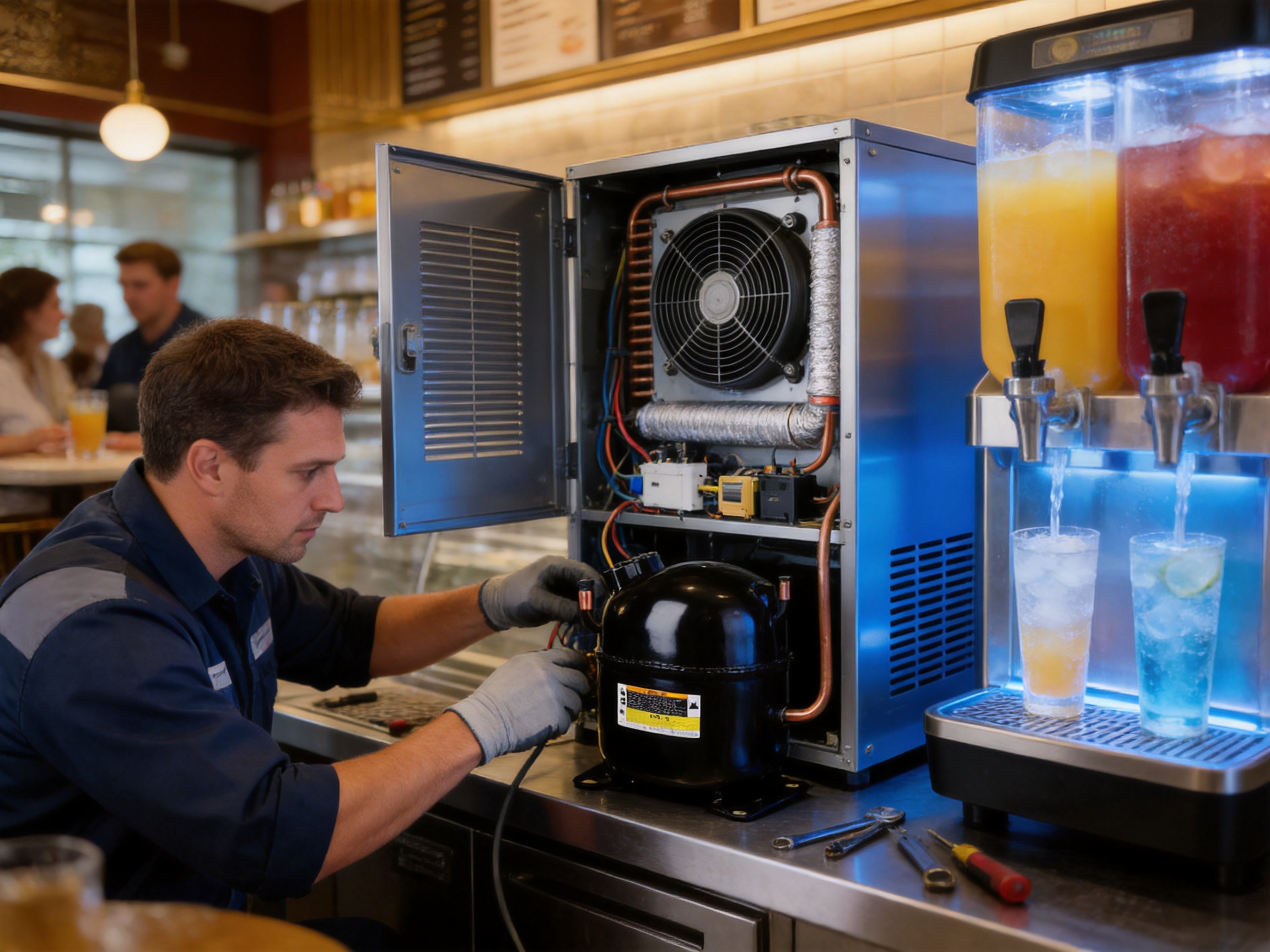
Reliable refrigeration is the foundation of every commercial cold drink appliance. Whether the equipment is a juice dispenser, chilled beverage unit, slush machine, ice cream machine, or another foodservice refrigeration system, the compressor plays a decisive role in cooling performance, energy consumption, product quality, operating noise, service life, and maintenance requirements. A carefully selected compressor can help equipment manufacturers and commercial operators achieve stable temperatures, attractive operating costs, and dependable service in demanding environments.
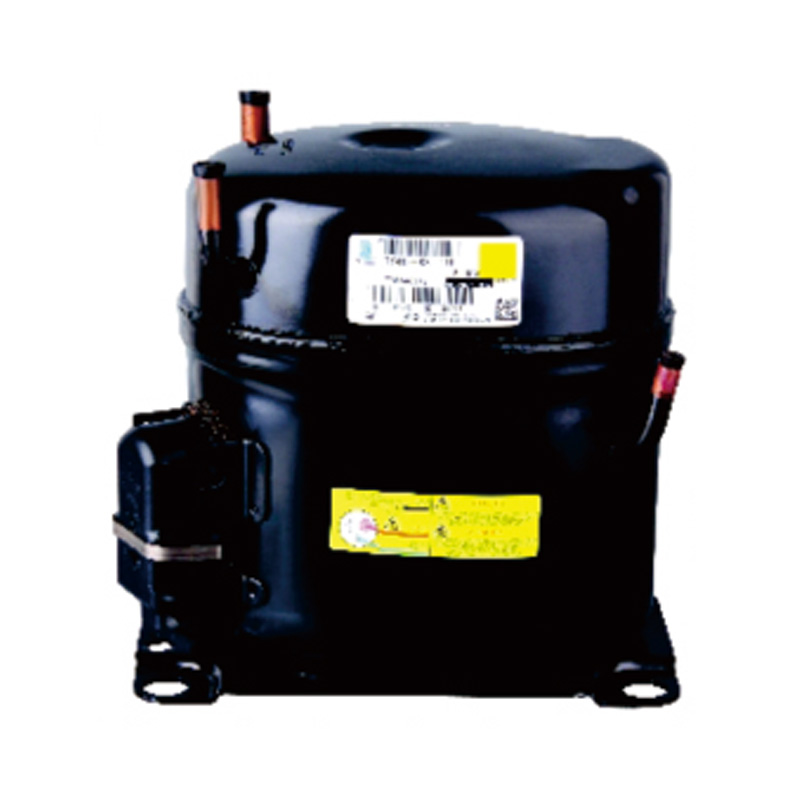
The Embraco refrigeration compressor offered by Spelor Electrical Appliances (Zhejiang) Co., Ltd. is designed as an integrated component for commercial cold drink appliances. It is supplied as an optional component and spare part rather than as an independent retail product. This positioning is important because a compressor must be matched with the complete refrigeration system, including the evaporator, condenser, expansion device, refrigerant circuit, electrical controls, cabinet design, and intended operating conditions.
When selected and installed as part of a suitable commercial refrigeration platform, the compressor provides an efficient foundation for beverage cooling applications. Its advanced refrigeration technology, low-noise and low-vibration design, intelligent control characteristics, and environmental performance make it suitable for equipment manufacturers, distributors, service organizations, and foodservice businesses seeking dependable refrigeration solutions.
This article examines the role of the compressor in commercial cold drink appliances, its principal advantages, the reasons it can offer value over less-advanced alternatives, and the manufacturing capabilities that support its use in professional foodservice equipment. It also explains how Spelor combines component selection, product engineering, production management, quality control, customization, and after-sales support into a complete commercial equipment solution.
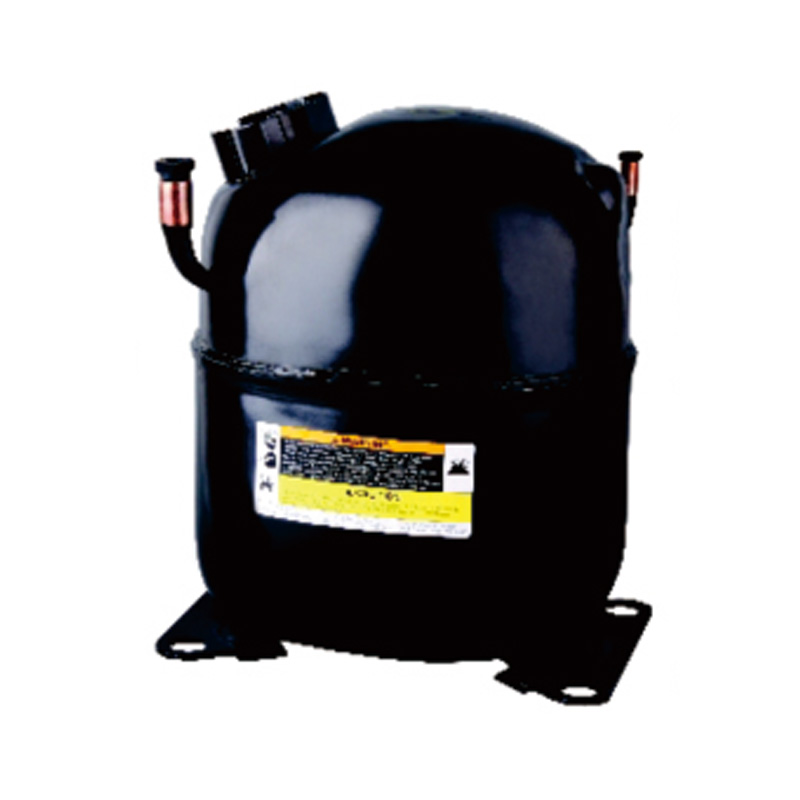
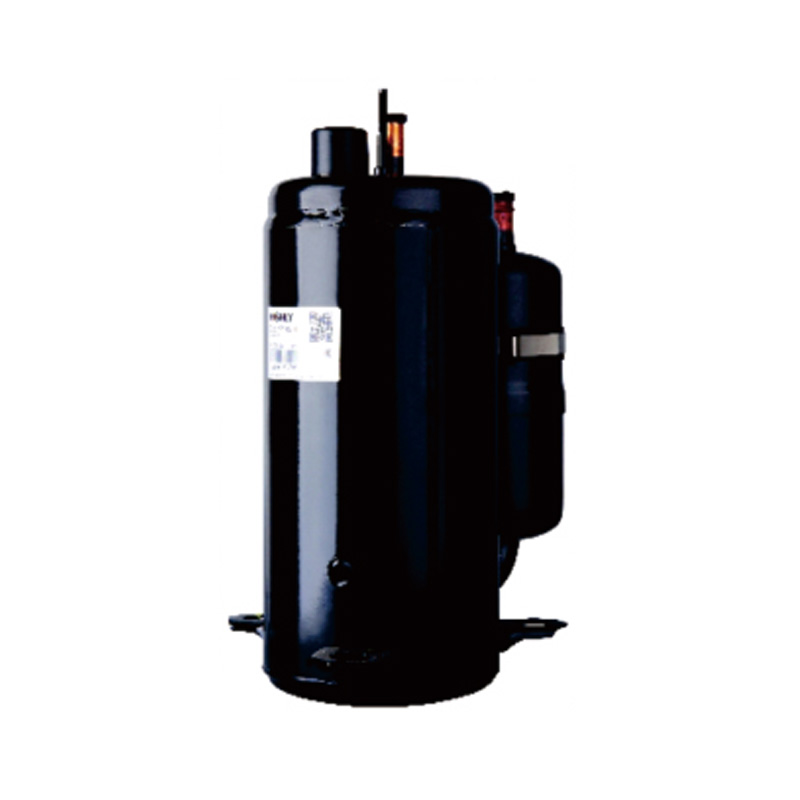
Embraco Refrigeration Compressor for Commercial Cold Drink Appliances(Not sold separately)
1. The Importance of the Compressor in Commercial Beverage Equipment
A commercial cold drink appliance must maintain appropriate product temperature while operating for long periods, often in busy service environments. The appliance may be opened frequently, exposed to warm ambient air, installed near cooking equipment, or expected to recover quickly after a large volume of product has been served. These conditions place continuous demands on the refrigeration system.
The compressor is the active driving force of a vapor-compression refrigeration cycle. It draws low-pressure refrigerant vapor from the evaporator, compresses that vapor to a higher pressure, and sends it toward the condenser. The refrigerant then rejects heat, changes state, passes through the expansion device, and returns to the evaporator to absorb heat from the beverage compartment or product system.
Although the compressor is only one part of the refrigeration circuit, its performance affects the behavior of the complete appliance. A compressor with suitable capacity and control characteristics can support rapid pull-down, stable temperature maintenance, and efficient operation. An unsuitable compressor may cause excessive energy use, temperature fluctuation, high noise, difficult starting, poor recovery, or unnecessary mechanical stress.
Commercial beverage equipment also has special requirements that may differ from domestic refrigerators. Many machines must maintain product quality during repeated dispensing cycles. Juice dispensers may need to keep beverages fresh and cool throughout the day. Slush machines and ice cream equipment may require reliable low-temperature operation. Compact commercial units must deliver useful cooling capacity without taking excessive space. These requirements make component compatibility and application-specific engineering essential.
1.1 Application-specific refrigeration requirements
Different commercial appliances use different temperature ranges, storage volumes, evaporator configurations, and duty cycles. A compressor intended for a small beverage dispenser may not be appropriate for a large refrigeration cabinet. Similarly, a compressor selected for medium-temperature cooling may not be suitable for an application requiring lower evaporating temperatures.
For this reason, compressor selection should consider the complete equipment design rather than focusing on a single specification. Important factors include cooling capacity, evaporating temperature, condensing temperature, refrigerant compatibility, voltage, frequency, ambient temperature, expected operating hours, startup conditions, and available ventilation.
Spelor’s experience in commercial refrigeration equipment allows the compressor to be evaluated within the wider context of foodservice equipment manufacturing. This integrated approach helps reduce the risk of treating the compressor as an isolated part and supports more reliable matching between the refrigeration system and the final appliance.
1.2 The relationship between cooling performance and beverage quality
Temperature stability is directly connected with beverage presentation and customer satisfaction. Drinks that are not sufficiently chilled may be rejected by customers, while excessive temperature fluctuation can affect consistency, storage life, and dispensing performance. For products such as juice, cold drinks, frozen beverages, and soft-serve-related mixtures, stable refrigeration supports a more predictable user experience.
A compressor with efficient and responsive operation can help the system recover after door openings, dispensing activity, or the addition of warmer product. It can also support more consistent operation when the surrounding environment changes. This does not eliminate the need for correct insulation, airflow, controls, and maintenance, but it provides a strong foundation for the equipment’s overall performance.
2. Product Overview
The Embraco refrigeration compressor is intended for commercial cold drink appliances and related beverage cooling systems. It belongs to the Optional Components & Spare Parts category and is not sold separately as a standalone consumer appliance. Its intended value lies in its integration into a complete refrigeration product or replacement program.
The compressor is associated with advanced refrigeration technology, energy-conscious operation, low-noise performance, low-vibration construction, intelligent control, and environmental considerations. These characteristics address the principal concerns of commercial operators and equipment manufacturers: operating cost, customer comfort, product consistency, equipment reliability, and compliance with modern expectations for responsible energy use.
Because the component is used inside commercial equipment, the final performance depends on system design and installation. The correct model, electrical configuration, refrigerant circuit, and operating envelope should be confirmed before procurement. Spelor can support customers with product consultation, application communication, and customized equipment solutions based on drawings or technical requirements.
| Key area | Product contribution | Commercial value |
|---|---|---|
| Cooling operation | Supports stable refrigeration within a properly matched system | Helps maintain beverage quality and service consistency |
| Energy performance | Designed around efficient refrigeration technology | May help reduce operating costs over the equipment life cycle |
| Acoustic comfort | Low-noise operating characteristics | Suitable for customer-facing foodservice environments |
| Mechanical behavior | Low-vibration design approach | Helps reduce disturbance and mechanical stress |
| Control response | Intelligent control characteristics that respond to operating conditions | Supports adaptable performance under changing ambient conditions |
| Environmental positioning | Designed with environmental performance in mind | Aligns with modern expectations for responsible commercial equipment |
| Supply model | Optional component and spare part for suitable equipment | Useful for OEM integration, replacement, and service programs |
3. Main Advantages Compared with Basic Compressor Alternatives
Commercial equipment buyers often compare compressors according to purchase price alone. However, the initial component price is only one part of the total cost of ownership. Energy consumption, noise, vibration, temperature stability, service requirements, equipment downtime, and compatibility with the final appliance can have an equally significant impact on business results.
The Embraco compressor offers several characteristics that can distinguish it from basic or less-specialized alternatives. These advantages should be considered in relation to the complete system and confirmed for the specific model and application.
3.1 Efficient refrigeration operation
Energy efficiency is a major concern for commercial beverage equipment because these machines may operate continuously throughout business hours or remain energized around the clock. A compressor that converts electrical input into useful refrigeration more effectively can contribute to lower energy consumption when it is properly matched with the system.
Efficient operation also has a secondary benefit: lower electrical consumption can reduce the heat released into the surrounding area. This may be valuable in beverage shops, bars, supermarkets, fast-food restaurants, and other locations where multiple appliances operate in a limited space. Lower heat rejection can also reduce the burden on room air conditioning, although the actual effect depends on the installation environment.
Compared with an older or poorly matched compressor, an efficient compressor may provide more useful cooling for a similar electrical input. The result can be improved operating economics over the working life of the appliance. For OEM customers, energy performance can also strengthen the market position of the final machine by supporting a more attractive total-cost proposition.
3.2 Low-noise performance for customer-facing locations
Noise is an important but sometimes overlooked factor in commercial refrigeration. Beverage dispensers, slush machines, ice cream equipment, and compact refrigeration units are often installed near customers, employees, dining tables, service counters, or checkout areas. Compressor noise that is acceptable in a remote plant room may be distracting in these environments.
The low-noise characteristics of the compressor are intended to create a more comfortable operating environment. Reduced compressor noise can help foodservice businesses maintain a calmer atmosphere, particularly in cafés, restaurants, bars, hotel breakfast areas, convenience stores, and open retail spaces.
Noise performance is influenced by the complete equipment design. Cabinet panels, mounting points, fan selection, refrigerant flow, airflow paths, and floor conditions all affect perceived sound. Nevertheless, starting with a compressor designed for low-noise operation gives equipment manufacturers a stronger foundation for acoustic control than relying on insulation or enclosure treatments alone.
3.3 Low vibration and improved equipment behavior
Mechanical vibration can affect the comfort, perceived quality, and long-term behavior of commercial refrigeration equipment. Excessive vibration may produce rattling panels, movement of internal components, stress at pipe connections, and unwanted sound transmission through the cabinet or floor.
The compressor’s low-vibration design approach can help reduce these concerns. When correctly mounted, the compressor can operate more smoothly and place less mechanical disturbance on the surrounding structure. This is particularly useful for compact machines where components are installed close together and where every vibration path can become noticeable.
Lower vibration may also support a more stable refrigeration circuit by reducing mechanical stress on tubing, fittings, and mounting structures. It does not replace correct installation practices, but it complements them. Proper transport, mounting, piping layout, and commissioning remain essential to achieving reliable results.
3.4 Intelligent response to changing conditions
Commercial equipment does not operate under identical conditions throughout the day. Ambient temperature may rise, the appliance may experience frequent dispensing, doors may be opened repeatedly, and the product load may change. Intelligent control characteristics allow the refrigeration system to respond more appropriately to such changes when the compressor is integrated with compatible controls.
Automatic adjustment of operating conditions can help the system balance cooling demand and energy use. During periods of higher thermal load, the compressor can support the required cooling response. During periods of lower demand, the system may avoid unnecessary operation, depending on the control design and operating strategy.
This type of adaptive behavior can be more effective than a simple fixed operating approach. It may improve temperature consistency, reduce unnecessary cycling, and provide more efficient use of electrical power. The exact benefits depend on the controller, sensors, software logic, evaporator design, and system commissioning.
3.5 Environmental performance
Modern commercial equipment buyers increasingly consider environmental performance alongside purchase price and cooling capacity. Lower energy consumption can reduce the carbon impact associated with operation. Responsible refrigerant selection, efficient system design, and long service life can further support environmental objectives.
The compressor’s environmental positioning reflects the broader movement toward more efficient and responsible refrigeration equipment. For foodservice equipment manufacturers, this can help support product development for customers that have internal sustainability goals or operate in markets with increasingly strict energy expectations.
Environmental performance should always be evaluated as a system-level result. Compressor efficiency, refrigerant choice, cabinet insulation, condenser cleanliness, control strategy, service practices, and end-of-life handling all contribute to the final environmental profile. A high-quality component is an important part of this process, but not the only factor.
4. Suitability for Commercial Cold Drink Appliances
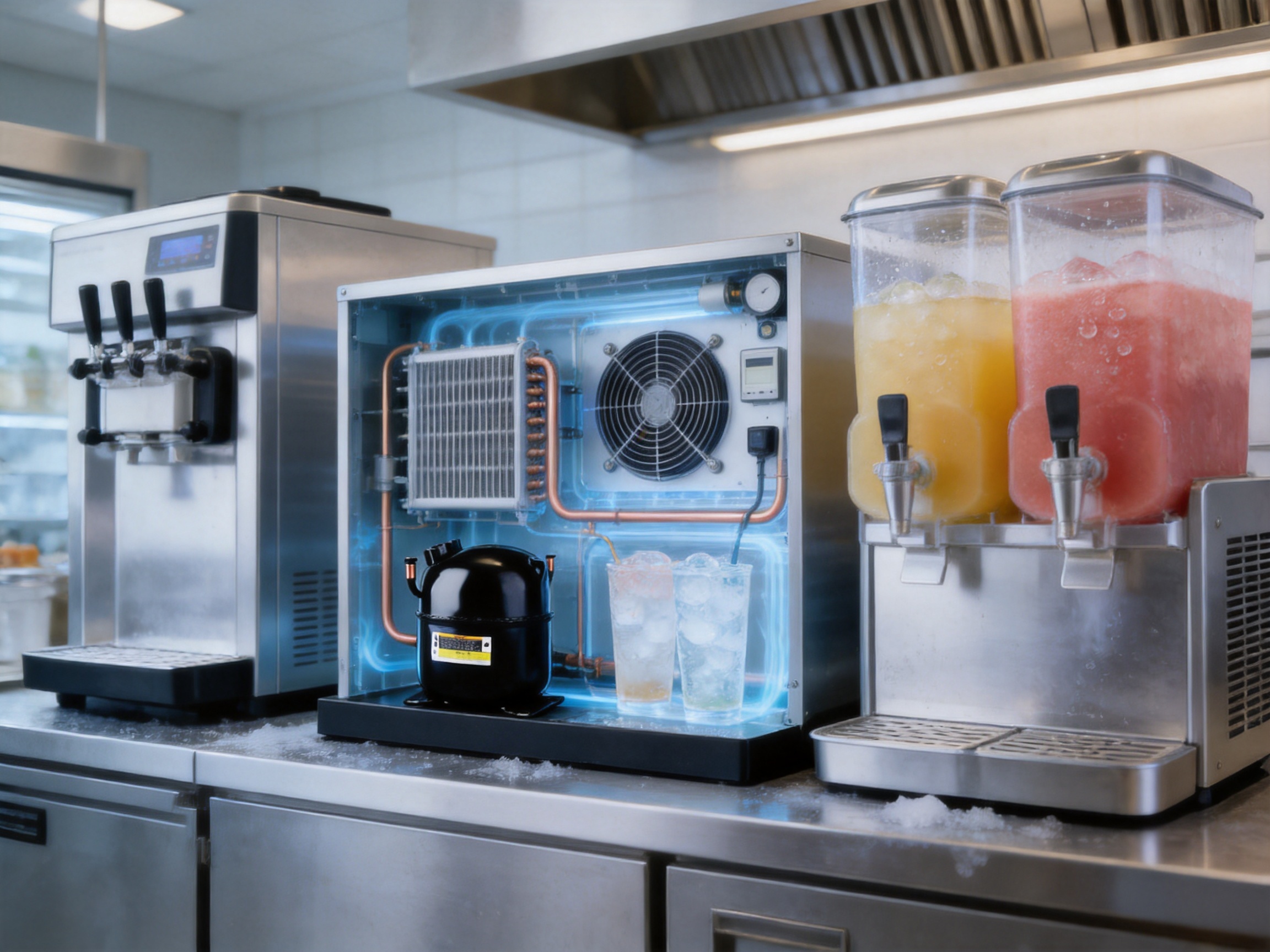
The component is suitable for integration into a range of commercial cold drink equipment when the technical parameters are correctly matched. Potential applications include commercial juice dispensers, cold beverage dispensers, slush machines, selected ice cream machines, refrigeration cabinets, and other foodservice appliances that require dependable cooling.
4.1 Juice dispensers
Commercial juice dispensers are commonly used in restaurants, hotels, cafeterias, buffet areas, convenience stores, and beverage shops. They must maintain a pleasant serving temperature while remaining visually attractive and easy to operate. A low-noise compressor can improve the environment around the service counter, while efficient refrigeration can support stable product temperature during extended operation.
In a juice dispenser, the refrigeration system may need to cool the beverage container, a surrounding bath, or another heat-transfer arrangement. The appropriate compressor depends on the machine’s volume, temperature target, heat load, and circulation design. Integration should therefore be based on the complete equipment drawing and operating conditions.
4.2 Slush machines
Slush machines create and maintain a partially frozen beverage texture. Their refrigeration systems may operate under demanding conditions because the product must remain within a controlled consistency range. The compressor must be matched with the evaporator, barrel design, agitator, control system, and intended ambient temperature.
Stable and responsive refrigeration can help support a consistent product texture. Low vibration is also valuable because slush machines contain moving elements and are often positioned in customer-facing locations. A smooth-running compressor can contribute to a more refined overall machine experience when combined with suitable mechanical design.
4.3 Commercial ice cream equipment
Commercial ice cream machines can require significant refrigeration capacity and reliable operation during repeated production cycles. The compressor may be used in a system that cools a freezing cylinder, hopper, or other product area. Since ice cream equipment can operate under high demand, the compressor selection process must account for product load, ambient temperature, duty cycle, and heat rejection.
Using a recognized compressor platform can help equipment manufacturers develop a more dependable refrigeration architecture. However, the machine must still be engineered and tested as a complete product. Product viscosity, scraper design, thermal insulation, sanitation procedures, and control logic all influence the final result.
4.4 Compact refrigeration cabinets and beverage stations
Cold drink cabinets and beverage stations often have limited internal space. Their refrigeration systems must deliver useful capacity while fitting within a compact equipment structure. Low noise and low vibration are particularly important because these cabinets may be installed under counters, behind service areas, or in retail displays.
An appropriately selected compressor can support compact equipment design while maintaining the operating characteristics expected in professional foodservice environments. The condenser airflow path and service access should be considered during the equipment design stage to prevent avoidable maintenance problems.
5. Engineering and Integration Considerations
A compressor should never be selected only by physical size or nominal power. Correct application engineering is necessary to achieve reliable performance. OEM customers and service organizations should review the complete operating requirements before placing an order.
5.1 Cooling capacity and operating range
The required cooling capacity depends on the internal volume, insulation, product load, ambient conditions, heat generated by motors or lighting, frequency of dispensing, and desired pull-down time. A compressor that is too small may run continuously without reaching the target condition. One that is too large may cycle excessively or create control and temperature-management challenges.
The evaporating and condensing temperatures must also be considered. Commercial beverage appliances may operate across different temperature ranges, and the selected compressor must be suitable for the intended refrigeration duty. Performance data should be reviewed for the actual design conditions rather than relying on a single nominal rating.
5.2 Electrical compatibility
Voltage, frequency, starting characteristics, current draw, overload protection, wiring, and control interfaces should be confirmed before integration. Commercial equipment may be manufactured for different regional electrical standards, and the compressor configuration must be compatible with the target market.
Spelor serves global foodservice markets and provides OEM and ODM support based on drawings or requirements. This type of cooperation allows electrical and mechanical details to be discussed during product development rather than discovered after production begins.
5.3 Ventilation and heat rejection
Even an efficient compressor must reject heat through the condenser. The equipment cabinet should provide adequate airflow, appropriate fan operation, and sufficient clearance around the condenser. Poor ventilation can increase condensing pressure, reduce cooling performance, increase energy use, and shorten component life.
Installation location is also important. Machines positioned near ovens, fryers, direct sunlight, or poorly ventilated corners may face much higher thermal loads than expected. Application guidance should account for realistic operating conditions instead of laboratory conditions alone.
5.4 Controls and sensors
Intelligent compressor operation depends on compatible control design. Sensors, thermostats, electronic controllers, protection devices, and software settings must work together. The controller should be configured to maintain the intended product temperature while avoiding unnecessary compressor starts and stops.
Control logic also affects energy efficiency and service life. Short cycling, excessive defrosting, incorrect sensor placement, and poorly adjusted temperature differentials can undermine the advantages of a quality compressor. Commissioning should therefore include functional checks under representative operating conditions.
5.5 Refrigerant circuit design
The compressor must be compatible with the refrigerant and oil used in the system. Tubing diameter, circuit length, suction-line insulation, expansion-device selection, charge quantity, and leak prevention all affect performance. The refrigeration circuit should be cleaned, evacuated, charged, and tested according to professional procedures.
Because the compressor is not sold as an independent consumer product, its value depends on correct system integration. Customers should provide sufficient technical information when requesting a replacement or customized solution. This helps reduce the risk of incompatibility and supports a more efficient procurement process.
6. Manufacturing Strengths Behind the Product
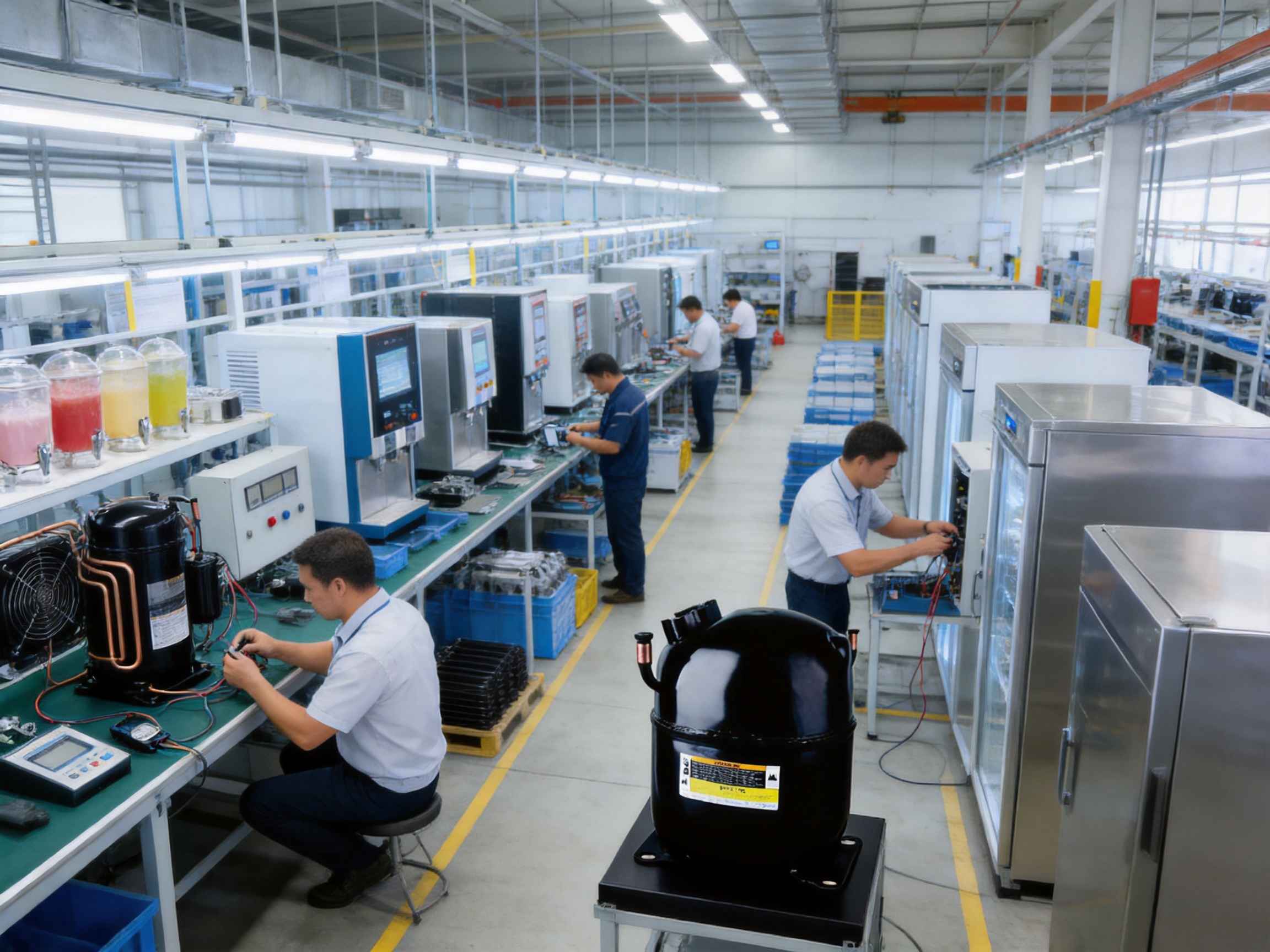
The compressor is supported by the broader manufacturing capabilities of Spelor Electrical Appliances (Zhejiang) Co., Ltd. The company is a professional manufacturer integrating design, research and development, manufacturing, sales, and service. Its operations are based in modern production facilities covering more than 60,000 square meters.
This scale supports a coordinated approach to commercial equipment development. Instead of treating sales, engineering, production, and after-sales service as separate activities, the company can connect these functions throughout the product life cycle. Such integration is valuable for OEM and ODM projects where product requirements may involve mechanical design, refrigeration performance, appearance, packaging, documentation, and delivery planning.
6.1 Broad commercial equipment experience
Spelor’s product range includes ice cream machines, juice dispensers, fried ice cream machines, refrigeration cabinets, slush machines, flake ice machines, cooking equipment, griddles, fryers, insulation products, barbecue equipment, and buffet solutions. This broad portfolio gives the company experience across several areas of professional foodservice equipment.
Experience across multiple machine categories can strengthen compressor application work because many refrigeration challenges are interconnected. A design team familiar with beverage dispensers, frozen dessert equipment, refrigeration cabinets, and ice machines can better understand differences in heat load, cleaning requirements, space limitations, user behavior, and service access.
6.2 Design and research capability
Commercial equipment development begins with understanding the customer’s application. This may include a drawing, a target specification, a market requirement, an existing product that needs improvement, or a request for a customized configuration. The design and research process can then address refrigeration capacity, cabinet arrangement, controls, appearance, materials, operating convenience, and manufacturing feasibility.
For compressor-integrated equipment, early design coordination is especially important. The compressor location affects service access, airflow, piping length, vibration transmission, and overall cabinet dimensions. Integrating these considerations at the design stage is more effective than attempting to correct them after the equipment has entered mass production.
6.3 Production organization
A modern production facility supports repeatable manufacturing through defined processes, organized work areas, assembly control, inspection procedures, and coordination between production and quality teams. Repeatability is essential for commercial equipment because customers often purchase multiple units and expect consistent performance across a fleet.
Production organization also supports OEM and ODM customers that require stable appearance, consistent dimensions, standardized packaging, and predictable delivery. When a component such as a compressor is incorporated into a larger machine, assembly consistency helps protect the reliability of the complete refrigeration system.
6.4 Quality-focused manufacturing philosophy
Quality in commercial refrigeration is not limited to visual appearance. It includes component matching, assembly accuracy, electrical safety, refrigerant circuit integrity, temperature performance, noise behavior, vibration control, and serviceability. A quality-focused manufacturer considers these factors throughout design, production, inspection, and customer support.
Testing and inspection should be aligned with the intended use of the machine. Commercial foodservice equipment may face long operating hours, frequent cleaning, repeated loading, transportation between locations, and variable ambient conditions. A manufacturing process that recognizes these realities can produce equipment better suited to professional use than a process designed only for occasional household operation.
7. OEM and ODM Advantages for Global Customers
Many foodservice equipment buyers need more than a standard product. They may require a particular voltage, cabinet dimension, control interface, logo treatment, packaging format, operating temperature, or combination of functions. Spelor’s OEM and ODM capability allows customers to discuss these requirements with a manufacturer that has experience in commercial refrigeration and foodservice equipment.
7.1 Development based on drawings or requirements
Some customers have complete technical drawings, while others begin with a concept, product photograph, performance target, or market specification. A flexible supplier should be able to communicate at different stages of product maturity. Spelor provides customized solutions based on drawings or requirements, allowing cooperation to begin from either a detailed engineering package or a broader commercial objective.
For compressor-related projects, useful information may include the appliance type, internal volume, target temperature, ambient temperature, refrigerant, electrical supply, condenser arrangement, product load, expected duty cycle, and installation environment. The more complete the information, the more effectively the compressor and the overall equipment can be evaluated.
7.2 Product customization
Customization may involve external dimensions, component layout, operating controls, product labeling, packaging, accessories, or performance targets. In some cases, the customer may need a replacement component for an existing equipment platform. In other cases, the compressor may be integrated into a new machine under development.
The “not sold separately” positioning helps clarify that this product is intended for professional integration and service use. It is not a general-purpose consumer replacement item to be installed without technical evaluation. This approach supports safer and more reliable application management.
7.3 Flexible logistics and payment solutions
International foodservice equipment projects often involve different shipment quantities, delivery schedules, import requirements, and payment arrangements. Spelor provides flexible logistics and payment solutions as part of its one-stop service approach. These commercial capabilities can be important for distributors, project contractors, equipment brands, and chain operators.
Reliable logistics planning is especially valuable when compressors are included in a broader equipment order. Coordinating components, finished machines, spare parts, packaging, and documentation can simplify procurement and reduce administrative work for the customer.
7.4 After-sales maintenance support
Commercial refrigeration equipment must remain operational after installation. When a machine serves customers every day, downtime can affect sales, product quality, labor planning, and brand reputation. Dependable after-sales communication helps operators identify problems, arrange replacement parts, and maintain equipment more effectively.
Spelor offers after-sales maintenance support as part of its service structure. This support can assist customers with troubleshooting, component replacement, operating questions, and maintenance coordination. The exact service process depends on the project, product type, location, and warranty terms.
8. Total Cost of Ownership
The value of a commercial compressor should be assessed over the complete operating life of the equipment. A low purchase price may appear attractive, but it can be outweighed by high energy consumption, excessive noise, repeated service calls, difficult installation, or premature replacement.
A more efficient compressor may help reduce electricity expenses. Low-noise and low-vibration operation may improve the environment for customers and employees. Intelligent control may support more balanced operation under changing conditions. Reliable manufacturing and service support may reduce the operational impact of unexpected problems.
Total cost of ownership also includes installation time, commissioning, spare parts availability, cleaning access, maintenance labor, transportation, and disposal. For an equipment manufacturer, these factors influence warranty exposure and customer satisfaction. For an operator, they influence profitability and the ability to keep the machine in service.
| Cost-of-ownership factor | How compressor selection may influence it | What should be evaluated |
|---|---|---|
| Energy use | Efficient refrigeration can reduce electrical demand | Operating hours, load profile, ambient temperature, and system efficiency |
| Product consistency | Stable cooling supports predictable beverage conditions | Temperature recovery, control accuracy, and appliance design |
| Acoustic comfort | Low-noise operation can improve the customer environment | Compressor sound, fan sound, cabinet resonance, and installation location |
| Mechanical reliability | Low vibration may reduce stress on nearby components | Mounting, piping, transport conditions, and cabinet construction |
| Service requirements | Suitable components can simplify maintenance and replacement | Access, documentation, spare parts, and technical support |
| Equipment lifespan | Correct matching can reduce unnecessary operating stress | Duty cycle, thermal conditions, protection devices, and cleaning |
| Business continuity | Reliable cooling helps reduce disruption caused by equipment failure | Service response, replacement planning, and preventive maintenance |
9. Installation, Commissioning, and Maintenance
Even a high-quality compressor requires correct installation. The refrigeration circuit should be assembled by qualified personnel using appropriate tools and procedures. Tubing should be routed to avoid unnecessary vibration, sharp bends, stress, and contact with surfaces that could create noise or wear.
9.1 Installation practices
The compressor should be mounted according to the equipment design. Mounting hardware should be secure, but excessive rigidity or incorrect fastening may transmit vibration into the cabinet. Service clearance should be maintained around the compressor and related components so that inspections and repairs can be performed efficiently.
Electrical connections should be checked for correct voltage, frequency, polarity where applicable, grounding, protective devices, and control compatibility. Refrigerant connections should be clean and secure. The circuit should be properly evacuated and charged according to the approved system specification.
9.2 Commissioning checks
Commissioning should confirm startup behavior, operating current, suction and discharge conditions, cabinet temperature, product temperature, condenser airflow, fan operation, control cycling, sound, and vibration. Tests should be performed under conditions that represent actual use as closely as possible.
Operators should also confirm that the equipment recovers appropriately after product loading or repeated dispensing. A machine that performs well when empty may behave differently under a full commercial load. Recording baseline measurements during commissioning can help identify future changes in performance.
9.3 Preventive maintenance
Regular maintenance is essential for preserving refrigeration efficiency. Condensers should be kept clean, airflow paths should remain unobstructed, door seals and cabinet insulation should be checked, and electrical connections should be inspected according to the equipment maintenance schedule.
Operators should pay attention to changes in sound, vibration, temperature stability, cycling frequency, and energy consumption. These changes may indicate a dirty condenser, fan problem, refrigerant issue, control fault, mounting problem, or another condition requiring service.
Preventive maintenance is especially important in foodservice environments because grease, dust, moisture, sugar, and food residue may accumulate around equipment. A clean and properly ventilated refrigeration system generally has a better opportunity to maintain efficient operation.
10. Choosing a Supply Partner
For international buyers, supplier selection involves more than reviewing a product image or a single technical specification. The supplier should be able to communicate clearly, understand the application, support customization, manage production, coordinate logistics, and provide after-sales assistance.
Spelor’s combination of manufacturing scale, product breadth, engineering experience, and service capability makes it a suitable partner for customers seeking commercial refrigeration and foodservice equipment solutions. The company’s factory-based structure supports communication between design, production, quality, sales, and service teams.
A supply partner should also be able to clarify whether a component is intended for standalone purchase or professional integration. In this case, the compressor is not sold separately as a consumer item. This helps ensure that procurement decisions are made with the complete equipment system in mind.
10.1 Questions to discuss before ordering
Customers should provide the intended appliance type, target market, power supply, operating temperature, ambient conditions, refrigerant requirements, cooling capacity, installation limitations, and expected quantity. If replacing an existing compressor, photographs, nameplate data, wiring information, and system history can be useful.
For an OEM or ODM project, the discussion may also include cabinet dimensions, controls, product appearance, branding, packaging, certifications, delivery schedule, spare parts, and service expectations. Early communication reduces the risk of delays and helps the manufacturer evaluate feasibility before production begins.
11. Recommended Application Workflow
A structured workflow can improve the results of compressor integration and commercial equipment development.
Step 1: Define the application
Identify whether the compressor will be used in a juice dispenser, slush machine, ice cream machine, beverage cabinet, or another commercial cooling appliance. Define the product temperature, volume, operating hours, and expected user environment.
Step 2: Establish technical conditions
Confirm the power supply, refrigerant, ambient temperature, evaporating and condensing conditions, required cooling capacity, condenser arrangement, and control method. This information creates the basis for proper component matching.
Step 3: Review the complete system
Evaluate the compressor together with the evaporator, condenser, expansion device, piping, insulation, fans, sensors, controller, cabinet, and mounting arrangement. System compatibility is more important than any isolated specification.
Step 4: Confirm customization requirements
Discuss dimensions, labeling, packaging, documentation, accessories, performance targets, and delivery requirements. If the project is based on drawings, provide the latest revision and identify any critical dimensions or interfaces.
Step 5: Test and validate
Conduct performance testing under representative load and ambient conditions. Check temperature stability, recovery, energy behavior, sound, vibration, electrical operation, and service access before approving mass production.
Step 6: Plan service and spare parts
Prepare maintenance instructions, replacement procedures, and spare-part planning. A clear service strategy helps protect equipment uptime after delivery.
12. Frequently Asked Questions
Q1: Is this compressor sold as a standalone consumer product?
No. It is positioned as an optional component and spare part for suitable commercial cold drink appliances. It should be selected and installed as part of a compatible refrigeration system by qualified personnel.
Q2: Which types of equipment may use this compressor?
Potential applications include commercial juice dispensers, cold beverage appliances, slush machines, selected ice cream equipment, refrigeration cabinets, and other foodservice cooling systems. Final suitability depends on capacity, temperature range, electrical configuration, refrigerant, and system design.
Q3: What are the main advantages of the compressor?
The principal advantages include efficient refrigeration technology, low-noise operation, low-vibration characteristics, intelligent response to changing operating conditions, and an environmental performance focus. These features are intended to support stable, economical, and comfortable commercial equipment operation.
Q4: Can the compressor be used to replace an existing unit?
It may be considered for replacement when the technical requirements are compatible. Customers should provide the original compressor information, equipment model, refrigerant details, power supply, operating conditions, and any relevant system data before ordering.
Q5: Why is system matching important?
A compressor works as part of a refrigeration circuit. If it is not matched with the evaporator, condenser, expansion device, refrigerant, controls, and cabinet design, the final appliance may experience poor cooling, high energy use, noise, excessive cycling, or reliability problems.
Q6: Does low-noise compressor operation eliminate all equipment noise?
No. Overall sound also comes from condenser fans, evaporator fans, refrigerant flow, cabinet panels, pumps, agitators, and mounting surfaces. A low-noise compressor provides a useful foundation, but the complete appliance must be designed and installed for acoustic performance.
Q7: How does intelligent control help commercial equipment?
Intelligent control can adjust operating behavior in response to changes in ambient conditions and refrigeration demand when compatible sensors and controls are used. This may support temperature stability and energy-conscious operation. The actual result depends on the complete control system.
Q8: What information should be supplied for an OEM or ODM inquiry?
Useful information includes the appliance type, drawings or photographs, target temperature, cooling capacity, internal volume, power supply, refrigerant, ambient conditions, cabinet dimensions, controls, quantity, destination market, packaging, and delivery requirements.
Q9: What manufacturing capabilities does Spelor provide?
Spelor integrates design, research and development, manufacturing, sales, and service. Its more than 60,000-square-meter modern production facilities support commercial refrigeration, kitchen, buffet, and related foodservice equipment. The company also provides customization, logistics coordination, payment solutions, and after-sales maintenance support.
Q10: Why work with a manufacturer experienced in several foodservice categories?
A broad product portfolio provides experience with different cooling loads, cabinet structures, customer environments, cleaning requirements, and service conditions. This wider perspective can support more practical compressor integration and more complete equipment solutions.
Q11: How can energy performance be maintained after installation?
Keep condensers clean, maintain adequate ventilation, check door seals and insulation, avoid overloading the machine, confirm correct control settings, and arrange qualified preventive maintenance. A well-selected compressor still requires proper system care.
Q12: Can Spelor provide complete equipment rather than only components?
Yes. Spelor manufactures a broad range of commercial refrigeration, kitchen, buffet, and foodservice equipment. Customers can discuss either a component-related requirement or a complete OEM and ODM equipment project based on drawings or application needs.
13. Conclusion
The compressor is a critical element in every commercial cold drink appliance. Its influence extends beyond basic cooling capacity to include energy consumption, temperature stability, noise, vibration, environmental performance, service life, and customer experience.
The Embraco refrigeration compressor for commercial cold drink appliances provides a technology-focused option for equipment manufacturers and professional service applications. Its efficient refrigeration characteristics, low-noise and low-vibration design, intelligent control potential, and environmental positioning make it suitable for integration into properly engineered commercial beverage systems.
Its value is further strengthened by Spelor’s manufacturing capabilities. With more than 60,000 square meters of modern production facilities and a product portfolio covering refrigeration, kitchen, buffet, and foodservice equipment, Spelor can support customers beyond the supply of an individual component. The company combines product development, manufacturing, customization, logistics, and after-sales service into a coordinated supply solution.
For buyers, the most important step is to evaluate the compressor as part of the complete appliance. Proper application data, system matching, qualified installation, commissioning, and preventive maintenance are essential. When these factors are managed correctly, the compressor can contribute to dependable commercial cooling, improved operating efficiency, a quieter service environment, and long-term business value.
References
1. Product information supplied for the Embraco refrigeration compressor for commercial cold drink appliances.
2. Manufacturer information supplied for Spelor Electrical Appliances (Zhejiang) Co., Ltd.
3. General refrigeration engineering principles concerning vapor-compression systems, compressor selection, heat transfer, controls, and preventive maintenance.
4. General commercial foodservice equipment design practices concerning energy efficiency, acoustic performance, ventilation, serviceability, and equipment integration.
5. General OEM and ODM manufacturing practices for commercial refrigeration, kitchen equipment, buffet equipment, and global foodservice applications.
Product: Embraco Refrigeration Compressor for Commercial Cold Drink Appliances(Not sold separately)

For exclusive deals and latest offers, sign up by entering your email address below.


-
spelor@spelor.com
-
+86-576-85229688
-
No.528, Changxi Road, Linhai City, Zhejiang Province, China
Commercial Refrigeration Equipment Manufacturer China
Copyright © 2025 by Spelor Electrical Appliances (Zhejiang) Co., Ltd. Rights Reserved.
