


 中文简体
High-Efficiency Refrigeration Compressors for Commercial Cold Drink Appliances
Admin 2026-09-27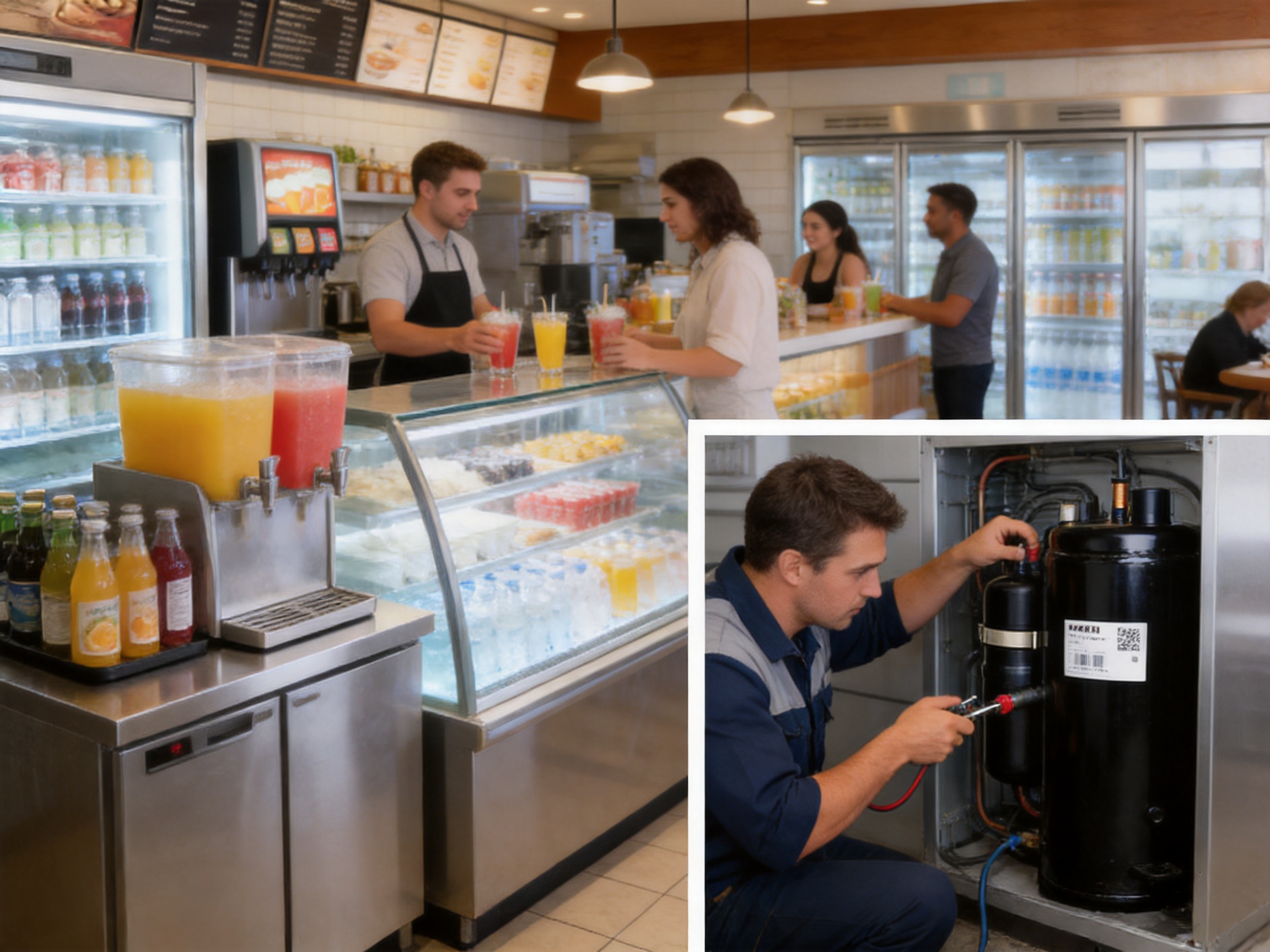
Commercial cold drink appliances depend on a stable refrigeration system to preserve beverage quality, maintain serving temperatures, and support reliable daily operation. At the center of that system is the refrigeration compressor. Although it is often hidden inside a cabinet, dispenser, cooler, or beverage service unit, the compressor determines much of the equipment’s cooling speed, energy consumption, operating stability, and service life.
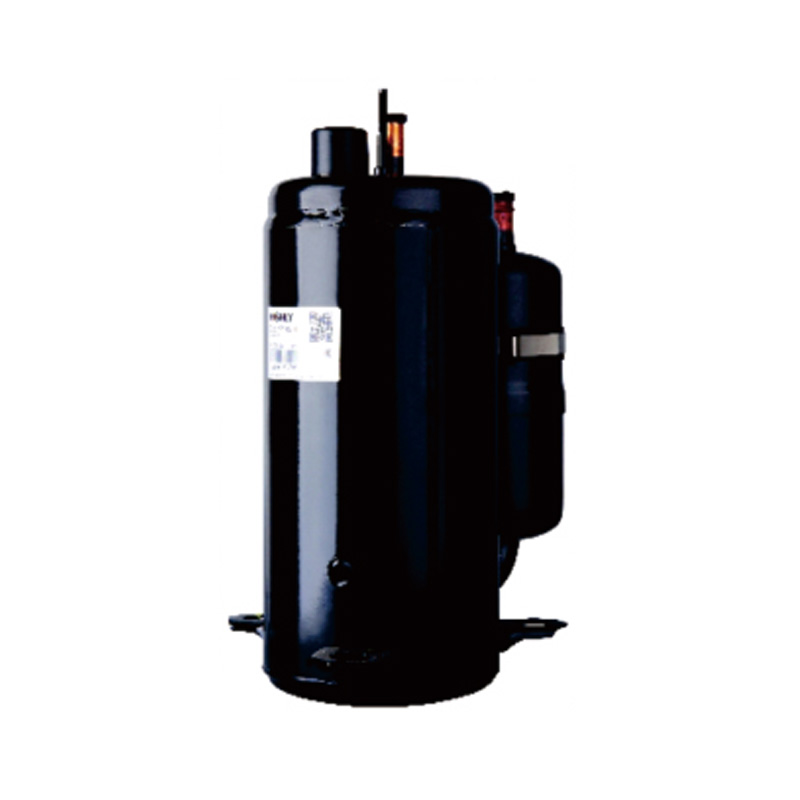
The Hitachi refrigeration compressor for commercial cold drink appliances is designed for professional beverage refrigeration applications where dependable cooling performance is essential. It is supplied as an optional component and spare part for suitable commercial equipment and is not sold separately as a standalone consumer product. Its intended role is to support commercial cold drink appliances manufactured, assembled, repaired, or customized according to specific refrigeration requirements.
With a focus on efficient cooling, durable operation, reduced energy consumption, and stable performance, this compressor is suitable for a broad range of beverage-related refrigeration systems. It can support applications such as commercial juice dispensers, chilled beverage machines, cold drink cabinets, beverage display equipment, and other foodservice appliances that require dependable temperature control.
For buyers, equipment manufacturers, distributors, and service providers, selecting a suitable compressor is not simply a matter of choosing a familiar component. The compressor must be compatible with the appliance design, refrigerant system, electrical conditions, operating environment, condenser and evaporator configuration, and expected usage pattern. Professional selection and integration are therefore essential to achieving the best result.
Why the Compressor Matters in Commercial Beverage Refrigeration
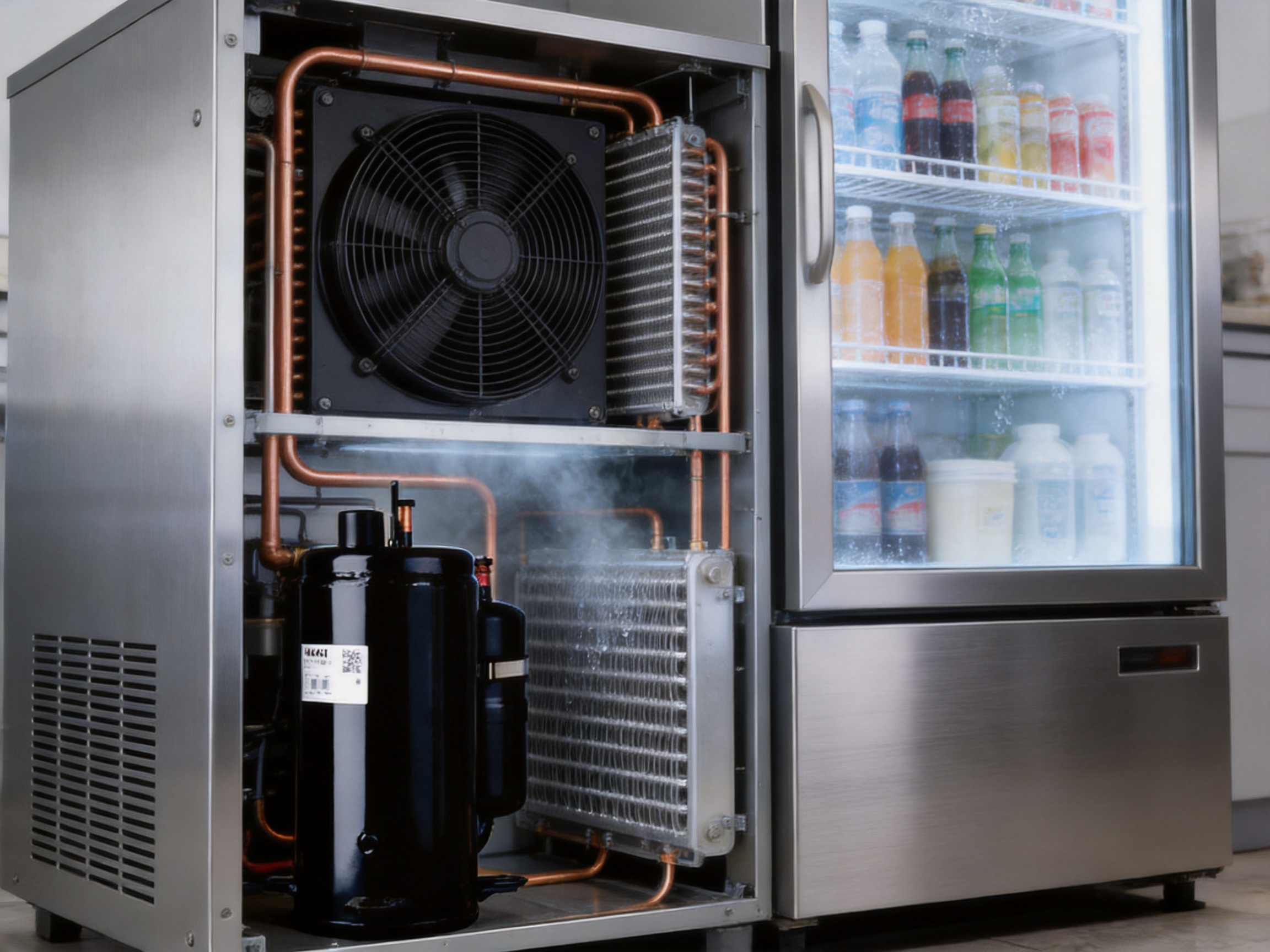
A refrigeration compressor is the driving component of the vapor-compression refrigeration cycle. It compresses low-pressure refrigerant vapor from the evaporator and transfers it toward the condenser at a higher pressure and temperature. This process enables the refrigerant to release heat and continue circulating through the system.
In a commercial cold drink appliance, the compressor works together with the condenser, expansion device, evaporator, fan system, insulation, thermostat, and control components. If any of these parts are poorly matched, the complete appliance may experience slow cooling, excessive energy consumption, unstable temperatures, high noise, or shortened service life.
Commercial beverage equipment is often exposed to demanding conditions. It may operate for many hours each day, serve a continuous flow of customers, and repeatedly recover from door opening, beverage dispensing, product loading, or ambient temperature changes. A compressor used in this environment must therefore provide consistent performance rather than only short-term cooling power.
A well-selected compressor helps the appliance achieve several important objectives:
• Rapid temperature reduction after startup or product loading.
• Stable maintenance of the target beverage temperature.
• Reliable operation during long working cycles.
• Efficient use of electricity during normal refrigeration demand.
• Reduced risk of temperature fluctuation that may affect beverage quality.
• Lower mechanical and maintenance pressure on the refrigeration system.
• Longer useful life when properly installed and operated.
For commercial users, these benefits directly influence operating cost, customer satisfaction, product presentation, and equipment availability.
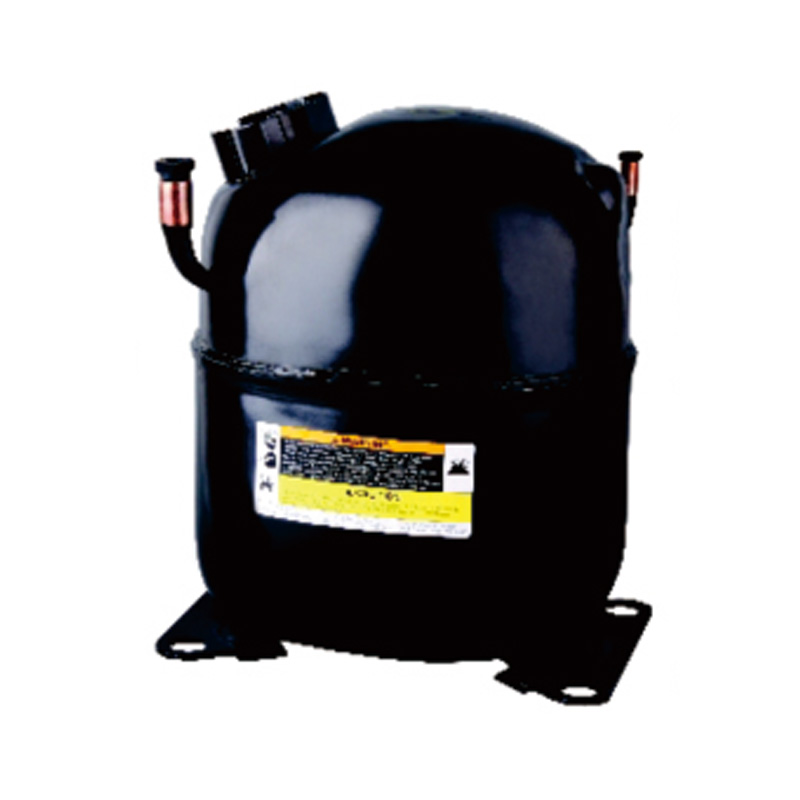
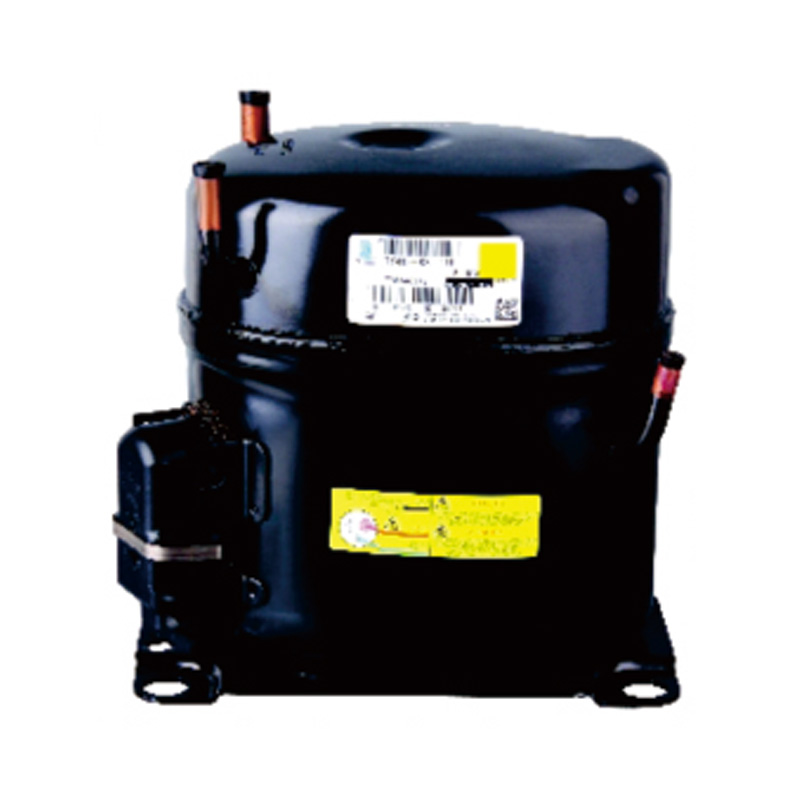
Hitachi Refrigeration Compressor for Commercial Cold Drink Appliances(Not sold separately)
Product Overview
The Hitachi refrigeration compressor is positioned as a professional component for commercial cold drink appliances. It is included within the category of optional components and spare parts, allowing suitable equipment projects to use a reliable compressor solution during original assembly, replacement, maintenance, or customized production.
The product is particularly relevant to manufacturers and suppliers of beverage refrigeration equipment. It may be considered when developing or servicing machines that require compact, dependable, and efficient refrigeration performance. Because refrigeration systems vary significantly, the final compressor model must be selected according to the technical requirements of the specific appliance.
Typical factors that need to be checked include cooling capacity, operating voltage, frequency, refrigerant type, displacement, starting characteristics, condenser arrangement, evaporator load, ambient temperature, cabinet volume, and duty cycle. These requirements should be confirmed by qualified technical personnel before integration.
The compressor is not sold separately as a general-purpose finished appliance. Instead, it is provided as part of a commercial equipment solution or as a suitable spare component for relevant systems. This approach helps ensure that the compressor is matched with the complete refrigeration design rather than being treated as an isolated part.
Designed for Beverage Refrigeration Applications
Cold drink equipment has different requirements from many other refrigeration products. Beverage appliances may need to cool liquids quickly, preserve consistent serving temperatures, and operate in environments such as cafés, restaurants, convenience stores, bars, supermarkets, hotels, institutions, and fast-food outlets.
In juice dispensers and similar appliances, cooling performance must remain stable while beverages are repeatedly dispensed and replaced. In cold drink cabinets, the system must recover efficiently after doors are opened or new products are added. In commercial beverage displays, the compressor must support a suitable balance between cooling output, cabinet temperature, energy consumption, and operating noise.
A compressor selected for these applications should therefore provide dependable refrigerant circulation, efficient heat transfer support, and stable operation over extended periods. The Hitachi compressor is intended to meet these practical needs when integrated into a properly designed commercial refrigeration system.
Core Performance Advantages
Efficient Cooling Capacity
One of the most important advantages of the compressor is its ability to support efficient cooling in commercial beverage equipment. Efficient cooling capacity allows the refrigeration system to reduce temperature within a reasonable time after startup, product loading, or periods of frequent use.
Rapid temperature reduction is valuable in foodservice environments because beverage equipment may need to become operational quickly at the beginning of a business day. It is also useful during busy periods when product turnover is high and the appliance experiences repeated thermal loads.
Efficient cooling does not mean that the compressor should be oversized for the appliance. Oversizing can cause unnecessary cycling, uneven temperature control, and inefficient operation. The best results are achieved when the compressor capacity is correctly matched to the evaporator, condenser, cabinet insulation, ambient conditions, and expected product load.
Stable Temperature Maintenance
Commercial beverage refrigeration requires more than an initial drop in temperature. The appliance must maintain a stable operating range throughout the service period. A compressor with dependable operating characteristics helps the complete refrigeration system respond to changes in load and maintain suitable cooling performance.
Stable temperature control protects beverage quality and improves the user experience. Drinks that are consistently chilled are more attractive to customers and easier for staff to serve. Stable operation also helps reduce unnecessary compressor cycling and limits excessive temperature swings within the cabinet or beverage tank.
The compressor works together with the appliance’s thermostat or electronic controller. When the system is correctly configured, the controller can regulate operation according to actual cooling demand. This supports a practical balance between cooling performance and energy use.
Low Energy Consumption
Energy consumption is a major concern for commercial foodservice operators. Beverage appliances may run for long periods, and even a small improvement in refrigeration efficiency can produce meaningful savings over the life of the equipment.
The compressor is designed with efficiency and lower energy consumption in mind. Its contribution to energy savings depends on correct system matching, proper refrigerant charging, adequate condenser ventilation, effective insulation, and suitable control settings. A high-quality compressor cannot compensate for an inefficient cabinet or a poorly designed refrigeration circuit, but it can provide a strong foundation for an efficient appliance.
Lower energy consumption can reduce operating expenses and support more sustainable equipment operation. It may also help limit heat generation in the installation area, which is useful in compact commercial kitchens, beverage counters, and enclosed service spaces.
Durability for Commercial Duty
Commercial equipment is expected to deliver reliable service over an extended operating life. A compressor used in a professional appliance must tolerate repeated starts, long operating cycles, changing thermal loads, and the demanding conditions found in foodservice environments.
The Hitachi compressor is designed with durability in mind. Reliable construction can help reduce the frequency of component replacement and minimize interruptions to business operations. For equipment owners, this contributes to lower maintenance costs and better long-term value.
Durability also depends on installation quality and routine care. The compressor must be installed according to the appliance design, with suitable electrical protection, adequate ventilation, clean heat-transfer surfaces, and appropriate refrigerant handling. Regular inspection of the condenser, fans, wiring, controls, and system pressure is equally important.
Intelligent Operating Control
The compressor system features an intelligent control concept that can adjust operating conditions according to actual requirements. In a properly engineered appliance, this helps the refrigeration unit respond to variations in temperature, product load, ambient conditions, and usage frequency.
Automatic adjustment can improve operating stability because the compressor does not need to function under the same conditions at all times. During periods of high demand, the system can support stronger cooling activity. When the target temperature has been reached and the load is lower, the control system can help reduce unnecessary operation.
The exact control method depends on the appliance architecture, electrical configuration, and refrigeration controller. Equipment manufacturers should confirm compatibility during the design stage and ensure that the compressor, control board, sensors, and protection devices work together as intended.
Advantages Compared with Less Suitable Alternatives
Commercial buyers often compare a recognized refrigeration compressor with lower-cost alternatives. Price is important, but the purchase decision should also consider performance consistency, energy consumption, service requirements, compatibility, and total ownership cost.
More Consistent Performance
Low-cost compressors may appear attractive when evaluated only by purchase price. However, inconsistent cooling output or unstable operating behavior can create additional costs after installation. The appliance may need longer cooling cycles, experience greater temperature fluctuations, or require more frequent service.
A compressor selected for professional beverage refrigeration offers a stronger basis for predictable equipment performance. Consistency is especially important for manufacturers that need to produce multiple units with similar operating characteristics. It can also make troubleshooting easier because the component’s expected behavior is better defined.
Better Energy Management
Commercial appliances operate over many hours, which means energy efficiency should be evaluated over the product lifecycle rather than at the time of purchase only. A compressor designed with efficient operation in mind can help the complete machine reduce unnecessary electricity usage when properly integrated.
Compared with unsuitable or poorly matched alternatives, an efficient compressor may help reduce the frequency and duration of high-load operation. This can lower running costs, improve operating stability, and support the user’s environmental objectives.
Reduced Maintenance Pressure
Frequent compressor-related problems can lead to service calls, replacement costs, product loss, and equipment downtime. Reliable component construction helps reduce the likelihood of avoidable failures, although all refrigeration systems still require proper maintenance.
For distributors and equipment manufacturers, dependable components can also reduce warranty pressure and improve customer satisfaction. When a commercial beverage appliance performs reliably, the user can focus on serving customers rather than managing repeated technical interruptions.
Suitable for Professional Integration
A commercial refrigeration compressor should be viewed as part of an engineered solution. Its value increases when it can be integrated with the manufacturer’s cabinet design, control system, condenser, evaporator, and electrical protection strategy.
Professional integration distinguishes a suitable commercial component from a generic replacement that may fit physically but fail to meet the system’s actual performance requirements. Before purchase, technical teams should verify all relevant specifications and confirm that the proposed compressor is suitable for the intended appliance.
Application Areas
Commercial Juice Dispensers
Juice dispensers require reliable cooling to maintain the serving quality of beverages throughout the day. The compressor supports the refrigeration system that cools beverage tanks, circulation paths, or related cold zones, depending on the design of the dispenser.
In high-traffic locations, juice dispensers may experience frequent dispensing and replenishment. The refrigeration system must recover from these changes without excessive temperature fluctuation. A stable compressor helps support continuous service and consistent beverage presentation.
Cold Drink Cabinets
Commercial cold drink cabinets are commonly used in restaurants, cafés, convenience stores, hotels, supermarkets, and institutional facilities. They may be designed for bottled beverages, cans, prepared drinks, or other packaged products.
The compressor supports the cabinet’s ability to cool stored products and maintain a suitable internal environment. Correct selection is especially important when the cabinet has large glass doors, frequent opening, high ambient temperature, or heavy daily turnover.
Commercial Beverage Display Equipment
Display equipment must combine product visibility with dependable refrigeration. Glass panels and frequent access can increase the thermal load, so the refrigeration system needs sufficient capacity and stable operation.
A properly selected compressor can help the display unit recover after door opening and support a consistent temperature for the products inside. The final performance will also depend on door seals, insulation, airflow, condenser cleanliness, and control settings.
Slush and Frozen Beverage Equipment
Slush machines and frozen beverage appliances have specialized refrigeration requirements. Their cooling load, viscosity control, cylinder design, and operating cycle may differ from those of a standard beverage cooler.
When used in a compatible design, a suitable compressor can support the refrigeration function of frozen beverage equipment. However, the system must be evaluated carefully because freezing applications may require different capacity, refrigerant, evaporator arrangements, and control logic than ordinary cold drink appliances.
Foodservice Refrigeration Systems
Commercial kitchens, snack shops, bars, fast-food chains, and buffet operations often use multiple types of refrigeration equipment. A dependable compressor component can support the manufacturer’s broader equipment portfolio when matched correctly to each application.
Using a reliable component platform can also simplify procurement, maintenance planning, and spare-parts management. Nevertheless, each appliance model should be assessed individually to ensure that the compressor specification is correct.
Manufacturing Strength and Production Capability
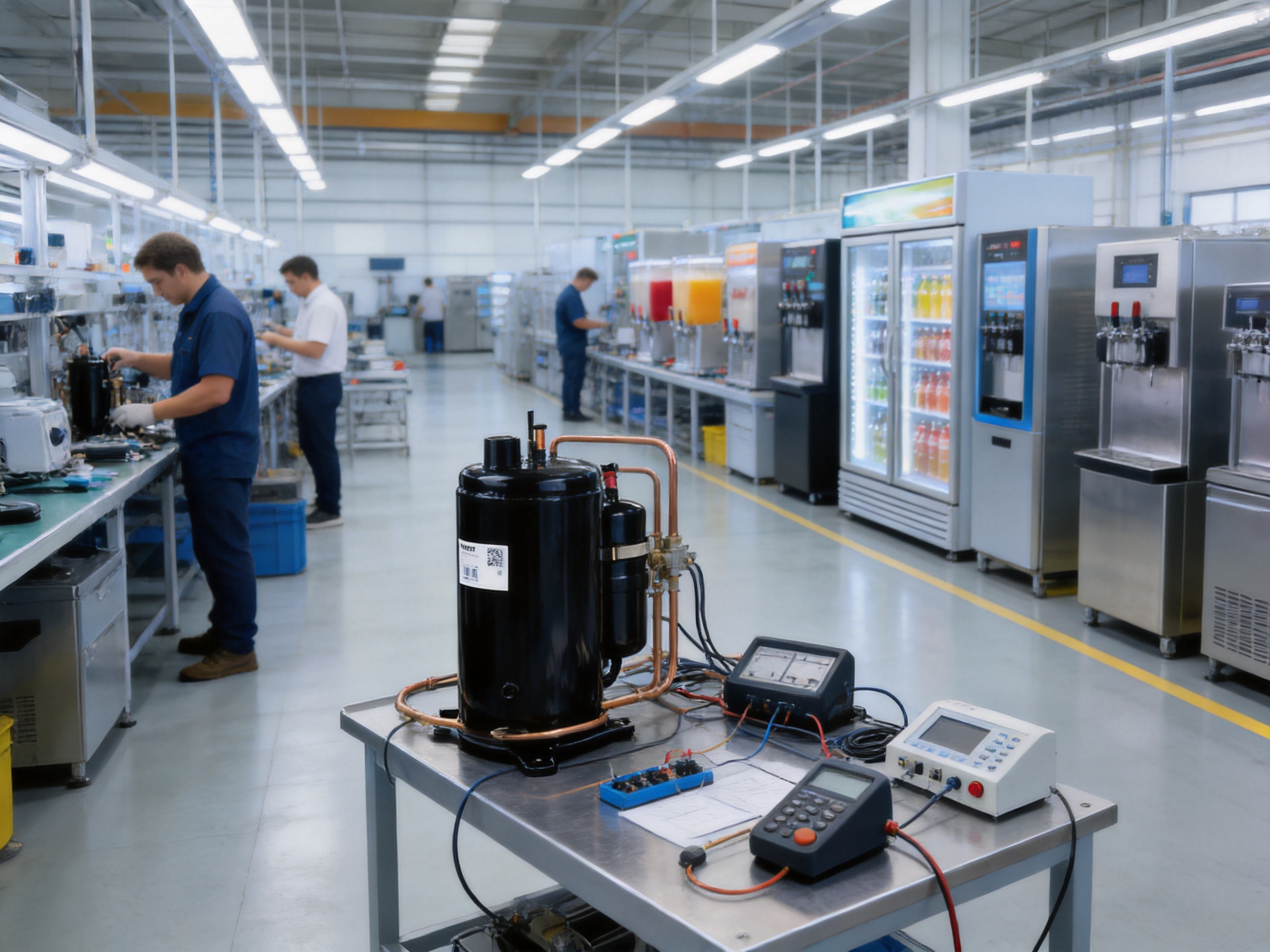
The performance of a compressor is important, but the quality of the finished commercial appliance also depends on the manufacturer’s ability to design, assemble, test, and support the complete system. Spelor Electrical Appliances (Zhejiang) Co., Ltd. is a professional manufacturer integrating design, research and development, manufacturing, sales, and service.
The company operates more than 60,000 square meters of modern production facilities. This scale provides a substantial foundation for commercial refrigeration and foodservice equipment manufacturing. It supports organized production planning, product development, component management, assembly operations, quality control, and customer service.
Spelor’s product scope includes commercial refrigeration equipment, kitchen equipment, buffet equipment, ice cream machines, juice dispensers, fried ice cream machines, refrigeration cabinets, slush machines, flake ice machines, cooking equipment, griddles, fryers, insulation products, barbecue equipment, and buffet solutions.
This broad product range creates practical experience across several related foodservice applications. The company can understand how refrigeration, food preparation, display, storage, and service requirements interact in real commercial environments.
Integrated Design and Development
An integrated design and development capability is valuable when a customer needs more than a standard component. Commercial equipment buyers may require a specific cabinet size, control configuration, cooling performance, appearance, electrical standard, or installation method.
By combining research and development with manufacturing experience, the company can evaluate the complete equipment system rather than focusing on one isolated part. This supports better coordination between the compressor, refrigeration circuit, cabinet structure, controls, user interface, and service requirements.
For customers developing a new beverage appliance, the technical process may begin with drawings, performance objectives, or application requirements. The manufacturer can then review the proposed design, identify relevant component needs, and help determine a practical production solution.
Modern Production Facilities
Modern factory facilities help support repeatable production and more organized quality management. In commercial equipment manufacturing, production consistency is essential because distributors and project buyers expect different units from the same model to provide comparable performance.
Factory organization may include structured material preparation, controlled assembly processes, electrical inspection, refrigeration system handling, appearance inspection, functional testing, and final packaging. Each stage contributes to the reliability of the finished product.
For compressor-based appliances, particular attention should be paid to refrigeration circuit cleanliness, tubing connections, brazing quality, vacuum procedures, refrigerant charging, electrical wiring, controller installation, and operating tests. These areas have a direct effect on cooling performance and service life.
Quality-Oriented Assembly
A reliable compressor can only perform properly when the complete refrigeration system is assembled correctly. The manufacturer’s production process should therefore control not only the compressor itself but also the way it is installed and connected within the appliance.
Quality-oriented assembly helps reduce risks such as refrigerant leakage, restricted flow, loose electrical connections, inadequate airflow, incorrect sensor placement, and poor thermal contact. These problems may not always be visible during a basic appearance inspection, which is why functional testing is important.
Appropriate inspection and testing provide an additional level of confidence before the equipment reaches customers. They also help identify process problems early, allowing corrective action before products are shipped in larger quantities.
Flexible OEM and ODM Support
Spelor provides OEM and ODM services for commercial refrigeration and foodservice equipment. OEM projects may involve manufacturing equipment according to customer drawings, branding requirements, or established specifications. ODM projects may involve developing or adapting a product based on application needs and commercial objectives.
For compressor-based beverage appliances, customization may involve cabinet dimensions, refrigeration capacity, control functions, electrical requirements, external panels, internal layout, dispensing configuration, or packaging. The exact scope depends on the project and should be confirmed during technical discussions.
OEM and ODM support is especially useful for importers, distributors, chain stores, foodservice groups, and equipment brands that need differentiated products without building a complete factory infrastructure of their own.
Manufacturing and Quality Workflow
A dependable commercial beverage appliance is produced through a sequence of coordinated activities. The following workflow represents the practical stages that should be considered when integrating a refrigeration compressor into commercial equipment.
1. Requirement Review
The process begins with a review of the application. The manufacturer needs to understand the appliance type, cabinet volume, beverage load, target temperature, ambient conditions, duty cycle, electrical standard, refrigerant requirements, and expected operating environment.
This stage prevents component selection based only on physical dimensions or nominal power. A compressor that is suitable for one beverage appliance may not be suitable for another with a different temperature range or heat load.
2. Technical Matching
The compressor is then matched with the evaporator, condenser, expansion device, fans, insulation, thermostat, and control system. Engineers evaluate whether the refrigeration capacity and operating range are appropriate for the equipment design.
Technical matching also considers startup performance, pressure conditions, heat rejection, noise expectations, electrical protection, and service accessibility. Proper matching helps the system operate efficiently and reduces unnecessary stress on individual components.
3. Prototype and Design Verification
For a new or customized product, prototype evaluation may be required. The prototype can be checked for temperature reduction, temperature stability, energy consumption, operating noise, condensation, cabinet airflow, and recovery after door opening or product loading.
Testing at this stage can reveal design adjustments that are difficult to make after mass production begins. It also provides useful information for selecting control settings and confirming that the compressor works properly within the complete appliance.
4. Controlled Assembly
After the design is confirmed, the appliance enters the production process. The compressor and related refrigeration components are installed according to the approved technical drawings and process requirements.
Careful assembly is important for tubing arrangement, vibration control, electrical connections, airflow, and access for future maintenance. The refrigeration circuit should be handled in a way that minimizes contamination and protects system integrity.
5. Refrigeration System Inspection
Inspection may include checking connections, pressure conditions, vacuum performance, refrigerant charging, electrical continuity, protective devices, and compressor startup. These checks help confirm that the assembled system is ready for functional testing.
Inspection criteria should be established according to the appliance design and applicable customer or market requirements. Documentation can also support later traceability and after-sales service.
6. Functional Testing
Functional testing evaluates whether the equipment cools as expected and maintains stable operation. Test personnel may observe startup behavior, cooling time, operating current, temperature recovery, compressor cycling, fan performance, and abnormal noise or vibration.
The objective is not merely to confirm that the compressor turns on. The complete appliance must demonstrate suitable operation under conditions that represent its intended commercial use.
7. Final Inspection and Packaging
Before shipment, the equipment or component package should undergo final inspection. Appearance, labeling, accessories, documentation, electrical safety, and packaging protection should be checked.
Proper packaging is particularly important for refrigeration components because they may be exposed to vibration, impact, moisture, and repeated handling during transportation. Packaging should help protect the compressor and other equipment from damage before installation.
Important Selection Considerations
Customers should provide as much technical information as possible when requesting a compressor or commercial beverage refrigeration solution. The following factors can influence the correct selection.
| Selection Factor | Why It Matters | Information to Confirm |
|---|---|---|
| Appliance Type | Different machines have different cooling loads and operating cycles. | Juice dispenser, beverage cabinet, slush machine, display cooler, or other equipment. |
| Cooling Requirement | The compressor must provide suitable capacity for the target temperature and product load. | Target temperature, cabinet volume, beverage quantity, and recovery expectations. |
| Electrical Supply | Electrical incompatibility can prevent correct operation or damage the system. | Voltage, frequency, phase, starting conditions, and protection requirements. |
| Refrigerant System | The compressor must be compatible with the refrigerant circuit and operating range. | Refrigerant type, pressure range, oil requirements, and system configuration. |
| Ambient Conditions | High surrounding temperatures increase heat rejection and refrigeration demand. | Installation location, ventilation, seasonal temperature, and indoor or outdoor use. |
| Duty Cycle | Frequent operation and long working hours affect durability and energy use. | Daily operating hours, customer traffic, door opening frequency, and product turnover. |
| Control System | Proper control coordination supports temperature stability and efficient operation. | Thermostat, sensors, electronic controller, protection devices, and adjustment range. |
| Service Requirements | Accessible components make inspection and maintenance easier. | Installation position, replacement access, documentation, and spare-part planning. |
Cooling Capacity and Load
Cooling capacity should be calculated according to the actual thermal load rather than estimated from cabinet size alone. Product temperature, beverage volume, insulation, ambient temperature, door opening, lighting, fans, and internal heat sources all affect the requirement.
A qualified technical team should evaluate whether the compressor can meet both the pull-down requirement and the steady-state maintenance requirement. These two conditions may place different demands on the system.
Electrical Compatibility
Electrical supply varies between markets and installation locations. Voltage and frequency must be confirmed before the compressor is integrated into the appliance. Starting current and electrical protection should also be considered, particularly in commercial locations with multiple machines operating on the same circuit.
Correct wiring, grounding, overload protection, and control integration are necessary for safe operation. Installation should be completed by qualified personnel who understand commercial refrigeration equipment.
Ventilation and Heat Rejection
The condenser must release heat effectively. If the appliance is installed in a confined space or positioned too close to a wall, the surrounding temperature may increase and reduce refrigeration efficiency.
Airflow paths should remain clear, and condenser surfaces should be cleaned periodically. Poor ventilation can cause longer operating cycles, higher energy consumption, increased operating temperature, and unnecessary stress on the compressor.
Installation and Maintenance Recommendations
Correct installation is essential for obtaining the intended benefits of the compressor. The component should be installed according to the equipment design, technical documentation, and applicable safety requirements.
Professional Installation
Installation should be carried out by qualified refrigeration technicians. The technician should verify the compressor model, electrical rating, refrigerant compatibility, connection points, mounting arrangement, and control wiring before startup.
The refrigeration circuit should be protected from moisture and contamination. Tubing should be routed carefully to avoid excessive vibration, sharp bends, and contact with surfaces that could create noise or mechanical wear.
Condenser Cleaning
Dust and grease on the condenser reduce heat transfer. In commercial kitchens and foodservice environments, airborne grease and particles can accumulate quickly. Regular cleaning helps the condenser operate effectively and reduces the thermal burden on the compressor.
The cleaning interval depends on the installation environment and operating hours. Equipment located near cooking areas or in dusty spaces may require more frequent attention than equipment installed in a clean beverage counter.
Airflow Inspection
Fans, vents, and air channels should be checked regularly. Blocked vents or failed fans can cause heat buildup and lead to reduced cooling performance.
Staff should avoid storing products, boxes, or cleaning materials in front of ventilation openings. Adequate space around the equipment should be maintained according to the installation instructions.
Electrical Inspection
Electrical connections, power cords, protective devices, and control components should be inspected during routine service. Signs of overheating, looseness, corrosion, or insulation damage should be addressed promptly.
Unexpected electrical behavior should not be ignored. Continued operation under abnormal conditions may increase the risk of damage to the compressor or other refrigeration components.
Temperature Monitoring
Monitoring cabinet or beverage temperature can help identify problems before they become serious. A gradual increase in operating temperature may indicate a dirty condenser, blocked airflow, refrigerant issue, sensor problem, door seal failure, or compressor-related fault.
Keeping basic service records can help technicians identify changes in performance. Records may include temperature readings, cleaning dates, service actions, and unusual operating observations.
Total Value for Commercial Buyers
The value of a refrigeration compressor should be evaluated across the complete ownership cycle. The initial component price is only one part of the purchasing decision. Energy use, service frequency, downtime, replacement difficulty, product loss, and customer satisfaction can have a greater financial effect over time.
A reliable compressor can support a lower total cost of ownership by helping the appliance operate efficiently and reducing avoidable service interruptions. For commercial operators, consistent cooling also protects the value of the beverages being stored or served.
For distributors, a dependable component can support stronger product positioning and fewer after-sales complaints. For manufacturers, it can help improve equipment consistency and simplify the development of commercial beverage machines.
For OEM and ODM customers, cooperation with an experienced factory can reduce the complexity of sourcing multiple equipment categories from different suppliers. A company with capabilities in refrigeration, kitchen, buffet, and beverage equipment can provide broader support for foodservice projects.
Support for Global Foodservice Markets
Commercial foodservice markets vary in climate, electrical standards, customer preferences, installation conditions, and regulatory expectations. A flexible supplier should be able to communicate clearly about technical requirements and adjust the product solution accordingly.
Spelor supports customers with pre-sales consultation, product customization, flexible logistics and payment solutions, and after-sales maintenance. This one-stop service model is valuable for overseas buyers that need assistance from initial product selection through shipment and continued equipment support.
Pre-sales consultation helps clarify the application and identify the correct technical direction. Customization supports different project requirements. Logistics coordination helps organize delivery, while after-sales assistance supports maintenance and troubleshooting after installation.
Reliable communication is especially important for compressor-based equipment because a small difference in voltage, refrigerant, cabinet design, or cooling demand can affect system performance. Technical information should therefore be exchanged carefully and confirmed before production.
Why Choose an Integrated Equipment Manufacturer
Working with an integrated equipment manufacturer offers several practical advantages. The customer can communicate with a team that understands both the refrigeration component and the finished commercial appliance.
This reduces the risk of coordination problems between separate component suppliers, cabinet manufacturers, control system providers, and service teams. It can also make customization more efficient because product development, engineering, manufacturing, and support are connected within one organization.
An integrated manufacturer can evaluate whether the compressor is suitable for the actual machine, how it should be installed, what control logic is appropriate, and what service considerations should be included in the final design.
For large orders or long-term cooperation, an integrated factory may also help improve purchasing efficiency, production planning, product consistency, and spare-parts management.
Frequently Asked Questions
Is the compressor sold as a standalone consumer product?
No. The compressor is listed as an optional component and spare part for suitable commercial cold drink appliances and is not sold separately as a general standalone product. It should be supplied and integrated according to the technical requirements of the relevant equipment.
Which commercial appliances can use this compressor?
Potential applications include commercial juice dispensers, cold drink cabinets, beverage display equipment, and other suitable commercial refrigeration appliances. The final application depends on the compressor specification and the complete refrigeration system design.
Can the compressor be used for a customized beverage machine?
It may be considered for customized equipment when the technical requirements are compatible. The customer should provide information about cabinet dimensions, target temperature, cooling load, electrical supply, refrigerant system, operating environment, and duty cycle so that the technical team can evaluate suitability.
Does the compressor reduce energy consumption?
The compressor is designed with efficient cooling and lower energy consumption in mind. Actual energy performance depends on correct compressor selection, cabinet insulation, condenser design, ventilation, refrigerant charging, control settings, ambient temperature, and usage conditions.
Can it support long operating hours?
It is intended for commercial beverage refrigeration applications where reliable operation is required. Long-term performance depends on proper system design, correct installation, regular maintenance, clean condenser surfaces, adequate ventilation, and suitable electrical protection.
What information is needed before ordering?
Useful information includes the appliance type, cooling capacity requirement, target temperature, cabinet or tank volume, voltage, frequency, refrigerant type, ambient temperature, operating hours, control method, and installation conditions. Drawings or photographs of the existing equipment can also help with technical evaluation.
Can the manufacturer provide OEM or ODM services?
Yes. The company provides OEM and ODM support for commercial refrigeration and foodservice equipment. Projects may be based on customer drawings, technical requirements, product concepts, or specific market needs.
Does the company manufacture other foodservice equipment?
Yes. Its product range includes ice cream machines, juice dispensers, fried ice cream machines, refrigeration cabinets, slush machines, flake ice machines, cooking equipment, griddles, fryers, insulation products, barbecue equipment, buffet equipment, and related commercial solutions.
How can compressor service life be supported?
Service life can be supported through correct selection, professional installation, proper refrigerant handling, clean condensers, unobstructed airflow, stable electrical supply, regular temperature monitoring, and timely maintenance when abnormal noise, overheating, or cooling problems occur.
Can the compressor replace another model directly?
Direct replacement should not be assumed. Compatibility must be checked according to cooling capacity, refrigerant, voltage, frequency, mounting dimensions, pipe connections, operating pressure, control system, and the requirements of the complete refrigeration circuit.
Is technical consultation available before purchase?
Pre-sales consultation is available to help customers discuss application requirements, product customization, logistics, and technical coordination. Customers should provide complete information so that the proposed solution can be evaluated accurately.
Conclusion
The refrigeration compressor is one of the most important components in a commercial cold drink appliance. It influences cooling speed, temperature stability, energy consumption, maintenance requirements, and equipment service life.
The Hitachi refrigeration compressor for commercial cold drink appliances provides a professional option for suitable beverage refrigeration systems. Its key strengths include efficient cooling capacity, stable temperature support, durability-oriented design, lower energy consumption objectives, and intelligent operating control. These features can help commercial equipment manufacturers and users achieve dependable performance when the compressor is correctly matched and installed.
The value of the product is further supported by Spelor’s integrated manufacturing capabilities. With more than 60,000 square meters of modern production facilities and experience across refrigeration, kitchen, buffet, beverage, and foodservice equipment, the company can provide more than a component supply relationship. It can support design review, product development, OEM and ODM production, assembly, testing, logistics, and after-sales service.
For buyers seeking commercial refrigeration equipment or customized beverage solutions, the best approach is to evaluate the compressor as part of a complete system. Technical compatibility, factory capability, production quality, service support, and total ownership cost should all be considered before making a final decision.
When these factors are properly coordinated, a dependable compressor can become the foundation of a stable, efficient, and long-lasting commercial cold drink appliance.
References
1. General principles of vapor-compression refrigeration systems and commercial cooling cycles.
2. Commercial refrigeration equipment design practices for beverage storage and dispensing applications.
3. Technical guidance on compressor selection, refrigerant compatibility, and system capacity matching.
4. Best practices for condenser maintenance, ventilation, electrical protection, and refrigeration service.
5. Manufacturer-provided product information for refrigeration compressors used in commercial cold drink appliances.
6. Manufacturer-provided company information regarding commercial refrigeration, foodservice equipment, OEM, and ODM manufacturing capabilities.
Product: Hitachi Refrigeration Compressor for Commercial Cold Drink Appliances(Not sold separately)

For exclusive deals and latest offers, sign up by entering your email address below.


-
spelor@spelor.com
-
+86-576-85229688
-
No.528, Changxi Road, Linhai City, Zhejiang Province, China
Commercial Refrigeration Equipment Manufacturer China
Copyright © 2025 by Spelor Electrical Appliances (Zhejiang) Co., Ltd. Rights Reserved.
