


 中文简体
Soft Ice Cream Machine Control Valve Distributor With Plastic Handle: Design, Performance, and OEM Manufacturing Value
Admin 2026-11-10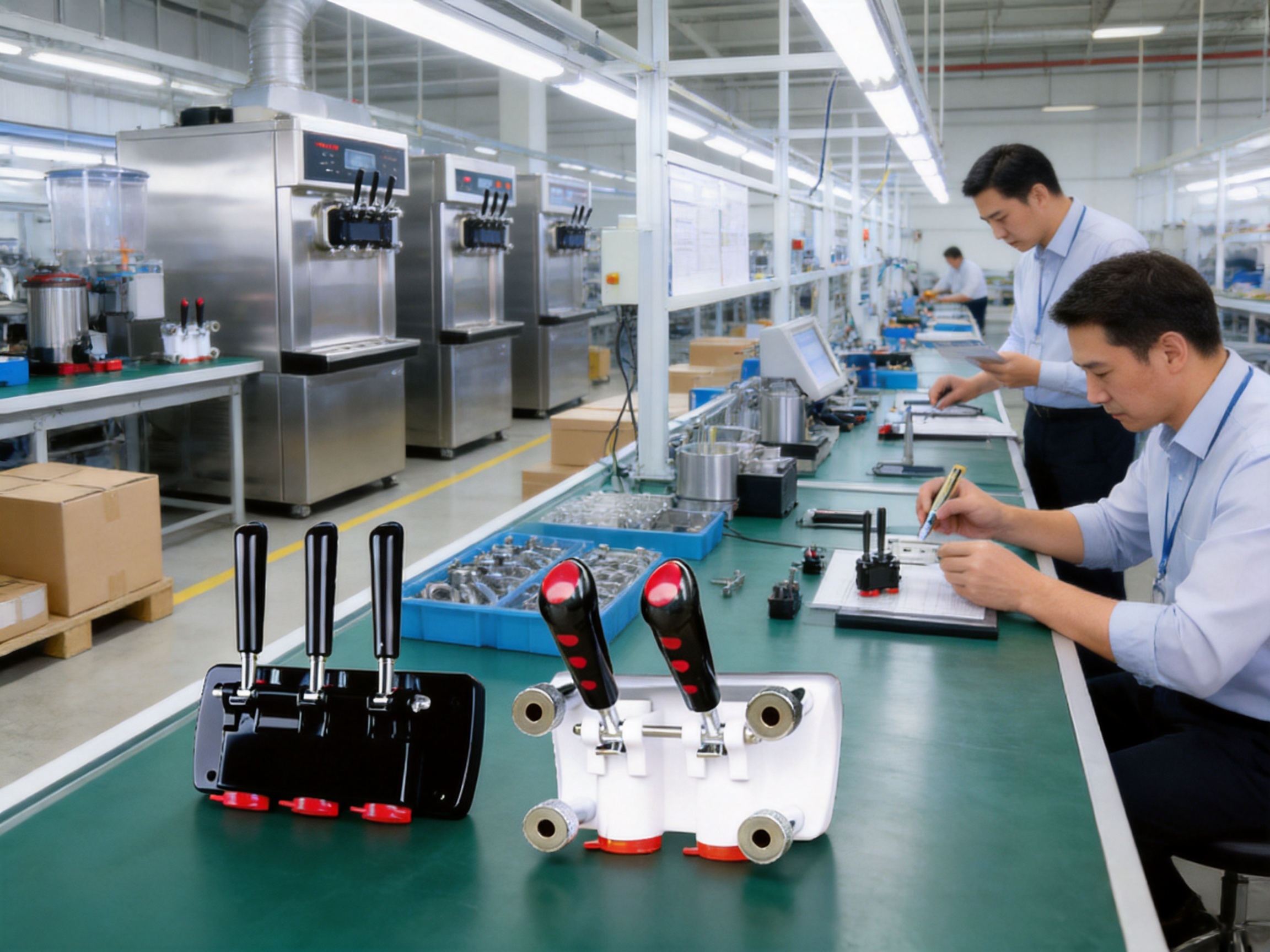
Reliable dispensing is one of the most important operating functions in a commercial soft ice cream machine. Customers expect a smooth serving experience, consistent portion control, and a clean presentation every time. Operators, meanwhile, need dispensing components that are easy to use, simple to maintain, and compatible with the working demands of a busy foodservice environment. The soft ice cream machine control valve distributor with plastic handle is designed to support these requirements by regulating the flow and distribution of soft ice cream through a manually operated valve assembly.
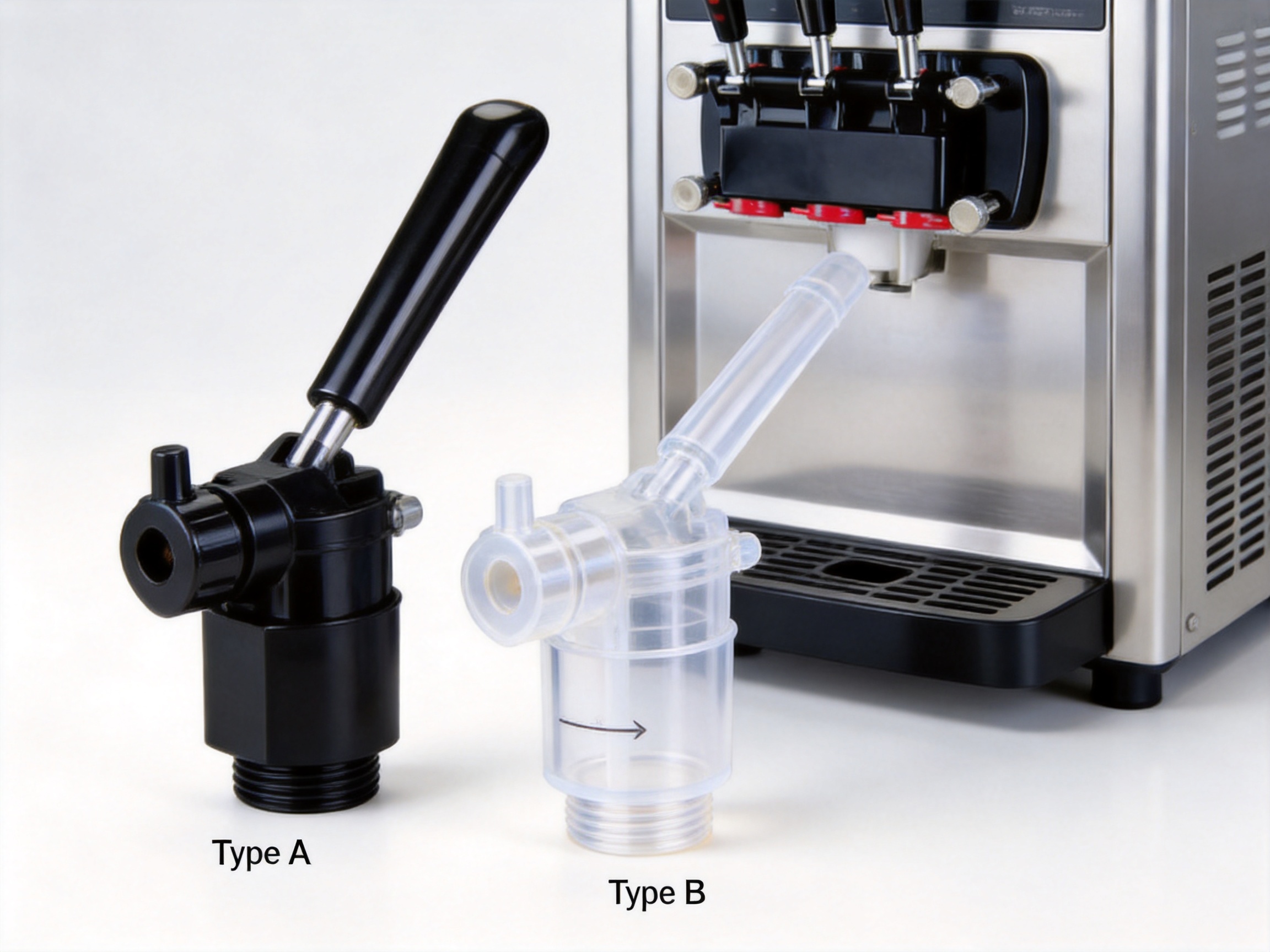
This component is supplied in two practical configurations. Type A features a black body with a longer plastic handle, while Type B is transparent and uses a shorter plastic handle. Both versions perform the same essential function: the operator rotates the handle to control the movement of soft ice cream from the machine toward the dispensing outlet. Their different visual designs and handle dimensions allow equipment builders, distributors, and commercial operators to select the configuration that best suits a particular machine design or operating preference.
Although compact in size, a control valve distributor has a direct effect on the usability and perceived quality of an ice cream machine. A valve that is awkward to operate can slow service and create unnecessary cleaning challenges. A clearly designed valve with a practical handle can make daily operation more intuitive, support repeatable dispensing, and simplify routine inspection. For these reasons, this part is an important consideration in the design, procurement, assembly, and maintenance of commercial soft ice cream equipment.
The component is identified as an optional component and spare part, and it is not sold separately. This supply arrangement is important for buyers to understand. It is intended to be included with, matched to, or supplied in connection with suitable commercial ice cream machine equipment rather than treated as a universal standalone replacement for every machine. Compatibility should therefore be confirmed according to the machine model, valve structure, connection arrangement, and application requirements before ordering.
Product Overview and Functional Purpose
A soft ice cream machine control valve distributor is the mechanism that manages product movement at the dispensing point. Inside a commercial ice cream machine, the frozen mix is prepared and held under controlled conditions before being directed toward the serving outlet. The control valve acts as a manually operated interface between the product passage and the dispensing nozzle. When the handle is moved or rotated, the internal passage changes position, allowing the operator to start, regulate, or stop the flow.
The distributor terminology reflects the component’s role in directing product through the outlet assembly. It is not merely a decorative handle or external cover. The handle is connected to the valve mechanism, and the body supports the internal flow path. During normal service, the operator uses the handle to dispense a measured amount of soft ice cream into a cone, cup, or other serving container.
Commercial equipment requires repeated operation throughout the day. A valve component must therefore be practical for frequent handling. The design presented here emphasizes a simple operating method, a straightforward structure, and an easy-to-understand visual form. These characteristics can be valuable in restaurants, snack shops, fast-food chains, cafés, bars, supermarkets, and institutional foodservice locations where staff members may need to serve customers quickly.
Because the component is associated with foodservice equipment, cleaning and maintenance are central to its value. The product information describes the dispensers as simple in design and easy to clean and maintain. A simple construction can reduce the number of complicated external features that collect residue and can help staff understand how to inspect the part. Nevertheless, cleaning procedures must always follow the instructions for the complete ice cream machine, including any requirements for disassembly, sanitization, lubrication, sealing components, and reassembly.
Two Practical Control Valve Configurations
Type A: Black Body with Longer Plastic Handle
Type A is the black version and is equipped with a longer plastic handle. The extended handle provides additional reach for manual operation and may be preferred where the machine’s front panel or dispensing arrangement benefits from a more prominent control point. A longer handle can also make the operating direction easier to recognize, especially when several machine functions are positioned close together.
The black appearance gives Type A a strong visual contrast against many stainless-steel or light-colored machine panels. This can help operators identify the dispensing control quickly during busy service periods. The dark body may also create a coordinated appearance with other black control elements, trim pieces, or protective components used in commercial equipment.
Type A is suitable for buyers who prioritize a longer grip, a clearly visible operating lever, and a traditional dark-colored valve assembly. As with all machine components, the actual suitability depends on the complete equipment design. The available space around the dispensing head, the direction of handle movement, and the required connection structure should be confirmed before selection.
Type B: Transparent Body with Shorter Plastic Handle
Type B is the transparent version and uses a shorter plastic handle. Its transparent or translucent appearance offers a different visual style and may allow the user to observe more of the component’s external form during inspection. The shorter handle creates a compact profile that may be useful where clearance at the front of the machine is limited or where a less prominent operating control is preferred.
The shorter handle can support a neat, compact appearance around the dispensing area. It may also be comfortable for operators who prefer a smaller movement when opening and closing the valve. However, handle comfort and operating clearance should be evaluated in the context of the complete machine, since the ideal handle length depends on the position of the valve, the surrounding panel, and the operator’s working posture.
Type B is a practical choice for applications requiring a transparent body, a shorter manual control, or a more compact external arrangement. Its inclusion as an alternative configuration gives equipment manufacturers and purchasing teams greater flexibility when matching the valve distributor to different ice cream machine models.
| Feature | Type A | Type B |
|---|---|---|
| Body appearance | Black | Transparent |
| Handle style | Longer plastic handle | Shorter plastic handle |
| Operating principle | Manual rotation to control product flow | Manual rotation to control product flow |
| Potential design preference | Prominent grip and strong visual contrast | Compact profile and transparent appearance |
| Typical application | Commercial soft ice cream machine dispensing assembly | Commercial soft ice cream machine dispensing assembly |
| Supply status | Optional component or spare part; not sold separately | Optional component or spare part; not sold separately |
Operating Principle and User Benefits
The control valve distributor operates through a simple manual action. When the handle is rotated, the valve’s internal flow path changes. In the open position, soft ice cream can move toward the dispensing outlet. In the closed position, the flow is interrupted. Depending on the specific machine structure, intermediate handle positions may influence the rate or amount of product being dispensed.
This manual principle offers several practical benefits. First, it gives the operator direct control over the serving process. Staff can begin and stop dispensing at the moment required without navigating a complicated electronic menu. Second, the mechanism is easy to understand, which can reduce training time for new employees. Third, the visible handle position provides an immediate indication of whether the dispensing path is open or closed.
In high-volume foodservice environments, the value of a component is often measured by how well it supports repetitive work. An operator may activate the valve hundreds of times during a busy shift. A practical handle shape and clear movement can help make this repetitive task more consistent. When used correctly, the valve can support controlled serving, reduce unnecessary product release, and help maintain a cleaner area around the machine outlet.
It is important to distinguish manual flow control from portion automation. The valve distributor itself does not replace an electronic portion-control system or a programmable dispensing system. Instead, it provides a mechanical interface that allows the operator to control the product flow manually. The final portion depends on handle operation, machine pressure, product consistency, nozzle design, and serving technique.
Advantages in Commercial Foodservice Applications
Simple Operation
The most direct advantage of this valve distributor is its simple operating method. A manual rotating handle is familiar to foodservice workers and does not require extensive technical instruction. This is particularly useful for businesses with rotating staff, seasonal employees, or multiple operators using the same machine throughout the day.
A clear control mechanism also helps reduce confusion during service. Operators can identify the dispensing control, move the handle, and observe the product flow. This straightforward interaction is appropriate for many commercial settings where speed and consistency are important.
Practical Cleaning and Maintenance
The product information emphasizes that the dispensers are easy to clean and maintain. Their uncomplicated external design can help staff perform regular wipe-downs and visual inspections. Since soft ice cream mix may accumulate around dispensing components, routine sanitation is essential for hygiene, product quality, and equipment reliability.
Cleaning should be approached as part of a complete machine procedure. Operators should not assume that wiping the visible surface is sufficient. The valve assembly, outlet, nozzle, sealing parts, and adjacent product-contact areas may all require attention according to the equipment manufacturer’s instructions. Correct disassembly and reassembly are also important because an incorrectly installed valve or seal can lead to leakage or poor operation.
Choice of Handle and Appearance
Offering two versions gives buyers more than one design solution. The black Type A with a longer handle may be suitable for machines that require a highly visible and easy-to-reach operating point. The transparent Type B with a shorter handle may suit compact layouts or customers who prefer a lighter visual appearance.
This choice can be valuable for original equipment manufacturers and distributors managing more than one machine design. Instead of redesigning the entire dispensing system around a single fixed style, the buyer can evaluate which valve configuration better supports a particular product series or front-panel arrangement.
Suitability for Repeated Commercial Use
The valve distributor is intended for commercial soft ice cream machine applications rather than occasional household use. Its purpose is aligned with equipment used in snack shops, fast-food operations, bars, supermarkets, institutional kitchens, and other professional service locations. In these environments, components must be selected with attention to repeated operation, cleaning frequency, operator convenience, and machine compatibility.
A component’s commercial value is not based only on its appearance. It must also integrate into the working rhythm of the equipment. A valve that can be easily identified, operated, checked, cleaned, and maintained contributes to a more efficient service process. This is particularly important when a machine serves several flavors or operates during extended business hours.
Comparison with Generic or Poorly Matched Alternatives
Many replacement components may appear similar at first glance, but visual similarity does not guarantee functional compatibility. A generic valve with an incorrect connection size, unsuitable internal passage, incompatible sealing arrangement, or unsuitable handle position may create operating problems. These problems can include leakage, restricted product flow, difficult operation, poor fit, or increased maintenance requirements.
The control valve distributor described here has the advantage of being positioned as a component for suitable commercial ice cream machine systems. When supplied as part of an equipment solution or matched spare-parts program, it can be evaluated together with the machine’s dispensing structure rather than selected only by external appearance. This system-based approach is generally more dependable than buying an unverified universal part.
Compared with an unnecessarily complex valve design, the simple manual construction can also make inspection more approachable. Fewer visible controls and a clear operating handle may reduce user confusion. In commercial equipment, simplicity is often a competitive advantage when it supports faster cleaning, easier staff training, and more efficient troubleshooting.
The two available forms provide another distinction from one-style alternatives. Some suppliers may offer only a single handle configuration, leaving the machine builder to adapt the surrounding design. The availability of a longer black-handled type and a shorter transparent-handled type allows the buyer to consider ergonomics and equipment appearance during the selection process.
However, responsible comparison requires more than claiming that one component is universally better than every alternative. The correct choice depends on machine design, product requirements, operating conditions, and maintenance procedures. The principal advantages of this product are its practical configuration options, clear manual function, commercial application, and support from an experienced foodservice equipment manufacturer.
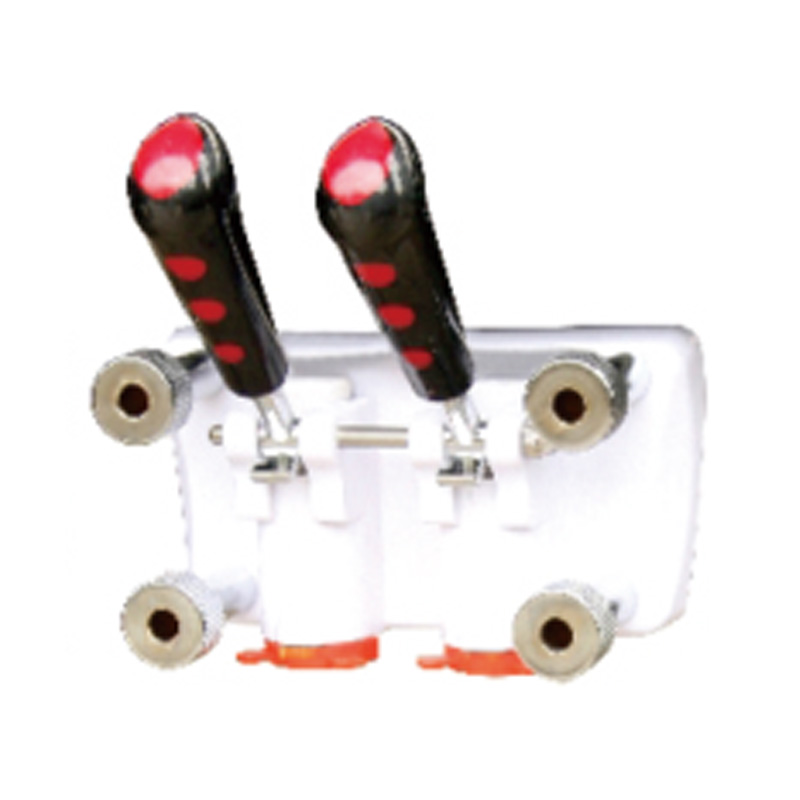
Soft Ice Cream Machine Control Valve Distributor With Plastic Handle(Not sold separately)
Manufacturing Strength Behind the Component
The value of a small machine component is closely connected to the manufacturing system behind it. Spelor Electrical Appliances (Zhejiang) Co., Ltd. is described as a professional manufacturer integrating design, research and development, manufacturing, sales, and service. This integrated structure is significant because it connects product development with production control, customer requirements, and after-sales support.
The company operates more than 60,000 square meters of modern production facilities. A facility of this scale can support coordinated activities such as product engineering, component sourcing, assembly, quality inspection, inventory management, packaging, and logistics. For commercial equipment buyers, manufacturing scale can contribute to more stable supply planning and the ability to support different product categories at the same time.
The company’s product range includes ice cream machines, juice dispensers, fried ice cream machines, refrigeration cabinets, slush machines, flake ice machines, cooking equipment, griddles, fryers, insulation products, barbecue equipment, and buffet solutions. This broad portfolio gives the manufacturer experience across several types of foodservice equipment. The control valve distributor benefits from being associated with a company that understands the operating context of ice cream machines rather than producing an isolated plastic accessory without knowledge of the complete application.
Design and Research Capability
Product design begins with understanding how a component will be used. For a control valve distributor, relevant design considerations include handle position, ease of rotation, external profile, connection structure, cleaning access, product-flow requirements, and integration with the dispensing head. A manufacturer with design and research capability can evaluate these factors as part of the larger machine system.
The two configurations demonstrate an application-oriented approach. The longer handle and black body of Type A create one operating and visual solution. The shorter handle and transparent body of Type B create another. Providing alternatives suggests that the manufacturer recognizes the importance of machine layout and user preference instead of treating every application as identical.
Design work should also consider repeatability. The valve must be produced in a way that allows the handle, body, and internal operating elements to work together consistently. When a component is used in commercial equipment, small variations can affect assembly, handle movement, fit, and maintenance. Engineering review and production feedback are therefore important parts of a reliable development process.
Manufacturing and Assembly Coordination
Integrated manufacturing allows design decisions to be assessed against production realities. Material selection, molding or forming considerations, component fit, assembly sequence, inspection points, and packaging requirements all influence the final result. A manufacturer that manages design and production together can identify potential assembly difficulties earlier than a company that only resells unrelated components.
For equipment manufacturers and distributors, this coordination can simplify procurement. Instead of managing multiple unrelated sources for machines and associated parts, buyers may be able to work with one supplier for a broader foodservice equipment program. This can support more consistent communication about product specifications, packaging, replacement requirements, and shipment planning.
The component itself is compact, but its quality depends on multiple stages. The body must be formed accurately, the handle must be fitted correctly, and the complete valve assembly must be checked for movement and application suitability. Production discipline is essential because a small component can affect the performance and customer perception of a much larger machine.
Quality-Oriented Production
The company describes its operating philosophy as user-oriented and quality-driven. For a commercial equipment manufacturer, this means quality should be considered across the product life cycle. It includes the initial design, material and component selection, production control, assembly, inspection, packaging, installation guidance, and after-sales maintenance.
For the control valve distributor, quality-oriented production should focus on practical performance characteristics. The handle should be properly fitted and comfortable to operate. The valve should be matched to the intended machine structure. The body should be free from visible manufacturing defects that could interfere with installation or cleaning. The complete assembly should be checked according to the manufacturer’s internal procedures before being supplied with the machine or as an approved component option.
Buyers may request detailed quality information according to their procurement standards. Depending on the project, this may include drawings, product specifications, sample approval, inspection arrangements, packaging requirements, and documentation for the complete machine. Clear communication is especially important when the component is not sold separately and must be supplied as part of a machine configuration or approved spare-parts program.
OEM and ODM Value for Equipment Buyers
The manufacturer offers OEM and ODM commercial refrigeration and foodservice equipment based on customer drawings or requirements. This capability is valuable for distributors, importers, chain stores, equipment brands, and project contractors that need more than an off-the-shelf product.
In an OEM arrangement, the customer may require a machine or component configuration to be produced according to an existing design, specification, or brand program. The control valve distributor can be considered within the complete dispensing system so that the handle style and body appearance align with the customer’s equipment design. For example, a buyer may prefer the black, longer-handle configuration across a particular product family or may request the transparent, shorter-handle configuration for a compact model.
In an ODM arrangement, the manufacturer contributes product-development knowledge and production capability to help create a solution based on the customer’s market requirements. This may involve reviewing the machine layout, operating preferences, product category, target market, packaging needs, and service expectations. The valve distributor is then considered as one element in a complete equipment solution rather than as an isolated part.
OEM and ODM projects require technical communication. Buyers should provide available drawings, machine model information, connection details, expected operating conditions, preferred handle configuration, quantity requirements, and applicable market standards. If drawings are not available, clear photographs, samples, dimensional information, or functional descriptions may help the engineering team evaluate the request.
The company’s one-stop service model includes pre-sales consultation, product customization, flexible logistics and payment solutions, and after-sales maintenance. This broad support can be advantageous for international buyers who need coordinated assistance from initial inquiry through delivery and long-term equipment use.
Installation and Compatibility Considerations
Because this control valve distributor is not sold separately, buyers should treat compatibility confirmation as an essential step in procurement. The component should be selected for the intended commercial soft ice cream machine, not simply ordered based on a general description such as “ice cream valve.” Different machines may use different connection structures, internal dimensions, sealing arrangements, handle positions, and dispensing assemblies.
Before placing an order, the buyer should confirm the machine model or project reference. If the request concerns a spare component, the original machine information should be supplied. The buyer may also need to confirm whether Type A or Type B is required, whether the complete valve assembly is included, and whether additional seals, fasteners, or related components are part of the delivery.
Installation should be performed by trained personnel or according to the machine manufacturer’s instructions. The valve must be fitted in the correct direction and secured properly. After installation, the operator should check handle movement, valve closure, product flow, and possible leakage under normal operating conditions. Any unusual resistance, looseness, leakage, or inconsistent flow should be investigated before the machine is returned to service.
It is also important not to force the handle beyond its intended range. Excessive force can damage the handle or internal mechanism. Operators should use the handle as designed and avoid using tools or extensions to obtain additional leverage. If the valve becomes difficult to operate, the machine should be inspected for residue, incorrect assembly, pressure-related issues, or worn sealing components.
Cleaning and Maintenance Guidance
Soft ice cream equipment requires disciplined cleaning because the product is a food substance and the dispensing area is exposed to frequent handling. The valve distributor should be included in the machine’s daily cleaning and sanitation routine when required by the equipment instructions. The precise procedure depends on the machine model, product-contact design, approved cleaning agents, and local food hygiene requirements.
At a general level, operators should first follow the machine’s shutdown and product-removal procedure. The valve area can then be cleaned using approved methods. Residue should not be allowed to dry around the handle, body, outlet, or adjacent seams. Cleaning staff should pay attention to areas where product may collect, while avoiding aggressive practices that could damage plastic surfaces or sealing elements.
Inspection is equally important. Staff should look for cracks, deformation, unusual discoloration, loose handles, damaged seals, or changes in operating resistance. Transparent Type B components may offer a convenient visual reference during inspection because the body’s appearance can make surface conditions easier to observe. Black Type A components also provide a clear, durable-looking external finish, but visual inspection should still be performed carefully under good lighting.
Maintenance schedules should be based on the complete machine’s service instructions rather than on assumptions about the valve alone. If the valve is removed for cleaning, it must be reassembled correctly. Any food-contact lubricant, seal replacement, or maintenance chemical should be approved for the application and used according to the equipment manufacturer’s guidance.
Proper maintenance offers several benefits. It supports hygiene, helps preserve smooth handle operation, reduces the risk of leakage, and extends the useful life of the dispensing assembly. It also allows operators to identify developing problems before they interrupt service.
Procurement Benefits for Distributors and Commercial Operators
For distributors, the control valve distributor can be included in a broader commercial equipment offering. The parent company manufactures multiple categories of foodservice equipment, including ice cream machines, juice dispensers, slush machines, refrigeration products, cooking equipment, and buffet solutions. This range may help distributors build a coordinated equipment portfolio for snack shops, cafés, restaurants, supermarkets, and institutional customers.
A broad product portfolio can also simplify communication with end customers. Buyers planning a new foodservice location may require several equipment categories at the same time. A supplier with integrated design, manufacturing, sales, and service capabilities can provide a more coordinated procurement experience. The valve component is then delivered as part of an appropriate machine solution rather than being sourced separately from an unknown spare-parts channel.
For commercial operators, the main benefit is operational fit. The correct valve configuration can contribute to easier daily service, more straightforward cleaning, and a more organized dispensing area. While the component is small compared with the full machine, it is directly handled by staff and directly associated with the customer-facing serving process.
For equipment brands, the component creates an opportunity to standardize a dispensing experience across a product line. The company can review the two handle options and determine which one best matches its machine appearance, operating position, and target market. When combined with OEM or ODM support, this can help create a more consistent equipment identity.
Application Environments
Snack Shops and Fast-Food Restaurants
Snack shops and fast-food restaurants often require quick dispensing and simple operator training. A manually operated valve with a clearly identifiable handle can support fast service during peak periods. The longer handle of Type A may be useful where operators need a prominent grip, while Type B may be suitable for a compact front-counter machine.
Cafés, Bars, and Dessert Counters
Cafés and bars may place greater emphasis on equipment appearance because the machine is visible to customers. The black Type A and transparent Type B offer different visual options. The choice can be coordinated with the counter design, machine housing, and overall presentation of the serving area.
Supermarkets and High-Volume Retail
Supermarkets may operate machines for extended service periods and require dependable cleaning routines between busy operating cycles. A practical valve distributor can support repeatable manual operation, while the manufacturer’s broader production and service capability may assist with equipment supply planning for multiple locations.
Institutional Foodservice
Schools, hospitals, hotels, and other institutions may value intuitive controls and straightforward maintenance. Staff members may work different shifts, so an easily understood manual valve can reduce training complexity. Compatibility and sanitation procedures remain essential, particularly where the machine is used by many operators.
Recommended Selection Process
Selecting the correct valve distributor should begin with the machine application. Buyers should identify the machine type, model, dispensing position, expected service volume, and maintenance program. The next step is to determine whether the longer black Type A or shorter transparent Type B better suits the equipment layout and operating preference.
The buyer should then confirm the technical fit with the supplier. Relevant information may include product photographs, existing component samples, machine drawings, valve dimensions, connection details, and the required quantity. Since the item is not sold separately, the buyer should also clarify how it will be supplied with the equipment or approved replacement package.
Sample evaluation can be useful for OEM and ODM projects. A sample allows the buyer to assess handle feel, visual appearance, installation position, clearance, and cleaning access. It also gives the manufacturer an opportunity to verify that the selected configuration works with the intended machine design before larger-scale production.
Procurement planning should include delivery timing, packaging, spare-parts expectations, and after-sales support. International customers may also need to discuss logistics, payment arrangements, labeling, documentation, and market-specific requirements. Early clarification can reduce delays and help ensure that the final equipment configuration meets the customer’s operational expectations.
| Procurement Step | Key Question | Why It Matters |
|---|---|---|
| Identify the machine | Which commercial soft ice cream machine will use the valve? | Prevents incompatible ordering. |
| Select the configuration | Is the longer black Type A or shorter transparent Type B preferred? | Matches the handle and appearance to the machine design. |
| Confirm technical details | Do the connections, dimensions, and internal arrangement match? | Supports correct installation and reliable operation. |
| Review samples or drawings | Can the component be evaluated before production? | Helps verify fit, clearance, appearance, and usability. |
| Clarify supply status | Will the component be included with the machine or approved spare-parts package? | Reflects the fact that it is not sold separately. |
| Plan service support | What cleaning, maintenance, and replacement guidance is required? | Supports long-term equipment operation. |
How the Product Supports Long-Term Equipment Value
Long-term equipment value depends on more than the initial purchase price. It includes ease of operation, serviceability, availability of support, compatibility with the machine, and the ability to maintain consistent performance over time. The control valve distributor contributes to these factors by providing a clear manual control point and a practical component structure.
A well-matched valve can help reduce avoidable service interruptions. When the handle is easy to operate and the assembly is maintained correctly, staff can continue serving product without unnecessary difficulty. When inspection is simple, early signs of wear or residue can be identified before they become larger problems.
The manufacturer’s integrated business model also supports long-term value. Design, research and development, production, sales, and service are connected within one organization. This can make it easier for customers to communicate technical questions, request customized configurations, discuss replacement needs, and plan future equipment purchases.
For international foodservice customers, responsive support is particularly important. Different markets may have different operating environments, service expectations, and procurement processes. A supplier that offers pre-sales consultation, customization, logistics solutions, and after-sales maintenance can help customers manage the complete equipment life cycle more effectively.
Frequently Asked Questions
What is a soft ice cream machine control valve distributor?
It is a manually operated component used to control and direct the flow of soft ice cream toward the dispensing outlet of a commercial ice cream machine. The operator rotates the plastic handle to open or close the valve and manage product dispensing.
What is the difference between Type A and Type B?
Type A is black and has a longer plastic handle. Type B is transparent and has a shorter plastic handle. Both versions perform the same basic flow-control function, but they offer different handle lengths and visual designs for different machine layouts and user preferences.
Is the control valve distributor sold as an independent spare part?
No. The product is identified as an optional component and spare part and is not sold separately. Buyers should confirm how it is supplied with the appropriate commercial ice cream machine, equipment configuration, or approved spare-parts arrangement.
Can this valve be installed on any soft ice cream machine?
Compatibility should not be assumed. The valve must match the machine’s connection structure, dimensions, internal flow arrangement, sealing system, and dispensing assembly. Buyers should provide the machine model or relevant technical information for confirmation before ordering.
Which type is better for a commercial machine?
Neither type is universally better. Type A may be preferred when a longer, more prominent handle and black appearance are desired. Type B may be preferred when a shorter handle, compact profile, and transparent appearance suit the machine better. The correct choice depends on the equipment design and operating requirements.
Is the component suitable for high-volume foodservice?
It is designed for use with commercial soft ice cream machine applications, including snack shops, fast-food operations, cafés, bars, supermarkets, and institutional foodservice environments. Actual performance depends on correct machine matching, installation, operation, cleaning, and maintenance.
How should the valve distributor be cleaned?
It should be cleaned as part of the complete ice cream machine’s approved sanitation procedure. Operators should follow the machine manufacturer’s instructions for shutdown, disassembly, cleaning agents, rinsing, sanitization, inspection, and reassembly. Residue should not be allowed to accumulate around the valve or dispensing outlet.
What should be checked before installation?
Buyers should check the machine model, valve dimensions, connection structure, handle type, clearance around the dispensing head, sealing arrangement, and whether the required assembly includes related parts. A sample or drawing review is recommended for customized or OEM projects.
Can the manufacturer support OEM or ODM projects?
Yes. The company offers OEM and ODM commercial refrigeration and foodservice equipment based on customer drawings or requirements. Buyers can discuss customized machine configurations, component preferences, production needs, logistics, and after-sales support.
What company capabilities support this product?
Spelor Electrical Appliances (Zhejiang) Co., Ltd. integrates design, research and development, manufacturing, sales, and service. It operates more than 60,000 square meters of modern production facilities and produces a broad range of commercial refrigeration, kitchen, buffet, and foodservice equipment.
Can the longer handle be used where space is limited?
The longer handle requires adequate operating clearance. If the machine has limited space around the dispensing area, the shorter Type B handle may be more suitable. The available clearance should be confirmed during machine design or installation review.
Why is compatibility more important than appearance?
A valve may look similar to another component while having different dimensions, connections, seals, or internal flow characteristics. Correct compatibility supports proper installation, smooth operation, effective closure, and reliable maintenance. Appearance should be considered together with technical fit.
Conclusion
The soft ice cream machine control valve distributor with plastic handle is a practical component for managing product flow in commercial ice cream equipment. Its simple manual operating principle, easy-to-understand design, and maintenance-oriented structure make it suitable for a wide range of foodservice applications. The two available configurations provide useful flexibility: Type A combines a black body with a longer plastic handle, while Type B combines a transparent body with a shorter plastic handle.
The product’s main competitive strengths are its functional simplicity, choice of handle configuration, commercial application focus, and ability to be matched with appropriate ice cream machine systems. It should not be treated as a universal standalone replacement, because it is an optional component or spare part that is not sold separately. Correct equipment matching, professional installation, and proper cleaning remain essential.
Its manufacturing value is supported by the capabilities of Spelor Electrical Appliances (Zhejiang) Co., Ltd. The company integrates product design, research and development, manufacturing, sales, and service, with more than 60,000 square meters of modern production facilities and experience across multiple foodservice equipment categories. This integrated foundation supports OEM and ODM cooperation, customized equipment requirements, coordinated procurement, and long-term after-sales service.
For distributors, equipment brands, and commercial operators, the valve distributor is best evaluated as part of a complete soft ice cream machine solution. When the configuration is correctly selected and properly maintained, this compact component can contribute to smoother daily operation, easier staff training, cleaner dispensing practices, and more dependable foodservice performance.
References
1. Product information supplied for the soft ice cream machine control valve distributor with plastic handle, including Type A and Type B configuration details.
2. Company information supplied for Spelor Electrical Appliances (Zhejiang) Co., Ltd., including manufacturing scope, facility scale, product categories, and integrated service capabilities.
3. Commercial foodservice equipment maintenance principles concerning routine cleaning, inspection, sanitation, and component compatibility.
4. General equipment-design principles for manual flow-control components used in commercial dispensing systems.
5. General OEM and ODM procurement practices for customized foodservice and commercial refrigeration equipment.
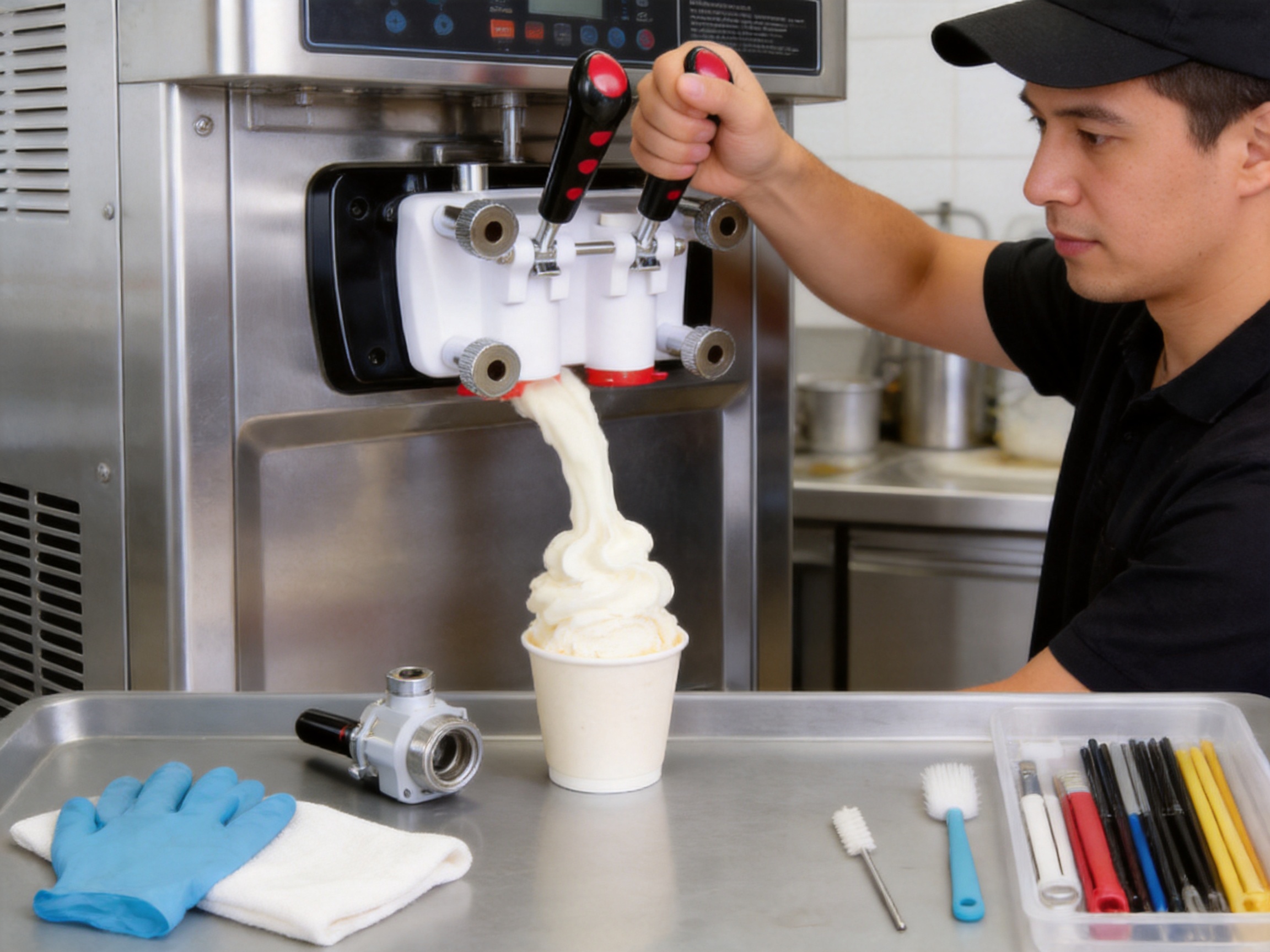
Product: Soft Ice Cream Machine Control Valve Distributor With Plastic Handle(Not sold separately)

For exclusive deals and latest offers, sign up by entering your email address below.


-
spelor@spelor.com
-
+86-576-85229688
-
No.528, Changxi Road, Linhai City, Zhejiang Province, China
Commercial Refrigeration Equipment Manufacturer China
Copyright © 2025 by Spelor Electrical Appliances (Zhejiang) Co., Ltd. Rights Reserved.
