


 中文简体
18L Single-Tank Stirring Commercial Juice Dispenser: Efficient Cooling, Consistent Mixing, and Reliable Foodservice Performance
Admin 2026-10-22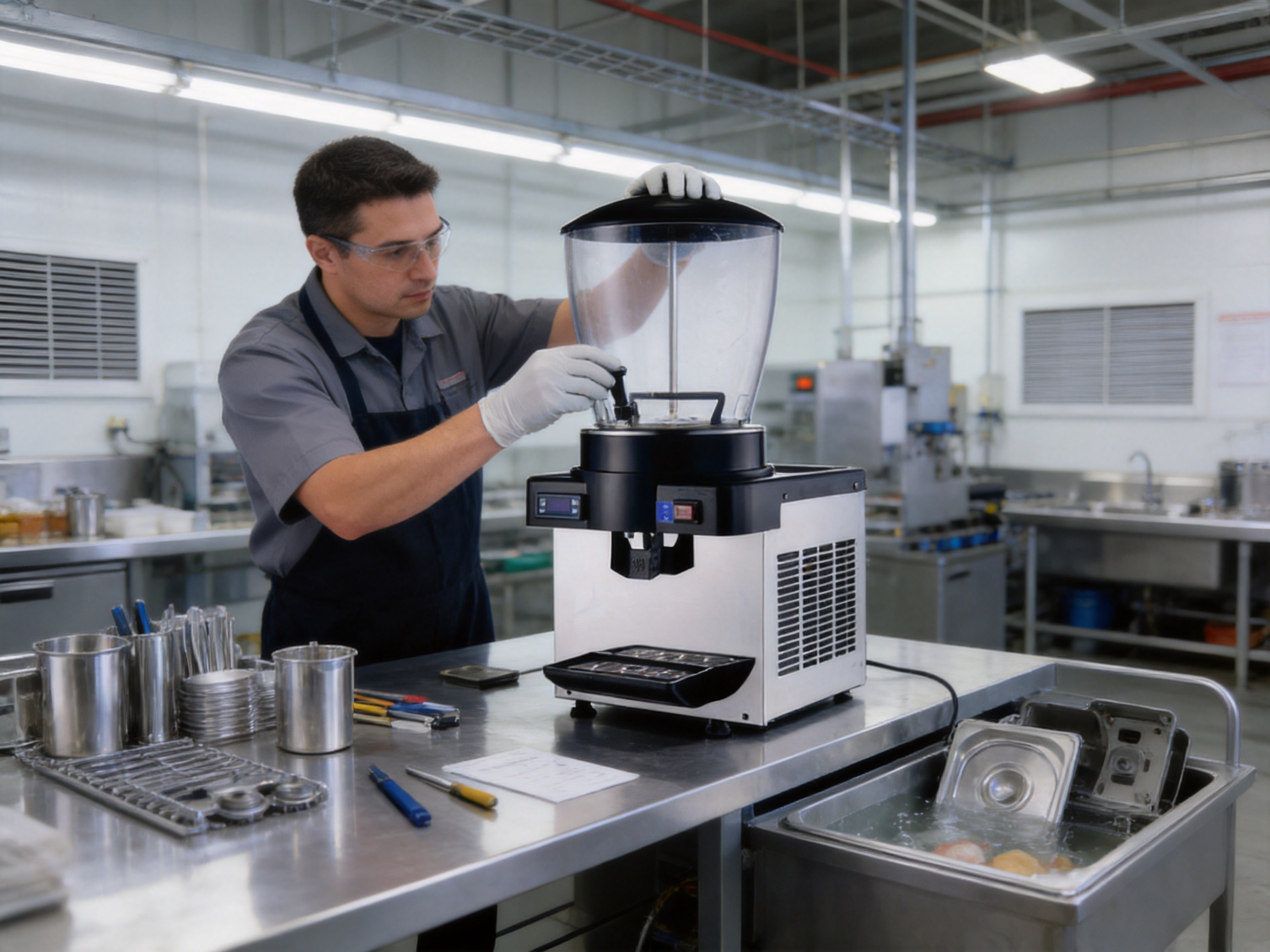
Introduction
Commercial beverage service depends on more than simply holding liquid in a container. A professional dispenser must keep drinks cold, maintain a consistent texture, support fast service, remain easy to clean, and operate reliably throughout long business hours. For cafés, restaurants, hotel breakfast areas, buffets, convenience stores, snack shops, and catering operations, the right equipment can improve serving speed, reduce product waste, and create a more consistent customer experience.
The 18L single-tank stirring commercial juice dispenser is designed for businesses that need dependable refrigerated beverage service in a compact footprint. Its single large tank provides enough capacity for concentrated juice, fruit drinks, flavored beverages, and other cold non-carbonated refreshments. A continuous stirring system helps maintain an even mixture, while refrigeration keeps the product within a practical serving temperature range of approximately 3°C to 10°C.
The machine combines stainless steel construction, European-inspired design, compact dimensions, simple controls, and efficient commercial operation. With an 18-liter capacity, 250-watt stirring power, and a vertical footprint of approximately 390 x 350 x 790 millimeters, it offers a useful balance between capacity and space efficiency. It is suitable for locations that need more volume than a countertop domestic appliance can provide but do not require a large multi-tank beverage station.
Manufactured by Spelor Electrical Appliances (Zhejiang) Co., Ltd., the dispenser reflects the company’s broader capabilities in commercial refrigeration, kitchen equipment, buffet equipment, and foodservice machinery. The manufacturer operates modern production facilities covering more than 60,000 square meters and provides design, research and development, manufacturing, sales, customization, logistics, and after-sales support for customers in global foodservice markets.
This article examines the product’s operating principles, commercial advantages, construction, cooling performance, maintenance requirements, application scenarios, purchasing considerations, and the manufacturing strengths that support its long-term value.
18L Single Tank Stirring Commercial Juice Dispenser
Product Overview
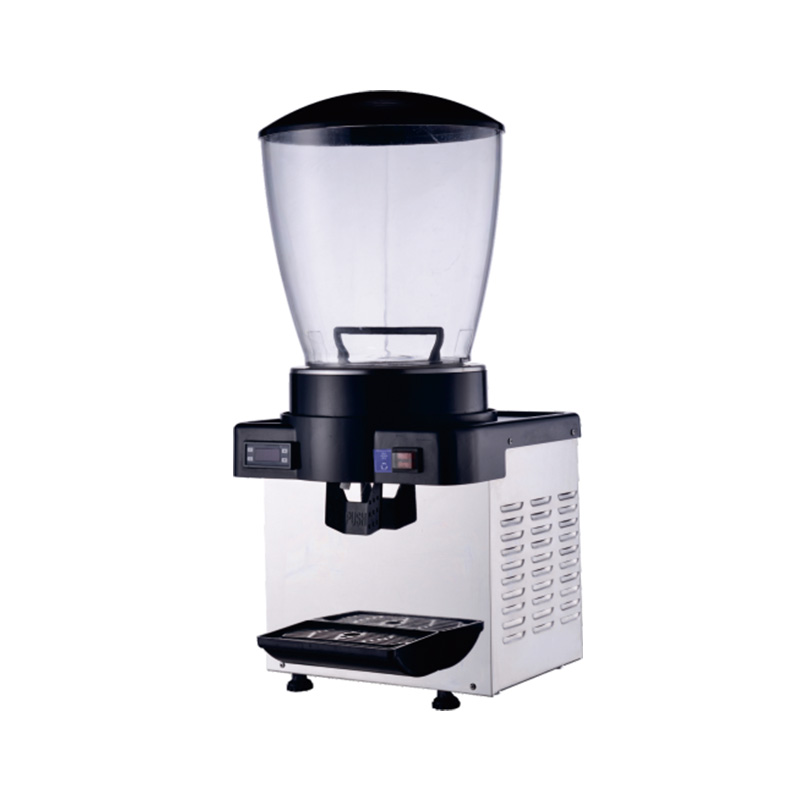
The 18L single-tank stirring commercial juice dispenser, model PL-118AJ, is a refrigerated beverage machine with an integrated stirring function. It is intended to store and serve chilled drinks while continuously helping to distribute ingredients evenly throughout the tank. The unit is particularly appropriate for beverages that may settle, separate, or develop an uneven concentration during service.
The primary product specifications include an 18-liter tank capacity, 250 watts of stirring input power, a temperature range of approximately 3°C to 10°C, and a compact overall size of 390 x 350 x 790 millimeters. Product information lists the net weight as 19 kilograms in one specification record and 23 kilograms in another technical information record. Buyers should confirm the final shipping and net weight with the manufacturer before placing an order, especially when planning counters, shelves, transport arrangements, or installation teams.
| Item | Specification |
| Product type | Single-tank stirring commercial juice dispenser |
| Model | PL-118AJ |
| Tank capacity | 18 liters |
| Stirring input power | 250 watts |
| Temperature range | Approximately 3°C to 10°C |
| Overall dimensions | Approximately 390 x 350 x 790 millimeters |
| Net weight | Reported as 19 kilograms or 23 kilograms; confirm final specification |
| Refrigeration function | Refrigeration only |
| Primary construction emphasis | Food-grade stainless steel body and panels |
| Recommended beverages | Juice, fruit drinks, concentrated beverages, and chilled non-carbonated refreshments |
The machine is described as refrigeration-only equipment. This means it is designed to cool and maintain beverages rather than heat them or produce frozen slush. It should not be treated as a substitute for a frozen drink machine, ice cream freezer, or hot beverage dispenser. Its strength lies in serving liquid drinks at a cool, refreshing temperature while maintaining a relatively uniform mixture.
The single-tank design is useful for businesses that have one main beverage flavor or one high-volume drink. It can also be used for seasonal beverages, signature fruit drinks, infused refreshments, or a rotating daily recipe. Compared with a multi-tank unit, a single-tank machine generally requires less counter space, fewer ingredients to manage, and less time for cleaning between separate beverage compartments.
How the Stirring and Refrigeration System Supports Beverage Quality
Many commercial beverages are not completely stable after preparation. Fruit pulp, concentrate, sugar, flavoring particles, and other ingredients can gradually settle at the bottom of a container. When this occurs, the first servings may be weaker while later servings may contain a higher concentration of settled ingredients. A continuous stirring system helps reduce this separation by circulating the beverage throughout the tank.
The stirring action is especially valuable for concentrated juices and fruit-based drinks. It helps maintain a more consistent texture and flavor from the upper portion of the tank to the dispensing area. This is important in self-service environments, where customers may serve themselves at different times and expect each portion to taste similar to the previous one.
Stirring also helps create a more attractive presentation. A beverage that remains visually uniform can look fresher and more professionally prepared. Depending on the recipe, the movement of the drink may also help distribute pulp or fine particles without requiring staff to manually remix the contents during peak service periods.
The refrigeration system complements the stirring mechanism by maintaining a cool serving temperature. The stated operating range of 3°C to 10°C covers the requirements of many chilled juice and cold drink applications. Exact temperature performance can depend on the starting temperature of the liquid, ambient room conditions, ingredient composition, loading practices, ventilation, and cleaning condition.
Rapid and stable cooling is particularly helpful in restaurants and breakfast areas where the machine may be refilled or opened frequently. The unit is intended to provide reliable cooling for normal commercial service rather than relying entirely on ice. This can help preserve the intended beverage concentration, since adding melting ice may dilute the drink over time.
Temperature stability also supports a more predictable service routine. Staff can prepare the beverage according to a defined recipe, load the tank, set or monitor the machine as required, and serve from a refrigerated container. This reduces the need for repeated manual mixing and may make beverage quality easier to standardize across shifts.
Suitable Beverage Formulations
The dispenser is well suited to prepared juices, fruit-based beverages, concentrated drinks diluted according to recipe, iced tea-style refreshments, flavored water, and similar non-carbonated products. The most appropriate formulations are liquid enough to circulate through the stirring system and stable enough to remain safe and appealing under refrigeration.
Businesses should assess each recipe before use. Excessively thick mixtures, large fruit pieces, hard particles, frozen ingredients, or products with unusually high viscosity may interfere with movement or dispensing. Recipes should be strained or prepared according to the machine’s operating requirements when necessary. Carbonated beverages may also require different equipment because agitation and dispensing pressure can affect carbonation.
Construction and Material Advantages
The dispenser uses stainless steel panels and a food-grade stainless steel body design. Stainless steel is widely used in professional foodservice equipment because it offers a useful combination of durability, cleanability, corrosion resistance, and a professional appearance. It is suitable for environments where equipment may be exposed to moisture, beverage splashes, repeated wiping, and frequent daily handling.
A stainless steel exterior can help the dispenser maintain a polished appearance over a longer service life than painted or lower-grade materials. It is also less likely to absorb odors or stains when properly cleaned. For customer-facing locations such as hotel breakfast rooms, front counters, buffets, and cafés, the clean metallic finish contributes to a modern and hygienic visual presentation.
The material selection also supports routine sanitation. Smooth surfaces are easier to wipe down, and the absence of unnecessary exterior texture can reduce areas where dirt or liquid residue may collect. Internal parts that contact beverages should still be cleaned according to foodservice procedures, but a well-designed stainless steel housing simplifies daily exterior maintenance.
The manufacturer describes the unit as suitable for operation in various conditions. In practical terms, this means the equipment is designed for demanding commercial settings rather than occasional household use. Nevertheless, proper installation remains essential. The dispenser should be placed on a level, stable surface with enough clearance for ventilation, cleaning, inspection, and electrical access.
Durability is not determined by material alone. It also depends on fabrication quality, panel fitting, weld or joint finishing, component selection, refrigeration assembly, electrical inspection, and final quality control. These manufacturing stages are important when comparing commercial equipment with lower-cost products that may use thinner panels, less consistent assembly, or components intended for lighter duty.
Compact Design for Commercial Counters
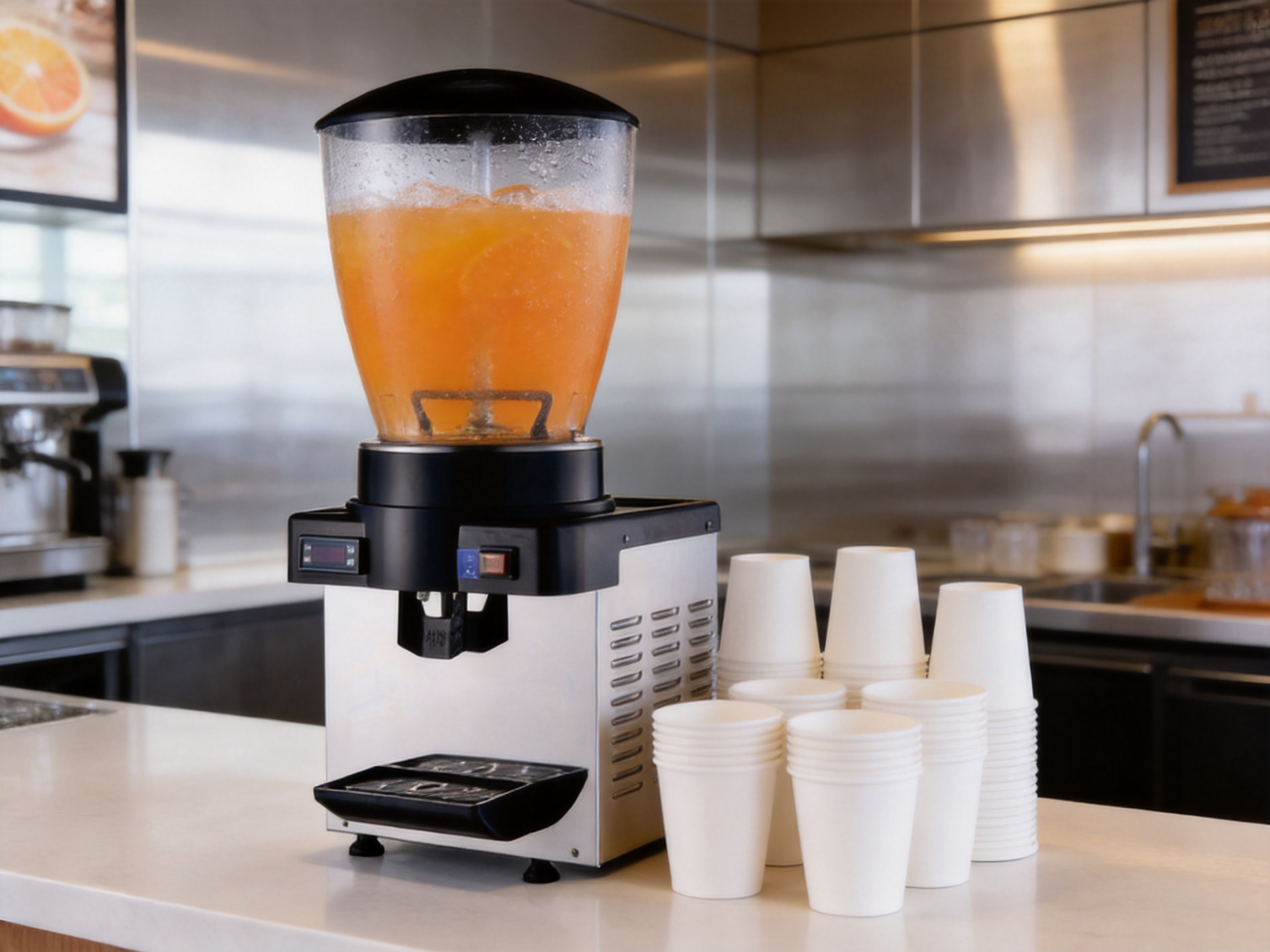
Space is a major concern in modern foodservice operations. A beverage machine must often share a counter with coffee equipment, food displays, payment terminals, storage containers, and other service tools. The approximate footprint of 390 x 350 millimeters allows the dispenser to occupy a relatively limited amount of counter area while still providing an 18-liter capacity.
The vertical height of approximately 790 millimeters uses upward space rather than requiring a wide horizontal footprint. This design can be helpful for buffet lines, breakfast counters, beverage stations, and compact retail stores. Before installation, operators should measure the complete available area, including overhead shelves, signage, electrical sockets, staff access, and clearance for opening or removing the tank components.
A compact body also makes the machine easier to position near the point of service. Shorter distances between the dispenser and the customer or serving staff can improve workflow. In a hotel breakfast area, for example, the machine can be placed with other beverage equipment. In a café, it can stand behind the counter near cups, lids, straws, and refrigerated ingredients.
Compact does not mean inadequate. The 18-liter capacity can support a substantial number of servings, depending on cup size and refill frequency. At 200 milliliters per serving, a full tank theoretically provides 90 servings. At 250 milliliters per serving, it provides approximately 72 servings. Actual output will vary because of foam, spills, staff samples, customer portion sizes, and the amount retained in the system.
This capacity makes the unit practical for medium-volume service. It may be especially efficient during breakfast periods, lunch rushes, events, and buffet service when a business wants a prepared beverage ready for immediate dispensing. Operators can also use smaller batch sizes when demand is lower, provided the beverage level remains sufficient for safe and effective operation.
Advantages Compared with Alternative Beverage Service Methods
Compared with Open Beverage Containers
An open pitcher or container may have a low initial cost, but it typically requires more frequent manual mixing and replenishment. Ingredients can settle, the beverage may warm quickly, and the container may be exposed to dust, spills, or unnecessary handling. A refrigerated dispenser provides a more controlled and professional service environment.
The machine’s stirring function helps maintain a more even beverage composition, while integrated cooling supports a stable serving temperature. The closed or covered tank arrangement also improves presentation and reduces the likelihood of accidental contamination compared with an uncovered container.
Compared with Ice-Based Service
Ice-based beverage service can cool drinks quickly, but melting ice may dilute the recipe. The beverage may become progressively weaker as the service period continues. A refrigeration-only dispenser cools the drink without adding water, helping preserve the intended flavor profile and concentration.
Ice also requires storage, handling, replenishment, and sanitation control. Eliminating or reducing the need for service ice can simplify back-of-house preparation and reduce the labor associated with maintaining an ice supply. The dispenser does not replace an ice machine for all applications, but it offers a more consistent solution for drinks that are intended to be served chilled rather than poured over ice.
Compared with Non-Stirring Dispensers
A non-stirring dispenser may be suitable for clear beverages that do not separate. However, drinks containing concentrate, pulp, or suspended ingredients can become less uniform when left still. The stirring function of this model provides a practical advantage for recipes requiring continuous or periodic movement.
Uniform mixing can also improve portion consistency. When every serving has a similar composition, operators can better control taste, customer expectations, and ingredient usage. This is especially valuable for branded recipes, standardized hotel breakfast menus, and businesses that monitor beverage cost carefully.
Compared with Larger Multi-Tank Systems
Multi-tank machines provide several flavors at once, but they also require more counter space, more ingredients, more cleaning tasks, and higher initial investment. A single-tank unit is a better fit when the business has one primary drink, changes flavors periodically, or wants a dedicated machine for a high-demand beverage.
The simpler configuration can reduce operational complexity. Staff need to monitor one tank, one beverage recipe, and one cleaning cycle at a time. This may be particularly helpful for smaller restaurants, independent cafés, temporary foodservice sites, or businesses adding refrigerated juice service for the first time.
Operational Benefits for Foodservice Businesses
The dispenser is designed for straightforward operation. A simple operating process generally includes preparing the beverage, loading the tank, connecting the machine to an appropriate power supply, activating the stirring and refrigeration functions, monitoring the beverage level and temperature, and dispensing portions as needed.
Ease of operation is an important commercial advantage because equipment may be used by multiple employees with different levels of experience. A machine that does not require complicated programming or specialized training can be integrated into daily routines more quickly. Clear internal procedures should still be established for start-up, shutdown, cleaning, and product handling.
Energy efficiency is another stated benefit of the compact design. The 250-watt stirring input is modest for a commercial beverage appliance, although total energy consumption also depends on the refrigeration system, ambient temperature, operating hours, and duty cycle. Operators can improve efficiency by avoiding unnecessary empty operation, keeping the tank covered, maintaining ventilation, and cleaning condenser areas as recommended.
A refrigerated dispenser may also reduce labor. Staff do not need to repeatedly whisk or manually remix the contents, transfer the beverage between containers, or replenish ice solely to keep the drink cool. The machine performs the core mixing and cooling functions continuously during service, allowing employees to focus on preparation, customer service, food production, and sanitation.
Reliable serving equipment can improve peak-hour workflow. During a busy breakfast period or lunch service, a ready-to-use beverage station allows customers to obtain drinks quickly. Faster service can help reduce queues, prevent congestion around the counter, and make better use of employee time.
The visual presentation of a dispenser can support merchandising. A clean tank filled with a brightly colored fruit drink can attract attention and communicate availability immediately. In buffet and self-service applications, visible beverage levels help staff determine when replenishment is needed before the product runs out completely.
Applications Across Commercial Environments
Cafés and Juice Bars
Cafés can use the machine for a signature juice, seasonal fruit drink, iced tea, or a prepared refreshment that complements coffee and snack offerings. Its compact footprint makes it practical for locations where counter space is limited. A single high-demand flavor can be displayed and served without requiring a large beverage tower.
Restaurants
Restaurants can place the dispenser near the service counter, dining area, or self-service station. It can support lunch specials, family dining, buffet service, and non-alcoholic beverage programs. The stirring system is useful when the restaurant prepares drinks from concentrate or uses fruit-based recipes that need to remain uniform.
Hotels and Breakfast Areas
Hotel breakfast operations often require dependable beverage equipment that can serve many guests during a concentrated morning period. An 18-liter tank provides useful capacity while the compact design helps preserve valuable buffet space. Staff can prepare the beverage before service and monitor the tank during the breakfast window.
Convenience Stores
Convenience stores can use the dispenser to offer chilled drinks near ready-to-eat foods, bakery items, or checkout areas. The stainless steel appearance supports a clean retail presentation. The unit may be suitable for one popular flavor or for a rotating beverage program that changes according to season and customer demand.
Snack Shops and Fast-Food Locations
Snack shops and fast-food outlets need quick service, repeatable recipes, and equipment that can withstand frequent use. The dispenser can support fruit beverages and cold drinks without requiring extensive preparation at the point of sale. Its single-tank format is suitable for businesses that want to add one beverage category without installing a larger beverage system.
Institutional and Event Catering
Schools, offices, hospitals, canteens, and event catering providers may use the machine where chilled beverage service is required. The equipment should be evaluated according to the site’s electrical supply, sanitation policy, transport needs, and expected serving volume. For temporary events, the machine’s weight and dimensions should be confirmed in advance for safe movement and placement.
Hygiene, Cleaning, and Food Safety
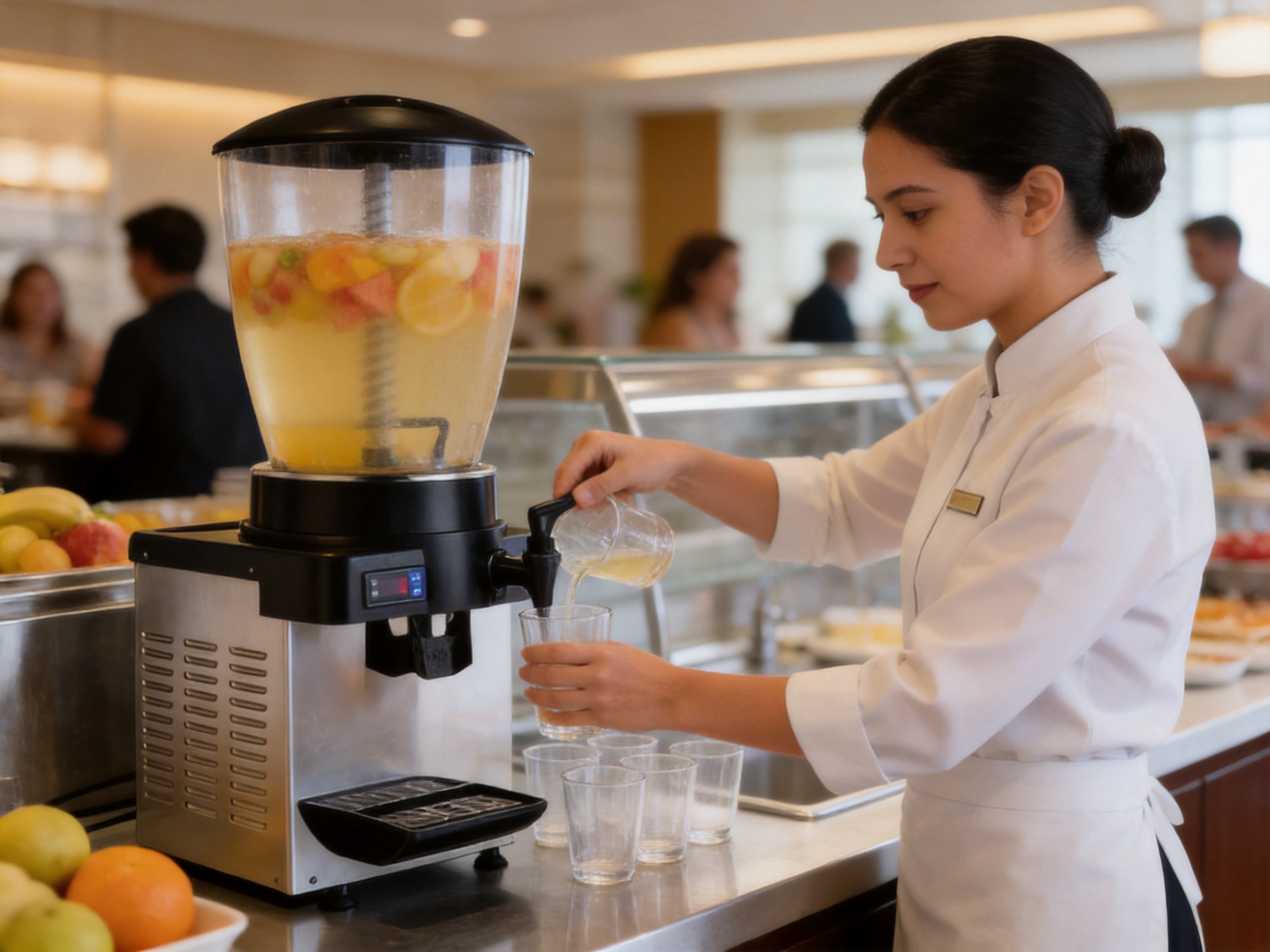
Commercial beverage equipment must be included in a documented cleaning and sanitation program. The specific cleaning procedure should follow the manufacturer’s final manual and the requirements of local food safety authorities. Operators should not assume that refrigeration eliminates the need for cleaning. Cold temperatures slow the growth of many microorganisms but do not replace sanitation.
Before cleaning, staff should stop the machine, disconnect power when required, remove remaining beverage according to the site’s food safety procedure, and allow accessible components to be handled safely. Removable parts should be washed with suitable food-contact detergent, rinsed thoroughly, and sanitized using an approved method. Components should be fully dried or reassembled according to the manufacturer’s instructions.
Daily cleaning is generally appropriate for beverage-contact areas in active foodservice environments, although the exact frequency depends on the product recipe, operating hours, local regulations, and manufacturer guidance. Sugary drinks can leave sticky residue that attracts insects and may obstruct moving or dispensing components if allowed to accumulate.
Operators should pay attention to the tank, stirring components, dispensing outlet, seals, covers, drip areas, and any surfaces exposed to splashes. External stainless steel panels should be wiped regularly with a suitable cleaner and soft cloth. Abrasive pads, harsh chemicals, or improper cleaning tools may scratch the surface or damage finishes.
Cleaning should be supported by inspection. Staff should check for unusual odors, discoloration, leaks, damaged seals, abnormal noise, slow stirring, inadequate cooling, or visible residue. Early detection helps reduce downtime and protects beverage quality.
Good ingredient management is equally important. Drinks should be prepared with safe water and approved ingredients, stored at appropriate temperatures before loading, and labeled when necessary. The tank should not be overfilled, and old product should not be mixed with a newly prepared batch unless the business’s food safety procedure specifically allows it.
Installation and Daily Operating Practices
Correct installation helps the machine deliver stable performance. The dispenser should be placed on a flat and sufficiently strong counter. The surface must support the machine’s operating weight, including the beverage load. Since 18 liters of liquid alone can weigh approximately 18 kilograms, the supporting counter should be selected with both the appliance weight and full tank weight in mind.
Ventilation clearance is also important. Refrigeration equipment releases heat during operation, and blocked airflow can increase energy consumption or reduce cooling performance. The machine should not be pushed tightly against a wall if the manufacturer requires rear or side clearance. Operators should keep ventilation openings free from dust, packaging, cloth, and other obstructions.
The electrical supply should match the final product rating and local requirements. A suitable grounded outlet and appropriate circuit protection should be used. Extension cords, overloaded outlets, or unauthorized electrical modifications can create safety risks and may affect warranty coverage.
Before the first beverage batch is loaded, the tank and beverage-contact components should be cleaned and sanitized. The machine should be allowed to cool as recommended rather than being loaded with a product that is significantly warmer than necessary. Starting with a chilled beverage can help the system reach the target serving range more efficiently.
During operation, staff should monitor the beverage level, texture, temperature, and appearance. The dispenser should not be allowed to operate under conditions outside its intended use. If the beverage becomes unusually thick or contains particles that interfere with movement, the machine should be stopped and inspected rather than forced to continue.
At the end of service, operators should follow the correct shutdown and cleaning procedure. Leaving sugary beverage residue in the system overnight can increase cleaning time and accelerate wear on seals or moving parts. A consistent closing routine helps protect both hygiene and equipment reliability.
Manufacturing Strengths and Production Capabilities
The product is manufactured by Spelor Electrical Appliances (Zhejiang) Co., Ltd., a company that integrates product design, research and development, manufacturing, sales, and service. This integrated structure is valuable for commercial equipment buyers because the same organization can coordinate product engineering, production planning, quality control, technical support, and after-sales service.
The company’s manufacturing base covers more than 60,000 square meters of modern production facilities. A facility of this scale can support organized production areas, dedicated assembly processes, component management, testing procedures, warehousing, and packaging operations. Large-scale infrastructure also provides a foundation for serving both standard product orders and customized commercial equipment requirements.
The manufacturer’s product portfolio includes commercial refrigeration equipment, ice cream machines, juice dispensers, fried ice cream machines, refrigeration cabinets, slush machines, flake ice machines, cooking equipment, griddles, fryers, insulation products, barbecue equipment, and buffet solutions. This broad product range demonstrates experience across multiple foodservice categories rather than dependence on one isolated product type.
Cross-category manufacturing experience can contribute to better product development. Knowledge of refrigeration systems, food-contact materials, commercial electrical assemblies, thermal performance, cleaning requirements, and service environments can be applied across different equipment families. For a juice dispenser, these capabilities support the integration of cooling, stirring, stainless steel construction, compact design, and user-oriented operation.
The company also offers OEM and ODM services based on customer drawings, specifications, or operational requirements. This can be important for distributors, restaurant groups, hospitality companies, equipment importers, and foodservice brands that need customized appearance, labeling, packaging, electrical configuration, dimensions, or functional details.
OEM production generally requires the manufacturer to produce equipment according to an established customer design or product specification. ODM cooperation may involve adapting an existing platform or developing a product around a customer’s market requirements. In both cases, clear technical communication is essential. Buyers should provide information regarding capacity, beverage type, temperature expectations, voltage, frequency, plug standard, finish, branding, packaging, certifications, and target market regulations.
Manufacturing strength should also be evaluated through process discipline. A professional production process may include incoming material inspection, sheet metal preparation, forming, welding or joining, surface finishing, component installation, refrigeration system assembly, electrical wiring, functional testing, leak inspection, temperature verification, cleaning, packaging, and final shipment review.
For stainless steel beverage equipment, accurate panel forming and consistent assembly are important to appearance and durability. Smooth finishing reduces sharp edges and makes the unit easier to clean. Correct alignment of tanks, covers, dispensing components, and stirring mechanisms supports reliable operation. Electrical and refrigeration checks help identify problems before shipment.
Quality control is particularly important in equipment that combines liquid, electricity, moving parts, and refrigeration. Testing should verify that the stirring system operates as intended, the refrigeration function responds correctly, the machine maintains a suitable temperature under test conditions, and the finished unit is safe to handle. Buyers seeking large quantities should request the applicable inspection and testing information for their order.
Customization and Global Supply Support
Different markets may require different electrical standards, languages, packaging formats, labeling rules, and documentation. A factory capable of handling OEM and ODM projects can help customers adapt commercial beverage equipment to their regional requirements. This may include voltage and frequency variations, plug types, instruction manuals, cartons, nameplates, color details, and private-label packaging.
Customization should be managed carefully because any change to capacity, refrigeration components, stirring power, dimensions, or control systems may affect performance. A professional supplier should review proposed changes through technical drawings, samples, specifications, and approval procedures before mass production.
Spelor provides one-stop support that includes pre-sales consultation, product customization, flexible logistics and payment solutions, and after-sales maintenance. This type of support can simplify procurement for international customers. Instead of coordinating separate design, factory, export, and service providers, buyers can work with one manufacturing partner for a broader portion of the project.
International buyers should still conduct their own due diligence. They should confirm production lead time, minimum order quantity, warranty terms, spare parts availability, packaging standards, export documents, certifications, inspection arrangements, and delivery responsibilities. Clear documentation reduces misunderstandings and helps both parties plan efficiently.
For distributors and commercial equipment dealers, spare parts and technical communication are especially important. Common service items may include seals, dispensing components, stirring parts, electrical controls, and refrigeration-related components. The exact parts list should be confirmed with the manufacturer based on the final configuration and market version.
Cost Efficiency and Long-Term Value
The purchase price is only one part of the total cost of ownership. A commercial dispenser should also be evaluated according to energy use, cleaning labor, product waste, service requirements, expected operating life, and the cost of downtime. A machine that supports consistent mixing and stable cooling may help reduce beverage waste caused by separation, dilution, or temperature problems.
The 18-liter capacity can improve batch efficiency. Staff can prepare a larger quantity at one time instead of filling small pitchers repeatedly. This may reduce preparation labor during busy periods and make recipe control easier. A standardized batch can also support more consistent flavor and portion costing.
Stainless steel construction contributes to long-term value by supporting durability and cleanability. When the machine is operated within its intended conditions and maintained properly, a robust commercial body can remain suitable for repeated service over an extended period. Preventive cleaning and inspection are generally less expensive than emergency repairs caused by neglected residue or blocked ventilation.
The single-tank format can provide a lower-complexity entry point for businesses that do not need multiple flavors. It allows an operator to offer refrigerated juice service without purchasing a larger multi-tank system. If demand grows, the business can later add another unit or expand into a broader beverage station.
Energy performance should be considered in relation to operating habits. Keeping the machine in a hot, poorly ventilated location may increase cooling demand. Loading very warm beverage can also lengthen the time required to reach the target temperature. Using chilled ingredients, maintaining airflow, and scheduling regular maintenance can support more efficient operation.
Purchasing Checklist for Commercial Buyers
Before ordering the dispenser, buyers should confirm that the 18-liter capacity matches expected demand. Consider the number of servings required during peak service, the available refill labor, and the time between preparation batches. A machine that is too small may require constant replenishment, while one that is too large may result in unnecessary product waste.
The beverage recipe should also be reviewed. Buyers should confirm whether the drink contains pulp, sediment, high-viscosity ingredients, or particles that may affect stirring and dispensing. If the product formula is unusual, technical consultation with the manufacturer is recommended before purchase.
Site measurements should include the counter footprint, machine height, overhead clearance, rear ventilation space, operator access, and electrical outlet position. The counter must be strong enough for the filled machine, and the location should allow cleaning and service access.
Electrical specifications should be verified for the destination market. Confirm voltage, frequency, plug type, rated current, grounding requirements, and any required certification. Do not assume that the standard product configuration is suitable for every country.
Buyers should clarify the final net weight because the supplied information lists both 19 kilograms and 23 kilograms. They should also confirm shipping dimensions, gross weight, carton design, pallet requirements, and stacking limitations if ordering multiple units.
Warranty coverage, spare parts, service response, technical manuals, and cleaning instructions should be included in the commercial discussion. Importers may also request pre-shipment inspection, sample approval, production photographs, or testing records where appropriate.
Recommended Service Workflow
A consistent service workflow begins with preparation. Staff should prepare the beverage according to a controlled recipe, verify ingredient quality, and pre-chill the product whenever practical. The tank should be clean and sanitized before filling.
During loading, the beverage should be added carefully to avoid spills and excessive foaming. The machine should not be filled beyond its approved level. Once loaded, staff can activate the stirring and refrigeration functions according to the operating instructions.
Before opening service, the beverage should be checked for temperature, appearance, taste, and consistency. Any unusual separation, odor, or texture should be investigated before customers are served. The machine should be positioned so that cups and service accessories are easy to reach without blocking airflow.
During service, staff should inspect the liquid level periodically and refill according to a first-in, first-out procedure where applicable. Spills around the dispensing area should be wiped promptly. If the machine makes abnormal noise or the temperature rises unexpectedly, it should be removed from service until the cause is identified.
At closing, the remaining beverage should be managed according to food safety rules. The unit should be drained or emptied as required, and all beverage-contact parts should be cleaned and sanitized. The external body, drip area, and counter should also be wiped. A written closing checklist can help ensure that cleaning is completed consistently across different shifts.
Q&A
What is the capacity of the commercial juice dispenser?
The dispenser has an 18-liter single tank. The actual number of servings depends on the portion size, product retention, and operating conditions. For example, 200-milliliter portions would theoretically produce approximately 90 servings from a full tank.
What type of beverages can it serve?
It is intended for chilled liquid beverages such as juice, concentrated juice preparations, fruit-based drinks, flavored refreshments, and similar non-carbonated products. Very thick mixtures, frozen products, large solid pieces, or recipes outside the machine’s operating range should be reviewed with the supplier before use.
Does the machine make frozen slush?
No. The product is described as refrigeration-only equipment. It is designed to cool and serve liquid beverages rather than freeze drinks into slush or produce ice cream.
Why is the stirring function important?
Stirring helps distribute ingredients evenly and reduces the settling or separation that can occur in fruit-based and concentrated beverages. It can support more consistent flavor, texture, and appearance throughout the service period.
What is the operating temperature range?
The stated temperature range is approximately 3°C to 10°C. Actual performance can vary with ambient conditions, beverage temperature, recipe composition, loading frequency, ventilation, and maintenance.
How much power does the stirring system use?
The listed stirring input power is 250 watts. Total electricity consumption also depends on the refrigeration system and operating cycle, so buyers should request the complete electrical rating for the final market configuration.
What are the dimensions of the unit?
The listed overall dimensions are approximately 390 x 350 x 790 millimeters. Installation space should include additional room for ventilation, cleaning, operator access, and service.
What is the net weight?
One product specification lists 19 kilograms, while another information record lists 23 kilograms. Because of this difference, buyers should confirm the final net weight and shipping weight with the manufacturer before planning transport or installation.
Is stainless steel suitable for commercial beverage service?
Yes. Food-grade stainless steel is widely used in commercial foodservice equipment because it is durable, cleanable, corrosion-resistant, and suitable for a professional customer-facing environment when maintained correctly.
Can the dispenser be used in a hotel breakfast area?
Yes. Its 18-liter capacity, compact footprint, continuous stirring, and refrigerated service make it suitable for hotel breakfast areas, buffets, restaurants, and other medium-volume commercial applications.
Does the manufacturer provide customization?
The manufacturer provides OEM and ODM support based on drawings, specifications, and customer requirements. Potential customization should be confirmed in advance, including electrical configuration, labeling, packaging, finish, dimensions, and documentation.
What should be cleaned after every service period?
Operators should follow the final equipment manual and local food safety requirements. In general, beverage-contact surfaces, the tank, stirring components, dispensing outlet, drip areas, covers, and seals should be cleaned and sanitized at the required frequency. Sugary residue should not be allowed to remain in the system.
Can the machine replace a multi-tank beverage dispenser?
It depends on the business requirement. The single-tank design is efficient for one primary flavor or a rotating beverage program. A multi-tank unit may be more appropriate when several flavors must be available simultaneously.
What kind of business can benefit most from this machine?
Cafés, restaurants, hotels, buffets, convenience stores, snack shops, fast-food outlets, institutional dining operations, and catering businesses can benefit when they need a compact refrigerated dispenser for liquid beverages.
Conclusion
The 18L single-tank stirring commercial juice dispenser provides a practical solution for businesses that need reliable chilled beverage service without the size and complexity of a large multi-tank system. Its 18-liter capacity supports medium-volume service, while the compact dimensions make it suitable for counters, buffet stations, cafés, hotel breakfast areas, convenience stores, and restaurant beverage points.
Its main functional advantages are continuous stirring, stable refrigeration, stainless steel construction, simple operation, and efficient use of space. Stirring helps maintain a more uniform beverage composition, while refrigeration supports a cool serving temperature without relying on melting ice that can dilute the drink. The stainless steel body contributes to durability, cleanability, and professional appearance.
The product is also supported by a manufacturer with broad experience in commercial refrigeration, kitchen equipment, buffet solutions, ice cream machines, slush machines, ice machines, and other foodservice products. More than 60,000 square meters of modern production facilities, integrated design and manufacturing capabilities, OEM and ODM services, and international support provide a strong foundation for commercial procurement.
For the best results, buyers should confirm the final technical configuration, net weight, electrical requirements, beverage compatibility, cleaning procedure, warranty conditions, and spare parts support before ordering. With correct installation, disciplined hygiene practices, and routine maintenance, this dispenser can help foodservice operators deliver consistent cold beverages, improve service efficiency, and build a dependable beverage program.
References
1. Product specification sheet for the PL-118AJ 18L single-tank stirring commercial juice dispenser.
2. Manufacturer-provided product information regarding capacity, stirring power, temperature range, dimensions, construction, and refrigeration-only operation.
3. Manufacturer company information concerning commercial refrigeration, kitchen equipment, buffet equipment, production capabilities, OEM and ODM services, and after-sales support.
4. General foodservice equipment principles concerning stainless steel construction, beverage sanitation, refrigeration practice, commercial installation, and preventive maintenance.
5. General commercial beverage service practices for juice preparation, portion control, temperature management, cleaning, and operational workflow.
Product: 18L Single Tank Stirring Commercial Juice Dispenser

For exclusive deals and latest offers, sign up by entering your email address below.


-
spelor@spelor.com
-
+86-576-85229688
-
No.528, Changxi Road, Linhai City, Zhejiang Province, China
Commercial Refrigeration Equipment Manufacturer China
Copyright © 2025 by Spelor Electrical Appliances (Zhejiang) Co., Ltd. Rights Reserved.
