


 中文简体
600LBS/24H Self-Cleaning Commercial Ice Machine with 440LBS Stainless Steel Storage Bin
Admin 2026-11-05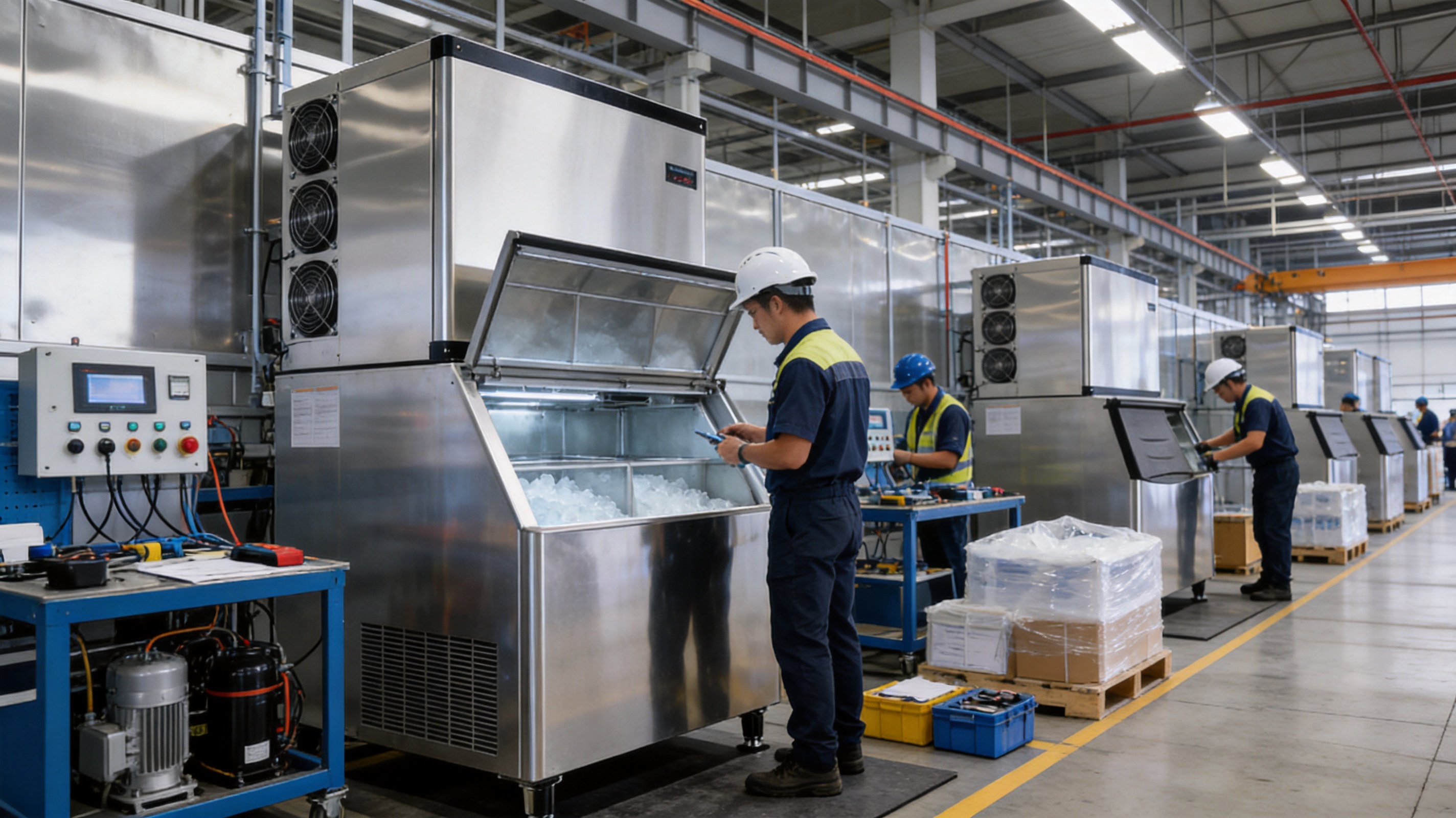
Introduction
Reliable ice production is an essential operational requirement for restaurants, hotels, cafés, bars, supermarkets, catering companies, and other foodservice businesses. In high-volume environments, ice is not simply an accessory. It supports beverage service, food presentation, buffet displays, seafood storage, chilled preparation, and continuous customer service. When an ice machine cannot keep pace with demand, the effects can include delayed orders, increased labor, unnecessary purchasing from external suppliers, and inconsistent service quality.
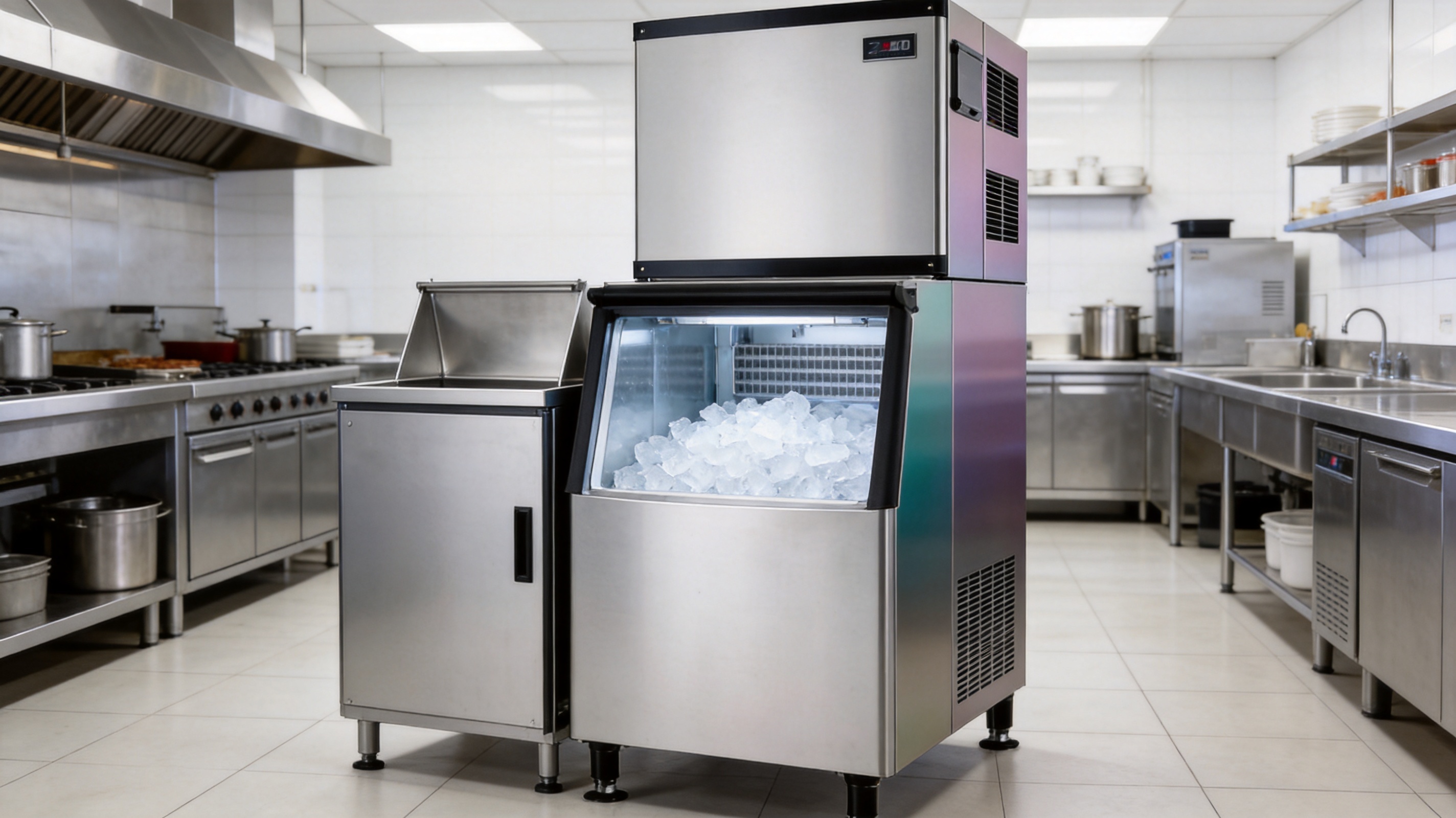
The 600LBS/24H Auto Self-Cleaning Commercial Ice Machine with 440LBS Stainless Steel Storage Bin is designed for businesses that require a high-capacity, stable, and hygienic ice production solution. Identified as model ZB-600, the machine is built to produce up to 300 kilograms of ice in a 24-hour period, equivalent to approximately 660 pounds under rated operating conditions. Its integrated storage bin holds up to 200 kilograms, or approximately 440 pounds, allowing operators to maintain a substantial reserve of ready-to-use ice.
Combining automatic production, air-cooled condensation, stainless steel construction, and an automatic self-cleaning function, this commercial ice-making system is intended for demanding foodservice environments. Its large production capacity and storage volume reduce the frequency of manual ice handling while helping businesses maintain a dependable supply during periods of peak demand.
The equipment is manufactured by Spelor Electrical Appliances (Zhejiang) Co., Ltd., a Chinese foodservice equipment factory with expertise in commercial refrigeration, kitchen equipment, ice machines, beverage equipment, and related systems. The company provides design, research and development, manufacturing, sales, customization, and after-sales service, supporting OEM and ODM requirements for international customers.

600LBS/24H Auto Self-Cleaning Commercial Ice Machine with 440LBS Stainless Steel Storage Bin
High-Capacity Ice Production for Demanding Operations
The central advantage of the ZB-600 is its high daily output. The machine is specified to produce up to 300 kilograms of ice per day, which corresponds closely to the product’s 600-pound-per-24-hour positioning. Actual production may vary according to ambient temperature, water temperature, ventilation, installation conditions, and operating practices, but the rated capacity gives commercial users a clear indication of the machine’s intended workload.
A production capability of this scale makes the machine suitable for businesses that consume ice continuously rather than occasionally. Restaurants may use ice for soft drinks, cocktails, iced coffee, food preparation, and table service. Hotels may require ice for guest areas, banquet facilities, room service, bars, and events. Cafés, juice bars, and beverage shops can use the machine to support large volumes of cold drinks without relying on packaged ice deliveries.
Foodservice operators also benefit from having production capacity available during the full operating cycle. Instead of depending entirely on a small machine that produces ice only when demand is immediate, a high-capacity system can create a reserve in the storage bin. This helps the business prepare for lunch rushes, dinner service, special events, weekend peaks, and unexpected increases in customer traffic.
Compared with lower-capacity commercial ice makers, the ZB-600 offers a more appropriate solution for high-volume locations. Small machines may require frequent emptying, repeated operating cycles, or supplementary ice purchases. A larger system can reduce these interruptions and consolidate ice production into one purpose-built installation. This can simplify the back-of-house workflow and make supply planning more predictable.
The rated power consumption is listed as 1420 watts. This power level supports a high-output commercial design while allowing the machine to remain suitable for professional foodservice facilities with appropriate electrical service. Before installation, buyers should confirm local electrical requirements, power supply compatibility, ventilation conditions, and site-specific installation standards.
Large 440LBS Storage Capacity
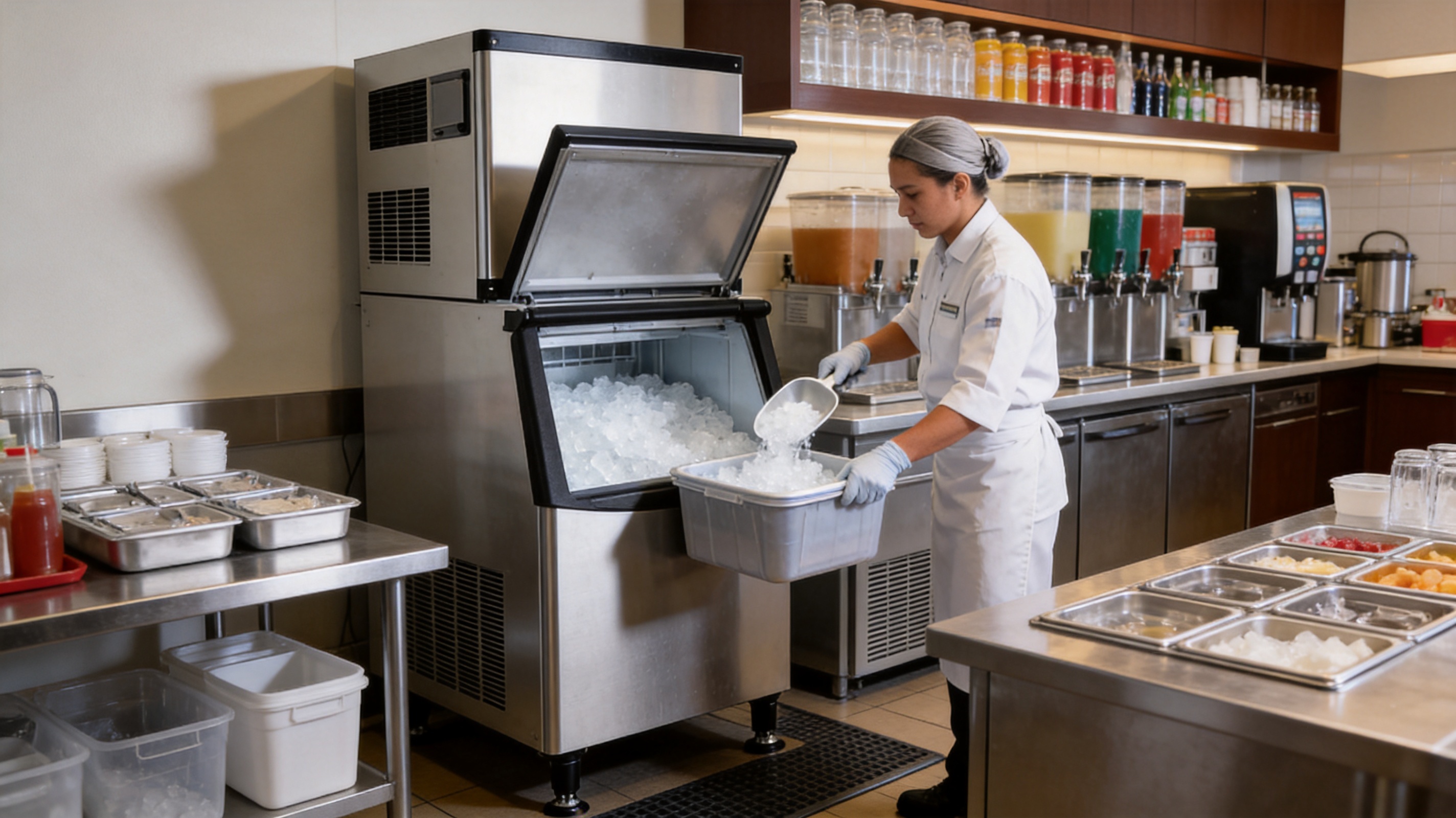
Production capacity is only one part of an effective ice solution. Storage capacity is equally important because demand is not always synchronized with the precise moment ice is produced. The ZB-600 includes a storage bin rated at 200 kilograms, equivalent to approximately 440 pounds. This large capacity enables the machine to store a substantial amount of ice for later use.
The integrated storage function is particularly valuable in businesses with sharp demand peaks. For example, a restaurant may have moderate ice consumption in the morning but experience a significant increase during lunch and dinner. A hotel may need a reserve for banquets or conferences. A bar may require a large quantity of ice over a short evening service period. With a generous storage bin, the equipment can build inventory before peak demand and release it as required.
A large storage bin also reduces the frequency of manual ice removal. Employees do not need to transfer ice as often from the machine to separate containers, which can save time and reduce unnecessary handling. Fewer handling steps may also help maintain a cleaner workflow, provided that staff follow appropriate sanitation procedures for scoops, containers, and contact surfaces.
Compared with compact machines equipped with small bins, this model can support more continuous service. A smaller storage compartment may become empty quickly during busy periods, even when the ice maker itself is functioning correctly. The 200-kilogram storage capacity gives the ZB-600 greater operational resilience and helps protect service continuity.
The storage bin is made with stainless steel construction, providing a durable and professional interior and exterior material for commercial use. Stainless steel is widely used in foodservice equipment because it is resistant to corrosion, easy to clean, and compatible with hygienic operating environments. Its smooth, robust surface also contributes to a professional appearance in visible or semi-visible installation areas.
Automatic Self-Cleaning Function
Hygiene is a critical consideration in any machine that produces and stores ice for human consumption. Water systems, ice-making surfaces, storage compartments, and drainage areas must be managed carefully to prevent the accumulation of mineral deposits, residue, and unwanted contaminants. The ZB-600 addresses this operational requirement with an automatic self-cleaning function.
Automatic self-cleaning helps simplify routine maintenance by supporting a programmed or controlled cleaning cycle. Rather than relying exclusively on manual intervention for every cleaning stage, operators can use the built-in function as part of a regular sanitation program. This can reduce the complexity of day-to-day operation and help staff maintain more consistent cleaning habits.
The self-cleaning feature is not a substitute for proper sanitation. Commercial users should still follow the manufacturer’s cleaning instructions, use approved cleaning and sanitizing products, inspect water-contact areas, maintain drainage, and schedule periodic professional service when necessary. However, automatic cleaning support can make these responsibilities easier to organize and less time-consuming.
Compared with basic ice machines without an automated cleaning function, the ZB-600 provides an operational convenience that can be valuable in busy environments. Staff can spend less time performing repetitive cleaning procedures and more time supporting food preparation, service, and customer needs. Regular cleaning may also help preserve equipment performance by reducing the impact of mineral buildup and residue.
Hygienic design should be considered together with user training. Staff should handle ice with dedicated clean scoops, avoid touching ice directly with bare hands, keep the storage bin closed when possible, and follow a documented cleaning schedule. The machine’s automatic function creates a stronger foundation for sanitation, while responsible operation completes the hygiene system.
Food-Grade Stainless Steel Construction
The product description identifies the plate body as being made of food-grade stainless steel and colorful sprayed steel. This combination provides a balance between hygiene, durability, appearance, and manufacturing flexibility. Stainless steel is a preferred material in commercial kitchens because it is durable under frequent use and can be cleaned efficiently when maintained correctly.
The stainless steel surfaces help the machine withstand the demanding conditions found in restaurants, hotels, beverage shops, and institutional kitchens. These environments may involve frequent contact with water, temperature changes, cleaning agents, carts, containers, and other equipment. A strong outer structure helps protect the internal refrigeration and ice-making components while supporting long-term use.
The colorful sprayed steel elements contribute to the machine’s visual presentation. Commercial equipment is increasingly expected to perform well while also fitting into carefully designed foodservice spaces. A clean, professional appearance can be important when equipment is installed in an open kitchen, beverage counter, hotel service area, or customer-facing preparation zone.
Material quality also affects maintenance. Smooth metal surfaces are generally easier to wipe down than rough or porous materials. When combined with suitable design and regular cleaning, this can help reduce the accumulation of dirt and support a more organized work environment.
Although robust construction supports long service life, operators should still avoid abrasive cleaning methods, harsh chemicals that are unsuitable for stainless steel, and prolonged exposure to standing water. Correct cleaning practices help preserve both the hygienic properties and the appearance of the equipment.
Air-Cooled Condensation System
The ZB-600 uses air-cooled condensation. In an air-cooled refrigeration system, ambient air is used to remove heat from the condenser. This configuration is widely used in commercial ice machines because it does not require a dedicated cooling-water circuit for the condenser.
One advantage of air cooling is installation flexibility. Businesses do not need to manage the additional water consumption associated with water-cooled condenser systems. This may simplify plumbing requirements and reduce ongoing water-related operating costs. Air-cooled systems can be especially practical for restaurants, cafés, hotels, and commercial kitchens where water conservation and straightforward installation are priorities.
Air-cooled equipment does require appropriate ventilation. The installation area should provide sufficient clearance for air intake and exhaust, and the condenser should be kept free of dust, grease, and obstructions. In a hot or poorly ventilated room, refrigeration performance may be affected. For this reason, site planning is an essential part of achieving the expected production level.
Compared with some water-cooled alternatives, an air-cooled commercial ice machine can offer a simpler overall installation and lower water usage. The most suitable configuration depends on local climate, utility costs, kitchen layout, available ventilation, and facility requirements. The ZB-600’s air-cooled design is well suited to operations seeking a practical, self-contained ice production system.
Refrigeration System and Operating Stability
The listed refrigerant information identifies R404A in the product specification, while the extended information references R404A/R410. Because refrigerant configuration can depend on the production version, market, certification requirements, or customer specification, purchasers should confirm the exact refrigerant before placing an order and before installation. The equipment should be serviced only by qualified technicians using procedures appropriate to the installed refrigeration system.
Regardless of the confirmed refrigerant configuration, the machine is designed around a commercial refrigeration system capable of supporting continuous ice production. The 1420-watt rated power input and 300-kilogram maximum daily output indicate a system intended for professional use rather than occasional household operation.
Operational stability depends on several factors, including water supply quality, ambient conditions, condenser cleanliness, electrical consistency, drainage, and adherence to the recommended installation clearances. The machine’s high production capacity should therefore be supported by a suitable operating environment. Proper installation helps the refrigeration system work efficiently and reduces avoidable stress on major components.
Businesses that operate in warm climates or kitchens with high heat loads should pay particular attention to ventilation. The area around the machine should not be blocked by walls, boxes, other appliances, or stored materials. Regular inspection and cleaning of the air path can help maintain heat transfer performance and protect production consistency.
Space-Efficient Vertical Design
The overall dimensions are listed as 760 by 860 by 1745 millimeters. This vertical format allows the equipment to provide substantial production and storage capacity without occupying an extremely large floor footprint. For commercial kitchens where floor space is limited but ice demand is high, vertical equipment can provide an efficient balance between capacity and spatial planning.
The machine should be positioned on a stable, level surface capable of supporting its operating weight. Access should be available for water connection, drainage, electrical service, routine cleaning, and technical maintenance. Operators should also consider doorways, corridors, elevators, loading areas, and final installation access before ordering.
Its tall structure is particularly suitable for back-of-house locations where vertical clearance is available. Buyers should verify ceiling height and overhead obstructions, including shelves, ventilation ducts, sprinkler systems, and lighting fixtures. Sufficient side and rear clearance should also be provided in accordance with the installation requirements.
The relatively compact footprint compared with the machine’s output and storage volume can help commercial operators make better use of valuable kitchen space. Instead of installing several smaller machines, a high-capacity unit may provide a more organized and centralized ice production area. This can simplify workflow and reduce the number of separate appliances requiring maintenance.
Advantages Over Conventional Commercial Ice-Making Solutions
The ZB-600 offers several practical advantages over conventional low-capacity or manually managed ice-making solutions. Its first advantage is scale. Producing up to 300 kilograms per day and storing up to 200 kilograms enables the machine to support high-demand operations with fewer interruptions.
Its second advantage is integrated storage. Businesses that use a separate ice maker and storage container may need additional floor space, more transfer steps, and more manual handling. An integrated production-and-storage system can create a more direct workflow from ice production to service.
The third advantage is automated cleaning support. Many basic machines require more manual attention for cleaning and maintenance. The automatic self-cleaning function helps reduce the burden on staff and supports a more consistent maintenance routine.
The fourth advantage is the use of stainless steel in a foodservice-oriented construction. The material offers a professional appearance, durability, and a surface that can be maintained using standard commercial cleaning practices.
The fifth advantage is air-cooled operation. For facilities that prefer to avoid a condenser water circuit, air cooling can offer a practical installation option. It may reduce water consumption and simplify utility planning, provided that the room has appropriate ventilation.
Finally, the machine is backed by a manufacturer with broad experience in commercial refrigeration and foodservice equipment. This matters because professional buyers often require more than a standalone product. They may need specification support, customization, production coordination, export documentation, replacement parts, and after-sales service. A factory capable of supporting these requirements can provide value throughout the equipment life cycle.
Applications Across Foodservice Markets
Restaurants
Restaurants can use the ZB-600 to supply ice for soft drinks, cocktails, iced tea, chilled ingredients, seafood displays, and table service. High daily output is especially useful for restaurants with large dining rooms, busy takeaway operations, or extended opening hours. The storage reserve can help the kitchen and bar maintain service during peak meal periods.
Hotels
Hotels often have varied ice requirements across restaurants, bars, conference rooms, banquet halls, room service, and guest-access areas. A high-capacity machine can support centralized ice production for multiple departments. The large storage bin helps hotel staff prepare for events and periods of increased occupancy.
Cafés and Beverage Shops
Cafés, juice bars, tea shops, and beverage counters may consume significant quantities of ice throughout the day. Continuous drink preparation can quickly exceed the capacity of a small machine. The ZB-600 can provide the reserve needed for smoothies, iced coffees, fruit beverages, soft drinks, and specialty cold drinks.
Bars and Entertainment Venues
Bars require dependable access to ice, often during concentrated periods of evening demand. Running out of ice can directly affect sales and customer satisfaction. The combination of high output and large storage capacity gives bars a stronger buffer against demand spikes.
Supermarkets and Institutional Foodservice
Supermarkets may use ice for seafood counters, deli operations, beverage preparation, and display applications. Schools, hospitals, factories, and other institutions may also require a stable supply for cafeterias and food preparation areas. A centralized commercial unit can support consistent internal supply and reduce reliance on packaged ice.
Catering and Event Operations
Catering businesses and event venues often experience temporary but intense demand. The large storage capacity enables operators to prepare ice in advance, while the high daily production rate supports repeat events and extended service periods. Installation and transportation planning should be evaluated carefully for each site.
Manufacturing Strengths and Factory Capabilities
Spelor Electrical Appliances (Zhejiang) Co., Ltd. is described as a professional manufacturer integrating design, research and development, manufacturing, sales, and service. Its modern production facilities cover more than 60,000 square meters. This scale supports the coordinated development and production of commercial refrigeration, kitchen, buffet, beverage, and foodservice equipment.
A broad product portfolio can strengthen manufacturing expertise because different product categories share common requirements in refrigeration, sheet-metal fabrication, electrical control, thermal management, sanitation, and commercial usability. The company’s product range includes ice cream machines, juice dispensers, fried ice cream machines, refrigeration cabinets, slush machines, flake ice machines, cooking equipment, griddles, fryers, insulation products, barbecue equipment, and buffet solutions.
This manufacturing background is relevant to the ZB-600 because a commercial ice machine requires the integration of multiple disciplines. The external body must be durable and cleanable. The refrigeration system must remove heat efficiently. The water and ice-contact areas must be considered from a hygiene perspective. Electrical controls must support dependable operation. The storage bin must withstand repeated commercial use. Quality management must coordinate all of these elements into one finished product.
The company’s design and research capabilities also support product development based on customer needs. International distributors, hotel groups, restaurant chains, and equipment importers may require changes to dimensions, appearance, electrical specifications, packaging, labeling, or configuration. An integrated factory structure can make it easier to evaluate and implement such requirements.
For OEM and ODM customers, manufacturing flexibility is an important advantage. Buyers may provide drawings, technical requirements, target markets, or brand specifications. The manufacturer can then discuss feasibility, product configuration, production schedules, packaging, and quality expectations. This approach may be more efficient than purchasing a standard product from a supplier without engineering or production support.
Quality, Process Control, and Product Reliability
Commercial equipment reliability begins with suitable materials and continues through controlled production. Stainless steel and sprayed steel body construction provide a solid foundation, but dependable performance also requires appropriate component selection, accurate assembly, electrical inspection, refrigeration testing, and final quality checks.
A professional manufacturing process should include inspection of incoming materials, verification of key components, assembly controls, leak testing where applicable, electrical safety checks, functional testing, and appearance inspection. These steps help identify potential issues before products leave the factory and support more consistent product quality across production batches.
The machine’s intended operating environment makes process discipline particularly important. Commercial customers expect equipment to operate for long hours, withstand frequent opening and closing, tolerate repeated cleaning, and maintain stable performance under changing demand. A factory experienced in foodservice equipment is better positioned to understand these practical requirements.
Quality should also include documentation and communication. Buyers may need product specifications, installation information, maintenance guidance, spare-parts support, packaging details, and shipping documents. Clear technical communication helps distributors and end users install and operate the machine correctly.
Reliability is not determined by one feature alone. The high production capacity, large storage bin, automatic cleaning function, air-cooled condenser, durable body, and appropriate maintenance program must work together. When the equipment is correctly installed and serviced, these elements can support stable long-term operation.
Maintenance and Operating Best Practices
To achieve reliable performance, operators should establish a routine maintenance program. The air condenser should be inspected and cleaned at suitable intervals, especially in kitchens where grease and airborne dust may accumulate. Restricted airflow can reduce cooling efficiency and increase the workload on the refrigeration system.
The ice storage bin should be cleaned and sanitized according to the manufacturer’s instructions. Operators should use clean tools for ice handling and avoid placing food packaging, personal items, or unapproved containers inside the bin. The bin door or access area should be kept closed when practical to protect stored ice.
Water quality can influence machine performance. Hard water may contribute to mineral deposits, while poor-quality water may affect hygiene and taste. A suitable water filtration or treatment system may be considered depending on local water conditions and the manufacturer’s recommendations.
Drainage should remain clear and correctly installed. Standing water can create hygiene concerns and may interfere with the operation of the surrounding area. Electrical connections should be inspected by qualified personnel, and any unusual noise, temperature, leakage, or production decline should be investigated promptly.
The automatic self-cleaning function should be used as part of a broader maintenance plan. Operators should not assume that automation eliminates the need for inspection. Scheduled manual checks, sanitation, component inspection, and professional servicing remain important for commercial equipment.
Before extended shutdowns, the machine should be cleaned, drained, and prepared according to the manufacturer’s instructions. When restarting after a long period, staff should inspect the water supply, drainage, electrical connection, and internal cleanliness before returning the machine to normal service.
Procurement, Customization, and Global Support
Commercial buyers often evaluate more than product capacity. They may also consider minimum order quantities, production lead times, container loading, export packaging, certifications, voltage requirements, language-specific labels, spare parts, warranty arrangements, and technical support. A manufacturer that provides integrated pre-sales and after-sales service can help simplify this process.
Spelor offers OEM and ODM support based on drawings or customer requirements. Depending on project scope, customization may involve external appearance, product labeling, packaging, electrical configuration, dimensions, control functions, or integration with a broader foodservice equipment program. All technical details should be confirmed in writing before production.
For distributors, the ZB-600 can serve as a high-capacity product in a commercial ice machine portfolio. Its combination of output, storage, stainless steel construction, air cooling, and self-cleaning support creates a clear value proposition for professional users. For restaurant groups and hotel projects, centralized purchasing can also help standardize equipment across multiple locations.
International customers should confirm the exact technical configuration for their destination market. Important points include voltage and frequency, refrigerant type, applicable safety standards, water requirements, drainage requirements, dimensions, packaging, and installation instructions. The available specification references R404A and R404A/R410, so refrigerant details should be verified with the factory for the specific order.
Why Choose a Factory-Direct Commercial Ice Machine?
Purchasing from a factory with design, production, and service capabilities can provide advantages throughout the procurement cycle. Factory-direct communication can reduce the distance between the buyer and the technical team, helping to clarify specifications and resolve questions more efficiently.
Factory support may also improve customization possibilities. Instead of adapting a standard product with limited options, a buyer can discuss requirements directly with the manufacturer’s engineering and sales teams. This is valuable for projects involving multiple machines, special installation conditions, private labeling, or coordinated equipment supply.
Direct factory relationships may support more efficient spare-parts planning as well. Commercial equipment owners benefit from access to compatible replacement components, maintenance information, and technical guidance. A manufacturer with a broad product line and established production facilities can provide a more stable long-term supply relationship.
Spelor’s experience across commercial refrigeration, kitchen equipment, beverage equipment, and buffet solutions positions it to serve customers seeking coordinated foodservice procurement. The company’s stated one-stop service includes pre-sales consultation, product customization, logistics and payment solutions, and after-sales maintenance support.
Installation Considerations
Before receiving the machine, the installation site should be evaluated carefully. The floor must be level and strong enough to support the equipment. The dimensions of 760 by 860 by 1745 millimeters should be compared with available space, access routes, ceiling height, and service clearances.
A suitable water supply and drainage connection should be prepared according to the technical requirements. The electrical supply must match the confirmed product configuration. Because the unit uses air-cooled condensation, the room should provide sufficient ventilation and should not expose the machine to excessive heat or blocked airflow.
The equipment should not be placed directly beside heat-producing appliances unless adequate separation and ventilation are provided. Ovens, fryers, steam equipment, and other hot appliances can increase ambient temperatures and affect ice production. Grease-heavy locations may also require more frequent condenser cleaning.
Installation should be completed by qualified personnel. After installation, the machine should be checked for stable positioning, correct connections, proper drainage, airflow, and normal operation. Staff should be trained in startup, shutdown, cleaning, ice handling, and basic troubleshooting.
Q&A
What is the daily ice production capacity?
The ZB-600 is rated to produce up to 300 kilograms of ice per 24 hours, which is approximately 660 pounds. The product title positions it as a 600LBS/24H commercial ice machine. Actual output may vary according to ambient temperature, water temperature, ventilation, installation, and operating conditions.
How much ice can the storage bin hold?
The storage bin capacity is listed as 200 kilograms, equivalent to approximately 440 pounds. This large reserve helps businesses prepare for peak demand and reduces the frequency of manual ice removal.
Is the storage bin made from stainless steel?
Yes. The product is described as having a stainless steel storage bin and a body made from food-grade stainless steel and colorful sprayed steel. Stainless steel supports durability, cleanability, and a professional commercial appearance.
Does the machine have automatic cleaning?
Yes. The ZB-600 includes an automatic self-cleaning function. Operators should still follow the complete cleaning and sanitation schedule provided by the manufacturer, because automatic cleaning does not replace all manual maintenance procedures.
What type of condensation does the machine use?
The machine uses air-cooled condensation. It requires suitable airflow and ventilation around the condenser. Correct installation is important for maintaining stable refrigeration performance.
What are the machine dimensions?
The listed dimensions are 760 by 860 by 1745 millimeters. Buyers should confirm final dimensions, service clearances, and access requirements before installation or shipment.
What is the rated power consumption?
The listed rated power consumption is 1420 watts. Electrical requirements should be confirmed for the specific market and order, including voltage, frequency, plug or wiring arrangement, and applicable safety standards.
Which refrigerant does the machine use?
The product specification lists R404A, while the extended information references R404A/R410. The exact refrigerant should be confirmed with the manufacturer for the specific production version and destination market before purchase and installation.
Who is the machine suitable for?
The machine is suitable for high-traffic restaurants, hotels, cafés, bars, beverage shops, supermarkets, catering businesses, institutional kitchens, and other foodservice operations requiring a substantial and dependable ice supply.
How does it compare with a small commercial ice maker?
It offers a much higher production capacity and a significantly larger storage reserve than compact ice makers. Its automatic self-cleaning function, stainless steel construction, and integrated storage also support more efficient operation in demanding environments.
What maintenance does the machine require?
Maintenance includes regular cleaning and sanitation, inspection of the storage bin, condenser cleaning, drainage checks, water-quality management, electrical inspection, and professional servicing when necessary. The automatic self-cleaning function should be included in, rather than substituted for, the overall maintenance program.
Can the manufacturer support OEM or ODM projects?
The manufacturer provides OEM and ODM services based on customer drawings or requirements. Project details such as customization, electrical configuration, packaging, labeling, certifications, quantities, and production schedules should be discussed and confirmed before ordering.
Conclusion
The 600LBS/24H Auto Self-Cleaning Commercial Ice Machine with 440LBS Stainless Steel Storage Bin is designed for professional operations that cannot afford an unstable ice supply. With a maximum daily production of 300 kilograms, a 200-kilogram storage bin, automatic self-cleaning, air-cooled condensation, and stainless steel construction, the ZB-600 provides a practical combination of capacity, hygiene support, durability, and operating convenience.
Its large storage volume helps businesses prepare for high-demand periods, while the high production rate supports continuous service across restaurants, hotels, cafés, bars, supermarkets, catering operations, and institutional kitchens. The vertical design makes efficient use of floor space, and the integrated production-and-storage configuration can reduce manual handling compared with separate or lower-capacity systems.
Beyond the product itself, the manufacturer contributes value through integrated design, research and development, manufacturing, customization, logistics coordination, and after-sales service. Its extensive production facilities and broad commercial foodservice portfolio support the needs of international distributors, hospitality groups, restaurant chains, and OEM or ODM buyers.
For the best results, purchasers should verify the final technical configuration, refrigerant, electrical requirements, certifications, installation conditions, and maintenance procedures before ordering. When correctly installed and maintained, the ZB-600 can serve as a dependable central ice production solution for businesses seeking stable output, substantial storage, and efficient long-term foodservice operation.
References
1. Product specification sheet for model ZB-600, commercial ice machine technical information.
2. Manufacturer-provided information on commercial refrigeration equipment, foodservice machinery, and OEM/ODM production services.
3. General commercial refrigeration maintenance and sanitation principles for ice-making equipment.
4. General foodservice equipment installation practices for air-cooled refrigeration systems.
5. General stainless steel care and cleaning guidance for commercial kitchen equipment.
Product: 600LBS/24H Auto Self-Cleaning Commercial Ice Machine with 440LBS Stainless Steel Storage Bin

For exclusive deals and latest offers, sign up by entering your email address below.


-
spelor@spelor.com
-
+86-576-85229688
-
No.528, Changxi Road, Linhai City, Zhejiang Province, China
Commercial Refrigeration Equipment Manufacturer China
Copyright © 2025 by Spelor Electrical Appliances (Zhejiang) Co., Ltd. Rights Reserved.
