


 中文简体
25Kg/24H Countertop Commercial Ice Cube Machine for Efficient Small-Batch Ice Production
Admin 2026-09-16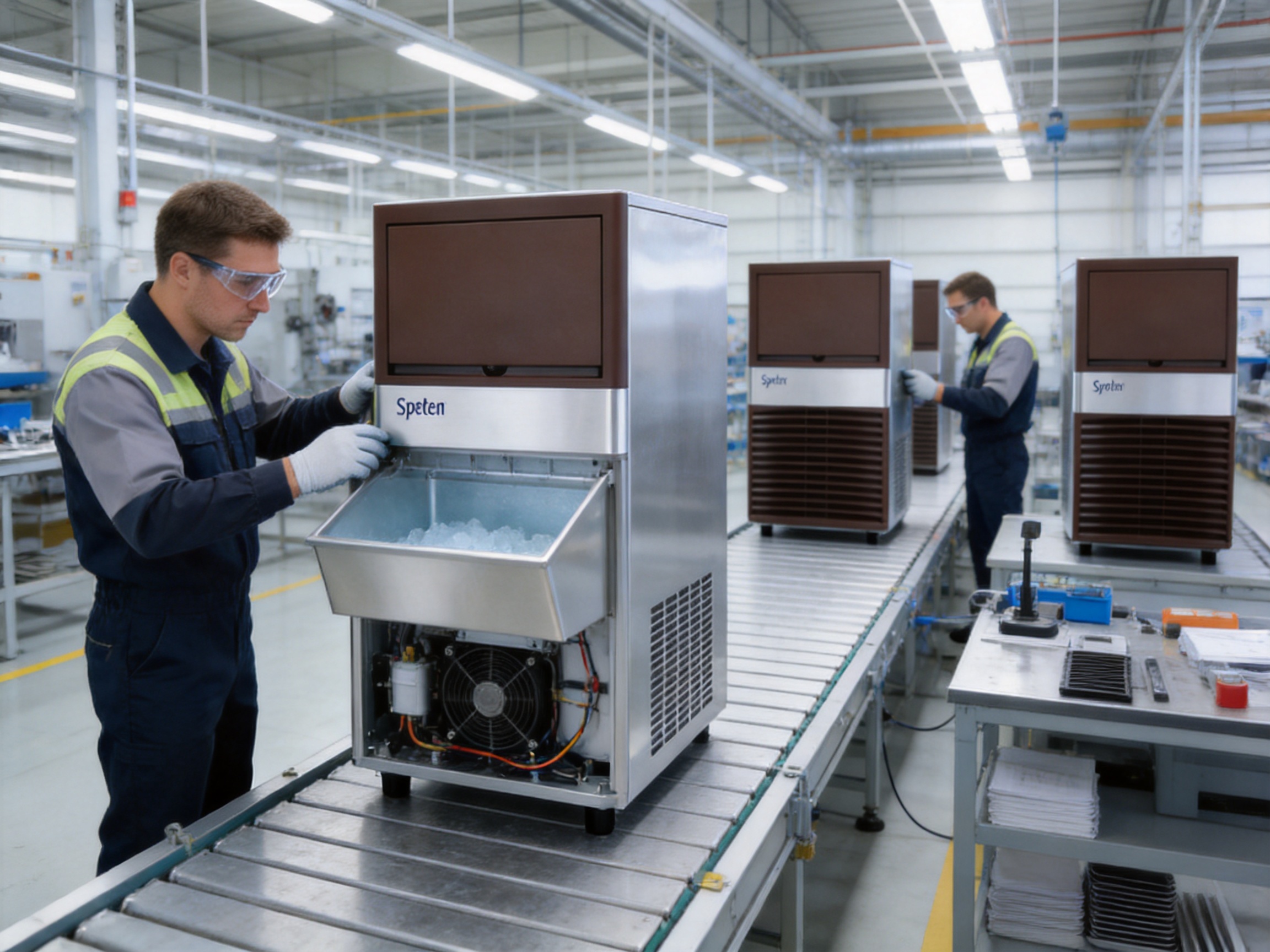
Reliable ice production is essential for restaurants, cafés, bars, offices, convenience stores, catering operations, and many other foodservice environments. Even businesses with moderate daily demand need a dependable supply of clean, consistent ice without dedicating excessive floor space to large industrial equipment. The 25Kg/24H Countertop Ice Making Machine with Stainless Steel Storage Bin is designed to address this practical requirement by combining compact installation, stable production, convenient storage, and straightforward operation.
Built around the ZB-50A specification, this commercial ice cube machine can produce up to 25 kilograms of ice per day while providing a storage capacity of up to 25 kilograms. Its countertop form allows operators to install it in areas where floor space is limited, while its stainless steel construction supports hygiene, durability, and professional presentation. Air cooling and R290 refrigerant further support efficient refrigeration performance for everyday commercial use.
This article examines the machine’s operating value, structural advantages, application possibilities, technical specifications, manufacturing strengths, maintenance requirements, and purchasing considerations. It also explains why a compact commercial ice-making solution can be more suitable than a larger machine when an operation requires dependable small-batch production rather than maximum industrial output.
1. Product Overview
The ZB-50A is a countertop commercial ice cube making machine developed for businesses that require a practical daily supply of ice without installing a large standalone ice system. With a maximum daily output of 25 kilograms, it is particularly suitable for light- to medium-duty applications in hospitality and foodservice.
The machine combines an ice-making section with an integrated storage bin. The production system creates ice continuously according to the operating cycle, while the insulated storage area holds finished ice for service use. This arrangement reduces the need for manual transfer between separate machines and containers, helping operators maintain a cleaner and more organized workspace.
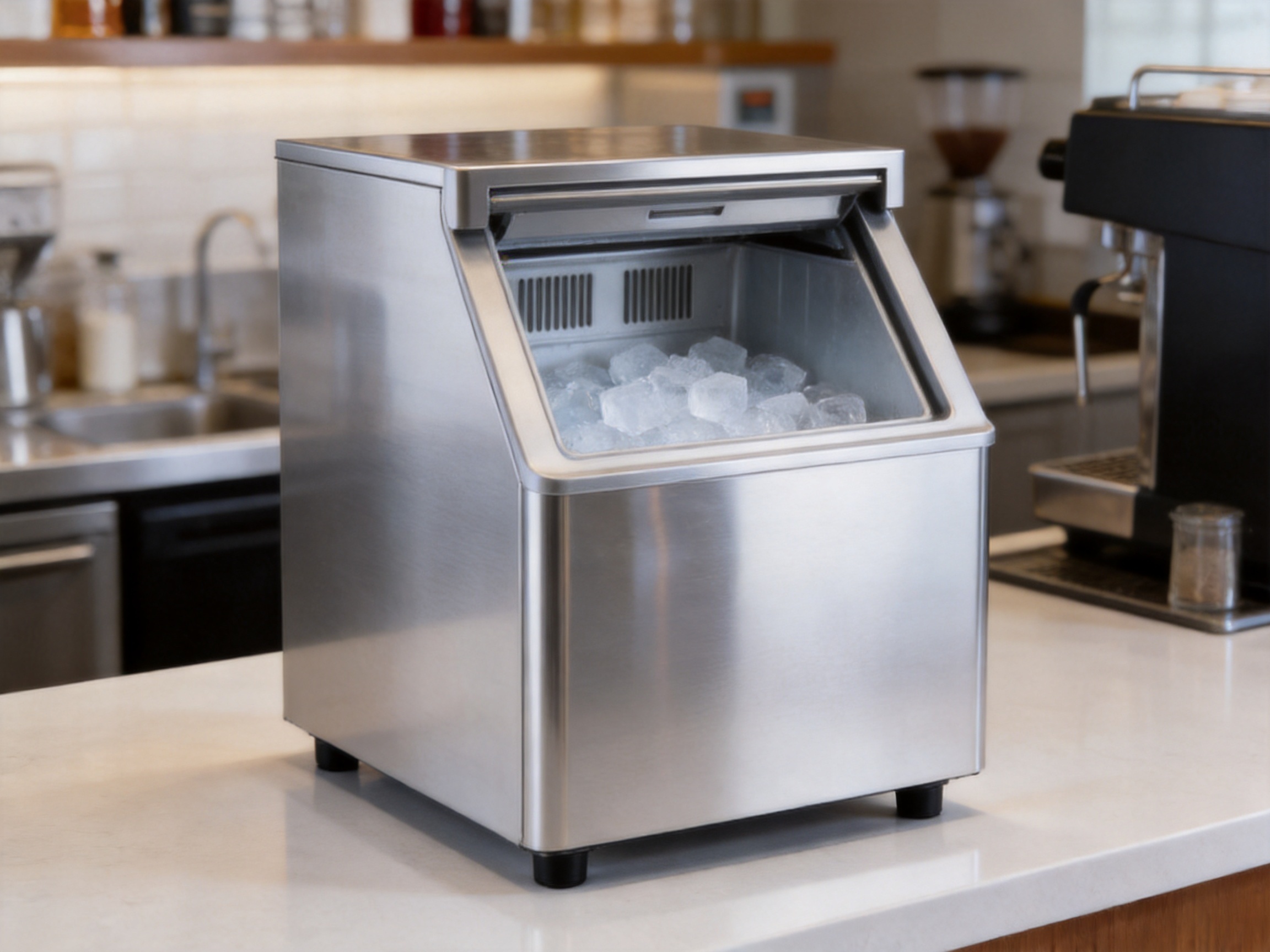
Its overall dimensions are approximately 500 x 432 x 810 millimeters. This footprint is compact enough for many countertops, service stations, preparation areas, beverage counters, and back-of-house workspaces. The vertical configuration makes effective use of available height while limiting the amount of valuable floor area occupied by the machine.
The external body uses food-grade stainless steel together with sprayed steel components. Stainless steel is widely used in commercial food equipment because it is resistant to corrosion, relatively easy to clean, and suitable for environments exposed to moisture, ice, water, and frequent handling. The smooth professional appearance also allows the machine to fit naturally into visible front-of-house locations.
The machine uses air cooling and R290 refrigerant. Air-cooled refrigeration eliminates the need for a separate water-cooling circuit, which can simplify installation in locations where water consumption, drainage, or additional plumbing would be inconvenient. R290 is a natural refrigerant increasingly used in refrigeration equipment because of its low global warming potential compared with many conventional refrigerants.
2. Main Technical Specifications
The following table summarizes the principal specifications supplied for the ZB-50A commercial ice cube machine.
| Model | ZB-50A |
| Maximum Daily Production | 25 kilograms per 24 hours |
| Storage Bin Capacity | 25 kilograms |
| Power Consumption | 350 watts |
| Rated Output | 360 watts |
| Condensation Method | Air cooling |
| Refrigerant | R290 |
| Overall Dimensions | 500 x 432 x 810 millimeters |
| Body Materials | Food-grade stainless steel and sprayed steel |
The listed power figures should be understood as product specification values that may vary slightly depending on operating conditions, ambient temperature, voltage, ice thickness settings, installation conditions, and electrical standards in the destination market. Buyers should confirm the final technical configuration, voltage, plug type, certification requirements, and shipping specification before placing an order.
3. Compact Design for Space-Limited Businesses
One of the most important advantages of the machine is its countertop design. Commercial kitchens and beverage counters often contain multiple appliances, preparation surfaces, sinks, storage units, and service stations. Floor space is costly, and a large ice machine may require substantial rearrangement of the working environment. A compact countertop model offers a more flexible alternative for businesses whose ice demand is steady but not extremely high.
The 500-millimeter width and 432-millimeter depth provide a practical balance between production capacity and installation footprint. The machine can be positioned on a suitable reinforced countertop, equipment stand, or dedicated service table. Its 810-millimeter height provides useful storage volume while keeping the ice-making system accessible to operators.
Compared with a separate ice maker and external storage container, an integrated unit can reduce equipment duplication. Operators do not need to dedicate additional space to a loose ice bin, and finished ice can remain within the machine until required. This can help improve the visual organization of beverage stations and reduce unnecessary movement during busy service periods.
The countertop format can also support business expansion. A small café, dessert shop, or office may begin with limited ice demand and later increase usage. Instead of immediately purchasing a large industrial machine, the operator can select a compact unit that meets current requirements while preserving flexibility for future equipment planning.
For wholesalers, the compact dimensions are also commercially valuable. Smaller equipment is often easier to package, handle, display, and distribute. It may be suitable for a broader range of customer premises than oversized machines, especially in urban markets where kitchens and service areas are restricted by rental costs or building layouts.

25Kg/24H Countertop Ice Making Machine with Stainless Steel Storage Bin
4. Stable 25-Kilogram Daily Production
The machine’s maximum daily production is 25 kilograms in a 24-hour period. This capacity is appropriate for many small restaurants, cafés, tea shops, offices, bars, snack shops, and limited-volume catering operations. It provides a dedicated supply of ice for drinks, chilled displays, food presentation, and routine service without requiring operators to purchase bagged ice every day.
Daily output is an important purchasing factor because insufficient capacity can create service interruptions, while excessive capacity may increase equipment cost, installation requirements, and unused storage. A 25-kilogram machine occupies a useful middle position for businesses that need more than occasional countertop ice but do not require the output of a large self-contained commercial ice maker.
The production figure should be evaluated together with local conditions. Actual output may be influenced by ambient temperature, water temperature, ventilation, operating schedule, ice cube thickness, and maintenance condition. In a hot or poorly ventilated kitchen, production may differ from laboratory or standard test conditions. Proper installation and routine cleaning are therefore important for achieving consistent performance.
When used as part of a planned service workflow, the machine can support predictable daily operations. Staff can produce ice during off-peak periods, allowing the integrated storage bin to accumulate ice before busy service begins. This approach reduces pressure during peak hours and helps staff avoid frequent manual preparation.
The output is also suitable for businesses that require different types of ice-related service throughout the day. A café may use ice for cold coffee and tea in the morning, a restaurant may use it for beverages during lunch, and a bar may rely on it during evening service. A dedicated machine helps make this demand more manageable than relying exclusively on purchased ice.
5. Integrated 25-Kilogram Storage Bin
The integrated storage bin has a listed capacity of 25 kilograms. This provides a practical reserve between production cycles and customer demand. Instead of removing ice immediately after every production cycle, staff can allow ice to accumulate in the bin and retrieve it when needed.
A built-in storage system can improve convenience in several ways. First, it reduces the number of containers required in the workplace. Second, it helps keep finished ice in a designated and protected location. Third, it allows the machine to function as a complete ice supply station rather than only as a production device.
The stainless steel storage area is particularly suitable for commercial environments where hygiene and durability are priorities. Stainless steel surfaces can be cleaned and sanitized according to the operator’s food safety procedures. They also provide a professional appearance that is more appropriate for visible service areas than improvised plastic storage boxes or open containers.
Operators should remember that storage capacity is not the same as daily production capacity. A 25-kilogram bin can hold up to the stated amount under suitable conditions, but the actual usable quantity may depend on ice shape, packing arrangement, meltwater management, and operating practice. Staff should follow the manufacturer’s recommendations regarding loading, removal, and cleaning.
For wholesalers, the combination of production and storage is a strong product feature because it broadens the possible customer base. A buyer does not need to purchase an additional external bin to create a complete small-scale ice station. This can simplify procurement and reduce the total equipment footprint.
6. Food-Grade Stainless Steel Construction
The machine’s plate body is made from food-grade stainless steel and sprayed steel. This material selection supports the demanding conditions found in commercial kitchens, where equipment may be exposed to humidity, water splashes, cleaning agents, temperature changes, and frequent contact with operators.
Food-grade stainless steel is valued for its smooth surface and resistance to corrosion. When properly maintained, it can help limit the accumulation of dirt and residue. Its surface is also compatible with common commercial cleaning procedures, provided that operators use appropriate products and avoid harsh chemicals that may damage the finish.
The stainless steel exterior contributes to long-term presentation as well as function. Equipment placed near customers should look clean, organized, and professionally maintained. A metal body can offer a more durable appearance than lightweight materials that may discolor, crack, or lose their visual quality under intensive use.
Sprayed steel components allow the manufacturer to combine structural performance with design flexibility. The resulting appearance can be integrated into different commercial environments, including modern cafés, traditional restaurants, hotel service areas, and institutional kitchens.
Material quality alone does not guarantee sanitation. Operators must still clean the ice-contact areas, storage bin, water system, drain components, and surrounding surfaces according to an established schedule. However, a well-finished stainless steel body provides a strong foundation for hygienic operation and routine maintenance.
7. Air-Cooled Refrigeration
The ZB-50A uses air cooling as its condensation method. In an air-cooled system, heat is released into the surrounding air rather than being transferred through a dedicated water-cooled condenser circuit. This arrangement can be attractive for businesses seeking a simpler installation process.
Air cooling generally avoids the need for additional condenser water connections. This may reduce plumbing complexity, water consumption, and drainage requirements. For cafés, offices, small restaurants, and mobile or semi-flexible service areas, these installation benefits can be significant.
However, an air-cooled machine requires sufficient ventilation. The surrounding area should allow warm air to move away from the condenser and should not block air intake or exhaust openings. The machine should not be pushed tightly against walls or placed next to equipment that produces excessive heat.
Regular cleaning of the condenser and ventilation openings is also important. Dust, grease, and lint can restrict airflow and reduce refrigeration efficiency. In commercial kitchens, where airborne grease may be present, cleaning may need to occur more frequently than in an office or low-dust environment.
When correctly installed, air cooling provides a practical balance between performance and installation simplicity. It is especially suitable for locations where water resources must be controlled or where adding another water circuit would create unnecessary complexity.
8. R290 Refrigerant and Refrigeration Considerations
The machine uses R290 refrigerant. R290 is propane used as a refrigerant and is recognized for its low global warming potential. Its use reflects the broader movement in commercial refrigeration toward refrigerants with reduced environmental impact.
R290 systems must be handled responsibly because the refrigerant is flammable. Installation, service, charging, recovery, and repair should be performed by qualified technicians who understand the applicable safety procedures and local regulations. The machine should be installed in accordance with the product manual and the requirements of the destination market.
For buyers operating internationally, refrigerant selection can be an important part of equipment planning. The purchasing team should confirm local requirements related to electrical safety, refrigerant handling, product labeling, ventilation, and technician qualifications. The manufacturer or authorized distributor should provide the relevant technical documentation for the target market.
From a sustainability perspective, R290 can support a lower-impact refrigeration strategy when combined with efficient system design, correct maintenance, and responsible end-of-life handling. Refrigerant choice should be evaluated together with overall power consumption, service life, insulation quality, production performance, and operating habits.
The use of R290 also demonstrates the importance of purchasing from an experienced manufacturer. Refrigeration equipment must be designed with appropriate component selection, sealed-system control, safety labeling, and service procedures. A professional factory can coordinate these elements during product development and production.
9. Advantages Compared with Alternative Small Ice Machines
The machine offers several practical advantages compared with basic household ice makers or less integrated commercial alternatives. The first is its commercial-oriented capacity. A 25-kilogram maximum daily output is substantially more suitable for regular foodservice use than the limited output of many domestic countertop appliances.
The second advantage is the storage volume. Many small ice makers produce ice but provide only a modest internal holding area. The ZB-50A combines production with a 25-kilogram storage bin, reducing the need for separate storage containers and improving service readiness.
The third advantage is its professional construction. Food-grade stainless steel and sprayed steel provide a more durable and commercial appearance than lightweight consumer-oriented housings. This makes the machine more appropriate for businesses that require equipment capable of continuous routine use.
The fourth advantage is installation flexibility. The countertop format allows the machine to be placed close to the point of use, while air cooling can reduce the need for additional condenser water connections. These features can help lower the complexity of fitting the machine into an existing workspace.
The fifth advantage is refrigerant selection. R290 aligns with current efforts to reduce the environmental impact of refrigeration systems, subject to correct installation and servicing. Buyers seeking a more modern refrigeration solution may consider this an important benefit.
Compared with very large floor-standing ice machines, the ZB-50A may offer better proportionality for smaller operations. Purchasing a machine far larger than the actual demand can result in higher initial cost, unnecessary space consumption, and inefficient use of equipment. A compact unit is often the more practical option when daily demand remains within the 25-kilogram range.
No ice machine is suitable for every operation. High-volume hotels, banquet venues, large bars, seafood processors, and industrial food plants may require much greater output. The appropriate comparison is therefore not simply between machine sizes, but between the machine’s capacity and the buyer’s real daily demand.
10. Suitable Commercial Applications
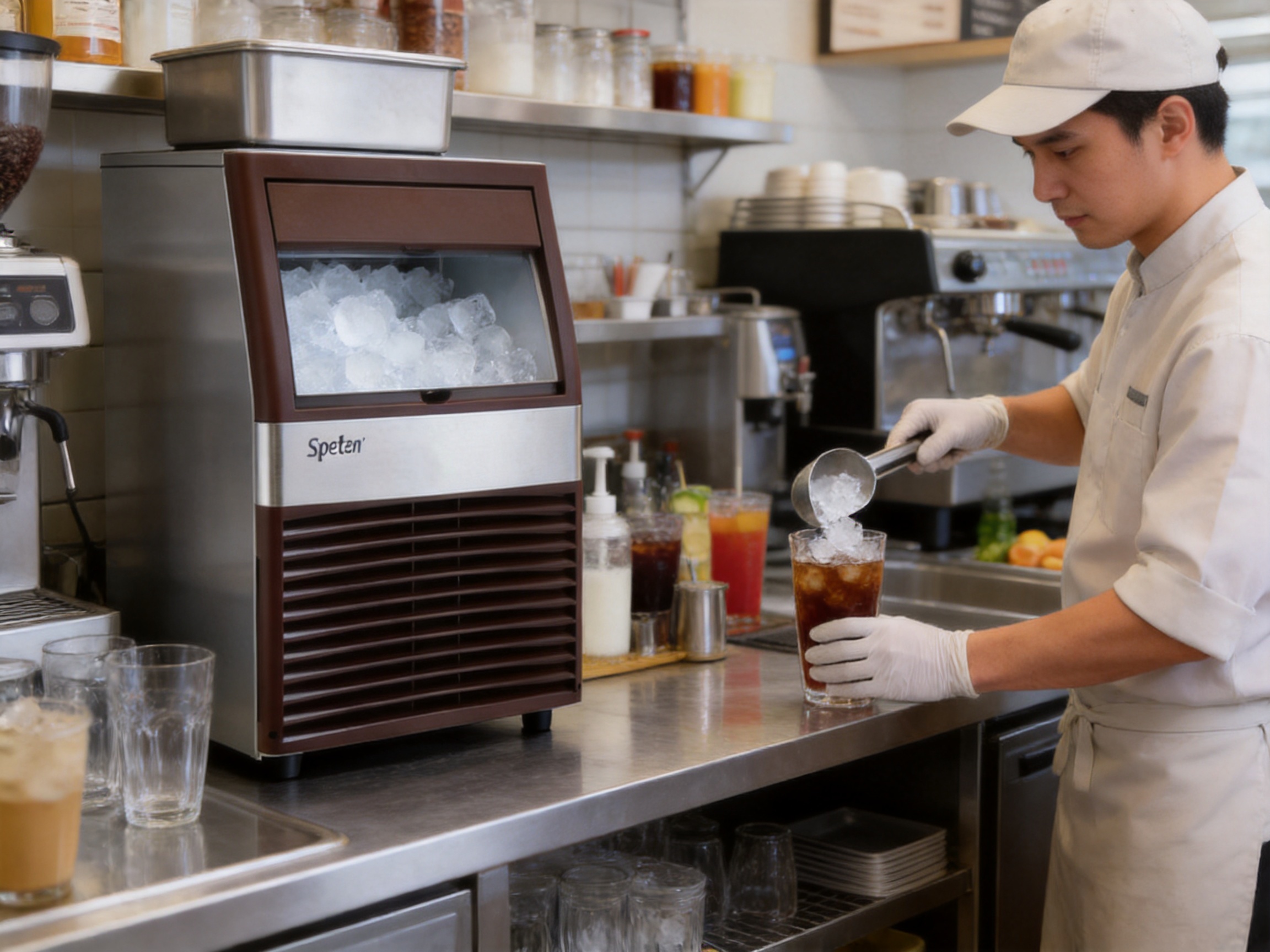
10.1 Cafés and Beverage Shops
Cafés and beverage shops require ice for iced coffee, tea, fruit beverages, smoothies, soft drinks, and specialty drinks. The countertop form allows the machine to be positioned near the beverage preparation area, reducing the distance staff must travel to retrieve ice.
The 25-kilogram daily capacity is suitable for many small and medium beverage businesses, especially those that operate during defined service hours rather than around the clock. The storage bin can hold ice produced before the busiest periods, helping staff maintain faster service during customer peaks.
10.2 Restaurants and Snack Shops
Restaurants can use the machine for chilled drinks, table service, buffet presentation, ingredient cooling, and limited food display applications. Snack shops and fast-food outlets can benefit from its compact footprint when counter space and back-of-house space are limited.
Because the machine is designed for commercial use, it can complement other foodservice equipment without requiring a major redesign of the kitchen. Operators should still evaluate ventilation, electrical supply, access to water, drainage, and cleaning space before installation.
10.3 Bars and Hospitality Venues
Bars require a dependable supply of ice for mixed drinks, soft drinks, water service, and bottle chilling. A built-in storage bin can help maintain a ready reserve, while the compact shape allows installation near a bar counter or service station.
Businesses with exceptionally high evening demand may need a higher-capacity model or multiple machines. However, for smaller bars, cafés, lounges, and hotel service points, the ZB-50A can provide a useful balance between output, storage, and space efficiency.
10.4 Offices and Institutions
Offices, schools, clinics, staff cafeterias, and institutional facilities may require ice for beverages, meetings, dining areas, or limited foodservice. The machine’s compact design makes it suitable for locations where a large commercial unit would be excessive.
Institutional buyers may also appreciate the straightforward operating concept. A dedicated machine can reduce dependence on packaged ice and provide a more consistent supply for regular internal use.
10.5 Catering and Event Preparation
Catering companies and event venues can use the machine for preparation areas, beverage stations, and temporary service setups where moderate ice demand is expected. The equipment should be transported and installed carefully, and the destination electrical and ventilation conditions should be confirmed before use.
11. Manufacturing Strengths and Factory Capabilities
Spelor Electrical Appliances (Zhejiang) Co., Ltd. is a professional manufacturer integrating design, research and development, manufacturing, sales, and service. This integrated structure is important for commercial equipment buyers because product performance depends not only on the final assembly but also on engineering decisions, material control, production coordination, quality management, and after-sales support.
The company operates more than 60,000 square meters of modern production facilities. A substantial manufacturing base can support broader production planning, equipment organization, component management, assembly operations, testing activities, and order coordination. It also provides a foundation for serving international customers with different product configurations and market requirements.
The company’s product portfolio covers commercial refrigeration, kitchen equipment, buffet equipment, ice cream machines, juice dispensers, fried ice cream machines, refrigeration cabinets, slush machines, flake ice machines, cooking equipment, griddles, fryers, insulation products, barbecue equipment, and buffet solutions.
This product diversity creates useful technical connections. Ice machines, beverage dispensers, refrigeration cabinets, and frozen dessert equipment all require knowledge of cooling systems, electrical controls, food-contact materials, cleaning requirements, and commercial operating conditions. Experience across related categories can help a manufacturer understand how different products are used together in real foodservice environments.
The company serves snack shops, fast-food chains, bars, supermarkets, institutions, and other foodservice applications. Such market coverage requires attention to different operating patterns. A small café may prioritize compactness and appearance, while a supermarket may emphasize continuous operation and display integration. A factory able to work across these applications can provide more adaptable product solutions.
11.1 Integrated Design and Research
Design and research are essential at the beginning of the equipment development process. An ice machine must coordinate refrigeration performance, water flow, ice formation, storage, insulation, drainage, electrical safety, cleaning access, and external dimensions.
By integrating design and research capabilities with manufacturing, the company can develop products around practical usage requirements rather than treating production as a separate activity. This supports more effective communication between engineering, production, purchasing, sales, and service teams.
For OEM and ODM customers, integrated development is particularly valuable. Buyers may have requirements concerning dimensions, appearance, branding, control systems, packaging, plug standards, capacity, or target-market compliance. A manufacturer with internal product development capabilities is better positioned to evaluate these requirements and coordinate a feasible solution.
11.2 Manufacturing and Production Coordination
Commercial equipment manufacturing requires coordination among metal fabrication, surface treatment, refrigeration components, electrical parts, assembly, inspection, packaging, and logistics. A factory with broad manufacturing capacity can organize these activities within a structured production system.
For the ZB-50A, the production process must ensure that the stainless steel body, refrigeration system, storage bin, electrical components, and operating controls are assembled as a reliable working unit. Each stage contributes to the finished product’s usability, durability, and appearance.
Production coordination also matters for wholesale supply. Distributors and importers need predictable communication about order quantities, lead times, packaging, loading arrangements, technical documentation, and after-sales parts. A manufacturer that combines production and service resources can help reduce the complexity of international procurement.
11.3 Quality-Oriented Product Development
The company follows a user-oriented and quality-driven philosophy. For commercial ice equipment, this means considering the daily realities of operators: limited space, repetitive service, cleaning requirements, energy use, safe material selection, access to maintenance, and the need for stable output.
Quality should be considered throughout the product life cycle. It begins with appropriate design and component selection, continues through manufacturing and inspection, and extends to packaging, shipping, installation guidance, spare parts, and after-sales support.
Although specific inspection procedures may differ according to model and market, buyers can reasonably request information about production testing, electrical inspection, refrigeration testing, material specifications, packaging standards, and available documentation before confirming an order.
11.4 OEM and ODM Support
The company offers OEM and ODM commercial refrigeration equipment solutions based on drawings or customer requirements. This is relevant to wholesalers, distributors, chain operators, hospitality groups, and equipment integrators that need products adapted to a specific sales channel or project.
OEM cooperation may involve supplying equipment under a buyer’s brand or agreed product identity. ODM cooperation may involve modifying an existing platform or developing a solution around the buyer’s technical and commercial requirements. Possible discussion areas can include product appearance, dimensions, labels, packaging, electrical configuration, accessories, documentation, and order volume.
Customization must always be evaluated according to technical feasibility, minimum order quantity, development time, tooling requirements, certification needs, and cost. Early communication is important because changes to dimensions, refrigeration performance, control systems, or materials may affect the entire production plan.
12. Product Installation Considerations
Before installation, the buyer should confirm that the countertop or equipment stand can safely support the machine and its ice load. The surface should be level, stable, clean, and strong enough for continuous commercial use. Uneven placement may affect operation, drainage, noise, or long-term component alignment.
Adequate clearance should be provided around the machine. Because the condenser is air-cooled, the unit needs sufficient airflow to release heat. The exact clearance should follow the manufacturer’s installation instructions, but operators should avoid enclosing the machine in a tight cabinet or placing it directly beside a heat-producing appliance.
The electrical supply must match the machine’s rated voltage, frequency, power requirements, plug type, and local safety regulations. Buyers importing the product should confirm these details before shipment. An unsuitable electrical supply can cause poor performance, equipment damage, or safety hazards.
Water quality can influence ice appearance, taste, scale accumulation, and maintenance frequency. Where local water contains high mineral content, buyers may consider appropriate filtration or water treatment based on professional advice. Drainage arrangements should also be planned so that meltwater and cleaning water can be managed safely.
The installation area should provide enough working space for loading water, removing ice, opening service panels where applicable, and cleaning the storage bin. A machine that is technically installed but difficult to access may be harder to maintain consistently.
13. Cleaning and Maintenance
Regular cleaning is essential for any commercial ice machine. Ice is a food-related product, and the production and storage areas should be maintained according to applicable hygiene standards and the manufacturer’s recommendations.
Operators should establish a cleaning schedule based on operating hours, water quality, environmental conditions, and local food safety requirements. The schedule may include cleaning the storage bin, internal water-contact surfaces, ice-contact components, external panels, drain areas, air filter areas, and condenser surfaces.
Cleaning products should be suitable for commercial food equipment and compatible with stainless steel and other machine materials. Abrasive pads, excessively strong chemicals, and unapproved treatments may damage surfaces or leave residues. After cleaning, components should be rinsed or sanitized according to the instructions provided for the machine.
The condenser and ventilation openings deserve special attention in air-cooled equipment. Dust and grease restrict airflow, making the refrigeration system work harder and potentially reducing ice production. A clean condenser can support more stable operation and help protect the service life of the refrigeration components.
Operators should inspect the power cord, plug, exterior panels, water connections, drainage, and unusual noises during routine checks. Any refrigerant-related repair or sealed-system service should be handled by qualified technicians. Because R290 is flammable, service personnel must follow appropriate safety practices.
14. How Wholesalers Can Position the Product
For wholesalers, the product can be positioned as a compact commercial ice solution for customers who require more capacity than a household machine but less output than a large industrial model. This clearly defined market position helps distributors explain the product to potential buyers.
The strongest selling points include 25-kilogram daily production, 25-kilogram storage, countertop installation, stainless steel construction, air cooling, R290 refrigerant, and suitability for small restaurants, cafés, offices, bars, and snack shops.
Wholesalers can also emphasize the product’s broad application range. A single model may serve multiple customer segments, simplifying inventory planning compared with a highly specialized machine designed for only one type of business.
Packaging and logistics should be discussed early. The distributor should confirm carton dimensions, gross weight, loading method, pallet requirements, spare parts, product manuals, labeling, and destination-market documentation. Since the machine contains refrigeration components, shipping arrangements should protect it from impact, moisture, and improper handling.
After-sales support is another important part of the wholesale proposition. Distributors may request exploded views, parts lists, troubleshooting information, maintenance guidance, warranty terms, and technician support. A manufacturer that offers pre-sales consultation and after-sales maintenance can help distributors build stronger customer relationships.
15. Why Manufacturer Support Matters
Commercial buyers need more than a product specification sheet. They need confidence that the supplier can answer technical questions, provide consistent communication, support customization, and assist with problems after delivery.
Spelor provides one-stop service that includes pre-sales consultation, product customization, flexible logistics and payment solutions, and after-sales maintenance. This service model can be valuable for overseas buyers who may need guidance on product selection, market suitability, electrical configuration, shipping arrangements, or replacement components.
Pre-sales consultation helps buyers match capacity with actual demand. A supplier should be able to discuss daily output, storage needs, installation conditions, ambient temperature, ventilation, water quality, and intended application before recommending a model.
Customization support can help large distributors and project buyers develop a more consistent product offering. Flexible logistics and payment discussions may also assist buyers with different purchasing volumes and delivery requirements, subject to commercial agreement.
After-sales maintenance is essential because refrigeration equipment is a long-term business asset. Clear service communication can reduce downtime, support correct troubleshooting, and help operators maintain the machine in suitable working condition.
16. Purchasing Checklist
Before purchasing the machine, buyers should first calculate expected daily ice demand. The 25-kilogram capacity is appropriate only when it matches the actual operation. Demand should include regular beverage service, food display, preparation, peak periods, seasonal changes, and possible future growth.
Second, buyers should check the installation location. Measure the available countertop area and confirm height, depth, ventilation clearance, access routes, drainage, water supply, and electrical connection.
Third, confirm the final electrical and refrigeration configuration. Voltage, frequency, plug type, rated power, refrigerant information, and destination-market documentation should be agreed before shipment.
Fourth, review material and hygiene requirements. Confirm the stainless steel construction, cleaning procedure, food-contact considerations, water quality requirements, and recommended sanitation schedule.
Fifth, discuss commercial terms with the supplier. Important points may include minimum order quantity, lead time, packaging, shipping terms, warranty, spare parts, technical documents, inspection procedures, and after-sales support.
Sixth, wholesalers should request product images, dimensional drawings, manuals, labels, carton information, and any available certification documents needed for local distribution. These materials support sales, import clearance, installation, and customer service.
17. Frequently Asked Questions
Q1: What is the maximum daily output of the machine?
The maximum listed daily production is 25 kilograms in 24 hours. Actual output can vary according to ambient temperature, water temperature, ventilation, ice settings, operating schedule, and maintenance condition.
Q2: How much ice can the storage bin hold?
The listed storage bin capacity is 25 kilograms. The practical usable quantity may depend on ice shape, arrangement, meltwater management, and operating procedures.
Q3: Is the machine suitable for a small café?
Yes. Its compact countertop design, moderate daily output, and integrated storage bin make it suitable for many small cafés, beverage shops, snack shops, and similar businesses.
Q4: Can it be used in an office?
Yes. The machine can serve offices, institutions, staff cafeterias, and other facilities that require a regular but moderate supply of ice. The installation area must provide the correct electrical supply, ventilation, water access, and drainage.
Q5: Does the machine use air cooling?
Yes. The condensation method is air cooling. Sufficient ventilation must be maintained around the machine, and the condenser should be cleaned regularly.
Q6: What refrigerant does it use?
The machine uses R290 refrigerant. Because R290 is flammable, installation and service should be performed by qualified personnel according to applicable safety requirements.
Q7: What are the main body materials?
The body uses food-grade stainless steel and sprayed steel. These materials support a professional appearance, durability, and practical cleaning in commercial environments.
Q8: Does the machine require a separate ice storage container?
No separate container is normally required for standard operation because the machine includes a 25-kilogram integrated storage bin. Additional storage may be useful if the operation needs more reserve capacity.
Q9: Can the product be customized?
The manufacturer supports OEM and ODM solutions based on drawings or customer requirements. Customization may involve appearance, dimensions, labels, packaging, electrical configuration, or other technical details, subject to feasibility and commercial conditions.
Q10: How often should the machine be cleaned?
Cleaning frequency depends on operating hours, water quality, environmental conditions, and local hygiene requirements. Operators should follow the manufacturer’s instructions and establish a documented routine for the ice-making area, storage bin, water system, drainage, exterior, and condenser.
Q11: Is the machine suitable for a high-volume hotel or large bar?
It may be suitable for a small service point within a larger property, but a high-volume operation should compare its expected demand with the 25-kilogram daily capacity. Hotels, banquet venues, and large bars may require a higher-capacity model or multiple machines.
Q12: What support does the manufacturer provide?
The manufacturer offers pre-sales consultation, product customization, logistics and payment support, and after-sales maintenance. Buyers should confirm the specific technical documents, warranty terms, spare parts, and service arrangements included with their order.
18. Conclusion
The 25Kg/24H Countertop Ice Making Machine with Stainless Steel Storage Bin is designed for businesses that need dependable small-batch ice production in a compact format. Its combination of 25-kilogram daily output, 25-kilogram storage capacity, stainless steel construction, air cooling, R290 refrigerant, and countertop installation makes it a practical choice for cafés, restaurants, bars, snack shops, offices, institutions, and other foodservice operations.
Its key advantage is balance. The machine offers more commercial capability than many basic household ice makers while requiring less space and infrastructure than large industrial equipment. The integrated storage bin improves readiness, the stainless steel body supports professional use, and the air-cooled design can simplify installation when suitable ventilation is available.
For wholesalers, the product offers a broad market position and multiple application possibilities. The manufacturer’s integrated design, research, production, sales, and service capabilities further support OEM and ODM cooperation, international distribution, and long-term customer service.
Before ordering, buyers should confirm actual ice demand, installation conditions, electrical requirements, water and drainage arrangements, ventilation, destination-market regulations, packaging, warranty, and after-sales support. When correctly selected, installed, cleaned, and maintained, this commercial ice cube machine can provide an efficient and reliable solution for daily small-scale ice production.
References
1. Product specification sheet for the ZB-50A 25Kg/24H Countertop Ice Making Machine.
2. Commercial refrigeration equipment maintenance and sanitation guidance.
3. General foodservice equipment planning principles for cafés, restaurants, bars, and institutional kitchens.
4. Refrigeration engineering references concerning air-cooled condenser operation and ventilation requirements.
5. Technical safety guidance for equipment using R290 hydrocarbon refrigerant.
6. Stainless steel material and hygienic design principles for commercial food equipment.
7. Manufacturer information concerning integrated design, research and development, manufacturing, OEM, ODM, logistics, and after-sales service.
Product: 25Kg/24H Countertop Ice Making Machine with Stainless Steel Storage Bin

For exclusive deals and latest offers, sign up by entering your email address below.


-
spelor@spelor.com
-
+86-576-85229688
-
No.528, Changxi Road, Linhai City, Zhejiang Province, China
Commercial Refrigeration Equipment Manufacturer China
Copyright © 2025 by Spelor Electrical Appliances (Zhejiang) Co., Ltd. Rights Reserved.
