


 中文简体
High-Efficiency Refrigeration Compressor for Commercial Cold Drink Appliances
Admin 2026-10-31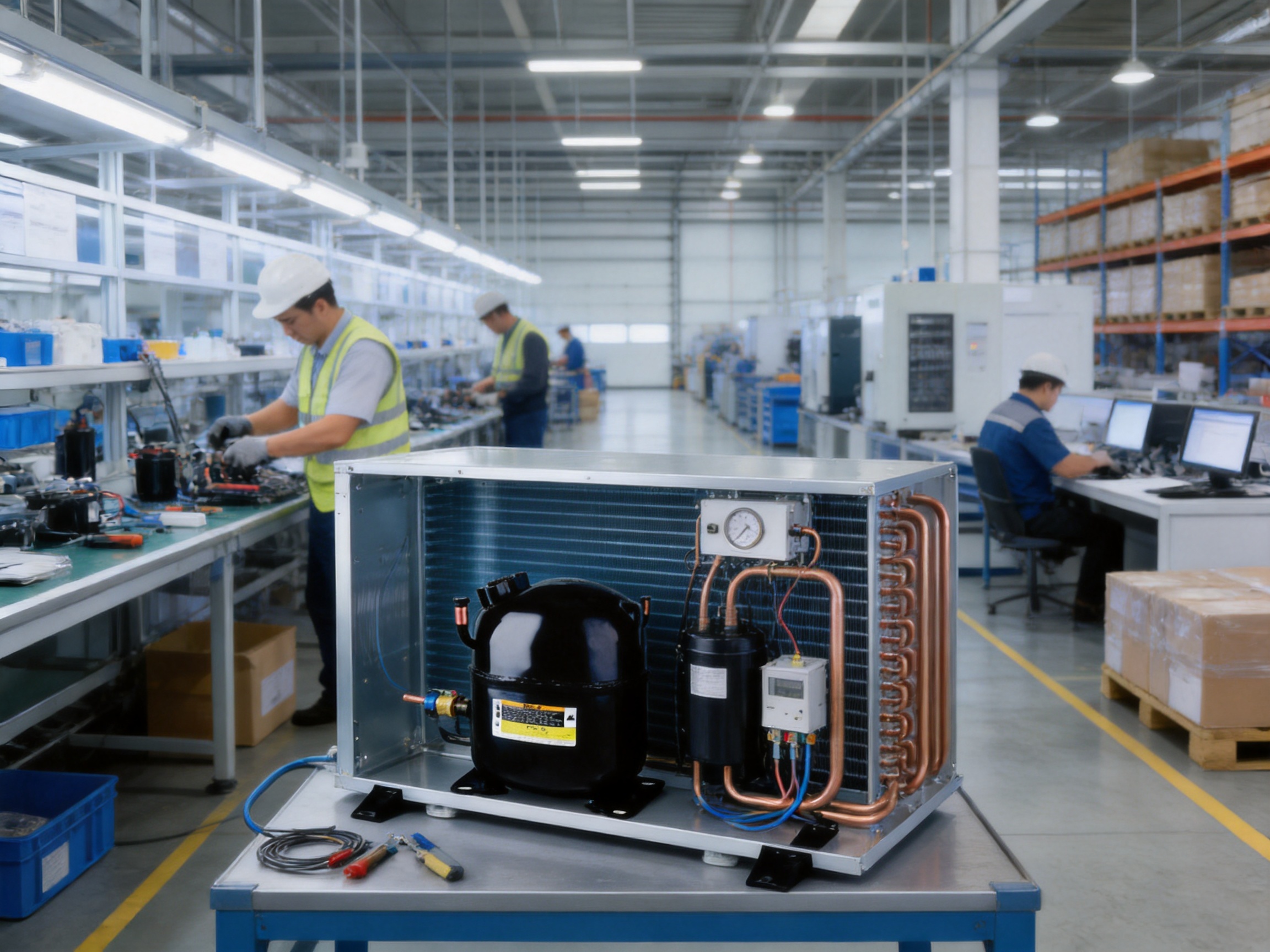
Reliable refrigeration is the foundation of every commercial cold drink appliance. Whether a machine is dispensing juice, cooling beverages in a countertop unit, or maintaining a stable temperature inside a commercial cabinet, the compressor determines much of the equipment’s cooling performance, energy consumption, acoustic comfort, and service life. A well-selected compressor supports consistent product quality while helping operators control electricity costs and reduce maintenance interruptions.
The Embraco refrigeration compressor presented here is designed for integration into commercial beverage cooling equipment and related refrigeration systems. It combines advanced refrigeration technology, energy-conscious operation, low-noise performance, low vibration, and intelligent control characteristics. These features make it a practical component for manufacturers and professional equipment buyers seeking dependable refrigeration performance in demanding foodservice environments.
This compressor is supplied as an optional component or spare part and is not sold separately as a standalone consumer product. It is intended to be matched with compatible commercial cold drink appliances, refrigeration assemblies, or OEM equipment according to the technical requirements of the complete system. Correct model selection, refrigerant compatibility, electrical matching, installation, and commissioning should be confirmed by qualified refrigeration professionals.
For global foodservice equipment manufacturers, the compressor is also supported by the manufacturing and customization capabilities of Spelor Electrical Appliances (Zhejiang) Co., Ltd. The company integrates product design, research and development, manufacturing, sales, and service across a modern production base of more than 60,000 square meters. Its experience in commercial refrigeration and foodservice equipment provides a strong foundation for component integration, equipment customization, and coordinated OEM or ODM projects.
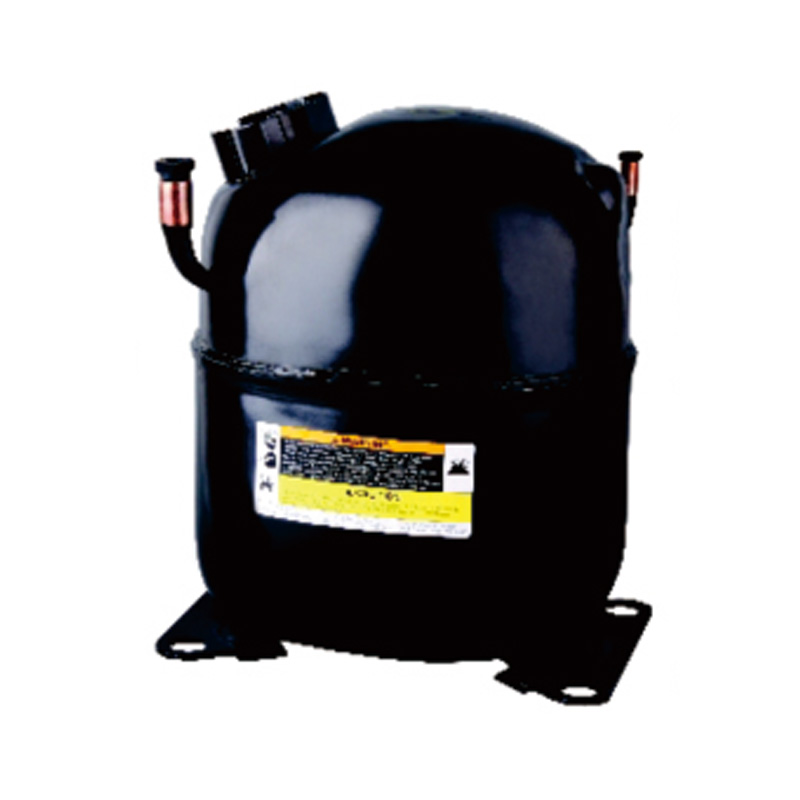
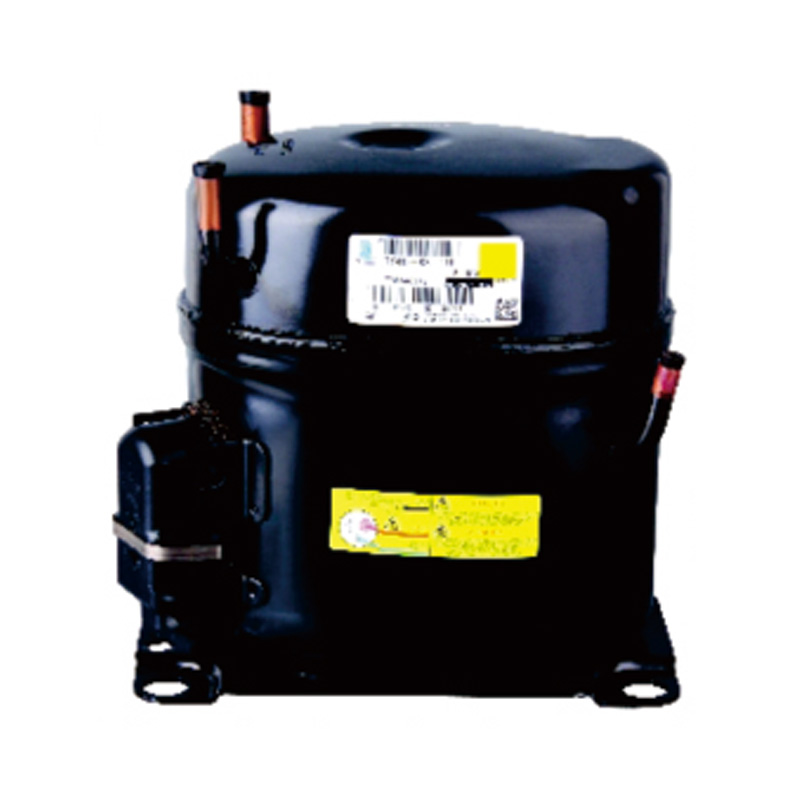
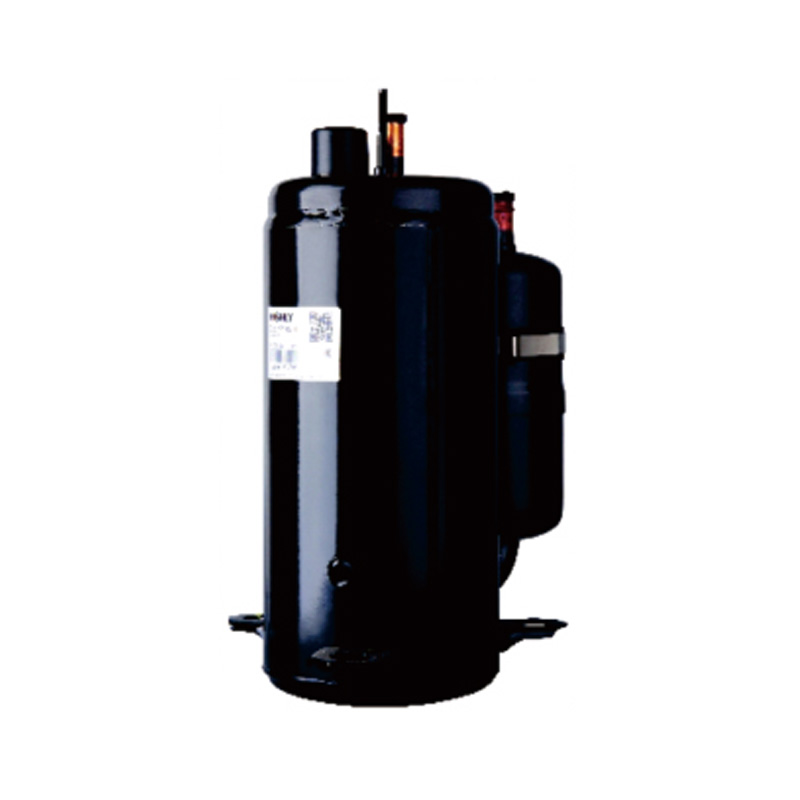
Embraco Refrigeration Compressor for Commercial Cold Drink Appliances(Not sold separately)
Why the Compressor Matters in Commercial Cold Drink Equipment
A commercial cold drink appliance must operate for extended periods, often in warm kitchens, busy beverage shops, supermarkets, bars, restaurants, institutional dining facilities, and other high-traffic locations. The refrigeration system must remove heat efficiently, maintain a stable internal temperature, and recover quickly after frequent door openings, beverage dispensing, product loading, or customer use.
The compressor is the active power unit of the refrigeration cycle. It compresses low-pressure refrigerant vapor and raises its pressure and temperature before the refrigerant moves through the condenser. After heat is rejected from the system, the refrigerant passes through the expansion device and evaporator, where it absorbs heat from the beverage compartment or cooling area. The refrigerant then returns to the compressor, and the cycle continues.
Because the compressor operates at the center of this cycle, its performance affects nearly every important operating characteristic. A suitable compressor can contribute to faster cooling, more stable temperatures, lower energy use, improved reliability, and a better user experience. An unsuitable compressor may lead to excessive cycling, high operating temperatures, unnecessary noise, unstable cooling, poor beverage quality, and premature system failure.
Commercial beverage equipment also creates special challenges. Juice dispensers may require stable cooling while the product is continuously circulated or dispensed. Cold drink cabinets may experience repeated door openings and variable loads. Beverage preparation counters may have limited ventilation space. Compact machines must deliver useful refrigeration performance without generating excessive noise or vibration in customer-facing areas.
These conditions make compressor selection more than a simple matter of choosing cooling capacity. Equipment designers must consider the complete refrigeration circuit, ambient temperature, target temperature, refrigerant, electrical supply, condenser design, evaporator configuration, airflow, control method, installation space, and expected duty cycle. The compressor must be treated as part of a coordinated system rather than an isolated replacement item.
Core Product Advantages
Efficient Refrigeration Performance
One of the principal advantages of the Embraco compressor is its focus on efficient refrigeration. Commercial beverage appliances are frequently used throughout the day, and their compressors may operate for long periods under changing loads. Energy-efficient operation can therefore have a meaningful impact on total ownership cost.
Advanced refrigeration technology helps the compressor convert electrical input into useful cooling performance with greater efficiency. When integrated with a properly designed condenser, evaporator, expansion device, and control system, the compressor can support effective heat transfer and stable temperature maintenance. This allows the complete appliance to cool beverages without unnecessary energy consumption.
Energy efficiency is especially valuable for businesses operating several machines at the same time. A beverage shop, supermarket, hotel, quick-service restaurant, or institutional kitchen may run multiple dispensers, cabinets, ice machines, and other refrigerated units. Improving the efficiency of each refrigeration system can contribute to lower operating expenses across the entire site.
Efficiency also supports sustainability objectives. Reduced electricity consumption can lower the equipment’s operating impact over its service life. For foodservice operators and equipment manufacturers seeking more environmentally responsible solutions, a compressor designed around energy-conscious operation offers an important advantage without sacrificing commercial usability.
Low Noise and Low Vibration
Noise is a practical concern in commercial beverage equipment. Machines installed near customers, service counters, dining areas, hotel lobbies, offices, and retail spaces must provide cooling without creating distracting mechanical sound. Excessive compressor noise can reduce the perceived quality of an appliance and make the surrounding work environment less comfortable.
The Embraco compressor is designed with low-noise and low-vibration characteristics. This makes it suitable for equipment where acoustic comfort is part of the overall user experience. Lower vibration can also reduce mechanical stress on mounting points, piping, panels, and neighboring components when the compressor is correctly installed.
Low vibration is particularly important in compact equipment. Small machines often have tightly arranged components, lightweight panels, and limited isolation space. A compressor with controlled operating vibration can help equipment manufacturers develop a more refined product while reducing the possibility of rattling, panel noise, or unwanted resonance.
Noise performance depends on the complete appliance, not only the compressor. Fan selection, airflow, mounting materials, pipe routing, cabinet construction, condenser cleanliness, and operating conditions all influence sound levels. Nevertheless, beginning with a compressor designed for low noise and low vibration gives equipment developers a stronger foundation for achieving a quiet final product.
Intelligent Operating Control
Modern commercial refrigeration systems must respond to changing environmental and operating conditions. Ambient temperature, product load, ventilation, usage frequency, condenser condition, and appliance location can all influence cooling demand. The compressor’s intelligent control characteristics help support automatic adjustment according to changes in operating conditions.
This adaptive approach can help the refrigeration system avoid operating in a fixed, inefficient pattern. When the cooling load changes, the system can work toward a more appropriate operating condition rather than continuously using maximum output or cycling unnecessarily. Such control may improve temperature stability, support energy savings, and reduce stress caused by unsuitable operating patterns.
For beverage equipment, temperature stability is closely related to product quality. Juice, cold drinks, and other prepared beverages are expected to remain fresh, appealing, and pleasant to consume. A refrigeration system that responds appropriately to changing demand can help the appliance maintain a suitable environment for the product.
Intelligent control must be coordinated with the appliance’s electrical architecture and control logic. System designers should verify the required sensors, controller interface, protection functions, starting characteristics, and operating parameters before integration. The exact control method will depend on the selected model and the design of the complete machine.
Environmental Performance
Environmental performance is increasingly important in commercial refrigeration. Operators want equipment that consumes less electricity, manufacturers need solutions aligned with evolving market expectations, and end users are increasingly attentive to the environmental impact of the products they purchase.
The compressor’s energy-conscious design supports efforts to reduce unnecessary power consumption. Its environmentally oriented characteristics also make it suitable for commercial equipment projects that place emphasis on responsible operation and long-term efficiency. When combined with appropriate system design and maintenance, these advantages can help reduce the total environmental burden of beverage cooling equipment.
Environmental performance should always be evaluated at the system level. Refrigerant selection, refrigerant charge, cabinet insulation, condenser airflow, control strategy, operating temperature, maintenance practices, and equipment lifetime all contribute to the final result. A high-quality compressor is an important part of a responsible refrigeration system, but its benefits are maximized when every major component is designed to work together.
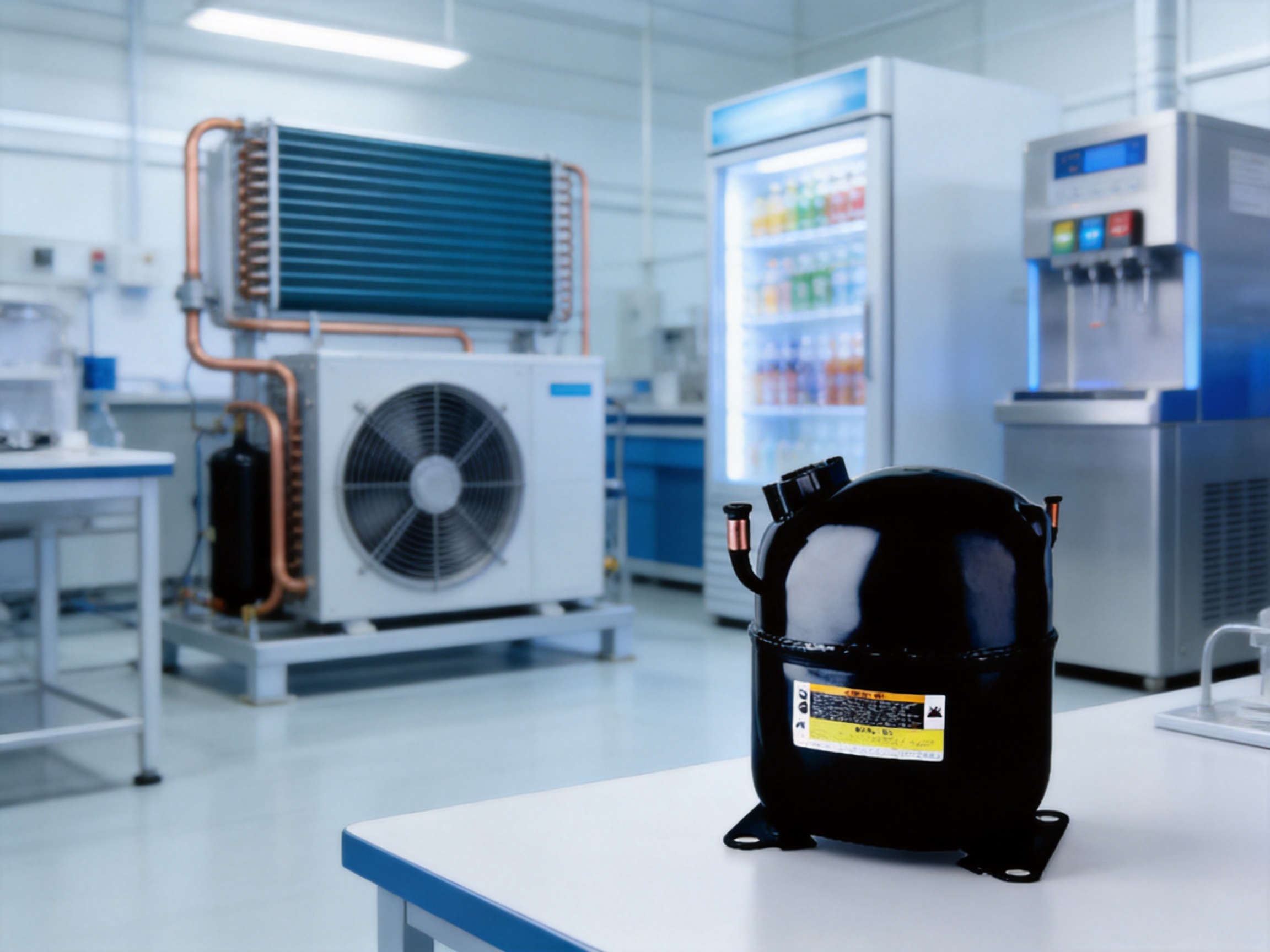
Application Scope for Commercial Cold Drink Appliances
The compressor is intended for integration into suitable commercial cold drink and beverage cooling equipment. Potential applications include refrigeration systems for juice dispensers, cold drink dispensers, beverage cabinets, compact commercial coolers, countertop beverage equipment, and other foodservice appliances requiring dependable refrigeration.
In a commercial juice dispenser, the refrigeration system must help keep the beverage at a suitable serving temperature while the machine may be used repeatedly throughout the day. The compressor supports the cooling circuit that removes heat from the product area. Stable operation can help the dispenser deliver a consistent experience during peak service periods.
In a cold drink cabinet or beverage display unit, the compressor helps maintain the internal temperature despite frequent access and varying product loads. Efficient operation is valuable because display equipment may remain energized continuously, including during long business hours or overnight periods.
In compact beverage appliances, installation space may be limited. The compressor’s low-noise and low-vibration characteristics can help manufacturers address the challenges of customer-facing placement. Its performance can be combined with appropriate insulation, ventilation, and mounting solutions to create a compact yet comfortable machine.
The compressor may also be considered for customized commercial equipment designed for fast-food chains, snack shops, bars, supermarkets, hotels, institutions, and other professional foodservice locations. Application suitability depends on technical matching. Buyers should not select a compressor solely by product category; they should provide complete system requirements for engineering confirmation.
| Application Environment | Primary Refrigeration Need | Relevant Compressor Benefit | Integration Consideration |
|---|---|---|---|
| Juice dispenser | Stable cooling during repeated dispensing | Efficient operation and temperature support | Match cooling capacity, product circuit, and control system |
| Beverage cabinet | Temperature recovery after door openings | Reliable refrigeration and adaptive operation | Confirm cabinet volume, insulation, and ambient conditions |
| Countertop cold drink appliance | Compact, quiet, continuous operation | Low noise and low vibration | Provide adequate airflow and vibration isolation |
| Foodservice refrigeration unit | Long duty cycles and changing loads | Energy-conscious refrigeration performance | Verify electrical, refrigerant, and control compatibility |
| Customized OEM equipment | Application-specific refrigeration design | Flexible integration with professional manufacturing support | Submit drawings, specifications, and operating requirements |
Advantages Compared with Basic or Poorly Matched Alternatives
Not all refrigeration compressors provide the same value. A low-cost component may appear attractive during initial purchasing, but the lowest purchase price does not always produce the lowest total cost. Energy consumption, noise, service interruptions, temperature instability, replacement frequency, and engineering time must also be considered.
Compared with basic compressors that operate with limited attention to acoustic performance, the Embraco solution offers a stronger foundation for quiet commercial equipment. This is important where machines are installed in visible or customer-accessible areas. A quieter appliance may improve the working environment and contribute to a more professional impression.
Compared with components that operate in a fixed manner under changing loads, intelligent control characteristics can support more responsive refrigeration. The ability to adjust operating conditions according to environmental changes may help the complete system avoid unnecessary energy use and maintain more consistent performance.
Compared with generic components selected without complete system evaluation, a professionally matched compressor is more likely to deliver dependable results. Compatibility with the refrigerant, electrical system, heat exchangers, control logic, and operating temperature is essential. A compressor with excellent specifications can still underperform if it is incorrectly applied.
Compared with products supported only by component sales, the compressor benefits from the broader capabilities of a commercial refrigeration equipment manufacturer. Spelor’s experience with juice dispensers, ice cream machines, fried ice cream machines, slush machines, ice machines, refrigeration cabinets, kitchen equipment, and buffet solutions provides practical insight into how refrigeration components function inside complete foodservice products.
This combination of component quality and equipment manufacturing experience can reduce communication gaps during OEM or ODM projects. Customers can discuss the compressor within the context of a complete machine, rather than treating it as an isolated purchase. This is especially useful when a project involves customized dimensions, control requirements, production schedules, packaging, or after-sales support.
Manufacturing Strengths Supporting Product Reliability
Integrated Design and Development
Spelor Electrical Appliances (Zhejiang) Co., Ltd. integrates design, research and development, manufacturing, sales, and service. This integrated structure supports a more coordinated approach to commercial equipment development. Product decisions can be evaluated from multiple perspectives, including technical performance, manufacturability, usability, procurement, logistics, and service.
For refrigeration component integration, this structure is valuable because compressor performance must be evaluated within the complete appliance. Design teams need to consider available installation space, piping routes, condenser location, airflow, electrical controls, access for service, and the expected operating environment. A manufacturer familiar with complete commercial machines can better understand these practical issues.
Integrated development also supports customization. Customers may have their own drawings, target specifications, brand requirements, market standards, or installation conditions. The supplier can discuss the intended application and determine how the refrigeration solution should be incorporated into the broader product design.
Modern Production Facilities
The company operates more than 60,000 square meters of modern production facilities. A substantial manufacturing base can support organized production, component coordination, assembly planning, inspection, warehousing, and order management for commercial equipment projects.
Large-scale facilities are particularly important for OEM and ODM customers. Commercial buyers often need repeatable production, consistent product configuration, coordinated delivery, and the ability to support multiple models. A structured production environment helps the supplier manage these requirements more effectively than a small workshop focused only on limited or irregular output.
Facility scale alone does not guarantee product quality, but it provides the infrastructure needed for systematic manufacturing. The value is realized through controlled processes, trained personnel, suitable equipment, documented inspections, and effective coordination between engineering and production teams.
Experience Across Foodservice Equipment Categories
Spelor manufactures and supports a broad range of commercial refrigeration, kitchen, and buffet equipment. Its product portfolio includes ice cream machines, juice dispensers, fried ice cream machines, refrigeration cabinets, slush machines, flake ice machines, cooking equipment, griddles, fryers, insulation products, barbecue equipment, and buffet solutions.
This range creates useful cross-category experience. A manufacturer working with different foodservice appliances encounters varied requirements for temperature control, hygiene, ease of cleaning, space utilization, customer interaction, service access, and operational durability. Knowledge gained across these categories can strengthen the design and integration of refrigeration systems.
For a customer purchasing a compressor as part of a broader equipment program, this experience can simplify supplier coordination. The same manufacturing partner may be able to support complete beverage equipment, refrigeration products, kitchen items, and optional components, helping customers streamline sourcing and communication.
Manufacturing for Professional Operating Conditions
Foodservice equipment must withstand demanding daily use. It may operate in warm rooms, crowded kitchens, retail areas, or high-volume service locations. It may be cleaned frequently, moved during maintenance, exposed to changing loads, or operated by different users with varying levels of technical training.
Commercial equipment manufacturing therefore requires attention to practical durability, accessibility, control clarity, and serviceability. When the compressor is integrated into such equipment, its installation must be designed to protect the refrigeration circuit, allow suitable ventilation, and support efficient maintenance. The company’s focus on commercial equipment provides an appropriate manufacturing context for these requirements.
Integration and Engineering Considerations
Because this compressor is an optional component and spare part rather than a separately sold consumer appliance, engineering confirmation is essential. Customers should provide as much information as possible before ordering. Useful details include the equipment type, target cooling temperature, ambient temperature range, internal volume, heat load, refrigerant, electrical voltage and frequency, condenser arrangement, evaporator design, control method, and expected operating schedule.
Cooling capacity should be selected according to the complete heat-load calculation. The calculation may include product load, cabinet heat transfer, door openings, fan motors, lighting, pumps, ambient conditions, defrost requirements, and other sources of heat. Selecting an oversized compressor may increase cycling or operating cost, while selecting an undersized compressor may cause long runtimes and insufficient cooling.
Refrigerant compatibility must be confirmed before installation. The compressor, lubricant, expansion device, evaporator, condenser, piping, and control system must be suitable for the selected refrigerant. Refrigerant handling should be performed by qualified technicians in accordance with applicable regulations and professional safety practices.
Electrical compatibility is equally important. The voltage, frequency, starting characteristics, current requirements, overload protection, wiring, controller, and safety devices must match the compressor and the appliance. Incorrect electrical matching can damage the compressor or create a safety hazard.
Ventilation and heat rejection also influence performance. The condenser must receive adequate airflow, and the warm air leaving the condenser must be directed away from the appliance’s air intake. In compact commercial machines, insufficient ventilation can raise condensing temperature, reduce efficiency, increase operating stress, and shorten service life.
Mounting design should address vibration and mechanical stability. The compressor should be installed using appropriate supports and isolation components. Refrigerant piping should be routed to avoid unnecessary vibration transfer, abrasion, sharp bends, or stress on connection points. Good installation practice helps preserve the low-noise and low-vibration benefits of the compressor.
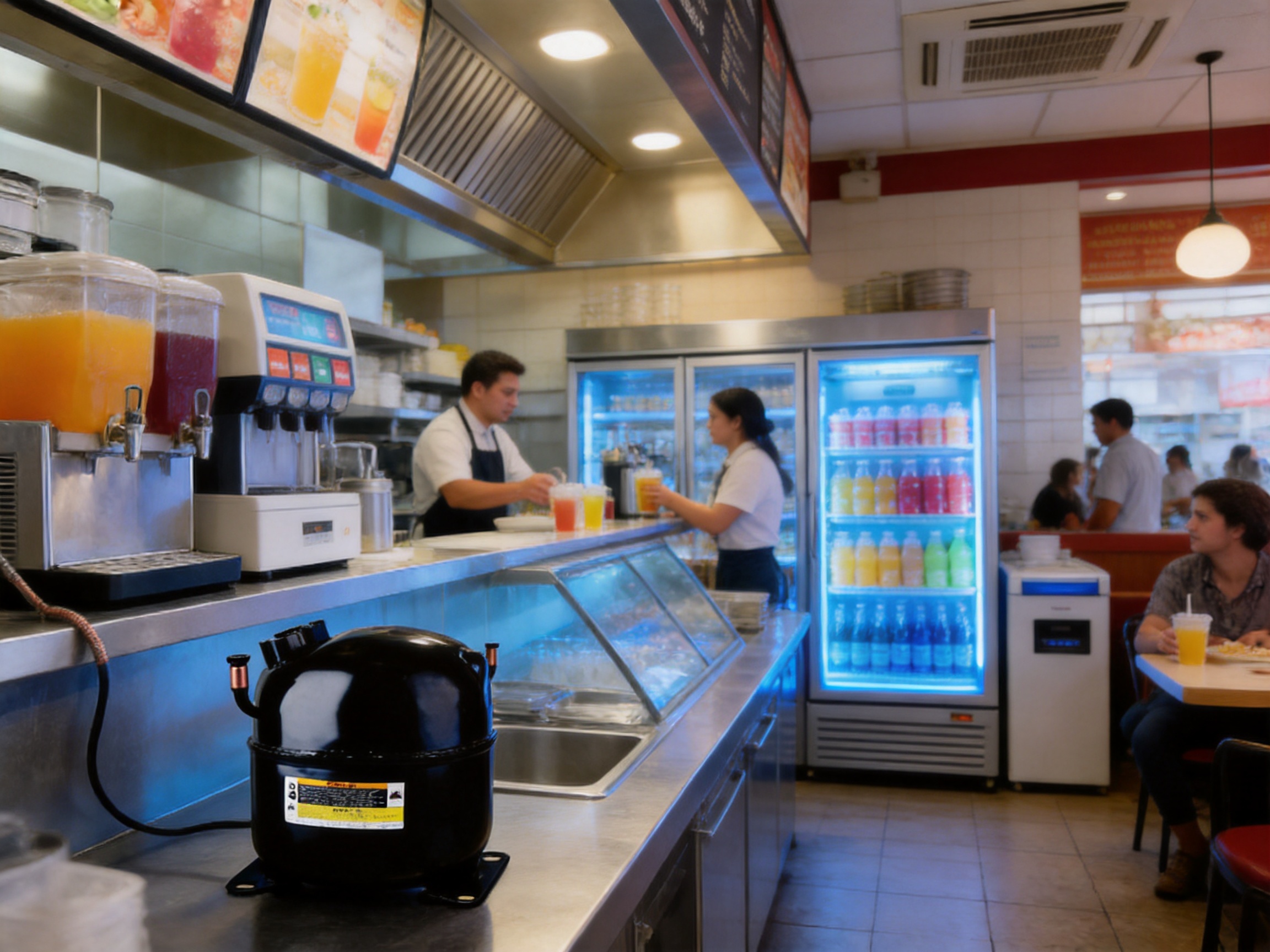
Quality, Service, and Long-Term Value
Quality in commercial refrigeration is not limited to the compressor’s internal construction. It also includes correct application, careful assembly, functional testing, packaging, documentation, installation guidance, and after-sales support. A reliable supplier should help customers manage the complete process from initial inquiry to long-term operation.
Spelor provides one-stop service that includes pre-sales consultation, product customization, flexible logistics and payment solutions, and after-sales maintenance. This service structure is valuable for international customers that may need assistance with technical communication, production planning, shipping coordination, spare parts, or service questions after delivery.
Pre-sales consultation helps clarify whether a selected compressor is appropriate for a specific machine. Customers can discuss their drawings or requirements before placing an order, reducing the risk of purchasing a technically unsuitable component. This is particularly important when the compressor is intended for a customized appliance or an existing system with limited space.
Customization support can help align the refrigeration solution with the customer’s equipment design. OEM and ODM projects may require adjustments to cabinet layout, control interfaces, electrical configuration, labeling, packaging, or production arrangements. The supplier’s role is to coordinate these requirements while maintaining stable product performance.
After-sales support contributes to long-term value. Commercial equipment operators need timely solutions when a machine requires diagnosis, maintenance, or replacement parts. Clear communication and access to professional assistance can reduce downtime and help customers maintain consistent service for their own end users.
The company’s user-oriented and quality-driven philosophy supports this approach. Rather than focusing only on a one-time shipment, the objective is to help customers achieve efficient procurement, stable operation, and long-term business value. For distributors and equipment manufacturers, this can strengthen their ability to support customers in multiple markets.
Recommended Selection Process
Step One: Define the Equipment Application
Begin by identifying the complete equipment type. State whether the compressor will be used in a commercial juice dispenser, cold drink dispenser, beverage cabinet, countertop cooler, or another refrigeration appliance. Explain how the equipment will be used, where it will be installed, and how frequently it will operate.
Step Two: Confirm Thermal Requirements
Provide the target temperature, expected product temperature, ambient temperature range, internal dimensions, insulation details, door or dispensing frequency, and estimated heat load. This information allows the compressor to be evaluated against the actual refrigeration demand rather than a general product category.
Step Three: Confirm Electrical and Refrigerant Requirements
Specify the voltage, frequency, phase, control method, and available electrical protection. Identify the refrigerant and other key refrigeration components. If the system is being redesigned, allow the engineering team to review the complete refrigeration circuit before finalizing the compressor.
Step Four: Review Physical Integration
Check the available installation space, mounting arrangement, piping routes, condenser location, service access, ventilation openings, and noise-control requirements. A successful compressor installation must fit the machine mechanically as well as perform correctly thermodynamically.
Step Five: Plan Testing and Maintenance
Before mass production, test the complete appliance under realistic operating conditions. Review start-up behavior, pull-down time, temperature stability, recovery after loading, energy use, sound, vibration, condenser temperature, and long-duration operation. Establish a maintenance plan that includes condenser cleaning, airflow inspection, electrical checks, and refrigeration-system diagnosis.
| Selection Topic | Information to Prepare | Why It Matters |
|---|---|---|
| Equipment type | Dispenser, cabinet, cooler, or customized machine | Defines the operating pattern and installation environment |
| Cooling demand | Target temperature, product load, ambient temperature | Supports correct capacity selection |
| Electrical system | Voltage, frequency, phase, controls, protection | Prevents electrical mismatch and unsafe operation |
| Refrigeration circuit | Refrigerant, condenser, evaporator, expansion device | Ensures system-level compatibility |
| Mechanical layout | Mounting area, piping, airflow, service access | Supports reliable installation and maintenance |
| Commercial plan | Quantity, customization, packaging, destination | Enables production and logistics planning |
Maintenance Practices for Better Performance
Even an efficient compressor requires proper maintenance. The condenser should be kept clean and free of dust, grease, paper, and other materials that restrict airflow. A dirty condenser forces the refrigeration system to work harder and may increase operating temperature and energy consumption.
Airflow openings should remain unobstructed. Equipment should not be pushed tightly against walls or placed in areas where hot air recirculates into the condenser intake. Operators should follow the installation clearances recommended for the complete appliance.
Electrical connections should be inspected by qualified personnel. Loose terminals, damaged wiring, unsuitable extension arrangements, or incorrect protection settings can affect compressor operation and create safety risks. Any unusual tripping, overheating, or starting difficulty should be investigated promptly.
Unusual noise or vibration should not be ignored. Possible causes may include loose mounting, contact between piping and panels, fan problems, foreign objects, or an operating condition outside the intended range. Early diagnosis can prevent minor issues from developing into expensive failures.
Refrigerant-system service should be conducted by trained technicians. Low cooling performance may result from airflow problems, incorrect refrigerant charge, a blocked filter-drier, expansion-device issues, control faults, or compressor problems. Replacing the compressor without diagnosing the entire system may not solve the original issue.
Preventive maintenance is especially important in commercial environments because equipment downtime can affect product quality, customer satisfaction, and daily revenue. A simple maintenance schedule can support consistent operation and extend the useful life of the complete beverage appliance.
Value for OEM and ODM Customers
OEM and ODM customers often require more than a standard component. They may need a compressor integrated into a newly designed product, matched to a particular cabinet, configured for a specific market, or coordinated with a broader equipment portfolio. The supplier’s design, production, and service capabilities can support these requirements.
For OEM projects, the customer may provide drawings, specifications, or an existing design. The manufacturing team can review the compressor application, identify integration requirements, and coordinate production details. Clear technical documentation and early communication are essential to reduce changes later in the project.
For ODM projects, the customer may provide a market concept, capacity target, appearance requirement, or functional brief. The supplier can contribute manufacturing and product-development experience to help transform the concept into a commercial appliance. The compressor becomes part of a wider design process that includes structure, controls, thermal performance, usability, and production planning.
Global foodservice customers may also benefit from flexible logistics and payment solutions. Commercial projects often involve multiple product categories, phased delivery, different destination markets, and specific packaging requirements. Coordinated support can make procurement more efficient and reduce the administrative burden of managing several unrelated suppliers.
Spelor’s product range allows customers to explore broader sourcing opportunities. A buyer seeking beverage refrigeration may also require ice cream equipment, slush machines, ice machines, cooking equipment, griddles, fryers, insulation products, barbecue equipment, or buffet solutions. A manufacturer experienced in these categories can help support a more unified foodservice equipment program.
Common Questions and Answers
Is this compressor sold as a standalone consumer product?
No. It is identified as an optional component or spare part and is not sold separately as a complete consumer appliance. It should be ordered for integration into compatible commercial cold drink equipment or an approved refrigeration system.
Which equipment can use this compressor?
Potential applications include commercial juice dispensers, cold drink appliances, beverage cabinets, compact coolers, and other suitable commercial refrigeration equipment. Final compatibility depends on cooling capacity, refrigerant, electrical specifications, control method, ambient conditions, and physical installation requirements.
What are the main advantages of the compressor?
The principal advantages include efficient refrigeration performance, energy-conscious operation, low noise, low vibration, intelligent operating control, and environmentally oriented characteristics. These benefits are intended to support stable and comfortable operation in professional beverage equipment.
Can it be used in a customized OEM machine?
It may be suitable for a customized OEM or ODM machine after technical evaluation. Customers should provide drawings, operating requirements, cooling targets, electrical information, refrigerant details, and installation dimensions so the supplier can confirm the correct integration approach.
Does low compressor noise guarantee a silent appliance?
No. The compressor is designed for low-noise and low-vibration performance, but the final sound level depends on the complete appliance. Fans, airflow, mounting, piping, panels, insulation, cabinet structure, and operating conditions all affect acoustic performance.
How does intelligent control benefit beverage equipment?
Intelligent control can help the refrigeration system adjust operating conditions as environmental and load conditions change. This may support more stable temperatures, improved energy use, and reduced unnecessary operation when the cooling demand is different from the normal design condition.
What information is needed before ordering?
Important information includes the equipment type, target temperature, ambient temperature, cooling load, internal volume, refrigerant, voltage, frequency, condenser and evaporator design, control method, mounting space, and expected operating schedule. Providing complete information helps prevent incorrect selection.
Who should install or service the compressor?
Installation and service should be performed by qualified refrigeration technicians. They should be familiar with refrigerant handling, electrical safety, pressure testing, vacuum procedures, system charging, brazing, control systems, and applicable local regulations.
What manufacturing support is available?
Spelor provides design, research and development, manufacturing, sales, and service support. Its services include pre-sales consultation, product customization, logistics and payment coordination, and after-sales maintenance for customers serving global foodservice markets.
Can one supplier support a broader foodservice equipment program?
Yes. In addition to refrigeration-related products, the company manufactures or supports ice cream machines, juice dispensers, fried ice cream machines, slush machines, flake ice machines, cooking equipment, griddles, fryers, insulation products, barbecue equipment, and buffet solutions.
Conclusion
The Embraco refrigeration compressor is a practical component solution for commercial cold drink appliances that require efficient, stable, and comfortable refrigeration. Its low-noise and low-vibration characteristics support customer-facing equipment, while intelligent control features help the system respond to changing environmental and operating conditions. Energy-conscious and environmentally oriented performance adds further value for modern foodservice applications.
The compressor should not be evaluated as an isolated part. Its best performance is achieved when it is correctly matched with the refrigeration circuit, electrical system, cabinet structure, condenser, evaporator, controls, and operating environment. Because it is not sold separately as a standalone consumer product, technical consultation and professional installation are essential.
Spelor Electrical Appliances (Zhejiang) Co., Ltd. strengthens the solution through integrated design, research and development, manufacturing, sales, and service. With more than 60,000 square meters of modern production facilities and experience across commercial refrigeration, kitchen, and buffet equipment, the company is positioned to support standard and customized OEM or ODM requirements.
For beverage equipment manufacturers, distributors, and professional foodservice operators, this combination of compressor technology and manufacturing capability can support better cooling performance, efficient procurement, stable operation, and long-term business value. The recommended next step is to provide the complete equipment requirements so that the compressor and the entire refrigeration system can be evaluated for compatibility.
References
1. Commercial Refrigeration System Design Principles, technical reference material for compressor, condenser, evaporator, and expansion-device coordination.
2. Foodservice Equipment Maintenance Practices, guidance on airflow, condenser cleaning, electrical inspection, and preventive service.
3. Energy-Efficient Refrigeration Technology, reference material concerning compressor efficiency, temperature stability, and operating-load management.
4. Refrigeration Safety and Professional Installation Procedures, technical guidance for qualified technicians handling refrigerants and commercial refrigeration systems.
5. Manufacturer Product Information: Embraco Refrigeration Compressor for Commercial Cold Drink Appliances, product information supplied for commercial equipment integration.
6. Manufacturer Company Information: Spelor Electrical Appliances (Zhejiang) Co., Ltd., information concerning product categories, manufacturing capabilities, OEM and ODM support, and after-sales service.
Product: Embraco Refrigeration Compressor for Commercial Cold Drink Appliances(Not sold separately)

For exclusive deals and latest offers, sign up by entering your email address below.


-
spelor@spelor.com
-
+86-576-85229688
-
No.528, Changxi Road, Linhai City, Zhejiang Province, China
Commercial Refrigeration Equipment Manufacturer China
Copyright © 2025 by Spelor Electrical Appliances (Zhejiang) Co., Ltd. Rights Reserved.
