


 中文简体
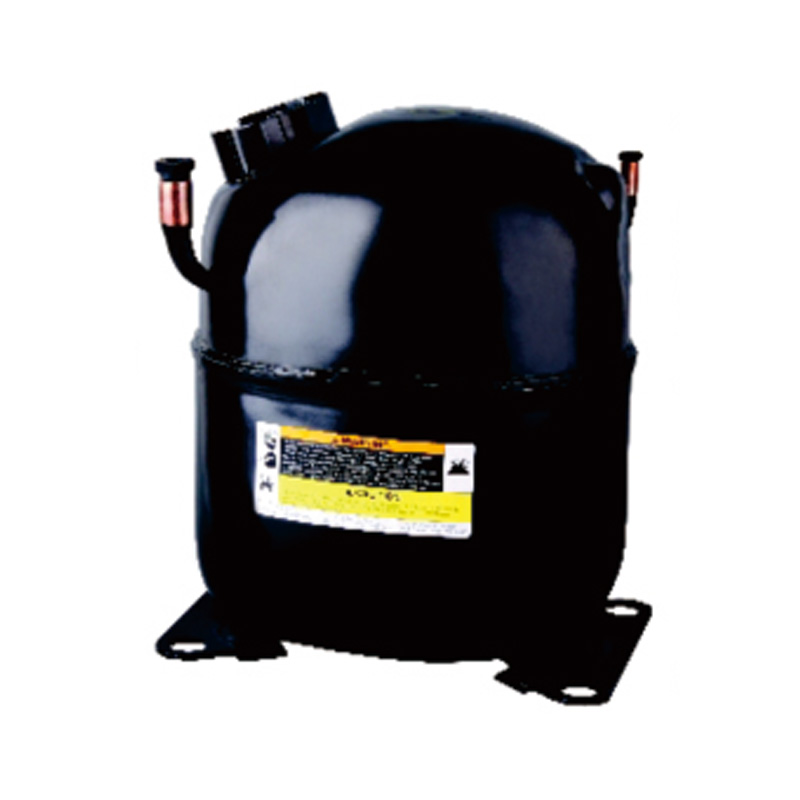
Tecumseh Refrigeration Compressor for Commercial Cold Drink Appliances
Admin 2026-09-06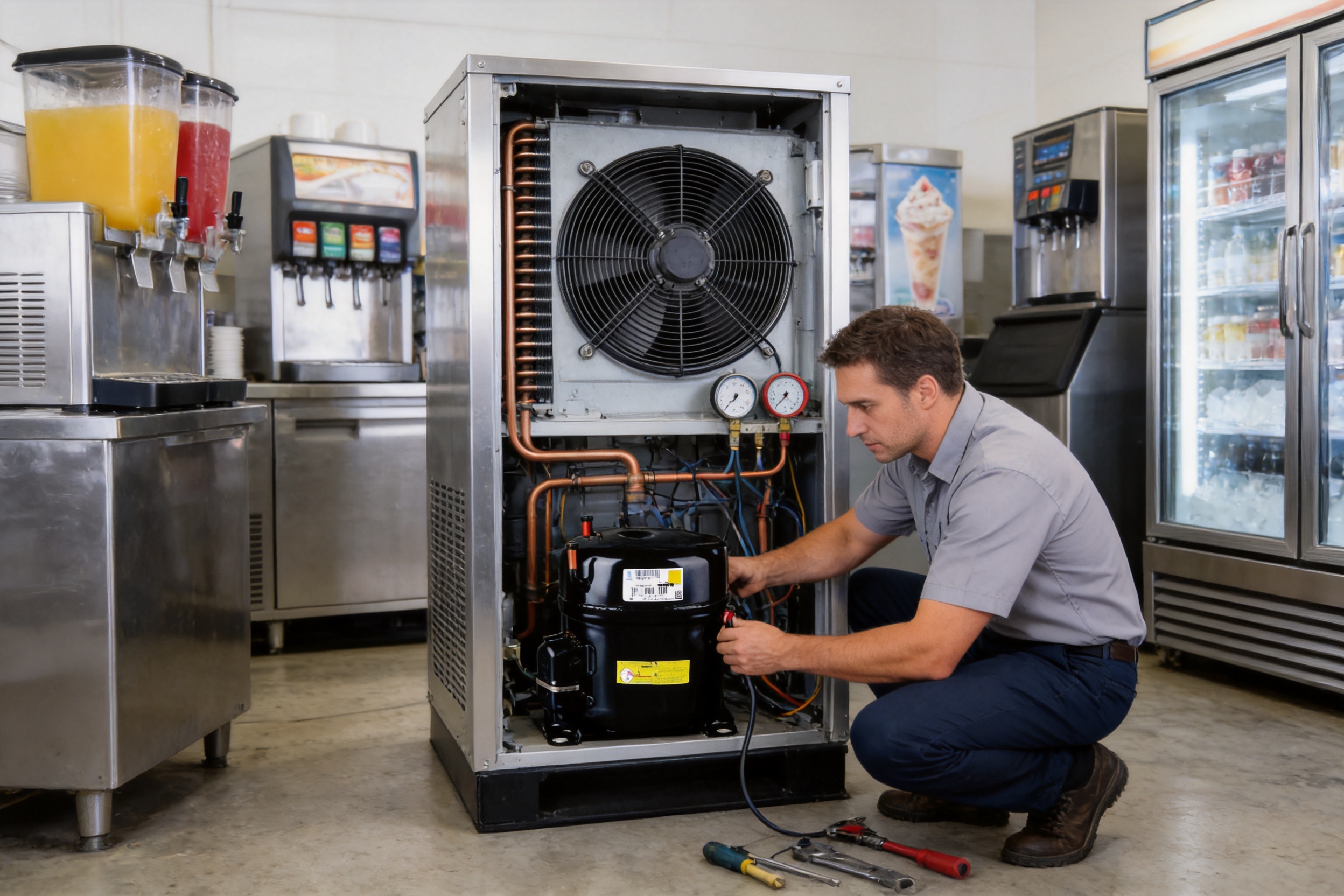
Commercial cold drink appliances depend on a stable refrigeration system to preserve product quality, maintain serving speed, and support profitable daily operation. Whether installed in a juice dispenser, chilled beverage cabinet, slush machine, ice cream machine, or another foodservice appliance, the compressor is one of the most important components in the refrigeration circuit. It provides the pressure difference required to circulate refrigerant, remove heat from the cabinet or product area, and maintain the operating temperature required by the equipment.
The Tecumseh refrigeration compressor supplied for commercial cold drink appliances is designed for demanding foodservice environments where reliability, compact installation, continuous operation, and manageable energy consumption are essential. It is offered as an optional component and spare part for compatible commercial beverage cooling equipment and is not sold separately as a standalone consumer product. Its intended application is professional equipment integration, replacement, or service support.
For equipment manufacturers, distributors, maintenance teams, and commercial operators, selecting the correct compressor is more than a matter of comparing nominal power ratings. The compressor must match the refrigeration circuit, refrigerant, evaporating temperature, condensing conditions, electrical supply, mounting arrangement, and cabinet design. A properly selected compressor supports faster pull-down, more consistent cooling, dependable operation during busy service periods, and easier maintenance over the service life of the appliance.
Why the Compressor Matters in Commercial Cold Drink Equipment
Cold drink appliances frequently operate in conditions that are more demanding than those found in ordinary household refrigerators. Commercial equipment may be opened repeatedly, exposed to warm ambient air, installed near cooking appliances, or required to cool large volumes of beverages within a short period. A dispenser may serve drink after drink throughout the day, while a beverage cabinet may need to recover quickly after the door is opened. Slush equipment and ice cream machines also place special demands on refrigeration systems because their product viscosity, temperature range, and operating cycle can vary considerably.
The compressor is the driving element of the vapor-compression refrigeration cycle. Refrigerant enters the compressor as a low-pressure vapor. The compressor raises the refrigerant pressure and temperature before sending it toward the condenser. After heat is rejected, the refrigerant passes through the expansion device and enters the evaporator at a lower pressure. In the evaporator, it absorbs heat from the beverage, product cylinder, storage compartment, or surrounding air. The refrigerant then returns to the compressor, and the cycle repeats.
If the compressor is incorrectly selected, the complete refrigeration system may experience slow cooling, excessive energy use, unstable temperatures, high discharge pressure, frequent thermal protection trips, or premature component wear. Conversely, a compressor that is correctly matched to the application can help the appliance deliver steady cooling while remaining compact and serviceable. This is why a purpose-oriented commercial refrigeration compressor is more valuable than a generic component chosen only by physical size or nominal horsepower.
Commercial cold drink appliances also require a balance between performance and practicality. The compressor must be powerful enough to deal with the expected heat load but not unnecessarily oversized. Oversizing can increase starting current, create inefficient short cycling, and raise system cost. Undersizing can result in continuous operation, inadequate pull-down capacity, and difficulty maintaining the target temperature. The Tecumseh compressor solution is intended to support this application-specific approach when integrated with a compatible refrigeration design.
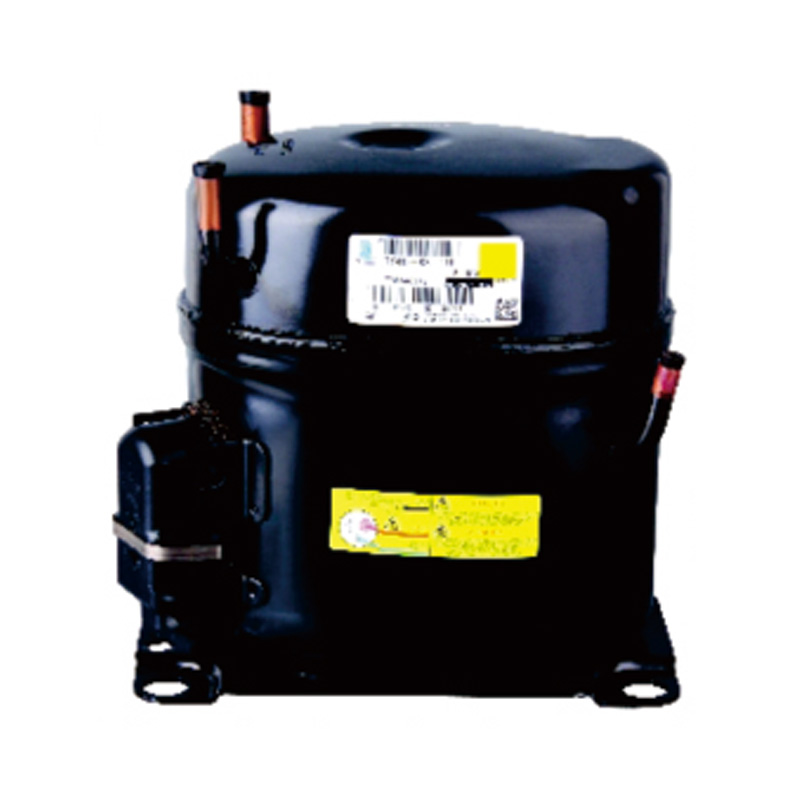
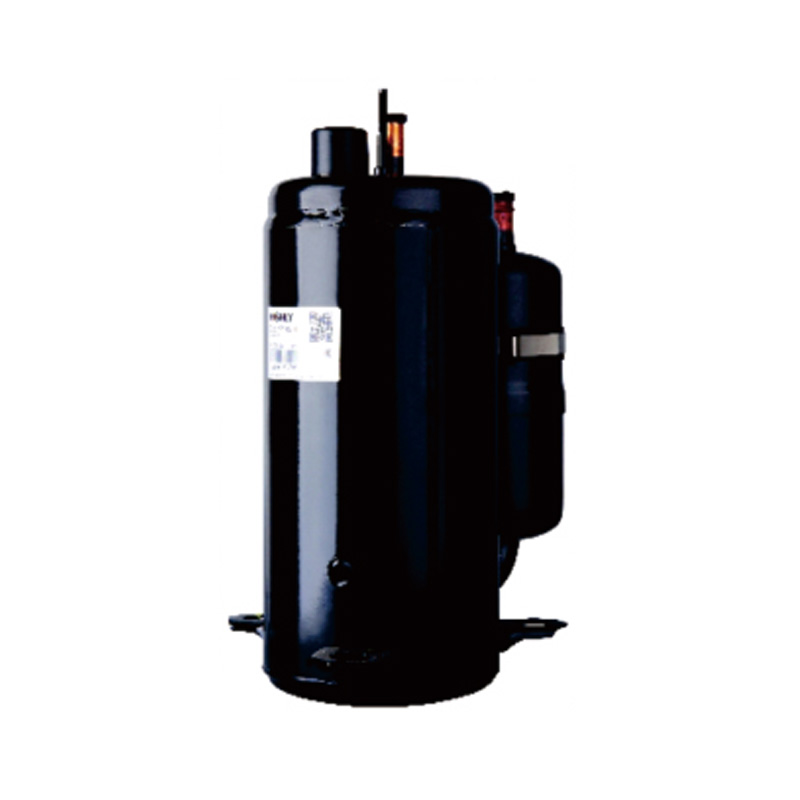
Tecumseh Refrigeration Compressor for Commercial Cold Drink Appliances(Not sold separately)
Product Overview
The Tecumseh refrigeration compressor for commercial cold drink appliances is a compact commercial refrigeration component intended for integration into compatible foodservice equipment. It is suitable for use in beverage cooling applications where stable operation, continuous duty capability, and service accessibility are important. The component can be considered for original equipment manufacturing, replacement programs, and maintenance inventory, subject to proper technical matching.
Its compact construction is particularly useful for equipment designers who must maximize internal storage space while maintaining adequate airflow and service clearance. Commercial refrigeration cabinets often have limited space beneath a counter, behind a beverage dispenser, or inside a machine base. A compressor with a practical footprint can simplify equipment layout and help manufacturers organize the compressor, condenser, fan, controls, piping, and electrical components more efficiently.
The product is also positioned as a cost-effective solution. Cost-effectiveness in commercial refrigeration does not mean selecting the cheapest component at the time of purchase. A more useful definition includes acquisition cost, installation effort, energy consumption, maintenance requirements, downtime risk, replacement availability, and expected operating life. A durable compressor that operates consistently and supports efficient system performance may provide greater total value than a low-cost component that requires frequent service or causes repeated interruptions.
Because the compressor is designed for professional equipment rather than casual household use, it can support the operating pattern associated with beverage businesses, restaurants, cafés, bars, supermarkets, convenience stores, institutional kitchens, and other foodservice locations. These environments often demand dependable cooling during long working hours, making continuous-duty stability an important selection factor.
Primary Product Characteristics
The main characteristics of this compressor include commercial suitability, compact installation, stable performance, continuous operation under appropriate conditions, good energy efficiency potential, and convenient integration into compatible refrigeration systems. These characteristics work together rather than independently. Compactness helps equipment designers, stable operation protects product quality, and energy efficiency helps control operating expenses.
The compressor should always be installed according to the technical requirements of the complete refrigeration system. Refrigerant type, capacity, pressure range, electrical voltage, frequency, oil specification, system charge, condenser design, evaporator load, and control strategy must be confirmed before installation. A compressor cannot compensate for a mismatched expansion valve, blocked condenser, inadequate airflow, incorrect refrigerant charge, or poorly designed pipework.
Advantages for Commercial Beverage Applications
Stable Cooling During Repeated Service
Commercial beverage equipment often faces repeated thermal disturbances. Doors may be opened frequently, drink containers may be loaded at room temperature, and warm ambient air may enter the product zone. A stable compressor helps the system recover from these disturbances and return the appliance to its intended operating condition.
Stable cooling is especially important for products that are served directly to customers. Beverage temperature affects taste, texture, customer satisfaction, and perceived product quality. In a dispenser, inconsistent cooling may lead to drinks that are less refreshing. In a cold storage cabinet, temperature variation may reduce the quality of stored beverages. In frozen or semi-frozen applications, temperature control influences product consistency and dispensing performance.
Support for Continuous Commercial Operation
In a professional environment, refrigeration equipment may operate for many hours each day. The compressor must therefore be suitable for a duty cycle that is more demanding than occasional domestic use. The Tecumseh compressor is intended to provide stable operation under appropriate commercial load conditions, helping equipment remain functional throughout busy service periods.
Continuous operation does not mean that the compressor should run without interruption under every condition. Correct controls should allow the compressor to cycle or modulate according to the equipment design and actual cooling demand. Good system design prevents unnecessary running, limits excessive starts, and ensures that the compressor receives appropriate lubrication and cooling. When correctly applied, the compressor can support reliable daily service without placing excessive stress on the refrigeration circuit.
Compact Installation
Commercial equipment manufacturers frequently need to make efficient use of limited space. A smaller compressor arrangement can create opportunities for a larger product compartment, more accessible controls, improved airflow, or a slimmer machine profile. Compactness may also simplify transportation and installation in locations where floor space is limited.
However, compact installation must always preserve service clearance and ventilation. The compressor needs adequate airflow and must be positioned away from excessive heat sources. The condenser and fan must be able to reject heat efficiently. When these conditions are respected, the compact design can help manufacturers build practical equipment without sacrificing serviceability.
Energy Efficiency Potential
Energy consumption is a major consideration for commercial refrigeration users. Beverage equipment may remain energized throughout the day, and even a modest difference in efficiency can influence annual operating expenses. The compressor is only one part of the energy equation, but its efficiency contributes directly to the performance of the complete system.
The Tecumseh compressor is described as offering a good energy efficiency ratio for suitable commercial beverage cooling applications. In practical terms, this means it can help remove the required amount of heat without excessive electrical input when matched with an appropriate evaporator, condenser, expansion device, refrigerant charge, and control system.
Actual energy performance depends on operating conditions. Ambient temperature, product load, cabinet insulation, condenser cleanliness, door-opening frequency, set point, refrigerant selection, and control settings all influence energy consumption. For this reason, responsible equipment design should evaluate the compressor as part of the whole refrigeration circuit rather than treating the compressor rating as a standalone guarantee of efficiency.
Durability and Service Value
Durability is essential for commercial appliances because downtime can affect sales, foodservice workflow, and customer confidence. A durable compressor can reduce the likelihood of premature replacement when the equipment is correctly installed and maintained. It may also help distributors and service providers standardize replacement procedures for compatible machines.
Long-term durability depends on several factors, including correct voltage, adequate ventilation, clean condenser coils, proper refrigerant charge, protection from liquid refrigerant return, and suitable operating pressures. The compressor provides a strong foundation, but the complete appliance must be designed and serviced correctly to achieve the expected service life.
Comparison with Generic or Poorly Matched Compressors
When comparing this product with generic or poorly matched alternatives, the most important difference is application suitability. A generic compressor may appear similar in size or rated power but still be unsuitable because of differences in refrigerant compatibility, evaporating temperature, starting characteristics, oil type, electrical configuration, or capacity at the required operating point.
A compressor selected only by physical dimensions may fail to provide adequate cooling capacity. It may run continuously without reaching the desired temperature, especially when the appliance is exposed to high ambient temperatures or frequent loading. This situation can increase energy consumption and reduce the service life of the compressor and related electrical components.
Another common problem is choosing a component designed for a different temperature range. A compressor intended for medium-temperature beverage cooling may not be appropriate for low-temperature frozen applications, while a low-temperature compressor may be inefficient or unsuitable for a warmer beverage cabinet. Application matching is therefore a major advantage over undifferentiated component sourcing.
Generic alternatives may also provide limited support for equipment integration. Commercial equipment manufacturers often need help with configuration, documentation, packaging, logistics, and replacement planning. A supplier with experience in commercial refrigeration equipment can provide broader assistance than a source that only sells an individual component without understanding the application.
| Selection Factor | Application-Matched Compressor | Generic or Poorly Matched Alternative |
|---|---|---|
| Cooling performance | Selected according to the refrigeration load and operating range | May be based only on nominal power or physical size |
| Commercial duty | Designed for professional equipment and repeated operating cycles | May not tolerate the expected duty cycle |
| System compatibility | Can be evaluated against refrigerant, voltage, oil, and pressure requirements | Compatibility may be uncertain or incomplete |
| Installation | Compact construction supports practical equipment layouts | May create space, piping, or mounting difficulties |
| Energy management | Good efficiency potential when correctly integrated | May consume more power under the same conditions |
| Service planning | Suitable for OEM and replacement coordination | May be difficult to standardize across equipment models |
| Long-term value | Evaluated through performance, durability, and maintenance needs | Lower purchase price may lead to higher operating risk |
The table illustrates why product selection should consider the complete operating context. No compressor should be judged solely by price. A component that supports stable machine performance and reduces service interruptions may offer a better commercial result even when its initial purchase price is not the lowest available.
Advanced Manufacturing Capabilities Behind the Product
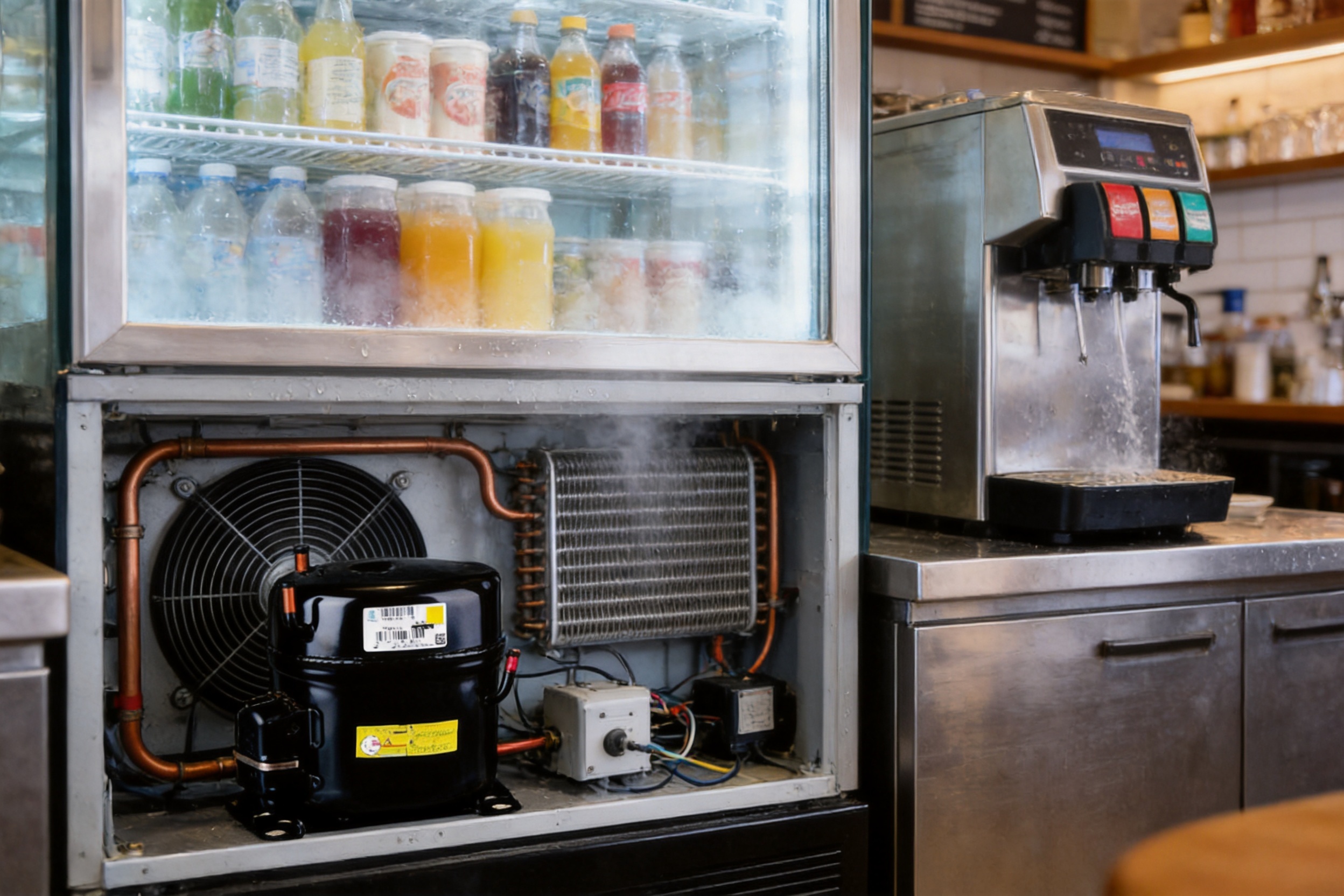
The compressor is supplied by Spelor Electrical Appliances (Zhejiang) Co., Ltd., a professional manufacturer integrating design, research and development, manufacturing, sales, and service. The company operates more than 60,000 square meters of modern production facilities and serves commercial refrigeration, kitchen, and buffet equipment markets.
This manufacturing background is important because a refrigeration component is most valuable when supported by a complete equipment and engineering capability. A factory that understands beverage dispensers, ice cream machines, slush machines, ice machines, refrigeration cabinets, cooking equipment, and buffet systems can evaluate compressor applications in the context of real commercial appliances.
Integrated Product Development
Integrated design and research capability allows product requirements to be considered from an early stage. For commercial cold drink equipment, this includes cooling capacity, machine dimensions, cabinet layout, operating temperature, user workflow, noise considerations, service access, electrical requirements, and production cost.
An integrated approach can help identify potential problems before mass production. For example, the compressor position may influence condenser airflow, piping length, service clearance, and cabinet balance. The design team can also consider how the compressor works with the appliance controller, fan system, evaporator, insulation, and drain arrangement.
For OEM and ODM customers, this capability is especially valuable. A customer may provide drawings, product requirements, market specifications, or a target machine configuration. The manufacturer can then review the requirements and help develop a suitable equipment solution or component arrangement. This approach is more efficient than treating every part as an isolated purchase.
Modern Production Facilities
More than 60,000 square meters of modern production facilities provide a substantial platform for manufacturing and assembly. Production scale can support organized material handling, dedicated work areas, process coordination, quality control, product testing, and shipment preparation.
Modern production does not depend only on building size. It also requires controlled procedures, trained personnel, suitable equipment, production documentation, and inspection standards. For refrigeration equipment and related components, manufacturing discipline is important because small inconsistencies in assembly, wiring, brazing, sealing, or testing can affect field performance.
A structured factory environment can also improve consistency between production batches. This matters to equipment manufacturers and distributors that need repeatable product performance and predictable replacement compatibility. Consistency helps reduce installation uncertainty and simplifies technical support.
Quality-Oriented Assembly and Inspection
Commercial refrigeration products require attention to mechanical assembly, electrical safety, refrigerant circuit integrity, and operational testing. Quality-oriented manufacturing should include inspection of incoming materials, verification of key assembly steps, visual and dimensional checks, electrical testing, and functional evaluation where appropriate.
For compressor-integrated equipment, the manufacturing process may include attention to mounting stability, piping connections, vibration control, condenser airflow, wiring protection, and controller operation. Proper assembly reduces the risk of noise, refrigerant leakage, electrical faults, and unnecessary mechanical stress.
Quality control is not limited to the final inspection. It should be built into the complete manufacturing process. Clear work instructions, traceable inspection records, trained operators, and corrective action procedures help manufacturers identify problems and improve future production. These practices strengthen the reliability of both finished appliances and replacement components.
OEM and ODM Flexibility
OEM and ODM projects often require more than standard catalog purchasing. Customers may need a particular machine size, electrical configuration, cooling performance, branding arrangement, packaging method, or regional compliance plan. A factory capable of customization can coordinate these requirements across design, production, and service teams.
For commercial beverage equipment, customization may involve matching a compressor to a specific cabinet, modifying the machine layout, adapting the control system, selecting suitable accessories, or developing a complete refrigeration solution based on drawings and requirements. This flexibility is a competitive advantage for importers, distributors, foodservice equipment brands, and project contractors.
Customization should always be supported by technical review. The compressor capacity, refrigerant compatibility, operating temperature, condenser arrangement, expansion device, and electrical characteristics must be validated before production. Proper engineering review prevents the common mistake of applying a standard component to a nonstandard system without confirming performance.
Application Areas
Commercial Juice Dispensers
Juice dispensers require reliable cooling to keep beverages refreshing during service. The compressor may support a refrigerated product tank, cooling coil, or integrated beverage circuit, depending on the machine design. In high-use locations, the system must respond effectively to repeated dispensing and regular replenishment.
A compact compressor can help preserve cabinet space for product storage and improve the overall machine footprint. Stable operation also supports consistent beverage temperature, which is important for customer satisfaction and product presentation.
Commercial Slush Machines
Slush machines need controlled cooling to maintain a partially frozen product with an appropriate texture. The compressor works together with the product cylinder, evaporator, agitator, controller, and insulation. The refrigeration system must be selected according to the product formulation, target temperature, cylinder size, ambient conditions, and expected operating cycle.
Because slush equipment can operate for extended periods in busy beverage outlets, compressor stability and heat rejection are important. A correctly integrated compressor can support the machine’s ability to maintain product consistency while avoiding excessive thermal stress.
Commercial Ice Cream Machines
Ice cream machines place substantial demands on refrigeration because the product must be cooled or frozen within a controlled range while the machine may be used repeatedly. The compressor must be evaluated together with the freezing cylinder, beater motor, product load, cleaning cycle, and control system.
In this application, the compressor should not be selected by nominal power alone. The refrigeration design must account for the required pull-down time, product viscosity, ambient temperature, and heat generated by other machine components. A compact, durable compressor can support a practical machine design when properly matched to these conditions.
Commercial Ice Machines
Ice machines depend on refrigeration to freeze water and complete their production cycle. Although the operating pattern differs from beverage dispensers, the same principles apply: correct capacity, reliable starting, adequate condenser performance, suitable refrigerant compatibility, and effective controls are essential.
Where a compressor is used in an ice machine or related appliance, engineering confirmation is required because ice-making systems can have specific low-temperature and harvest-cycle requirements. The compressor should be evaluated according to the complete machine design and not transferred between applications without technical approval.
Refrigeration Cabinets and Beverage Coolers
Refrigeration cabinets and beverage coolers often need to maintain a stable temperature while handling frequent door openings and product loading. A dependable compressor can help the cabinet recover efficiently after each disturbance and protect the quality of stored products.
Cabinet performance also depends on insulation, door seals, condenser cleanliness, evaporator design, fan operation, and thermostat settings. When these elements are coordinated, the compressor can operate within a stable range and contribute to lower operating costs.
Installation and Integration Considerations
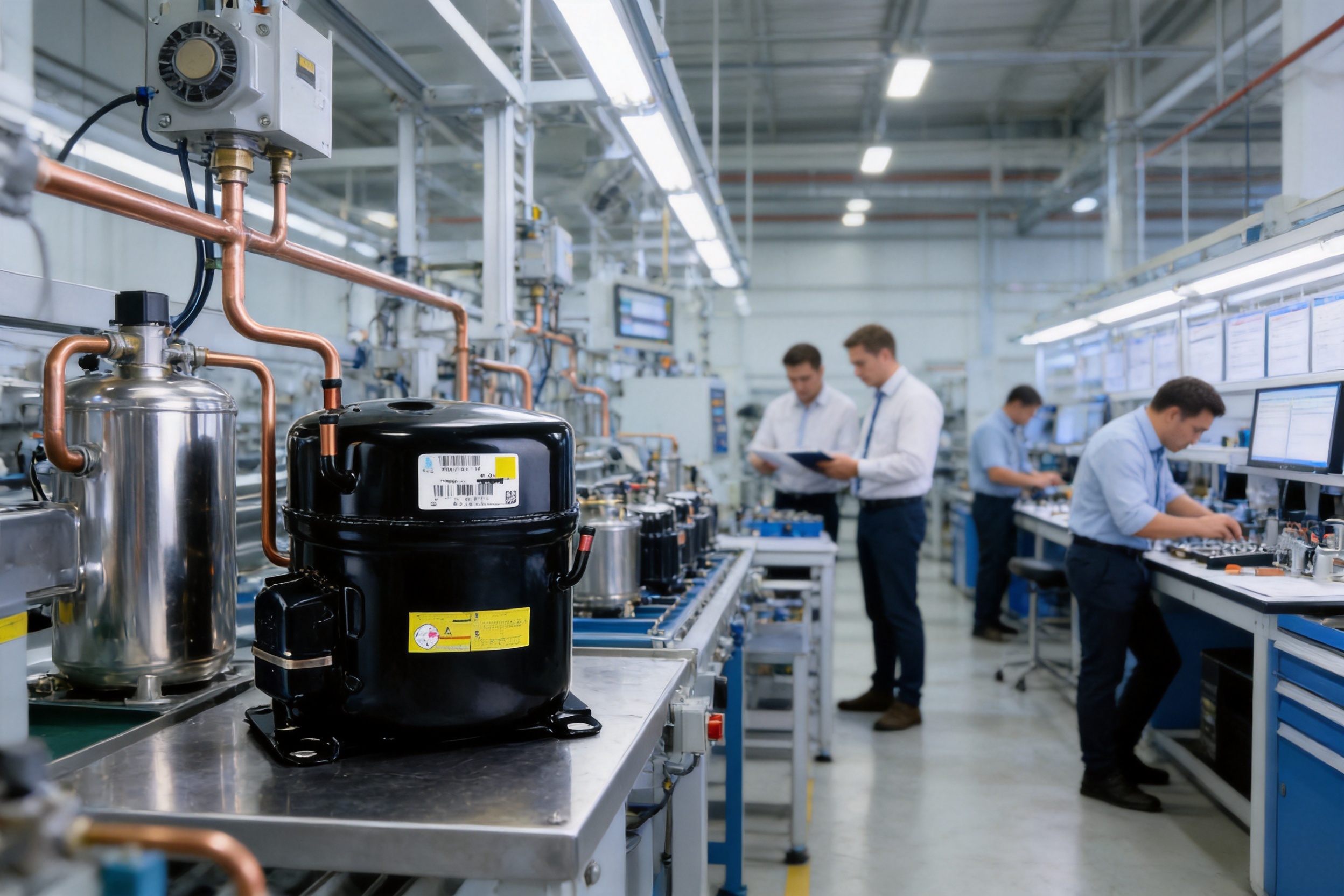
Because this compressor is an optional component and spare part rather than a universal plug-and-play consumer product, installation should be performed by qualified refrigeration technicians or equipment manufacturers. The first step is to confirm that the replacement compressor matches the original system or the proposed equipment design.
Confirm the Technical Match
Before installation, verify the compressor model, refrigerant requirements, electrical voltage, frequency, phase, cooling capacity, application temperature range, starting characteristics, oil specification, connection dimensions, mounting points, and protection requirements. If any of these details are uncertain, technical consultation should take place before the component is ordered or installed.
The technician should also review the condition of the rest of the refrigeration circuit. A failed compressor may be the result of another problem, such as a blocked condenser, refrigerant leakage, liquid return, electrical voltage instability, contaminated oil, restricted tubing, or a defective control. Replacing the compressor without correcting the original cause can lead to repeated failure.
Prepare the Refrigeration Circuit
The refrigeration circuit should be clean, dry, and free from unnecessary contaminants. Pipework must be correctly sized and routed, with joints properly made and inspected. The system should be evacuated according to accepted refrigeration practice before charging with the specified refrigerant.
Improper evacuation can leave moisture or non-condensable gases in the system. These contaminants may increase operating pressure, reduce efficiency, damage components, or cause unstable operation. Correct charging is equally important. Too much or too little refrigerant can alter pressure, cooling performance, and compressor temperature.
Provide Adequate Ventilation
The compressor and condenser release heat during operation. If the equipment enclosure does not provide adequate ventilation, condensing pressure may rise and the compressor may operate at a higher temperature than intended. This can increase energy consumption and activate thermal protection.
Equipment designers should provide a clear airflow path and avoid placing the machine directly next to ovens, grills, hot walls, or other heat-producing equipment. Operators should keep condenser openings clear and clean dust, grease, and debris from the condenser according to the maintenance schedule.
Control Vibration and Noise
Correct mounting is important for commercial refrigeration equipment. The compressor should be securely mounted using suitable hardware and vibration-control elements where required. Piping should be routed so that it does not rub against the cabinet or transmit unnecessary vibration.
Noise can be influenced by compressor operation, fan balance, cabinet resonance, loose panels, and pipe contact. A well-designed installation reduces these issues and provides a more comfortable environment for staff and customers.
Maintenance Practices for Long-Term Performance
Routine maintenance is one of the most effective ways to protect a commercial refrigeration compressor. Operators should establish a service schedule based on equipment usage, ambient conditions, and manufacturer recommendations. High-use locations and dusty or greasy environments may require more frequent cleaning than lightly used indoor applications.
Condenser cleaning should be treated as a priority. A dirty condenser restricts heat transfer, raises condensing pressure, and forces the compressor to work harder. Over time, this can increase energy consumption and shorten component life. Air filters, fan guards, and ventilation openings should also be checked where applicable.
Technicians should inspect electrical connections for looseness, overheating, or corrosion. Voltage should be checked under operating conditions, particularly in locations where supply fluctuations are common. Controls, relays, overload protectors, capacitors, and wiring should be evaluated as part of the service process.
Temperature and pressure readings can provide useful information about system health. Unusual suction pressure, excessive discharge pressure, abnormal superheat, or unexpected compressor temperature may indicate a refrigeration circuit problem. These measurements should be interpreted by a qualified technician familiar with the specific equipment.
Operators should also monitor product temperature, recovery time, unusual noise, excessive cycling, and changes in energy use. Early signs of a problem can include longer running time, reduced cooling capacity, frequent thermal trips, or inconsistent beverage temperature. Prompt service may prevent a minor issue from becoming a major compressor failure.
Value for Equipment Manufacturers and Distributors
For equipment manufacturers, the product offers access to a recognized compressor solution that can be considered during the design of commercial cold drink appliances. Its compact format and commercial application can help support practical machine architecture, while its efficiency and durability characteristics may contribute to a competitive product offering.
For distributors, stocking or sourcing an appropriate spare component can improve after-sales response. Commercial customers typically value quick repair because refrigeration downtime can interrupt sales and operations. A reliable supply channel, accurate model identification, and technical coordination can reduce the time required to return equipment to service.
For foodservice equipment brands, the combination of component supply and manufacturing support can simplify procurement. Instead of managing unrelated suppliers for every appliance category, customers may coordinate refrigeration, beverage, kitchen, and buffet equipment through a factory with broader product knowledge.
Spelor’s product range includes ice cream machines, juice dispensers, fried ice cream machines, refrigeration cabinets, slush machines, flake ice machines, cooking equipment, griddles, fryers, insulation products, barbecue equipment, and buffet solutions. This range provides context for compressor applications and supports a broader understanding of the needs of snack shops, fast-food chains, bars, supermarkets, institutions, and other foodservice operations.
The company also provides one-stop service covering pre-sales consultation, product customization, logistics and payment solutions, and after-sales maintenance. For international buyers, this type of support can help coordinate technical questions, production planning, documentation, shipment preparation, and service requirements.
How to Select the Correct Configuration
Customers should provide as much technical information as possible when requesting a compressor or replacement recommendation. Useful information includes the original compressor model, appliance type, refrigerant, electrical rating, target temperature, evaporator capacity, condenser design, ambient temperature, machine dimensions, and operating symptoms.
Photographs of the compressor label, wiring arrangement, mounting position, pipe connections, and equipment identification plate may also help the technical team evaluate compatibility. Drawings and performance requirements are particularly useful for OEM and ODM projects.
It is important to clarify whether the request concerns a new machine, a replacement compressor, a spare-parts program, or a complete equipment project. The correct recommendation may differ depending on whether the component must replace an existing model or be selected for a new refrigeration circuit.
| Information to Provide | Reason It Is Important |
|---|---|
| Appliance type | Different machines require different temperature ranges and cooling loads |
| Original compressor model | Helps identify capacity, electrical, and dimensional compatibility |
| Refrigerant type | Confirms pressure, oil, and material compatibility |
| Voltage and frequency | Ensures suitable electrical operation and starting performance |
| Target temperature | Defines the required evaporating range |
| Ambient conditions | Influences condensing pressure and heat rejection |
| Machine drawings or photographs | Supports evaluation of installation space and connections |
| Operating symptoms | Helps distinguish compressor failure from other system faults |
Providing complete information reduces the risk of ordering an unsuitable component. It also allows the supplier to identify whether the problem is related to the compressor itself or to another part of the refrigeration system.
Q&A
What is this product used for?
This product is a Tecumseh refrigeration compressor intended for integration into compatible commercial cold drink appliances and related commercial refrigeration equipment. It may be used for original equipment projects, replacement work, and spare-parts support after technical compatibility has been confirmed.
Is the compressor sold as a standalone consumer product?
No. The product is marked as not sold separately. It is intended as an optional component or spare part for compatible commercial equipment and should be purchased and installed through an appropriate equipment, refrigeration, or service channel.
Can it be used in any beverage cooler?
No. Compressor selection must be based on the complete refrigeration system. Refrigerant, cooling capacity, electrical supply, operating temperature, mounting arrangement, oil type, pressure range, and condenser design must all be compatible. Technical confirmation is recommended before installation.
What are its main advantages?
Its main advantages include commercial application suitability, compact construction, stable operation under appropriate loads, support for continuous-duty equipment, durability, and good energy efficiency potential when correctly integrated into a refrigeration system.
Can it support juice dispensers and slush machines?
It may support compatible juice dispensers, slush machines, beverage coolers, and other cold drink appliances. However, each machine has different cooling requirements. The compressor must be matched to the appliance design, product temperature, refrigeration load, and operating cycle.
Can it be used in an ice cream machine?
It may be considered for compatible commercial ice cream equipment, but ice cream machines often have demanding freezing and pull-down requirements. The compressor capacity, low-temperature performance, refrigerant, and control system must be evaluated before use.
How does it compare with a generic compressor?
The key advantage is application-focused selection and support. A generic compressor may have similar physical dimensions but differ in capacity, refrigerant compatibility, temperature range, electrical characteristics, or duty suitability. A properly matched commercial compressor can provide better system reliability and more predictable performance.
Does the compressor reduce energy consumption automatically?
No compressor can guarantee a specific energy reduction independently of the equipment design. Energy performance depends on the compressor, condenser, evaporator, insulation, controls, refrigerant charge, ambient temperature, maintenance, and operating habits. The product offers good efficiency potential when these elements are correctly matched.
What maintenance is required?
Maintenance generally includes condenser cleaning, airflow inspection, electrical connection checks, temperature monitoring, pressure evaluation by a qualified technician, and inspection for refrigerant leakage or abnormal noise. The actual schedule should reflect the equipment type and operating environment.
What should be checked before ordering a replacement?
Check the original model, refrigerant, voltage, frequency, cooling capacity, operating temperature, mounting dimensions, pipe connections, and application. Photographs of the original compressor label and equipment identification plate can help with technical confirmation.
Can the manufacturer provide customized solutions?
Yes. Spelor provides OEM and ODM commercial refrigeration equipment solutions based on drawings or requirements. Customers can discuss equipment configuration, product customization, manufacturing arrangements, logistics, and after-sales support with the company’s technical and sales teams.
What types of customers can benefit from this product?
Potential customers include commercial refrigeration manufacturers, beverage equipment brands, foodservice equipment distributors, refrigeration service providers, restaurant groups, supermarket suppliers, and operators requiring a compatible spare component for professional equipment.
Conclusion
The refrigeration compressor is central to the performance of commercial cold drink appliances. It affects cooling speed, temperature stability, energy consumption, operating continuity, service requirements, and the overall value of the equipment. Selecting a component that is appropriate for the intended refrigeration system is therefore essential.
The Tecumseh refrigeration compressor for commercial cold drink appliances offers a practical combination of commercial suitability, compact installation, stable operation, durability, and good energy efficiency potential. Its value is strongest when it is correctly matched with the evaporator, condenser, expansion device, refrigerant, controls, and electrical system.
Compared with generic or poorly selected alternatives, an application-focused compressor can provide greater confidence in equipment integration and long-term service. It can support juice dispensers, slush machines, beverage coolers, ice cream machines, ice machines, and other compatible commercial refrigeration applications, provided that technical requirements are confirmed for each project.
Behind the product is a manufacturing organization with more than 60,000 square meters of modern production facilities and capabilities covering design, research and development, manufacturing, sales, and service. This integrated foundation supports OEM and ODM cooperation, product customization, coordinated procurement, and after-sales assistance for customers serving global foodservice markets.
For equipment manufacturers, distributors, and professional service providers, the correct purchasing decision should consider more than the component’s initial price. Compatibility, reliability, installation space, energy performance, maintenance, technical support, and supply continuity all influence the total commercial result. With proper application review and professional installation, this compressor can serve as a dependable component in demanding commercial beverage cooling equipment.
References
1. Commercial Refrigeration Engineering Principles, refrigeration cycle operation, compressor selection, and system integration practices.
2. Foodservice Equipment Design Guidelines, commercial beverage cooling, cabinet ventilation, service access, and maintenance planning.
3. Refrigeration System Installation and Service Practices, evacuation, refrigerant charging, pressure testing, and electrical inspection.
4. Compressor Application Engineering References, evaporating temperature, condensing conditions, duty cycles, oil compatibility, and capacity matching.
5. Commercial Kitchen and Beverage Equipment Maintenance Guidance, condenser cleaning, airflow management, temperature monitoring, and preventive service.
6. Manufacturer-provided product information for commercial refrigeration components and foodservice equipment solutions.
Product: Tecumseh Refrigeration Compressor for Commercial Cold Drink Appliances(Not sold separately)

For exclusive deals and latest offers, sign up by entering your email address below.


-
spelor@spelor.com
-
+86-576-85229688
-
No.528, Changxi Road, Linhai City, Zhejiang Province, China
Commercial Refrigeration Equipment Manufacturer China
Copyright © 2025 by Spelor Electrical Appliances (Zhejiang) Co., Ltd. Rights Reserved.
