


 中文简体
Commercial Floor-Standing Soft Serve Ice Cream Machine for High-Output Dessert Operations
Admin 2026-11-06Introduction
Soft serve ice cream is one of the most adaptable and commercially attractive dessert products in the foodservice industry. It can be served in cones, cups, sundaes, shakes, parfaits, waffles, fruit desserts, and specialty combinations. Because the product is familiar to customers, easy to customize, and suitable for different seasons, soft serve equipment is widely used in dessert shops, cafés, restaurants, fast-food outlets, hotels, amusement venues, supermarkets, catering businesses, and mobile event services.
For a commercial operator, however, a soft serve machine must provide more than attractive appearance. It must maintain consistent freezing performance, support repeated production, offer practical capacity, allow efficient operation, and simplify sanitation. The equipment must also fit the available space, match the expected customer flow, and deliver dependable performance during long working hours. A machine that freezes slowly, requires frequent manual adjustment, or is difficult to clean can create unnecessary labor costs and reduce customer satisfaction.
The BQL-818 floor-standing commercial soft serve ice cream machine is designed for businesses that require stable output, multiple flavor options, and a professional production solution. With a stated production capacity of 18 liters per hour, two 5.5-liter hoppers, two 1.6-liter freezing tanks, an 1,800-watt input power rating, and a floor-standing structure, it is positioned for dessert and catering operations that need more capacity than a small countertop machine can provide.
Its design combines food-grade stainless steel, colorful sprayed steel panels, an LCD control panel, and a self-cleaning function. These features support both practical operation and a professional appearance. The machine is suitable for medium- to large-sized venues and for businesses that need to produce soft serve continuously rather than only occasionally.
Manufactured by Spelor Electrical Appliances (Zhejiang) Co., Ltd., the machine is supported by a manufacturer with experience in commercial refrigeration, foodservice equipment, buffet equipment, and related cold-food machinery. The company operates modern production facilities covering more than 60,000 square meters and provides design, research and development, manufacturing, sales, customization, logistics, and after-sales support.
This article examines the machine’s structure, operating advantages, application value, manufacturing strengths, maintenance considerations, and purchasing relevance for global foodservice buyers.

Spelor Floor Commercial Soft Serve Ice Cream Machine Versatile for Dessert Catering
Product Overview
The BQL-818 is a floor-standing soft serve ice cream machine intended for professional foodservice use. Its vertical format allows the machine to provide meaningful production capacity without requiring a long horizontal footprint. This configuration is particularly useful in commercial kitchens, dessert counters, concession areas, café backrooms, and catering preparation spaces where floor space must be used efficiently.
The machine is designed around a two-flavor configuration. Its two hoppers and two freezing tanks allow operators to work with separate mixtures and produce more than one flavor. Depending on the selected dispensing configuration, a two-flavor machine can support independent flavor service and combination servings. This gives businesses more menu flexibility than a basic single-flavor unit.
The key specifications supplied for the product include an 18-liter-per-hour production capacity, 1,800-watt input power, two 5.5-liter hoppers, two 1.6-liter freezing tanks, a net weight listed at approximately 106 to 119 kilograms in the supplied information, and dimensions of 540 x 575 x 1,370 millimeters. The product information also identifies a Chinese compressor and R404 refrigerant.
| Specification | Product Detail |
|---|---|
| Model | BQL-818 |
| Product type | Floor-standing commercial soft serve ice cream machine |
| Production capacity | 18 liters per hour |
| Input power | 1,800 watts |
| Hopper capacity | 2 x 5.5 liters |
| Freezing tank capacity | 2 x 1.6 liters |
| Dimensions | 540 x 575 x 1,370 millimeters |
| Net weight | Approximately 106–119 kilograms according to the supplied specifications |
| Compressor | Chinese compressor |
| Refrigerant | R404 |
| Control system | LCD panel |
| Cleaning support | Self-cleaning function |
The difference between the two stated net weights should be confirmed with the manufacturer before ordering, especially when planning transportation, installation, floor loading, or export documentation. Such confirmation is a normal part of commercial equipment procurement and does not change the machine’s core operating concept.
Floor-Standing Design for Professional Use
One of the most important advantages of the BQL-818 is its floor-standing format. Countertop machines may be convenient for small operations, but their limited hopper capacity and compact freezing systems can become restrictive when customer traffic increases. A floor-standing machine can provide a larger internal layout, more substantial refrigeration components, and a more visible professional presence at the service counter.
The dimensions of 540 x 575 x 1,370 millimeters create a relatively narrow rectangular footprint for a commercial machine with two flavor channels. The width and depth are suitable for many service areas, while the vertical height allows the equipment to use available upward space. Operators should still measure doorways, elevators, work areas, and service clearances before installation.
A floor-standing machine can also improve workflow. Staff members do not need to lift a heavy unit onto a workbench, and the dispensing area can be placed at a practical serving height. Ingredients and accessories may be organized around the machine, while the lower part of the equipment remains available for structural support and ventilation planning.
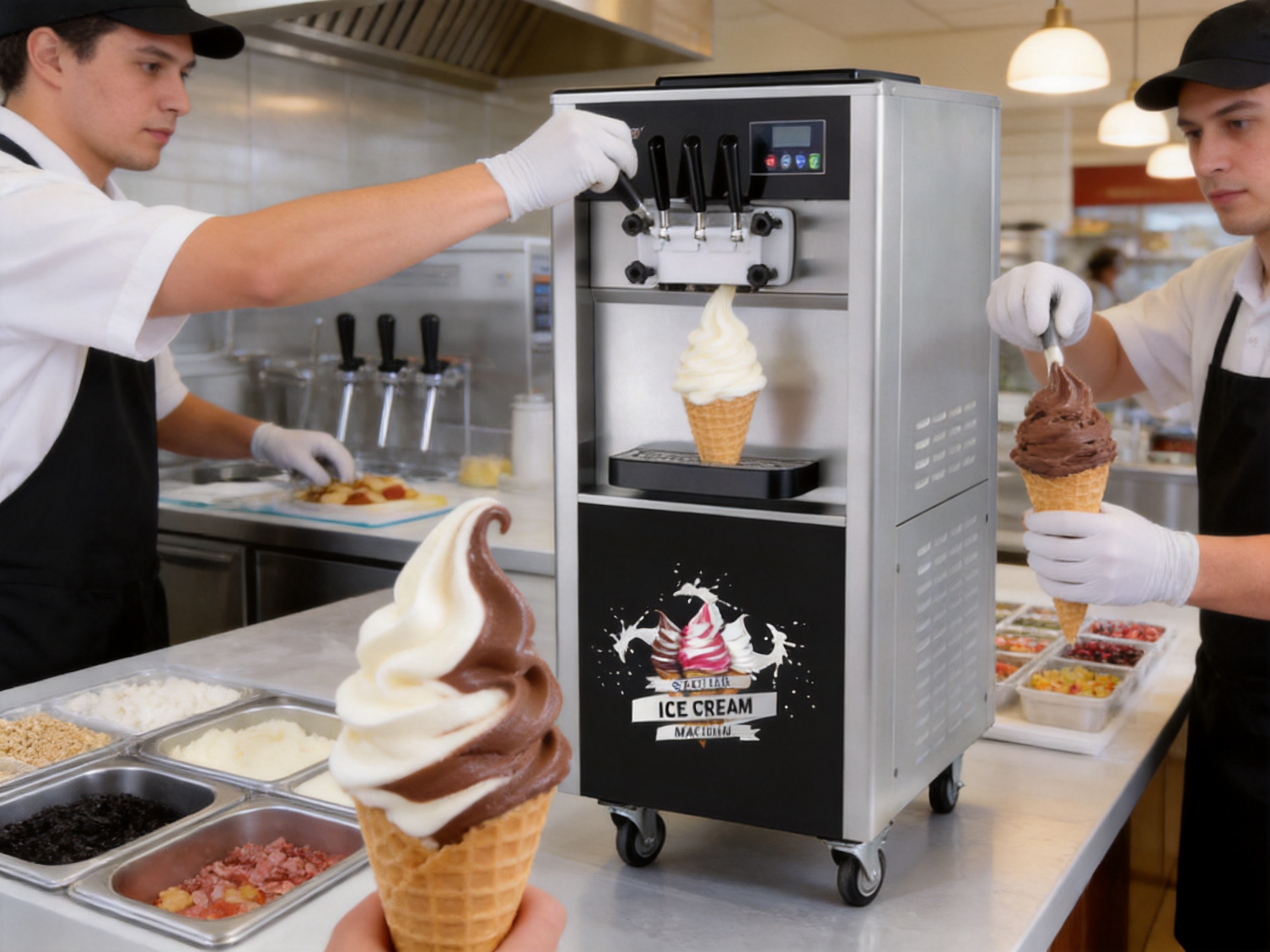
Compared with compact consumer-oriented equipment, the BQL-818 is intended to function as part of a continuous commercial workflow. It can be installed in a dessert production line, a fast-food counter, a catering preparation zone, or a buffet service area. Its appearance, based on stainless steel and colorful sprayed steel, also helps it fit into customer-facing environments rather than being limited to a hidden backroom.
Production Capacity and Commercial Efficiency
The stated capacity of 18 liters per hour is one of the machine’s central commercial advantages. Capacity should not be understood as a guarantee of identical output under every condition. Actual production depends on mix temperature, formulation, serving size, ambient temperature, cleaning cycles, electrical supply, and operating practices. Nevertheless, the rating indicates that the machine is designed for substantially higher output than entry-level domestic equipment.
For a dessert shop, the capacity can support regular service throughout the day. For a restaurant or café, it can provide soft serve as an additional menu category without requiring a separate large production system. For event catering, the machine can help maintain service continuity when demand rises during peak periods.
Two 5.5-liter hoppers provide a combined ingredient holding capacity of 11 liters before accounting for operating requirements and minimum fill levels. The separate hoppers allow the operator to prepare two flavors or two product mixtures. This supports menu differentiation and can increase average customer spending through combination servings, premium toppings, flavored cones, and customized desserts.
The 1.6-liter freezing tanks on each side are designed to maintain product in a ready-to-serve condition. The relationship between hopper capacity and freezing cylinder capacity allows the machine to replenish the freezing area from the ingredient supply as product is dispensed. Operators should follow the manufacturer’s recommended filling, mix preparation, and minimum-level procedures to protect product consistency and equipment performance.
Commercial efficiency is not based only on liters per hour. It also depends on how quickly the machine can recover between servings, how often staff must intervene, how simple cleaning is, and how reliably the unit performs during extended operation. The BQL-818 addresses these factors through its refrigeration system, LCD panel, self-cleaning function, and dual-flavor architecture.
Dual-Flavor Flexibility
Customers increasingly expect variety, even from relatively simple dessert menus. A machine that supports two flavors can serve traditional vanilla on one side and chocolate, fruit, yogurt, or another specialty mixture on the other. This allows the business to refresh its menu without purchasing two separate machines.
Two independent flavor options can also support different customer groups. A shop may offer a classic dairy-based product and a fruit-based product, or a standard recipe and a seasonal recipe. Restaurants can align the flavors with existing desserts, while catering companies can select flavors according to the event theme.
The dual-flavor design creates additional possibilities for combination servings. A customer may choose one flavor, the other flavor, or a mixed serving where supported by the dispensing arrangement. Combination products can improve visual appeal and encourage social media sharing, especially when served with toppings, syrups, fresh fruit, cookies, or decorated cones.
From an operational perspective, separate hoppers also help the operator manage demand. If one flavor is more popular, the business can adjust its preparation schedule and production planning. The machine can therefore support both product variety and more responsive inventory management.
Compared with a single-flavor commercial machine, a two-flavor unit may provide better value for businesses where menu variety is important. Compared with purchasing two independent units, one dual-flavor machine may reduce the required counter length, electrical planning, cleaning stations, and routine maintenance workload.
Food-Grade Materials and Sanitary Construction
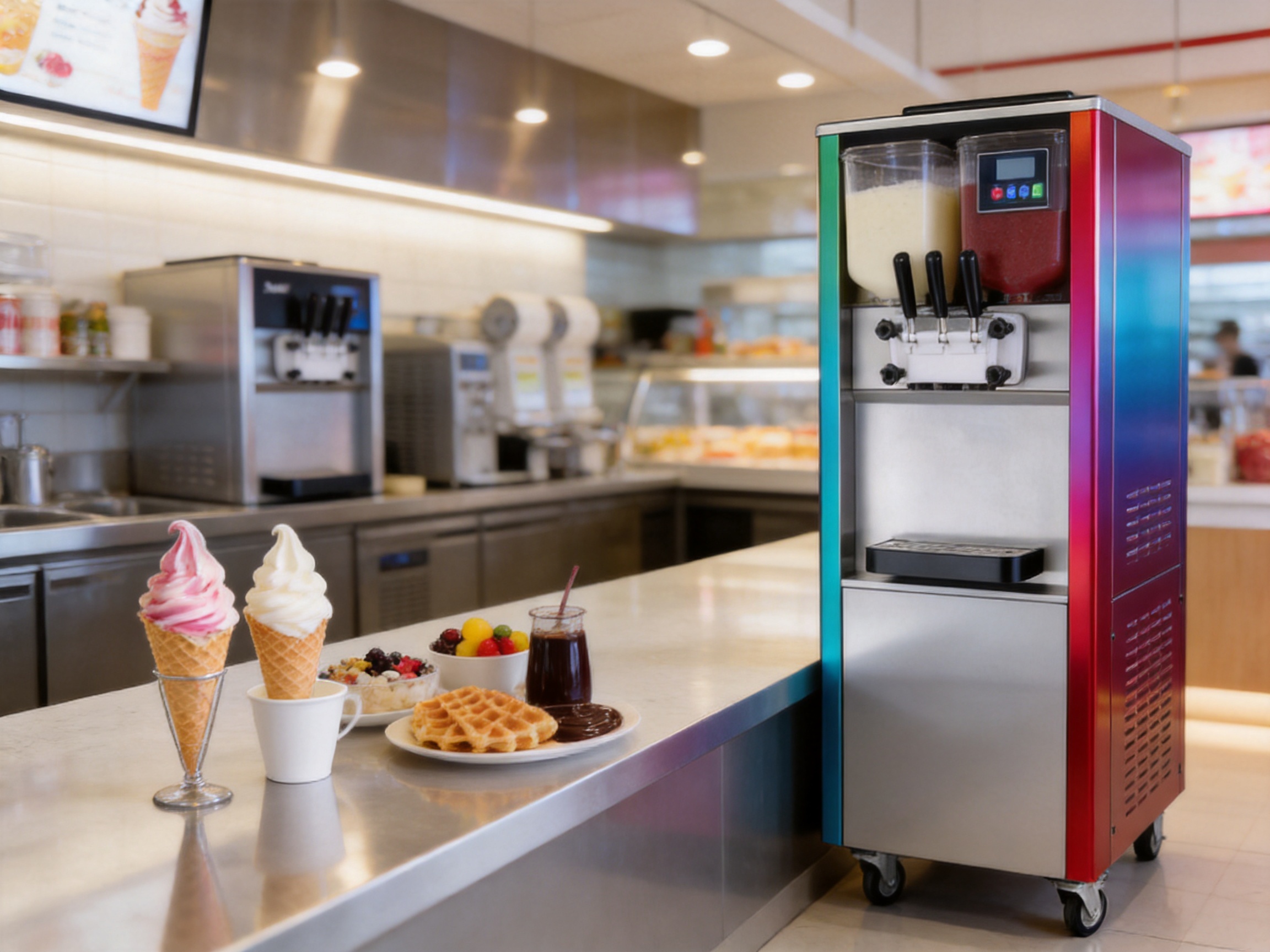
The product information states that the plate body is made of food-grade stainless steel and colorful sprayed steel. These materials serve different practical purposes. Stainless steel is widely used in foodservice equipment because it is durable, resistant to corrosion under normal operating conditions, and relatively easy to wipe and sanitize. It also provides a professional appearance that suits commercial kitchens and visible service counters.
The use of food-grade material is important because soft serve production involves direct contact between the equipment and food mixtures. Surfaces around the hopper, dispensing area, and service panels should be maintained in a clean condition. Smooth, accessible surfaces reduce the risk of residue accumulation and support routine sanitation practices.
Colorful sprayed steel panels can contribute to the machine’s visual identity. In customer-facing environments, equipment is part of the overall store presentation. A clean and attractive machine can communicate orderliness and professionalism. The color treatment may also help businesses coordinate the machine with their branding, interior décor, or product display area.
Material selection must be considered together with operating discipline. Even high-quality stainless steel requires regular cleaning, correct chemical use, drying, and inspection. Operators should avoid abrasive tools or harsh chemicals that could damage finishes. The machine should also be protected from standing water, excessive humidity, and improper drainage.
For buyers comparing competing machines, the relevant question is not simply whether stainless steel is present. Buyers should examine which components use food-contact materials, how easily removable parts can be cleaned, whether seams and corners are accessible, and whether replacement seals and dispensing components are available. The BQL-818’s foodservice-oriented construction provides a solid basis for these requirements.
LCD Control Panel and Operator Convenience
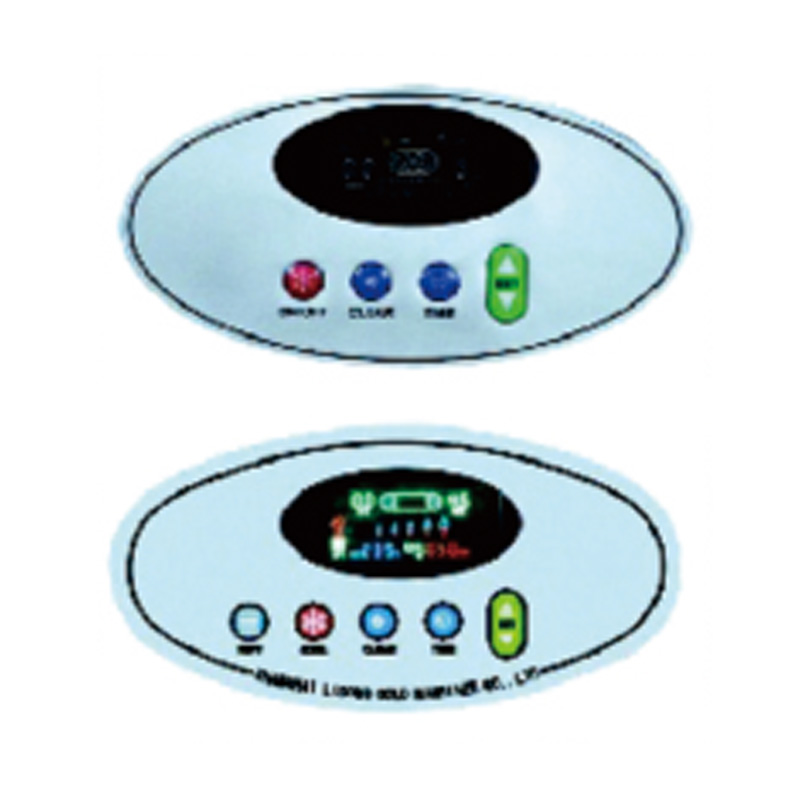
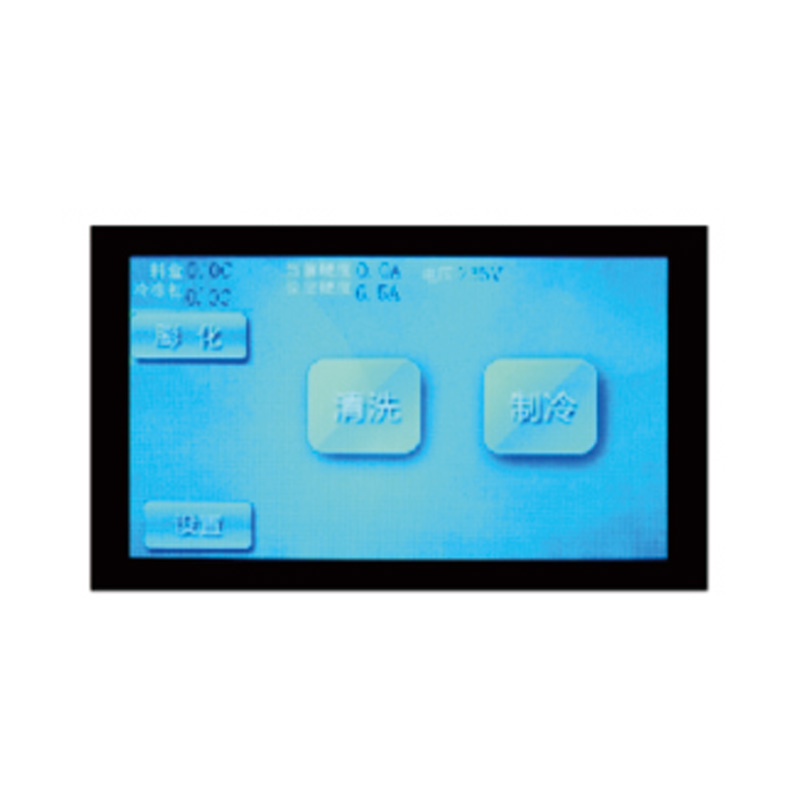
The LCD panel is designed to make the machine easier to monitor and operate. A clear digital interface can help staff understand operating status, select functions, and respond to routine requirements. In a busy commercial environment, simple controls reduce training time and make it easier for new employees to follow standard procedures.
Compared with purely mechanical controls, an LCD panel can provide a more direct visual connection between the operator and the machine. Depending on the final control configuration, the display may support information related to operating modes, temperature management, cleaning, standby operation, or alerts. Buyers should confirm the exact display functions and language options when placing an order for a particular market.
Digital controls can also improve consistency between shifts. When procedures are represented clearly on the panel, different employees are more likely to operate the unit in the same way. This is valuable in businesses with multiple locations, seasonal staff, franchise operations, and catering teams.
However, digital convenience should be supported by basic training. Staff should understand ingredient preparation, filling limits, dispensing technique, cleaning procedures, and emergency shutdown steps. The LCD panel is an operating aid, not a substitute for proper food safety and equipment management.
Self-Cleaning Function and Sanitation Support
Cleaning is one of the most important aspects of soft serve equipment. Milk-based, sugar-based, and flavored mixtures can leave residue in hoppers, freezing cylinders, dispensing valves, seals, and product passages. If cleaning is delayed or incomplete, the machine may experience changes in taste, reduced hygiene, blocked passages, seal deterioration, and unwanted microbial growth.
The BQL-818 includes a self-cleaning function intended to reduce the labor required for routine cleaning. This function can help circulate cleaning water or cleaning solution through relevant internal areas, depending on the machine’s operating design. It may be especially useful in high-frequency environments where the equipment must be cleaned regularly and staff time is limited.
Self-cleaning should be understood as a support function rather than a complete replacement for manual cleaning and inspection. Removable parts, dispensing components, seals, and external surfaces may still require disassembly, hand washing, sanitizing, and visual inspection. The operator should follow the manufacturer’s cleaning instructions and local food safety requirements.
The commercial value of a self-cleaning system is significant. It can shorten routine service procedures, make cleaning more repeatable, and help businesses maintain a more reliable sanitation schedule. It may also reduce the risk that employees skip cleaning because the process is perceived as too time-consuming.
For purchasing teams, it is useful to ask for detailed information about the self-cleaning cycle, recommended detergents, water requirements, cycle duration, removable parts, sanitation temperature, and post-cleaning storage procedures. These details help the buyer calculate labor requirements and establish a practical standard operating procedure.
Cooling Performance and Refrigeration Configuration
Soft serve quality depends heavily on freezing performance. The mix must be cooled and partially frozen at a controlled rate so that the final texture is smooth, stable, and easy to dispense. If the freezing system is too weak for the demand, product may become soft during peak service. If the system is incorrectly adjusted, the product may become too hard, uneven, or difficult to dispense.
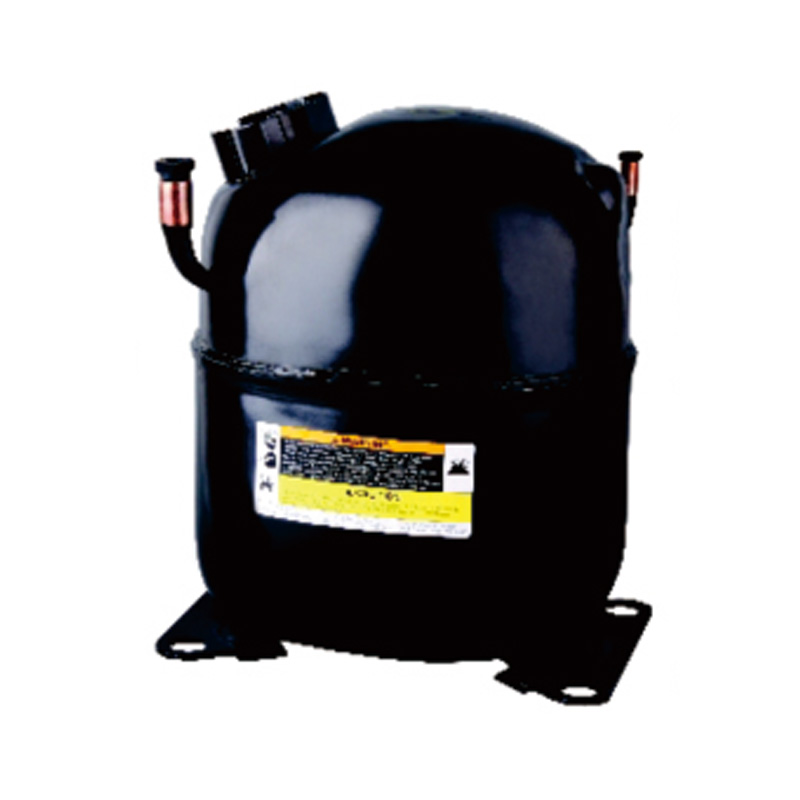
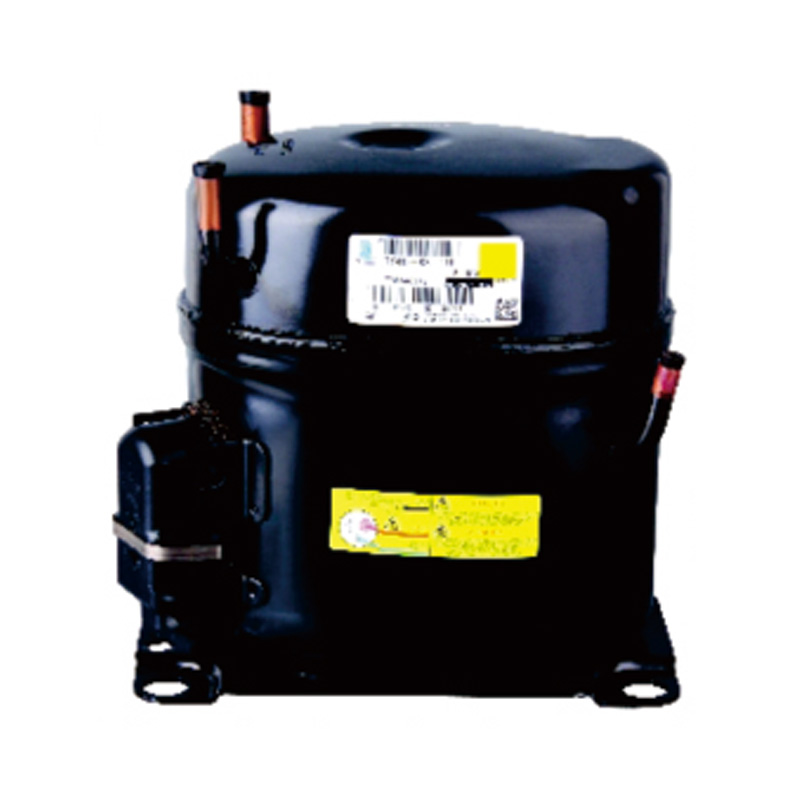
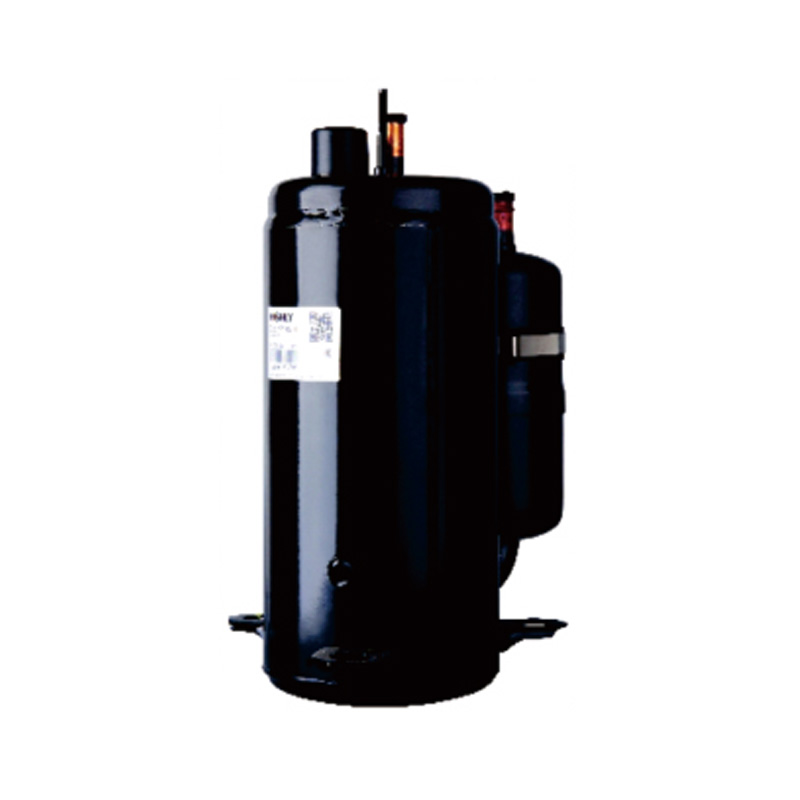
The BQL-818 is rated at 1,800 watts and uses a commercial refrigeration arrangement with a Chinese compressor and R404 refrigerant according to the supplied product information. The refrigeration system is intended to support rapid and stable cooling for commercial production. Its performance will be influenced by ventilation, ambient temperature, ingredient temperature, condenser cleanliness, electrical stability, and correct installation.
The machine’s two freezing tanks correspond to its two flavor channels. This arrangement helps separate the production of different mixtures and supports more flexible service. The operator should avoid mixing incompatible formulas and should ensure that every recipe is suitable for the machine’s intended freezing characteristics.
Stable cooling is valuable during peak service. When demand increases, the equipment must recover product consistency while continuing to dispense. A commercial machine with adequate power and cooling design can reduce waiting time and help staff maintain a consistent serving appearance.
As environmental regulations and refrigerant policies vary by country, importers should confirm the refrigerant requirements applicable to their market. They should also review electrical specifications, voltage, frequency, plug configuration, safety certifications, and installation requirements before final purchase.
Advantages Compared with Smaller or Less Specialized Machines
The BQL-818 has several advantages over small countertop units and basic single-flavor machines. The first is capacity. An 18-liter-per-hour rating is more appropriate for commercial service than the limited output of many household or light-duty machines.
The second advantage is flavor flexibility. Two hoppers and two freezing tanks allow businesses to offer two flavors without occupying the space or managing the operating complexity of two separate machines.
The third advantage is workflow suitability. The floor-standing structure provides a stable installation platform and a practical serving height. It also avoids the need to place a heavy machine on a counter that may not be designed to support it.
The fourth advantage is operator support. The LCD panel and self-cleaning function can make daily operation more systematic. These features are especially relevant for businesses with multiple employees or frequent staff changes.
The fifth advantage is presentation. Stainless steel and colored sprayed steel provide a commercial appearance that is more suitable for front-of-house use than basic plastic-bodied equipment. A professional appearance can reinforce customer confidence in the cleanliness and quality of the dessert service.
The machine also offers potential procurement advantages over buying separate pieces of equipment. One dual-flavor floor unit may simplify logistics, installation, staff training, and service planning. For a growing business, this can support expansion without immediately requiring a larger production line.
Applications Across Foodservice Markets
Ice Cream and Dessert Shops
Dedicated dessert shops can use the machine as a central production unit for cones, cups, mixed servings, sundaes, and specialty products. The two-flavor configuration allows the shop to offer a basic flavor and a rotating seasonal flavor. Additional toppings and sauces can turn a simple soft serve product into a higher-value dessert.
Cafés and Bakeries
Cafés and bakeries may use soft serve as a complementary menu item. It can be served with waffles, brownies, fruit, pastries, or coffee-based desserts. The machine allows these businesses to diversify without building a full ice cream production department.
Fast-Food Restaurants
Fast-food operators benefit from equipment that can support quick service and repeatable portions. Soft serve can be included in value meals, children’s menus, promotional campaigns, and seasonal offerings. The machine’s capacity and dual-flavor format can help reduce service bottlenecks during busy periods.
Hotels and Buffets
Hotels, resorts, and buffet restaurants can install the machine near dessert stations. Customers can select flavors and toppings, creating an interactive service experience. The machine’s professional appearance is suitable for visible buffet areas, provided that sanitation, staff supervision, and access control are properly managed.
Supermarkets and Convenience Stores
Supermarkets and convenience stores can use soft serve to create an additional impulse-purchase category. A strategically placed machine near the entrance, food court, or checkout area can attract customers looking for a quick dessert. Operators should plan ingredient replenishment, cleaning schedules, and customer-facing safety procedures.
Catering and Events
Catering companies can use the machine for weddings, festivals, corporate events, family entertainment centers, and seasonal markets. Because the unit is heavy, event planners need to consider transport and installation logistics. Once positioned correctly, its capacity and flavor variety can support continuous service for large groups.
Amusement and Family Entertainment Venues
Soft serve is strongly associated with leisure and family activities. Amusement parks, indoor play centers, cinemas, and recreational venues can use the machine to add a familiar product with broad customer appeal. A dual-flavor machine can support themed menus and promotional combinations.
Manufacturing Strengths of the Supplier
The equipment is supplied by Spelor Electrical Appliances (Zhejiang) Co., Ltd., a manufacturer that integrates design, research and development, production, sales, and service. This integrated structure is important for commercial equipment buyers because it enables closer coordination between product development, factory production, quality control, documentation, and after-sales support.
The company was formerly known as Zhejiang Spelor Refrigeration Equipment Co., Ltd. Its product experience covers commercial refrigeration, kitchen equipment, buffet equipment, ice cream machines, juice dispensers, fried ice cream machines, refrigeration cabinets, slush machines, flake ice machines, cooking equipment, griddles, fryers, insulation products, barbecue equipment, and buffet solutions.
This broad product range gives the supplier an understanding of different foodservice environments. A manufacturer that produces several related categories can often better understand the workflow between refrigeration, preparation, cooking, display, and service. This can be valuable for buyers seeking a coordinated equipment package rather than one isolated machine.
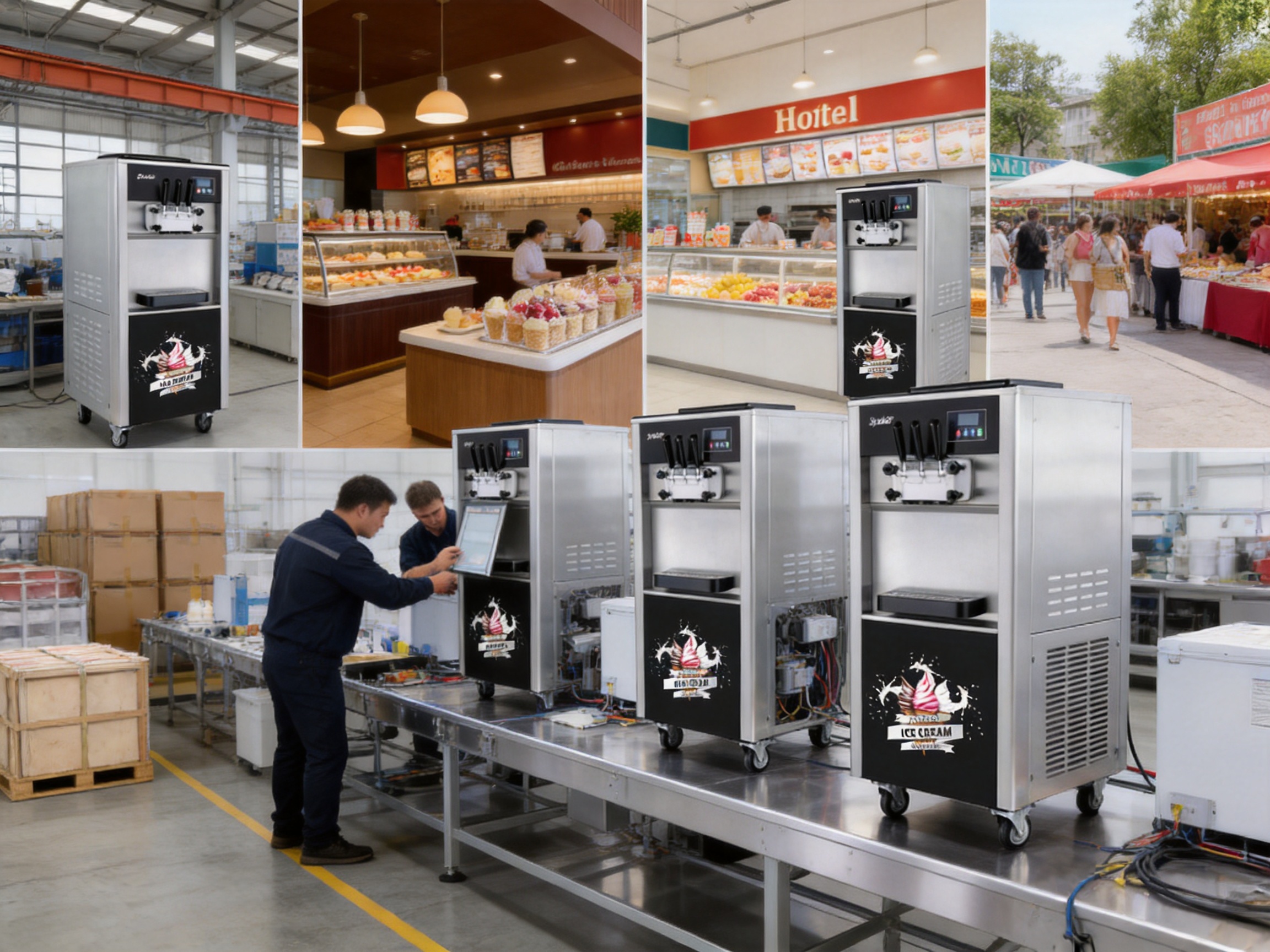
The company reports more than 60,000 square meters of modern production facilities. A substantial manufacturing base can support organized production lines, component storage, assembly operations, testing areas, packaging, and order management. It also creates a foundation for serving distributors, importers, chain stores, project contractors, and OEM customers.
Manufacturing scale does not automatically guarantee quality, so buyers should still request product documentation, inspection procedures, test records, certifications, spare-parts information, and warranty terms. Nevertheless, the reported facility scale and integrated business model indicate that the supplier is structured to support commercial equipment orders rather than only small-scale trading transactions.
Advanced Production and Quality Management Considerations
Commercial refrigeration equipment requires coordinated manufacturing across sheet-metal processing, surface treatment, refrigeration assembly, electrical installation, insulation, control systems, and final testing. Each stage can affect the machine’s reliability and service life.
Sheet-metal production must maintain dimensional accuracy so that panels, doors, covers, and internal supports fit correctly. Stainless steel surfaces should be formed and finished in a way that minimizes sharp edges, visible defects, and areas where residue can accumulate. Sprayed steel panels require consistent surface preparation and coating control to achieve a durable and attractive finish.
Refrigeration assembly requires correct component matching, secure piping connections, appropriate evacuation and charging procedures, and leak testing. The compressor, condenser, evaporator, refrigerant circuit, and control system must work together. A production line with defined inspection points can help identify problems before shipment.
Electrical assembly requires attention to wiring, grounding, switches, controls, overload protection, and regional voltage requirements. Since the BQL-818 uses an LCD panel and powered refrigeration system, proper electrical testing is essential. Buyers should confirm whether the supplied version meets the electrical standards of the destination market.
Final testing should ideally include operational checks under controlled conditions. These may involve startup performance, refrigeration response, dispensing operation, control-panel functions, cleaning functions, noise observation, current measurement, and visual inspection. The exact test protocol should be confirmed with the supplier for the specific order.
Spelor’s integrated design and manufacturing model allows product feedback to move more directly between engineering, production, and service teams. This can support product improvements, customization, and more responsive troubleshooting for overseas customers.
OEM and ODM Support
The supplier’s stated OEM and ODM capabilities are relevant to distributors, importers, restaurant groups, and foodservice project companies. OEM production may allow a buyer to order equipment under its own brand or according to an established specification. ODM cooperation may involve adapting an existing product or developing a customized configuration based on drawings, technical requirements, appearance guidelines, or market needs.
For the BQL-818, customization may potentially involve exterior color, logo placement, control-panel language, packaging, electrical configuration, documentation, or selected operating parameters. The feasibility of any modification must be confirmed during technical review because changes can affect certification, tooling, production lead time, minimum order quantity, and cost.
Professional OEM and ODM cooperation should begin with a clear specification sheet. The buyer should define capacity, dimensions, voltage, frequency, refrigerant, compressor requirements, materials, display language, safety standards, packaging method, spare parts, and delivery terms. Drawings and approval samples can reduce misunderstandings before mass production.
A manufacturer with its own design, research, and production capabilities can be more flexible than a trading company that depends entirely on outside factories. Direct communication with engineering and production teams can help the buyer evaluate whether a requested change is technically practical and commercially reasonable.
Installation and Site Planning
Before installing the machine, the operator should prepare a level and stable floor area. The dimensions are 540 x 575 x 1,370 millimeters, but additional clearance may be necessary for ventilation, cleaning, maintenance, ingredient loading, and access to electrical components.
The machine should be positioned away from direct heat sources, ovens, steam-producing equipment, and areas exposed to excessive sunlight. High ambient heat can increase refrigeration workload and may reduce cooling efficiency. Adequate air circulation around the condenser and other ventilation areas is essential.
The floor must be capable of supporting the machine’s weight. Because the supplied information lists different net weights, the buyer should confirm the final shipping and operating weight with the manufacturer. If the machine is installed on a raised platform, the platform should be professionally assessed for stability and load capacity.
Electrical installation should be completed according to local regulations. The power supply must match the machine’s required voltage and frequency, and appropriate grounding and circuit protection should be provided. Extension cords or undersized circuits should not be used unless specifically approved by a qualified technician.
Water access may be needed for cleaning, although the exact requirements depend on the self-cleaning design. The operator should also plan for wastewater handling, cleaning-solution storage, product disposal, and sanitation equipment. A well-planned installation reduces daily labor and helps prevent accidental contamination.
Recommended Operating Practices
Operators should prepare the soft serve mixture according to a validated recipe. The mixture must be thoroughly blended, filtered if required, and maintained at a safe temperature before loading. Ingredients should not be placed in the hopper if they have exceeded their approved storage time or temperature.
The hoppers should not be overfilled. Adequate space may be needed for expansion, agitation, or correct operation. Operators should also avoid allowing the ingredient level to fall below the machine’s required minimum, because insufficient mix can affect product quality and may allow excessive air or improper freezing conditions.
During service, staff should use consistent dispensing technique. The nozzle should be kept clean, portions should be controlled, and product should not be allowed to accumulate around the dispensing area. If the product becomes unusually soft, hard, grainy, or difficult to dispense, the operator should stop and check the mix, settings, temperature, and machine status.
At the end of the operating period, staff should follow the full cleaning and sanitation procedure. This may include removing unused mix, rinsing, running the self-cleaning cycle, disassembling designated parts, washing and sanitizing components, inspecting seals, and drying parts before reassembly or storage.
Operators should keep a simple maintenance record. The record can include cleaning dates, lubrication or seal checks, unusual noises, temperature observations, service calls, and replacement parts. Consistent records help identify gradual problems before they become costly failures.
Maintenance and Service Value
Preventive maintenance is especially important for commercial refrigeration equipment because the machine may operate for long hours under demanding conditions. The condenser and ventilation areas should be kept free of dust and grease. Product residue should not be allowed to harden around seals, nozzles, or internal passages.
Seals and gaskets are wear components. They should be inspected for cracking, deformation, loss of elasticity, or leakage. Damaged seals can affect sanitation and may reduce freezing performance. Keeping suitable spare parts available can reduce downtime during peak seasons.
The dispensing system should be inspected regularly. Sticking valves, unusual resistance, leaks, or irregular portion shape may indicate a cleaning issue, worn component, or adjustment problem. Maintenance staff should use the correct tools and follow the supplier’s technical instructions.
Refrigeration service should be performed by qualified technicians. Unauthorized refrigerant handling, incorrect charging, or unapproved component replacement can create safety, performance, and compliance risks. The stated use of R404 should be reviewed against local refrigerant regulations and service availability.
Spelor’s broad product and service structure can be valuable when buyers need technical consultation, spare parts, troubleshooting, or after-sales maintenance. Before ordering, commercial customers should confirm warranty coverage, response procedures, replacement-part lead times, remote support, and the availability of service documentation in the destination market.
Why the Machine Is Suitable for Growing Businesses
Growing foodservice businesses need equipment that can support present demand without becoming immediately obsolete. A small machine may be affordable at the beginning but restrictive once customer traffic increases. The BQL-818 provides a larger capacity and two-flavor format that can support a broader menu from the start.
The machine can also help businesses standardize production across locations. If the same model is installed in multiple stores, staff training, cleaning procedures, spare-parts management, and operational planning can become more consistent. This is useful for chain restaurants, franchise groups, regional dessert brands, and institutional foodservice operators.
Its customization potential may allow a distributor or brand owner to align the machine with a particular market. Exterior colors, labels, manuals, packaging, and electrical configurations can be discussed during the OEM or ODM process. This creates opportunities for private-label programs and coordinated equipment packages.
The machine’s value should be assessed through total cost of ownership rather than purchase price alone. Buyers should consider capacity, labor savings, cleaning time, product waste, service support, spare parts, energy use, installation, shipping, and expected service life. A machine that supports stable operation and efficient cleaning may provide stronger long-term value than a cheaper unit with limited support.
Purchasing Checklist for Importers and Foodservice Operators
Before purchasing, buyers should confirm the final technical specification. Important points include production capacity, hopper volume, freezing tank volume, dimensions, net and gross weight, compressor type, refrigerant, voltage, frequency, plug type, control-panel language, and electrical certifications.
The buyer should request product drawings showing service clearances, connection points, ventilation areas, and removable components. These drawings help architects, kitchen planners, and contractors integrate the machine into a commercial space.
Documentation should include an operation manual, cleaning instructions, parts list, troubleshooting guide, warranty terms, packaging details, and export documents. For regulated markets, the buyer should identify applicable safety, electromagnetic compatibility, food-contact, and energy requirements.
For container or pallet shipments, the buyer should confirm packaging protection and loading methods. The unit should be protected against impact, moisture, vibration, and incorrect orientation during transportation. Installation instructions should clarify whether the machine must remain upright for a specified period before startup.
Buyers should also confirm whether spare seals, dispensing parts, filters, switches, control components, and other commonly replaced items can be ordered separately. A recommended spare-parts package can be particularly useful for distributors serving customers in regions far from the manufacturing plant.
| Purchasing Area | Recommended Confirmation |
|---|---|
| Technical specifications | Capacity, power, hopper size, freezing tank size, dimensions, weight, compressor, and refrigerant |
| Electrical requirements | Voltage, frequency, plug, grounding, circuit protection, and destination-market compliance |
| Installation | Ventilation clearance, floor loading, service access, water requirements, and drainage |
| Operation | LCD functions, flavor configuration, recipe requirements, minimum fill levels, and standby modes |
| Cleaning | Self-cleaning procedure, approved detergents, removable parts, sanitation frequency, and water use |
| Service | Warranty, technical support, spare parts, troubleshooting, and technician requirements |
| Customization | Logo, color, packaging, language, drawings, minimum order quantity, and lead time |
| Logistics | Packaging, shipping weight, pallet dimensions, loading method, and delivery documentation |
Q&A
What type of business is the BQL-818 designed for?
The BQL-818 is designed for commercial dessert shops, cafés, restaurants, fast-food outlets, hotels, buffets, supermarkets, catering companies, amusement venues, and other foodservice operations that require professional soft serve production.
How much product can the machine produce?
The stated production capacity is 18 liters per hour. Actual output depends on mix formulation, inlet temperature, ambient conditions, serving size, operating settings, and cleaning or standby periods.
Does the machine support more than one flavor?
Yes. The machine has two 5.5-liter hoppers and two 1.6-liter freezing tanks, supporting a two-flavor operating format. Buyers should confirm the exact dispensing configuration and combination-serving capability for the ordered version.
What are the machine dimensions?
The listed dimensions are 540 x 575 x 1,370 millimeters. Buyers should allow additional clearance for ventilation, cleaning, ingredient loading, and maintenance access.
What is the purpose of the LCD panel?
The LCD panel provides a digital interface for operating and monitoring the machine. Exact functions may vary by configuration, so buyers should confirm the available modes, alerts, temperature information, language options, and control features before purchase.
Does the machine clean itself completely?
The machine includes a self-cleaning function that supports routine internal cleaning. It should not be treated as a replacement for manual disassembly, washing, sanitizing, inspection, and drying of removable parts. Operators should follow the supplied cleaning instructions and local food safety requirements.
What materials are used in the machine body?
The product information identifies food-grade stainless steel and colorful sprayed steel. Stainless steel supports durability and sanitation, while sprayed steel contributes to the machine’s appearance and exterior finish.
What refrigerant does the machine use?
The supplied information identifies R404 refrigerant. Importers should confirm current destination-market regulations, service availability, and compliance requirements before ordering.
Is the machine suitable for front-of-house installation?
Yes. Its floor-standing structure, stainless-steel construction, and colored exterior make it suitable for dessert counters, buffet stations, cafés, and other visible commercial areas. The installation should still provide proper ventilation, cleaning access, and staff supervision.
Can the manufacturer provide OEM or ODM service?
The manufacturer states that it offers OEM and ODM services based on drawings or customer requirements. Possible customization may include appearance, logo, packaging, language, electrical configuration, or selected technical details, subject to engineering review and order conditions.
What should buyers confirm about the listed weight?
The supplied product materials list net weights of approximately 106 kilograms and 119 kilograms in different sections. The final net and gross weights should be confirmed with the manufacturer before shipping, installation planning, and export documentation.
How should the machine be maintained?
Maintenance should include regular cleaning and sanitation, condenser and ventilation inspection, seal checks, dispensing-system inspection, electrical safety checks, and professional refrigeration service when required. A maintenance record can help reduce unexpected downtime.
Conclusion
The BQL-818 floor-standing commercial soft serve ice cream machine is designed for foodservice operators that need higher capacity, multiple flavor options, and stable day-to-day performance. Its 18-liter-per-hour production rating, dual 5.5-liter hoppers, dual 1.6-liter freezing tanks, 1,800-watt input power, and professional floor-standing format make it suitable for medium- to large-sized dessert and catering applications.
Its principal advantages include a practical two-flavor structure, commercial refrigeration capacity, food-grade stainless-steel construction, colorful sprayed steel panels, LCD control, and a self-cleaning function. Together, these features address the main requirements of professional soft serve service: output, menu flexibility, operational visibility, sanitation support, and attractive presentation.
The machine also benefits from the manufacturing capabilities of Spelor Electrical Appliances (Zhejiang) Co., Ltd. The company integrates research and development, design, manufacturing, sales, and service, operates more than 60,000 square meters of modern production facilities, and supplies a broad portfolio of commercial refrigeration, kitchen, buffet, and foodservice equipment. Its OEM and ODM capabilities provide additional value for distributors, restaurant groups, project contractors, and private-label buyers.
As with any commercial refrigeration product, proper installation, recipe control, cleaning, preventive maintenance, electrical planning, and local compliance are essential. Buyers should confirm the final technical specification, refrigerant requirements, operating voltage, service conditions, spare-parts availability, and net weight before placing an order.
For businesses seeking a versatile and scalable soft serve solution, the BQL-818 offers a combination of capacity, dual-flavor flexibility, practical controls, sanitation support, and manufacturer-backed customization. It can serve as a dependable production platform for dessert shops, restaurants, cafés, catering operations, supermarkets, hotels, and other professional foodservice environments.
References
1. Product specification sheet for the BQL-818 commercial soft serve ice cream machine.
2. Manufacturer-provided information concerning construction materials, LCD operation, self-cleaning functions, capacity, power, dimensions, and refrigeration configuration.
3. Manufacturer profile of Spelor Electrical Appliances (Zhejiang) Co., Ltd., including company history, production capabilities, product categories, OEM and ODM services, and after-sales support.
4. General commercial foodservice equipment planning principles concerning installation, ventilation, sanitation, preventive maintenance, and electrical safety.
5. General soft serve equipment operating practices concerning mix preparation, freezing performance, dispensing, cleaning, and product quality control.
Product: Spelor Floor Commercial Soft Serve Ice Cream Machine Versatile for Dessert Catering

For exclusive deals and latest offers, sign up by entering your email address below.


-
spelor@spelor.com
-
+86-576-85229688
-
No.528, Changxi Road, Linhai City, Zhejiang Province, China
Commercial Refrigeration Equipment Manufacturer China
Copyright © 2025 by Spelor Electrical Appliances (Zhejiang) Co., Ltd. Rights Reserved.
