


 中文简体
Single Square Commercial Fried Ice Cream Roll Cart Machine with Five Tanks: A Practical Guide to High-Volume Frozen Dessert Production
Admin 2026-10-14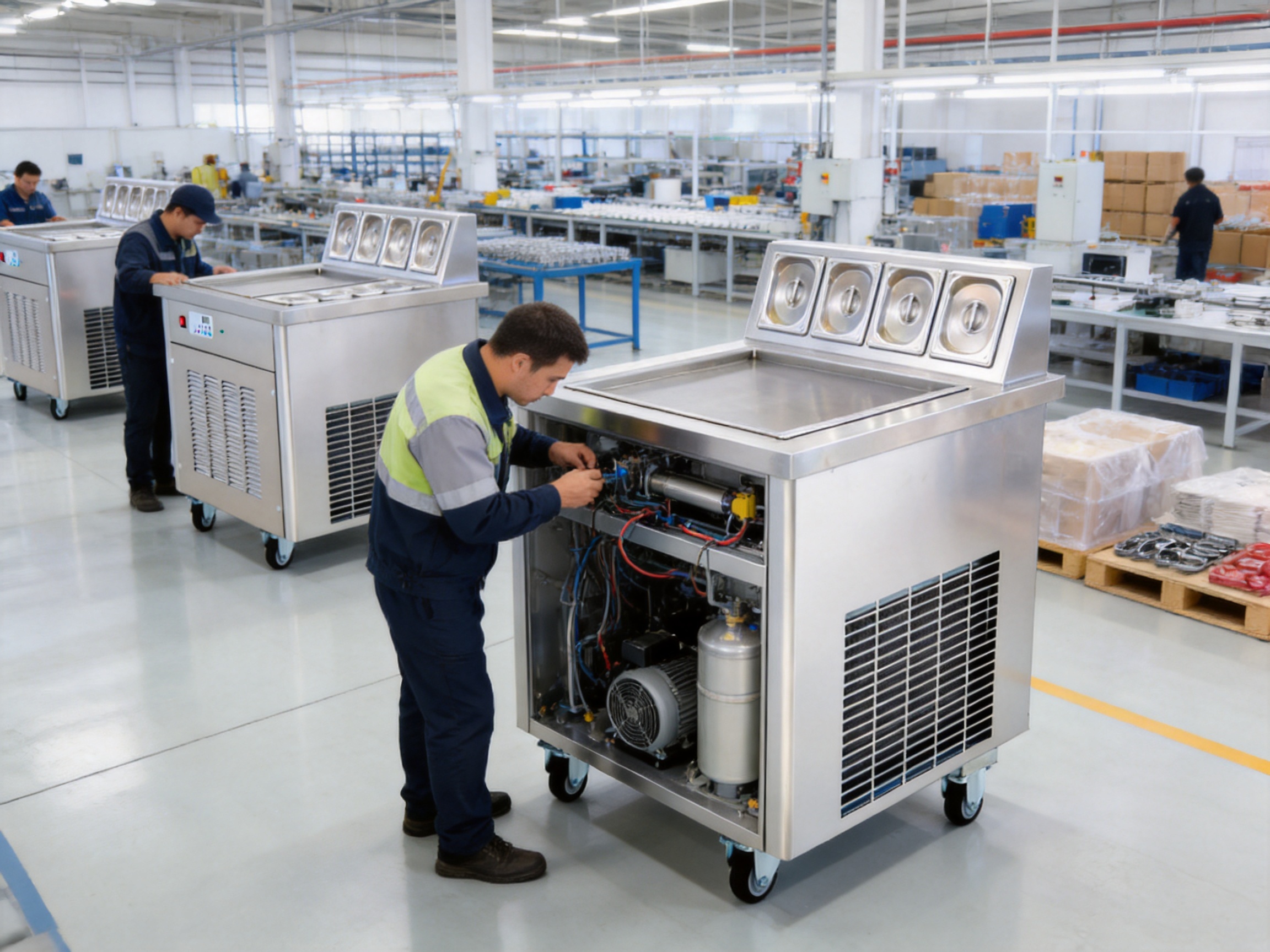
Commercial frozen dessert businesses increasingly need equipment that combines visual appeal, production flexibility, reliable cooling, and efficient use of limited service space. Fried ice cream rolls are especially attractive because they are prepared in front of customers, offer strong customization opportunities, and create an engaging experience for food stalls, shopping centers, dessert shops, night markets, fast-food outlets, and mobile catering businesses. However, attractive presentation alone is not enough to support commercial success. A suitable machine must also deliver stable freezing performance, practical workflow design, easy cleaning, dependable operation, and enough capacity to handle busy service periods.
The Single Square Commercial Fried Ice Cream Roll Cart Machine with Five Tanks, model CB-530F+5XF, is designed for these operating requirements. It combines a 53-centimeter square freezing pan with five ingredient or flavor tanks in one commercial unit. This configuration allows an operator to prepare multiple flavor combinations while keeping the main freezing surface available for efficient production. With a rated input power of 1500 watts, a working temperature range of approximately -17°C to -20°C, and a net weight of 70 kilograms, the machine is intended for professional foodservice environments rather than occasional domestic use.
Its single-square five-slot structure creates a balanced compromise between working capacity and footprint. Compared with smaller single-flavor equipment, it offers greater preparation flexibility. Compared with larger multi-pan systems, it can be easier to position in a compact dessert counter, food stall, market booth, or small production area. The result is a practical machine for businesses that need variety without committing to an oversized installation.
Product Overview
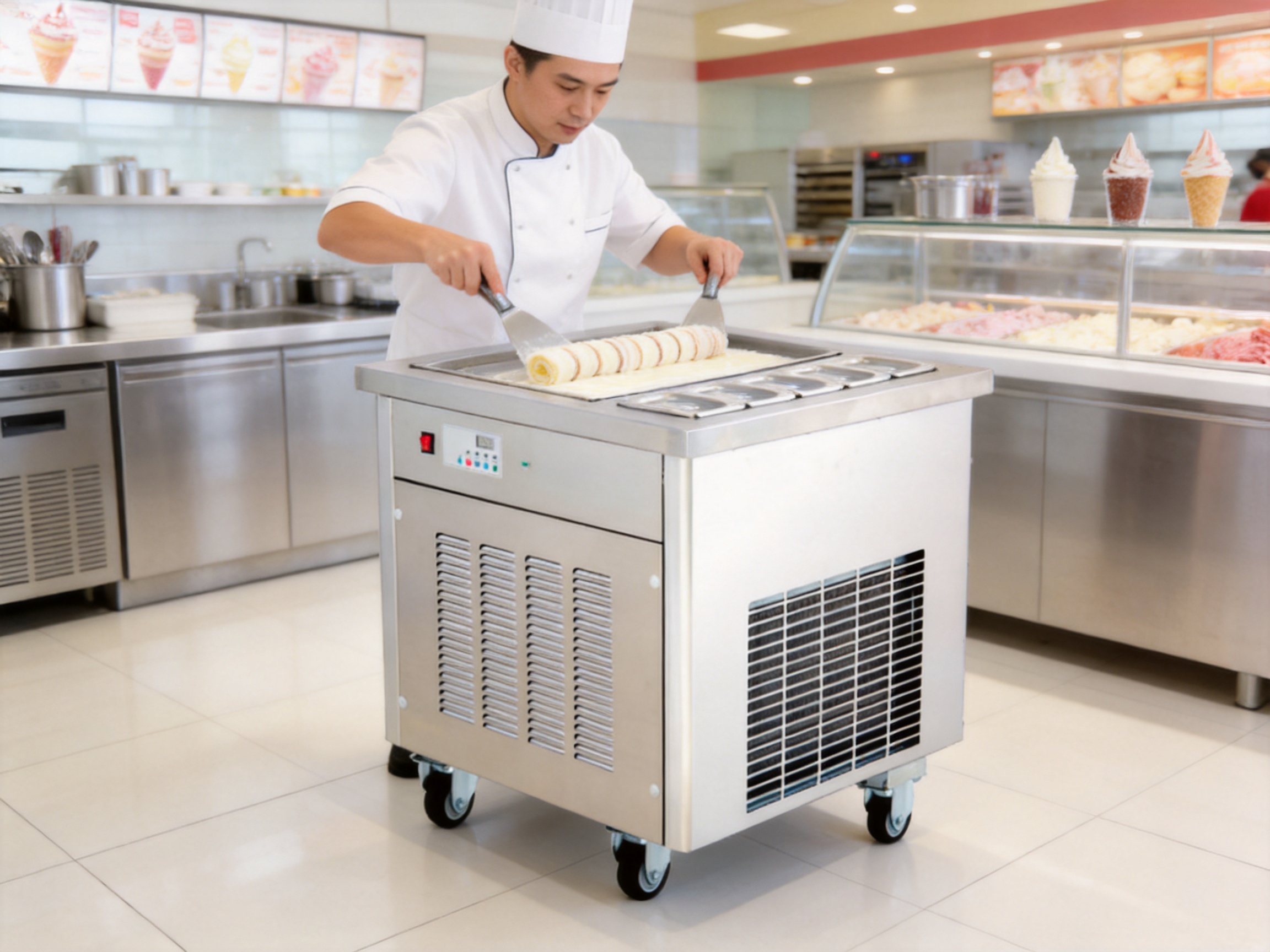
The CB-530F+5XF is a commercial fried ice cream roll machine built around a square freezing pan. The pan measures approximately 53 centimeters across and has a depth of approximately 2 centimeters. This broad, shallow work surface is suitable for spreading a prepared ice cream mixture into a thin layer, allowing rapid contact with the chilled pan and supporting the formation of rolled frozen dessert portions.
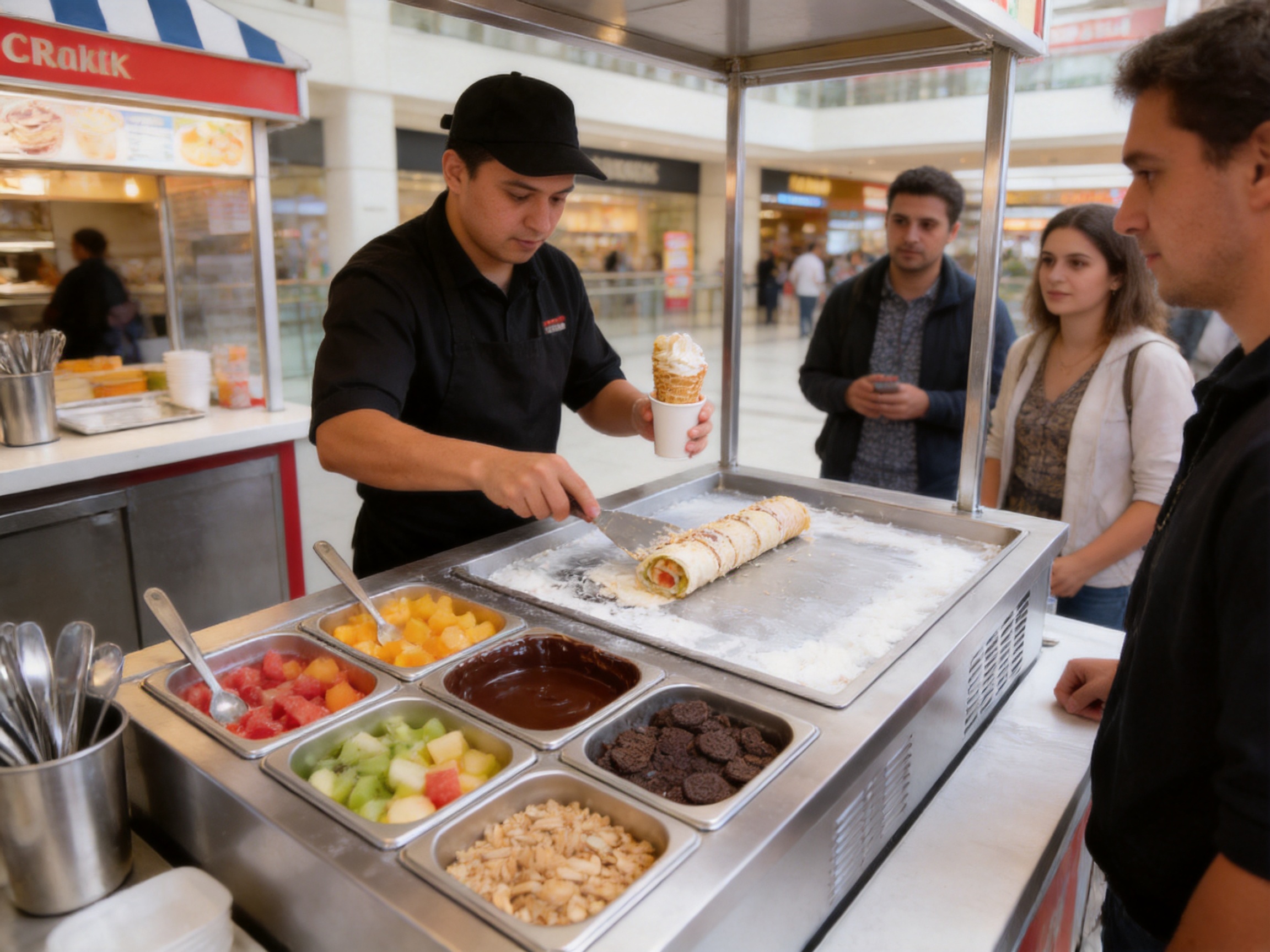
The machine includes five separate tanks or slots. These tanks can be used for different flavors, sauces, bases, toppings, or prepared ingredients according to the operating model of the business. A five-tank layout is particularly useful when customers expect multiple choices at a single service counter. An operator can keep several commonly requested ingredients available without repeatedly leaving the workstation or opening separate storage containers.
The machine is specified with a 1500-watt power rating and a 220V/50Hz power supply. Its stated dimensions are approximately 680 x 740 x 830 millimeters, while its net weight is approximately 70 kilograms. These measurements indicate that it is a substantial commercial appliance that should be installed on a stable, level support structure with adequate ventilation and sufficient clearance for operation and service.
The supplied technical information lists Chinese compressor construction and identifies R410 in one specification section. A separate information section lists R22/R404A as the refrigerant specification. Because refrigerant selection may vary by production configuration, market, or order, purchasers should confirm the exact compressor and refrigerant arrangement with the manufacturer before placing an order. This confirmation is particularly important when the equipment will be installed in a region with specific refrigerant regulations, service requirements, or electrical standards.
| Item | Specification |
| Model | CB-530F+5XF |
| Machine type | Single-square commercial fried ice cream roll machine |
| Tank configuration | Five tanks or flavor slots |
| Input power | 1500W |
| Power supply | 220V/50Hz |
| Square pan size | Approximately 53cm |
| Pan depth | Approximately 2cm |
| Temperature range | Approximately -17°C to -20°C |
| Net weight | Approximately 70kg |
| Dimensions | Approximately 680 x 740 x 830mm |
| Compressor | Chinese compressor, according to the supplied specification |
| Refrigerant | Confirm final configuration with the manufacturer; supplied data lists R410 and R22/R404A |
Why a Five-Tank Design Matters in Commercial Service
Flavor variety is one of the strongest selling points of rolled ice cream. Customers often want to combine fruit, chocolate, cookies, syrups, nuts, cereal, and other ingredients. A machine with only one ingredient container can force operators to interrupt production repeatedly. Each interruption increases service time, creates additional movement, and may result in inconsistent portioning. A five-tank configuration helps organize the preparation area and makes frequently used flavors available at the point of production.
The five-slot arrangement also supports menu development. A business can use the tanks for five separate flavor bases, five sauces, five topping categories, or a combination of ingredients selected according to its menu. For example, one tank may hold a chocolate mixture, another may contain a fruit preparation, and the remaining tanks may be used for syrups, crushed biscuits, or seasonal ingredients. The exact use depends on the recipe, food safety procedure, and operating style of the business.
For food stalls and market vendors, the ability to serve several flavor profiles from one compact machine can be a valuable competitive advantage. A small footprint is often essential in temporary booths, shopping mall kiosks, concession counters, and mobile retail environments. The five-tank design provides a broader menu without requiring a separate machine for every flavor. This can help the operator use counter space more efficiently and maintain a clear service sequence during busy periods.
Independent stirring and cooling systems are identified as important characteristics of the product. These systems are intended to help maintain consistent ingredient conditions and support uniform taste. Independent operation can also reduce the need to manually manage every tank during service. While the exact internal arrangement should be confirmed with the manufacturer, the principle is valuable: ingredient handling and cooling should be organized so that the operator can concentrate on customer orders rather than constantly adjusting the equipment.
A five-tank machine also supports upselling. Customers may be offered premium toppings, flavor combinations, or customized recipes. Because the ingredients are visible and accessible, the preparation process becomes part of the sales experience. This is especially useful for businesses that rely on impulse purchases and visual merchandising.
Advantages of the Single Square Pan
The square pan is the central working area of the machine. At approximately 53 centimeters, it provides enough surface area for commercial preparation while remaining more compact than some larger multi-pan installations. Its shallow depth of approximately 2 centimeters is suitable for spreading a thin layer of mixture across the chilled surface. A thin layer can freeze more rapidly and can be manipulated into rolls when the consistency is appropriate.
A square work surface also gives the operator clear working zones. The mixture can be spread from one edge toward another, divided into sections, and shaped according to the order. The corners can be used as reference points for portion control or ingredient placement. This predictable geometry may help new operators learn the process more quickly than they would on an irregular or crowded work area.
The single-pan configuration can be advantageous for businesses that do not require several orders to be frozen on separate surfaces at exactly the same time. It keeps the equipment layout straightforward and may simplify cleaning, preparation, and operator training. The machine is especially suitable for shops where one operator manages mixing, freezing, rolling, garnishing, and serving within a compact workstation.
Compared with a machine that has multiple smaller pans, one larger square pan may provide more freedom to spread and combine ingredients. It can accommodate broader motion and may make it easier to prepare a visually attractive serving in front of the customer. Compared with a very large production unit, the single square format can require less counter space and may involve lower initial equipment complexity.
The pan depth also contributes to practical cleaning. A shallow working surface generally has fewer deep areas in which mixture can accumulate. Operators must still follow a complete sanitation procedure, but a simple work area can reduce cleaning difficulty when compared with equipment containing numerous difficult-to-reach chambers.

Single Square Commercial Fried Ice Cream Roll Cart Machine with Five Tanks
Cooling Performance and Temperature Control
Freezing speed and temperature stability are central to the production of fried ice cream rolls. The prepared mixture must reach a workable consistency quickly enough to maintain service efficiency, while the pan must remain cold enough to support repeated batches. The supplied operating temperature range of approximately -17°C to -20°C indicates that the machine is designed for low-temperature commercial frozen dessert preparation.
Actual freezing results depend on several factors. The temperature of the incoming mixture, the quantity spread on the pan, the ambient temperature, humidity, ingredient composition, sugar content, fat content, and the time between batches can all affect performance. A mixture containing more sugar or certain liquid ingredients may freeze differently from a lower-sugar formulation. Operators should therefore standardize recipes and use consistent portion sizes when they want predictable results.
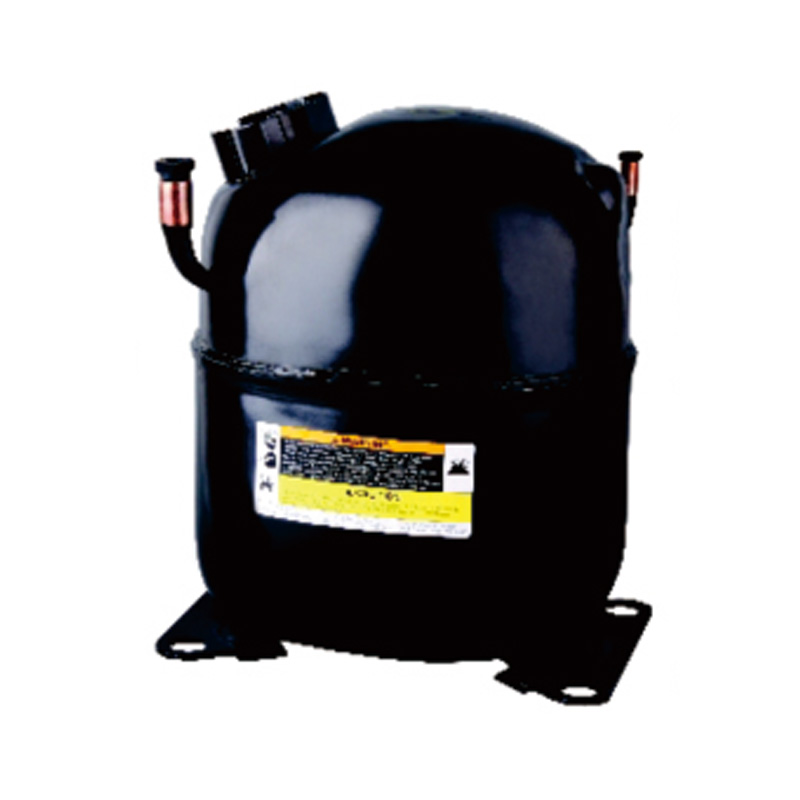
The compressor is a major part of the refrigeration system. The supplied specification identifies a Chinese compressor. This description does not by itself define every aspect of compressor performance, but it indicates that the unit is configured for commercial refrigeration production. Buyers should request the final compressor model, rated capacity, service requirements, and electrical details for the specific order, particularly when purchasing multiple units or importing equipment into another country.
Temperature control should be viewed as a combination of machine design and operating discipline. The machine must be installed with sufficient airflow around the refrigeration components. Operators should avoid placing heat-producing appliances immediately beside the unit. The condenser area should be kept clean and unobstructed, and the machine should not be overloaded with mixture beyond the recommended working quantity.
For foodservice businesses, stable cooling provides several benefits. It can help shorten preparation time, reduce variation between servings, and make it easier to maintain a consistent rolling texture. It can also support a more orderly queue because the operator can estimate production time more accurately. However, no machine can eliminate the need for proper recipes, ingredient preparation, and operator training.
The refrigerant information supplied for this product contains two different entries: R410 in the specification section and R22/R404A in the information section. This should be treated as an order-confirmation issue rather than ignored. Refrigerant requirements may differ between product versions and markets. The buyer should confirm the exact refrigerant before shipment and ensure that installation and maintenance are performed by qualified personnel familiar with the selected refrigerant.
Commercial Workflow and Ease of Operation
A productive fried ice cream workstation should minimize unnecessary movement. The operator typically needs to receive the order, select ingredients, add the mixture to the pan, spread and stir it, form rolls, place the rolls in a serving container, add toppings, and hand the finished product to the customer. A machine that places the tanks close to the main pan can help create a more direct workflow.
The five-tank layout allows ingredients to be organized according to order frequency. Frequently requested flavors can be placed in the most accessible positions, while seasonal or premium choices can be placed in other slots. This creates an opportunity to design a clear operating sequence and reduce the time spent searching for ingredients.
Ease of operation is also important for businesses with multiple employees. A simple, repeatable layout makes staff training more manageable. New operators can learn where ingredients are located, how much mixture to use, and how to complete the rolling process. Clear procedures should cover start-up, pre-cooling, ingredient handling, pan operation, cleaning, shutdown, and basic troubleshooting.
The machine is described as easy to operate, clean, and maintain. These qualities are especially relevant in high-volume foodservice environments, where equipment may be used for many hours per day. Cleaning should be integrated into the service schedule rather than postponed until residue has hardened. Operators should follow the manufacturer’s cleaning instructions and use food-safe materials compatible with the pan and other product-contact surfaces.
Although the machine is designed for commercial work, its 70-kilogram net weight means that it is not a lightweight countertop appliance. Installation should be planned before delivery. The support table or cart must be able to carry the machine securely, and the floor or platform should be level. If the unit will be moved regularly, suitable transport equipment and safe handling procedures should be arranged.
Comparison with Alternative Equipment Configurations
When selecting a fried ice cream machine, buyers commonly compare single-pan units, double-pan units, multi-pan production systems, and machines with different numbers of ingredient containers. Each configuration has a suitable operating environment. The correct choice depends on menu size, daily order volume, available space, labor, budget, and expected growth.
A basic single-pan machine with limited ingredient storage may have a lower purchase price and a smaller footprint. However, it may require more manual ingredient handling and may provide fewer opportunities for menu variety. The five-tank CB-530F+5XF configuration addresses this limitation by combining one broad square pan with several accessible flavor or ingredient slots.
A double-pan machine may allow two preparations to be made simultaneously. This can be beneficial for very busy stores or businesses that need separate recipes prepared at the same time. Nevertheless, a double-pan unit may require more counter space, greater electrical planning, and additional operator coordination. A single square model can be more suitable for a compact stall or a business whose service volume does not justify two independent freezing surfaces.
Large multi-pan systems can deliver higher theoretical capacity, but they may also involve greater initial investment, more cleaning points, more complex maintenance, and a larger installation area. They may be appropriate for centralized production or very high-volume outlets. For a food stall, kiosk, market vendor, or developing dessert shop, the single-square five-tank design can provide a more balanced investment.
Compared with improvised refrigerated surfaces, a dedicated commercial machine offers a more organized production platform. Improvised methods may lack suitable temperature control, ingredient storage, sanitation design, and service durability. A purpose-built unit is easier to integrate into a standard operating procedure and can present a more professional appearance to customers.
| Configuration | Typical Strength | Potential Limitation | Best-Suited Application |
| Basic single-pan unit | Simple layout and lower equipment complexity | Limited ingredient organization | Small menus and lower-volume service |
| Single square pan with five tanks | Good flavor flexibility with a practical footprint | One main freezing surface | Food stalls, kiosks, market vendors, and medium-volume shops |
| Double-pan unit | Two simultaneous freezing areas | More space and operational complexity | Busy shops with parallel order production |
| Large multi-pan system | High potential throughput | Higher installation, cleaning, and investment demands | Large stores and centralized production |
Advantages for Food Stalls and Market Vendors
Food stalls and market vendors often operate under strict space and mobility limitations. Every appliance must justify the space it occupies, and the service process must be understandable to customers who may be making a quick purchase. The CB-530F+5XF addresses these conditions with a compact rectangular body, one clearly defined working pan, and five visible ingredient positions.
The visual preparation of fried ice cream rolls can attract passersby. Customers can observe the mixture being spread, combined with ingredients, frozen, scraped, and rolled. The machine therefore serves not only as production equipment but also as part of the retail display. A clean and well-organized setup can support customer confidence and encourage repeat purchases.
Menu flexibility is another benefit. Vendors can adapt the five slots to local preferences, seasonal fruit, popular toppings, or specialty recipes. A market vendor may offer a different selection on weekends than on weekdays. A food stall may use one slot for a signature flavor and reserve the remaining spaces for familiar choices. This flexibility reduces the need for separate specialized equipment for each menu item.
The unit’s dimensions of approximately 680 x 740 x 830 millimeters can be useful when planning a compact service station. The operator should still allow extra room for utensils, serving cups, toppings, cleaning materials, ventilation, and customer access. The dimensions should be measured against the actual booth or counter before ordering.
Because the machine weighs approximately 70 kilograms, vendors should distinguish between a compact footprint and easy portability. It may fit into a relatively small booth, but moving it may require two or more trained people or suitable lifting equipment. If the machine is intended for a mobile operation, the transport vehicle, loading route, electrical supply, and stabilization method should all be evaluated in advance.
Advantages for Dessert Shops and Fast-Food Outlets
Established dessert shops and fast-food outlets often need equipment that can support consistency across shifts. A standardized machine layout helps staff produce similar servings even when different employees are working. The five tanks can be assigned to defined ingredients, and the recipes can specify the amount of each ingredient, the spreading method, the target texture, and the final presentation.
For a fast-food outlet, service speed is important because customers may expect to receive their order within a limited time. A well-prepared mixture, pre-cooled pan, organized ingredients, and trained staff can help the machine operate efficiently. The machine alone does not determine service speed, but its layout can contribute to a more streamlined process.
Dessert shops can also use the equipment for product testing. New recipes can be introduced through one tank without changing the entire menu. Operators can monitor customer response to a new fruit combination, sauce, or topping. If the product performs well, it can become a permanent menu item. This makes the machine useful not only for production but also for product development.
The machine may also support themed promotions. For example, a shop can offer a five-flavor seasonal menu, a combination menu for families, or a limited-edition selection during holidays. Since fried ice cream rolls are highly visual, promotional recipes can be prepared directly in front of customers and photographed for in-store marketing.
Manufacturing Strengths and Production Capabilities
The manufacturer, Spelor Electrical Appliances (Zhejiang) Co., Ltd., is described as a professional enterprise integrating design, research and development, manufacturing, sales, and service. This integrated structure is significant for commercial equipment buyers because successful product supply involves more than assembly. It requires product design, refrigeration knowledge, component coordination, quality control, packaging, documentation, logistics, and after-sales support.
The company is reported to operate more than 60,000 square meters of modern production facilities. A production base of this scale can support organized manufacturing activities, multiple product lines, material handling, testing, inventory management, and export preparation. The supplied company information identifies commercial refrigeration, kitchen equipment, and buffet equipment as core areas of specialization.
Its product range includes ice cream machines, juice dispensers, fried ice cream machines, refrigeration cabinets, slush machines, flake ice machines, cooking equipment, griddles, fryers, insulation products, barbecue equipment, and buffet solutions. This breadth can benefit distributors and foodservice groups that prefer to source related equipment from one manufacturer. It may also support coordinated procurement for new stores, franchise locations, catering projects, and hospitality applications.
An integrated design and manufacturing process can help a company respond to different market requirements. Commercial equipment may need different voltage standards, plug types, refrigerants, control configurations, dimensions, labeling, packaging, or documentation depending on the destination market. The company’s stated OEM and ODM capability is relevant to buyers that need products based on drawings, specifications, or operational requirements.
OEM production generally involves manufacturing a product according to a buyer’s established design, brand, or technical specification. ODM cooperation may involve adapting an existing platform or developing a product around a buyer’s requirements. For a machine such as the CB-530F+5XF, customization discussions may include tank arrangement, exterior finish, control layout, electrical configuration, packaging, branding, accessories, and documentation. Any modification should be confirmed through formal technical drawings and written specifications before production.
The company also describes a user-oriented and quality-driven philosophy. In practical terms, this should be supported by documented inspection procedures, component verification, refrigeration testing, electrical safety checks, packaging controls, and service communication. Buyers should request the quality documents and test records applicable to their order, especially when purchasing for regulated commercial environments.
Manufacturing strength is not simply a matter of factory size. It also includes the ability to maintain consistent production, coordinate suppliers, identify problems, deliver replacement parts, communicate technical information, and support customers after shipment. The company’s stated combination of manufacturing, customization, logistics, and after-sales service positions it as a potential long-term equipment partner for international foodservice buyers.
Quality Control Considerations for Commercial Refrigeration Equipment
Commercial refrigeration equipment should be evaluated through a series of practical quality-control questions. The first is whether the machine reaches and maintains its intended operating temperature under normal loading conditions. The second is whether the refrigeration system can recover effectively after repeated service cycles. The third is whether the pan and ingredient areas are suitable for foodservice cleaning and daily use.
Electrical inspection is also important. The power supply is listed as 220V/50Hz with a rated power of 1500 watts. Buyers must confirm that these requirements match the local electrical system. The machine should be connected to a properly grounded circuit with protection appropriate for the installation. Electrical work should be completed by qualified personnel, and extension cords that are not rated for the load should be avoided.
Mechanical inspection should include the pan surface, tank structure, covers, handles, controls, fasteners, wheels or support points if included, and external panels. The equipment should arrive without transport damage, and all components should be checked against the packing list. Any damage or missing part should be documented immediately and reported according to the supplier’s procedure.
Refrigeration inspection should include the compressor, condenser, evaporator or cold plate arrangement, temperature control, wiring, insulation, and refrigerant labeling. Since the supplied product information contains multiple refrigerant references, the final production label and technical documentation should be checked carefully before installation.
Food-contact areas require particular attention. The operator should identify which surfaces directly contact ingredients and which areas are exposed to splashes or residue. Cleaning chemicals should be selected according to the manufacturer’s recommendations. Abrasive tools or unsuitable chemicals may damage surfaces and reduce service life.
Cleaning, Hygiene, and Maintenance
Fried ice cream production involves dairy or non-dairy mixtures, fruit preparations, sauces, sugar, and other ingredients. Residue can accumulate quickly if cleaning is delayed. A daily cleaning plan should define responsibilities for the pan, tanks, utensils, surrounding surfaces, handles, controls, and any removable parts.
At the end of a service period, operators should remove remaining ingredients according to the business’s food safety procedure. The pan should be allowed to reach a suitable condition for cleaning, and residue should be removed with approved tools. The tanks should be emptied, cleaned, rinsed, and dried according to the manufacturer’s instructions. Cleaning materials should not leave harmful residues or damage seals and surfaces.
Routine maintenance should include inspection of electrical cables, controls, seals, ventilation openings, fasteners, and refrigeration components. Dust and grease around the condenser can restrict airflow and reduce cooling efficiency. The cleaning frequency should be adjusted to the environment. A busy market stall with airborne dust may require more frequent attention than a controlled indoor dessert shop.
Preventive maintenance can reduce unexpected downtime. The operator should record unusual sounds, slow freezing, excessive condensation, unstable temperatures, damaged cables, or irregular tank operation. Early reporting allows a technician to investigate before a small problem becomes a major service interruption.
Only qualified technicians should work on the refrigeration circuit or electrical system. Refrigerant handling must comply with applicable regulations. The correct refrigerant, lubricant, charging method, and recovery procedure should be used for the specific machine configuration. This is another reason buyers should retain the final product documentation and confirm the refrigerant before commissioning.
Installation and Site Planning
Before delivery, the buyer should measure the intended installation area. The machine dimensions are approximately 680 x 740 x 830 millimeters, but additional clearance is required for ventilation, cleaning, operator movement, and service access. The equipment should not be pressed tightly against a wall or enclosed in a cabinet unless the manufacturer has approved that arrangement.
The support surface must be level and strong enough for a 70-kilogram appliance, plus ingredients and operating accessories. A weak or unstable surface can create vibration, make cleaning more difficult, and increase the risk of accidental movement. If the equipment is mounted on a cart, the cart should be designed for the load and should include a reliable method of stabilization during operation.
The installation area should be away from direct heat sources such as fryers, ovens, hot cooking plates, and strong sunlight. High ambient heat can increase refrigeration load and reduce energy efficiency. Adequate air circulation is important around the compressor and condenser areas.
The electrical connection should be checked before the machine arrives. The listed requirement is 220V/50Hz and 1500 watts, but local installation conditions may require a dedicated circuit or additional protection. Buyers should confirm the plug type, cable length, operating current, and safety requirements for the destination country.
Water access may not be required for normal freezing operation, but a suitable cleaning station should be available nearby. Operators need a hygienic way to wash utensils, manage ingredient containers, dispose of waste, and dry removable parts. Good site planning improves both food safety and staff efficiency.
Recipe and Production Management
The machine’s performance depends heavily on recipe consistency. Operators should establish standard measurements for the base mixture, flavor ingredients, sauces, and toppings. A recipe that changes significantly from one batch to another may produce different freezing times and rolling textures, even when the machine is working correctly.
Ingredient temperature should also be managed. A mixture taken directly from a warm preparation area may require more time to freeze than a properly chilled mixture. However, ingredients must be stored and handled in accordance with food safety requirements. The goal is not simply to make the mixture colder, but to establish a safe and repeatable preparation process.
Portion control supports both quality and profitability. Excessive mixture on the pan can increase freezing time and produce uneven texture. Too little mixture may create thin or irregular rolls. Staff should be trained to use a consistent quantity for each serving and to spread it evenly across the working area.
Menu engineering can help the business make full use of the five tanks. High-demand flavors should receive priority, while lower-volume ingredients can be rotated according to demand. The operator may also create fixed combinations to speed service, such as a fruit combination, a chocolate combination, a cookie combination, and a premium combination.
Production records can provide useful information. The business can track the number of servings sold, the most popular flavors, average service time, ingredient usage, and cleaning requirements. These records can guide menu changes and help determine whether the current machine capacity is suitable for the business.
Benefits of OEM and ODM Cooperation
International distributors and foodservice groups may require more than a standard catalog product. They may need private labeling, a specific voltage, customized exterior graphics, modified tank arrangements, special packaging, or a documentation package for local market approval. OEM and ODM cooperation can make these requirements easier to coordinate through one manufacturing partner.
Customization should begin with a clear requirement document. This document may include target market, electrical standard, dimensions, capacity expectations, refrigerant requirements, materials, controls, logo placement, packaging, spare parts, warranty terms, and inspection procedures. Drawings and sample approvals should be used to reduce misunderstandings.
A buyer should also distinguish between cosmetic customization and technical customization. A different label or color may have a relatively simple production impact. A change to the refrigeration system, pan structure, tank capacity, or electrical design may require engineering evaluation, testing, and revised documentation. Lead times and minimum order quantities may also differ.
The manufacturer’s stated design, research and development, manufacturing, sales, and service capabilities can support this type of project. However, all technical changes should be confirmed in writing. The final approved specification should identify the exact refrigerant, compressor, electrical configuration, dimensions, accessories, and testing requirements.
Business Value and Return on Equipment Investment
The commercial value of a fried ice cream machine depends on more than its purchase price. Buyers should consider the number of servings that can be produced, the selling price, ingredient cost, labor cost, operating hours, maintenance expenses, shipping, installation, and expected service life. A machine that supports a broad menu and an attractive customer experience may generate value through both direct sales and repeat business.
The five-tank design can support revenue diversification. A business may sell standard flavors, premium combinations, add-on toppings, seasonal specials, and family-size servings. The same core equipment can therefore support several pricing levels. The ability to change ingredients without changing machines may also reduce the cost of menu experimentation.
Efficient workflow can reduce labor waste. If staff members spend less time searching for ingredients and moving between stations, more of their working time can be directed toward customer service and production. This benefit is difficult to calculate without observing the operation, but it is an important consideration for busy outlets.
Equipment reliability also contributes to business value. Unexpected downtime can result in lost sales, wasted ingredients, emergency repair costs, and customer dissatisfaction. Purchasing from a manufacturer that provides technical communication, spare parts, and after-sales support can reduce operational risk. Buyers should clarify warranty coverage, service response, replacement part availability, and recommended maintenance before purchase.
Recommended Purchasing Checklist
Before ordering the CB-530F+5XF or a customized version, buyers should confirm the exact model and configuration. The product title describes a single square commercial fried ice cream roll cart machine with five tanks, but the buyer should verify whether the tanks are intended for flavor base, ingredients, sauces, or another specific use.
The electrical details should be confirmed, including voltage, frequency, rated power, plug type, cable arrangement, circuit requirements, and local compliance documentation. The supplied information states 220V/50Hz and 1500 watts, but destination-market requirements should be checked before shipment.
The refrigeration details should be confirmed in writing. The supplied data references R410 in one section and R22/R404A in another. The purchaser should request the exact refrigerant, compressor model, cooling capacity, operating temperature range, and service instructions for the final unit.
The buyer should confirm external dimensions, working pan dimensions, pan depth, net weight, gross shipping weight, packing dimensions, and loading method. This information is important for transport, customs clearance, installation, and workplace planning.
Documentation should include an operating manual, cleaning guidance, electrical information, spare parts identification, warranty terms, and any available inspection or test records. For international orders, the buyer may also require a commercial invoice, packing list, certificate of origin, compliance documents, and shipping marks.
Finally, the buyer should discuss spare parts and service support. Consumable or replaceable components should be identified in advance. A distributor may want to order a spare parts package with the first shipment so that routine maintenance can be completed without excessive delay.
Frequently Asked Questions
What type of business is this machine designed for?
The machine is designed for commercial foodservice applications such as dessert shops, snack shops, food stalls, market vendors, fast-food outlets, shopping mall kiosks, bars, catering businesses, and other operations that prepare fried ice cream rolls for customers. Its five-tank design is particularly suitable for businesses that want several flavor or ingredient choices in one workstation.
How many flavors can be offered?
The machine has five tanks or slots, allowing the operator to organize five flavor bases, ingredients, sauces, or topping categories according to the menu. The actual number of finished flavor combinations may be greater because ingredients can be combined on the square pan.
What is the size of the freezing pan?
The supplied specification identifies a square pan measuring approximately 53 centimeters, with a pan depth of approximately 2 centimeters. Buyers should confirm the final dimensions on the approved technical drawing if the machine is customized.
What is the machine’s operating temperature?
The stated temperature range is approximately -17°C to -20°C. Actual results depend on ambient temperature, mixture formulation, portion size, loading frequency, and installation conditions.
What power supply does the machine use?
The supplied information states 220V/50Hz and a rated power of 1500 watts. The exact electrical configuration should be confirmed for the destination market before ordering and installation.
Is the machine suitable for high-volume production?
It is intended for commercial production and is described as suitable for medium- to high-volume foodservice use. However, the appropriate capacity depends on service speed, staffing, recipe, portion size, and customer demand. Businesses with extremely high simultaneous order volume may need to compare this single-pan design with a double-pan or larger multi-pan system.
Is the machine easy to clean?
The product is described as easy to operate, clean, and maintain. Its single square pan and organized tank arrangement can support a straightforward cleaning routine. Operators must still follow the manufacturer’s instructions and clean product-contact areas regularly.
What refrigerant does the machine use?
The supplied product materials contain different refrigerant references: R410 in the specification section and R22/R404A in the information section. The buyer should request written confirmation of the exact refrigerant used in the final machine before shipment, installation, or servicing.
How heavy is the machine?
The listed net weight is approximately 70 kilograms. This makes it a substantial commercial appliance. Although its footprint is relatively compact, moving and installing it may require suitable handling equipment or more than one trained person.
Can the manufacturer provide OEM or ODM service?
The company information states that OEM and ODM solutions are available based on drawings or requirements. Potential customization may include branding, electrical configuration, external finish, packaging, documentation, and selected technical features. All changes should be reviewed and approved through formal specifications.
What should be confirmed before purchase?
Buyers should confirm the exact model, pan dimensions, tank function, electrical supply, refrigerant, compressor, operating temperature, machine dimensions, shipping weight, warranty, spare parts, documentation, packaging, and after-sales service arrangements. These details are especially important for export orders.
Conclusion
The Single Square Commercial Fried Ice Cream Roll Cart Machine with Five Tanks is designed to combine customer-facing preparation with practical commercial production. Its 53-centimeter square pan provides a broad working surface for spreading and rolling frozen dessert mixtures, while the five-tank arrangement supports flavor variety, menu flexibility, and organized ingredient handling. The 1500-watt system, stated temperature range of approximately -17°C to -20°C, and commercial construction make it suitable for food stalls, market vendors, dessert shops, fast-food outlets, and other professional applications.
Its main advantage over simpler machines is the combination of a single usable square pan and five accessible flavor or ingredient positions. This can help businesses offer greater variety without installing several separate units. Compared with larger multi-pan equipment, the machine may provide a more practical balance of footprint, operational simplicity, and commercial capability for medium-scale businesses.
The manufacturer’s stated experience in commercial refrigeration, kitchen equipment, buffet equipment, design, research and development, production, sales, and service provides a foundation for international procurement and OEM or ODM cooperation. Its reported modern production facilities and broad product range may also benefit distributors and foodservice groups seeking coordinated equipment supply.
Prospective buyers should confirm all final technical details, particularly the refrigerant specification, electrical configuration, compressor information, and destination-market requirements. With suitable installation, standardized recipes, trained staff, disciplined cleaning, preventive maintenance, and clear purchasing documentation, the CB-530F+5XF can serve as a flexible and visually engaging foundation for commercial fried ice cream roll production.
References
1. Product specification sheet for model CB-530F+5XF, including input power, pan size, pan depth, weight, dimensions, compressor information, and refrigerant reference.
2. Product information summary for the Single Square Commercial Fried Ice Cream Roll Cart Machine with Five Tanks, including power supply, temperature range, operating concept, and machine dimensions.
3. Manufacturer profile for Spelor Electrical Appliances (Zhejiang) Co., Ltd., including company history, production facilities, product categories, OEM and ODM capabilities, and service information.
4. General commercial refrigeration installation and maintenance principles, including ventilation, electrical safety, temperature management, cleaning, and preventive service practices.
5. General foodservice equipment purchasing principles, including capacity planning, site preparation, documentation, spare parts planning, and supplier support evaluation.
Product: Single Square Commercial Fried Ice Cream Roll Cart Machine with Five Tanks

For exclusive deals and latest offers, sign up by entering your email address below.


-
spelor@spelor.com
-
+86-576-85229688
-
No.528, Changxi Road, Linhai City, Zhejiang Province, China
Commercial Refrigeration Equipment Manufacturer China
Copyright © 2025 by Spelor Electrical Appliances (Zhejiang) Co., Ltd. Rights Reserved.
