


 中文简体
中文简体How long does it take to produce a batch of hard ice cream
Admin 2026-05-27What affects the freezing time?
The batch freezing time (from pouring liquid mix into the machine to obtaining scoopable ice cream) typically ranges from 8 to 20 minutes, depending on several factors. Understanding these factors helps a shop plan production.
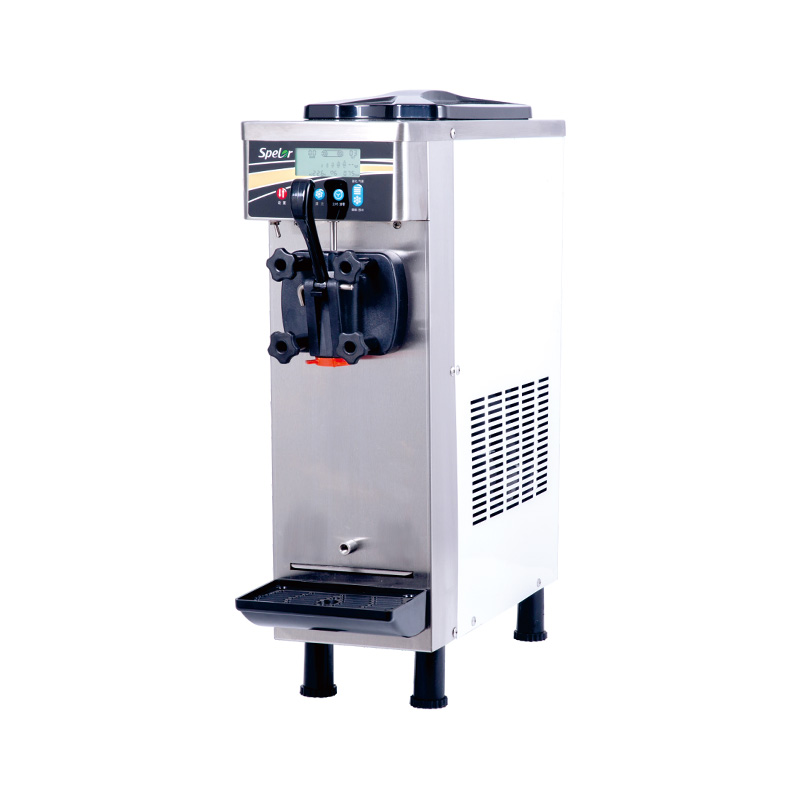
Machine refrigeration capacity (BTU/h or kW).
The freezing cylinder is surrounded by evaporator coils containing refrigerant (R-404A, R-448A, or R-449A). The refrigeration system removes heat from the mix at a certain rate. A small countertop machine (1.5–3 L batch) has about 800–1,500 BTU/h (0.23–0.44 kW) of cooling capacity and takes 15–20 minutes per batch. A medium floor-standing machine (5–10 L batch) has 3,000–6,000 BTU/h (0.9–1.8 kW) and takes 10–15 minutes. A large production machine (15–20 L batch) has 10,000–20,000 BTU/h (2.9–5.9 kW) and takes 8–12 minutes. If a machine is taking longer than the manufacturer's specification (e.g., 25 minutes for a machine rated at 12 minutes), the refrigeration system may be low on refrigerant (leak), the condenser coils may be clogged with dust, or the ambient temperature may be too high (above 32°C/90°F).
Starting temperature of the ice cream mix.
The liquid mix (milk, cream, sugar, stabilizers) should be pre-chilled to 4°C (40°F) or colder before pouring into the machine. If you pour mix at room temperature (20–25°C), the freezing time increases by 5–8 minutes because the machine must remove extra heat. Many shops pre-chill mix in a refrigerator overnight. Some high-capacity machines have a built-in pre-cooling hopper (a refrigerated tank that holds the mix at 4°C). Without pre-chilling, the machine's production rate drops by 30–50%.
Overrun (air incorporation) target.
Overrun is the percentage of air incorporated into the ice cream. Hard ice cream typically has 20–50% overrun (the volume increases by 20–50% over the liquid mix volume). The dasher spins at 100–300 rpm, whipping air into the mix as it freezes. Higher overrun (more air) makes the ice cream softer and faster to freeze because air acts as an insulator. Actually, air incorporation slows freezing slightly (by 1–2 minutes) because air reduces the thermal conductivity of the mix. However, the air also makes the product easier to scoop immediately after freezing. For dense gelato (20–30% overrun), freezing time is similar to standard ice cream (30–50% overrun). The machine's manual will specify a target overrun; you adjust it by changing the mix flow rate or dasher speed (if variable).
How do you clean a commercial hard ice cream machine, and why is daily cleaning mandatory?
Ice cream machines are breeding grounds for bacteria (Listeria, Salmonella, E. coli) because the mix is dairy-based, and the machine has warm zones (the motor housing, the drive shaft seal) and cold zones (the cylinder). Daily cleaning is not optional—it is a health code requirement in most jurisdictions.
The 5-step daily cleaning procedure (manufacturer-dependent, but general):
Scrape remaining ice cream from the cylinder. Run the machine until the cylinder is mostly empty. Use a plastic scraper (provided with the machine) to remove ice cream from the dasher and cylinder walls. Do not use metal tools (they scratch the cylinder).
Open the door (front cover) and remove the dasher, blades, and seals. These parts are shown in the manual. Place them in a sink with warm, soapy water.
Rinse the cylinder with warm water (40–50°C) to remove any remaining mix. Then wash the cylinder with a soft brush and approved dairy cleaner (often a chlorinated alkaline solution, pH 10–12, 50–60°C). Scrub for 2–3 minutes. Rinse thoroughly with warm water (or until no foam remains).
Sanitize the cylinder and all parts. Use a no-rinse food contact sanitizer (quaternary ammonium or peracetic acid-based), mixed according to label instructions (typically 50–200 ppm). Fill the cylinder with sanitizer, or circulate it through the machine for 2–5 minutes. Then drain and leave the door open to air dry (do not rinse after sanitizer—the residue is safe and prevents bacterial growth).
Reassemble the machine only when all parts are completely dry (wet parts can trap bacteria). Some shops cover the cylinder with plastic wrap overnight to prevent dust.
Why you cannot skip cleaning, even if you make only one batch per day. Ice cream residue on the dasher, door seals, and drive shaft creates a biofilm (a slimy layer of bacteria encased in polysaccharides). Biofilm forms within 4–6 hours at room temperature, and within 12–24 hours in refrigerated conditions. Once biofilm forms, a simple rinse does not remove it; you need scrubbing. Listeria monocytogenes (a pathogen that grows at refrigeration temperatures) can survive for weeks in a poorly cleaned machine. Health department inspections check for residue in the door seal crevices; a positive test can shut down the business.
Weekly deep cleaning (disassembly of the drive shaft). The drive shaft extends from the motor into the cylinder. At the point where the shaft passes through the front door bearing, there is a seal that can accumulate a mix. Once a week, remove the bearing and seal (requires a wrench or special tool). Clean the shaft and seal with a brush. Lubricate the seal with food-grade silicone lubricant (not petroleum-based, which damages the seal). A neglected shaft seal will leak ice cream mix into the motor housing, causing electrical shorts and mold growth.
Sanitizing between batches of different flavors. If you make vanilla, then chocolate, you do not need a full cleaning. You can rinse the cylinder with warm water (2–3 rinses) and wipe the dasher. However, if you are making a dairy-free sorbet after a dairy-based ice cream (for allergy concerns), a full clean is necessary (including disassembly) to remove all dairy protein. Many shops schedule non-dairy batches first thing in the morning, then clean before dairy batches.
For exclusive deals and latest offers, sign up by entering your email address below.


-
spelor@spelor.com
-
+86-576-85229688
-
No.528, Changxi Road, Linhai City, Zhejiang Province, China
Commercial Refrigeration Equipment Manufacturer China
Copyright © 2025 by Spelor Electrical Appliances (Zhejiang) Co., Ltd. Rights Reserved.
